Category: Non-Conformance and CAPA

NCR and CAPA execution that closes the loop into updated work, training, and prevention. Focuses on owners, SLAs, escalation, and linking corrective actions to controlled revisions.

  • CAPA in Aerospace: When to Start, What to Prove, and How to Close

    CAPA in Aerospace: When to Start, What to Prove, and How to Close

    CAPA aerospace workflows are often discussed only after something has already gone wrong: a recurring nonconformance, an audit finding, a supplier escape, or a field event that raises airworthiness concern. The issue is rarely the form itself. The issue is whether the organization knows when CAPA begins, what evidence belongs in the file, and what proves the fix actually worked.

    In aerospace manufacturing and MRO, CAPA is not a paperwork exercise. It is a controlled process for turning quality data into permanent solutions. Done well, it connects NCRs, MRB decisions, inspections, supplier records, customer feedback, and field events into one practical process for risk reduction and continuous improvement.
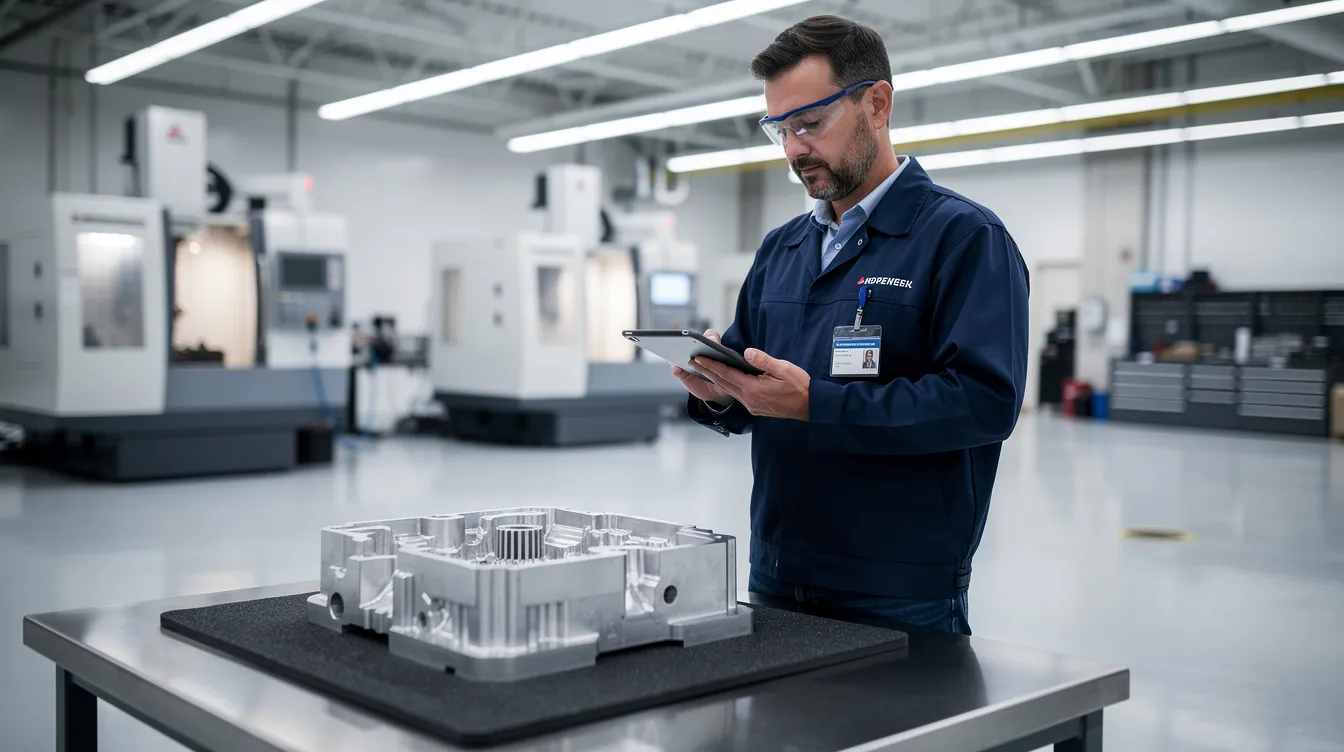
    An aerospace inspector is examining a machined component on a clean production floor while using a tablet, highlighting the importance of quality management systems and the effective CAPA (Corrective and Preventive Actions) process in ensuring regulatory compliance and continuous improvement in aerospace manufacturing.

    What is CAPA in Aerospace Manufacturing and MRO?

    CAPA stands for Corrective and Preventive Action. In practice, it means corrective and preventive actions taken through a formal, evidence based workflow. Corrective actions address known quality problems and prevent recurrence. Preventive actions address related risks before they become quality defects, escapes, or safety events.

    CAPA is familiar in medical devices, medical device manufacturing, and the way medical device companies manage quality system obligations under federal regulations. Medical device manufacturers often face strong regulatory scrutiny around CAPA documentation, root cause determination, and effectiveness checks. Aerospace has a different operating environment, but the expectation is similar: a capa process must be traceable, risk based, and supported by evidence.

    In aerospace production and MRO, CAPA sits inside the quality management system. It connects nonconformance reports, MRB decisions, internal audits, supplier issues, customer escapes, service difficulty signals, and field events into a closed loop. It is not just a qms capa record. It is the mechanism for proving that the production process, maintenance process, or supplier process has been brought back under control.

    AS9100D Clause 10.2 expects organizations to react to nonconformities, determine root cause, consider whether similar nonconformities exist, implement corrective actions, and evaluate effectiveness. FAA and EASA regulatory requirements, NADCAP special process expectations, and customer quality clauses all point toward the same operating truth: an effective capa system must produce records that show what happened, why it happened, what changed, and whether the change worked. Guidance on AS9100D nonconformity and corrective action requirements is summarized by AS9100 Store.

    Connect981 provides the digital backbone for this work across factories, suppliers, and MRO facilities. Instead of tracking a capa plan through spreadsheets, email threads, local folders, and disconnected quality systems, teams can link defects, inspection evidence, owners, action plans, change control, and closure evidence in one shared workflow.

    When Should a CAPA Be Opened in Aerospace Operations?

    A CAPA should be opened when the evidence points beyond a single defect and toward systemic issues, repeat risk, regulatory impact, or significant safety and airworthiness concern. CAPA does not begin automatically every time an NCR is written. A one off nonconformance can often be handled through NCR, MRB disposition, containment, and correction.

    The decision changes when the same type of problem repeats, when a single event has high consequence, or when an audit finding shows a weakness in the quality management process. In those cases, a corrective action plan is needed because the organization must understand root cause and change the system, not just fix the affected part.

    Under using CAPA hides systemic risk. Overusing CAPA creates noise, delays, and long backlogs that prevent the team from focusing on high risk issues. The best capa procedures use risk based prioritization. They define when the CAPA threshold has been met, who approves the decision, what evidence is needed, and how capa outcomes will be measured.

    Connect981 supports this decision by reading across NCRs, defects, rework, supplier records, audit findings, and process data. The platform can surface capa trends and AI assisted root cause signals so quality leaders can see whether an issue is isolated or part of a wider pattern.

    Trigger Logic: Clear Criteria for Opening a CAPA

    Aerospace organizations should document CAPA trigger logic in their procedures and configure it into the capa system. The decision should not depend on who happens to be reviewing the issue that day. It should be consistent, auditable, and aligned with regulatory expectations.

    Common CAPA triggers include:

    • Repeated nonconformances on the same part family, feature, process, work center, tool, or supplier within a defined period. A practical threshold is three similar NCRs within 90 days, although each organization should set criteria based on its own processes and risk profile.
    • A serious quality escape affecting delivered aircraft, flight hardware, maintenance release, or customer safety. Structural fastener torque issues discovered after delivery should trigger CAPA immediately.
    • Internal audits, AS9100 audits, NADCAP audits, FAA or EASA findings, or customer audits that identify systemic weakness or repeated minor findings in the same area.
    • A high Risk Priority Number from FMEA, a severe risk assessment outcome, or risk analysis showing that even a single occurrence could affect airworthiness, compliance, or mission reliability.
    • Supplier quality problems involving safety critical parts, long lead components, counterfeit risk, traceability gaps, or repeated documentation failures.
    • Customer feedback showing recurring escapes, late corrective measures, or dissatisfaction tied to the same process weakness.
    • Negative trend data in scrap, rework, inspection failures, test failures, MRO turnaround delays, or supplier controls.

    A CAPA trigger does not mean the answer is already known. It means the organization has enough evidence to justify a thorough investigation. In Connect981, these criteria can be built into configurable workflows so recurring defects, supplier performance drops, or high risk issues are flagged before they become audit findings or customer escapes.

    Examples: When Immediate Correction Is Enough vs. When CAPA Is Required

    A single routing sheet error may not justify CAPA. If one work order has an incorrect router code, the affected record can be corrected, the lot can be reviewed, and the operator or planner can be briefed. If there is no trend, no safety impact, and no evidence of a broken planning process, an NCR and correction may be enough.

    A recurring torque verification gap is different. If three work orders for the same part family show missing torque verification on critical structural fasteners, the issue has moved beyond correction. The capa investigation should review work instructions, tooling, inspection points, training, human factors, and whether the router allows the operation to be skipped.

    Supplier labeling follows the same logic. One mislabeled shipment of non flight hardware may be handled through MRB, receiving inspection, and supplier notification. Multiple mislabels from the same supplier over two months point to supplier process weakness. That requires CAPA, supplier corrective actions, and likely a preventive action plan covering similar part families or packaging flows.

    A field event can trigger CAPA without waiting for recurrence. If an aircraft or engine assembly shows a structural issue after delivery, the organization should open CAPA based on risk, not count. Connect981 helps by showing recurrence across shops, suppliers, programs, and MRO stations, giving quality teams the evidence to justify escalation.

    How CAPA Differs from NCR, MRB, and Immediate Containment

    CAPA is often confused with NCR, MRB, and containment because all four may appear in the same quality event. They are connected, but they do different work.

    • Nonconformance Report, or NCR: The NCR is the initial record of a defect or deviation on a part, assembly, process, document, or maintenance task. It often applies to a single work order, batch, serial number, or inspection record.
    • Material Review Board, or MRB: MRB is the engineering and quality decision process for dispositioning nonconforming product. Typical dispositions include use as is, repair, rework, scrap, or return to supplier. MRB decides the fate of product. It does not, by itself, solve the process failure.
    • Immediate containment or correction: Containment protects the customer, the aircraft, and production flow while the facts are being established. Examples include quarantine, stop use, stop shipment, added inspection, temporary rework, and suspect lot review.
    • CAPA: CAPA sits above NCR and MRB. It is triggered when data from those processes show deeper process failure, repeat risk, regulatory compliance exposure, or safety concern.

    The distinction matters. Containment may stop the bleeding, but it does not prove the root cause has been removed. MRB may release or scrap hardware, but it does not verify effectiveness of a process change. CAPA is the closed loop record that shows root cause, corrective or preventive actions, implementation evidence, and capa effectiveness.

    Connect981 links NCRs, MRB decisions, containment tasks, and CAPA records so teams can see the full chain from first defect through confirmed root cause and long term fix. The result is better traceability and fewer gaps during regulatory inspections.

    Practical Process Flow: From Deviation to CAPA

    A practical process keeps the handoffs clear:

    • Defect or deviation is logged as an NCR with part number, serial number, operation, work order, inspector, and evidence.
    • MRB reviews the affected product and determines disposition, such as rework, repair, scrap, use as is, or return to supplier.
    • Immediate containment protects the customer and production flow. Suspect inventory may be quarantined, shipments paused, or inspection expanded.
    • Quality performs trend review and risk assessment using NCR history, process data, audit findings, supplier records, and customer feedback.
    • CAPA is opened if trigger criteria are met. The capa owner is assigned, scope is defined, and the capa form becomes the umbrella record.
    • The investigation aggregates NCRs, MRB records, inspection results, supplier inputs, engineering analysis, and production evidence.
    • Corrective actions and preventive measures are implemented, verified, monitored, and reviewed for closure.

    In Connect981, this flow is modeled as linked digital workflows. Teams avoid duplicate data entry, evidence remains connected to the original event, and the audit trail is built as the work happens.

    A quality engineer is inspecting aerospace fasteners at a workstation, while digital records are displayed on a tablet, highlighting the importance of a quality management system in ensuring regulatory compliance and effective corrective actions. The scene emphasizes the role of continuous improvement and thorough investigation in the aerospace industry.

    The CAPA Investigation: Root Cause, Evidence, and Action Planning

    A real capa investigation starts with a clear problem statement. The statement should describe what failed, where it failed, when it was found, how many units were affected, which requirements were missed, and why the issue matters. Vague language creates weak investigations. A well documented CAPA file begins with operational facts.

    The investigation then defines scope. That includes affected parts, programs, suppliers, work centers, shifts, tools, routers, inspection points, MRO tasks, and potentially delivered product. The team should also evaluate whether similar nonconformities exist elsewhere. AS9100D expects this broader check, not only a review of the visible defect.

    Aerospace CAPA cannot stop at “operator error.” Human factors matter, but they must be examined in context. The team should review instruction clarity, training records, tooling condition, calibration, access to current revisions, environmental conditions, supervision, inspection plans, supplier controls, and change control history. EASA Part 145 environments also expect root cause and contributing factor analysis for findings, as summarized in industry guidance on aviation maintenance root cause analysis.

    Each CAPA should document the problem statement, scope, data sources, root cause analysis, corrective actions, preventive actions, and effectiveness verification plan. Connect981 keeps photos, NCRs, SPC charts, supplier emails, FAI reports, calibration logs, and revised work instructions linked to the CAPA record for fast retrieval during audits.

    Root Cause Analysis in Aerospace CAPA

    Root cause analysis is a disciplined method for separating symptoms from causes. It should be practical, not theatrical. The goal is root cause determination that can be tested against evidence and translated into corrective measures.

    Useful methods include:

    • 5 Whys for straightforward process breakdowns, such as a skipped verification step.
    • Fishbone or Ishikawa analysis for issues with multiple contributing factors, such as plating defects involving chemistry, tooling, handling, and inspection.
    • fault tree analysis for safety critical failures where event logic and failure paths must be understood.
    • FMEA review when the failure mode was known but risk management controls did not prevent occurrence or detection failure.
    • Process mapping when handoffs between planning, stores, inspection, MRO, or supplier teams are unclear.

    CAPA should involve cross functional teams when the issue crosses boundaries. A cross functional team may include quality, manufacturing engineering, design engineering, production, MRO leads, supply chain, supplier quality, and program management. In high consequence cases, organizations should involve cross functional teams early so the investigation does not optimize one department while missing the system failure.

    Connect981 can support RCA by surfacing similar events, defect history, supplier patterns, and prior capa actions. AI assisted root cause suggestions can point teams toward likely contributing factors, but the decision remains with engineering and quality. The confirmed root cause must be supported by evidence.

    Evidence Requirements: What Belongs in CAPA Documentation

    Good capa documentation tells a coherent story. An auditor, customer representative, or new quality manager should be able to understand what happened, why it happened, what changed, and how the organization verified the result.

    Typical evidence includes:

    • NCR history and defect records.
    • Scrap, rework, and repair trends before and after the event.
    • Inspection results, SPC charts, capability studies, and test data.
    • Photos, microscopy, measurement reports, or lab results showing the defect.
    • Calibration records, tool maintenance logs, and gage records.
    • Training records, qualification sign offs, and skill matrix updates.
    • Revised digital work instructions, routers, inspection plans, and control plans.
    • Change control approvals, ECOs, drawing updates, software revisions, or CNC program validation.
    • First Article Inspection records when the process or configuration changed.
    • Supplier corrective action reports, supplier audits, and receiving inspection evidence.
    • Risk assessment, risk analysis, and FMEA updates.
    • CAPA review notes, approvals, and management review inputs when appropriate.

    Each root cause should have supporting evidence. Each corrective action and preventive action capa item should also have proof that it was implemented. If the fix was an updated torque specification, the CAPA file should link to the approved specification, revised router, updated work instruction, and evidence that the station is using the current revision.

    Connect981 acts as a single evidence repository across ERP, MES, PLM, QMS, and supplier data. This matters because CAPA evidence often lives in fragments. One piece is in email, another in a file share, another in a supplier portal, and another on the shopfloor. Fragmented evidence creates audit risk even when the team did the right work.
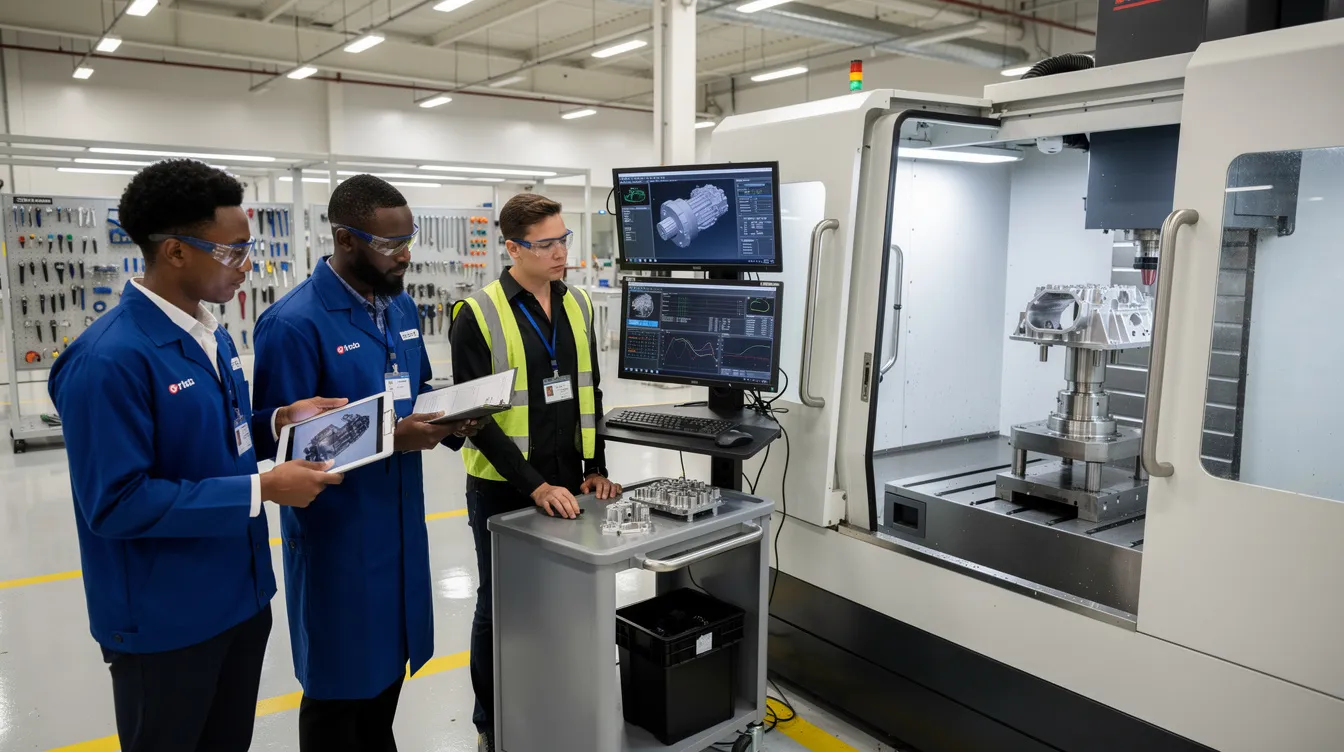
    A cross-functional aerospace quality team is reviewing component inspection results beside a production cell, focusing on implementing corrective and preventive actions as part of their quality management system. They are engaged in root cause analysis to ensure continuous improvement and prevent recurrence of quality defects in the manufacturing process.

    Building the CAPA Action Plan

    The capa plan translates root cause findings into specific action plans. It should separate correction from corrective action. Correction fixes the affected part or record. Corrective action changes the system so the issue does not recur. A preventive action plan extends the lesson to similar risks elsewhere.

    An aerospace CAPA action plan may include:

    • Process changes to routing, inspection sequence, traveler logic, or MRO task flow.
    • Procedure updates and revised digital work instructions.
    • Tooling changes, fixture improvements, calibration frequency changes, or gage updates.
    • Training tied to the revised process, not generic retraining.
    • Supplier development, supplier audits, or updated purchase order quality clauses.
    • Design changes, ECOs, configuration updates, or FAI requirements.
    • Additional controls for detection, such as automated verification, required signoffs, or inspection hold points.

    Every action should have an owner, due date, risk priority, required evidence, and acceptance criteria. The capa owner should not be left to chase status manually through email. Capa management works best when ownership, escalation, and evidence expectations are visible from the start.

    Connect981 provides configurable CAPA forms with action tables, owner assignment, e signatures, due dates, escalation logic, and links to downstream change control and validation activities. This supports implementing corrective actions without losing the connection between the root cause and the work being done.

    Effective CAPA Closure: What “Done” Really Looks Like

    Effective capa closure is not the point where tasks are checked off. It is the point where evidence shows the issue is controlled and unlikely to recur within defined risk limits. That is the difference between activity and control.

    A strong capa program defines closure criteria before closure begins. For example, the organization may require three consecutive production lots with zero repeat defects, 90 days without a similar NCR, a successful internal audit of the revised process, or verified supplier performance after corrective action. The criteria should match the severity and risk of the issue.

    Cosmetic closure is a common failure. A document is updated, a training record is signed, and the CAPA is closed before the production process proves stability. That approach does not satisfy regulatory expectations. It also fails operations because recurrence returns the same problem to the same people weeks later.

    Aerospace teams should use plan do check act thinking. Plan the CAPA, do the implementation, check performance against evidence, and act again if the data shows the fix did not hold. This is where capa effectiveness is proven. Connect981 can automate effectiveness tracking using real production and inspection data, then prompt the capa owner when enough evidence is available for closure review.

    Closure Evidence: Proving the CAPA Worked

    Closure evidence should prove that the action was implemented and that it worked. Auditors and OEM customers are not looking for a clean form. They are looking for evidence of a controlled process.

    Useful closure evidence includes:

    • Before and after trend charts showing reduced defect rate, scrap, rework, or escapes.
    • Zero repeat NCRs for the same issue over a defined time period or production quantity.
    • Successful FAI after a process, tooling, or configuration change.
    • Audit reports confirming that operators are using the revised procedure or work instruction.
    • Approved ECOs, updated drawings, released routers, revised inspection plans, and current digital work instructions.
    • Validated CNC, test rig, inspection, or software program changes where applicable.
    • Training completion records tied to the exact revised process.
    • Supplier performance records showing the same defect has not recurred.
    • Updated FMEA, risk controls, control plans, or inspection frequency.
    • Formal capa review sign off by the quality manager, CAPA board, or authorized approver.

    The CAPA review should confirm that the root cause logic is sound, the risk assessment remains valid, the actions match the cause, and the effectiveness data is sufficient. If the evidence is weak, the CAPA should remain open. If recurrence appears, the team should reopen the investigation or launch a new CAPA with the prior failure included in the analysis.

    Connect981 presents closure packets and dashboards that show timelines, action status, evidence links, trend plots, and approval history. This helps quality leaders verify effectiveness without rebuilding the story from scattered records.

    Integrating CAPA with Change Control, Quality Management, and Suppliers

    CAPA does not operate alone. It is part of quality management, risk management, supplier management, configuration control, and production execution. Many capa actions require formal change control because they affect routers, work instructions, inspection plans, tooling, software, drawings, or maintenance procedures.

    That integration is where many organizations struggle. A CAPA may require an updated work instruction, but the change is released only in a document system and never reaches the station. A supplier may submit a response, but receiving inspection does not change its sampling plan. An engineering change may be approved, but the FAI requirement is missed. These are not individual failures. They are workflow gaps.

    CAPA should connect to:

    • Internal audits and audit finding closure.
    • FAI and production readiness.
    • Configuration management and engineering change control.
    • MRO maintenance records and parts history.
    • Supplier portals, supplier corrective actions, and procurement workflows.
    • Training and qualification management.
    • Management review, especially for repeated or high severity capa trends.

    Connect981 links CAPA to change control workflows, supplier collaboration, and real time shopfloor execution. Approved changes can be pushed to the right workstations, suppliers, and inspection points with revision control. The organization can then show not only that the CAPA was approved, but that the approved process reached the people doing the work.

    Digital CAPA Systems in Aerospace: From Paper to Connected Workflows

    Paper and spreadsheet based CAPA tracking can work for a small volume of simple issues. It breaks down when operations span multiple sites, suppliers, product lines, and regulatory obligations. The problem is not just administration. The problem is weak data continuity.

    An effective capa system gives teams a single source of truth for CAPA documentation, owners, due dates, evidence, approvals, and closure status. It also supports automated reminders, escalations, consistent templates, electronic signatures, and audit ready traceability. In practice, this reduces time spent searching for records and increases time spent solving the actual problem.

    A connected digital system should support:

    • Linked NCR, MRB, containment, CAPA, and closure records.
    • Real time dashboards for open actions, aging, risk level, and overdue items.
    • Cross site capa trends and supplier performance visibility.
    • Configurable capa procedures that reflect the organization’s quality system.
    • AI assisted root cause analysis and production quality insights.
    • Integration with ERP, MES, PLM, QMS, supplier portals, and shopfloor execution.
    • Evidence capture from photos, inspections, calibration records, training, and change approvals.

    Technology does not replace judgment. It helps the organization make good judgment repeatable. Connect981 is built for aerospace manufacturing and MRO teams that need CAPA connected to real work: digital work instructions, quality checks, supplier collaboration, traceability, routing, and compliance records.

    For aerospace manufacturers and MRO providers looking to standardize CAPA, reduce regulatory compliance risk, and close the loop from defect to verified improvement, Connect981 provides a practical path. Request a demo to see how an integrated CAPA workflow can connect NCRs, MRB decisions, root cause analysis, change control, supplier actions, and effectiveness verification in one operational layer.


  • Managing Supplier Non-Conformances in Aerospace: From SCARs to Scorecards

    Managing Supplier Non-Conformances in Aerospace: From SCARs to Scorecards

    Managing Supplier Non-Conformances in Aerospace: From SCARs to Scorecards

    In aerospace, a single defective lot from a supplier can halt production, trigger aircraft-on-ground (AOG) situations, or invite intense regulatory scrutiny. That is why aerospace supplier non conformance management is not just a purchasing or quality activity—it is a core risk-control and business performance process.

    This article focuses specifically on non conformances originating from suppliers: how they are detected, communicated, corrected, and ultimately used to drive long-term performance improvement. When done well, supplier NCR (non-conformance report) data becomes a strategic asset for managing risk and making sourcing decisions. When done poorly, it leads to recurring problems, strained relationships, and cost overruns.

    For teams putting non-conformance and capa into daily operation, non-conformance management, supply chain and supplier execution, quality management workflows help connect the concept to traceability, work-order reality, and audit-ready evidence.

    The same operating model also depends on a connected execution platform, Connect 981’s aerospace execution solutions, real aerospace execution examples, Connect 981’s aerospace operations guidance, especially when decisions have to move across quality, production, suppliers, and program leadership without losing context.

    If you are looking for a broader, end-to-end view of non-conformance handling across your operation, including in-house manufacturing and MRO, see our guide on enterprise-wide non conformance visibility.

    Why Supplier Non-Conformances Are Critical in Aerospace

    Impact on production schedules and AOG risk

    Purchased material typically represents a large portion of cost and risk in aerospace programs. When supplier parts arrive out of specification:

    • Production lines stall while engineering determines disposition and buyers scramble for replacement parts.
    • Aircraft-on-ground (AOG) situations may occur if replacement parts are not available to support final assembly or maintenance.
    • Buffers and safety stock are consumed more quickly, driving up inventory requirements and working capital if supplier quality is unstable.

    Because many aerospace parts have long lead times and tight qualification requirements, switching suppliers or re-sourcing is rarely a quick option. Effective supplier non-conformance management is therefore a critical lever for protecting delivery schedules.

    Regulatory and customer traceability expectations

    Regulators and aerospace customers expect full traceability for supplier-related non conformances:

    • Which lots, serial numbers, and work orders are affected?
    • What containment was applied and when?
    • What root cause was identified at the supplier and at your own facility?
    • What corrective and preventive actions (CAPA) were implemented, and how was effectiveness verified?

    Standards like AS9100, along with customer clauses, require documented, auditable processes for handling supplier-caused non conformances. Incomplete or inconsistent records can surface during audits, customer reviews, or incident investigations, with significant reputational and commercial consequences.

    Cost and relationship implications of poor supplier quality

    Supplier non conformances carry direct and indirect costs:

    • Direct costs: additional inspection, rework, scrap, expedited freight, and premium overtime.
    • Indirect costs: missed delivery commitments, line downtime, engineering support, and customer penalties.

    At the same time, suppliers are long-term partners. Overly punitive responses can damage relationships and limit collaboration, while overly lenient responses encourage recurrence. The goal is a fair, documented, and consistent process that:

    • Protects safety and compliance.
    • Allocates costs appropriately when justified by facts.
    • Supports genuine joint improvement with strategic suppliers.

    Typical Supplier Non-Conformance Workflow

    Although every organization has its own terminology and systems, most aerospace supplier non-conformance workflows follow a similar pattern.

    Detection at incoming inspection or in-process

    Supplier issues can be detected at multiple points:

    • Incoming inspection – dimensional checks, functional tests, documentation review, and visual inspection.
    • In-process – machining, assembly, or test operations reveal defects traceable back to supplier material.
    • Final inspection or test – failures linked to upstream supplier deviations.
    • Field or MRO feedback – service issues ultimately traced to a supplier component or process.

    When a deviation is found, the inspector or operator should immediately:

    1. Quarantine the suspect material (physical segregation and clear identification).
    2. Document the non conformance in the QMS or NCR system, including part numbers, lot/serials, supplier details, and defect description.
    3. Flag potential impact on work-in-process and delivered products using the same lot or configuration.

    Documentation and issuing supplier corrective action requests (SCARs)

    Not every minor defect warrants a formal Supplier Corrective Action Request (SCAR). Many organizations use thresholds based on:

    • Severity (safety or flight-critical impacts).
    • Frequency (repeat issues over a defined period).
    • Volume (defect rate across a lot or program).

    For issues that cross those thresholds, the quality or supplier management team issues a SCAR that typically includes:

    • Clear description of the non conformance and supporting evidence (photos, test results, measurements).
    • Traceability information (purchase order, lot, serial, manufacturing date, applicable specs and revisions).
    • Required containment actions at the supplier and your site.
    • Timelines for initial response, root cause analysis, and corrective action completion.

    Well-structured SCARs set expectations up front and avoid rework cycles where suppliers ask for missing information or clarification.

    Joint root cause analysis and corrective action planning

    Effective supplier non-conformance management is collaborative. After the SCAR is issued:

    • The supplier performs an initial assessment and confirms or updates containment scope.
    • Both parties may participate in a structured problem-solving method such as 8D or 5 Whys.
    • Root causes are identified not only at the supplier but also, if applicable, in your own processes (e.g., inadequate incoming inspection, unclear specifications).
    • Corrective and preventive actions are defined, including process changes, training, documentation updates, and verification plans.

    The aim is not merely to close the SCAR, but to implement actions that demonstrably prevent recurrence.

    Defining Clear Expectations for Suppliers

    Clarity upfront reduces friction and delays during non-conformance handling. Expectations should be documented in supplier quality requirements, purchase order terms, and, where appropriate, contracts.

    Response time targets and containment requirements

    Many aerospace organizations define tiered response expectations, such as:

    • Immediate (within 24 hours): Acknowledgement of the SCAR and confirmation of short-term containment actions and affected scope.
    • Interim report (3–5 business days): Initial root cause hypotheses, risk assessment, and additional containment if needed.
    • Final 8D / root cause and corrective action (10–30 days): Verified root cause, implemented corrective actions, and effectiveness plan.

    Containment expectations should specify:

    • How the supplier will identify and segregate potentially affected material (on-site and at your facility).
    • How they will prevent shipment of suspect product until risk is understood.
    • When and how they will perform 100% inspection or additional testing, if required.

    Data and evidence required with supplier responses

    To avoid low-quality responses, define minimum requirements for SCAR closure, such as:

    • Documented root cause analysis method used and why the cause is believed to be valid.
    • Objective evidence of process changes (updated work instructions, control plans, training records, equipment maintenance or calibration records).
    • Verification data, such as capability studies, inspection results, or pilot runs showing the issue is resolved.
    • Assessment of similar products, processes, and customers potentially affected by the same cause.

    Making these expectations visible to suppliers upfront improves the quality and consistency of their responses.

    Alignment with AS9100 and customer clauses

    Supplier expectations should be aligned with:

    • AS9100 requirements for control of externally provided processes, products, and services.
    • Specific customer quality requirements (e.g., mandatory notification timelines, approval of concessions, mandated use of particular 8D templates).
    • Any applicable design authority or regulatory requirements for concessions or deviations.

    Providing suppliers with a concise summary of these expectations—rather than assuming they will interpret long standards documents—reduces ambiguity and audit risk.

    Using Digital Tools to Manage Supplier Non Conformances

    Managing supplier SCARs through email, spreadsheets, and ad hoc trackers quickly becomes unmanageable, especially across multiple sites and high part counts. Digital solutions make the process more reliable and transparent.

    Supplier portals and shared NCR visibility

    A secure supplier portal within your quality management or non-conformance system allows suppliers to:

    • View all open and historical non conformances assigned to them.
    • Access relevant documentation (NCR forms, photos, drawings where authorized).
    • Submit SCAR responses, attach evidence, and update status directly.

    This eliminates version confusion from multiple spreadsheets and enables a single, auditable record for each issue. Suppliers see precisely what is expected and by when, and your teams see responses as soon as they are posted.

    Automated notifications and reminders

    Digital workflows can automatically:

    • Notify the appropriate supplier contacts when a new SCAR is issued or updated.
    • Send reminders ahead of due dates for containment, interim reports, and final actions.
    • Escalate overdue responses to supplier management or your internal supplier quality leaders.

    This reduces administrative follow-up burden and prevents SCARs from silently aging in inboxes.

    Integrating supplier data into scorecards and dashboards

    When supplier-related NCR and SCAR data is stored in structured, centralized systems, it becomes straightforward to:

    • Calculate defect rates by part family, program, or supplier.
    • Monitor response time and closure time performance.
    • Track repeat issues by root cause category.
    • Feed this information into supplier scorecards and executive dashboards.

    This connection between day-to-day non-conformance handling and periodic business reviews is a key element of mature supplier management.

    Building Supplier Scorecards From Non-Conformance Data

    Supplier scorecards are most effective when they combine objective defect data with a balanced view of responsiveness and collaboration.

    Key metrics: defect rates, response times, effectiveness

    Common quality and non-conformance related metrics include:

    • Defect rate: parts per million (PPM), percentage of lots rejected, or NCRs per million dollars of spend.
    • SCAR response time: average days from issuance to initial containment, interim report, and final closure.
    • Corrective action effectiveness: percentage of SCARs with no recurrence within a defined monitoring window.
    • Documentation quality: completeness and clarity of responses, frequency of returns for rework.

    These metrics should be trended over time to identify improvement or deterioration rather than viewed as one-off snapshots.

    Combining qualitative and quantitative assessments

    Numbers alone do not tell the full story. Leading organizations also consider qualitative factors, such as:

    • Collaboration: willingness to share data, engage in joint problem-solving, and attend technical reviews.
    • Engineering support: ability to respond to technical questions, support qualification, and manage changes.
    • Process maturity: evidence of robust internal quality systems (e.g., AS9100 certification, robust FMEA/control plans).

    Scorecards that mix hard data with structured qualitative input support better sourcing and development decisions.

    Using scorecards in reviews and sourcing decisions

    Supplier scorecards should not be a once-a-year exercise with little follow-through. They can be used to:

    • Guide quarterly business reviews (QBRs) with key suppliers.
    • Identify candidates for development plans or additional oversight.
    • Support sourcing decisions when awarding new business or consolidating volumes.
    • Recognize and reinforce high performers through preferred status or longer-term agreements.

    The key is consistency: suppliers should know how their performance is assessed and how scorecard results influence future opportunities.

    Collaborative Improvement With Strategic Suppliers

    Not all suppliers are equal. For strategic, high-impact suppliers, non-conformance management should feed a broader, collaborative improvement agenda.

    Sharing trends and lessons learned

    Instead of addressing each SCAR in isolation, analyze and share:

    • Trends in defect types (e.g., surface defects, documentation errors, process escapes).
    • Common root cause categories (e.g., operator training, programming errors, supplier sub-tier issues).
    • Lessons learned that could apply across part families or programs.

    Regularly reviewing this information with strategic suppliers helps both sides prioritize improvement projects that deliver the greatest risk reduction.

    Joint improvement projects and training

    Where recurring or high-risk issues are identified, consider:

    • Joint Kaizen or problem-solving events at the supplier facility.
    • Technical training on print interpretation, special process controls, or regulatory requirements.
    • Support for the supplier to improve their own NCR and CAPA systems, including how they manage their sub-tiers.

    These collaboration efforts should be targeted based on data from your non-conformance and scorecard systems, ensuring resources go where they have the most impact.

    Recognizing and rewarding strong performance

    Non-conformance data can also be used positively. For suppliers that consistently demonstrate:

    • Low defect rates,
    • Fast and effective SCAR responses,
    • Strong support during audits and customer visits,

    you can consider:

    • Reduced incoming inspection levels in accordance with risk and regulation.
    • Preferred-supplier status or opportunities for new programs.
    • Public recognition in supplier conferences or awards.

    Positive reinforcement, anchored in objective non-conformance data, helps build durable, high-performance supplier partnerships.

    Bringing It All Together

    Supplier non-conformance management in aerospace is about more than closing NCRs and SCARs. It is a structured way to protect safety, maintain regulatory compliance, safeguard production schedules, and strengthen your supply base.

    Organizations that move from fragmented spreadsheets and email to integrated, digital workflows gain:

    • Faster, more reliable detection and containment across sites.
    • Traceable, auditable records that stand up to regulatory and customer scrutiny.
    • Rich data to power supplier scorecards, risk assessments, and improvement plans.
    • Stronger collaboration with strategic suppliers built on clear expectations and shared visibility.

    By treating supplier non conformances as a high-value feedback loop rather than a necessary administrative burden, aerospace organizations can turn everyday quality problems into a driver of long-term performance and strategic advantage.

  • How to Run Effective Root Cause Investigations in Aerospace Operations

    How to Run Effective Root Cause Investigations in Aerospace Operations

    In aerospace operations, every non-conformance is a potential safety, schedule, and compliance risk. When the underlying causes are not fully understood, organizations end up firefighting the same problems repeatedly—adding cost, eroding customer trust, and exposing the business to regulatory scrutiny.

    Structured root cause analysis (RCA) gives aerospace quality and engineering teams a disciplined way to understand why a non-conformance occurred and what must change so it does not happen again. This article explains the most commonly used RCA methods in aerospace, how to choose between them, and how to embed them into digital non-conformance workflows so investigations are consistent, auditable, and genuinely effective.

    For a broader look at how investigations fit into the end‑to‑end quality process, see our guide to systematic non conformance investigations across aerospace operations.

    Why Structured Root Cause Analysis Matters in Aerospace

    The risk of treating only symptoms

    Aerospace environments are full of pressure to restore flow quickly: clear holds, release parts, and get aircraft out the door. Under this pressure, investigations often stop at the most visible cause: “operator forgot,” “inspection missed defect,” or “supplier sent wrong part.” These are symptoms, not true root causes.

    When teams stop at symptoms, organizations see:

    • Repeat non-conformances on the same part family, process, or workstation
    • Growing backlogs of open corrective actions with limited impact
    • Escalating rework, scrap, and expedite costs
    • Eroding confidence from customers and regulators

    Structured RCA methods force investigators to look beyond the obvious and consider multiple causal paths: process controls, design robustness, training, equipment capability, environment, documentation, and management systems. This is especially critical where issues can affect airworthiness, reliability, or regulatory approval.

    Regulatory and customer expectations for RCA rigor

    Standards such as AS9100 and regulatory authorities like the FAA and EASA do not prescribe one specific RCA tool, but they do expect investigations to be:

    • Systematic – following defined procedures rather than ad-hoc brainstorming
    • Evidence-based – supported by data, records, tests, and traceable assumptions
    • Proportionate to risk – more rigorous for safety or flight-critical non-conformances
    • Connected to CAPA – directly linked to corrective and preventive actions

    Major aerospace customers often add further requirements such as mandatory 8D investigations above certain risk thresholds, specific response timelines, and structured RCA reporting templates.

    Organizations that cannot demonstrate disciplined RCA during audits risk findings related to ineffective corrective action, inadequate data, or repeat issues not being sufficiently analyzed.

    Linking RCA outcomes to CAPA effectiveness

    RCA is not an academic exercise; it exists to drive effective Corrective and Preventive Action (CAPA). If the root cause is wrong or incomplete, even well-executed corrective actions will not eliminate recurrence.

    A robust aerospace investigation process therefore ensures:

    • Clear traceability from problem statement → causal analysis → selected root cause(s)
    • Direct linkage from each root cause to specific corrective and preventive actions
    • Defined verification plans (e.g., process audits, capability studies, trend monitoring) to confirm that recurrence has stopped
    • Feedback into design, process, and training systems so lessons learned are reused, not forgotten

    Overview of Common Aerospace RCA Methods

    Aerospace organizations typically maintain a toolkit of RCA techniques and select the appropriate method (or combination) based on risk, complexity, and customer or regulatory expectations.

    8D problem solving

    8D (Eight Disciplines) is a structured, team-based problem-solving approach frequently requested by aerospace OEMs and Tier 1 suppliers for significant or recurring non-conformances.

    The classic 8D steps are:

    1. D0 – Plan: Confirm the problem scope and plan for the 8D.
    2. D1 – Team: Establish a cross-functional team with appropriate expertise.
    3. D2 – Problem Description: Define the problem clearly (who, what, when, where, how much).
    4. D3 – Containment Actions: Protect the customer while investigation is underway.
    5. D4 – Root Cause Analysis: Identify root cause(s) of occurrence and escape.
    6. D5 – Corrective Actions: Define and select permanent corrective actions.
    7. D6 – Implement & Validate: Implement corrective actions and verify effectiveness.
    8. D7 – Prevent Recurrence: Update systems, procedures, and training.
    9. D8 – Recognize the Team: Capture lessons learned and acknowledge contributors.

    In aerospace, 8D is especially common for:

    • Regulatory or customer-reportable events
    • Repeat non-conformances with significant cost impact
    • Supplier-caused issues requiring formal customer response

    Ishikawa (fishbone) diagrams

    A Fishbone Diagram (also called an Ishikawa or cause-and-effect diagram) is a visual tool that organizes potential causes into logical categories. Typical categories in aerospace manufacturing include:

    • Man / People – training, competence, workload
    • Machine – equipment capability, maintenance, calibration
    • Method – work instructions, process controls, inspection plans
    • Material – raw material variation, certification, handling
    • Measurement – gauges, measurement methods, MSA results
    • Environment – temperature, contamination, lighting, vibration

    Teams brainstorm potential contributors under each category, then use data and testing to narrow them down. Fishbone diagrams are widely used during the D4 step of 8D or as a standalone tool for mid-complexity issues.

    5 Whys

    5 Whys is a simple yet powerful method: repeatedly ask “Why?” about the preceding cause until you reach a systemic root cause rather than a surface symptom.

    For example:

    1. Non-conformance: Hole diameter out of tolerance.
      Why? – The drilling operation produced oversized holes.
    2. Why? – The drill bit was worn.
    3. Why? – The tool life limit was exceeded.
    4. Why? – The operator was not aware of the updated tool life standard.
    5. Why? – The procedure update was not communicated and training records were not updated.

    Instead of stopping at “operator error” or “worn tool,” the analysis reveals a breakdown in document control and training—issues that, if unresolved, could affect many operations.

    5 Whys is often combined with fishbone diagrams or used within 8D to drill deeper on a specific cause chain.

    Failure Mode and Effects Analysis (FMEA)

    Failure Mode and Effects Analysis (FMEA) is a proactive tool designed to identify potential failure modes in a design or process, evaluate their risk, and define controls before failures occur. In aerospace, organizations use both:

    • Design FMEA (DFMEA) – for components, systems, and assemblies
    • Process FMEA (PFMEA) – for manufacturing and repair processes

    While FMEA is primarily preventive, it also plays a crucial role in RCA:

    • It helps validate whether a discovered non-conformance was anticipated in risk analyses.
    • It can be updated based on new failure modes identified during investigations.
    • It guides where to invest in additional prevention or detection controls after a major event.

    Many aerospace customers require FMEAs to be revised when serious non-conformances occur, creating a direct link between reactive RCA and proactive risk management.

    Selecting the Right RCA Approach for Each Non Conformance

    Criteria: risk, complexity, recurrence, and cost impact

    Not every non-conformance warrants a full 8D investigation. Applying heavyweight methods to low-risk, one-off issues can slow down the organization and dilute focus.

    Common criteria for selecting the RCA approach include:

    • Safety and regulatory risk: Flight-safety, critical characteristics, or potential airworthiness implications justify the most rigorous methods.
    • Complexity: Issues involving multiple processes, technologies, or sites benefit from team-based methods like 8D and fishbone diagrams.
    • Recurrence: Repeated non-conformances with a shared pattern call for formal, structured analysis and systemic fixes.
    • Cost and customer impact: AOG events, significant scrap, or customer spills warrant deeper investigation.

    Many organizations categorize non-conformances (e.g., minor, major, critical) and map each category to a minimum investigation level.

    Combining methods for critical or systemic issues

    For high-risk events, teams often combine methods rather than choosing only one. A typical aerospace pattern might be:

    • Open an 8D for structure and stakeholder alignment.
    • Use a fishbone diagram to identify and organize potential causes.
    • Apply 5 Whys to drill down on the most probable branches.
    • Review and update the FMEA to ensure the risk is captured and mitigated long term.

    This layered approach ensures the team does not overlook systemic contributors and that lessons learned feed into upstream risk management.

    When a lightweight approach is sufficient

    For low-risk, non-recurring issues with clear and well-supported causes, a simpler method is acceptable as long as it is documented and traceable. Examples include:

    • A one-off cosmetic defect on a non-critical surface with clear handling damage evidence
    • A documentation typo caught before use, where the cause is a known, low-risk data entry error already being addressed

    In these cases, a concise problem description, brief causal explanation (supported by evidence), and targeted corrective action may be enough. The key is that the decision to use a lightweight approach aligns with internal procedures, customer contracts, and applicable regulations.

    Executing Effective Cross-Functional Investigations

    Involving quality, production, engineering, and suppliers

    Aerospace non-conformances almost always span functional boundaries. A robust RCA team typically includes:

    • Quality – leads the investigation, facilitates RCA methods, ensures documentation quality.
    • Production / Operations – provides process knowledge, shift context, and practical constraints.
    • Manufacturing or Design Engineering – analyzes technical risks, dispositions material, designs corrective actions.
    • Supplier Quality / Suppliers – contributes when purchased material, processes, or offloaded work are involved.
    • Maintenance, tooling, or metrology – participates where equipment or measurement systems may be causal factors.

    Cross-functional participation prevents narrow, function-centric conclusions (e.g., “inspection missed it” or “operator mistake”) and surfaces systemic causes such as inadequate process capability or ambiguous specifications.

    Ensuring data completeness before analysis

    RCA quality depends heavily on the quality of initial data captured when the non-conformance is raised. Before launching into 8D or fishbone sessions, teams should verify that they have:

    • Accurate part and configuration details (part number, revision, serial/lot, routing)
    • Exact location and step where the issue was detected and where it likely occurred
    • Photographs, measurements, and test results documenting the deviation
    • Relevant process data (machine settings, SPC charts, tool IDs, batch records)
    • Environmental or shift context (time, team, special conditions)

    Digital non-conformance systems can enforce mandatory fields and attachments to avoid starting investigations with incomplete or inconsistent information.

    Documenting assumptions and evidence

    In aerospace, every RCA may eventually be scrutinized by customers, internal auditors, or regulators. Investigators should therefore make their reasoning transparent by clearly documenting:

    • Assumptions – what the team believes to be true (e.g., material certificates are authentic, calibration is valid) and why
    • Evidence – documents, test reports, photos, and data that support or refute specific causal hypotheses
    • Rationale for rejecting causes – why certain causes were investigated and then ruled out
    • Linkage to controls – how selected corrective actions will break the cause-effect chain

    This level of documentation also makes it easier to revisit the investigation later if new information emerges or similar issues appear elsewhere.

    Embedding RCA Into Digital Non-Conformance Workflows

    Templates and mandatory RCA fields

    Relying on free-form narratives in emails or spreadsheets leads to inconsistent RCA quality and makes trending nearly impossible. Digital non-conformance platforms can standardize the process by providing:

    • RCA templates aligned with 8D, fishbone, or 5 Whys steps
    • Mandatory fields for root cause type (e.g., process, design, training, supplier, measurement, environment)
    • Structured problem statements that capture what/where/when/extent and detection source
    • Drop-down taxonomies for classification (e.g., defect codes, process steps, stations)

    Standardization enables better reporting, easier onboarding of new investigators, and faster audit responses.

    Attaching analysis artifacts (diagrams, test data)

    Modern RCA rarely lives only as text. Teams generate:

    • Fishbone diagrams from workshops
    • 5 Whys worksheets
    • Updated FMEA pages
    • Test reports, capability studies, and simulation outputs
    • Photos, sketches, and markups of parts and tooling

    Digital workflows should allow these artifacts to be attached directly to the non-conformance or RCA record. This supports traceability, simplifies audit preparation, and allows other sites or teams to reuse the analysis when encountering similar issues.

    Tracking RCA quality and recurrence rates

    Embedding RCA in digital workflows also enables the organization to measure how well RCA is being performed, not just whether forms are completed. Useful indicators include:

    • Average investigation cycle time by severity class
    • Percentage of records with clearly classified root causes and evidence attachments
    • Recurrence rate for each root cause category or corrective action type
    • CAPA closure on time and effectiveness verification completion

    These metrics help quality leaders identify where additional coaching, training, or process refinement is needed.

    Measuring RCA and CAPA Effectiveness

    Recurrence metrics and trend analysis

    A key test of RCA quality is whether similar non-conformances reappear. Organizations can monitor this by:

    • Tracking repeat issues by part family, process, or line
    • Comparing pre- and post-RCA defect rates for targeted areas
    • Reviewing top recurring root cause categories and associated costs

    Digital systems that centralize non-conformance and RCA data make these analyses far easier than spreadsheet-based approaches.

    Verification plans and long-term monitoring

    Regulators and customers increasingly expect explicit plans to verify that corrective actions are working. In practice, this often means:

    • Defining the verification method (e.g., audit, inspection sampling, SPC, capability study)
    • Setting timeframes or sample sizes (e.g., three months of stable data, 500 consecutive parts)
    • Specifying acceptance criteria (e.g., no repeat non-conformances, Cpk > 1.33)

    These plans should be documented in the same digital record that holds the RCA and CAPA, with automated reminders and status tracking.

    Using lessons learned across sites and programs

    The full value of RCA emerges when organizations move beyond local fixes and leverage lessons learned across programs, platforms, and sites. This requires:

    • Centralized access to non-conformance and RCA records across the enterprise
    • Standardized taxonomies so similar issues can be trended together
    • Processes for sharing and reviewing critical investigations with other sites and program teams

    For example, a major machining issue resolved at one plant might reveal design or process vulnerabilities that apply to multiple locations. A digital system can flag similar part numbers or processes elsewhere and prompt preventive reviews before issues appear in the field.

    Practical considerations and limitations

    The methods described here are proven and widely used in aerospace, but they are not one-size-fits-all. Each organization must:

    • Tailor its RCA procedures to its specific risk profile, product mix, and customer contracts
    • Clarify with key customers which formats (e.g., 8D) are required for which categories of issues
    • Ensure that chosen methods align with internal QMS and regulatory obligations

    RCA is a skill that improves with practice, coaching, and feedback. Investing in training investigators, standardizing digital workflows, and measuring outcomes will do more to improve investigation quality than simply mandating a particular template.

    When aerospace organizations move from ad-hoc, narrative-based investigations to structured, digitally supported root cause analysis, they not only resolve today’s non-conformances more effectively—they build a foundation for safer products, stronger regulatory confidence, and more resilient operations.

    For teams putting non-conformance and capa into daily operation, non-conformance management, quality management workflows, a connected execution platform help connect the concept to traceability, work-order reality, and audit-ready evidence.

    The same operating model also depends on Connect 981’s aerospace execution solutions, real aerospace execution examples, Connect 981’s aerospace operations guidance, practical aerospace operations FAQs, especially when decisions have to move across quality, production, suppliers, and program leadership without losing context.

  • Manual vs. Digital Non-Conformance Management in Aerospace: A Data-Driven Comparison

    Manual vs. Digital Non-Conformance Management in Aerospace: A Data-Driven Comparison

    Manual vs. Digital Non-Conformance Management in Aerospace: A Data-Driven Comparison

    In aerospace manufacturing and MRO, the difference between a manual and a digital non-conformance management system is the difference between reactive firefighting and repeatable, auditable control. This article compares spreadsheet- and email-based approaches with unified digital NCR platforms, quantifying their impact on cycle time, audit readiness, and the cost of poor quality.

    The Limits of Manual NCR Management

    Many aerospace organizations still handle non-conformance reports (NCRs) through Excel files, PDF forms, and endless email chains. While these tools are familiar and flexible, they struggle under aerospace requirements for traceability, configuration control, and cross-functional collaboration.

    For teams putting non-conformance and capa into daily operation, non-conformance management, ERP, MES, and PLM integration paths, quality management workflows help connect the concept to traceability, work-order reality, and audit-ready evidence.

    The same operating model also depends on a connected execution platform, Connect 981’s aerospace execution solutions, real aerospace execution examples, Connect 981’s aerospace operations guidance, especially when decisions have to move across quality, production, suppliers, and program leadership without losing context.

    Typical Spreadsheet and Email Workflows

    In a typical manual environment, the end-to-end NCR process looks something like this:

    • Detection: An inspector or technician identifies a discrepancy and fills out a paper or PDF form.
    • Data entry: Someone re-enters that data into a spreadsheet on a local or shared drive.
    • Routing: The spreadsheet row or form is emailed to engineering for disposition and to production for containment.
    • Updates: Stakeholders reply-all with comments and decisions; coordinators manually update the spreadsheet.
    • Closure: Once actions are complete, someone updates status and moves the line item to a “closed” tab.

    This process can work at low volumes, but as NCR counts grow and more sites, programs, and customers are involved, the hidden costs escalate.

    Common Failure Modes: Lost Data, Delays, Blind Spots

    Manual systems tend to fail in predictable ways:

    • Version confusion: Multiple copies of the same NCR log circulate in inboxes. Teams act on outdated information because there is no definitive single source of truth.
    • Lost context: Photos, drawing markups, and measurement sheets are stored in separate folders or emails. Investigators waste time hunting for complete information.
    • Missed handoffs: When someone leaves the company, changes roles, or is on leave, NCRs stall because only that person’s inbox tracks the next step.
    • Limited traceability: Tying NCRs to specific serial numbers, lots, work orders, or aircraft tail numbers requires manual lookups and cross-checks.
    • Weak trending: Aggregating data for root cause analysis or supplier scorecards means exporting, cleaning, and reformatting spreadsheets each time.

    Impact on AOG Events, Delivery Schedules, and Costs

    In aerospace, these process weaknesses directly affect operations:

    • AOG duration: For line or field NCRs, every day spent waiting for disposition or approvals extends aircraft-on-ground (AOG) time.
    • Schedule risk: Production cannot reliably plan around holds if containment status and dispositions are buried in emails.
    • Quality cost: Delayed containment allows nonconforming material to move downstream, increasing rework scope, scrap, and premium freight to recover schedules.
    • Compliance exposure: Reconstructing complete histories from scattered spreadsheets is error-prone, especially under FAA, EASA, or customer audits.

    Manual tools are not inherently bad, but they were never designed to support the complex, regulated environment of modern aerospace non-conformance management workflows.

    What a Unified Digital NCR System Looks Like

    A modern digital non-conformance management platform replaces fragmented files with a single, integrated workflow that connects quality, engineering, production, supply chain, and even customers and suppliers.

    Centralized Data Repository and Single Source of Truth

    At the core is a centralized database for all NCRs, related attachments, and actions. Key characteristics include:

    • Standardized forms: Configurable digital forms enforce required fields such as part number, serial/lot, work order, defect code, and detection point.
    • Linked records: Each NCR ties directly to affected items (e.g., work orders, serial numbers, aircraft tail numbers) and related CAPAs.
    • Full revision history: Every change is time-stamped, attributed to a user, and preserved for auditability.

    This forms the foundation for reliable reporting, traceability, and compliance.

    Role-Based Access and Collaborative Workflows

    Digital systems translate your process into structured workflows:

    • Role-based permissions: Quality, design engineering, MRB boards, production, suppliers, and customers see what they need to see—no more, no less.
    • Automated routing: The system routes NCRs to the correct individuals or groups based on part family, program, customer, or severity.
    • Parallel activities: Containment, investigation, and preliminary risk assessments can occur in parallel instead of waiting on sequential emails.
    • Structured investigations: Built-in templates for 5-Why, fishbone, or 8D guide root cause analysis and ensure consistent documentation.

    Real-Time Dashboards and Alerts

    Instead of static spreadsheets, digital platforms provide live visibility:

    • Dashboards: Filterable views by site, cell, supplier, program, or customer show open NCRs, cycle times, and bottlenecks.
    • Alerts: Time-based reminders and escalations trigger when containment, disposition, or corrective actions approach or miss due dates.
    • Trend charts: Visualizations of defects by part family, process step, or root cause category support proactive continuous improvement.

    These capabilities shift quality management from reactive status chasing to proactive risk control.

    Quantifying the Operational Impact

    Moving from manual to digital non-conformance management in aerospace typically produces measurable improvements. Actual results vary by organization and baseline performance, but several impact categories are consistent.

    Cycle Time Reductions and On-Time Containment

    Two of the most visible changes are NCR cycle time and containment performance:

    • End-to-end NCR cycle time: Organizations frequently observe reductions on the order of 30–60% as email delays and manual chasing are removed.
    • On-time containment: Automated notifications and clear ownership make it realistic to target 90–95%+ on-time containment for priority issues, versus far lower performance when actions are tracked informally.

    These improvements directly affect AOG durations and production schedule adherence, particularly for high-impact NCRs on critical components.

    Rework, Scrap, and Premium Freight Savings

    Better containment and faster, more accurate dispositions translate into lower quality-related costs:

    • Rework: Early detection and rapid holds reduce the amount of downstream work that must be re-done.
    • Scrap: Improved root cause analysis and trending help address systemic issues that would otherwise generate repeated scrap events.
    • Premium freight and overtime: When NCRs are resolved predictably, fewer last-minute expedites and weekend recoveries are required.

    Organizations commonly use a combination of historical cost-of-poor-quality data and post-implementation trending to estimate savings and refine their ROI models.

    Audit Preparation Effort Before and After Digitization

    Audit readiness is another area where the difference between manual and digital is stark:

    • Manual environment: Teams may spend days compiling NCR histories, CAPA evidence, and disposition approvals from multiple drives and email archives for AS9100, customer, or regulatory audits.
    • Digital environment: Auditors can be provided with controlled access or curated reports that show complete NCR life cycles—detection, containment, investigation, disposition, corrective actions, and verification—in minutes.

    This reduces disruption to operations during audits and provides stronger, more consistent evidence of compliance.

    Key Capabilities to Look For in Digital NCR Platforms

    Not all digital solutions are equal. When evaluating platforms for digital non conformance management in aerospace, several capability areas deserve close attention.

    Configurable Forms and Workflows

    Your processes and customer requirements will evolve. The platform should adapt without extensive custom coding:

    • Configurable forms: Ability to add fields, enforce mandatory data, and tailor layouts by NCR type (e.g., internal, supplier, customer-return, field service).
    • Rule-based workflows: Routing logic based on customer, program, part family, criticality, or location.
    • Support for structured methods: Built-in patterns for 8D, 5-Why, or FMEA integration.

    Integration with ERP/MES and Configuration Management

    To avoid rework and errors, the digital NCR system should integrate with existing enterprise systems:

    • ERP integration: Pull part masters, work orders, serial/lot numbers, and inventory data to pre-populate NCRs.
    • MES integration: Link NCRs to specific operations, resources, and process parameters captured at the machine or station level.
    • Configuration management: Preserve traceability to design baselines, revision levels, and engineering change orders associated with dispositions and corrective actions.

    Analytics and Trending for Continuous Improvement

    Digital platforms should make it straightforward to transform NCR data into actionable insights:

    • Standard reports: Cycle time, backlog aging, containment performance, and corrective action effectiveness.
    • Defect trending: Defects by supplier, part number, operation, shift, cell, or root cause category.
    • Supplier scorecards: Non-conformance rates, response times, and recurrence metrics that inform sourcing decisions and supplier development plans.

    These analytics capabilities are essential to move from basic compliance to proactive, data-driven improvement.

    Building a Business Case for Digital Transformation

    Because NCR systems touch quality, operations, engineering, IT, and supply chain, gaining alignment for digital transformation requires a structured business case.

    Gathering Baseline Metrics from Current Processes

    Before projecting benefits, quantify the current state. Useful baselines include:

    • Average and median NCR cycle time by severity and detection point.
    • Percentage of containment actions completed within required timeframes.
    • Number of repeat non-conformances for the same root cause or part family.
    • Labor hours spent each month on NCR administration and audit preparation.
    • Annual costs associated with rework, scrap, premium freight, and warranty claims tied to non-conformances.

    Estimating ROI Based on Realistic Improvements

    Using baseline metrics, you can model a range of improvement scenarios. For example:

    • What is the impact of a 30–40% reduction in average NCR cycle time on delivery performance and AOG duration?
    • How much cost could be avoided if repeat non-conformances were reduced by a modest percentage through better root cause analysis?
    • What labor savings accrue from reducing audit prep time from days to hours?

    These estimates should be presented as ranges and scenarios rather than guaranteed outcomes, with clear assumptions documented.

    Aligning Stakeholders from Quality, Operations, and IT

    Successful initiatives involve key stakeholders early:

    • Quality: Focus on compliance, traceability, investigation quality, and audit readiness.
    • Operations and supply chain: Emphasize schedule reliability, reduced rework, and better supplier performance.
    • Engineering: Highlight streamlined MRB/DRB processes and improved access to historical data for design decisions.
    • IT: Address integration, security, data governance, and total cost of ownership.

    A shared understanding of current pain points and targeted outcomes helps maintain alignment from selection through rollout.

    Implementation Pitfalls to Avoid

    Digitalization can fail to deliver expected value if implementation is approached purely as a software installation instead of a process transformation.

    Over-Customization and Inflexible Designs

    Two extremes often create long-term problems:

    • Over-customization: Excessive bespoke workflows and one-off features make upgrades difficult and lock you into legacy behavior.
    • Inflexible templates: Adopting a system that forces your processes into rigid, non-aerospace patterns can compromise compliance and usability.

    A balanced approach uses configuration options extensively while minimizing custom code.

    Insufficient Training and Change Management

    Digital systems will not fix weak processes without proper adoption:

    • Engage inspectors, engineers, and production supervisors in defining workflows and screens.
    • Provide role-specific training, job aids, and sandbox environments for practice.
    • Monitor early usage data and feedback, then adjust forms or workflows where users encounter friction.

    Clear expectations from leadership and timely support during the transition are essential.

    Ignoring Supplier and Multi-Site Requirements

    Aerospace supply chains and organizations are inherently distributed. Implementation plans should consider:

    • How suppliers will receive NCRs, submit responses, and attach evidence.
    • How multiple sites and business units will standardize on core data structures while allowing appropriate local variation.
    • How to manage customer-specific formats and reporting requirements within a common platform.

    Designing for external and multi-site collaboration from the outset avoids rework and conflicting local solutions later.

    Conclusion: Choosing the Right Time to Go Digital

    The tipping point for moving from manual to digital non-conformance management in aerospace usually arrives when teams can no longer answer basic questions quickly: What are our top recurrent issues? Which suppliers are driving the most disruptions? How many safety-critical NCRs remain open beyond due date?

    Unified digital NCR systems provide the visibility, control, and auditability required in a high-stakes, highly regulated industry. By quantifying current performance, prioritizing must-have capabilities, and avoiding common implementation pitfalls, aerospace organizations can build a solid business case and achieve sustainable, data-driven improvements in quality and operational performance.

  • How to Make Your Non-Conformance Management Audit-Ready for FAA and EASA

    How to Make Your Non-Conformance Management Audit-Ready for FAA and EASA

    In aerospace operations, a single non-conformance can trigger aircraft-on-ground (AOG) events, delay deliveries, or attract regulator scrutiny. While regulations themselves are issued by authorities like the Federal Aviation Administration (FAA) and the European Union Aviation Safety Agency (EASA), non-conformance records are where your organization demonstrates day-to-day compliance and control.

    This article explains, at a practical level, how FAA and EASA oversight influences the way aerospace organizations document, trace, and approve non-conformances. It focuses on how to design and operate regulatory-grade digital workflows without interpreting regulations in a legally binding way. For specific obligations, always consult the applicable FAA/EASA regulations, guidance material, and legal or compliance experts.

    For teams putting non-conformance and capa into daily operation, non-conformance management, quality management workflows, a connected execution platform help connect the concept to traceability, work-order reality, and audit-ready evidence.

    The same operating model also depends on Connect 981’s aerospace execution solutions, real aerospace execution examples, Connect 981’s aerospace operations guidance, practical aerospace operations FAQs, especially when decisions have to move across quality, production, suppliers, and program leadership without losing context.

    If you are looking for a broader process view beyond regulatory expectations, see our hub on regulatory-grade non conformance management.

    Regulatory Context for Non-Conformance in Aerospace

    Non-conformance management in aerospace sits at the intersection of regulations, industry standards, and customer requirements. FAA and EASA rarely dictate the exact format of a non-conformance report (NCR), but they do expect to see evidence that your quality system is systematic, controlled, and traceable.

    How FAA and EASA interact with company quality systems

    FAA and EASA typically oversee organizations through approvals such as production certificates, repair station approvals, Part 21/145 approvals, design organization approvals, and other certificates. Each of these approvals requires a documented quality management system. Non-conformance control is a core element of that system.

    • Regulators approve the system, not individual NCRs. They review your procedures, sample records, and how consistently you follow your own processes.
    • NCRs become evidence of how you detect, document, disposition, and prevent recurrence of issues that could affect safety or airworthiness.
    • Findings during oversight (e.g., audit non-compliances) often relate to weaknesses in non-conformance handling, such as missing approvals, incomplete traceability, or late closure.

    In practice, when FAA or EASA representatives visit, they are less interested in the aesthetics of your NCR form and more interested in whether your records demonstrate control over non-conforming product and processes.

    The relationship between regulations, standards, and customer requirements

    Operational expectations for non-conformance management are shaped by several layers:

    • Regulations and implementing rules (e.g., 14 CFR for FAA, EASA Part-21/145) set high-level obligations around airworthiness, production, and maintenance.
    • Industry standards such as AS9100, AS9110, and AS9120 provide detailed requirements on control of nonconforming product, corrective actions, and records.
    • Customer-specific clauses (OEMs, primes, airlines) often go beyond regulations and standards, specifying response times, notification triggers, and approval routing for certain non-conformances.

    Your non-conformance process must reconcile all three. For example, a customer may require notification within a defined timeframe when non-conformance impacts delivered aircraft, even if the regulator has not explicitly stated that timeline.

    When non-conformances draw regulator attention

    Not every NCR will interest regulators directly, but certain categories routinely attract attention:

    • Flight-safety and airworthiness issues involving critical parts, structures, or systems.
    • Systemic issues where trends suggest a breakdown in your quality system (e.g., recurring non-conformances in the same process or station).
    • Configuration or conformity concerns where records cannot prove the delivered article conforming to the approved design.
    • Field events and incidents where investigation leads back to manufacturing or maintenance non-conformances.

    In these situations, regulators may review historical NCR data to understand detection, containment, root cause, and corrective actions. Weaknesses in documentation, traceability, or approvals can quickly become compliance findings.

    Documentation and Traceability Expectations

    From a regulatory perspective, non-conformance records are not just internal notes—they underpin your ability to prove product conformity and airworthiness. That requires robust traceability and complete, legible documentation.

    Linking non-conformances to part numbers, serials, and tail numbers

    Effective NCR systems provide clear links between the discrepancy and the affected hardware, documents, and aircraft. Regulators and customers commonly expect to see:

    • Part-level identification: part number, revision, lot/batch, and where applicable, serial number.
    • Work order or job context: shop order, operation step, station, and date of discovery.
    • Aircraft/tail identification when installed or intended for a specific aircraft (or engine/major assembly).

    Digitally, this is easiest when NCR forms inherit data directly from ERP, MES, or MRO systems. Manual typing increases the risk of identification errors, which can cause challenges if regulators later ask you to demonstrate exactly which aircraft or units were affected.

    Maintaining complete histories of findings and dispositions

    FAA and EASA expect that you can reconstruct the history of a non-conformance from detection to closure. In practice, this means your records should clearly show:

    • Initial detection details: who found the issue, when, where, and the factual description of the discrepancy.
    • Containment actions: what was done immediately to prevent escape or further processing.
    • Investigation and root cause analysis: documented reasoning, data considered, and conclusions.
    • Disposition decisions: rework, repair, scrap, or use-as-is, including technical justification where required.
    • Corrective and preventive actions: systemic measures aimed at preventing recurrence.
    • Verification and closure: evidence that actions were implemented and effective.

    Digital systems should preserve this history as a single, coherent record rather than scattering it across emails, spreadsheets, and separate documents. Fragmented records are hard to defend during an audit or investigation.

    Importance of configuration and change control in records

    For regulators, non-conformance management is tightly coupled to configuration control. A few practical implications:

    • NCRs should indicate the drawing or specification revision in effect at the time of manufacture or maintenance.
    • When corrective actions lead to design or process changes, links to change records (e.g., engineering change orders) help demonstrate that configuration management has been respected.
    • For repaired or reworked parts, NCRs should clearly show the final configuration and any deviations approved under concession/repair schemes.

    In a digital environment, connecting NCRs to your configuration management system avoids contradictions between what the records say and what was actually approved for use.

    Audit and Investigation Scenarios

    Designing non-conformance management with regulators in mind is easier if you understand how your records are likely to be used. Common scenarios include routine audits, AOG situations, and incident/accident investigations.

    What regulators typically expect to see during audits

    During routine FAA or EASA surveillance, inspectors or surveyors may sample your non-conformance records. Typical expectations include:

    • Availability: the ability to retrieve relevant NCRs quickly, filtered by product, timeframe, or process.
    • Completeness: all required fields populated, with clear descriptions and dispositions.
    • Traceable approvals: each decision and closure clearly associated with an authorized individual.
    • Consistency with procedures: what is written in your manuals matches what the NCR actually shows.
    • Evidence of follow-through: corrective actions tracked through to verification and effective closure.

    When records are electronic, regulators may ask to see how data integrity is preserved—who can change what, how revisions are tracked, and how you prevent deletion or backdating.

    Supporting AOG and incident investigations with NCR data

    In AOG or incident investigations, time is critical. Non-conformance records can help determine:

    • Whether a specific serial number has any history of non-conformances.
    • Which lots or aircraft might be at risk from a discovered issue.
    • Whether previously detected non-conformances were handled adequately.

    To support these scenarios, your system should allow rapid search by serial number, tail number, work order, or supplier batch. Investigators—internal, customer, or regulatory—are reassured when they see that your data is complete, consistent, and quickly retrievable.

    Ensuring data integrity and access control

    Electronic non-conformance systems must protect data integrity in ways that satisfy regulatory expectations. Key practices include:

    • Role-based access control so that only authorized personnel can create, modify, or approve certain record types.
    • Immutable audit trails that log changes (who, what, when, and possibly why) without allowing silent overwrites.
    • Controlled deletion policies for error correction, with traceable supersession rather than permanent removal.
    • Secure backups and disaster recovery to ensure records remain available for the required retention period.

    These controls help demonstrate that your records can be trusted as objective evidence, which is central to both FAA and EASA oversight.

    Designing Compliant Digital Workflows

    Moving from paper and spreadsheets to a unified digital system can dramatically improve audit readiness, provided that the design of the workflow reflects regulatory expectations around approvals, traceability, and retention.

    Timestamping, user identification, and electronic approvals

    Regulatory bodies accept electronic records and signatures under certain conditions, often influenced by standards and national rules. Without offering legal interpretations, organizations commonly adopt the following good practices:

    • Automatic timestamps at key events: creation, modification, approval, and closure.
    • Uniquely identified users, authenticated before they can sign or approve an NCR step.
    • Electronic signature metadata showing who signed, their role or authority, and the date/time.
    • Non-repudiation controls so a user cannot plausibly deny actions taken under their credentials.

    When these elements are in place, it becomes much easier to defend the reliability of your digital approval process during an audit.

    Ensuring revision control and record retention

    Digital NCR systems should behave more like configuration-managed documents than ad hoc data tables. Consider:

    • Version history whenever fields of regulatory significance are changed (e.g., disposition, root cause, corrective actions).
    • Clear status indicators such as open, under investigation, pending approval, closed, and verified effective.
    • Retention rules that align with your regulatory approvals, contracts, and internal policies—and that are technically enforced by the system.

    Because retention periods can vary by jurisdiction, certificate type, and product, organizations typically define them in their own policies based on official regulations and legal advice, then configure their digital tools accordingly.

    Demonstrating systematic problem solving and closure

    Regulators look for evidence that you are not just closing NCRs administratively, but actually solving problems. Digital workflows can help by:

    • Requiring root cause fields that go beyond superficial labels (e.g., prompting analysis category selection and narrative justification).
    • Linking NCRs to corrective action records or CAPA items, so that systemic issues are visible.
    • Capturing verification results, such as audit outcomes, statistical checks, or yield improvements.
    • Providing dashboards that show aging NCRs, overdue actions, and recurring causes.

    This structure helps demonstrate to FAA and EASA representatives that you run a closed-loop, data-driven quality system rather than a reactive one.

    Aligning Internal Procedures with Regulatory Oversight

    Even the best software cannot compensate for procedures that are unrealistic or poorly followed. To satisfy regulators, your documentation, training, and internal oversight must align with actual practice.

    Writing procedures that reflect actual practice

    Quality manuals and procedures are often the first documents regulators review. Problems arise when written procedures describe an idealized process that your teams do not actually follow. To avoid this:

    • Engage front-line users in procedure development so workflows match the real-world sequence of events.
    • Ensure that digital system configuration (forms, approval routes, statuses) mirrors what the procedure describes.
    • Periodically reconcile procedures with how the NCR system is being used, updating either the process or the documentation to eliminate gaps.

    When auditors compare your procedures with sampled NCRs, they should see alignment in who initiates, who approves, and how decisions are documented.

    Training staff to document non-conformances correctly

    Regulators frequently encounter NCRs that are technically accurate but poorly documented. You can reduce this risk with targeted training:

    • Teach inspectors and technicians how to write fact-based discrepancy descriptions (what was observed, not assumptions about cause).
    • Provide examples of acceptable root cause statements that go beyond generic labels like “human error” or “miscellaneous.”
    • Clarify who is authorized to approve dispositions and under what conditions.
    • Use your digital system’s mandatory fields, tooltips, and templates to guide data entry.

    Well-trained users generate consistent, complete data, which in turn makes audits and investigations faster and less disruptive.

    Using internal audits to validate compliance

    Internal audits are one of the strongest tools you have to detect and correct non-conformance management issues before they surface in external oversight. Effective internal audit practices include:

    • Sampling NCRs across sites, products, and processes to check completeness and accuracy.
    • Comparing system timestamps against required timelines in your procedures and customer agreements.
    • Verifying that electronic signatures and access controls operate as intended.
    • Reviewing trends for recurring non-conformances that may indicate deeper systemic issues.

    Findings from internal audits should lead to improvements in both the NCR process and the supporting digital tools, closing the loop before regulators identify the same weaknesses.

    Bringing It All Together

    FAA and EASA do not prescribe every detail of non-conformance management, but their oversight strongly influences how aerospace organizations design and operate NCR processes. By focusing on traceability, data integrity, realistic procedures, and demonstrable problem solving, you can make your digital non-conformance system a strength rather than a liability during audits and investigations.

    When you combine these regulatory expectations with unified, aerospace-specific workflows, you not only improve compliance posture—you also reduce cycle times, support faster AOG resolution, and create a solid foundation for continuous improvement.

    For a broader discussion of how to streamline the end-to-end process, including supplier management, analytics, and operational performance, explore our hub article on regulatory-grade non conformance management.

    Important Disclaimer

    This article is for informational purposes only and does not constitute legal, regulatory, or certification advice. FAA and EASA requirements can vary based on approval type, jurisdiction, and specific circumstances. Always refer to official regulations, guidance material, and your organization’s legal or compliance experts when interpreting or implementing regulatory requirements.

  • AS9100 Non-Conformance Requirements: Practical Implementation Guide

    AS9100 Non-Conformance Requirements: Practical Implementation Guide

    AS9100 Non-Conformance Requirements: Practical Implementation Guide

    In aerospace manufacturing and MRO, a single nonconformance can ground aircraft, disrupt delivery schedules, and raise regulatory concerns. AS9100 raises the bar on how you must control nonconforming outputs and manage corrective action, but many organizations struggle to translate the standard’s language into clear, workable processes.

    This guide explains AS9100 non conformance requirements in practical terms: what processes and records auditors expect to see, how to align your NCR and CAPA workflows with the standard, and how digital tools can simplify compliance across sites.

    For teams putting non-conformance and capa into daily operation, non-conformance management, quality management workflows, a connected execution platform help connect the concept to traceability, work-order reality, and audit-ready evidence.

    The same operating model also depends on Connect 981’s aerospace execution solutions, real aerospace execution examples, Connect 981’s aerospace operations guidance, practical aerospace operations FAQs, especially when decisions have to move across quality, production, suppliers, and program leadership without losing context.

    Implementation guidance here is general and must be adapted to your certified scope, processes, and registrar expectations. For exact wording and clause references, always consult the official AS9100 standard.

    Overview of AS9100 and Its Scope

    What AS9100 covers beyond ISO 9001

    AS9100 is built on ISO 9001, then adds aviation, space, and defense-specific requirements. Compared with ISO 9001, it places much tighter expectations on:

    • Control of nonconforming outputs (products, services, and processes)
    • Configuration management and traceability for safety- and airworthiness-related items
    • Risk-based thinking in both planning and corrective action
    • Supplier control and flow-down of requirements

    For non-conformance management, this means you need more than a basic NCR log. You must demonstrate a systematic, risk-aware approach that is consistently applied and fully traceable.

    Why non-conformance control is central in AS9100

    AS9100 treats nonconformances as a primary feedback loop in your Quality Management System (QMS). Effective control of nonconforming outputs is closely tied to:

    • Flight safety – ensuring no suspect or unverified parts make it onto aircraft
    • Regulatory compliance – providing complete records when authorities or prime contractors request evidence
    • Customer confidence – demonstrating that quality escapes are quickly contained and prevented from recurring
    • Operational performance – reducing rework, scrapped hardware, schedule slips, and AOG events

    AS9100 auditors will typically spend significant time reviewing your nonconforming output and corrective action processes because they reveal how effective your QMS truly is.

    How AS9100 ties into regulatory and customer demands

    While AS9100 itself is not a regulation, it is widely referenced by OEMs and aligns with expectations from authorities such as the FAA and EASA. In practice:

    • Regulators expect traceability and documented control of nonconformances that could impact airworthiness.
    • Customers often impose additional notification, response time, and reporting requirements on top of AS9100.
    • Prime contractors may require structured corrective action (e.g., 8D) and formal approval of supplier responses.

    Your nonconformance and CAPA processes must therefore satisfy AS9100 while remaining flexible enough to support customer-specific and regulatory requirements.

    AS9100 Clauses Related to Non-Conformance and Corrective Action

    This section interprets common expectations without quoting the standard. Always use the latest AS9100 text as your legal reference.

    Nonconforming outputs (e.g., Clause 8.7 concepts)

    AS9100 requires that nonconforming outputs are identified and controlled to prevent unintended use or delivery. In practice, this means you should be able to show that you:

    • Detect and clearly identify nonconforming products or services (tags, holds in ERP/MES, quarantine areas).
    • Apply containment to all potentially affected material (lots, batches, tail numbers, work orders).
    • Assign a disposition (e.g., rework, scrap, repair, return to supplier, or use-as-is with justification).
    • Obtain appropriate approvals for each disposition, particularly for use-as-is and repair decisions.

    Nonconforming outputs include more than physical parts. They can be services (e.g., incomplete MRO work scopes) or process nonconformances (e.g., missed steps, uncalibrated tooling, unauthorized procedure changes).

    Corrective action and risk-based thinking

    AS9100 expects organizations to react to nonconformances by:

    • Taking immediate corrective action (containment and short-term fixes).
    • Determining root cause of significant or recurring nonconformances.
    • Implementing systemic corrective actions to prevent recurrence when warranted.
    • Evaluating risk when deciding which issues require full corrective action and what level of analysis is appropriate.

    Risk-based thinking means not every minor paperwork error requires a full 8D, but safety, regulatory, or major customer-impact issues absolutely do. Your procedures should clearly define when to escalate from an NCR to a formal Corrective Action Request (CAR).

    Configuration management and traceability expectations

    AS9100 places strong emphasis on configuration management and traceability, especially for safety-critical items. For nonconformance control, that means:

    • Linking each nonconformance to specific part numbers, serial numbers, lots, or aircraft tail numbers.
    • Tracking affected configurations when design changes or deviations are involved.
    • Ensuring records show exactly which hardware or documents were affected, how they were dispositioned, and by whom.

    Your nonconformance and corrective action records should tie together parts, documents, revisions, and approvals in a way that supports configuration audits and airworthiness investigations.

    Documentation Expectations Under AS9100

    Required records for nonconforming outputs

    AS9100 requires documented information that provides objective evidence of control. Typical records for each NCR include:

    • Unique NCR number and date raised
    • Detection source (incoming inspection, in-process, final inspection, customer return, audit, etc.)
    • Part number, description, serial/lot number, work order or job number
    • Process step or station where detected
    • Detailed description of the nonconformance, including measurements and references to drawing or specification requirements
    • Photos or attachments where applicable
    • Containment actions taken (including inventory scope and locations checked)
    • Final disposition (rework, repair, scrap, use-as-is, return to supplier, etc.)
    • Names, roles, and approvals of individuals authorizing the disposition

    These records must be controlled: stored securely, protected from loss or alteration, and retained for defined periods consistent with customer, regulatory, and contractual requirements.

    Evidence of containment, disposition, and approvals

    Auditors look for more than completed forms. They want to see a logical chain of events supported by evidence:

    • When a defect was found, what was contained and how quickly?
    • Which inventory was checked and what were the results?
    • What engineering evaluation supported a use-as-is or repair decision?
    • Were the right authorities involved (quality, engineering, MRB, customer when required)?

    In a digital system, this is often represented by time-stamped workflow steps, electronic signatures, and linked inspection or test records. In a manual system, auditors will review paper trails, stamps, and signatures to verify proper control.

    Linking non conformances to CAPAs and design changes

    AS9100 expects that significant or repeating nonconformances drive corrective action, and where appropriate, design or process changes. To demonstrate this, your documentation should show:

    • Which NCRs led to formal Corrective Action Requests (CARs) or CAPAs.
    • How root cause analysis was performed and by whom.
    • What process, document, or design changes were implemented.
    • How effectiveness was verified (audit, sampling plan, performance metrics, etc.).

    Ideally, your system allows you to trace from a single NCR to related CAPAs, Engineering Change Orders (ECOs), training actions, and updated procedures. This traceability becomes very important when demonstrating your aerospace non conformance management framework to customers and auditors.

    Aligning Your NCR Workflow With AS9100

    Ensuring controlled forms and revision history

    Whether electronic or paper-based, your NCR and CAR forms must be treated as controlled documents. That includes:

    • Document numbers, titles, and revision levels
    • Version control so obsolete forms are not used
    • Authorized owners responsible for maintaining and updating templates
    • Clear instructions for how to complete each field

    In digital systems, this typically means centrally managed form templates with governed change control. In paper systems, it means controlled distribution and clear withdrawal of superseded forms.

    Defining authorities for disposition and use-as-is

    AS9100 expects that qualified and authorized personnel make disposition decisions. Your procedures should clearly define:

    • Who can disposition routine rework or scrap decisions.
    • Who sits on your MRB (Material Review Board) or equivalent authority panel.
    • When customer or regulatory approval is required for deviations or repairs.
    • What engineering analysis is needed before approving use-as-is decisions.

    Auditors will compare your documented authority matrices to actual records to confirm the right people are approving the right things.

    Meeting response time and closure expectations

    AS9100 itself does not prescribe exact timelines, but customers frequently do (e.g., 24-hour containment, 7-day root cause, 30-day closure). Best practice is to:

    • Define internal target timelines for containment, root cause analysis, and corrective action closure.
    • Configure your workflows to flag overdue items and escalate to management.
    • Differentiate timelines by risk or severity level (e.g., safety-related vs. documentation-only issues).

    Digital tools make it much easier to track response times and demonstrate control during audits.

    Preparing for AS9100 Audits

    How auditors typically sample NCR and CAPA records

    During certification, surveillance, or customer audits, you can expect auditors to:

    • Request a list of open and recently closed NCRs and CAPAs.
    • Select a sample across different sources (suppliers, internal production, customer complaints, audits).
    • Follow several cases end-to-end: detection, containment, disposition, root cause, corrective action, and effectiveness check.
    • Cross-check that changes claimed in CAPAs are actually implemented in procedures, training, and shop-floor practice.

    If your information is spread across spreadsheets, emails, and shared drives, this sampling process becomes stressful and time-consuming. Centralized, searchable records make it much smoother.

    Common nonconformities found during AS9100 audits

    Typical nonconformities raised by AS9100 auditors around nonconformance and corrective action include:

    • NCRs without clear or complete descriptions of the defect.
    • Nonconforming product not clearly identified or physically segregated.
    • Use-as-is dispositions without adequate engineering justification.
    • Recurring issues without evidence of root cause investigation.
    • CAPAs closed without documented effectiveness verification.
    • Inconsistent application of procedures across sites or shifts.

    Reviewing your recent NCRs and CAPAs against this list is a helpful way to prepare for audits and pre-empt findings.

    Using audit findings to strengthen your process

    Audit findings should feed into your continuous improvement process, not just be treated as “items to close.” For each audit nonconformity related to NCR/CAPA, consider:

    • Is this an isolated error, or does it reveal a systemic weakness in training, tools, or oversight?
    • Should the finding trigger a formal corrective action with root cause analysis?
    • Can we improve our standard forms, checklists, or digital workflows to prevent similar issues?

    Documenting this thinking shows auditors that you use their feedback to mature your QMS.

    Leveraging Digital Systems to Demonstrate Compliance

    Controlled electronic records and signatures

    Digital QMS platforms, MES systems, and specialized nonconformance tools can strongly support AS9100 compliance when implemented correctly. Key capabilities include:

    • Centralized records for NCRs, CARs, and related approvals.
    • Electronic signatures tied to unique user IDs and time stamps.
    • Audit trails showing who changed what and when.
    • Access control by role, location, or responsibility.

    These functions help demonstrate control over documented information, a recurring theme throughout AS9100.

    Dashboards and reports that support audit readiness

    Well-designed dashboards make it easy to answer typical audit questions such as:

    • How many NCRs are open, and what is their aging profile?
    • What are the top recurring defect types or root causes?
    • Which suppliers have the highest nonconformance rates?
    • Are we meeting our targeted closure timelines?

    Rather than manually compiling spreadsheets before every audit, you can generate these reports on demand, demonstrating ongoing control rather than one-time preparation.

    Maintaining consistency across multiple sites

    For multi-site aerospace organizations, consistency is a major AS9100 concern. Digital workflows help by:

    • Standardizing NCR and CAR templates across facilities.
    • Ensuring common disposition codes, defect categories, and root cause taxonomies.
    • Providing cross-site visibility to trends and best practices.
    • Supporting central QA oversight while allowing local execution.

    This reduces variation in how nonconformances are handled and provides a more uniform demonstration of compliance to auditors.

    Putting It All Together

    AS9100 non conformance requirements are not just about filling out forms. Aerospace organizations need:

    • Clear, risk-based processes for detecting, containing, and disposing of nonconforming outputs.
    • Robust documentation that links NCRs to corrective actions, design changes, and effectiveness checks.
    • Defined authorities and timelines that match the risk and customer expectations.
    • Digital workflows that replace fragmented spreadsheets and email with traceable, auditable records.

    When these elements are in place, nonconformance management becomes a powerful driver of continuous improvement, audit readiness, and customer trust—rather than a bureaucratic burden.

    To understand how these practices fit into a broader aerospace quality strategy, see the related discussion of a modern non-conformance management framework in aerospace operations.

    As you refine your processes, keep alignment with AS9100, your certified scope, and your customers’ specific requirements at the center of your design, and leverage digital tools to enforce consistency and provide the evidence auditors and regulators expect to see.

  • Aerospace Non-Conformance Reports (NCRs): Step-by-Step Process and Best Practices

    Aerospace Non-Conformance Reports (NCRs): Step-by-Step Process and Best Practices

    Aerospace Non-Conformance Reports (NCRs): Step-by-Step Process and Best Practices

    In aerospace, a single non conformance can ground an aircraft, trigger regulatory scrutiny, or delay a key delivery. That is why the aerospace non conformance report process must be structured, repeatable, and fully traceable from first detection through final closure.

    This article explains the aerospace non conformance report (NCR) lifecycle in practical terms. You will see what information belongs in an NCR, how work should flow between quality, engineering, production, and suppliers, and where digital tools can eliminate delays and blind spots. For a broader view of how NCRs fit into the wider quality ecosystem, see our hub article on aerospace non conformance management.

    What Is an Aerospace Non-Conformance Report (NCR)?

    Definition of an NCR in Aerospace Manufacturing and MRO

    An aerospace non-conformance report (NCR) is a formal record used to document any deviation from approved requirements in design, manufacturing, maintenance, repair, or overhaul activities. It captures the details of the discrepancy, its impact, and the actions taken to contain, investigate, and disposition the issue.

    In AS9100-based quality systems, NCRs are a primary mechanism for demonstrating control of nonconforming product and for feeding issues into corrective action and continuous improvement processes.

    Common Triggers for Raising an NCR

    Typical triggers for issuing an NCR in aerospace include:

    • Dimensional out-of-tolerance conditions identified during inspection
    • Incorrect material, heat treatment, or special process certification
    • Surface defects such as scratches, pits, corrosion, or coating damage
    • Assembly errors (wrong part installed, incorrect torque, missing hardware)
    • Software or configuration mismatches relative to the approved baseline
    • Deviations from approved work instructions or process parameters
    • Equipment used past calibration or outside specified limits
    • Field or in-service performance issues reported by operators or customers

    Any time product, documentation, or process execution does not conform to the approved specification or procedure, an NCR should be raised to preserve traceability and ensure structured follow-up.

    Minor vs. Major Non Conformances and Risk Categorization

    Aerospace organizations typically categorize non conformances according to risk. Terminology and criteria may be defined by internal procedures, AS9100-compliant QMS documents, customer contracts, or regulatory expectations, so each organization must follow its own approved definitions. A common pattern is:

    • Minor non conformance: A deviation that does not affect safety, airworthiness, form/fit/function, or regulatory compliance. Examples include cosmetic blemishes within agreed limits or certain documentation errors that can be corrected without product impact.
    • Major non conformance: A deviation that may affect safety, airworthiness, performance, reliability, or compliance. Examples include dimensional issues on critical features, missing inspections, process escapes on special processes, or unapproved design changes.

    Risk categorization helps determine priorities, containment urgency, who must approve dispositions, and which NCRs must be reported to customers or authorities.

    Core Stages of the Aerospace NCR Process

    While each organization’s procedures differ, most aerospace NCR workflows contain the same core stages.

    1. Detection and Initial Documentation

    The process starts when someone detects a deviation. This might be an inspector, production technician, engineer, supplier quality representative, or field service technician. Key steps include:

    • Recognize the non conformance: Confirm that an actual requirement is violated (drawing, specification, procedure, or contract).
    • Open the NCR: Create an NCR record in the approved system with a unique identifier.
    • Capture basic details: Part number, serial/lot, work order, operation, discrepancy description, and who found it.
    • Record immediate risk notes: Is product already delivered? Is there potential impact to in-service aircraft?

    Fast, accurate initial documentation is essential. Incomplete information at this stage often causes rework and investigation delays later.

    2. Containment and Segregation of Nonconforming Product

    Containment prevents the nonconformance from spreading or reaching the customer. Typical actions:

    • Physically segregate affected parts or assemblies in a clearly marked hold area.
    • Place electronic or physical hold tags on related work orders or lots.
    • Stop or limit production steps that could worsen the issue.
    • Assess potential impact on delivered product or fielded aircraft and initiate additional containment if required.

    The objective is to protect flight safety and customer operations while the investigation proceeds. The effectiveness and timeliness of containment are key metrics for a healthy NCR process.

    3. Root Cause Investigation and Analysis

    Once the situation is stable, a structured investigation begins. Common practices include:

    • Assign an owner: Typically a quality or manufacturing engineer responsible for coordinating the investigation.
    • Use a formal method: 5-Why, Ishikawa/fishbone, 8D, or similar approaches suitable for aerospace applications.
    • Consider multiple cause categories: Human (training, workload), method (procedure), machine (equipment), material, measurement, and environment.
    • Review historical data: Previous NCRs, process capability data, maintenance logs, and supplier history to determine if the issue is isolated or systemic.

    In aerospace, superficial root cause analysis is a recurring audit finding. Investigations must go beyond operator error and identify underlying system or process contributors.

    4. Disposition, Corrective, and Preventive Actions

    Disposition is the formal decision on what to do with the affected product. Common aerospace dispositions are:

    • Use-as-is: The product is acceptable in its current state, and engineering analysis confirms no negative impact to form, fit, function, or safety.
    • Rework: The product will be processed to bring it fully back into conformance with the original specification.
    • Repair: A controlled deviation from the original design is accepted according to an approved repair scheme, often documented in a repair order or engineering deviation.
    • Scrap: The product is not recoverable or is not economical to rework or repair and is permanently removed from use.

    Around the disposition decision, the team defines:

    • Immediate corrective actions: What must be done now to fix the specific occurrence.
    • Systemic corrective actions: Changes to procedures, tooling, training, or controls to address the root cause.
    • Preventive actions: Proactive measures to prevent similar issues in adjacent processes or products, even if they have not yet failed.

    Who can approve which disposition is usually defined by internal procedures and may depend on part criticality, regulatory requirements, and customer contracts.

    5. Verification and Formal Closure

    An NCR should only be closed when:

    • The disposition has been implemented and documented.
    • All required inspections, tests, or verifications are completed.
    • Corrective and preventive actions are implemented and verified for effectiveness according to internal criteria.
    • All required approvals and signatures are captured in the record.

    Verification might include follow-up audits, review of process performance data, or sampling inspections after the corrective action is in place. Only then is the NCR closed in the system. The data should still be accessible for trend analysis, audits, and continuous improvement.

    Standardizing NCR Data Capture

    Standardizing the information captured in each non conformance report is one of the fastest ways to improve investigation quality and reduce cycle time.

    Mandatory Fields: Part, Serial, Work Order, References

    At minimum, an aerospace NCR should consistently record:

    • Identification: Part number, nomenclature, revision level, and configuration baseline.
    • Traceability: Serial number, lot/batch number, heat number (if applicable), and work order or routing.
    • Location: Station, process step, or facility where the non conformance was found.
    • References: Drawing or model ID, specification, procedure, or customer requirement that was violated.
    • Detection method: Incoming inspection, in-process inspection, final inspection, test, or field report.
    • Discrepancy description: Clear, objective description including what was expected vs. what was actually observed.

    Many organizations define checklists or electronic forms to ensure these data elements cannot be skipped.

    Capturing Visual Evidence and Measurement Data

    High-quality NCRs include objective evidence, such as:

    • Photographs of the condition with clear context and scale
    • Dimensional measurements compared to tolerance bands
    • Screen captures or logs from test systems and automated equipment
    • Copies or links to relevant certifications, travelers, or process records

    Digital systems make it easier to attach this evidence directly to the NCR, improving communication between inspectors, engineers, and suppliers.

    Ensuring Completeness at the Point of Entry

    Data gaps at the start of the process are a major cause of NCR delays. To minimize this:

    • Use mandatory fields with validation rules in electronic forms.
    • Provide clear guidance and training for personnel who open NCRs.
    • Leverage dropdown lists for common defect codes and locations to standardize terminology.
    • Integrate with ERP/MES to auto-populate part, work order, and customer data where possible.

    Doing the hard work upfront enables faster, more accurate root cause work later on.

    Roles and Responsibilities Across the NCR Workflow

    Quality Engineering Ownership

    Quality often owns the overall NCR process. Typical responsibilities include:

    • Ensuring NCRs are opened when required and contain sufficient detail.
    • Coordinating containment and verifying that affected product is controlled.
    • Driving root cause analysis and ensuring use of structured methods.
    • Monitoring timelines, escalations, and adherence to procedures.
    • Maintaining the integrity of the NCR database and reporting.

    Production, Design Engineering, and Supplier Roles

    Beyond quality, other functions play key roles:

    • Production / Operations: Implement containment and rework, provide process knowledge, and support root cause investigations.
    • Manufacturing / Industrial Engineering: Analyze process capability, tooling, and workflow; propose process changes.
    • Design Engineering: Evaluate impact to form/fit/function and safety, approve use-as-is or repair dispositions, and initiate design changes when required.
    • Supplier Quality and Suppliers: Investigate and correct issues originating at the supplier, provide supporting data, and implement corrective actions in their own processes.

    Escalation Paths for Safety-Critical Issues

    For safety-critical parts, systems, or in-service events, escalation paths must be clear and documented. These may include:

    • Immediate notification of engineering leadership and airworthiness authorities within the organization.
    • Triggers for reporting to customers according to contract or quality agreement clauses.
    • Internal safety review boards or material review boards (MRBs) for high-risk dispositions.

    Timelines, communication channels, and decision-making authority should be defined in approved procedures rather than improvised after a serious event occurs.

    Common Bottlenecks in Manual NCR Processes

    Email-Based Approvals and Spreadsheet Tracking

    Many aerospace facilities still manage NCRs via email, shared folders, and spreadsheets. Typical consequences include:

    • Approvals that sit in inboxes for days with no visibility to quality or management.
    • Conflicting versions of NCR forms across various shared drives.
    • Manual copying of data between systems, leading to errors and omissions.

    These delays directly impact mean time to closure, on-time delivery, and audit readiness.

    Lost Context and Incomplete Audit Trails

    When conversations occur in email threads and hallway discussions, critical context is easily lost:

    • Decisions are not fully documented in the NCR record.
    • Investigations are difficult to reconstruct during audits.
    • Lessons learned cannot be effectively reused across the organization.

    Aerospace regulators and customers expect complete and retrievable records, not scattered files and partial histories.

    Missed Deadlines for Customer and Regulatory Commitments

    Some customers and authorities specify response times for acknowledging and resolving non conformances. Manual monitoring makes it easy to miss these commitments. Consequences can include:

    • Formal audit findings or certification risk.
    • Customer dissatisfaction and increased oversight.
    • Pressure on internal teams as due dates slip without early visibility.

    Without real-time dashboards and automated reminders, quality managers often spend significant time just chasing status updates.

    Digitizing the NCR Workflow

    Digital tools do not change the fundamental steps of the NCR process, but they dramatically improve speed, visibility, and consistency.

    Configurable Electronic NCR Forms

    Electronic forms allow organizations to:

    • Standardize mandatory data fields for all NCRs.
    • Configure specialized forms for different categories (e.g., design, supplier, in-service).
    • Embed guidance, checklists, and drop-down codes to improve data quality.
    • Attach supporting documents and multimedia evidence directly to the record.

    This reduces errors and rework compared with handwritten or static PDF forms.

    Automated Routing and Notification Rules

    Workflow engines can route NCRs automatically based on criteria such as product line, customer, risk level, or part criticality. Typical capabilities include:

    • Automatic assignment of NCRs to the responsible quality or engineering group.
    • Parallel routing for approvals when multiple sign-offs are required.
    • Escalation emails or alerts when tasks remain open beyond defined thresholds.

    This reduces dependency on manual coordination and helps ensure issues progress steadily toward closure.

    Dashboards for Tracking Open NCRs and Cycle Time

    Digital dashboards give real-time visibility into:

    • Total open NCRs by status, product line, or facility.
    • Average and median cycle times.
    • Backlogs at key workflow steps (e.g., pending engineering disposition).
    • Top recurring defect codes, suppliers, or processes.

    With this information, leaders can allocate resources, remove bottlenecks, and prioritize high-risk items proactively.

    KPIs for Measuring NCR Process Performance

    To continuously improve the aerospace non conformance report process, organizations track key performance indicators (KPIs) and use them in regular reviews.

    Mean Time to Closure (MTTC)

    Mean time to closure is the average time between NCR creation and final closure. It is often broken down by category, product family, or facility. Trends in MTTC help identify:

    • Whether the process is becoming more efficient over time.
    • Where specific groups or steps are causing delays.
    • How process changes or digital tools are affecting responsiveness.

    Some organizations also track time by phase (e.g., from detection to containment, from containment to disposition) for finer analysis.

    First-Pass Containment and Investigation Effectiveness

    It is not enough to close NCRs quickly; actions must be effective. Two useful concepts are:

    • First-pass containment effectiveness: Percentage of non conformances where the initial containment fully prevents further escapes or rework.
    • Investigation and corrective action effectiveness: Measured by repeat non conformance rates on the same part, process, or defect code over a defined period.

    Low effectiveness often indicates that root causes were not correctly identified or that corrective actions were too narrow or insufficiently verified.

    Rework, Scrap, and Cost of Poor Quality (COPQ) Impact

    The NCR process should feed into cost analysis to support data-driven decision-making. Common metrics include:

    • Rework hours and cost associated with NCRs.
    • Scrap quantities and value by part family or process.
    • Cost of Poor Quality (COPQ): A holistic measure including internal failure costs (rework, scrap), external failure costs (returns, concessions), appraisal costs, and prevention costs.

    Linking technical NCR data with financial metrics helps prioritize improvement projects with the highest return on investment.

    Connecting NCRs to Broader Non-Conformance Management

    NCRs are a central building block of broader aerospace non conformance management. A mature approach:

    • Integrates NCRs with CAPA, risk management, and configuration management processes.
    • Supports trend analysis across multiple sites, programs, and suppliers.
    • Ensures that lessons learned are shared and embedded into standards, training, and design rules.

    By standardizing and digitizing the NCR process, aerospace organizations improve traceability, reduce cycle time, and protect safety and compliance, while building a stronger foundation for continuous improvement across their entire operation.