RSC Cluster: Non-Conformance Management and Digital NCR Workflows in Aerospace

  • Non Conformance in Aerospace: Managing NCRs, Compliance, and Digital Workflows

    Non Conformance in Aerospace: Managing NCRs, Compliance, and Digital Workflows

    Aerospace manufacturing operates under constraints that other industries rarely encounter. When an A320 wing rib arrives machined beyond tolerance limits or a Boeing 777 engine bracket is fabricated from an incorrect alloy, the consequences extend far beyond production delays. These nonconformances directly threaten structural integrity under flight loads, potentially leading to fatigue cracks, certification issues, or catastrophic failure during service.

    Non conformance in aerospace refers to any unplanned deviation where a product, process, or system fails to meet specifications, engineering drawings, regulatory mandates, or contractual obligations. Unlike consumer goods manufacturing, where a nonconforming part might only affect aesthetics or minor functionality, aerospace manufacturing demands absolute precision. Even subtle deviations can cascade into airworthiness certification problems, regulatory groundings, and financial losses measured in billions of dollars.

    Understanding the terminology matters for both operational clarity and audit readiness. Under AS9100D and FAA/EASA frameworks, a nonconformance is an unplanned spec breach, distinct from a defect (an inherent flaw in a part), a deviation (a pre-planned, approved temporary departure from specs), and a concession (formal customer approval to use or release a nonconforming item under controlled conditions). These distinctions shape how aerospace organizations document, disposition, and ultimately close quality issues.

    The Nonconformance Report, or NCR, serves as the primary mechanism for capturing and resolving these issues across aerospace shops, hangars, and supplier facilities. Detection points include First Article Inspection (FAI) under AS9102, in-process checks via coordinate measuring machines (CMM) or non-destructive testing (NDT) on turbine blades, incoming inspection of forgings, and line maintenance during C-checks. This article covers the regulatory framework (AS9100, FAA 14 CFR, EASA Part 21), NCR workflows, root cause analysis, CAPA integration, digital systems, and the cost impact of scrap and rework.

    Aerospace OEMs, Tier 1–3 suppliers, and MROs are increasingly investing in digital nonconformance management platforms like Connect981 to handle the growing complexity of global supply chains, multi-site operations, and regulatory scrutiny. Paper-based systems and fragmented spreadsheets simply cannot keep pace with programs like A350 or F-35, where just-in-time production and remote audits demand real-time visibility and structured documentation.

    The Importance of Non Conformance Management in Aerospace

    The 2018–2020 Boeing 737 MAX crises brought nonconformance management into sharp public focus. Production quality escapes, including nonconforming sensor installations and MCAS software deviations, contributed to two fatal crashes, a 20-month global grounding, over $20 billion in costs, and FAA findings of 178 production-related nonconformances. Similarly, Boeing 787 fuselage nonconformances from 2010–2022, such as shim gaps and fastener issues at Spirit AeroSystems, triggered inventory builds exceeding 500 aircraft and $15 billion in charges.

    Nonconformances occur across the entire product lifecycle:

    • Design phase: Model mismatches in CAD data leading to manufacturing errors
    • Fabrication: Composite porosity in layups, dimensional variations in machined parts
    • Assembly: Misdrilled holes in wing spars, incorrect torque on fasteners
    • Testing: Hydraulic actuator failures, pressure test anomalies
    • Flight line: Pylon fitting mismatches, wiring discrepancies
    • MRO: Corrosion exceeding allowable limits on landing gear during heavy checks

    The risk spectrum ranges from cosmetic issues like paint adhesion problems to critical structural nonconformances affecting airworthiness. A burr on a bracket interior might be classified as minor with no safety impact. A titanium bulkhead crack affecting load paths represents a critical, safety-of-flight issue requiring immediate regulatory notification.

    Operational consequences hit production schedules hard. Line stoppages occur when nonconforming parts cannot be cleared. Aircraft on Ground (AOG) events can cost $10,000–$50,000 per hour for widebody aircraft. Rework bays fill up, drawing resources from planned production. Customer penalties add up, as evidenced by Boeing’s $2.5 billion 737 MAX settlement, including a $243.6 million victim fund.

    Best-in-class aerospace organizations foster a no-blame reporting culture aligned with AS9100 clause 10.2.1. They recognize that every NCR represents an opportunity for continuous improvement. Organizations that encourage reporting every nonconformance, rather than hiding defects, consistently achieve lower defect rates over time. Some suppliers using NCR data for kaizen events have reduced defect rates by 30–50%.

    Effective nonconformance management requires tight integration across functions. Quality logs the NCR. Engineering evaluates disposition options. Production implements containment. Supply chain manages vendor SCARs. MRO provides in-service feedback loops. Siloed responses create gaps where issues recur or escalate.

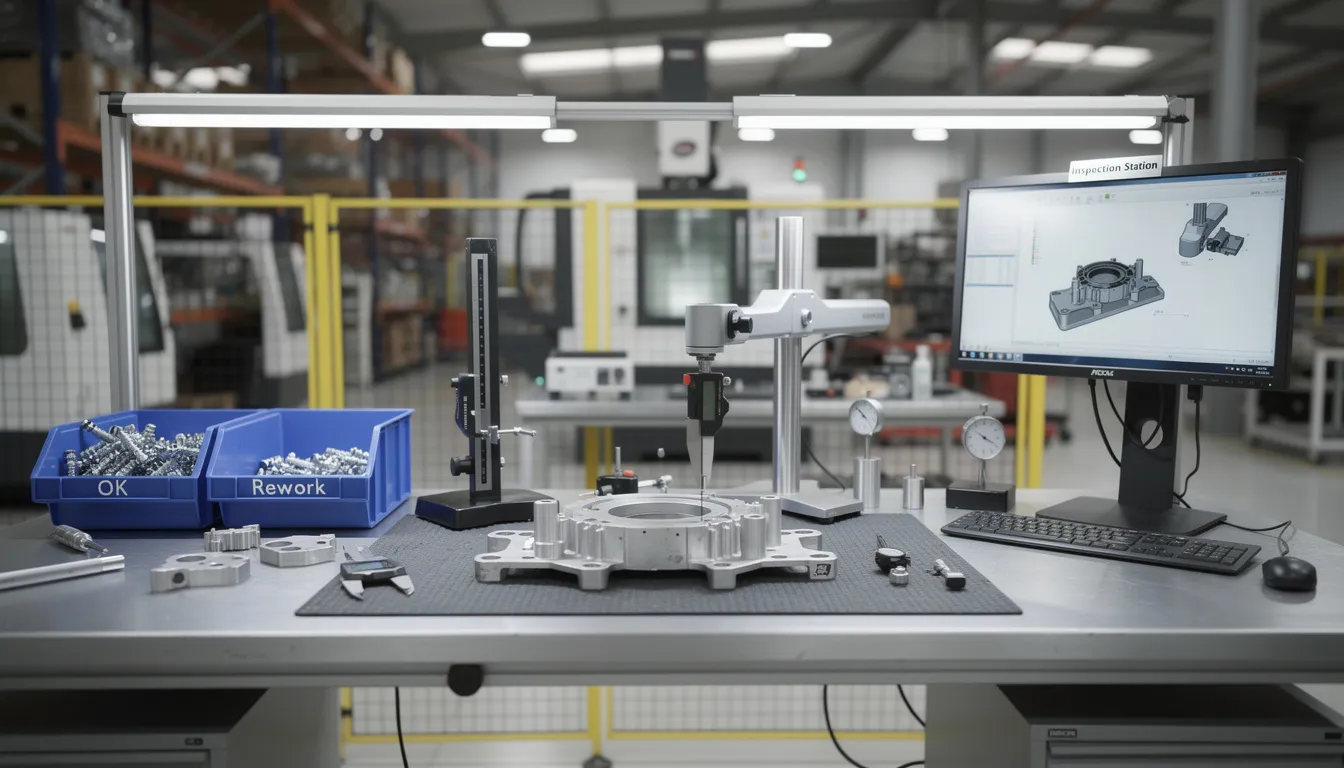
    An aerospace technician is meticulously inspecting an aircraft wing component, ensuring compliance with quality management systems and safety standards in the aerospace industry. This detailed examination plays a critical role in identifying any non conformances to maintain high product quality and operational excellence.

    Regulatory and Standards Requirements for Aerospace Nonconformance

    Aerospace nonconformance control operates under multiple regulatory layers. International standards, aviation authorities, prime contractor specifications, and customer contracts all impose requirements that quality teams must satisfy simultaneously. Understanding these layers is essential for maintaining compliance across programs and customers.

    AS9100D Requirements

    AS9100D (2016 revision) provides the quality management system foundation for aerospace organizations. Clause 8.7 specifically addresses control of nonconforming outputs, requiring:

    • Identification through tags, labels, or electronic flags
    • Segregation in quarantine areas to prevent unintended use
    • Disposition evaluation with documented rationale
    • Approval authority for use-as-is, rework, or repair decisions
    • Records retention for double the part life or 20 years, whichever is longer

    Clause 10.2 links nonconformity management to corrective action, requiring organizations to react to nonconformances, evaluate the need for action to eliminate root causes, implement actions, review effectiveness, and update risks and opportunities as needed.

    FAA and EASA Expectations

    FAA requirements under 14 CFR Part 21 mandate that design and production organizations identify, document, and disposition nonconforming outputs to prevent unintended use. Part 145 repair stations must ensure airworthy releases via Form 8130-3, with clear processes for handling nonconforming material discovered during maintenance.

    EASA Part 21 Subpart G and Part 145 require equivalent controls, including segregation and Material Review Board (MRB) evaluation. Concessions affecting type design require DOA/DER approvals, adding complexity when dispositioning nonconformances on certified products.

    OEM-Specific Requirements

    Primes layer additional requirements through supplier quality documents:

    • Boeing D6-82479 requires NCRs within 24 hours for Tier 1 suppliers
    • Airbus GRAMS mandates FAI NCRs with 3D scan data
    • Rolls-Royce SABRe uses risk-based classification tied to engine health monitoring

    These requirements flow down through supply chain contracts, creating a web of obligations that suppliers must track and satisfy.

    Documentation and Traceability

    Regulatory compliance demands robust traceability. Serial and lot tracking per AS9100 clause 8.5.4 must connect parts to their manufacturing records. Digital signatures must meet standards equivalent to 21 CFR Part 11. Configuration baselines must align with Illustrated Parts Catalogs (IPCs). Critical structure records like engine disks require retention beyond 10 years.

    Post-2020 FAA and EASA audits flagged paper NCRs in 40% of findings across supply chains. This trend drives digital mandates, as reflected in FAA Order 8120.22 for production approval holders. Primes now audit for integrated QMS/MES/PLM linkages, rejecting siloed Excel tracking as insufficient for regulatory requirements.

    Core Aerospace NCR Workflow: From Detection to Disposition

    A clear, repeatable NCR workflow ensures that nonconformances are captured, evaluated, and resolved with full traceability. The process varies by organization but follows a consistent structure across aerospace manufacturing and MRO operations.

    Detection and Initiation

    Nonconformances surface at multiple points:

    • CMM inspection revealing turbine blade airfoil deviations during FAI
    • NDT ultrasonic testing identifying subsurface indications on landing gear struts
    • Borescope inspection finding erosion beyond limits during heavy maintenance
    • Receiving inspection detecting dimensional nonconformances on incoming forgings
    • Assembly line operators identifying fit issues during installation

    Certified inspectors, operators, or field service representatives can initiate NCRs. The key is ensuring that anyone who identifies a potential nonconformance has a clear path to document it without barriers.

    Documentation Requirements

    An aerospace NCR must capture sufficient detail for evaluation and future reference:

    • Part number, serial number, and lot number
    • Aircraft tail number (for MRO applications)
    • Drawing number and revision level
    • Specification limits and measured results (e.g., “0.005 inch oversize hole”)
    • Photos, NDT reports, and other objective evidence
    • Reference to traveler, route card, or work order step
    • Date, time, and initiator identification

    This structured documentation supports both immediate disposition decisions and long-term trend analysis.

    Containment and Segregation

    Once an NCR is opened, containment prevents the nonconforming item from progressing:

    • Physical red-tags placed on parts
    • Movement to quarantine cages or designated hold areas
    • Electronic holds in ERP blocking MES routing and shipment
    • Notification to downstream operations and MRB members
    • Work order holds preventing installation on other assemblies

    Electronic systems can auto-notify MRB members and trigger containment actions simultaneously, reducing response time compared to paper-based processes.

    Evaluation and Classification

    MRB evaluation classifies the nonconformance based on impact:

    • Minor: Cosmetic issues with no effect on fit, function, or safety
    • Major: Affects fit or function but manageable through disposition, no immediate safety impact
    • Critical: Safety of flight consideration, requires immediate regulatory notification

    Critical nonconformances involving airworthiness must be escalated to FAA or EASA within prescribed timeframes. Classification drives the rigor of the disposition process and the level of approval authority required.

    Disposition Options

    Aerospace MRBs typically select from these disposition categories:

    Disposition

    Description

    When Used

    Scrap

    Destroy and recycle material

    Uneconomic to repair or safety risk precludes rework

    Rework

    Bring part back to drawing requirements

    Feasible within process capability and cost constraints

    Repair

    Accept with approved engineering instruction

    Cannot achieve original spec but meets functional requirements

    Use-as-is

    Accept via concession or deviation

    Customer/DER approved, no safety impact

    Return to vendor

    Send back to supplier

    Supplier-caused defect, warranty claim

    Downgrade

    Use in non-flight application

    Part acceptable for ground support or spares

    Each disposition requires appropriate approval authority. Scrap decisions on critical components often require design authority concurrence. Use-as-is dispositions affecting type design need DER/DOA involvement.

    Verification and Closure

    Final steps ensure the nonconformance is fully resolved:

    • Re-inspection confirms rework or repair meets requirements
    • Updated routing reflects disposition actions
    • Configuration records updated for aircraft or assembly
    • Final digital sign-off with time/date stamps
    • Effectiveness check scheduled if linked to CAPA

    Complete closure creates an audit-ready record demonstrating that the nonconformance was effectively managed.

    Nonconformance vs Deviation, Concession, and Scrap in Aerospace

    Aerospace teams must clearly distinguish between related but distinct terms. Audit findings frequently cite improper classification, and operational confusion can lead to safety risks or regulatory violations.

    Nonconformance Defined

    A nonconformance is an unplanned failure to meet drawing, specification, or contract requirements. Examples include:

    • Holes drilled oversize in a 737 fuselage panel, risking corrosion propagation
    • Surface roughness exceeding callout on a hydraulic cylinder bore
    • Incorrect heat treatment on a landing gear component
    • Missing NDT inspection on a critical weld

    The defining characteristic is that the condition was not planned or anticipated. Something went wrong during production or maintenance.

    Deviation and Concession

    A deviation or concession represents a planned or accepted departure from requirements, approved before use or continued work. For example:

    • Substituting 7075 aluminum for 2024 on a test fixture with OEM waiver limiting cycles
    • Accepting a cosmetic surface condition outside normal limits for a prototype
    • Using an alternative fastener per engineering evaluation

    Concessions typically document the technical rationale, limitations on use, and any follow-up actions required. They represent controlled risk acceptance, not quality escapes.

    Scrap Criteria

    Scrap is the appropriate disposition when a part cannot be economically or safely reworked or repaired. Criteria often include:

    • Rotating engine parts with material inclusions per OEM specifications
    • Structural components with cracks exceeding blend limits
    • Parts where rework would compromise fatigue life or damage tolerance
    • Material contamination that cannot be removed

    Safety-critical components like titanium fan blades with inclusions typically mandate scrap and material recycling. The cost of scrap is significant, but the alternative risks far outweigh material losses.

    Relationship Between NCRs and Concessions

    An NCR typically captures the issue. A separate deviation or concession record documents the decision to use-as-is or repair under specific limits. The NCR remains part of the quality record, linked to the concession that authorized continued use.

    Mislabeling creates risks. Treating a nonconformance as a deviation after the fact bypasses proper root cause analysis and corrective action requirements under AS9100. Using concessions as shortcuts to avoid RCA leads to recurring issues. The Spirit AeroSystems 787 shim problems, which triggered FAA special audits, illustrate how such shortcuts compound over time.

    Root Cause Analysis and CAPA Integration for Aerospace NCRs

    NCR data becomes valuable when it drives improvement. Aerospace quality management systems under AS9100 require rigorous root cause analysis and linkage to corrective and preventive actions. This integration distinguishes mature organizations from those simply processing paperwork.

    Common RCA Tools

    Aerospace organizations deploy several root cause analysis methods depending on the complexity of the nonconformance:

    5 Whys: Sequential questioning to reach underlying factors. For example, peeling rivets trace to operator error, then to training gap, then to absence of refresher training program.

    Ishikawa Diagrams: Fishbone analysis examining man, method, machine, material, measurement, and environment factors for issues like rivet line misalignment.

    Fault Tree Analysis: Logical decomposition for complex failures like avionics intermittents or hydraulic system anomalies.

    FMEA: Failure Mode and Effects Analysis for recurring assembly defects on programs like A220 or Embraer E2, predicting risk priority numbers.

    Cross-Functional Investigation

    Effective RCA requires input beyond the quality control department:

    • Quality engineers lead documentation and process
    • Manufacturing engineering evaluates process capability
    • Design engineering assesses specification adequacy
    • Supply chain investigates vendor-related causes
    • MRO line leads provide in-service failure context
    • Customer representatives participate when required by contract

    This cross-functional approach prevents narrow conclusions that miss systemic issues.

    Translating RCA to CAPA

    RCA outcomes must drive concrete corrective and preventive actions:

    • Process FMEAs revised to reflect new risk understanding
    • Digital work instructions updated in MES with specific guidance
    • Poke-yoke tooling added to prevent recurrence
    • Supplier corrective action requests (SCARs) issued with 30-day closure targets
    • Training modules deployed addressing identified gaps

    The goal is eliminating the root cause, not just addressing the symptom.

    Traceability Requirements

    Auditors expect clear linkage between NCR, RCA, and CAPA records:

    • Unique IDs connecting related documents
    • Hyperlinks in digital systems enabling direct navigation
    • Evidence of effectiveness checks after 3–6 months
    • Closure verification demonstrating sustained improvement

    Example: Composite Layup CAPA

    In 2023, a supplier supporting A220 production experienced repeated nonconformances on composite plies. Using 8D methodology, the cross-functional team traced the issue to cure cycle variations. The CAPA introduced automated ply counters and temperature profiling during cure. The result was a 65% reduction in defect rates per internal metrics.

    Primes and authorities review this NCR-RCA-CAPA chain to assess quality management system maturity. Boeing’s QPM scoring, for instance, evaluates suppliers on their ability to demonstrate this closed-loop process.

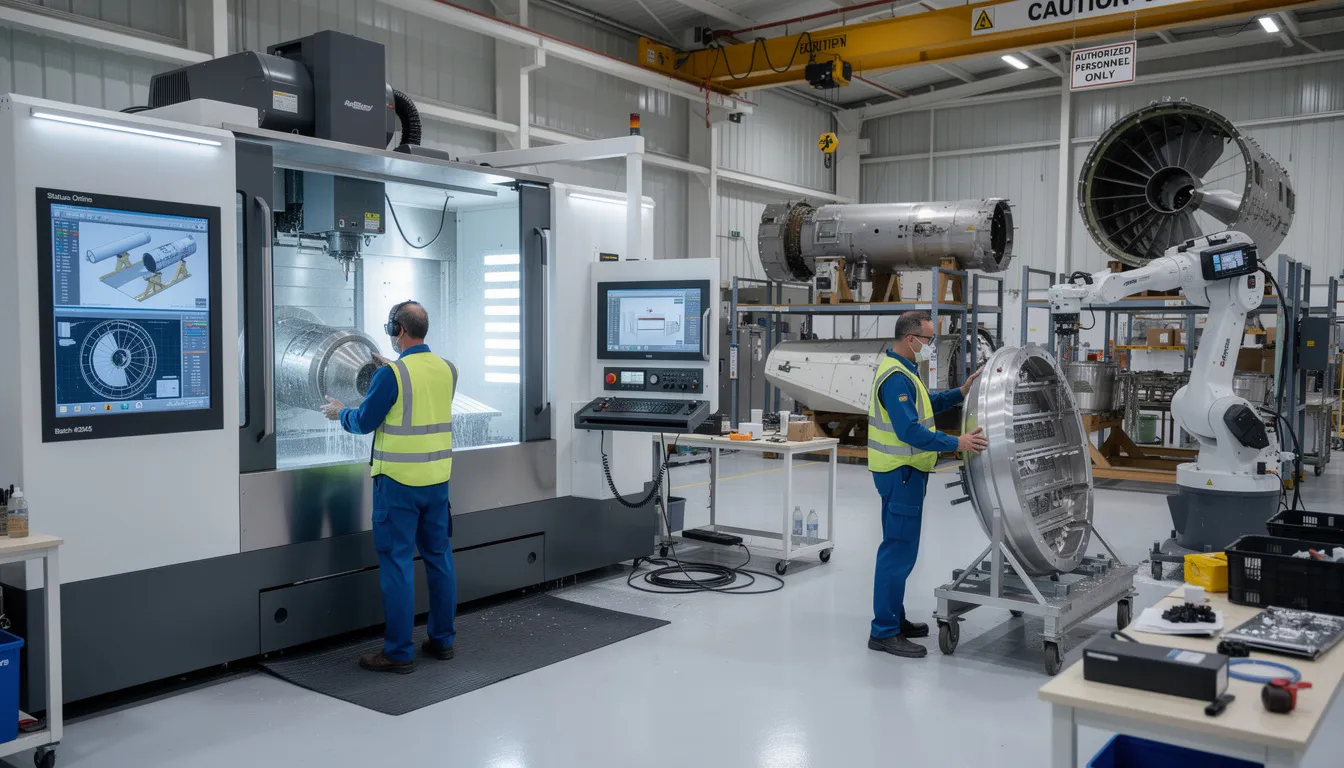
    The image depicts a busy manufacturing floor in the aerospace industry, where workers are engaged in quality inspection of composite parts, ensuring adherence to quality management systems and regulatory compliance. The scene highlights the importance of operational excellence and continuous improvement initiatives in maintaining high-quality outcomes and addressing any non-conformance issues.

    Digital Nonconformance Systems and Connected Aerospace Operations

    The shift from paper travelers and email-based MRB logs to integrated digital NCR workflows accelerated dramatically after 2020. Remote audits, global supply disruptions, and increased regulatory scrutiny exposed the limitations of manual processes.

    Core Capabilities of Modern Systems

    Aerospace digital NCR systems must deliver:

    • Electronic forms with validation and required fields
    • Role-based approval workflows matching MRB authority structures
    • Attachment of CMM data, NDT reports, and photos
    • Automatic notifications to stakeholders
    • Integration with ERP for inventory holds
    • Integration with MES for work order routing
    • Integration with PLM for configuration management
    • Audit trail with digital signatures and timestamps

    These capabilities replace fragmented spreadsheets and email chains with structured, auditable workflows.

    Connect981 as a Unified Operations Layer

    Connect981 serves as an aerospace-native platform connecting NCRs to related operational data. The platform links nonconformance management to digital work instructions, supplier data, serial and lot traceability, and shopfloor execution records across OEM and MRO environments.

    This integration means that when an NCR is opened, relevant context is immediately available: the work instruction revision in use, the operator who performed the task, the incoming inspection results for materials, and the configuration baseline for the assembly.

    Multi-Site and Multi-Supplier Visibility

    Large aerospace programs require standardization across facilities and suppliers. Connect981 enables:

    • Standardized NCR templates used across different plants
    • Shared dashboards showing trends by program, part family, or supplier
    • Tier 2 and Tier 3 suppliers using consistent processes
    • Real-time visibility for program quality managers

    This visibility supports early detection of emerging issues before they propagate through the supply chain.

    Zero and Low-Code Workflow Configuration

    Traditional MES implementations require extensive IT involvement to model approval workflows. Connect981’s zero and low-code tools allow quality and manufacturing engineers to configure complex MRB and concession approval routes without heavy IT projects.

    This flexibility matters because NCR workflows vary by program, customer, and part criticality. A concession on a flight-critical structure requires different approvals than a cosmetic deviation on a ground support component.

    AI-Assisted Analytics

    Historical NCR and process data enable predictive capabilities:

    • Identifying likely root causes based on similar past nonconformances
    • Flagging high-risk work orders before issues reach final assembly
    • Suggesting investigation paths for manufacturing engineers
    • Detecting emerging supplier trends before they trigger production impacts

    These capabilities move quality management from reactive to proactive.

    MRO Deployment Example

    A 2025 MRO deployment illustrates the operational impact. The organization used Connect981 to cut NCR processing time from days to hours by automating routing between hangar technicians, engineering disposition, and customer representatives. This speed prevented AOG events on 787 engine maintenance and improved customer satisfaction through faster turnaround.

    Quest Global’s implementation of Connect981’s root cause and corrective action workflows yielded 3x build rates and $10 million in annual savings, demonstrating that digital transformation in quality management delivers measurable operational efficiency gains.

    Supplier NCR Management and Multi-Tier Aerospace Supply Chains

    Large aerospace programs depend on extensive supplier networks. The A320neo program involves over 2,000 vendors. A single supplier nonconformance can ground aircraft or stall final assembly lines. Managing supplier quality issues requires structured processes and clear information flow.

    OEM and Tier 1 Supplier NCR Management

    When nonconformances trace to supplier-provided material or components, OEMs and Tier 1s typically:

    • Raise a supplier NCR documenting the defect
    • Issue a Supplier Corrective Action Request (SCAR)
    • Require stock sweeps to contain suspect material
    • Demand root cause analysis with specified due dates
    • Track cost recovery through chargebacks

    Critical part nonconformances can trigger chargebacks exceeding $100,000, creating significant financial incentive for supplier quality performance.

    Information Flow Requirements

    Effective supplier NCR management requires clear data exchange:

    Information Element

    Direction

    Purpose

    Defect details and photos

    Buyer to supplier

    Define the issue clearly

    Suspected root cause

    Supplier to buyer

    Demonstrate investigation

    Containment actions

    Supplier to buyer

    Show immediate response

    Stock sweep results

    Supplier to buyer

    Confirm scope of problem

    Corrective action plan

    Supplier to buyer

    Define permanent fix

    Effectiveness evidence

    Supplier to buyer

    Prove sustained improvement

    Fragmented Systems Challenge

    The reality across aerospace supply chains is system fragmentation. OEMs use SAP or Oracle ERP with custom QMS modules. Tier 1 suppliers might use different ERP systems. Tier 2 and Tier 3 suppliers often rely on spreadsheets or basic quality databases.

    This fragmentation delays NCR resolution by 2–4x compared to integrated approaches. Data re-entry introduces errors. Audit trails become difficult to reconstruct.

    Connect981 Supplier Integration

    Connect981’s supplier integration capabilities create a shared layer where suppliers can receive, respond to, and close NCR-related actions without needing access to the OEM’s core ERP. This approach:

    • Standardizes NCR and SCAR templates across the supply chain
    • Provides suppliers with clear task lists and due dates
    • Captures responses and evidence in a single system of record
    • Generates audit-ready reports for AS9100 or customer reviews

    A 2024 case demonstrated the impact: a precision machining supplier’s recurring dimensional nonconformances dropped 50% after implementing standardized digital NCR and SCAR workflows. The key was visibility into trends and accountability for closure.

    Audit and Compliance Benefits

    Digital supplier NCR management provides clear trails showing:

    • When suppliers were notified of nonconformances
    • How suppliers responded and what actions they took
    • Evidence that effectiveness checks were completed
    • Trend data supporting supplier performance ratings

    Auditors reviewing the supply chain look for this documentation. Organizations that can demonstrate robust quality management systems for supplier oversight consistently achieve better audit results.

    Cost, Scrap, and Rework Impact of Aerospace Nonconformances

    Nonconformances carry significant financial consequences. Understanding these costs drives investment in prevention and enables informed disposition decisions.

    Direct Cost Categories

    Cost Element

    Typical Range

    Notes

    Scrap (titanium bulkhead)

    $50K–$200K

    Material cost plus machining investment

    Rework labor

    100–500 hours at $150/hr burdened

    Depends on complexity

    MRB evaluation

    20–40 hours per meeting

    Engineering and quality time

    Takt time disruption

    $1M+/day on programs like F-35

    Line stoppages cascade

    AOG events

    $20K/hr for widebodies

    Airline operational impact

    Customer penalties

    1–5% contract value

    Delivery delay liquidated damages

    Industry Examples

    The 2023–2024 fan case supply chain constraints illustrate systemic cost impact. Delivery delays on these critical engine components cost the aerospace industry an estimated $500 million industry-wide, with production rates constrained well below demand.

    Suppliers with high nonconformance rates experience cost of poor quality (COPQ) reaching 15–25% of revenue. This includes not just direct scrap and rework but also expediting costs, inspection overhead, and customer management burden.

    Using NCR Data for COPQ Analysis

    Digital NCR systems enable organizations to calculate COPQ by program and supplier:

    • Aggregate scrap and rework costs by part number
    • Identify suppliers driving disproportionate quality costs
    • Quantify the return on process improvement investments
    • Prioritize where to deploy automation or additional inspection

    Indirect Impacts

    Beyond direct costs, nonconformances create indirect financial exposure:

    • Missed slots on final assembly lines requiring schedule rework
    • Airline AOG events driving MRO nonconformances
    • Reputational damage leading to increased oversight and audit frequency
    • Loss of future contract opportunities

    Digital Platforms Reduce Costs

    Connect981 reduces nonconformance costs through several mechanisms:

    • Shortening NCR cycle time by 50–80%
    • Preventing repeat defects through better RCA visibility
    • Enabling early detection through real-time dashboards
    • Linking NCR trends to WIP data for predictive intervention

    A 2024 deployment demonstrated the impact: an aerospace manufacturer reduced scrap rates on composite panels by 35% after implementing standardized digital NCR workflows and visual dashboards. The visibility enabled manufacturing engineering to identify process drift before it generated scrap.

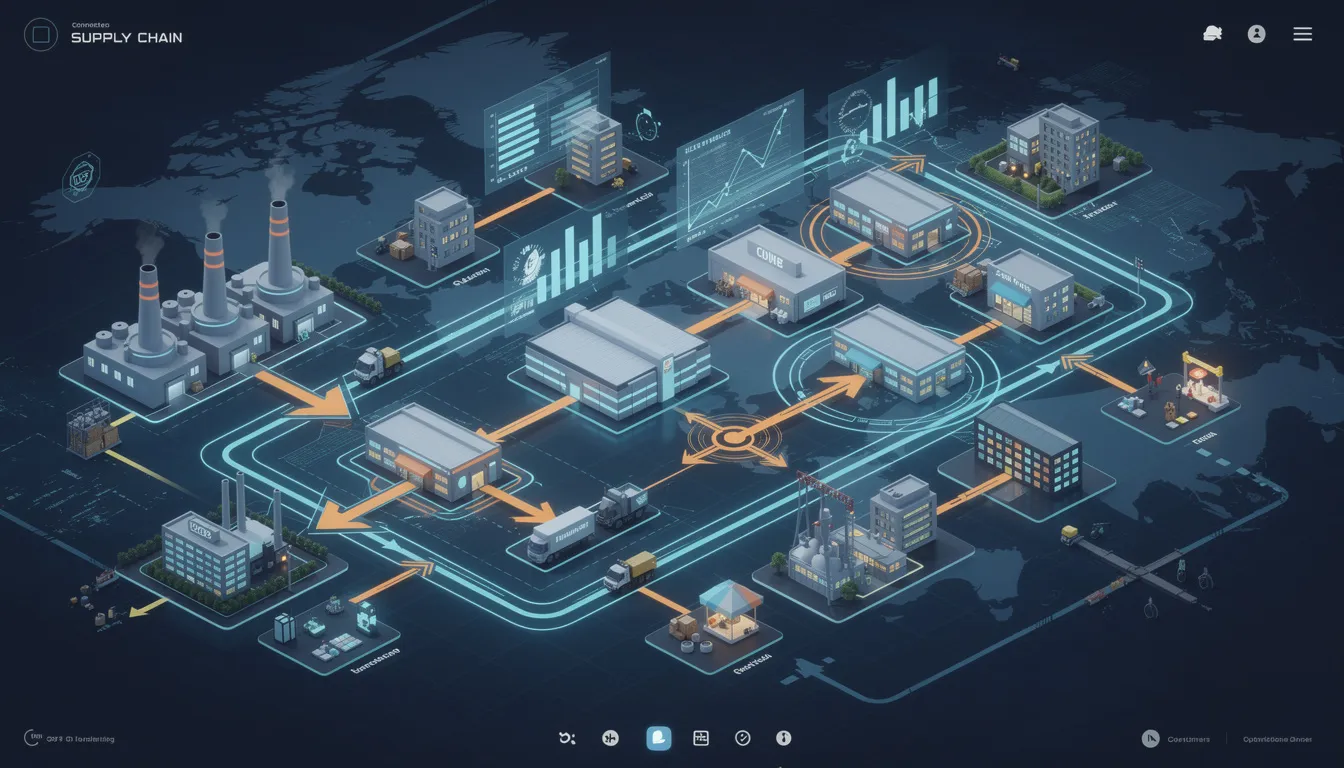
    The image depicts a modern aerospace manufacturing facility featuring digital displays that showcase production metrics, emphasizing operational efficiency and quality management systems. This environment reflects the aerospace industry's commitment to continuous improvement and regulatory compliance through innovative solutions and robust quality control measures.

    Future of Nonconformance Management in Aerospace

    Through 2030, nonconformance management will evolve significantly as digital transformation reshapes aerospace operations.

    Industry 4.0 Integration

    The “digital thread” connecting design, production, and MRO data will mature. Model-based definition (MBD) will enable simulation of tolerance stack-ups before manufacturing, predicting potential nonconformances during design. Digital twins will track actual versus designed configurations throughout product life. Digital product passports will provide lifecycle configuration visibility for major assemblies.

    Aviation Authority Expectations

    Regulators will continue tightening oversight of digital quality systems. FAA’s 2025+ digital mandates will require production approval holders to demonstrate integrated, auditable NCR workflows. Paper-based systems will increasingly fail to meet regulatory requirements for traceability and configuration control.

    AI and Predictive Analytics

    Machine learning applied to historical NCR, process, and sensor data will flag at-risk operations before visible nonconformances emerge. Early implementations show 80% accuracy in predicting certain defect types like alloy mix-ups. Complex assemblies and engines, where the cost of nonconformance is highest, will see the greatest investment in predictive capabilities.

    Space Technology and Defense Systems

    Emerging programs in space technology and defense systems will demand even more rigorous nonconformance management. These applications combine the quality standards of commercial aerospace with additional security and performance requirements, making integrated digital workflows essential.

    Connect981’s Role

    Connect981 positions aerospace organizations for this future as a configurable, aerospace-specific platform that links NCRs, CAPA, production data, and supplier information into a single operational view. The platform’s zero and low-code flexibility allows organizations to adapt workflows as requirements evolve without waiting for custom development.

    Organizations that invest now in digital nonconformance management build the foundation for continuous improvement and operational excellence as the industry advances toward fully connected operations.

    For quality leaders, operations managers, and MRO directors ready to transform their nonconformance management, Connect981 offers a practical path forward. The platform delivers aerospace-native NCR workflows, supplier integration, and analytics without the complexity of traditional MES replacements.

    Request a Connect981 demo to see digital NCR workflows in action and explore how your organization can reduce cycle time, prevent repeat defects, and satisfy regulatory requirements with a unified operations layer built for aerospace realities.

  • What non-conformance records are commonly reviewed during FAA or EASA audits?

    Commonly, auditors review non-conformance records that show how your organization detects, contains, evaluates, disposes, implements, and closes quality issues with full traceability. They are usually not looking at NCRs in isolation. They often follow the record into the surrounding evidence trail.

    The exact sample depends on the audit scope, the type of approval or oversight involved, product criticality, recent escapes or enforcement history, supplier risk, and whether the organization is manufacturing, repair, overhaul, or mixed operation. So there is no universal fixed list. In practice, the records most often reviewed include:

    • Product non-conformance reports with potential airworthiness or conformity impact, especially those tied to dimensional misses, material discrepancies, process deviations, documentation gaps, or configuration mismatches.

    • Open and recently closed NCRs, to assess timeliness, aging, interim containment, and whether closure was supported by objective evidence rather than administrative completion.

    • Recurring or trend-related NCRs, where auditors may test whether repeated defects were escalated appropriately and linked to corrective action.

    • NCRs involving critical characteristics, key process controls, or special processes, because these often carry higher traceability and validation expectations.

    • MRB dispositions and approval records, including use-as-is, repair, rework, or scrap decisions, with evidence that authority, rationale, and downstream actions were controlled.

    • Rework and repair records, including the approved instructions used, revision status, operator qualifications where applicable, inspection results, and final acceptance evidence.

    • Deviation, concession, or waiver-related records, where allowed by the organization and customer framework, especially if they affect delivered hardware or documentation.

    • Supplier non-conformance records, including incoming inspection rejects, supplier corrective actions, containment of suspect stock, and whether affected work orders, lots, or serial numbers were identified.

    • Escape and containment records, especially where nonconforming material moved to downstream operations, to customers, or into service-related channels before detection.

    • Scrap records tied to NCRs, to confirm physical segregation, disposition control, and reconciliation between quality records and inventory or MES/ERP status.

    • Linked CAPA or root cause records, if the issue met the organization’s escalation threshold for systemic investigation.

    • Training, document change, or process change records linked to the NCR, when the corrective response required updated instructions, retraining, or revised controls.

    What auditors usually test inside those records

    • Clear identification of the nonconformance, affected part, lot, serial, batch, or work order

    • Date, source of detection, and who initiated the record

    • Containment actions and segregation status

    • Impact assessment, including whether other product may be affected

    • Disposition decision, approval path, and technical rationale

    • Execution evidence for rework, repair, or scrap

    • Verification or reinspection results after disposition

    • Closure evidence and, where required by procedure, effectiveness follow-up

    • Consistency across NCR, traveler, inspection records, DHR, ERP inventory status, and shipment history

    What gets organizations into trouble

    The most common problems are not usually missing forms. They are broken evidence chains. Examples include NCRs closed before reinspection was complete, dispositions that do not match the work actually performed, serial or lot traceability gaps, rework instructions used without clear revision control, supplier issues not linked to affected product, and CAPA decisions that are inconsistent with repeat findings.

    Another common issue in brownfield environments is record fragmentation. The NCR may exist in a QMS, the disposition in email or a spreadsheet, rework execution in paper travelers, training in a separate LMS, and inventory status in ERP. That can still be workable, but only if the links are reliable, timestamps are preserved, approvals are controlled, and users can retrieve the full history quickly during an audit. If integration is weak, auditors and internal teams may see conflicting statuses or incomplete closure evidence.

    That is also why full system replacement is often a poor near-term strategy in regulated, long-lifecycle environments. Replacing QMS, MES, ERP, or DHR workflows all at once can create validation burden, downtime risk, retraining overhead, and new traceability gaps during transition. In many plants, strengthening evidence linkage across existing systems is more realistic than attempting a clean replacement.

    Bottom line

    Auditors commonly review NCRs that are high risk, recent, recurring, supplier-related, disposition-heavy, or linked to escaped product. They also tend to follow those NCRs into MRB, CAPA, training, document control, traceability, and shipment records. The question is usually less “Do you have an NCR form?” and more “Can you prove the nonconformance was controlled correctly from detection through final resolution?”

  • How do we manage NCM differently for serialized versus lot-controlled parts?

    You do not manage them the same way in practice, even if the NCR workflow and approval steps look similar on paper.

    For serialized parts, NCM is usually handled at the individual unit level because each item has its own identity, history, and status. For lot-controlled parts, NCM is usually handled at the lot, batch, or sub-lot level unless you can prove which specific units are affected and which are not.

    In practice, this connects to non-conformance management when teams need to turn the answer into repeatable execution habits.

    What changes between serialized and lot-controlled parts

    • Containment scope: Serialized parts let you quarantine exact serial numbers. Lot-controlled parts often require holding the full lot, or a broader suspect population, until impact is understood.

    • Traceability basis: Serialized parts rely on unit history. Lot-controlled parts rely on lot genealogy, material segmentation, process step records, and sampling rationale.

    • Disposition precision: Serialized parts can be reworked, scrapped, accepted under deviation, or returned individually. Lot-controlled parts may need lot split, regrade, additional inspection, rework of the full lot, or partial scrap if segregation is defensible.

    • Risk of escape: For lot-controlled parts, the main risk is false segregation. If your records cannot prove separation, narrowing the affected population may not be credible.

    • Evidence burden: Serialized parts usually need unit-specific evidence. Lot-controlled parts need evidence that the lot definition, sampling approach, and segregation logic are valid and consistently executed.

    Serialized parts

    For serialized items, the normal expectation is to preserve a complete chain from the nonconformance to the exact affected serial numbers, their current location, prior operations, components, inspections, and any downstream assemblies they entered.

    In practice, that usually means:

    • place the affected serial numbers on hold immediately

    • prevent further movement, consumption, shipment, or installation of those units

    • record defect details against each serial number or against a common NCR linked to all affected serials

    • capture disposition by serial number if outcomes differ between units

    • maintain as-reworked or as-scrapped history without overwriting the original event

    • check upward and downward genealogy if the part is already consumed into a higher assembly

    The benefit is precision. The tradeoff is administrative load and system discipline. If operators can bypass scans, if serial numbers are reused or mislabeled, or if MES and ERP status are not synchronized, serialized control can look strong while still producing gaps.

    Lot-controlled parts

    For lot-controlled material, the first question is not just what is nonconforming, but what population is credibly suspect.

    That usually means you need to determine:

    • the exact lot or batch definition in use at the time

    • whether the issue is uniform across the lot or limited to a time window, machine state, cavity, tool, operator, or incoming material segment

    • whether the lot was ever split, merged, repacked, relabeled, or partially consumed

    • whether downstream genealogy can identify where the affected lot was used

    If you cannot answer those questions reliably, the conservative path is often to hold the entire lot and any downstream material produced from it. That is operationally expensive, but narrower containment without supporting evidence creates obvious traceability and audit problems.

    Lot-controlled NCM often requires extra decisions that serialized flow does not, including:

    • whether to create sub-lots after investigation

    • whether additional inspection can separate conforming from nonconforming material

    • whether a statistically based release is actually appropriate for the defect mode

    • whether rework changes lot identity, status, or documentation requirements

    A common failure mode is using sampling logic to justify release when the defect mechanism is not random. If the issue is tied to a specific machine condition, setup state, heat lot, or process excursion, sampling may not protect you.

    System and data implications

    The process difference is not only procedural. It is also a data-model difference.

    Serialized NCM works best when your systems can track individual-unit status and genealogy across receiving, production, inspection, rework, inventory, and shipment. Lot-controlled NCM depends more heavily on accurate lot definitions, split and merge controls, quantity integrity, and consumption genealogy.

    In brownfield plants, this usually spans multiple systems. A QMS may own the NCR, ERP may own inventory status, MES may own execution history, and spreadsheets may still be used for segregation or rework queues. That coexistence can work, but only if status changes, identifiers, and timestamps stay aligned. If they do not, investigators end up reconciling records manually, which slows containment and weakens evidence.

    That is one reason full replacement programs often struggle in regulated environments. Rebuilding serialization, lot genealogy, dispositions, and evidence trails across MES, ERP, PLM, and QMS is not just an IT exercise. It carries validation effort, downtime risk, retraining burden, and requalification implications that many plants underestimate.

    Practical policy difference

    A workable rule is:

    • Serialized: contain, investigate, disposition, and release by individual serial number whenever the unit identity is maintained.

    • Lot-controlled: contain and investigate by suspect population first, then narrow to sub-lot or unit level only if your records and physical segregation controls can support that decision.

    If your site cannot reliably prove segregation, do not assume you can manage lot-controlled material with serial-like precision.

    So the answer is yes: NCM should be managed differently for serialized versus lot-controlled parts, mainly in containment scope, evidence model, disposition granularity, and genealogy expectations. The underlying workflow may be shared, but the traceability logic is not.

  • Does AS9100 mandate specific NCR forms or software tools?

    No. AS9100 does not mandate a specific NCR form, template, or software tool.

    It requires that nonconformities be controlled through a defined process and that records are maintained appropriately. In practice, auditors and customers usually care far more about process discipline, traceability, approvals, record control, and evidence of disposition and follow-up than about whether you use paper, ERP, QMS software, MES, or a standalone NCR application.

    In practice, this connects to non-conformance management when teams need to turn the answer into repeatable execution habits.

    What AS9100 typically expects in practice

    Your NCR process usually needs to support the following, whether managed manually or digitally:

    • clear identification of the nonconformance
    • containment and segregation, where applicable
    • disposition decisions and authority
    • traceability to part, lot, serial, order, operation, supplier, or job context as needed
    • review and approval records
    • links to corrective action when required
    • record retention and revision control

    If your form or system cannot support those basics reliably, the issue is not that it is the wrong brand or format. The issue is that the process and records may be inadequate.

    Paper, spreadsheet, or software?

    Any of them can be workable in some environments. None is automatically acceptable.

    A paper form may be sufficient in a smaller or lower-volume setting if document control is strong and retrieval is manageable. A spreadsheet may work temporarily, but often becomes weak on approvals, audit trail, access control, version control, and linkage to disposition, CAPA, or genealogy records. Dedicated software can improve control and visibility, but only if it is configured correctly, validated where required by your procedures, and integrated well enough that users do not create side systems outside control.

    Brownfield reality

    In regulated aerospace and similar environments, replacing existing quality and manufacturing systems just to standardize NCR handling is often a poor strategy. Full replacement frequently fails because of qualification burden, validation cost, downtime risk, integration complexity, entrenched ERP or MES dependencies, and long equipment and system lifecycles.

    More often, plants keep existing ERP, MES, QMS, PLM, and document control systems and improve the NCR workflow around them. That can mean adding a focused NCR tool, extending the current QMS, or digitizing only the approval and traceability steps first. The tradeoff is that coexistence creates interface and master data risks, so ownership of record, synchronization rules, and change control need to be explicit.

    What usually matters more than the form or tool

    • Who can create, review, and approve NCRs
    • How dispositions are controlled and authorized
    • Whether affected inventory or WIP can be identified and contained
    • How NCRs connect to MRB, deviations, concessions, supplier issues, and CAPA where applicable
    • Whether records are complete, legible, retrievable, and protected from uncontrolled change
    • Whether the system supports your actual workflow instead of forcing off-system workarounds

    So the short answer is no, AS9100 does not require a specific NCR form or software package. It does require a controlled, effective, and auditable nonconformance process. Whether your current approach meets that bar depends on your procedures, system design, data discipline, and how well the process holds up under real operational conditions.

  • How long should an NCR stay open before escalation in aerospace environments?

    There is no single fixed number of days that is correct for every aerospace NCR. The escalation point should be defined by your quality system, product risk, contractual obligations, and the operational impact of leaving the NCR open.

    In practice, an NCR should escalate when it is open long enough to create unmanaged risk, delay disposition, weaken traceability, or allow recurrence without effective containment. For aerospace environments, that often means using tiered aging rules rather than one blanket deadline.

    In practice, this connects to non-conformance management when teams need to turn the answer into repeatable execution habits.

    What usually drives escalation

    • Severity and criticality: Potential airworthiness impact, flight safety relevance, special process exposure, escaped nonconformance, and configuration impact should escalate faster than routine workmanship issues.

    • Containment status: If suspect material is not fully identified, segregated, and controlled, escalation should happen quickly regardless of NCR age.

    • Production impact: Line stoppage, blocked assemblies, shortage creation, or repeated use-as-is decisions are signs the issue should not sit in a queue.

    • Recurrence: Repeated NCRs on the same part, process, tool, supplier, or failure mode usually warrant earlier management review.

    • Disposition path: Cases needing MRB, engineering review, customer approval, supplier response, or concession workflows often take longer, but that is not a reason to leave them unmanaged. Aging controls still need checkpoints.

    • Customer and internal requirements: Some programs, contracts, or internal procedures define explicit response and closure windows. Those must govern if they exist.

    A practical approach

    A common approach is to set formal review thresholds such as:

    • initial review within 24 to 72 hours for triage, containment, and ownership

    • management visibility after a defined aging point such as 7, 14, or 30 days depending on risk class

    • senior quality or operations escalation for overdue disposition, blocked material, repeat events, or customer-impacting issues

    That does not mean every NCR should close in a week. Some aerospace NCRs legitimately remain open longer because root cause work, engineering assessment, supplier investigation, or approval workflows take time. The control point is not just total age. It is whether the record shows timely containment, clear ownership, documented status, and justified delay.

    What should not happen

    An NCR should not remain open indefinitely because the plant is busy, the responsible function is unclear, or the disposition process is fragmented across QMS, ERP, MES, PLM, and email. In brownfield environments, this is common. Open NCR aging often reflects system handoff failures as much as product quality issues.

    If your process spans multiple systems, escalation rules should account for that reality. For example, an NCR may be created in QMS, tied to hold status in ERP, linked to genealogy or traveler data in MES, and require engineering action from PLM or a separate workflow tool. If those integrations are weak, aging metrics can be misleading unless ownership and status synchronization are explicit.

    What auditors and leadership typically care about

    Not whether every NCR closes within one universal number, but whether you can show:

    • documented criteria for escalation and aging

    • risk-based prioritization

    • effective containment while the NCR is open

    • clear responsibility and due dates

    • traceable links to MRB, CAPA, supplier action, and rework or scrap decisions where applicable

    • evidence that overdue NCRs are reviewed, not ignored

    So the short answer is: escalate based on risk and aging thresholds defined in your quality system, not on an industry myth that every aerospace NCR must close in a fixed number of days. If you do not already have formal thresholds, many organizations start with staged reviews at 7, 14, and 30 days, then tighten or relax by risk class and process maturity.

    If your backlog is large, the safer response is usually not a full system replacement. In regulated aerospace settings, replacing QMS, MES, ERP, or MRB-related workflows outright often fails because of validation burden, qualification impact, downtime risk, integration complexity, and long equipment and process lifecycles. A more realistic path is to add aging rules, ownership checkpoints, and evidence links across existing systems first.

  • How do digital systems reduce non-conformance cycle time?

    Digital systems reduce non-conformance cycle time mainly by removing waiting, re-entry, and information gaps from the NCR process. They do not eliminate the underlying technical investigation, disposition effort, or required approvals. In regulated manufacturing, the gain usually comes from faster detection, cleaner records, better routing, and clearer traceability.

    In practical terms, a well-implemented digital workflow can reduce cycle time in several places:

    In practice, this connects to non-conformance management when teams need to turn the answer into repeatable execution habits.

    • Capture at the point of occurrence so operators, inspectors, or technicians do not wait for paper forms or later transcription.

    • Require complete fields, attachments, part identifiers, lot or serial references, and defect codes up front, which reduces back-and-forth for missing information.

    • Route NCRs automatically to quality, engineering, production, supplier quality, or MRB based on rules instead of manual email chains.

    • Expose real-time status and aging so stalled cases are visible earlier.

    • Link evidence such as photos, measurements, work instructions, revision history, and as-built records in one place.

    • Trigger containment actions and downstream tasks immediately, including holds, segregation, rework instructions, or supplier notifications.

    • Standardize dispositions and cause coding enough to reduce ambiguity and support faster review.

    The biggest time savings usually come from fewer administrative delays, not from automating judgment. If an issue still requires engineering analysis, supplier response, qualification review, retest, or customer communication, cycle time may remain long even with better software.

    What has to be in place

    Cycle-time improvement depends on more than having an NCR module. It usually requires:

    • Clear process ownership and decision rights.

    • Usable defect, part, and operation master data.

    • Role-based workflow design that matches actual plant practice.

    • Integration quality between QMS, MES, ERP, PLM, and sometimes supplier portals.

    • Controlled templates, disposition paths, and change control.

    • Training and adoption on the shop floor and in review functions.

    If those foundations are weak, digitization may simply make the same delays more visible. In some cases it can make them worse by adding mandatory fields, duplicate approvals, or poor integration that forces users to reconcile records across systems.

    Brownfield reality

    Most plants do not reduce non-conformance cycle time by replacing every legacy system. More often, they improve one workflow at a time and connect it to existing MES, ERP, PLM, and QMS records. That coexistence approach is usually more realistic in long-lifecycle, regulated environments because full replacement carries qualification burden, validation cost, downtime risk, and substantial integration complexity.

    For example, the NCR record may live in a QMS or quality application, while part genealogy comes from MES, item and inventory status come from ERP, and drawing or revision context comes from PLM. If those links are reliable, reviewers spend less time hunting for evidence. If they are not, the team still loses time switching systems and validating which record is current.

    Tradeoffs and limits

    There are tradeoffs. More controls can improve traceability and consistency, but they can also slow simple cases. Highly configurable workflows can fit local processes, but they are harder to validate and govern. Analytics can help prioritize aging or repeat defects, but only if defect coding is disciplined enough to trust the data.

    Also, digital systems do not guarantee better outcomes. They do not ensure root cause quality, audit readiness, or compliance performance. Those depend on process discipline, evidence integrity, review rigor, and how changes are controlled over time.

    A concise way to think about it is this: digital systems reduce non-conformance cycle time when they remove avoidable waiting and evidence chasing without adding unnecessary control layers. When they are poorly integrated or over-engineered, they can just move the queue from paper to software.