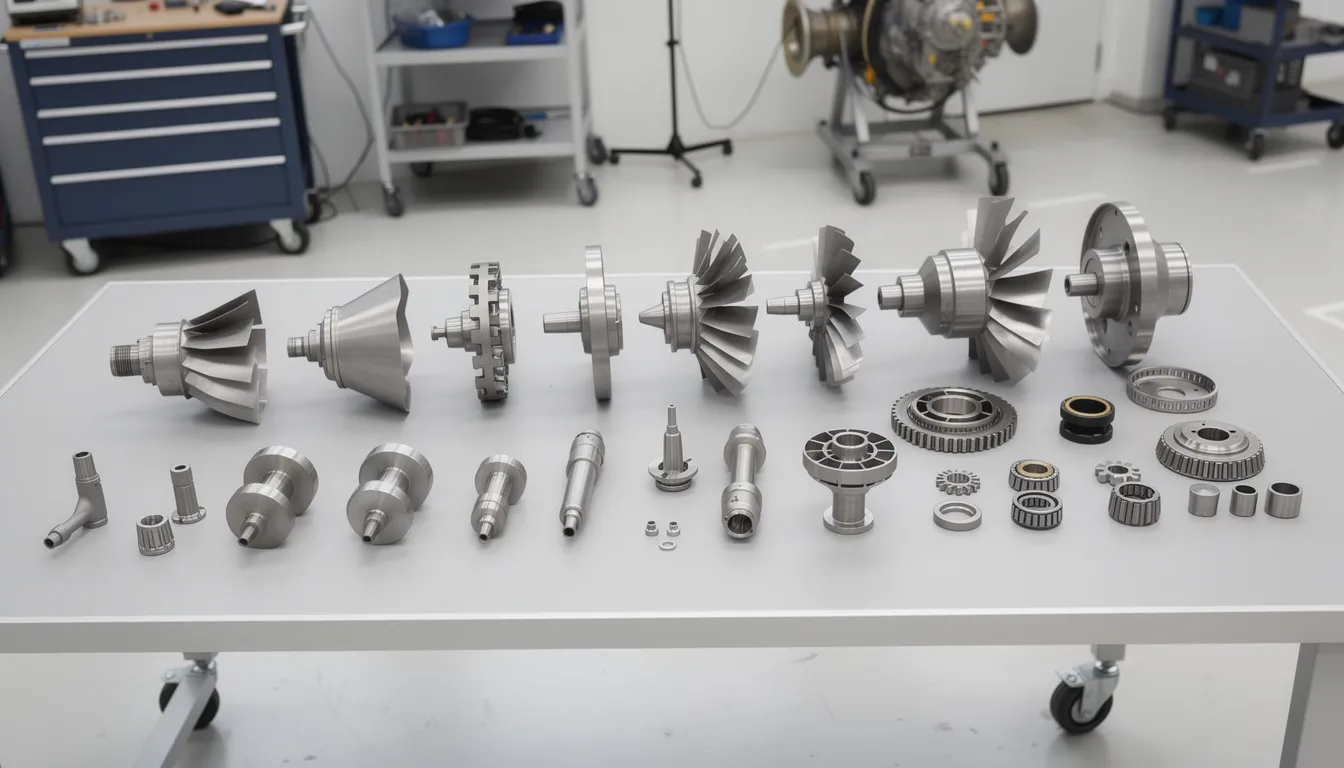
RSC Cluster: Export Controls and Technical Data Handling

The Export Controls and Technical Data Handling Cluster focuses on practical handling of controlled technical data. It defines what qualifies as technical data and how drawings, specifications, and revisions should move across suppliers securely. The content emphasizes minimum necessary controls and clear ownership. This cluster makes compliance operational rather than obstructive.

  • Does ISO 27001 require DLP?

    ISO 27001 does not explicitly require a Data Loss Prevention (DLP) tool or any specific vendor solution. It is a risk-based management standard and is technology-agnostic. What it requires is that you identify risks to information confidentiality, integrity, and availability, then select and implement appropriate controls to treat those risks.

    What ISO 27001 actually requires

    ISO/IEC 27001 and its Annex A (aligned with ISO/IEC 27002) include a set of information security controls related to preventing unauthorized disclosure or exfiltration of information, for example:

    • Controls on information transfer (e.g., email, removable media, cloud collaboration).
    • Access control and least privilege around sensitive data.
    • Use of encryption where appropriate.
    • Monitoring and logging of critical systems and data access.
    • Data classification and handling rules for confidential and regulated data.

    DLP tooling can help satisfy several of these controls, but the standard does not say you must implement DLP as a named technology. You must show that the combination of policies, processes, and technical measures you use is suitable and effective for your risk profile.

    When DLP becomes effectively necessary

    In practice, many organizations find that some form of DLP or equivalent capability is hard to avoid when:

    • You handle a large volume of regulated or export-controlled technical data.
    • You have many external partners, contract manufacturers, or suppliers accessing shared information.
    • You rely on email, cloud storage, and collaboration tools across multiple sites and vendors.
    • Auditors or customers expect clear evidence of technical controls around data leakage, not just policy documents.

    Even then, you may meet the intent of ISO 27001 with a mix of other measures: network segmentation, strict access control, hardened endpoints, encryption, and strong governance around removable media and external data transfers. Whether this is acceptable depends on your documented risk assessment, your regulatory obligations, and the expectations of customers and auditors.

    Specific considerations for industrial and regulated environments

    On factory networks and OT systems, full DLP deployment is often constrained by:

    • Legacy systems and protocols: Older equipment and operating systems may not support agents or modern inspection methods.
    • Qualification and validation burden: Installing DLP agents or proxies on validated systems, MES, or historian servers can trigger revalidation, which is costly and time consuming.
    • Downtime risk: Enforcing content inspection on production traffic can introduce latency or instability, which is often unacceptable for critical automation.
    • Integration complexity: Mixed vendors, segmented networks, and site-specific architectures make consistent DLP coverage difficult.

    In these contexts, organizations often apply DLP or equivalent inspection at the enterprise IT layer (email, web gateways, end-user endpoints) and use different controls on OT networks:

    • Tight control of engineering workstations and data export paths (e.g., from MES, PLM, and QMS).
    • Whitelisted data transfer mechanisms between OT and IT (e.g., managed file transfer, data diodes).
    • Strict removable media processes, including logging, scanning, and approval workflows.
    • Segmentation and hardened jump hosts for vendor and remote access.

    ISO 27001 allows this kind of layered approach, as long as you can show that the chosen controls address the identified risks and are operated under change control and continuous improvement.

    How to decide if you need DLP for ISO 27001

    From a practical standpoint, the decision should follow your risk management and not just the desire to “check a box”:

    1. Perform or update your risk assessment: Identify where sensitive data lives (design files, NC programs, recipes, batch records, customer IP), who can access it, and how it moves inside and outside the organization.
    2. Identify leakage vectors: Email, cloud sharing, contractors, VPNs, removable media, remote support tools, and data exports from MES/PLM/ERP/QMS.
    3. Map existing controls: Access control, encryption, network segmentation, logging, supplier controls, and user training.
    4. Determine gaps: Where you cannot reasonably control or monitor data flows with current tooling and processes.
    5. Select proportional controls: DLP may be one of them, but you may also strengthen other controls where DLP is not feasible or would create unacceptable operational risk.

    If your risks around data exfiltration are high and you have no strong technical safeguards around information transfer, it will be hard to justify not implementing some DLP-like capability in your ISO 27001 risk treatment plan, even if you choose not to label it as a DLP product.

    Evidence expectations for ISO 27001 audits

    Auditors will not look for a specific DLP product name, but they will typically expect to see:

    • A documented risk assessment identifying data leakage risks.
    • Clear policies on information classification, handling, and transfer.
    • Technical and procedural controls that align with those policies.
    • Monitoring and incident response processes for potential data leaks.
    • Change control and validation practices for security changes on critical systems.

    If you use DLP, you should also show how it is configured, monitored, and governed. If you do not use DLP, you should be able to justify how your alternative controls are adequate and proportionate to risk, especially where regulated or export-controlled data is involved.

    In summary, ISO 27001 does not require DLP by name. It requires you to understand and control data leakage risks. In complex, regulated manufacturing environments with long-lived systems, that usually means combining selective DLP deployment in IT domains with other compensating controls and robust governance around sensitive technical data.

  • How can document control systems support ITAR compliance?

    A document control system can support ITAR by helping an organization control, trace, and limit access to controlled technical data. It is a supporting control layer, not a substitute for export control governance, user screening, network security, training, or legal review.

    In practice, the most useful capabilities are:

    • Access control by role, program, site, and need-to-know so controlled documents are not broadly visible.
    • Document classification and labeling so ITAR-relevant content is identified consistently and handled differently from general business records.
    • Version control and effective-date management so users work from the current approved revision and older versions remain traceable.
    • Approval workflows to document review, release, change authorization, and withdrawal of obsolete content.
    • Audit trails showing who viewed, changed, approved, exported, or distributed controlled documents.
    • Controlled distribution to reduce uncontrolled copying, emailing, printing, and local storage.
    • Retention and archival controls to preserve records needed for investigations, internal review, and traceability.
    • Acknowledgment and training linkage so policy, work instruction, and access changes can be tied to affected users.

    Those capabilities matter because ITAR risk often comes from ordinary operational failures, not just malicious behavior. Common failure modes include misclassified files, excessive shared-drive permissions, uncontrolled exports from PLM or CAD, supplier packet emails, copied files on local devices, and legacy repositories that are outside current approval and logging workflows.

    A document control system helps most when it is part of a broader control model for technical data handling. That usually includes identity and access management, endpoint controls, DLP or monitoring where appropriate, supplier data exchange controls, and clear ownership for classification and release decisions.

    What it can and cannot do

    It can help enforce process discipline and provide evidence of who had access to what and when. It cannot determine by itself whether a document is ITAR-controlled, whether a recipient is authorized, or whether a specific transfer is permissible. Those depend on classification accuracy, user provisioning, business rules, and the quality of surrounding controls.

    It also does not eliminate brownfield risk. In many plants, controlled documents live across PLM, ERP, MES, QMS, shared folders, email, supplier portals, and paper packets on the floor. If the document control system governs only one repository, gaps remain. Integration quality matters, especially where released drawings, work instructions, routers, inspection plans, and supplier packages are replicated into downstream systems.

    That is why full replacement strategies often fail here. In regulated, long-lifecycle environments, replacing PLM, MES, ERP, or QMS outright can trigger large qualification and validation burdens, operational downtime risk, retraining costs, and loss of traceability across legacy records. A staged coexistence model is usually more realistic: put stronger governance around controlled documents first, then close the highest-risk handoff points between systems.

    What good implementation usually requires

    • A clear classification model for controlled technical data and related records.
    • Role design and access reviews that reflect real programs, suppliers, sites, and citizenship or authorization constraints where applicable.
    • Change control for document templates, metadata, workflows, and integration mappings.
    • Validation and testing of permissions, routing, watermarking, export restrictions, and audit logging.
    • Integration controls so downstream systems do not strip labels, expose attachments, or replicate files into less controlled repositories.
    • Exception handling for printed packets, offline access, emergency maintenance, and external collaboration.

    If those basics are weak, the system may create a false sense of control. For example, strong approvals with weak metadata discipline still leave room for misrouted technical data. Detailed audit logs are also of limited value if accounts are shared, integrations use generic service identities without context, or logs are not retained and reviewed.

    So the practical answer is yes: document control systems can materially support ITAR-related control objectives by improving restriction, traceability, revision governance, and evidence capture. But they are only effective when classification, access governance, integration design, and operational discipline are mature enough to make those controls real.

  • technical data

    Technical data commonly refers to detailed information that describes the design, manufacture, operation, maintenance, or testing of a product, system, or process. In industrial and regulated environments, it often has specific handling, export control, and information security implications.

    What technical data typically includes

    In manufacturing and industrial operations, technical data often covers:

    • Engineering designs and drawings, including CAD models and schematics
    • Manufacturing process instructions, routings, and control plans
    • Bill of materials (BOM) details beyond commercial part descriptions
    • Test methods, qualification procedures, and acceptance criteria
    • Product performance characteristics and tolerance data
    • Software source code or configuration details for embedded or control systems
    • Maintenance manuals, repair instructions, and overhaul procedures

    This information may exist in PLM, MES, ERP, document management, and quality systems, or as files exchanged with suppliers and customers.

    What technical data usually excludes

    Depending on the regulatory regime, technical data typically does not include:

    • Purely commercial or marketing materials (price lists, brochures, sales quotes)
    • Basic product descriptions that do not reveal detailed design or manufacturing know-how
    • General engineering knowledge that is widely taught or publicly available

    However, the exact boundary between technical data and non-technical information is defined by the applicable regulations, contracts, or internal policies.

    Technical data in regulated environments

    In many jurisdictions, technical data is a defined term in export control and defense-related regulations. In those contexts it can trigger specific obligations for:

    • Access control and user authorization within OT/IT systems
    • Cross-border transfers (email, file sharing, cloud storage, supplier portals)
    • Use of external service providers for design, analysis, or manufacturing
    • Recordkeeping and traceability of who accessed or shared certain documents

    Manufacturers often classify technical data to align with export control regimes or customer contract requirements and configure MES, PLM, and document control systems to enforce those classifications.

    Operational handling in manufacturing systems

    In day-to-day operations, technical data appears as:

    • Digital work instructions and standard operating procedures on the shop floor
    • Controlled drawings and specifications linked to part numbers and revisions
    • NC/CNC programs, control logic, and machine parameter sets
    • Test limits and calibration data used in inspection or automated testing

    Organizations typically govern technical data through document control, configuration management, and access control workflows. These workflows may integrate across MES, ERP, PLM, QMS, and content management systems to ensure that only authorized users can access specific technical data and that correct revisions are used in production.

    Information security and data loss considerations

    Because technical data can contain sensitive intellectual property or controlled information, it is often a focus area for information security and data loss prevention. Controls can include:

    • Role-based access control and segregation of duties
    • Network segmentation between OT and IT systems that store or process technical data
    • Monitoring and restrictions on file transfer, removable media, and printing
    • Encryption of repositories and communication channels where technical data is stored or transmitted

    Standards-based information security programs often require organizations to identify and classify technical data, assess risks related to its transfer and storage, and implement appropriate technical and procedural controls.

    Common confusion

    • Technical data vs. personal data: Technical data describes products and processes, while personal data relates to identifiable individuals. Both can be sensitive but are governed by different rules.
    • Technical data vs. trade secrets: Some technical data may qualify as trade secrets, but not all. Trade secret status depends on legal criteria and protection measures, not only on the type of information.
    • Technical data vs. operational data: Operational data (for example, machine telemetry or production counts) describes performance and events. Technical data describes how products are designed and manufactured. In some systems, both are stored together but are conceptually different.

    Link to data loss prevention and security standards

    In information security standards and risk assessments, technical data is often treated as a sensitive information category that requires controls on transfer, storage, and access. Data loss prevention tools, secure collaboration platforms, and controlled document workflows are examples of mechanisms that may be used to reduce the risk of unauthorized disclosure or leakage of technical data, especially when that data is subject to export controls or customer-imposed restrictions.

  • What access controls are required when FAI data is ITAR-controlled?

    If FAI data is ITAR-controlled, access cannot be broad, convenience-based, or handled only with generic department permissions. The practical requirement is to restrict access to authorized personnel with a documented need-to-know, and to enforce that restriction consistently across storage, workflow, transmission, export, and administration.

    There is no single universal control set that by itself makes an environment acceptable. The exact control model depends on whether the FAI package contains controlled technical data, how that data is classified internally, where it is stored, which systems touch it, and whether any users, admins, support staff, suppliers, or cloud services could create unauthorized access.

    Controls typically expected in practice

    • Identity-based access control: Access should be assigned to named users, not shared accounts. Generic shop-floor logins and mailbox-style accounts are a weak fit for ITAR-controlled FAI records.

    • Need-to-know and least privilege: Users should only see the FAI records, fields, attachments, and functions required for their role. Many plants need finer control than simple quality-versus-engineering permissions.

    • U.S. person and authorization screening where applicable: If the content is ITAR-controlled technical data, access decisions often need to account for export-control status, not just job title. That includes internal users, contractors, supplier contacts, and sometimes vendor support personnel.

    • Strong authentication: Multi-factor authentication is commonly part of a defensible control set, especially for remote access, administrative access, and cloud-based workflows.

    • Segregation of administrative privileges: System administrators should not automatically have unfettered access to controlled content unless that access is explicitly justified, approved, and logged. This is often overlooked in SaaS and managed-service arrangements.

    • Audit logging and review: You need traceable logs for access, changes, downloads, approvals, exports, and privilege changes. Logging without review and retention discipline is not enough.

    • Controlled attachment handling: FAI packages often include drawings, models, characteristic ballooning outputs, inspection results, and cert packages. Access controls have to extend to attachments, generated reports, exports, email notifications, and temporary files, not just the main application record.

    • Restricted sharing and transmission paths: If users can freely email, sync, print, or externally share FAI data, your application-level permissions may be bypassed. Transmission controls and approved data-sharing workflows matter as much as repository permissions.

    • Data segmentation: ITAR-controlled FAI data should be logically and, in some environments, operationally separated from non-controlled records to reduce accidental exposure and simplify review.

    • Change control for permissions and configuration: Group membership, role definitions, connector behavior, report templates, and export settings should be governed changes. In regulated operations, informal admin changes create traceability and validation problems quickly.

    • Retention, archival, and disposal controls: Historical FAI records can remain sensitive long after the product is released. Access rules must continue through archive copies, backups, and migrated records.

    What this means in brownfield environments

    In most plants, FAI data does not live in one clean system. It may move between QMS, MES, PLM, ERP, shared drives, supplier portals, CMM software, ballooning tools, and reporting packages. That is where access control usually fails.

    If one connected system has weaker permissions than the system of record, the overall control posture is only as strong as the weakest export, integration, or replica. Common failure modes include nightly data extracts to shared folders, uncontrolled PDF generation, supplier email loops, broad ERP attachments access, and vendor support accounts with excessive privileges.

    For that reason, the requirement is not simply to lock down the FAI application. You need to map where controlled data is created, copied, cached, transformed, and viewed across the workflow. In older environments, coexistence with legacy systems is normal, but each handoff needs to be assessed explicitly.

    Role-based access alone is usually not enough

    No, standard role-based access control by itself is usually not sufficient for ITAR-controlled FAI data. It helps, but by itself it often misses export-control status, attachment-level restrictions, admin access, downstream copies, and external collaboration paths.

    A more credible approach combines role-based permissions with user identity controls, documented authorization rules, data classification, logging, and restrictions on transfer and support access.

    Cloud and vendor access considerations

    Cloud deployment is not automatically disqualifying, but it raises design questions that must be answered carefully. You need clarity on where data is stored, who can administer the environment, what support access exists, how logs are retained, whether backups and disaster recovery copies are controlled appropriately, and how integrations move data in and out.

    If a vendor, subcontractor, or MSP can access the environment, that access needs the same scrutiny as internal access. Many organizations focus on end users and overlook privileged vendor paths, which can undermine the control model.

    Documentation matters as much as the control itself

    Whatever access model you implement, it should be documented, approved, tested, and maintained. In practice, that usually includes documented data classification rules, role definitions, access approval workflows, periodic access reviews, validation or verification evidence for configured controls, and change records when permissions or integrations change.

    That documentation does not guarantee any regulatory outcome, but without it, it becomes difficult to show that controls are intentional, repeatable, and traceable.

    Bottom line

    The required access controls for ITAR-controlled FAI data are restrictive, identity-based, auditable, and end-to-end. At a minimum, you should expect need-to-know access, least privilege, strong authentication, controlled admin access, auditable logs, protected attachments and exports, and disciplined governance over integrations and configuration changes.

    If your current process relies on shared folders, broad internal visibility, unmanaged PDF exports, or loosely controlled system integrations, that is a warning sign. In most aerospace environments, the real work is not choosing a policy statement. It is enforcing consistent controls across a mixed, long-lived system landscape without breaking validated processes or production continuity.

  • ITAR

    ITAR commonly refers to the International Traffic in Arms Regulations, a set of United States export control regulations that govern the manufacture, export, temporary import, and brokering of defense-related articles, services, and technical data.

    What ITAR covers

    In an industrial and manufacturing context, ITAR typically applies when an organization is involved with items or data that are listed on the U.S. Munitions List (USML). This can include:

    • Physical products such as weapon system components, military aircraft parts, or specialized electronics designed for defense use
    • Technical data such as drawings, models, CAD files, material specifications, process sheets, and work instructions that describe ITAR-controlled items
    • Defense services, including support, training, or design work provided to foreign entities related to ITAR-controlled items

    ITAR is focused on control of access and transfer. It regulates who can access controlled items and technical data, and under what conditions data can be shared across borders, including via IT and OT systems.

    Operational meaning in manufacturing

    For manufacturers and industrial operations, ITAR most often shows up as requirements around:

    • Identifying which parts, assemblies, and documents are ITAR-controlled
    • Restricting access in MES, PLM, ERP, QMS, and document management systems to authorized personnel only
    • Managing export-controlled technical data when integrating OT and IT systems, including backups and cloud services
    • Controlling which workers, contractors, and suppliers can view or handle ITAR-controlled data or product
    • Maintaining records that show how controlled data was handled, shared, and accessed

    ITAR considerations often intersect with cybersecurity frameworks and information security management systems, but they remain export control regulations rather than an information security standard.

    What ITAR is not

    ITAR:

    • Is not an information security standard like ISO 27001 or NIST 800-171, although those frameworks may support ITAR-related controls
    • Is not specific to any one industry software platform; it applies regardless of the MES, ERP, or QMS in use
    • Does not apply to all aerospace or industrial products, only to items and data subject to U.S. export control under the USML

    Common confusion

    • ITAR vs. EAR: ITAR typically covers defense and munitions items, while the Export Administration Regulations (EAR) cover many dual-use and commercial items. Some manufacturing operations handle both ITAR- and EAR-controlled products and data.
    • ITAR vs. cybersecurity standards: ITAR focuses on export control and who may access technical data. Cybersecurity frameworks address how information systems are secured overall. They are related but not interchangeable.

    Context for aerospace and regulated suppliers

    In aerospace and defense supply chains, ITAR is often a key driver for how technical data is classified, stored, and shared. When plants integrate legacy MES, ERP, and QMS systems, they must evaluate how ITAR-controlled data flows between systems and across organizational or national boundaries, and configure access controls and evidence capture accordingly.

  • How can digital platforms support ITAR and EAR constraints in supply chain collaboration?

    Digital platforms can support ITAR and EAR constraints in supply chain collaboration, but only if they are configured around export-control decisions your organization has already defined. The platform is an enforcement and traceability layer, not a substitute for classification, licensing analysis, or internal export-control governance.

    In practice, a useful platform supports controlled collaboration by limiting who can see what, when, and under what workflow conditions. That usually includes role-based and attribute-based access controls, segregation of controlled technical data from commercial data, approval workflows for external sharing, immutable audit trails, document version control, and retention of evidence showing what was shared with which supplier and why.

    In practice, this connects to export controls and technical data handling when teams need to turn the answer into repeatable execution habits.

    For supply chain use cases, the most valuable capabilities are usually:

    • supplier-specific access scopes so one supplier cannot see another supplier’s controlled data

    • data partitioning by program, part, customer, country, and control status

    • workflow gates before releasing drawings, models, work instructions, inspection requirements, or deviation-related information

    • download, print, forwarding, and watermarking restrictions where appropriate

    • end-to-end audit trails across document release, acknowledgment, revisions, and revocation

    • integration with identity providers for stronger authentication and access revocation

    • policy-driven notifications when controlled content changes or access exceptions occur

    • evidence preservation for internal review, customer review, and audit preparation

    These controls are especially important in brownfield environments because collaboration data rarely lives in one place. Controlled information may originate in PLM, ERP, MES, QMS, file shares, email, or legacy portals. If those systems are poorly integrated, the platform may show a clean access model on the surface while uncontrolled copies still move through side channels. That is a common failure mode.

    Another practical limit is data labeling and classification quality. If parts, documents, BOM elements, or process instructions are not accurately tagged for export sensitivity, the platform cannot reliably enforce restrictions. Many programs fail here because master data is inconsistent across systems, attachments bypass structured controls, or revisions are copied into unmanaged repositories.

    Digital platforms can also reduce exposure by enabling selective disclosure. A supplier may need routing steps, delivery requirements, and approved specifications, but not full product definition, broader program context, or unrelated technical packages. Good system design supports least-necessary data sharing rather than broad document dumps.

    That said, there are tradeoffs. Tighter controls can slow supplier response, complicate onboarding, and increase administrative overhead. More granular permissions improve risk control but raise configuration and validation effort. Stronger segregation often means more integration work, more metadata discipline, and more user training. In regulated operations, these are not one-time setup tasks. They require ongoing change control, periodic access review, and validation after process or system changes.

    Full replacement of existing collaboration, PLM, ERP, or quality systems is often not the best answer. In long lifecycle, regulated environments, replacement programs frequently stall because of qualification burden, validation cost, downtime risk, interface complexity, and the need to preserve traceability across legacy records. A more realistic pattern is controlled coexistence: keep systems of record where they are, add policy enforcement and workflow controls at integration points, and close the highest-risk data leakage paths first.

    No platform can guarantee compliant behavior on its own. Users can still export data incorrectly, classify information badly, use unmanaged channels, or create process gaps between systems. The practical objective is narrower: reduce uncontrolled sharing, make authorized sharing traceable, and make exceptions visible quickly enough to investigate and correct them.

    What good looks like operationally

    A defensible implementation usually includes:

    • a defined data classification model tied to parts, documents, and transactions

    • clear ownership for release authority and supplier access approval

    • segregated collaboration spaces for controlled and non-controlled exchanges

    • integrated identity management and timely access revocation

    • revision-aware sharing so obsolete controlled content is not left accessible

    • logging and evidence retention that survive system changes

    • periodic review of supplier access, workflow exceptions, and integration failures

    If those foundations are weak, adding a portal or cloud workspace may improve convenience without materially improving control.

  • Do I need lawyers involved when interpreting PT controls?

    In most regulated industrial environments, you do not need a lawyer for every question about PT (export) controls, but you do need a structured way to decide when legal review is required.

    When you typically do not need a lawyer

    You can usually rely on internal procedures and prior legal guidance when:

    In practice, this connects to export controls and technical data handling when teams need to turn the answer into repeatable execution habits.

    • The situation matches a documented internal precedent (e.g., previously reviewed product classification or country list).
    • You are following an approved, version-controlled procedure that was already cleared by counsel.
    • You are configuring systems or workflows strictly within clearly documented rules (e.g., blocking certain destinations, users, or data types based on an approved matrix).
    • You are not changing the underlying interpretation of regulations, only implementing controls already defined by policy.

    In these cases, the risk is usually around execution quality, validation, and evidence, not legal interpretation. The focus should be on traceability, change control, and ensuring the digital implementation matches the approved policy.

    When you should involve legal counsel

    Legal or specialized trade-compliance counsel should be involved when any of the following apply:

    • New or ambiguous interpretation: The regulation, control list entry, or license condition is unclear, and there is no internal precedent.
    • Cross-border data and cloud decisions: You are deciding what technical data can be stored, processed, or accessed in specific regions or by specific roles (especially for export-controlled or defense-related work).
    • System-wide design choices: You are defining role-based access, data segregation, or integration rules that will be embedded in MES/PLM/ERP/QMS for years.
    • New product lines or technologies: Classification or control status is not yet established, or technologies span multiple regimes or agencies.
    • High enforcement risk: Sensitive programs, embargoed destinations, complex multi-party collaborations, or prior enforcement history.
    • Disagreement among stakeholders: Engineering, operations, and IT do not align on how to map regulations into system behavior or process steps.

    In these scenarios, your long-lived decisions on PT controls will drive how systems are configured, audited, and defended if challenged. Having documented legal interpretation is part of risk management.

    Practical approach in brownfield environments

    In typical brownfield plants with mixed legacy and modern systems, a practical approach is:

    1. Centralize interpretations: Maintain a controlled repository (often owned by Trade Compliance or Legal) of approved interpretations, classifications, and data-handling rules.
    2. Translate into rules: Operations, IT, and engineering convert these interpretations into concrete system rules (role matrices, data labels, export flags, routing rules) with clear traceability back to the source decision.
    3. Use change control: Treat any change to PT control logic like a significant process or configuration change: documented rationale, impact assessment, testing, and approvals.
    4. Escalate exceptions: If a scenario does not match the existing repository, pause implementation and escalate to Trade Compliance or Legal rather than improvising a new interpretation.

    Full replacement of legacy systems purely to “solve” PT controls is rarely justified. Qualification burden, validation cost, and downtime risk often exceed any compliance benefit. It is usually more realistic to:

    • Layer PT controls on top of existing PLM/MES/ERP/QMS via classification fields, access rules, and middleware.
    • Strengthen evidence generation and reporting across the mixed stack.
    • Limit legal review to the rules that drive these configurations, not every technical change.

    How to formalize who decides what

    To avoid ad hoc legal involvement, many organizations define a simple RACI (or similar) model for PT controls:

    • Legal / Trade Compliance: Own regulatory interpretations, product and data classifications, and country/program-level rules.
    • Quality / Compliance: Own procedures, training, audit readiness, and ensuring changes follow controlled processes.
    • IT / OT / Systems Owners: Own technical implementation in MES/PLM/ERP/QMS and integrations, and ensure configuration matches approved rules.
    • Operations / Engineering: Own how PT controls affect workflows, routings, and work instructions.

    With this structure, lawyers are involved when interpretations or classifications change, not for every daily decision or configuration ticket.

    Key takeaway

    You do not need lawyers involved in every step of interpreting and applying PT controls, but you do need:

    • Clear criteria for when legal review is mandatory.
    • Documented, version-controlled interpretations that others can implement.
    • Traceability from legal decisions to system rules and plant procedures.
    • Change control so that PT-related logic in long-lived systems is updated consistently and defensibly.

    This balance keeps legal involvement focused on high-impact interpretation and classification decisions, while enabling operations, engineering, and IT to execute within an agreed, controlled framework.

  • How do we protect export-controlled work instructions in digital systems?

    Protecting export-controlled work instructions in digital systems is primarily a data-handling and architecture problem, not just an MES or document-control feature. You need a design that aligns with your export control and cybersecurity programs, and then validate that design in your specific environment.

    1. Start with scoping and segregation of export-controlled content

    Before tooling decisions, clearly define where export-controlled work instructions can and cannot live.

    In practice, this connects to export controls and technical data handling when teams need to turn the answer into repeatable execution habits.

    • Scope the data: Identify which work instructions, models, drawings, and routings are export-controlled or mixed (partly controlled content).
    • Segregate systems where possible: Prefer keeping ITAR/export-controlled work instructions in a limited set of systems and repositories instead of pushing them into every PLM, MES, DMS, and training platform.
    • Use dedicated environments: For cloud or SaaS, this often means GCC High, ITAR-compliant hosting, or at minimum region-restricted, tenant-isolated environments with contractual controls. For on-prem, it can mean dedicated servers, VLANs, and tighter administrative boundaries.
    • Minimize replication: Avoid unnecessary copies in staging, analytics, test, or training environments. Each copy is another control surface to manage.

    2. Enforce identity, RBAC, and least privilege

    Access control is central, but it must be concrete and enforced consistently across your stack.

    • Strong identity: Use centralized identity (e.g., AD/Entra/LDAP) with unique accounts, MFA, and clear HR offboarding processes for all users with export-controlled access.
    • Role-based access control (RBAC): Define roles based on function (e.g., ITAR machinist, ITAR NPI engineer, ITAR MRB engineer), not just organization charts. Grant access to export-controlled work instructions only where required for that role.
    • Attribute-based controls where supported: When your PLM/MES/DMS supports attributes (e.g., export_controlled = true), use them to drive view/download restrictions and to prevent inadvertent sharing or routing.
    • Admin boundaries: Limit who can administer export-controlled repositories. Admins and support staff may themselves fall under export control constraints.

    3. Govern where and how work instructions are delivered to the shop floor

    Digital work instruction tools, MES, and traveler systems must respect export-control boundaries in how they present content.

    • Point-in-time rendering: For execution, show only the minimum required excerpt of the controlled instruction rather than full document sets when feasible.
    • Context-aware access: Tie visibility to the work order, cell, and operator role. An operator working non-controlled jobs should not be able to browse ITAR-controlled instructions.
    • Segregated kiosks or terminals: Consider dedicated terminals for export-controlled work, especially if your plant also runs fully commercial work. This simplifies network and physical controls.
    • No generic shared logins: Shared shop-floor accounts make export-control enforcement and audit trails unreliable. Use individual sign-on or badge/PIN schemes linked to individual identities.

    4. Control offline use, downloads, and printing

    Most data leakage in practice happens at the edges: downloads, email, portable storage, and uncontrolled printouts.

    • Restrict downloads: Only allow downloading or exporting ITAR/export-controlled instructions where there is a documented business need, and log every event.
    • Printing controls:
      • Route printing through managed, logged print queues.
      • Force watermarks (e.g., “EXPORT CONTROLLED – DO NOT COPY/EMAIL”).
      • Use location-aware printing where possible so ITAR documents can only be printed in secured areas.
    • Endpoint controls: On engineering and programming workstations, use DLP or equivalent capabilities to restrict copying to USB, personal cloud storage, and email.
    • Offline mobile/AR use: If using tablets, AR headsets, or offline-capable WI apps, verify how data is cached, encrypted, and wiped. Offline copies of export-controlled instructions must be encrypted at rest and removed on revocation or role change.

    5. Architect integrations for ITAR-safe workflows

    Brownfield integrations are a common failure point. Many organizations accidentally spread export-controlled data through ETL jobs, file shares, or reporting tools that were never evaluated for this use.

    • Classify integration flows: Map where work instruction data flows: PLM → DMS → MES → shop-floor clients → archives. Flag which flows carry export-controlled content.
    • Selective synchronization: Configure integrations to exclude export-controlled instructions from systems that are not authorized for that data, or to synchronize only derived, non-controlled metadata where possible.
    • Secure APIs and message buses: Ensure APIs that serve work instructions enforce the same identity and RBAC logic as the source system. Avoid open service accounts with broad read access.
    • Testing and validation: Treat integration changes as controlled changes. Test that export-controlled documents do not appear in unintended systems, sandboxes, or vendor debug environments.

    6. Maintain audit trails, version control, and change governance

    Export-controlled environments typically need defensible evidence about who accessed what, when, and under which role.

    • Immutable logs: Log viewing, printing, download, and sharing actions for export-controlled work instructions. Protect logs from tampering, and define retention periods aligned with your regulatory and customer requirements.
    • Version control: Ensure that revisions of export-controlled instructions are tracked, with clear effective dates and linkage to part numbers, work orders, and configurations.
    • Change control: Treat any structural change to WI systems, integrations, or hosting (e.g., cloud migration) as a controlled change that specifically evaluates export-control impact.
    • Periodic review: Periodically review access lists, admin rights, and logs to identify orphaned accounts, role creep, and unusual access patterns.

    7. Consider infrastructure and hosting realities

    Export-controlled work instructions interact heavily with your infrastructure choices.

    • Cloud vs on-prem: Some regulations and customer contracts tightly constrain where export-controlled data can be hosted and who can administer it. This may rule out certain multi-tenant SaaS offerings, generic public cloud regions, or offshore support models.
    • Long equipment lifecycles: Legacy DNC, NC program storage, and on-machine HMIs may not support modern security controls. In many plants, full replacement is not realistic due to validation burden, machine recertification, downtime risk, and cost.
    • Compensating controls: When you cannot upgrade or replace legacy systems, use network segmentation, jump hosts, and tightly controlled file-transfer processes as compensating controls.

    8. Align with your broader export control and cybersecurity programs

    Digital protection of work instructions must be consistent with company-wide compliance and security policies.

    • Policy alignment: Ensure your digital WI procedures align with your export control manual, technology control plans, and any customer or government flow-downs.
    • Framework mapping: Many organizations use NIST 800-171, NIST 800-53, CMMC, and ISO 27001 mappings to ensure controls on access, logging, encryption, and incident response cover technical data, including work instructions.
    • Vendor due diligence: Validate that any cloud or software vendor that stores or processes export-controlled instructions can meet your contractual, jurisdictional, and administrative requirements. Do not assume compliance based on marketing claims.
    • Training: Train engineers, programmers, planners, and IT admins on what is considered export-controlled content and the approved systems and workflows for handling it.

    9. Practical brownfield considerations

    Most aerospace and defense plants operate mixed environments with legacy MES, PLM, and document systems. In this context:

    • Avoid big-bang replacements: Replacing core MES/PLM purely to “solve” export control often fails once you factor in validation, qualification, re-training, integration rewrites, and downtime.
    • Layer controls on top: In many cases, it is more realistic to tighten identity, network segmentation, logging, and integration filters around existing systems than to replace them.
    • Focus on choke points: Identify the few systems that actually render instructions to operators or that serve as “golden sources” for process definitions, and harden those first.

    Ultimately, protecting export-controlled work instructions is about designing and validating end-to-end handling of that content across PLM, MES, DMS, endpoints, and integrations, then operating those controls consistently over the long lifecycle of your equipment and programs.