RSC Cluster: IEC 62443 Industrial Cybersecurity for Manufacturing and OT

  • SOC

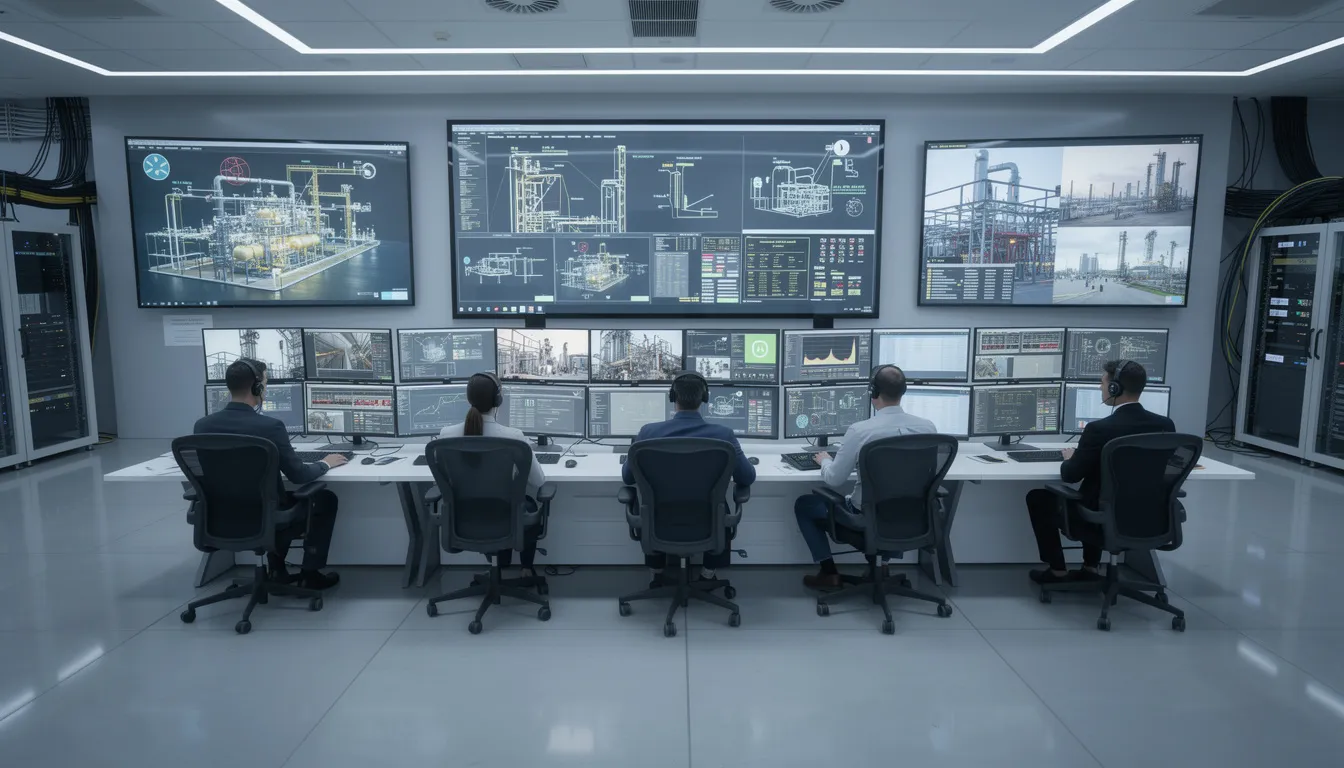
    SOC most commonly refers to a Security Operations Center in the context of industrial operations and regulated manufacturing environments.

    What is a SOC?

    A Security Operations Center is a dedicated function, team, and often a physical or virtual facility responsible for monitoring, analyzing, and coordinating responses to security events across an organization's technology landscape. In manufacturing, this typically spans both IT (business systems, networks, cloud) and OT (plant-floor control systems, industrial networks, IIoT devices).

    A SOC usually operates on a continuous basis (often 24×7) and uses specialized tools to collect and correlate security-relevant data from many sources, such as logs, network traffic, endpoint agents, and industrial control systems.

    Typical responsibilities in industrial and OT/IT environments

    • Monitoring and detection: Continuous surveillance of logs, events, and alerts from firewalls, servers, endpoints, PLC networks, HMIs, MES, and other critical systems.
    • Incident triage and investigation: Analyzing alerts to distinguish true security incidents from noise, and understanding potential impact on safety, quality, and production.
    • Incident response coordination: Working with IT, OT, and plant operations teams to contain, eradicate, and recover from security incidents while minimizing disruption.
    • Threat intelligence consumption: Using cyber threat intelligence (CTI) such as strategic, operational, tactical, and technical feeds to tune detections and prioritize risks relevant to specific plants, assets, and suppliers.
    • Vulnerability and exposure management: Supporting identification and tracking of vulnerabilities in IT and OT systems, often feeding results into change management and maintenance planning.
    • Compliance and reporting support: Providing evidence, metrics, and documentation that support internal policies and external regulatory or customer requirements related to cybersecurity.

    How SOC shows up in workflows and systems

    In manufacturing organizations, the SOC function commonly integrates with:

    • SIEM and log management: Central platforms that aggregate and correlate events from ERP, MES, plant historians, domain controllers, industrial firewalls, and other systems.
    • OT monitoring tools: Passive network monitoring, asset discovery, or anomaly detection tools specific to industrial control networks.
    • Ticketing and case management: Systems used to track investigations, remediation tasks, and communication with plant and engineering teams.
    • Change and maintenance processes: Integration with maintenance management, patching, and configuration control so that security actions are coordinated with production schedules.

    Common confusion

    • SOC vs NOC: A Network Operations Center (NOC) focuses on performance, uptime, and capacity of networks and systems. A SOC focuses on security risk, threats, and incidents. In some organizations these are combined, but their objectives differ.
    • SOC vs CSIRT/CERT: A Computer Security Incident Response Team (CSIRT) or similar group focuses specifically on incident handling. A SOC usually covers continuous monitoring plus incident handling and may include or work closely with a CSIRT function.
    • SOC vs security standard reports (e.g., SOC 1, SOC 2): Service Organization Control reports in auditing and assurance are unrelated. They are audit report types, not operational centers. In industrial cybersecurity discussions, SOC almost always means Security Operations Center.

    Link to cyber threat intelligence (derived context)

    In the context of cyber threat intelligence (CTI), a SOC is often the primary consumer of tactical, technical, and operational intelligence. The SOC uses this information to update detection rules, enrich alerts, and prioritize investigations for assets and processes that matter most in specific plants and regulated environments.

  • What are examples of ISMS?

    In this context, an Information Security Management System (ISMS) is not a single product but a structured set of policies, processes, controls, and tools for managing information security risk. In regulated industrial environments, effective ISMS examples usually combine a recognized framework with concrete plant-level controls.

    Common ISMS framework examples

    These are widely used as the backbone of an ISMS in manufacturing and other regulated sectors:

    • ISO/IEC 27001-based ISMS: A formal ISMS built around ISO/IEC 27001, using ISO/IEC 27002 as a control catalog. Often extended with sector guidance (for example, IEC 62443 for OT systems) and integrated into existing quality and safety management systems.
    • NIST Cybersecurity Framework (NIST CSF)-aligned ISMS: A program structured around the NIST CSF functions (Identify, Protect, Detect, Respond, Recover), with policies and procedures mapped to those categories and subcategories. Common in US-based organizations, especially those with mixed IT/OT environments.
    • NIST SP 800‑53-based ISMS: A control-based approach derived from SP 800‑53, usually in organizations that already follow US federal or defense-related requirements. This is often more detailed and heavier-weight than ISO/IEC 27001 for day-to-day plant operations.
    • IEC 62443-informed OT security program: An ISMS that uses ISO/IEC 27001 for overall governance while relying on IEC 62443 for industrial automation and control system security zones, conduits, and technical OT controls.

    In practice, many organizations use a hybrid: for example, ISO/IEC 27001 for certification scope, NIST CSF for communicating maturity, and IEC 62443 to shape OT security controls.

    Examples of ISMS implementations in brownfield plants

    In a typical brownfield environment with legacy MES/ERP/QMS and long-qualified equipment, an ISMS tends to look like a layered set of controls rather than a clean greenfield design. Concrete examples include:

    • ISMS integrated into an existing QMS: Information security policies and risk assessment processes are built into the quality management system and change control workflows. Security requirements become part of equipment qualification, software validation, and supplier management procedures.
    • ISMS focused on OT network segmentation and access control: The ISMS explicitly covers network zoning for production cells, firewalls between OT and IT, remote access restrictions for OEM vendors, and strict account management for MES, SCADA, and PLC programming tools.
    • ISMS centered on data integrity for regulated records: Controls focus on electronic batch records, device history records, test data, and configuration baselines. The ISMS defines how data is captured, transmitted, stored, backed up, restored, and audited across MES, LIMS, PLM, and QMS, with clear traceability and change control expectations.
    • ISMS embedded in an enterprise risk management framework: Information security risk is treated alongside safety, quality, and supply chain risk. Production-impacting threats (for example, ransomware on MES or historian systems) are identified, and the ISMS defines preventive, detective, and recovery controls with clear ownership between IT, OT, and operations.

    Examples of ISMS controls relevant to manufacturing systems

    Regardless of framework, an ISMS in this environment usually translates into specific controls across IT and OT. Examples include:

    • Governance and organization
      • Documented information security policy approved by leadership.
      • Defined roles and responsibilities for IT, OT, operations, and quality.
      • Formal risk assessment process that explicitly includes production systems and long-lifecycle assets.
    • Asset and configuration management
      • Inventories of MES, SCADA, PLCs, HMIs, historians, test stands, and associated servers and workstations.
      • Baseline configurations for validated applications and control systems, with change control and rollback plans.
      • Classification of data (for example, product IP, test data, batch records) to drive control strength.
    • Access control
      • Unique accounts and least-privilege roles for MES/ERP/QMS users and OT engineering tools.
      • Multi-factor authentication where feasible, especially for remote access into plant networks.
      • Formal joiner/mover/leaver processes so access is revoked promptly when roles change.
    • Network and system security
      • Segmentation of OT networks into zones with firewalls or data diodes between levels.
      • Controlled pathways for vendor remote support of equipment, with session recording where appropriate.
      • Patch and vulnerability management tuned for validated systems and equipment that cannot be frequently rebooted, including documented compensating controls when patching is delayed.
    • Data integrity, backup, and recovery
      • Regular, tested backups of MES, historians, configuration databases, and critical recipe or test data.
      • Documented recovery time and recovery point objectives that reflect production and regulatory needs.
      • Procedures to verify data integrity after restoration, including checks for regulated records.
    • Monitoring and incident management
      • Security monitoring of key servers, network segments, and user access, within limits of legacy system capabilities.
      • Incident response plans that explicitly address production systems, including who can shut down equipment and how changes are documented.
      • Lessons-learned loops into change control, risk registers, and training.
    • Supplier and third-party management
      • Security requirements included in contracts for MES, OT equipment, and cloud service providers.
      • Qualification and periodic review of critical vendors, especially where remote access or data hosting is involved.
      • Defined responsibilities for vulnerability disclosure, patch provision, and end-of-support handling.

    Coexistence with existing systems and why “full replacement” ISMS tools often fail

    Many vendors market tool-centric “ISMS solutions” that assume you can rapidly standardize everything on a new platform. In regulated, long-lifecycle manufacturing environments, this is rarely realistic due to:

    • Qualification and validation burden: Replacing or heavily modifying MES, QMS, or OT components purely for security introduces significant validation work and regulatory scrutiny.
    • Downtime and production risk: Major cutovers to new platforms carry nontrivial risk to yield, schedule, and contractual commitments.
    • Integration complexity: Existing ERP, PLM, and plant-floor systems are often tightly coupled via custom interfaces, making rapid platform swaps risky and expensive.
    • Traceability and change control: Large-scale replacements make it harder to maintain clear audit trails of who changed what, when, and why across multiple systems.

    Effective ISMS examples in this environment usually:

    • Start with governance, risk assessment, and policy unification.
    • Add controls and monitoring around existing MES/ERP/QMS and OT systems rather than replacing them outright.
    • Use targeted upgrades and compensating controls where legacy constraints limit “textbook” security patterns.

    Key dependencies and constraints

    The suitability of any ISMS example depends heavily on:

    • Existing frameworks already used by corporate IT or quality (for example, ISO/IEC 27001 vs NIST CSF).
    • Plant automation maturity and vendor mix (legacy PLCs and proprietary HMIs vs modern, more open platforms).
    • Regulatory expectations for your sector and geography.
    • Data classification, retention requirements, and validation practices for electronic records.

    Because of these dependencies, an ISMS must be tailored per organization and often per site. Framework names and control catalogs can be reused, but the actual implementation needs to fit your brownfield constraints, integration debt, and change control culture.

  • How can MRO facilities apply IEC 62443 without disrupting turnaround times?

    Applying IEC 62443 in a maintenance, repair, and overhaul (MRO) environment is possible without breaking turnaround commitments, but only if it is treated as a staged, risk-based program tightly aligned with existing maintenance and change-control processes. Trying to “do everything at once” is almost guaranteed to disrupt throughput.

    Start with a risk-based, not standard-based, mindset

    IEC 62443 is broad and not all requirements are equally critical for your MRO operation. To avoid disruption, you need to prioritize:

    • Map critical assets and processes: Identify which equipment, test stands, special processes, and data flows truly affect safety, airworthiness, or regulatory posture vs. those that mainly affect productivity.
    • Perform a focused risk assessment: Use IEC 62443 concepts (threats, vulnerabilities, consequences) to rank OT assets by business impact and regulatory sensitivity, not just technical exposure.
    • Define security levels per zone: Set realistic target security levels (SL-T) for each zone based on risk. Not all areas need the same rigor.

    Only after this should you choose which parts of IEC 62443 to implement first. This avoids applying high-friction controls to low-risk assets that contribute heavily to turnaround time.

    Use zones and conduits to contain changes

    Zones and conduits are central to IEC 62443 and are very compatible with keeping MRO running:

    • Define OT zones: Group assets by process and risk: e.g., engine test cells, NDT labs, plating lines, general machining, admin/engineering workstations.
    • Identify critical conduits: Document how data moves between zones (e.g., test cell controllers to data historians, MRO ERP/MES connections, remote vendor access).
    • Harden per zone, not per device: Plan changes at the zone boundary first (firewalls, jump hosts, unidirectional gateways where appropriate) before touching individual machines.

    This lets you make large security gains by controlling a small number of communication chokepoints, rather than reconfiguring every device on the shop floor.

    Phase implementation to match maintenance and outage windows

    To protect turnaround times, sequence IEC 62443 controls into work that can be done with minimal or planned downtime:

    • Phase 0: Documentation and monitoring (no or very low disruption)
      • Asset inventory and network mapping using passive methods.
      • Baseline network traffic and user access patterns.
      • Document existing configurations as-is for traceability.
    • Phase 1: Boundary protections and access controls
      • Introduce or tighten firewalls between OT and IT networks during planned windows.
      • Implement jump hosts or secure remote access for vendors, rather than direct connections.
      • Enforce stronger authentication where systems already support it (e.g., AD integration, multi-factor for remote access).
    • Phase 2: System hardening during scheduled maintenance
      • Apply OS and firmware patches on test stands, PLCs, and HMIs only as part of scheduled maintenance or calibration cycles.
      • Harden configurations (disable unused services, lock down local accounts) when assets are already down for other reasons.
    • Phase 3: Deeper architectural changes
      • Network segmentation inside high-risk zones (e.g., separating safety-critical control from support systems).
      • Replacing obsolete devices that cannot be secured, timed with equipment refresh or major overhaul projects.

    This phased plan should be documented and reviewed through your existing change-control and validation processes so that cybersecurity work does not bypass operational and regulatory controls.

    Exploit non-invasive controls early

    Several IEC 62443-aligned measures can be deployed with little or no impact on turnaround times if carefully engineered:

    • Passive network monitoring: OT-specific monitoring tools that observe traffic without inline enforcement can provide early detection and visibility with minimal risk to production, provided they are correctly deployed and tuned.
    • Role-based access control (RBAC): Where systems already support it, align roles with existing job functions and authorizations instead of creating new roles that confuse operators.
    • Least-privilege engineering access: Replace shared “engineering” accounts with named accounts and controlled elevation processes, implemented primarily in IT/identity systems.
    • Procedural controls: Improve and formalize procedures for USB use, vendor access approvals, and software changes, even before all technical controls are in place.

    These steps provide immediate risk reduction and evidence of progress with little direct impact on touch time at the workstation or test cell.

    Integrate with brownfield systems instead of replacing them

    Most MRO sites run mixed-vintage test equipment, legacy MES/ERP/QMS, and vendor-specific tools that are costly to qualify or recertify. Attempting to fully replace these for cybersecurity reasons alone is usually impractical and can severely disrupt turnaround times.

    Instead:

    • Wrap, do not rip-and-replace: Use secure gateways, protocol translators, and network segmentation to isolate insecure but critical legacy systems.
    • Document compensating controls: When a device cannot meet a given IEC 62443 control (e.g., no patching, no encryption), document the gap and compensating protections (e.g., isolated zone, no internet connectivity, tightly controlled access).
    • Align with qualification/validation cycles: Coordinate security-related upgrades with scheduled validation or recertification events to avoid re-opening evidence or re-running tests more often than necessary.

    This approach recognizes that in aerospace-grade and other highly regulated MRO environments, the cost and risk of full system replacement often exceed the benefit, especially when turnaround is contractually constrained.

    Protect turnaround by embedding security in operational planning

    To keep IEC 62443 from becoming an external “IT project” that collides with daily operations, embed it into your existing planning mechanisms:

    • Use the maintenance planning system: Schedule cybersecurity work against assets like any other maintenance task, with clear work instructions and time estimates.
    • Define standard work for cybersecurity tasks: Create digital work instructions for repeatable activities like applying patches, changing firewall rules, and onboarding new OT assets, with clear verification steps.
    • Involve production and quality leads in change boards: Ensure any IEC 62443-driven change is reviewed for its impact on lead time, rework risk, and compliance evidence.
    • Track operational metrics: Measure whether cybersecurity changes correlate with NPT, delays, or test stand downtime and adjust the rollout rate accordingly.

    Plan for validation, traceability, and audit evidence

    In regulated MRO, every material change to control systems and data handling can have validation and traceability implications. To prevent cybersecurity work from triggering unplanned disruptions:

    • Maintain detailed configuration records: For each critical asset, track firmware versions, applied patches, firewall rules, and access rights as controlled documentation.
    • Link changes to risk assessments: For each implemented control, preserve the rationale, affected zones, and residual risk, which supports both IEC 62443 alignment and internal/external audits.
    • Version-control security configurations: Treat firewall policies, access control lists, and monitoring rules like software, with roll-back plans and test evidence.
    • Predefine test/acceptance criteria: For high-impact changes, agree in advance what proves that equipment performance is unaffected (e.g., repeatability tests for a test stand after a firmware update).

    This minimizes surprises where a security change forces revalidation or stops a cell because behavior changed unexpectedly.

    Common pitfalls that do disrupt turnaround times

    Several patterns reliably cause disruption if not managed:

    • Uncoordinated patch cycles: Pushing IT-style monthly patching into OT without aligning to maintenance cycles and validation can lead to unplanned outages and troubleshooting during peak demand.
    • Inline security tools without staged testing: Deploying inline IDS/IPS or new firewalls in production first, without offline or shadow-mode testing, risks blocking legitimate traffic and halting equipment.
    • Overly restrictive network policies: Blocking protocols or ports that legacy tools require, especially for diagnostics or calibration, can increase MTTR and delay maintenance.
    • Security controls that bypass change control: When security teams make direct changes on OT assets outside of plant change-control processes, downstream impacts on compliance and turnaround are hard to manage.

    Connecting this to an MRO context

    For MRO facilities specifically, the practical path to IEC 62443 is to treat it as the security framework that shapes how you manage OT risk, not as a checklist to be implemented immediately. Focus first on critical test stands, special processes, and systems that handle configuration and release data. Use zones and conduits to add protection at boundaries, schedule deeper changes into existing maintenance and validation windows, and rely on compensating controls for legacy equipment that cannot be upgraded without jeopardizing turnaround commitments.

  • IEC 62443-2-4

    IEC 62443-2-4 is a part of the IEC 62443 series that specifies cybersecurity requirements for service providers who design, integrate, operate, or maintain industrial automation and control systems (IACS). It focuses on how external providers must organize and execute their services so that industrial systems can achieve and maintain an appropriate security level.

    The standard commonly applies to vendors, system integrators, and managed service providers that deliver activities such as system integration, maintenance, remote support, patching, and monitoring for operational technology (OT) environments. It defines process and technical requirements the service provider should meet, including topics like secure configuration, change handling, vulnerability and patch handling, documentation, and incident response coordination.

    Scope and applicability

    IEC 62443-2-4 primarily addresses:

    • Service providers working on industrial control systems, safety systems, and related OT networks
    • Service arrangements such as projects, long-term service contracts, and remote operations support
    • Interfaces between the service provider and the asset owner, including responsibilities, information exchange, and access methods

    It does not define a complete security program for the asset owner, nor is it a product standard. Instead, it focuses on the requirements that apply to the way services are delivered and managed.

    Operational meaning in manufacturing and regulated environments

    In industrial and regulated operations, IEC 62443-2-4 is often used as a reference when qualifying and managing external providers who have access to OT systems. Typical applications include:

    • Writing contractual security requirements for system integrators and service partners
    • Defining expectations for remote access, account management, and change implementation on production systems
    • Requesting documented procedures, records, and technical controls related to cybersecurity activities
    • Aligning supplier audits or assessments with commonly recognized OT security practices

    Asset owners may map their internal supplier qualification, change control, and evidence collection practices to the requirements in IEC 62443-2-4 to better manage risk in brownfield, validated, or high-availability environments.

    Relationship to the broader IEC 62443 series

    IEC 62443-2-4 is part of the “2” series within IEC 62443, which focuses on security policies, procedures, and management system aspects. It complements other parts that address:

    • Overall security programs for asset owners and operators of IACS
    • System-level requirements for secure architectures
    • Component-level requirements for products used in OT environments

    Used together, these parts allow asset owners, product suppliers, and service providers to reference a shared framework when defining and coordinating cybersecurity responsibilities.

    Common confusion

    IEC 62443-2-4 is sometimes:

    • Mistaken for a product standard. It does not directly certify or qualify hardware or software products; it concentrates on service delivery processes and controls.
    • Assumed to be automatically met by all major vendors or integrators. Actual alignment typically requires explicit requirements, documented scope, and evidence-based assessment rather than default assumptions.
    • Used interchangeably with organization-wide security management standards. While related, it specifically targets service provider activities around industrial control systems.

    Context: service provider expectations

    In practice, organizations often use IEC 62443-2-4 as a reference when defining what they expect from external service providers that access production OT or validated systems. This can include specifying roles and responsibilities, required documentation, acceptable remote access patterns, and how security-relevant changes are requested, approved, implemented, and recorded over the life of the service relationship.

  • defense in depth

    Defense in depth is a security strategy that uses multiple, independent layers of controls to protect systems, data, and operations. Instead of relying on a single barrier, it assumes that individual controls can fail or be bypassed and therefore stacks technical, procedural, and physical safeguards so that a weakness in one layer is mitigated by others.

    Key characteristics

    In industrial and regulated environments, defense in depth commonly includes:

    • Multiple control types such as physical security (fences, locks, access badges), technical measures (network segmentation, firewalls, authentication, encryption), and administrative controls (policies, procedures, training).
    • Layered placement of controls at different points, for example at the perimeter, network zones, endpoints, applications, and data level.
    • Assumption of compromise, designing systems so that if one control is bypassed, subsequent layers still limit impact and maintain required operations.
    • Independence of layers where possible, so that a single failure mode does not disable multiple protections at once.

    Application in industrial and OT environments

    Within manufacturing, defense in depth is often applied to both IT and OT systems that support production, quality, and regulatory obligations. Examples include:

    • Using separate network zones for corporate IT, plant systems, and critical control networks, with controlled gateways between them.
    • Hardening servers, HMIs, MES, and PLCs individually, even when they sit behind firewalls.
    • Combining user access controls in MES/ERP with strong identity management, logging, and independent audit trails.
    • Supporting cybersecurity controls with procedures such as change management, backup and recovery practices, and incident response plans.

    Relation to ISMS and compliance

    Within an Information Security Management System (ISMS), defense in depth is one of the core design principles for protecting information assets and production systems. It is typically implemented as a coordinated set of controls across people, process, and technology, and is aligned with risk assessments and governance structures. The existence of multiple layers does not imply any specific compliance status; it is a design approach that can be evaluated within audits and risk reviews.

    Common confusion

    • Not the same as perimeter security only: Defense in depth includes perimeter controls but also assumes that threats may originate inside the network or bypass external defenses.
    • Not limited to cybersecurity: The principle can also apply to safety, quality, and continuity controls, for example using both automated interlocks and procedural checks to prevent unsafe operations.
  • zones and conduits

    In industrial and OT cybersecurity, zones and conduits commonly refer to a structured way of segmenting systems and controlling communications between those segments. The concept is widely associated with IEC 62443 and similar standards for securing industrial automation and control systems.

    Definition

    Zones are groupings of assets (such as controllers, servers, workstations, sensors, and applications) that share similar security requirements and risk profiles. A zone typically:

    • Represents a logical or physical segment of the system (for example, a plant floor control network, a DMZ, or an engineering workstation group)
    • Is defined by common security policies, such as required authentication, allowed services, or target security level
    • Can map to network segments, functional areas, or combinations of both

    Conduits are the controlled communication paths that connect zones. A conduit typically:

    • Represents the data flows between zones (for example, between a control network and a historian, or between OT and IT networks)
    • Implements security controls for those flows, such as firewalls, VPNs, demilitarized zones (DMZs), or data diodes
    • Defines which protocols, ports, and directions of traffic are permitted between zones

    How zones and conduits are used operationally

    In industrial environments, zones and conduits are used to:

    • Model the architecture of industrial automation and control systems at a security level
    • Support risk assessments by showing where critical assets reside and how they are interconnected
    • Guide design and configuration of network segmentation, access control lists, and security gateways
    • Document intended communication paths for change management, compliance reviews, and incident response

    For example, a manufacturing site might define separate zones for field I/O, control systems, safety systems, a site operations network, and enterprise IT. Conduits would then describe and restrict traffic between these zones, such as historian data flows from OT to IT or remote maintenance connections into control networks.

    Relationship to IEC 62443

    IEC 62443 commonly uses zones and conduits as core concepts for designing and documenting a secure industrial control system architecture. The standard encourages grouping assets into zones with defined target security levels and controlling inter-zone communication through conduits with appropriate technical and procedural safeguards. This approach supports lifecycle activities such as design, implementation, and ongoing verification of security controls in OT environments.

    Common confusion

    • Zones vs. VLANs or subnets: A zone is a security and risk construct, not strictly a network construct. A single zone can span multiple subnets, and one subnet can contain multiple zones if they have different security requirements.
    • Conduits vs. network devices: A conduit is the secured communication path and its policies, not just the physical device. A firewall, router, or gateway may implement part of a conduit, but the conduit includes the defined rules, monitoring, and documentation for that traffic.
    • Zones vs. physical areas: Physical plant areas (for example, a packaging line) and zones are not always the same. Zones are defined primarily by security needs and logical interactions, even though they often align with physical layouts.

    Manufacturing-relevant examples

    • A “Safety Instrumented System” zone separated from a “Basic Process Control System” zone, with a tightly controlled conduit allowing only specific diagnostic data.
    • A “Site Operations” zone containing MES and historian servers, connected via conduits to both control system zones (for process data) and the enterprise IT zone (for reporting and planning).
    • A remote access conduit that permits vendor maintenance connections to a specific control zone through a gateway with strong authentication and logging.

    Use in documentation and governance

    Zones and conduits are often documented in architecture diagrams, security plans, and procedures. They support coordination between OT, IT, engineering, and quality teams by providing a clear model of where critical functions reside and how information moves across the manufacturing environment.

  • security level

    A security level is a defined degree of protection against intentional or accidental threats to systems, data, or physical assets. In industrial and regulated environments, it commonly refers to a graded set of cybersecurity or physical security requirements that must be met for a system, zone, or asset.

    In industrial and OT cybersecurity

    In operational technology (OT) and industrial control system (ICS) contexts, a security level often refers to a formal, discrete rating that describes how resistant a system is to cyber attacks from defined types of adversaries. Frameworks such as IEC 62443 use numbered security levels to specify progressively stronger requirements for:

    • Access control and authentication
    • System integrity and hardening
    • Network segmentation and communication security
    • Monitoring, detection, and incident response
    • Maintenance and change management practices

    In this usage, the security level applies to defined scopes such as devices, systems, zones, or conduits. It is set based on a risk assessment, threat model, and impact analysis, then implemented through technical and procedural controls. The level itself does not guarantee security; it reflects the intended rigor of applied controls.

    Operational meaning in manufacturing

    Within manufacturing operations, security levels may be used to:

    • Classify production networks or cells (for example, segregated OT zones) according to required protection
    • Set minimum security expectations for equipment suppliers and system integrators
    • Drive requirements for user roles in MES, historians, or SCADA systems
    • Guide patching, remote access, and backup procedures based on the criticality of assets

    Security levels are typically documented in security policies, system specifications, or zone & conduit models and are used as a reference during design, implementation, and assessment activities.

    Common confusion

    • Security level vs. safety integrity level: A security level addresses protection against malicious or unauthorized actions. A safety integrity level (SIL) in functional safety addresses the reliability of safety functions against hazards, not cybersecurity.
    • Security level vs. security control: A security level is an overall target or rating. Security controls are individual technical or procedural measures used to achieve that level.
    • Security level vs. compliance status: A security level does not in itself confirm regulatory or standard compliance. It is a design and management construct that may be aligned with standards and then verified through separate assessments.

    Relation to IEC 62443 context

    In the context of IEC 62443, security levels are central to specifying cybersecurity requirements for industrial automation and control systems. The standard defines how asset owners, system integrators, and product suppliers can use graded security levels to scope, design, and assess controls over the full lifecycle. The chosen level is based on risk and threat assumptions and must be supported by appropriate technical and organizational measures.

  • ISA-99

    ISA-99 commonly refers to a series of standards developed by the International Society of Automation (ISA) that define cybersecurity concepts and requirements for industrial automation and control systems (IACS). The work originally published under the ISA-99 designation has been jointly developed and harmonized with the International Electrotechnical Commission (IEC) and is now largely known internationally as the IEC 62443 series.

    In manufacturing and other industrial environments, ISA-99 concepts are used to structure how plants identify, categorize, and protect operational technology (OT) systems, including DCS, PLCs, SCADA, MES interfaces, and associated networks. The standards describe models, terminology, and requirements for securing these systems over their lifecycle, from design and integration through operation and maintenance.

    Scope and key concepts

    Within industrial operations, ISA-99 / IEC 62443 commonly covers:

    • Foundational terminology and reference models for IACS cybersecurity
    • Segmentation concepts such as zones and conduits to structure networks and access control
    • Security levels and capability requirements for systems and components
    • Policies and procedures related to patching, remote access, account management, and monitoring
    • Lifecycle considerations such as secure design, integration, and maintenance of control systems

    In regulated manufacturing plants, ISA-99 aligned practices are often mapped against existing OT and IT controls, vendor capabilities, and site change-control and validation processes. The intent is to integrate cybersecurity into existing engineering, quality, and maintenance workflows rather than treat it as a standalone activity.

    Use in practice

    Operationally, ISA-99 may appear in:

    • Internal standards or policies that adopt ISA-99 / IEC 62443 terminology for zones, conduits, and security levels
    • System design specifications that call for certain security capabilities for controllers, HMIs, gateways, and MES interfaces
    • Vendor and integrator requirements for configuring, documenting, and maintaining OT assets
    • Risk assessments and mitigation plans focused on IACS and their supporting networks

    Organizations may still use the term “ISA-99” informally, even when the applicable documents are labeled IEC 62443, particularly in North America or where legacy documentation predates the harmonized numbering.

    Common confusion

    • ISA-99 vs IEC 62443: ISA-99 work products have been jointly developed with IEC and are published in the IEC 62443 series. In many contexts, references to “ISA-99” today effectively mean “the ISA/IEC 62443 series.” The specific numbering and publication format can differ between ISA and IEC.
    • ISA-99 vs IT security standards (for example, ISO/IEC 27001): ISA-99 focuses on industrial automation and control systems and their specific needs, while general IT security standards cover broader information security management. Plants often map requirements between these to avoid conflicting expectations on shared infrastructure.

    Relation to IEC and other standards

    ISA-99 originated within ISA and was later aligned with IEC through joint development, resulting in corresponding IEC 62443 parts. In practice, industrial sites may need to reconcile ISA-99 / IEC 62443 guidance with other standards and regulatory expectations, including those that govern quality systems, functional safety, or data integrity in regulated manufacturing.

  • incident response

    Incident response commonly refers to the organized set of processes, roles, and tools used to manage and resolve unplanned events that threaten normal operations, information security, safety, or regulatory compliance. In industrial and regulated environments, this typically focuses on cyber and operational technology (OT) incidents that could affect production systems, product quality, data integrity, or safety.

    Core elements of incident response

    Although specific models vary, incident response activities usually include:

    • Preparation: Defining policies, playbooks, communication paths, responsibilities, and technical tooling (logging, monitoring, forensics).
    • Detection and analysis: Identifying potential incidents from alerts, logs, user reports, or process anomalies, then triaging and confirming scope, impact, and severity.
    • Containment: Limiting further impact, for example by isolating affected OT/IT assets, disabling user accounts, or switching to manual or degraded operating modes.
    • Eradication: Removing root causes, such as malware, unauthorized changes, or misconfigurations, and restoring systems to a known-good state.
    • Recovery: Safely returning systems and processes to normal operation, validating that they are stable, and monitoring for reoccurrence.
    • Post-incident review: Capturing lessons learned, updating procedures, and improving controls, training, and system designs.

    Incident response in industrial and regulated environments

    In manufacturing, incident response must coordinate across OT, IT, quality, and compliance functions. Typical concerns include:

    • Security incidents affecting PLCs, SCADA, MES, ERP, data historians, or network segments that control or monitor production lines.
    • Events that may compromise data integrity in batch records, device history records, electronic logs, or quality systems.
    • Incidents that could trigger deviation management, CAPA, or regulatory reporting, such as suspected tampering, unauthorized changes, or prolonged system outages.
    • Maintaining safe states and verifying that any return to production does not bypass required checks, interlocks, or approvals.

    Incident response processes are often integrated with change management, business continuity, disaster recovery, and quality management systems. Evidence collection and documentation are usually emphasized to support audits, investigations, and continuous improvement.

    Relationship to cyber threat intelligence (CTI)

    Cyber threat intelligence feeds, especially tactical and technical CTI, frequently inform incident response. Indicators such as malicious IPs, domains, file hashes, and TTPs (tactics, techniques, and procedures) can be used to:

    • Improve detection rules and alert triage for OT and IT environments.
    • Guide scoping, containment, and hunting activities during an active incident.
    • Support post-incident analysis of adversary behavior and potential future exposure.

    Common confusion

    • Incident response vs. disaster recovery: Incident response covers the immediate handling of a specific event, including analysis and containment. Disaster recovery focuses on restoring IT/OT services after a major disruption, often using backups and alternate sites.
    • Incident response vs. business continuity: Business continuity planning defines how to maintain critical operations during disruptions. Incident response is the concrete set of steps taken to address a specific incident that may trigger those plans.
    • Incident response vs. problem management: In service management frameworks, problem management aims to find and address root causes to prevent recurring issues. Incident response deals with the active, time-sensitive handling of one incident, even when the root cause is not yet fully understood.