Reducing AOG Risk With Faster Aerospace Non-Conformance Resolution
In aerospace manufacturing and MRO, a single non-conformance can strand an aircraft on the ground, push a major delivery milestone to the right, or trigger an intensive regulatory review. Non-conformance management is not back-office paperwork; it is one of the main levers that determines how often quality issues turn into Aircraft-on-Ground (AOG) events and missed customer commitments. When organizations connect non-conformance workflows into an integrated aerospace non-conformance management workflow, they materially reduce operational disruption and protect key contracts.
This article is for aerospace operations, quality, and compliance teams who need to understand Reducing AOG Risk With Faster Aerospace Non-Conformance Resolution. It explains the practical question this topic answers in a manufacturing execution context.
This article links day-to-day non-conformance report (NCR) performance to AOG exposure, schedule risk, and customer trust. It focuses on practical levers: improving containment discipline, shortening engineering disposition time, and creating a data-driven view of risk across an AS9100-regulated manufacturing environment.
For teams putting this topic into daily operation, non-conformance management, quality management workflows, a connected execution platform help connect the concept to traceability, work-order reality, and audit-ready evidence.
The same operating model also depends on Connect 981’s aerospace execution solutions, real aerospace execution examples, Connect 981’s aerospace operations guidance, practical aerospace operations FAQs, especially when decisions have to move across quality, production, suppliers, and program leadership without losing context.
AOG and Delivery Commitments in the Aerospace Context
AOG situations and late deliveries are rarely the result of a single catastrophic failure. More often, they arise from ordinary non-conformances that are detected late, investigated slowly, or poorly communicated. Understanding how NCRs intersect with operations is the first step to reducing that risk.
Why Even Single Non-Conformances Can Ground Aircraft
In aerospace, non-conformances are tied to specific serial numbers, build records, and aircraft tail numbers. When a discrepancy is found on a safety-critical component—such as a flight control actuator, engine mount, or pressure vessel—regulations and internal airworthiness policies typically require immediate containment. That may include grounding an aircraft until engineering has issued a formal disposition.
Even seemingly minor deviations (for example, out-of-tolerance fastener torques, undocumented process deviations, or missing inspection sign-offs) can become AOG drivers if they affect a configuration-critical zone or a system that is already on the aircraft. The technical risk may be small, but until a qualified engineer analyzes the condition against design and certification basis, the default position is to protect safety and hold the asset.
The Cost and Reputation Impact of AOG Situations
AOG events tied to non-conformances have measurable cost drivers: unplanned maintenance labor, expedited replacement parts, repositioning crews, and penalties under power-by-the-hour or availability contracts. For defense and space programs, AOG-like readiness impacts may drive liquidated damages or contractual performance deductions.
Beyond direct cost, repeat AOG incidents attributable to slow or inconsistent NCR handling erode customer confidence. Airlines, operators, and government customers track how quickly suppliers can assess and resolve quality issues. When engineering dispositions routinely take days instead of hours, customers start to question the maturity of the supplier’s quality system and its ability to support long-term fleet operations.
How NCR Processes Intersect With Maintenance and Delivery
Non-conformance workflows are woven through production, modification, and maintenance operations:
- Final assembly and delivery: An NCR on a late-stage component can immediately threaten the delivery date, especially if it involves a serialized part with long lead time or a customer-specific configuration.
- MRO and heavy checks: When maintenance discovers a deviation that is not covered by the approved data set, work often stops while engineering issues a repair or concession. The aircraft stays in the hangar, regardless of slot pressure.
- Field incidents and service bulletins: Non-conformances discovered in service can trigger fleet-wide inspections and additional NCRs on the production line, tying together manufacturing, in-service engineering, and customer support.
The more fragmented the NCR process, the more these interactions create surprises: parts on hold that production planners don’t see, pending dispositions that line maintenance is unaware of, or inspection findings that never reach the team managing delivery milestones.
Where Non-Conformance Processes Slow Down Operations
Most aerospace organizations understand the technical rigor required for non-conformance evaluation. The bottlenecks usually arise from process and systems: who is notified, how information moves, and how decisions are documented across a distributed factory and supply chain.
Waiting for Engineering Dispositions
Engineering disposition time is often the longest single contributor to NCR cycle time, especially for complex assemblies and safety-critical hardware. Common delay patterns include:
- NCRs arriving as unstructured email attachments or scanned PDFs, requiring engineers to search for essential data such as drawing revisions, process history, and serial numbers.
- Ambiguous or incomplete discrepancy descriptions that force multiple clarification loops between quality and engineering.
- Limited visibility into operational impact, so engineers are unaware that a pending disposition is blocking a customer delivery or an AOG return-to-service.
In an integrated digital environment, engineers should see, at a glance, which open NCRs are tied to aircraft already in service, near-term deliveries, or critical schedule paths—and prioritize accordingly.
Unclear Ownership of Containment Actions
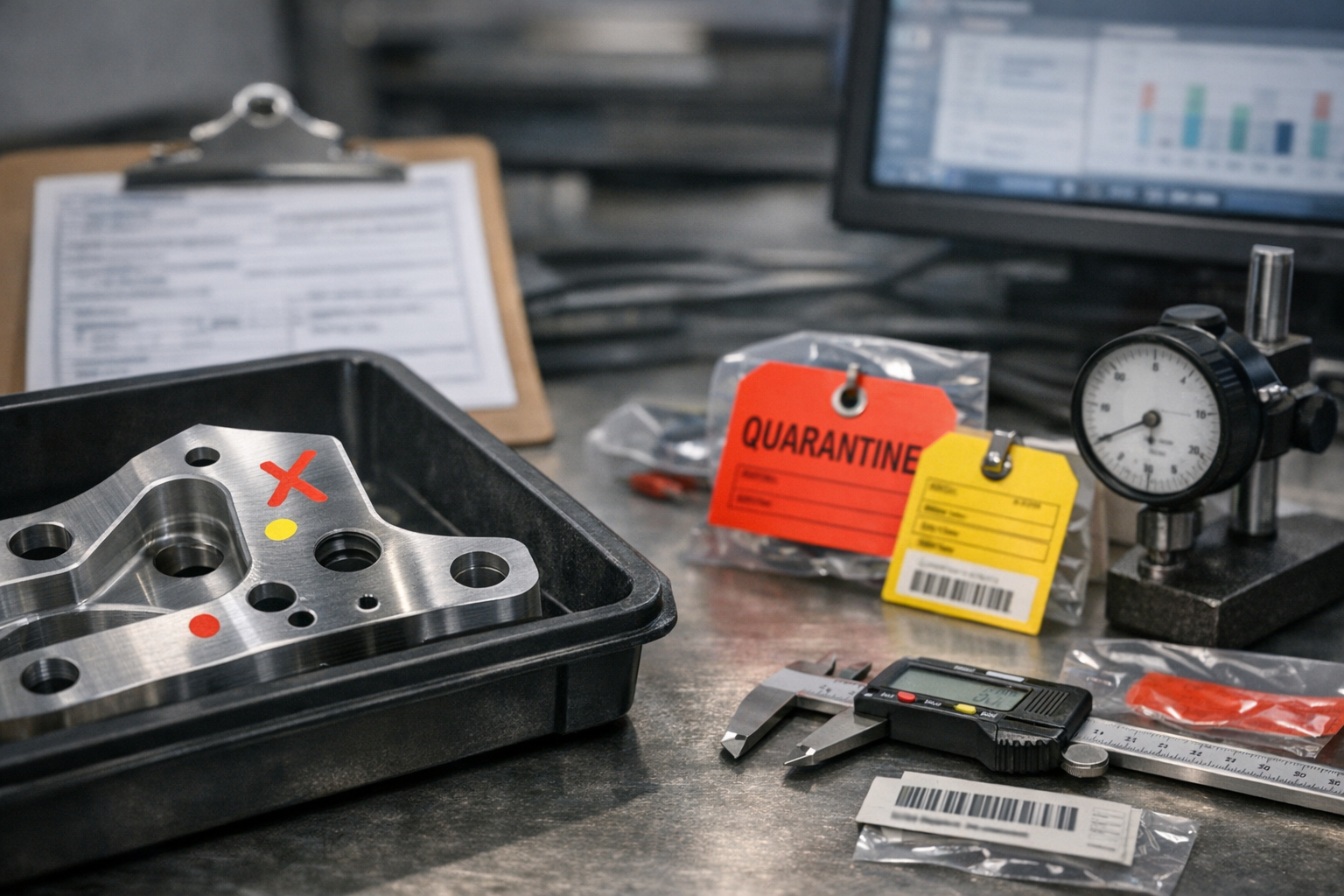
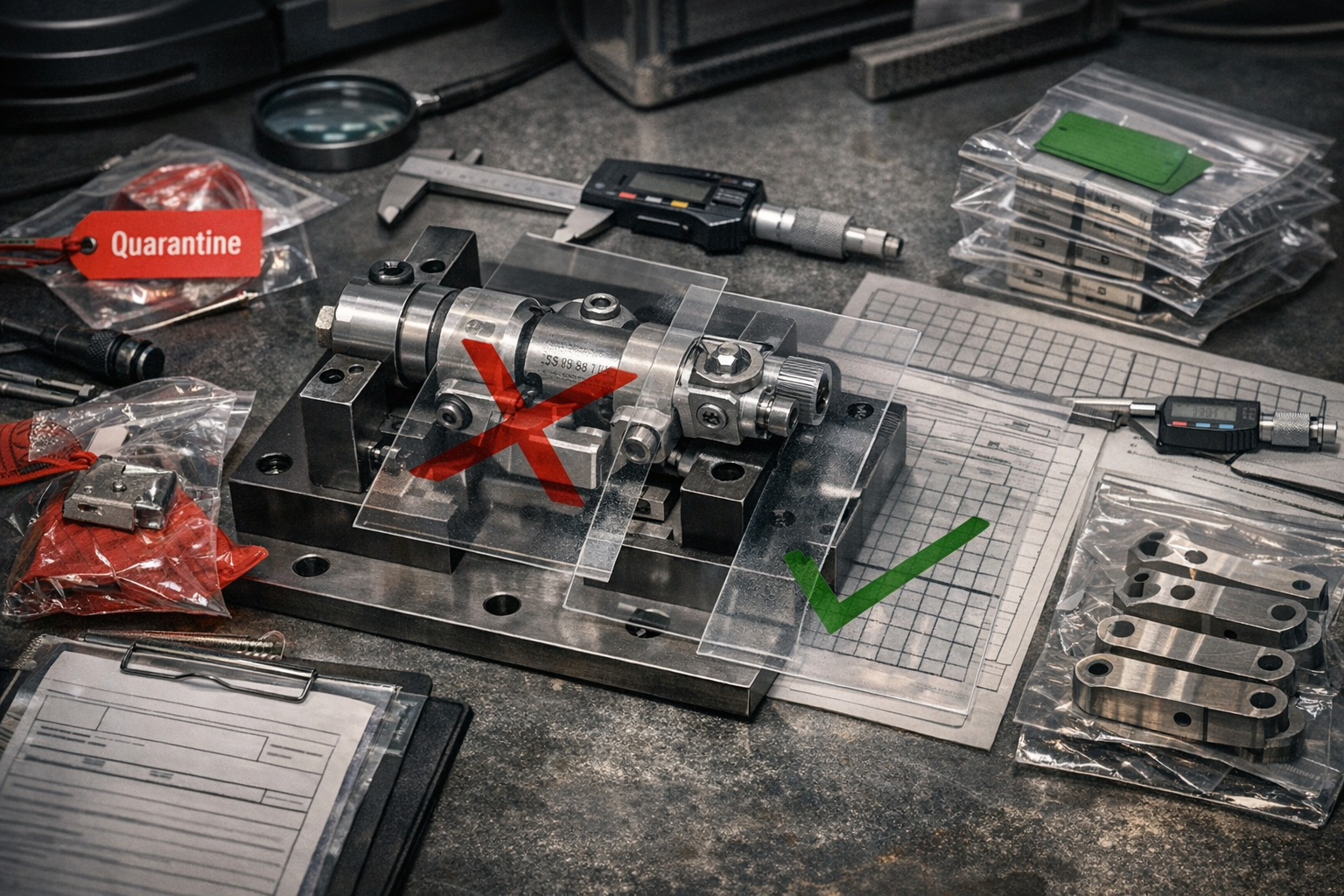
Containment is the first line of defense against AOG and schedule impact, yet responsibility is often diffuse. A non-conforming lot may be partially in stock, partially on the line, and partially at an external processor. Without clear ownership and system-driven tasks, containment becomes inconsistent:
- Material is quarantined in one store but allowed to continue into assembly at another site.
- Work instructions are updated on one shift but not communicated effectively to the next.
- Maintenance finds an issue on-wing but the related parts in production are not flagged, creating future risk.
When containment is slow or incomplete, the eventual disposition often affects a much larger population of parts or aircraft, increasing the likelihood of AOG-level actions.
Fragmented Tracking Across Sites and Shifts
Aerospace programs typically span multiple facilities, time zones, and partner organizations. If NCRs are tracked in local spreadsheets, email folders, or non-integrated MES and QMS tools, no one has a single, reliable view of risk and status. This fragmentation introduces several AOG drivers:
- Open NCRs on safety-critical components that are invisible to the teams planning maintenance or delivery slots.
- Duplicate investigations into the same underlying condition at different sites, wasting engineering capacity and delaying real root cause analysis.
- Missed escalation thresholds because there is no consolidated dashboard of aging, high-risk NCRs.
Connect 981 and similar digital manufacturing infrastructures address this by creating a unified, cross-site picture where each NCR has a clear owner, status, and operational linkage.
Key Levers to Reduce NCR-Related AOG Risk
Preventing AOG and delivery slips is less about eliminating non-conformances altogether and more about managing them intelligently. Three levers consistently show impact: risk-based prioritization, automated communication, and standardization for high-risk items.
Clarify the operational risk
When the work behind Reducing AOG Risk With Faster affects quality, delivery, or compliance, teams need one place to connect evidence, decisions, and shop-floor follow-through.
Risk-Based Prioritization and Routing
Not all NCRs merit the same urgency. A structured risk model helps route and prioritize work so that scarce engineering and quality resources focus where they protect availability and safety most:
- Technical criticality: Link NCRs to part criticality (for example, flight safety, mission-critical, maintenance-significant) and to the systems they affect.
- Operational impact: Flag NCRs associated with assets in service, in heavy check, or within a defined delivery horizon.
- Regulatory sensitivity: Identify non-conformances that touch certification basis, airworthiness limitations, or mandated inspections.
An NCR with moderate technical severity but direct impact on an AOG recovery may deserve higher priority than a more severe issue on a part still weeks away from use. Digital workflows can codify these rules and push high-risk NCRs to specialized engineering teams with appropriate response-time targets.
Automated Notifications and Escalations
Manual follow-ups—phone calls, reminder emails, spreadsheet extracts—are unreliable mechanisms for managing hundreds or thousands of open NCRs. Automated notification logic reduces latency between events (detection, containment, disposition) and decisions:
- Immediate alerts to responsible engineers when an NCR is raised on a safety-critical serialized component.
- Escalations to functional and program management when high-risk NCRs approach or exceed defined cycle time thresholds.
- Notifications to planning and logistics when a disposition decision changes part availability assumptions.
These mechanisms should be integrated with existing MES, ERP, and engineering tools so that status changes in one system are reflected in others. The goal is to ensure that an NCR never languishes simply because the next actor didn’t see it.
Standardized Templates for High-Risk Parts and Systems
For certain parts—landing gear components, hydraulic actuators, structural joints, propulsion hardware—non-conformances recur in recognizable patterns. Creating standardized NCR templates and investigation checklists for these areas shortens engineering response and improves consistency:
- Pre-defined data fields for loads, environment, material batch, and inspection method relevant to the specific part family.
- Embedded guidance on acceptable deviations, applicable design allowables, and previous dispositions.
- Standard repair schemes or concession criteria that can be rapidly tailored rather than created from scratch.
This standardization works best when supported by a central, searchable knowledge base linked directly to the NCR system, rather than scattered engineering reports on shared drives.
Using Data to Predict and Prevent Disruptions
Non-conformance data is often underused. When integrated into a broader digital thread, it becomes a forward-looking indicator of AOG and schedule risk rather than a static archive for audits.
Identifying Patterns Tied to AOG Events
By correlating historical AOG incidents and major delivery slips with NCR records, organizations can identify specific signatures that signal elevated risk. Examples include:
- Repeated late-stage NCRs on the same subassembly or work center.
- Clusters of non-conformances on parts from specific suppliers or special processes.
- Frequent concessions on the same dimension or feature, indicating design or tolerance issues.
These patterns guide where to focus engineering support, process improvement, or design changes. More importantly, they can feed alerting logic: when similar NCR patterns reappear on current programs, operations teams can proactively protect schedule and fleet availability.
Monitoring Cycle Time for Safety-Critical NCRs
Overall mean time to close NCRs is useful, but safety-critical and AOG-linked NCRs require more granular monitoring. Typical metrics include:
- Average and 90th-percentile disposition time for safety-critical components.
- Time from detection to effective containment on serialized, in-service hardware.
- Number of open high-risk NCRs older than agreed thresholds.
When these indicators degrade, it often signals capacity issues in engineering, process bottlenecks, or insufficient data in initial NCRs. Addressing those upstream problems directly reduces the chance that a future aircraft will remain on the ground while decisions are made.
Proactive Maintenance and Design Improvements
Non-conformance trends also inform reliability engineering and maintenance planning. If NCRs repeatedly surface on the same component in both production and MRO, that may justify:
- More targeted inspection intervals or condition-based monitoring thresholds.
- Design changes that increase manufacturability or reduce sensitivity to process variation.
- Supplier process changes or additional process controls for high-variation steps.
These actions will not eliminate AOG events entirely—operational and environmental factors also play significant roles—but they reduce one of the key controllable contributors: quality-driven disruptions.
Collaborating With Customers on Critical Non-Conformances
For major operators and government customers, how an organization communicates about critical non-conformances during an AOG or high-visibility delivery issue is almost as important as the technical fix.
Communication Protocols During AOG-Related Issues
Structured communication protocols help avoid both under- and over-communication. Typical elements include:
- Pre-defined trigger conditions for customer notification (for example, NCRs affecting in-service fleet, airworthiness limitations, or delivery-critical items).
- Named technical and commercial points of contact on both sides.
- Agreed update cadence during active AOG investigations.
Connect decisions to execution
Connect 981 helps turn this kind of operational detail into traceable action, so the context behind each decision does not get lost.
These protocols should be linked to the NCR system so that when an issue is flagged as customer-notifiable, the corresponding communication workflow starts automatically, with consistent content and traceability.
Sharing Status and Documentation Securely
Customers increasingly expect near-real-time visibility into NCRs that affect their assets or delivery lines, but this has to be balanced with intellectual property and export control constraints. A modern platform approach enables:
- Role-based access to NCR summaries, dispositions, and supporting evidence.
- Time-bound sharing of specific records for joint investigations or regulatory reporting.
- Audit trails of what was shared, with whom, and when.
This transparency builds trust while maintaining control over proprietary design and process data, and simplifies joint root cause analysis during multi-party investigations.
Balancing Transparency With Data Protection
Aerospace programs often involve export-controlled information, classified work, or sensitive defense capabilities. Non-conformance records naturally contain technical detail, so uncontrolled sharing is not acceptable. Effective collaboration therefore relies on:
- Data segregation and tagging (for example, ITAR, EAR, program-restricted) within the NCR system.
- Configurable redaction or abstraction of sensitive details in externally shared reports.
- Alignment between engineering, export control, and legal teams on what can be disclosed under which circumstances.
These controls should be embedded into the digital workflow so that engineers and quality teams can collaborate with customers efficiently without manually managing classification rules each time.
Embedding Lessons Learned Back Into Operations
Reducing AOG and delivery risk is not a one-time project. The value of each closed NCR lies in how well its lessons are captured and reused across the production system and supply chain.
Updating Procedures and Training
When repeat non-conformances drive AOGs or delivery slides, the root causes often point to unclear procedures or inconsistent training. Effective organizations link NCR closure to concrete updates:
- Revision of work instructions, inspection plans, or special process parameters.
- Targeted refresher training for specific roles or certifications.
- Job aids or checklists embedded at the point of use in MES or digital work instructions.
The NCR system should track which procedural changes were triggered by which investigations, making it easier to verify that corrective actions are fully deployed.
Adjusting Inspection Points and Sampling Plans
Non-conformance data is a powerful input to risk-based inspection planning. When particular features or operations are systematically implicated in AOG-related NCRs, organizations can:
- Introduce additional in-process inspections earlier in the routing.
- Increase sampling rates or move from sampling to 100% inspection for selected characteristics.
- Deploy automated inspection technologies where human error is a significant contributor.
Conversely, areas with stable performance and a long history of conforming results can sometimes justify reduced inspection intensity, freeing up quality capacity to focus on higher-risk work.
Tracking Whether Improvements Reduce Future AOG Incidents
Closing the loop requires measuring whether process changes actually reduce operational disruption. Useful indicators include:
- Trend in AOG events where non-conformance was a primary or contributing factor.
- Reduction in repeat NCRs for the same cause, part, or work center.
- Improved adherence to delivery milestones on assemblies historically affected by quality-driven delays.
By linking these outcomes back to specific NCR-driven improvements, organizations build a quantitative case for continued investment in integrated quality systems and digital infrastructure.
Non-conformances will always exist in complex aerospace manufacturing and maintenance environments. The differentiator is how effectively they are detected, contained, investigated, and translated into enduring improvements. When non-conformance management is treated as a core element of the aerospace production system—supported by integrated data, risk-based workflows, and disciplined collaboration—it becomes one of the most powerful tools for controlling AOG risk and protecting delivery performance.