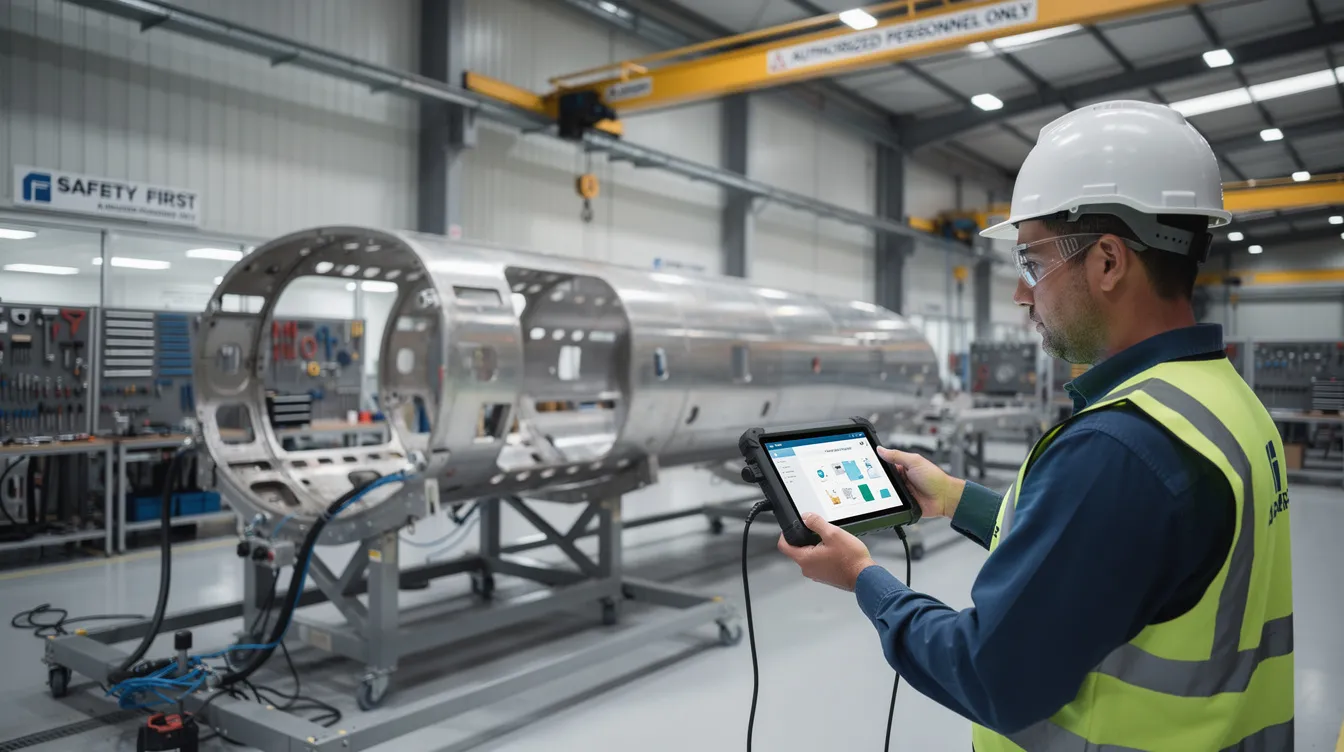
Overview: What AS9100 Is and Why It Exists
AS9100 is the primary quality management system standard for organizations operating in the aviation, space, and defense sectors. The current version, AS9100 Rev D, was released in 2016 and remains the benchmark for aerospace quality management worldwide. It establishes requirements for how aerospace organizations design, manufacture, assemble, test, and service products that must perform reliably under the most demanding conditions.
The standard is published by SAE International and was primarily developed through the collaborative work of the International Aerospace Quality Group, which includes representatives from major aerospace manufacturers and suppliers across the Americas, Europe, and Asia-Pacific. AS9100 is built directly on the ISO 9001:2015 framework, incorporating all of its requirements while adding over 100 aerospace-specific mandates that address the unique demands of safety-critical products and complex global supply chains.
This article focuses on the conceptual and industry-level understanding of AS9100. It does not provide certification guidance, audit preparation advice, or compliance recommendations.
Core characteristics of AS9100 as a standard:
- Defines quality management systems requirements specifically for aviation space and defense organizations
- Builds on ISO 9001 with additional requirements addressing product safety, risk management, configuration management, and traceability
- Applies across all tiers of the aerospace supply chain, from prime contractors to subcontractors and service providers
- Serves as a common quality language recognized by aerospace manufacturers, regulators, and defense organizations globally
Industry Context: Why Aerospace Needs a Dedicated Quality Standard
The aerospace industry operates under conditions that differ fundamentally from most other industry sectors. Products such as commercial aircraft, military platforms, satellites, launch vehicles, and propulsion systems have lifecycles measured in decades. A single airframe may remain in service for 30 years or more, accumulating hundreds of thousands of flight hours while passing through multiple maintenance, repair, and overhaul cycles. Throughout that lifecycle, every component must perform as designed, every modification must be traceable, and every maintenance action must be documented.
The regulatory environment reinforces this reality. Authorities like the Federal Aviation Administration in the United States, EASA in Europe, and defense agencies worldwide impose stringent oversight on design, production, and continued airworthiness. These regulatory requirements reflect the consequences of failure: a nonconforming part in a flight control system, a counterfeit fastener in a structural assembly, or a software anomaly in avionics can result in loss of life, mission failure, or catastrophic asset destruction. The aerospace sector operates with zero tolerance for such outcomes.
A generic ISO 9001 quality management system, while effective for many industries, does not address these specific conditions. ISO 9001 establishes foundational quality management principles around process control, customer satisfaction, and continual improvement. However, it does not require the depth of configuration management, traceability, risk controls, or supplier oversight that aerospace demands. When AS9100 was first released in March 1999, it formalized what aerospace primes and space and defense organizations had already learned: that a sector-specific standard was necessary to codify good practices and reduce organization unique requirements across the supply chain.
The practical environment where AS9100 applies includes OEM final assembly lines building complete aircraft or spacecraft, tier-1 and tier-2 suppliers manufacturing engines, landing gear, avionics, and structural assemblies, and MRO facilities performing heavy maintenance checks on aging fleets. These operations span multiple countries, involve thousands of suppliers, and require consistent quality systems that can coordinate across organizational and geographic boundaries. The result of traceability gaps, configuration errors, or quality escapes in any part of this network can propagate through the entire product lifecycle.

Relationship Between AS9100 and ISO 9001
AS9100 Rev D incorporates all requirements of ISO 9001:2015 verbatim. Every clause, every expectation, and every process requirement in ISO 9001 appears identically in AS9100. Organizations that achieve AS9100 certification inherently satisfy ISO 9001 requirements as well.
ISO 9001 functions as a generic quality management system standard applicable to any organization in any sector. It establishes a process-based approach to managing quality, emphasizing customer focus, leadership engagement, planning, operational controls, performance evaluation, and continual improvement. These quality standards provide a solid foundation for organizations seeking to enhance customer satisfaction and deliver products and services consistently.
AS9100 extends this foundation with aerospace-specific additions that address the elevated risk profile of the sector. Where ISO 9001 introduces risk-based thinking at a conceptual level, AS9100 mandates structured operational risk assessment and mitigation for activities that could affect flight safety, mission success, or regulatory compliance. Where ISO 9001 expects organizations to control documented information, AS9100 adds requirements for configuration management that ensure every product matches its intended design baseline and every change is controlled and traceable throughout the product lifecycle.
The conceptual scope differences are significant. ISO 9001 aims for consistent product quality and customer requirements fulfillment across diverse industries. AS9100 narrows this focus to aerospace operations, where product quality intersects with product safety, where reliability requirements must account for extreme environmental conditions, and where regulatory compliance is not optional but foundational. Specific thematic additions in AS9100 include:
- Extended risk management protocols covering operational, safety, and supply chain vulnerabilities
- Explicit product safety requirements ensuring products perform safely under specified conditions
- Heightened configuration management controls for tracking design baselines, modifications, and as-built records
- Strengthened oversight of external providers, including supplier selection criteria, performance monitoring, and flow-down of quality requirements
- Requirements for counterfeit parts prevention to detect and block unapproved materials from entering the supply chain
- Focus on critical items whose failure could affect safety or mission success
- Emphasis on delivery performance and on-time metrics given the tight schedules of aerospace programs
For readers familiar with ISO 9001, the relationship is straightforward: AS9100 is ISO 9001 plus the additional requirements that aerospace demands.
Development History and Governance of AS9100
The first version of AS9100 was published in March 1999, developed by the Society of Automotive Engineers in collaboration with aerospace industry stakeholders. This original release aligned with ISO 9001:1994 and represented the sector’s first unified attempt to standardize quality practices beyond the patchwork of organization unique requirements that primes had historically imposed on their suppliers.
Subsequent revisions tracked changes in ISO 9001 while incorporating lessons learned from aerospace operations. AS9100 Revision B emerged in the early 2000s, followed by Revision C, which aligned with ISO 9001:2008. The current version, AS9100 Rev D, was released in 2016 to align with the updated QMS model aligned with ISO 9001:2015. Each revision has strengthened requirements around risk management, product safety, and supply chain controls based on industry experience and regulatory expectations.
The International Aerospace Quality Group governs AS9100’s development and maintenance. IAQG includes representatives from three regional groups: AAQG in the Americas, EAQG in Europe, and APAQG in Asia-Pacific. This structure ensures that the standard reflects global aerospace needs rather than the requirements of any single region or prime manufacturer. Major aerospace manufacturers participate directly in IAQG working groups, contributing operational experience and technical expertise to revision cycles.
SAE International serves as the publisher for AS9100 in the Americas. In Europe, the equivalent standard is published as EN9100, and in Japan as JISQ9100. Despite different document numbers, these are technically equivalent standards, ensuring that certification to any one of them is recognized globally. This harmonization supports the international standard recognition that aerospace supply chains require.
Revision cycles are driven by changes in the underlying ISO 9001 framework, lessons learned from aerospace incidents and near-misses, evolving regulatory expectations, and technological advances in areas like composite materials, avionics software, additive manufacturing, and space systems. The forthcoming IA9100 revision is expected to introduce expanded product safety requirements, quality culture and ethical behavior integration, Advanced Product Quality Planning linkages, and a new information security clause reflecting the sector’s digital transformation.
Conceptual Scope of AS9100 in Aerospace Operations
AS9100 covers the full aerospace product lifecycle, from initial design and development through manufacturing, assembly, testing, delivery, and post-delivery support. This scope extends to maintenance, repair, and overhaul activities that sustain products throughout decades of operational service. The standard applies wherever aerospace products and services are realized, regardless of whether the organization is an OEM, a tiered supplier, a distributor, or a maintenance provider.
The types of aerospace organizations that AS9100 targets include:
- Original equipment manufacturers producing complete aircraft, spacecraft, engines, or major assemblies
- Tier-1 and tier-2 suppliers manufacturing components such as landing gear, avionics systems, hydraulic actuators, and structural parts
- Tier-3 and lower suppliers providing raw materials, fasteners, electronic components, and specialized hardware
- Maintenance, repair, and overhaul organizations performing scheduled maintenance, modifications, and repairs on operational fleets
- Service providers supporting aerospace programs through engineering, testing, calibration, or logistics functions
AS9100 emphasizes process-based management. Organizations must define the processes that affect product conformity and safety, establish controls to ensure these processes operate as intended, measure performance to identify gaps, and implement continual improvement to address weaknesses. This approach requires documented process flows, clear responsibilities, defined interfaces between functions, and mechanisms for detecting and correcting nonconformities before they reach customers.
In daily operations, AS9100 requirements manifest in tangible ways. Build packages contain controlled work instructions with revision control ensuring every operator follows current procedures. Serialized parts carry documented histories that trace their origin, processing, inspection results, and installation location. Nonconformities trigger formal disposition processes that evaluate impact, determine root causes, and implement recurring corrective actions to prevent recurrence. Internal audits verify that processes operate as designed and that records support the objective evidence required by interested parties including regulators, primes, and customers.
Core Aerospace-Specific Quality Themes in AS9100
AS9100’s differentiation from ISO 9001 centers on several major aerospace-specific themes that reflect the sector’s risk profile, regulatory environment, and operational complexity. These themes are not isolated clauses but interconnected concepts that shape how aerospace organizations manage quality throughout the product lifecycle.
The key themes include:
- Product safety: Requirements ensuring that aerospace products can be safely used under specified conditions, with controls that identify and mitigate potential risks to passengers, crew, and ground personnel
- Operational risk management: Structured approaches to identifying, assessing, and controlling risks that could affect product conformity, flight safety, mission success, or regulatory compliance
- Configuration management: Disciplines ensuring that each product conforms to its intended design baseline, with every change controlled, documented, and traceable
- Reliability and maintainability: Considerations for how products will perform over extended service lives and how maintenance requirements are addressed in design and documentation
- External provider controls: Expanded oversight of suppliers, subcontractors, and special process houses to ensure quality requirements flow down through the supply chain
Digital traceability and documentation integrity are woven throughout these themes. Serial and lot management, first article inspection records, lifetime maintenance histories, and engineering change documentation all depend on accurate, accessible, and controlled information systems. The data that supports AS9100 compliance must be consistent across factories, suppliers, and MRO facilities.
These themes connect directly to typical aerospace workflows: build packages that guide assembly operations, engineering change incorporation that modifies production configurations, maintenance records that document every action performed on an aircraft, and cross-site data consistency that enables global supply chain management.
Risk-Based Thinking and Operational Risk in Aerospace
AS9100 extends ISO 9001’s risk-based thinking into structured operational risk management with explicit focus on aerospace-specific hazards. While ISO 9001 expects organizations to consider risks and opportunities when planning their quality management system, AS9100 mandates that this thinking be applied systematically to activities that could affect flight safety, mission success, and regulatory compliance.
Aerospace operational risks take many forms. Hardware failures in flight-critical systems can result in loss of control. Software anomalies in avionics can corrupt navigation or flight management data. Maintenance errors during heavy checks can introduce latent defects that remain undetected until operational stress reveals them. Disruptions to single-source critical suppliers can halt production lines and delay aircraft deliveries. Human factors in assembly or maintenance can lead to incorrectly installed components, missed inspection steps, or documentation errors that mask nonconformities.
AS9100 expects organizations to identify, assess, and control these potential risks not only during product design but also throughout production, servicing, and change management activities. A missed torque sequence on a flight-critical fastener, a misrouted wire harness in an avionics bay, or an undocumented deviation from an approved repair procedure all represent operational risks that the standard requires organizations to address through their quality systems.
The emphasis is on prevention rather than detection. AS9100’s approach to risk management aims to build controls into processes before problems occur, reducing variation and eliminating conditions that could lead to nonconforming outputs.
Product Safety and Configuration Management
Product safety in AS9100 refers to the state where an aerospace product can be safely used under specified conditions throughout its lifecycle. This concept extends beyond manufacturing quality to encompass design decisions, maintenance procedures, operational limits, and documentation that together ensure safe operation in service.
Configuration management is the discipline that binds design intent to physical reality. Every aircraft, engine, or subsystem exists in a specific configuration state defined by its design baseline, approved modifications, and as-built records. Configuration management ensures that:
- Design data accurately reflects the intended product configuration
- Production documentation translates design intent into manufacturing instructions
- As-built records capture the actual configuration of each delivered product
- Changes are controlled through formal processes that evaluate impact, approve modifications, and update affected documentation
Concrete examples illustrate why this matters. An aircraft fleet may include airframes at different modification states, some incorporating service bulletins while others remain at the original configuration. Managing this variation requires precise records that show exactly which modifications have been incorporated on each tail number. Avionics systems may run different software versions depending on when they were manufactured or last updated, and tracking these versions is essential for troubleshooting, maintenance planning, and regulatory compliance. Composite structures may be produced using approved process variations that affect material properties, and knowing which variation applies to each part is critical for structural analysis and repair decisions.
AS9100 conceptually binds design data, production documentation, and actual physical configuration together. When these elements align, products conform to their approved design and can be certified as airworthy. When mismatches occur, the consequences can include grounded aircraft, costly rework, regulatory findings, or safety events.
Counterfeit Parts, Traceability, and External Providers
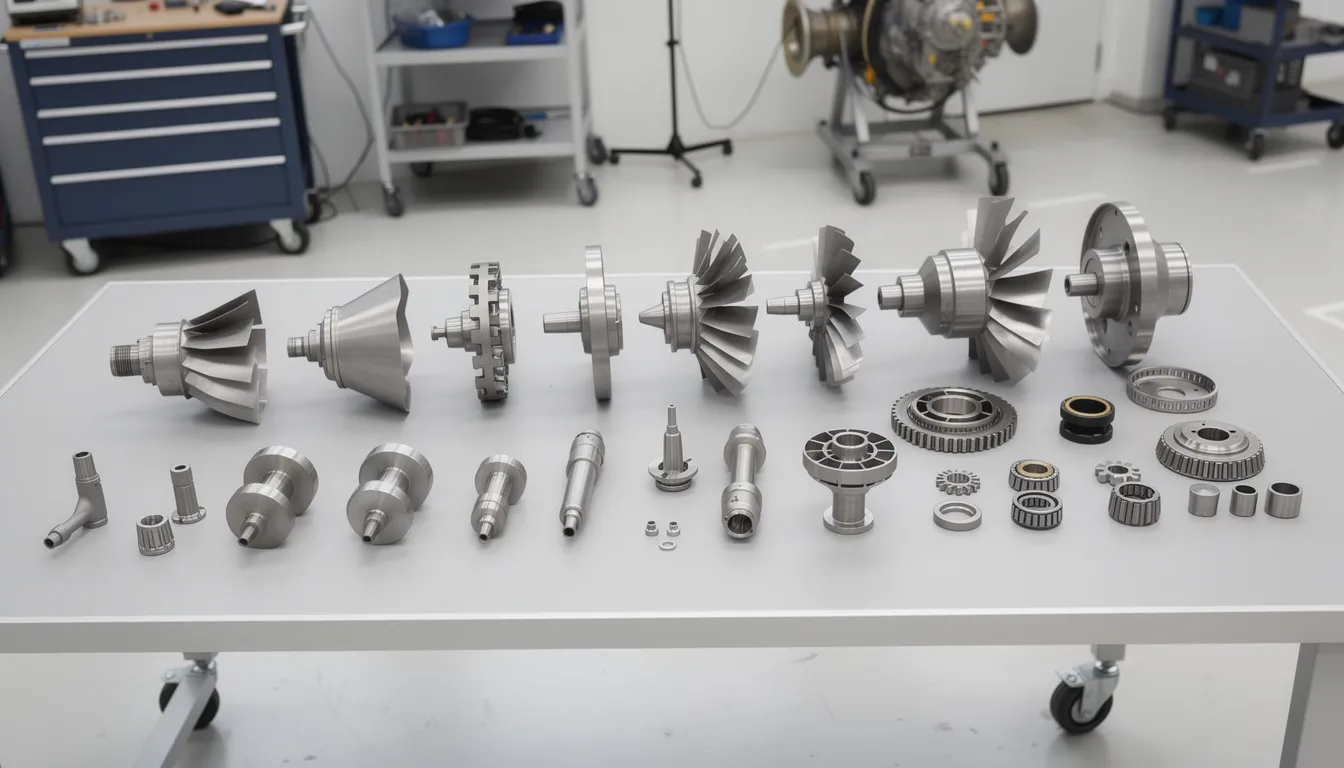
The aerospace sector faces particular exposure to risks from counterfeit or unapproved parts. Global supply chains, long product lifecycles, and high component values create incentives for fraudulent materials to enter the system. Examples include unauthorized fasteners that fail to meet strength specifications, electronic components with falsified certifications, and so-called “paper parts” that exist only in documentation while substandard materials are actually supplied.
AS9100 addresses counterfeit parts prevention through requirements that organizations detect and block unapproved materials before they enter production or maintenance activities. This includes supplier controls, incoming inspection protocols, documentation verification, and awareness training for personnel who handle parts and materials.
Traceability is the foundation that makes counterfeit detection possible. AS9100 requires that aerospace components carry documented histories tracing their origin, material certifications, processing records, inspection results, and movement through the supply chain. For safety-critical items, this traceability extends throughout the product lifecycle, enabling investigations when anomalies occur and supporting airworthiness determinations during maintenance events.
The standard also places significant emphasis on controlling external providers. Aerospace organizations depend on suppliers, subcontractors, and special process houses that perform work affecting product conformity. AS9100 requires that quality requirements flow down to these external providers, that their performance is monitored through supplier selection and evaluation processes, and that objective evidence confirms requirements conformance. The OASIS database maintained by IAQG provides a registry where aerospace suppliers can demonstrate their certification status, supporting supply chain visibility across the aerospace and defense industry.
These themes connect to the reality of globalized aerospace supply networks. OEMs, suppliers, and MRO partners must share reliable data to maintain the integrity of products that may cross dozens of organizational boundaries before reaching operational service.
AS9100 in the Broader Aerospace Standards Ecosystem
AS9100 serves as the core quality management system reference for aerospace, but it operates within a broader ecosystem of standards that address specific segments, processes, and requirements. Understanding this ecosystem helps clarify how AS9100 relates to other standards referenced in contracts, specifications, and regulatory frameworks.
Related aerospace management systems standards include:
Standard
Scope
AS9100
QMS for design, manufacturing, and service organizations
AS9110
QMS for maintenance, repair, and overhaul organizations
AS9120
QMS for stockists and distributors
AS9102
First article inspection requirements
AS9103
Requirements conformance measure variation management
AS9145
Requirements for Advanced Product Quality Planning
These standards share a common foundation in ISO 9001 but add specific requirements relevant to their scope. An MRO organization might hold AS9110 certification, while a hardware distributor might hold AS9120. Both standards build on the same quality management principles but address the distinct operational realities of their sectors.
Regulators, primes, and defense organizations often expect alignment with AS9100 principles even when contracts reference additional quality standards. NADCAP accreditation for special processes like heat treatment, welding, or nondestructive testing represents another layer of aerospace quality assurance that works alongside AS9100 certification. An aerospace company may require certification to AS9100 as a baseline while also requiring NADCAP accreditation for suppliers performing critical processes.
AS9100 sits at the center of this layered environment, providing the foundational management system structure that other standards and requirements build upon.
Digital Operations, AS9100, and the Role of Platforms like Connect981
Modern aerospace operations increasingly depend on digital systems to uphold AS9100 expectations around documentation control, traceability, quality assurance, and record retention. The volume and complexity of data that aerospace organizations must manage, from build packages and work instructions to serial number histories and nonconformance records, exceeds what paper-based or disconnected systems can reliably handle.
Connecting ERP, MES, PLM, QMS, and supplier data into a single operational layer helps organizations maintain consistent, audit-ready information across factories and supply chains. When data flows seamlessly between systems, the risk of configuration mismatches, traceability gaps, and documentation errors decreases. Quality leaders can monitor requirements conformance measure metrics in real time rather than discovering problems during internal audits or customer reviews.
Typical AS9100-relevant workflows that benefit from digitalization include:
- Electronic work instructions with version control ensuring operators follow current procedures
- Serialized parts tracking that maintains documented histories from receiving through final assembly
- Defect logging and nonconformance documentation with automated routing for disposition decisions
- Supplier quality visibility enabling real-time insight into external provider performance
- First article inspection records linked to production data for validation of new parts or processes
- Audit trail generation that demonstrates objective evidence of conformance to interested parties
The Connect981 platform is an aerospace-focused operations layer that supports these kinds of AS9100-aligned quality and traceability workflows. By connecting shopfloor execution, supplier data, documentation control, and quality processes in a unified system, Connect981 helps aerospace organizations maintain the data integrity and process control that AS9100 conceptually requires. The platform is designed for fast deployment with minimal IT overhead, enabling organizations to digitize critical workflows without the complexity of full MES or ERP replacement.
This digital infrastructure does not guarantee compliance; that remains the responsibility of each organization’s management system. However, connected operations make it easier to operate within AS9100’s conceptual framework and demonstrate conformance when customers, regulators, or certification bodies require evidence.

Summary: Conceptual Impact of AS9100 on Aerospace Quality
AS9100 represents the aerospace-specific extension of ISO 9001 that formalizes how organizations manage quality, safety, and risk across complex, regulated product lifecycles. It provides the structural foundation for effective quality management system implementation in aviation, space, and defense while addressing the sector’s unique demands for product safety, configuration control, and supply chain integrity.
The main conceptual differences from ISO 9001 center on deeper risk integration, explicit product safety focus, rigorous configuration management, heightened traceability requirements, and elevated expectations for supplier oversight. These additions reflect the aerospace sector’s reality: products must perform reliably under extreme conditions, regulatory requirements must be satisfied, and failures carry consequences that extend far beyond typical manufacturing environments.
Industry-wide, AS9100 provides a common language and structure for OEMs, aerospace suppliers, and MRO providers to align their quality systems, data flows, and daily operations. This standardization reduces organization unique requirements, minimizes supply chain variation, and enables the consistent delivery of products that meet customer requirements and regulatory expectations.
Evolving aerospace technologies, including advanced materials, digital systems, additive manufacturing, and autonomous platforms, will continue to shape future revisions of AS9100. The digital infrastructures that support these quality systems, including platforms like Connect981, will play an increasingly important role in helping aerospace organizations maintain the documentation control, traceability, and process visibility that the standard demands. Organizations that understand AS9100 conceptually are better positioned to operationalize its requirements and deliver products that meet the aerospace industry’s uncompromising standards for safety and reliability.
For aerospace manufacturing and MRO teams seeking digital support for AS9100-aligned workflows, request a demo of Connect981 to see how a unified operations layer can strengthen documentation control, traceability, and quality processes across your organization.