Tag: manufacturing standards

  • IEC 62264 Manufacturing Operations: Standards-Aligned Overview

    IEC 62264 Manufacturing Operations: Standards-Aligned Overview

    Manufacturing enterprises operating across multiple sites, suppliers, and jurisdictions face a persistent challenge: how to describe what happens between business planning and the physical processes on the factory floor. The answer, for many global organizations, lies in IEC 62264.

    This international standard series provides a common framework for enterprise control system integration, giving manufacturers a shared vocabulary for how enterprise systems and control systems exchange information. For aerospace organizations coordinating production, maintenance, and quality operations across complex supply chains, IEC 62264 offers a neutral reference that supports consistent communication regardless of geography or technology platform.

    This blog post examines the scope and purpose of IEC 62264, its relationship to ISA 95, and its role in global manufacturing operations.

    What Is IEC 62264 in Manufacturing Operations?

    IEC 62264 is the internationally adopted version of the ISA-95 enterprise and control system integration standard, focused specifically on manufacturing operations management at Level 3 in the hierarchical model. Published by the International Electrotechnical Commission, IEC 62264 provides a common reference model for how business planning and logistics systems (Level 4) interact with manufacturing operations and control functions (Levels 3 and 2).

    The standard exists to serve as a globally recognized counterpart to the ISA-95 series originally developed by the International Society of Automation. While ISA-95 carries ANSI/ISA designation, IEC 62264 enables organizations worldwide to reference the same technical content through their national or regional standards frameworks.

    IEC 62264 is widely applied in discrete, batch, and continuous manufacturing sectors. It holds particular relevance for aerospace and MRO operations that rely on interconnected systems including enterprise resource planning, manufacturing execution systems, product lifecycle management, and quality management systems. These environments require precise coordination of production orders, maintenance records, traceability data, and compliance documentation across multiple facilities and suppliers.

    Connect981 is a platform built for aerospace manufacturing and MRO teams that aligns to IEC 62264 and ISA-95 concepts. Its approach to organizing digital work instructions, traceability, and supplier workflows reflects the levels, information flows, and terminology established by these standards.

    Scope and Purpose of IEC 62264

    IEC 62264 defines models, terminology, and interfaces that describe how enterprise systems and manufacturing operations exchange information. It does not prescribe specific technologies or software products. Instead, it provides a conceptual framework that allows different stakeholders, vendors, and sites to interpret and design systems consistently.

    The core scope centers on control system integration, specifically the interactions between:

    Level

    Domain

    Examples

    Level 4

    Business planning and logistics

    ERP, supply chain planning, order management

    Level 3

    Manufacturing operations management

    MES, MOM, production scheduling, quality management

    Level 2

    Supervisory control

    SCADA, DCS, supervisory systems

    Level 1

    Sensing and manipulating

    Sensors, actuators, devices

    Level 0

    Physical processes

    Actual production equipment and physical assets

    The purpose of IEC 62264 is to standardize how manufacturing activities, information objects, and information flows are described. This standardization allows organizations to map their existing systems into a common reference architecture without requiring a complete technology overhaul.

    For aerospace and MRO organizations, this scope supports consistent handling of:

    • Production orders and work schedules
    • Maintenance orders and equipment states
    • Quality data and inspection records
    • Materials, lot tracking, and serialization
    • Resource allocation across plants and suppliers

    The standard’s purpose is informational and modeling-oriented. It defines activity models and object models. It does not mandate how those models should be implemented in any specific technology or business processes.

    Relationship Between IEC 62264 and ISA-95

    IEC 62264 and ISA 95 cover the same conceptual territory. They were developed in close coordination, with IEC 62264 effectively mirroring the content of ISA-95 for international use.

    ISA-95 was first developed and published by ISA in the mid-1990s and early 2000s. The standard addressed a critical functional gap: the interface between enterprise functions operating at Level 4 and process control functions operating at Level 2. When this content achieved sufficient technical maturity, it was adopted and published by the IEC as the IEC 62264 series to provide a global electrotechnical standard.

    The part structure aligns closely between the two series:

    ISA-95 Part

    IEC 62264 Part

    Focus Area

    ISA-95 Part 1

    IEC 62264-1

    Models and terminology, Level 3-4 interface

    ISA-95 Part 2

    IEC 62264-2

    Object model attributes

    ISA-95 Part 3

    IEC 62264-3

    Activity models of MOM

    ISA-95 Part 4

    IEC 62264-4

    Object models and attributes

    ISA-95 Part 5

    IEC 62264-5

    Business-to-manufacturing transactions

    Conceptually, both series share the same hierarchical model defined for organizing manufacturing levels, the same object models for entities like materials and equipment, and the same activity models for production, maintenance, quality, and inventory operations. Document layouts and editorial details may differ between ISA and IEC publications, but the technical substance remains equivalent.

    Connect981’s information model and workflows are designed to be understandable in both ISA-95 and IEC 62264 terms. This helps aerospace teams collaborate across global partners who may refer to either naming convention.

    Why IEC Versions Exist Alongside ISA Standards

    ISA is a professional society. IEC is a formal international standards body recognized by many national standards organizations and regulators. This distinction explains why both designations exist for the same technical content.

    IEC 62264 exists to provide the ISA-95 concepts in a format that can be adopted as national or regional electrotechnical standards. In Europe, for example, CENELEC can adopt IEC standards directly. Other national committees worldwide follow similar processes. When organizations reference IEC 62264, they reference a standard with formal international standing.

    Several practical factors drive this dual publication approach:

    • Procurement and contracts: Many countries and procurement frameworks reference IEC standards explicitly. Having IEC 62264 makes it easier for multinational manufacturers to align on a single international reference.
    • Regulatory alignment: Different jurisdictions have different standards bodies. IEC publication provides equal weight across multiple regulatory environments.
    • Community coordination: The coexistence of ISA-95 and IEC 62264 allows both automation professionals and national standards bodies to work from a harmonized conceptual base while following their own publication processes.

    This dual publication is especially important in global industries such as aerospace. OEMs, Tier-1 suppliers, and MRO providers must coordinate standards language across multiple jurisdictions. A supplier in Germany can reference IEC 62264 knowing that a customer in the United States recognizes the same technical content under the ISA-95 designation.
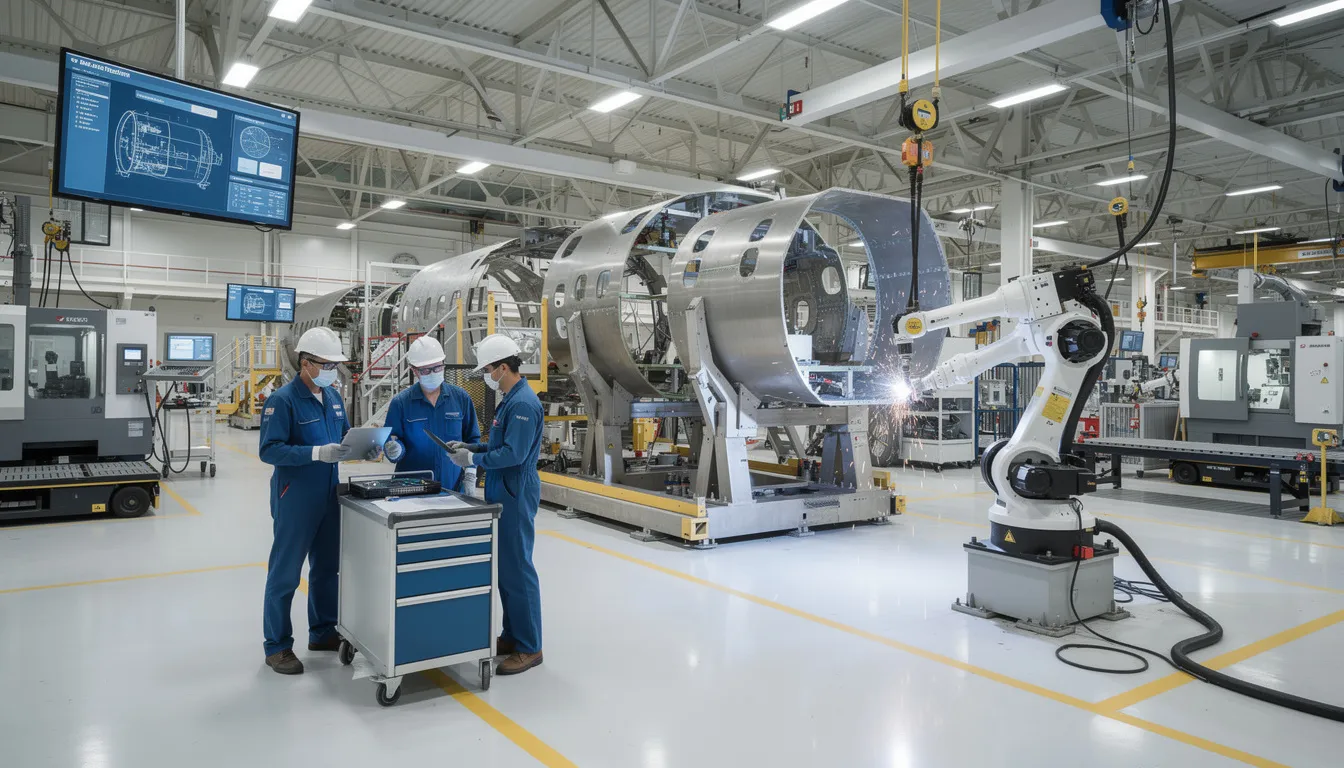
    The image depicts an industrial aerospace manufacturing floor bustling with workers collaborating alongside automated equipment, showcasing the integration of enterprise control systems and manufacturing operations. This environment highlights the synergy between technology and business processes, emphasizing the efficient management of manufacturing activities within the aerospace sector.

    How IEC 62264 Mirrors ISA-95 Conceptually

    The technical content of IEC 62264 is designed to be conceptually equivalent to ISA-95. Models, definitions, and terminology align across both series by design.

    Both standards use a hierarchical view of manufacturing based on the Purdue Reference Model. This layers defined structure organizes technology and business processes from physical production (Level 0) up through business planning (Level 4). The hierarchy provides a common reference for discussing where different systems and functions operate.

    In both ISA-95 and IEC 62264, Level 3 (Manufacturing Operations Management) breaks into four key activity areas:

    Activity Area

    Scope

    Production operations

    All the activities related to converting materials into products

    Maintenance operations

    Activities taking place to maintain equipment availability

    Quality operations

    Activities related to measuring and verifying product and process quality

    Inventory operations

    Activities for managing materials and storage

    Both series define similar object models for entities such as:

    • Material (material lots, sublots, serial numbers)
    • Equipment (work centers, production units, storage zones)
    • Personnel (qualifications, assignments)
    • Process segments (routing steps, operations)

    These object models enable consistent descriptions of what is being planned, executed, and recorded across manufacturing operations domain applications.

    Connect981 uses these same conceptual objects and levels. Work orders, routing, resources, and quality records map cleanly to IEC 62264 and ISA-95 aligned architectures. This alignment makes it easier to integrate enterprise system data with shopfloor execution.

    IEC 62264 Part Structure for Manufacturing Operations

    IEC 62264 is organized into multiple parts, each addressing a specific aspect of enterprise and control integration. Understanding this structure helps organizations locate the relevant models and terminology for their needs.

    IEC 62264-1: This part establishes the foundational framework, including the five-level hierarchy, the manufacturing operations management domain definition (Level 3), and the interfaces between Level 3 and Level 4. The latest edition includes extended functional and equipment hierarchies, a physical asset equipment model, and generic models of manufacturing operations management categories. The interface content describes what information flows between manufacturing operations and other enterprise functions.

    IEC 62264-2: Focuses on object model attributes for information exchanges between enterprise and control domain systems.

    IEC 62264-3:2016: The second edition defines activity models of manufacturing operations management. It covers production operations management, maintenance operations management, quality operations management, and inventory operations management. The 2016 update consolidated information and aligned terminology with other parts.

    IEC 62264-4: Covers object models and attributes used in manufacturing operations, specifying the precise data structures for data exchange between functions.

    IEC 62264-5: Addresses business-to-manufacturing transactions, defining how to enable enterprise system communication with manufacturing operations management systems.

    The updates across editions have focused on aligning terminology across parts and maintaining consistency with ISA-95 equivalents. Aerospace organizations often use Level-3 activity and object models as a reference for aligning ERP order management, MES systems, and shopfloor execution tools like Connect981.

    IEC 62264-3:2016 and Manufacturing Operations Management (MOM)

    IEC 62264-3:2016 is the second edition that defines activity models of Manufacturing Operations Management (MOM). It clarifies the role of Level 3 as the operational layer between business planning (Level 4) and control (Level 2).

    The activity models in IEC 62264-3:2016 provide a structured way to describe what Level 3 actually does. The models cover:

    • Production operations management: Detailed production scheduling, production dispatching, production execution management, and production data collection
    • Maintenance operations management: Maintenance scheduling, dispatching, execution, and tracking
    • Quality operations management: Quality test management, inspection coordination, and quality data collection
    • Inventory operations management: Material movement, storage management, and inventory tracking

    These models operate independently of any specific software or hardware. They can describe both traditional MES implementations and newer digital operations platforms. The purpose is to enable information collection and coordination across manufacturing activities regardless of the underlying technology.

    This edition updated terminology and cross-references to align with IEC 62264-1 and IEC 62264-4. Activity descriptions and object models use consistent naming across the entire standard series.

    Connect981 aligns its features with these MOM activity areas. Digital work instructions, traceability, quality checks, and supplier workflows map to the production, quality, and maintenance operations described in IEC 62264-3:2016. This mapping helps aerospace teams describe their processes using standards-aligned language.
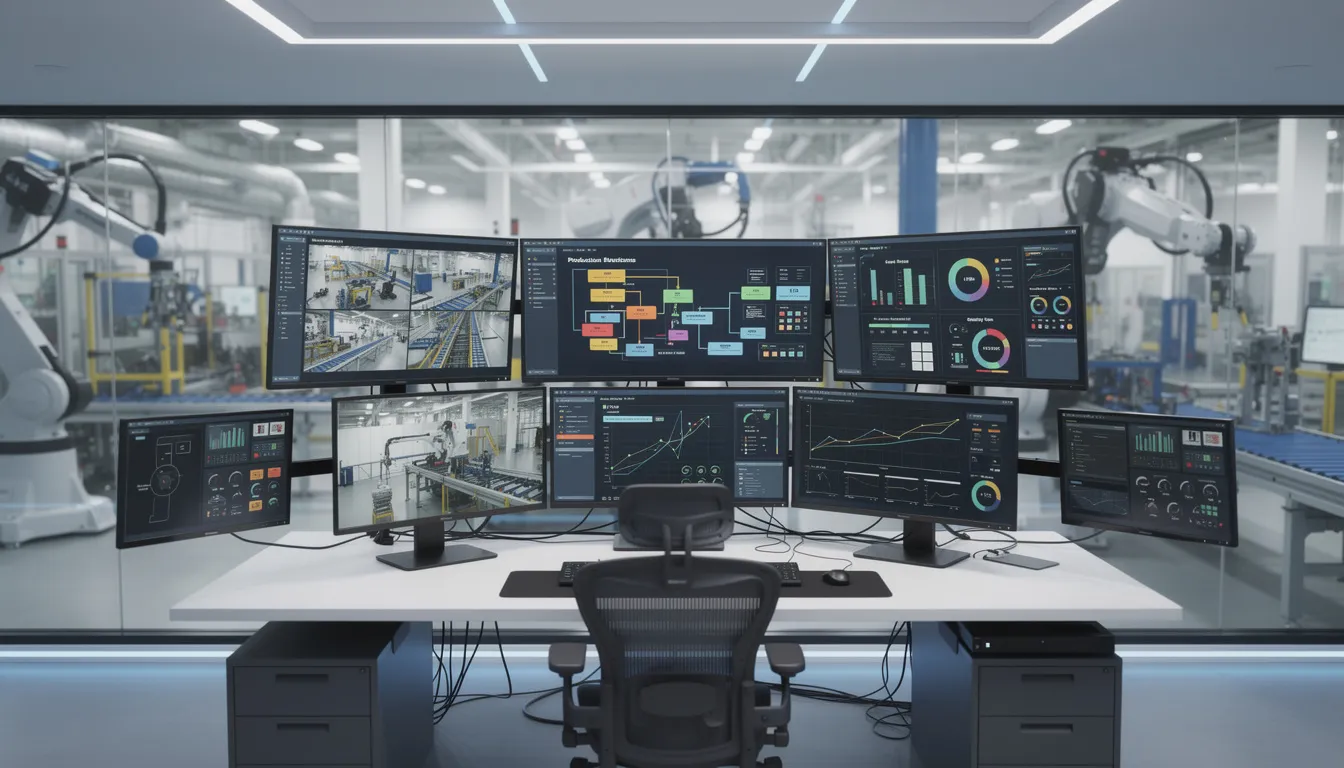
    The image depicts a modern control room filled with multiple monitors that display real-time data related to manufacturing operations management. This setup illustrates the integration of enterprise control systems, enabling efficient monitoring and management of business and manufacturing activities.

    Terminology and Consistency Between IEC 62264 and ISA-95

    One of the key aims of both IEC 62264 and ISA-95 is to provide a stable, shared vocabulary for enterprise-control system integration. This interface terminology allows different organizations to describe the same operations the same way.

    The two series coordinate on terminology for key concepts:

    Term

    Definition

    Manufacturing Operations Management

    Level 3 functions that manage manufacturing operations

    Process segment

    A logical grouping of manufacturing operations

    Material lot

    A specific quantity of material with common properties

    Equipment

    Physical assets used in manufacturing

    Work center

    A grouping of equipment for production purposes

    Production schedule

    A plan for production activities over time

    Revisions such as those in IEC 62264-3:2016 have explicitly updated terms to align with naming conventions in other parts (for example, IEC 62264-4) and with their ISA-95 counterparts. This deliberate alignment ensures models and terminology remain consistent across the entire standard family.

    This terminology consistency allows documentation, system specifications, and cross-site process descriptions to remain coherent whether a stakeholder references the ISA or IEC designation. When different parties in a supply chain use the same terms for the same concepts, integration becomes more straightforward.

    Connect981 uses this standards-aligned vocabulary in its data model and user interfaces where practical. This helps aerospace and MRO organizations describe the same operations the same way across OEMs, suppliers, and regulators.

    Role of International Standardization in Manufacturing Operations

    International standardization through bodies like the IEC enables manufacturers, technology providers, and regulators across different regions to share a common framework for describing manufacturing operations. This role is especially important for industries with global supply chains.

    IEC 62264 supports interoperability by giving different systems a shared reference for how information should be structured at the boundaries between business and manufacturing. When an ERP system needs to communicate with an MES, or when an MES needs to exchange data with a QMS, IEC 62264 provides the conceptual framework for describing what information should flow and how it should be structured.

    In global aerospace supply chains, this international alignment is crucial for coordinating:

    • Production schedules across multiple manufacturing sites
    • Quality data shared between OEMs and suppliers
    • Maintenance records for aircraft components across MRO providers
    • Compliance documentation required by different regulatory authorities

    International standards make it easier for software platforms to interoperate with existing systems. Because the information flows can be modeled using widely understood IEC 62264 and ISA-95 concepts, integration projects can proceed from a shared reference point rather than custom definitions.

    IEC 62264’s role is to provide a neutral, well-defined language for manufacturing operations. This supports long-term consistency even as specific technologies, architectures, and tools evolve. The standard organizes technology choices without mandating them.

    IEC 62264, Smart Manufacturing, and Aerospace Digital Operations

    IEC 62264’s models connect directly to current themes such as smart manufacturing, Industry 4.0, and connected aerospace operations. The standard’s technology-agnostic architecture remains valid as organizations adopt new capabilities.

    Similar to ISA-95, IEC 62264 offers an architecture that accommodates:

    • IoT devices and sensor networks at Levels 0-2
    • Cloud analytics and reporting systems
    • AI-driven insights and predictive analytics
    • Digital thread initiatives connecting design through production
    • Automation across manufacturing and quality processes

    Aerospace and MRO organizations can use IEC 62264 concepts to describe how information should move between:

    • Planning systems: Build plans, maintenance programs, production schedules
    • Operations systems: Work execution, inspections, resource allocation
    • Supporting systems: Configuration management, certification records, audit trails

    The hierarchical model and activity models provide a stable reference even as the underlying technology changes. An organization can modernize its industrial control systems, adopt new information technology platforms, or implement advanced automation while maintaining alignment with the same conceptual framework.

    Platforms like Connect981 implement digital work instructions, traceability, supplier collaboration, and real-time reporting in ways that fit naturally into the Level 3 Manufacturing Operations Management space described by IEC 62264-3. This alignment provides several advantages:

    • Clear boundaries between what enterprise systems manage and what shopfloor systems manage
    • Consistent terminology for describing product offerings and system capabilities
    • A reference for how information should flow between applications performing business functions and those managing physical production

    By aligning digital operations platforms with IEC 62264 and ISA-95 concepts, aerospace manufacturers and MRO providers can modernize their operations while keeping a clear, standards-aligned structure for information and responsibilities. The result is operations that increase uniformity across sites and suppliers without requiring all parties to use identical technology platforms.
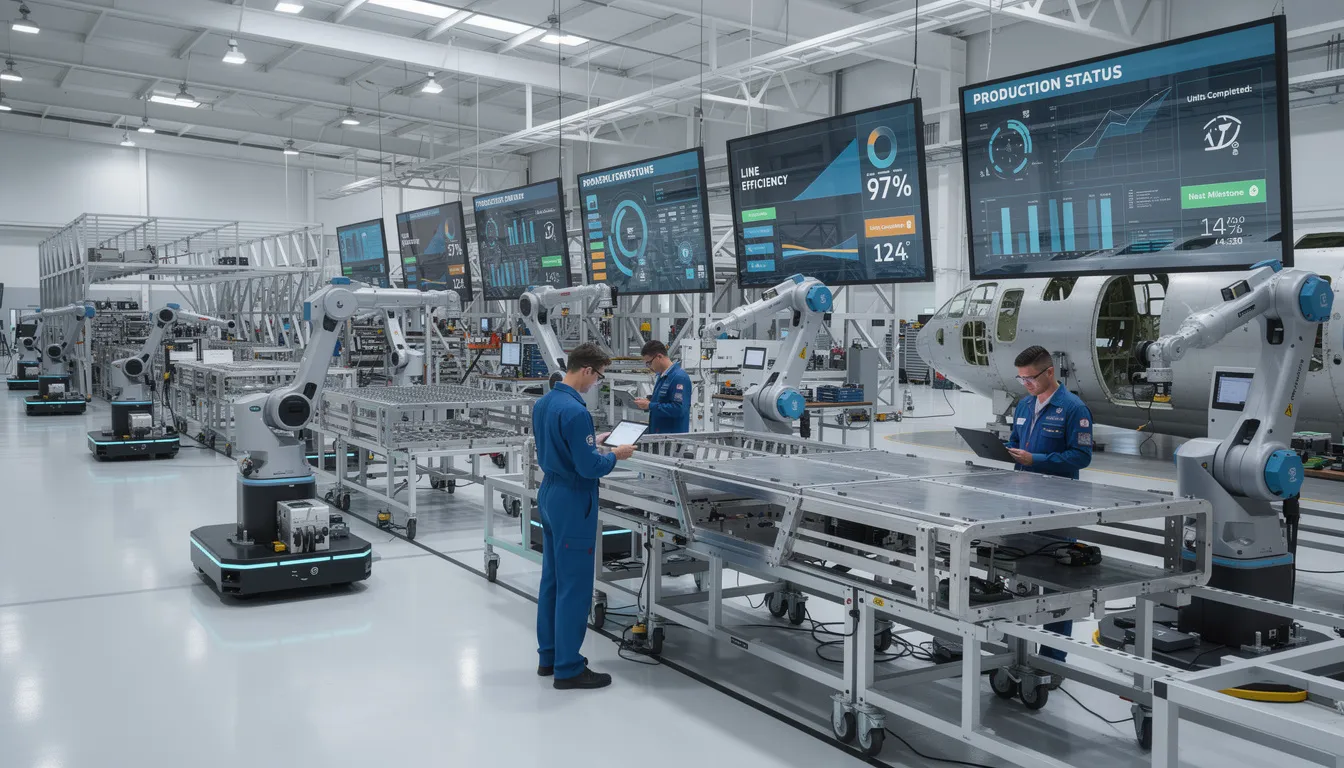
    The image depicts an aerospace manufacturing facility featuring digital displays that showcase real-time production information, reflecting the integration of control systems and manufacturing operations management systems. This environment emphasizes the importance of enterprise control system integration and efficient management of manufacturing activities.

    IEC 62264 provides the neutral, well-defined language that global aerospace manufacturing operations require. Its conceptual mirroring of ISA-95 ensures that organizations referencing either designation work from the same technical foundation. For aerospace teams coordinating production, maintenance, quality, and supply chain activities related to complex product offerings, this standards alignment supports consistent communication across other domains and systems.

    Connect981 is designed with these IEC 62264 and ISA-95 concepts in mind, organizing digital aerospace manufacturing and MRO workflows around the same levels, objects, and activities that the standards describe. To see how this standards-aligned approach works in practice, request a demo and explore how Connect981 fits into your operations architecture.
  • What is ISA-88? A Practical Overview of the Batch Control Standard

    What is ISA-88? A Practical Overview of the Batch Control Standard

    What is ISA-88?

    ISA-88, formally known as ANSI/ISA-88.01-1995 and also referenced as S88 or IEC 61512, is an international standard that defines models and terminology for batch control in manufacturing processes. The standard originated from the work of the International Society of Automation (ISA) SP88 committee in the early 1990s, driven by the need for a consistent set of concepts that could be applied across plants, vendors, and automation platforms. Rather than prescribing specific control algorithms or batch control software configurations, ISA-88 provides a structured framework for describing how batch processes work, how equipment is organized, and how recipes translate product requirements into executable procedures.

    The standard was developed primarily for batch process industries such as pharmaceuticals, specialty chemicals, food and beverage, and biotechnology. However, the underlying concepts have proven useful in any manufacturing environment where finite quantities of material are produced through defined sequences of processing activities on shared or reusable equipment. ISA-88’s main contribution is the conceptual separation of recipe, equipment, and process, which provides a common language for control engineers, IT teams, operations personnel, and management. This separation allows organizations to describe what they make, where they make it, and how they make it as distinct but connected concerns.

    Connect981 works with manufacturers that often rely on ISA-88 concepts to structure their batch documentation, traceability, and shopfloor workflows, even when control systems differ across sites or supplier facilities. The models and terminology defined by the standard offer a foundation for consistent communication regardless of the specific batch automation platforms in use.

    Batch Manufacturing and Batch Control Context

    Batch production involves creating finite quantities of material by subjecting inputs to an ordered sequence of operations over a defined period, typically using equipment that can be reconfigured or reused for different products. This stands in contrast to continuous processing, where material flows through a plant without discrete start and stop points, as in large petroleum refineries or paper mills. It also differs from one-off discrete manufacturing, such as custom fabrication of a unique part, where each item may follow a distinct path.

    Many regulated and high-mix environments rely on batch logic. Pharmaceutical manufacturing, for example, produces defined lots of tablets or injectable solutions where every batch must meet strict quality specifications. Chemical processors run different formulations through shared reactors and separators. Food manufacturers produce finite runs of different product recipes on the same filling and packaging lines. In each case, batch operations coordinate what happens, when it happens, and on which equipment, covering activities such as charging materials, heating, holding, reacting, cooling, and discharging.

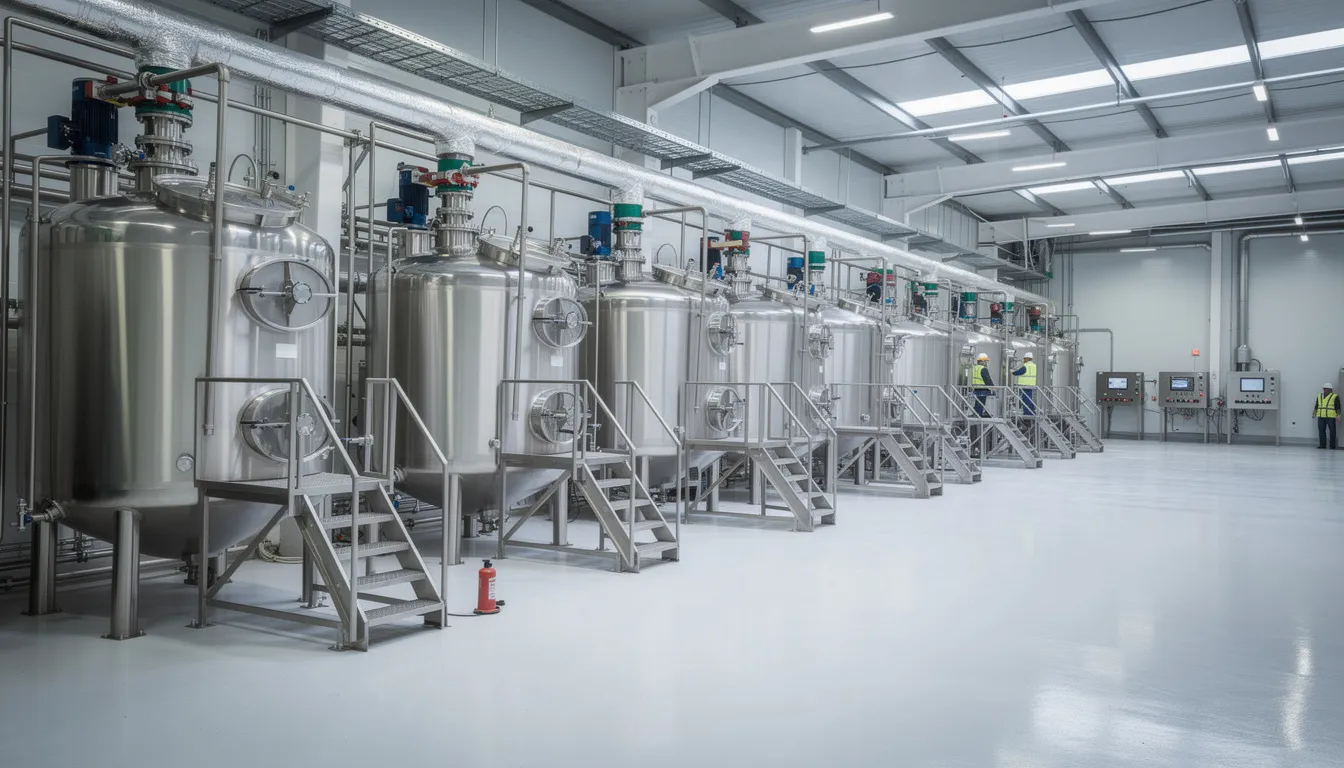
    The image depicts an industrial batch processing facility featuring stainless steel reactor vessels and mixing tanks, essential components in batch production. This environment highlights the use of batch control systems and automated control systems for efficient process operations and regulatory compliance in manufacturing.

    In life sciences and aerospace-related special processes, the batch concept extends to operations like composite curing, surface treatment baths, and heat treatment cycles. These batches must be tightly controlled and fully traceable to support regulatory compliance and product quality. ISA-88 provides a consistent way to model this complexity so that procedures, equipment capabilities, and recorded batch data remain aligned and auditable across different sites, systems, and even supplier networks.

    Purpose and Scope of the ISA-88 Standard

    The primary goal of ISA-88 is to define a common set of models and terminology for batch control that can be applied consistently across plants, control systems, and suppliers. Before the standard existed, batch automation was often implemented using custom, plant-specific software that made it difficult to transfer processes between sites, communicate requirements to automation vendors, or integrate systems from different manufacturers.

    ISA-88 addresses these challenges by improving efficient communication between process engineering, automation, IT, and operations teams. The standard enables modular, reusable design of batch procedures, meaning that a well-defined phase or operation can be deployed across multiple products without being rewritten for each application. It also supports regulatory compliance by providing structured data structures for batch production records, making it easier to demonstrate traceability and process consistency during audits.

    The ISA-88 standard is organized into multiple parts. Part 1 establishes the core models and terminology. Part 2 covers data structures and guidelines for languages used to represent batch logic. Part 3 extends the recipe framework to general and site recipe models that support multi-site standardization. Part 4 defines a data model for batch production records, capturing materials, activities, and process conditions. Part 5 addresses modular concepts for automated control systems, applying ISA-88 principles to reusable automation components. These parts are discussed in more detail later in this article.

    The boundaries of the standard’s scope are deliberate. ISA-88 focuses on batch control models and data structures, not on mechanical design, detailed safety interlock systems, or business planning logic. It is also technology-agnostic: the concepts apply whether batch control is implemented on PLCs, DCS platforms, SCADA systems, MES layers, or custom batch engines. Higher-level coordination may use modern platforms like Connect981 or legacy tools, and the ISA-88 framework remains applicable in either case.

    Core ISA-88 Models and Terminology

    ISA-88 defines a set of abstract models that describe batch processes from multiple perspectives. These include the process model, the physical model, and the procedural control model, along with standardized terminology such as process cell, unit, phase, and recipe. Each model provides a different view of the same manufacturing reality. The process model focuses on the scientific and chemical requirements of what must happen to the material. The physical model describes the equipment hierarchy that exists in the plant. The procedural control model captures how operations are executed over time, connecting process requirements to physical resources.

    These models give multidisciplinary teams a shared framework for discussing batch operations without getting lost in vendor-specific control code or hardware details. The following subsections introduce each model and its key components.

    ISA-88 Process Model

    The process model describes the manufacturing process in terms of what needs to happen to the material, independent of specific physical equipment. It uses a hierarchy of process, process stages, process operations, and process actions. At the top level, a process represents the complete set of steps required to transform raw materials into a final product. For example, in pharmaceutical manufacturing, this might encompass everything from raw active ingredients and excipients through to compressed tablets ready for packaging.

    Process stages break the overall process into major segments that are meaningful to process engineers and quality teams. These might include stages such as solution preparation, reaction, purification, and finishing. Each stage represents a significant portion of the overall transformation without yet specifying which tanks, reactors, or dryers will be used.

    Process operations and process actions allow further refinement. Operations capture logical steps within a stage, while actions represent elementary tasks such as charging solvent, heating to a setpoint, agitating, or holding for a defined reaction time. Throughout this hierarchy, the process model remains equipment-agnostic. This allows organizations to define a common process description that can later be mapped onto different physical installations, whether at a headquarters plant, a contract manufacturer, or a supplier facility. In aerospace-related special processes, the process model might capture stages like surface preparation, coating application, cure, and post-cure inspection, without assigning specific ovens or spray booths.

    ISA-88 Physical Model

    The physical model represents the real equipment hierarchy that exists in a manufacturing facility. ISA-88 defines levels including enterprise, site, area, process cell, unit, equipment module, and control module, though batch control typically focuses on the levels from process cell downward.

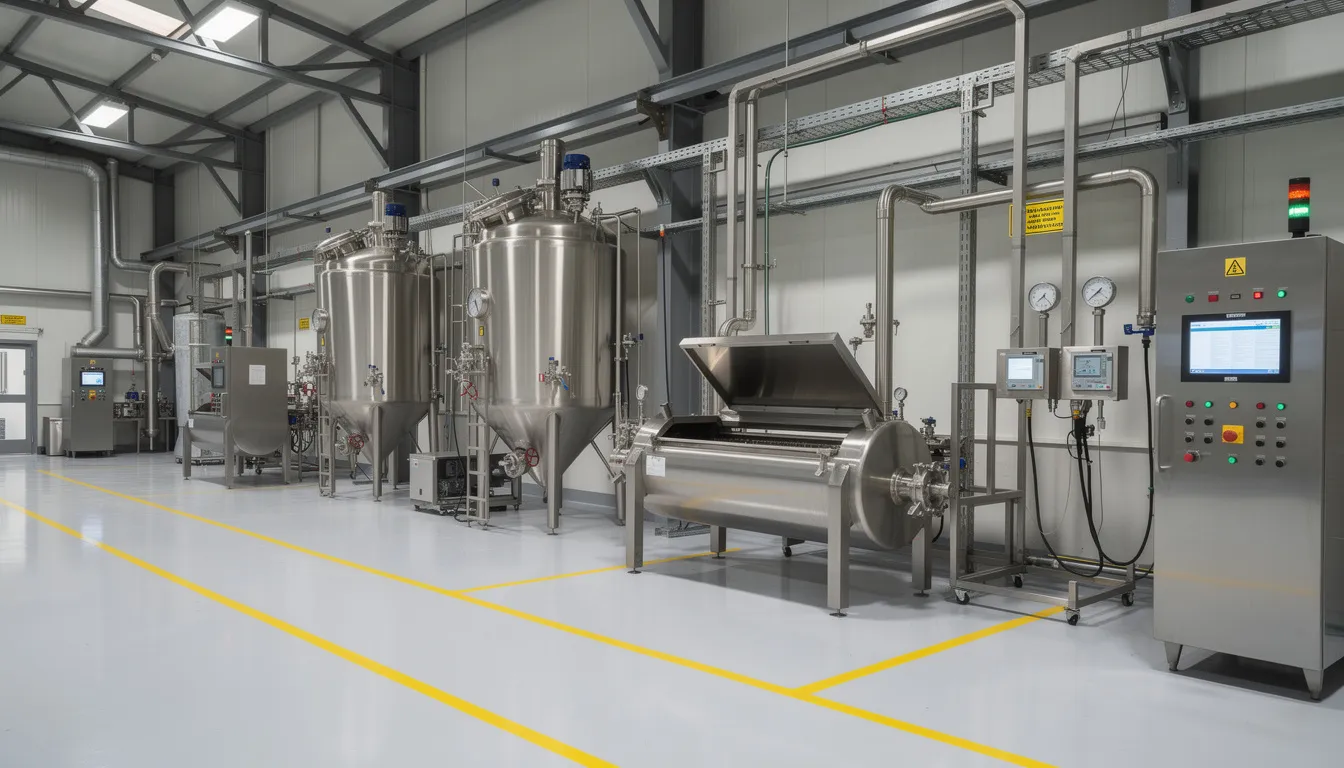
    The image depicts a factory floor filled with various processing equipment, including reactors, mixers, and control panels, essential for batch production and automation. This environment showcases the integration of batch control systems and equipment modules that support efficient process operations and regulatory compliance.

    A process cell is a collection of control equipment arranged to produce one or more products. For example, a pharmaceutical process cell might include a set of reactors, filters, and dryers that can be combined in various configurations to run several different recipes. The process cell is the scope within which batch control coordinates activities.

    Units are major pieces of physical equipment capable of carrying out unit procedures. A reactor vessel, blending tank, granulator, or autoclave would each be considered a unit. In the standard model, each unit operates on one batch at a time, making it a natural boundary for procedural execution and traceability.

    Equipment modules represent functional groupings within or across units. A dosing skid, heating loop, or clean-in-place module would be examples. Control modules sit at the lowest level and include individual devices like valves, motors, sensors, and measurement instruments. These are the components that receive basic control commands and provide feedback to higher-level logic.

    The physical model allows batch designers to reason about what each part of the plant can do, independent of any specific recipe. This makes it easier to reuse units or modules across many products and to understand capacity constraints when scheduling batch production. While ISA-88 was created for control systems, the same physical structure proves useful in higher-level digital tools for mapping work instructions, traceability, and maintenance records onto specific units and modules.

    ISA-88 Procedural Control Model

    The procedural control model describes how a batch is executed over time, using a hierarchy of procedure, unit procedure, operation, and phase. A procedure represents the complete set of steps needed to run a batch, mapped to a process cell. A unit procedure is a logical segment tied to a specific unit, such as a charging and reacting sequence that takes place entirely within a single reactor.

    Operations divide unit procedures into smaller logical steps. Phases are the smallest procedural elements, directly interacting with equipment modules and control modules. A phase might represent actions such as starting an agitator, heating and holding at a setpoint, or transferring material to a buffer tank. Phases are where sequential control and regulatory control commands are typically applied to the physical equipment.

    The procedural control model is where the separation between recipe logic and equipment capability becomes operational. The same unit might support phases used by multiple different recipes. A reactor that can heat, cool, agitate, and transfer can execute phases for dozens of products without requiring new control logic for each one.

    ISA-88 also defines standard execution states and transitions for phases and units. These include quiescent states like idle and held, transient states representing transitions, and final states indicating completion. The standard provides guidelines for unit states without prescribing PLC programming patterns or specific vendor implementations. This allows multidisciplinary teams to discuss sequence behavior and exception handling using common terminology.

    Consider a simple unit procedure: charge materials, heat to reaction temperature, hold for reaction time, cool to discharge temperature, transfer to the next unit. This sequence illustrates how the procedural control model organizes activities without specifying the exact valve sequences or controller settings that would vary by installation.

    Separation of Recipe, Equipment, and Process in ISA-88

    One of ISA-88’s defining principles is the clear separation of three concerns: what must happen to the material (process), what physical resources exist (equipment), and how a specific product is made at a given site (recipe). This separation allows each concern to be managed, documented, and changed somewhat independently.

    ISA-88 defines several recipe types that sit on top of the process and physical models. A general recipe describes a product at a high level, independent of any specific site. A site recipe adapts that general recipe to the capabilities and constraints of a particular manufacturing location. A master recipe adds equipment-specific details for a particular process cell or set of units. A control recipe is the actual executable instance created for a single batch, containing specific parameter values, material quantities, and equipment assignments.

    The process model expresses product and chemistry requirements. The physical model describes available units and modules. Recipes bind these two worlds together for a specific product on specific equipment. Recipe management becomes a structured activity rather than ad-hoc customization of control code.

    This separation creates practical benefits for organizations. Moving a recipe between sites with different equipment layouts becomes a matter of adapting the recipe at the appropriate level rather than rewriting control logic from scratch. Introducing new equipment modules does not require rethinking the entire product definition if the module can support the required phases. Change control and validation in regulated industries become more tractable when process intent, equipment capability, and recipe parameters are documented in aligned but distinct structures.

    Consider scaling a biotech fermentation process from a pilot plant to commercial production. The process model describes the fermentation requirements: media preparation, inoculation, growth phase, harvest. The pilot plant has one set of units with specific volume and control capabilities. The commercial plant has larger fermenters with different instrumentation. By maintaining the separation, the organization can adapt recipes to the new physical model without changing the underlying process definition.

    In aerospace and MRO operations, many special processes and repair routes follow similar patterns. Process requirements remain stable, specifying what must happen to achieve required material properties or surface conditions. Equipment assignments and control recipes may vary between in-house facilities, approved suppliers, or partner locations. The ISA-88 framework provides a conceptual structure for managing this variation while maintaining traceability and compliance.

    What ISA-88 Standardizes (and What It Does Not)

    ISA-88 standardizes how to describe batch processes, equipment, procedures, and data. It does not standardize how to program or configure specific batch control systems. This distinction is fundamental to understanding the standard’s role and limitations.

    What ISA-88 Standardizes

    What ISA-88 Does Not Standardize

    Common terminology for batch control objects

    Specific PLC, DCS, or MES configurations

    Conceptual models (process, physical, procedural)

    Control algorithms or tuning parameters

    Types and structure of recipes

    User interface layouts or alarm designs

    High-level data structures and relationships

    Enterprise planning logic (scheduling, capacity)

    Concepts for batch production records

    Vendor-specific file formats

    Modular automation concepts

    Manual processes implementation details

    Functional model guidelines

    Data acquisition system specifics

    The standard provides guidelines rather than rigid specifications. It establishes that a control recipe should contain a header, formula, equipment requirements, and procedure, but it does not dictate the database schema or file format used to store that information. It defines what regulatory control and basic control mean in a batch context, but it does not provide guidelines on specific tuning approaches or controller selection.

    This deliberate boundary allows ISA-88 to remain stable and vendor-neutral while giving suppliers and manufacturers freedom to innovate implementations. Organizations often map ISA-88 structures onto their own databases, MES systems, or digital operations platforms to maintain consistency from control logic through documentation and traceability without enforcing a single control technology. Connect981, for example, helps organizations structure shopfloor workflows and documentation in ways that align with ISA-88 concepts even when underlying batch control software varies across sites.

    The standard is just a standard: a conceptual framework rather than a turnkey solution. Its value lies in widespread adoption of common terminology and models that enable smooth integration across disciplines, vendors, and organizational boundaries.

    Relationship Between ISA-88 and ISA-95

    ISA-95 is a companion standard focused on integrating enterprise systems and control systems. While ISA-88 addresses the structure of batch control at the equipment and process cell level, ISA-95 defines models for how information flows between higher-level business systems (ERP, planning, MES) and lower-level control environments.

    The image depicts an overview of a manufacturing facility, showcasing a control room alongside the production floor, illustrating different operational levels within the batch production process. This setting emphasizes the integration of automated control systems and batch control software, essential for managing batch processes and ensuring regulatory compliance in production operations.

    In terms of the Purdue reference model, ISA-88 primarily addresses Levels 1 and 2, where batch operations and control logic reside, with some extension into Level 3 for batch supervision. ISA-95 covers Levels 3 and 4, defining production operations management, scheduling, performance analysis, and inventory management. Together, the standards provide guidelines for a cohesive architecture from enterprise planning through shopfloor execution.

    ISA-88 objects such as units, control recipes, and batch production records can be mapped into ISA-95’s production order, production schedule, and production performance models. Joint guidance from ISA working groups, including discussions at the World Batch Forum and related industry events, has clarified how these mappings work in practice.

    Consider a practical example: an ERP system creates a production order for a batch of specialty chemicals. This order, structured according to ISA-95 concepts, is translated into one or more control recipes and batch runs modeled according to ISA-88. As each batch executes, batch data is collected according to ISA-88’s production record concepts. Batch results then feed back as production responses and records into higher-level systems, completing the information loop.

    Connect981 typically operates in the space between ERP/PLM and on-the-floor control, where ISA-95 production models and ISA-88 batch structures both matter. The platform helps organizations orchestrate work, share data with suppliers, and maintain audit-ready histories in ways that respect both standards’ concepts. Seamless integration between these levels is increasingly important as manufacturers pursue digital transformation and require better visibility across operations, quality, and supply chain functions.

    Structure of the ISA-88 Standard Parts

    ISA-88 is a multi-part standard developed over several decades, with parts published and maintained both by ISA and as IEC 61512 standards for international adoption. Understanding the structure helps organizations determine which parts are most relevant to their operations.

    Part 1: Models and Terminology was published in the mid-1990s and remains the foundation of the standard. It defines the core process model, physical model, and procedural control model along with the vocabulary that has become widely adopted across batch industries. Any organization working with ISA 88 batch control should be familiar with Part 1 concepts.

    Part 2: Data Structures and Guidelines for Languages extends Part 1 by describing data models for batch procedures and records. It provides guidance on how to represent batch logic and procedural elements in a structured way that supports implementation across different platforms. While more technical than Part 1, Part 2 is valuable for teams designing batch control software architectures or MES integrations.

    Part 3: General and Site Recipe Models and Representation expands the recipe framework above the master and control recipe levels. It addresses how organizations can define recipes at corporate or general levels and then adapt them for specific sites, supporting multi-site standardization and technology transfer. This part is particularly relevant for large organizations with multiple manufacturing locations or extensive contract manufacturing networks.

    Part 4: Batch Production Records defines a data model for capturing and storing batch histories, including activities, materials, and process conditions. This part directly supports regulatory compliance requirements in industries like pharmaceuticals, where complete batch records are mandatory for product release. The technical report guidance in Part 4 helps organizations design systems that capture the right information in auditable formats.

    Part 5: Modular Concepts for Automated Control Systems applies ISA-88 concepts to modular, reusable automation components. This part extends the standard builds beyond traditional batch process industries to address modular equipment and plug-and-play automation scenarios that are increasingly common in flexible manufacturing.

    The IEC 61512 series represents the international adoption of ISA-88, with only minor technical differences between the ISA and IEC versions. Global manufacturers often reference the IEC designation in their documentation, particularly when working with European suppliers or regulatory bodies.

    Organizations rarely implement all of ISA-88 at once. Most selectively apply models and recipe concepts that align with their products, regulatory requirements, and legacy batch systems. The modular nature of the standard supports this approach, allowing organizations to adopt terminology and models progressively as their batch operations mature.

    For organizations managing complex batch operations across aerospace, pharmaceutical, or chemical industries, understanding ISA-88 provides a common language that bridges engineering, operations, and compliance. Connect981 helps teams put these concepts into practice through digital work instructions, traceability, and workflow management that align with how batch operations are structured and documented. To explore how your batch documentation and shopfloor workflows can benefit from this structured approach, request a demo to see the platform in action.