RSC Colour: Extra Dark Blue

  • Repair Limit

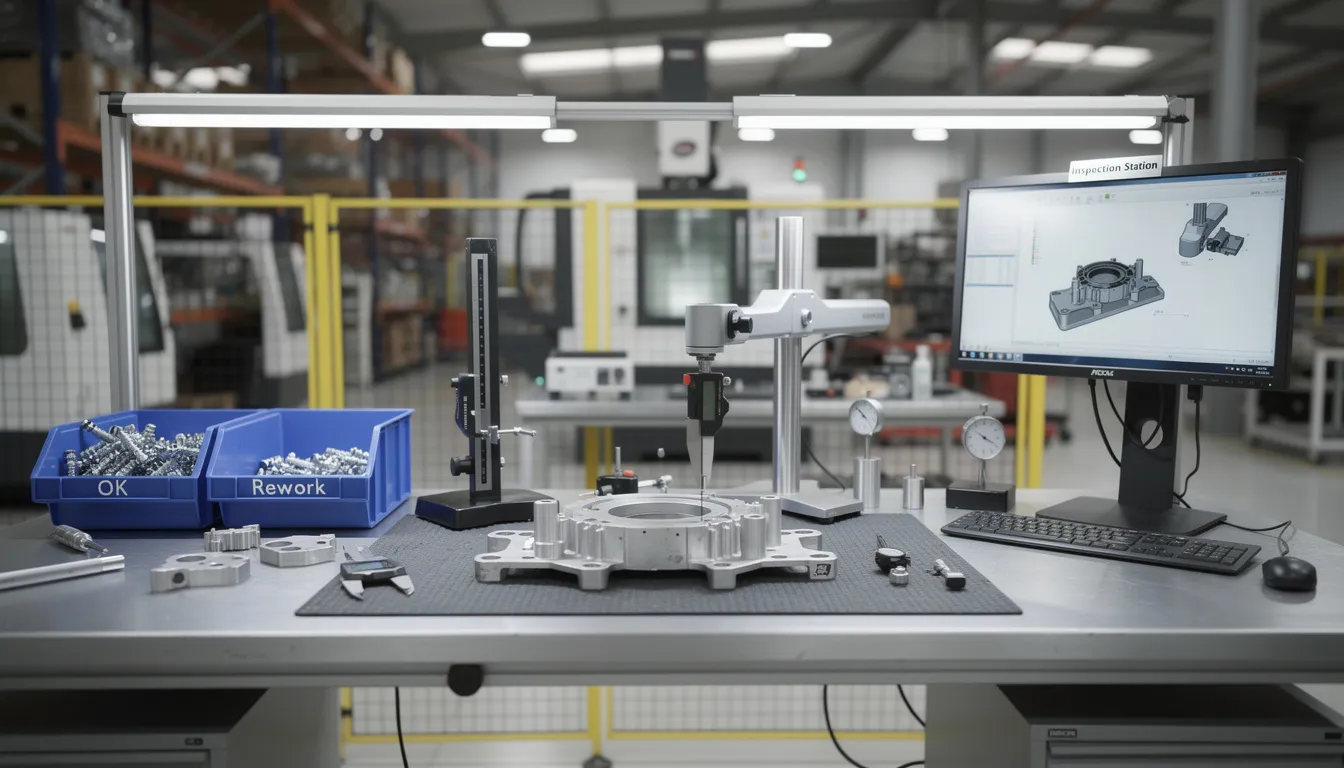
    A repair limit is the defined boundary beyond which a part, assembly, or feature is no longer considered repairable by an approved repair method. It commonly refers to the maximum allowable extent of damage, wear, corrosion, distortion, or material removal that can be restored while keeping the item within its specified requirements.

    In manufacturing and MRO environments, the term is used to decide whether a nonconforming or deteriorated item can proceed through repair, must be reworked by another method, requires engineering review, or should be scrapped. The limit may be expressed as dimensions, thickness, crack length, blend depth, number of prior repairs, remaining life, or other measurable criteria.

    What it includes and excludes

    A repair limit includes the measurable acceptance boundary for performing a repair. It does not by itself describe the full repair procedure, approval authority, or inspection method, although those are often linked in controlled documentation.

    • Includes: maximum allowable repair depth, remaining wall thickness, permitted damage size, or allowable number of repair cycles.

    • Excludes: general workmanship guidance, temporary deviations, and final product acceptance criteria unless those are explicitly tied to the repair definition.

    How it appears in operations

    Repair limits are commonly found in maintenance manuals, engineering dispositions, standard repair schemes, work instructions, and nonconformance workflows. In digital systems, they may appear as structured decision points in MES, QMS, or MRO software, where inspection results are compared against defined thresholds to route the item correctly.

    Example: a component may be repairable if corrosion can be removed without reducing thickness below a stated minimum. If the measured condition exceeds that limit, the part is no longer eligible for that repair path.

    Common confusion

    Repair limit is often confused with service limit or allowable limit. A service limit usually describes the maximum condition permitted for continued use in operation. A repair limit describes the maximum condition that can still be corrected by repair. It can also be confused with rework; rework usually returns a product to requirements using the original process or a defined repeat of it, while repair commonly accepts a different restoration method that addresses damage or nonconformance.

  • What are examples of MES alerts that reduce AOG risk?

    How MES alerts can actually impact AOG risk

    MES alerts reduce AOG risk when they prevent flight‑critical nonconformances from escaping, or when they protect schedule on parts and assemblies that sit on the AOG critical path. In practice this only works if the MES is tightly aligned with engineering configuration, quality rules, and material availability constraints. Alerts that simply add noise without clear ownership and response plans can increase risk by driving operator workarounds. In brownfield environments, you typically have to layer these alerts on top of legacy ERP, PLM, and QMS, so data consistency and interface reliability become limiting factors. The goal is not maximal alerting, but a small set of well‑defined, validated alerts tied to specific AOG drivers.

    Examples of quality and conformance alerts that protect airworthiness

    One high‑value alert is for use of nonconforming or unapproved parts in a flight‑critical assembly, triggered when a lot is on hold in the QMS or has open nonconformance reports. Another is an alert that blocks operation start if required special process certifications (e.g., heat treat, NDI, coatings) are missing, expired, or not matched to the current configuration. MES can also issue alerts when inspection or test results fall into pre‑defined degradation bands that are not yet out‑of‑tolerance but suggest an elevated escape risk. For repaired or overhauled components, alerts that detect missing disassembly, inspection, or replacement operations in the routing help avoid incomplete work that might only surface when the aircraft is down. The effectiveness of all these alerts depends on reliable interfaces to the QMS, validated rules for which characteristics are flight‑critical, and robust procedures for manual overrides.

    Configuration control alerts that prevent AOG from wrong‑build issues

    Configuration mismatch is a frequent hidden driver of AOG, and MES can help by alerting when the shop order’s planned configuration does not match the current approved configuration in PLM. Useful alerts include blocking release if an outdated engineering revision, service bulletin, or modification state is being used for a serialized aircraft part. Another example is an alert when a component’s actual as‑built configuration does not match the as‑planned BOM or routing, such as missing mods or substituted parts that are not engineering‑approved. For serialized flight hardware, alerts that fire when traceability links (parent–child serial relations, lot‑to‑serial mapping, or special process traceability) are incomplete before closeout can prevent aircraft‑level configuration errors later. These alerts only work when PLM, ERP, and MES are synchronized with clear ownership of which system is the master for configuration data.

    Material and logistics alerts linked to AOG‑critical components

    MES can also reduce AOG risk by signaling when material or WIP issues threaten availability of known AOG‑critical items. One pattern is an alert when a work order for a part that appears on AOG critical lists is late at a gate operation that historically drives schedule slippage. Another is an alert for kitting or pick issues where a required flight‑critical component is short, substituted, or coming from a lot with limited remaining life (e.g., shelf life or life‑limited parts), prompting proactive rescheduling or alternate sourcing. In MRO contexts, alerts that trigger when parts required for a planned check or modification are not yet available, but the aircraft induction date is fixed, can shift the risk from on‑wing time to earlier in the planning window. These alerts require accurate critical‑part designation, clean item master data, and integration between MES, ERP, and planning systems.

    Process adherence and documentation alerts that avoid release delays

    Many AOG events are not caused by hardware defects but by incomplete records or unverified process steps discovered late. MES can mitigate this by alerting when mandatory inspection operations, sign‑offs, or dual‑inspections for flight‑critical tasks are missing before a lot or serial can move forward. Another valuable alert type flags when prerequisite operations (e.g., torque, safety wire, leak test) are recorded out of sequence or performed by personnel without current qualifications, forcing re‑inspection before the part leaves the shop. For documentation, alerts can trigger if required attachments such as certificates of conformance, special process reports, or deviation approvals are missing at ship‑release. These alerts reduce the chance that an aircraft is held AOG because paperwork cannot be reconciled, assuming your routing content, training records, and document links are all current and validated.

    Deviation, concession, and rework alerts that protect future maintainability

    When deviations or concessions are granted to keep production moving, they can create latent AOG risk during future maintenance or modification events. MES can help by issuing alerts when you attempt to use a deviation that has expired, is approved only for a specific serial, or conflicts with a later design change. During rework or repair, alerts can ensure that re‑inspection and re‑test operations tied to the concession are added and completed, rather than closing the work order using the original, non‑rework routing. Another important alert type is when a part with concessions affecting interchangeability is assigned to an aircraft or tail where the configuration or maintenance plan does not accommodate that deviation. These controls depend heavily on how well your deviation and concession data in the QMS or PLM is structured and mapped into the MES rules engine.

    Constraints, tradeoffs, and brownfield realities

    Deploying these alerts into an existing aerospace‑grade environment is constrained by integration quality, validation effort, and change control. Every alert that can block work or shipment must be validated, traced to requirements, and governed through configuration management, which limits how many you can realistically sustain. In brownfield plants with mixed MES/ERP/QMS generations, you often cannot implement every alert end‑to‑end; you may need to start with high‑risk areas and accept manual checks elsewhere. Excessive or poorly tuned alerts can cause operators to seek workarounds, eroding data integrity and actually increasing AOG risk. Instead of aiming for full replacement of legacy controls with automated alerts, most organizations get better outcomes by layering a small, high‑impact alert set on top of existing procedures and tightening them over time based on incident and AOG data.

    Connecting these alerts to actual AOG events

    To make MES alerts meaningfully reduce AOG risk, they must be derived from analysis of real AOG and near‑miss events, not from generic best‑practice lists. This typically involves mapping back from aircraft‑level delays to specific part numbers, routings, and failure modes, then encoding those patterns as alert triggers and thresholds. Over time, incidents and nonconformances that contributed to AOG should be reviewed to refine or retire alerts, and to add new ones where gaps are found. It is also important to define clear response playbooks for each alert type, including who acts, within what timeframe, and how overrides are documented and reviewed. Without this closed loop, MES alerts become another notification channel rather than a practical control that materially improves aircraft availability.

  • How do analytics support the business case for MES investments?

    Using analytics to quantify the current baseline

    Analytics support the business case for MES by providing a defensible baseline of current performance before any system changes. Instead of arguing from anecdotes, you can show hard numbers on unplanned downtime, yield loss, rework rates, compliance deviations, and schedule adherence. This baseline is essential for calculating potential uplift from improved execution, standardization, and visibility. In regulated environments, being explicit about data sources, time windows, and exclusions is important so that finance, quality, and operations accept the numbers. Where data is incomplete or inconsistent, analytics can surface the gaps and establish confidence intervals rather than pretending to give exact values. The business case is stronger when it openly acknowledges these data limitations and still shows a material opportunity range.

    Identifying where MES can realistically move the needle

    Analytics help distinguish problems that MES is well-suited to address from those driven mainly by equipment design, labor constraints, or upstream supply variability. By drilling into loss trees and Pareto charts for downtime, scrap, and delays, you can map which losses are tied to poor instruction management, manual data entry, lack of genealogy, or weak dispatching logic. Those are areas where MES capabilities are likely to have impact, assuming proper configuration and adoption. Conversely, when root causes point to chronic equipment reliability issues or supplier quality, MES alone will not close the gap, and the business case should not claim that it will. Using analytics this way avoids over-attributing all pain to the lack of MES and helps size only the portion of benefit that better execution and traceability can realistically provide.

    Building traceable links between MES features and financial outcomes

    To be credible with finance and leadership, the case for MES should connect specific MES capabilities to specific metrics and then to financial impact. Analytics allow you to model how changes in right-first-time rates, batch release lead time, or investigation cycle time translate into reduced scrap, lower overtime, or higher throughput. For example, better electronic work instructions and inline checks may relate directly to fewer operator-induced deviations, which analytics can quantify using historical deviation classifications and defect codes. Electronic batch records and automated data collection can then be tied to reduced manual review effort and fewer investigation extensions, again supported by measured time and effort data. These relationships are rarely perfect, but even approximate, documented linkages give stakeholders more confidence than generic claims about “digital transformation” or “paperless benefits.”

    Stress-testing assumptions, scenarios, and tradeoffs

    Analytics enable scenario analysis to test the assumptions behind the MES business case instead of relying on a single optimistic projection. You can model different adoption rates, partial-rollout scenarios, or alternative workflows (for example, minimal MES with just electronic records versus a more automated dispatching and enforcement model). In each scenario, you estimate changes in key metrics like OEE, on-time-in-full, deviation volume, or cycle time, then convert those into cost and capacity implications. This makes tradeoffs visible: a low-disruption MES deployment may lead to smaller short-term gains but lower risk, while a more aggressive deployment might promise larger gains with higher disruption and validation effort. In regulated environments, the analytics should also incorporate the cost and schedule impact of validation, training, and change control, rather than treating them as negligible overhead.

    Leveraging pilots and phased rollouts for evidence

    In brownfield, highly regulated plants, large bang–big-bang MES replacements are rarely viable due to validation burden, downtime, and integration complexity. Analytics are critical in phased or pilot-based strategies, where you need early evidence of value from limited scope deployments. By instrumenting pilot lines or selected product families, you can track pre- and post-implementation metrics with the same definitions and measurement methods. This allows you to separate real signal from noise and to see whether observed improvements persist beyond the “new project attention” period. Analytics also highlight unintended consequences, such as longer operator log-in times or new workarounds introduced by the system, which should be factored back into the business case before wider rollout.

    Accounting for data quality, integration, and validation constraints

    The strength of an MES business case that leans on analytics is directly limited by data quality, integration maturity, and validation status of source systems. If current data is fragmented across PLCs, spreadsheets, and legacy MES or LIMS systems, the initial analytics may require significant manual reconciliation and careful explanation of uncertainty. Integration debt may also mean that some of the projected MES benefits (such as automatic material status checks or real-time genealogy) will depend on additional interfaces to ERP, QMS, or warehouse systems, each with its own cost and validation plan. In safety- or quality-critical contexts, the analytics models and data transformations themselves may need review to ensure they do not drive decisions based on misclassified or incomplete data. Being transparent about these constraints avoids overstating near-term gains and helps scope enabling work as part of the business case.

    Differentiating between optimization and full system replacement

    Analytics can support decisions about whether to invest in incremental MES enhancements, point solutions, or a more substantial platform change. By comparing performance across areas with different levels of MES functionality, you can see whether major constraints are due to missing core capabilities or simply poor use of existing ones. Often, analytics show that optimizing configurations, cleaning master data, and automating specific handoffs can deliver a meaningful share of the value without a full rip-and-replace. In aerospace-grade or similar environments, a complete MES replacement can trigger extensive revalidation, requalification, and retraining, with downtime and integration risk that outweigh the modeled benefits. Good analytics make these tradeoffs explicit, allowing leadership to decide whether the additional benefit from a new platform justifies the lifecycle cost and risk.

    Connecting back to your specific operations context

    In a mixed-vendor, legacy-heavy environment, analytics usually start from whatever data is already being captured in existing MES, historians, and quality systems, even if it is incomplete. The early goal is to quantify the magnitude and location of losses well enough to decide where MES investments are likely to have a material effect. Over time, as MES capabilities expand, the same analytics framework can be used to monitor actual versus expected benefits, track deviations from the plan, and justify course corrections. The most effective organizations treat analytics as an ongoing discipline supporting MES governance, not just a one-time exercise to get a project approved. This mindset is particularly important where validation and change control make every subsequent adjustment expensive, so initial decisions need to be grounded in the best available evidence.

  • What integrations are required to connect MES into the digital thread?

    There is no universal integration checklist for connecting MES into the digital thread. At minimum, MES usually needs to exchange controlled execution data with the systems that define the product and process, plan the work, verify quality, manage exceptions, and retain evidence. Which integrations are truly required depends on what the digital thread must prove for a product, program, customer, and regulatory context.

    Common MES integrations in a digital thread

    The most common integrations are with systems that own upstream definitions, downstream records, or quality evidence. In regulated manufacturing, the important question is not just whether systems are connected, but whether the data is version-controlled, traceable, validated, and usable during an investigation or audit.

    • PLM or engineering document control: product structures, drawings, specifications, process plans, revision status, effectivity, and engineering changes.
    • ERP or MRP: work orders, demand signals, routings at a planning level, inventory, material allocations, completions, and cost or schedule status.
    • QMS: nonconformances, deviations, concessions, CAPA links, approvals, dispositions, and quality record references.
    • Inspection, metrology, or SPC systems: characteristics, measurement results, inspection status, sampling decisions, gage or equipment references, and evidence attachments.
    • CMMS, EAM, or calibration systems: asset status, maintenance holds, calibration validity, tool availability, and equipment constraints that affect execution.
    • Equipment, SCADA, PLC, or historian systems: machine state, process parameters, alarms, recipes, cycle data, and environmental data where those signals are relevant and reliable.
    • Warehouse, supplier, or receiving systems: lots, serials, certificates, incoming inspection status, kitting, and material genealogy.
    • Identity, training, and access control systems: operator authorization, role-based access, electronic signature support, and training prerequisites where required by procedure.
    • Data warehouse, lakehouse, or analytics platforms: curated read-only data for reporting and analysis, usually not as the system of record for regulated execution decisions.

    The integration scope should follow the traceability requirement

    MES does not need to integrate with every system to participate in a digital thread. It needs to integrate with the systems required to maintain a defensible chain from engineering definition to production execution, inspection evidence, material genealogy, and quality disposition.

    For some plants, ERP plus PLM plus QMS is the minimum practical set. For others, inspection equipment, calibration systems, or supplier data are equally important because the product risk, customer requirements, or process controls depend on them.

    Brownfield constraints matter

    In most established plants, MES is added to an existing mix of ERP, PLM, QMS, legacy databases, paper records, spreadsheets, machine interfaces, and custom middleware. Full replacement is usually unrealistic in regulated environments because of qualification burden, validation cost, downtime risk, integration complexity, traceability obligations, change control, and long equipment lifecycles.

    A more realistic approach is controlled coexistence: define the system of record for each data object, map identifiers and revisions, integrate only the data needed for execution and evidence, and phase the rollout by product line, work center, or value stream.

    Common failure modes

    The main failure mode is assuming that connectivity equals a digital thread. It does not. A brittle point-to-point interface can move data while still leaving unclear ownership, stale revisions, missing context, or incomplete audit trails.

    Typical problems include mismatched part numbers, ambiguous revision effectivity, duplicate routings, uncontrolled work instruction changes, missing lot or serial genealogy, incomplete exception handling, unvalidated middleware, weak time synchronization, and poor integration monitoring.

    Security and export control requirements can also limit what data may move, where it may be stored, and who may access it. Those constraints need to be designed into the integration architecture rather than added after go-live.

    What must be in place before integration works

    The prerequisites are usually master data discipline, clear system-of-record decisions, a canonical data model or mapping layer, documented interface requirements, change control, validation planning, error handling, and operational ownership. Without those controls, MES integrations often create faster data movement but weaker traceability.

    The practical answer is that MES integration into the digital thread is not a single interface project. It is a governed set of data relationships across engineering, planning, production, quality, maintenance, and records systems. The required integrations are the ones needed to preserve traceability and execution control for the specific operation.

  • How does MES ensure operators only see the latest approved work instructions?

    MES does not ensure this by itself. Operators only reliably see the latest approved work instructions when the MES is connected to a controlled document or content release process and is configured to block obsolete revisions at the point of use. In practice, that means approved versions are tied to the specific part, operation, work order, routing step, and effective date, and older versions are suppressed or made inaccessible for normal execution.

    What usually makes it work

    In most regulated manufacturing environments, the control depends on a few basic mechanisms working together:

    • Revision-controlled source content: The work instruction has a unique document ID, revision, approval status, and release record in MES, PLM, QMS, or a connected document control system.
    • Approved-only publication: Draft or in-review versions are not exposed to production users. The MES should present only released content for executable operations.
    • Context-based binding: The instruction shown is not just the latest file in a folder. It is the approved revision mapped to the exact product, process step, equipment, customer or program variant, and sometimes serial or lot conditions.
    • Effective date and disposition logic: New revisions often become effective only for specific work orders, lots, serial numbers, or after a cut-in point. Without that logic, “latest” can be wrong for in-process work.
    • Role-based access and UI control: Operators see the execution copy. Authors, engineers, and quality reviewers may see drafts or superseded versions, but that access should be restricted and traceable.
    • Execution blocking: If the required approved instruction is missing, expired, or not yet released for that operation, the MES should stop or hold the transaction rather than let the operator proceed on guesswork.

    What MES can and cannot guarantee

    MES can enforce what it knows. It can present the currently authorized instruction for a transaction, record which revision was acknowledged or used, and prevent normal use of superseded versions. It cannot guarantee that every operator always follows the displayed instruction, or that no uncontrolled copies exist outside the system.

    That last point matters. Plants often still have PDFs on shared drives, printed binders at the machine, screenshots in training decks, or local job aids created outside formal control. If those are not governed, the MES may be correct while the shop floor is still exposed to stale instructions.

    Common architectures

    The pattern varies by site maturity and existing systems:

    • MES-native work instructions: The instruction is authored, approved, versioned, and displayed directly inside the MES.
    • PLM or QMS controlled content with MES delivery: The source of truth sits outside MES, and MES calls or embeds the approved revision during execution.
    • Hybrid model: Core manufacturing steps are governed in MES, while drawings, specifications, or visual aids come from PLM or a document management system.

    No model is automatically better. The weak point is usually the handoff between systems: revision mapping, timing of release, and whether the MES caches or links to live content.

    Where this fails in brownfield environments

    Brownfield plants are where the claim usually breaks down. Mixed MES, ERP, PLM, and QMS stacks often have inconsistent identifiers, duplicate routings, manual document release steps, and old integrations that were never designed for strict point-of-use control.

    Typical failure modes include:

    • routing steps not correctly linked to the current instruction revision
    • PLM or QMS release completed, but MES not updated yet
    • cached local copies still displayed after supersession
    • rework, deviation, or concession instructions handled offline
    • operators printing a packet before a revision change and continuing to use it
    • training records lagging the released revision
    • multiple program-specific variants using similar but not identical instructions

    In regulated contexts, those are not minor admin issues. They directly affect traceability, evidence quality, and change control.

    Why “latest” is not always the right requirement

    The better requirement is usually “the correct approved revision for this exact job.” For example, a work order already in progress may need to finish on the previously approved revision, while new orders start on the new one. Engineering changes, deviations, customer-specific requirements, and cutover rules can make a blanket “always latest” rule incorrect.

    That is why mature MES deployments store or reference the exact revision used at execution time, not just whatever is currently active now.

    What evidence should exist

    If the control is working properly, you should be able to trace:

    • who approved the work instruction and when
    • which revision was effective for a given order, lot, or serial number
    • what the operator was shown at the time of execution
    • whether acknowledgment or training was required
    • what changed between revisions
    • whether any deviation, temporary instruction, or concession overrode standard content

    If that evidence is missing or split across disconnected systems, the process may still function operationally, but the control is weaker than people assume.

    Practical boundary

    If your MES is being positioned as the sole answer, be careful. The real control sits across document governance, change control, integration quality, and shop-floor discipline. Full replacement of legacy systems just to solve this is often unrealistic in regulated environments because of validation cost, downtime risk, qualification burden, and long-lived interfaces. More often, the workable path is to tighten revision governance and point-of-use blocking across the existing stack.

  • Can AOG risk mapping be applied to both OEM and MRO operations?

    Short answer

    Yes, AOG risk mapping can be applied to both OEM and MRO operations, but it does not look the same in each environment and it does not eliminate AOG events. In OEM contexts it is mainly a design, initial provisioning, and global supply-chain tool, while in MRO it is more tightly coupled to shop scheduling, parts availability, and turnaround-time commitments. The underlying concepts transfer, but the data structures, time horizons, and decision points differ enough that a single, generic template usually fails in practice. Both uses also depend heavily on data quality, integration with existing systems, and disciplined change control. In regulated environments, AOG risk mapping is decision support, not a guarantee of service levels, compliance, or audit outcomes.

    How AOG risk mapping fits OEM operations

    For OEMs, AOG risk mapping is typically anchored in design, reliability, and spares provisioning rather than day‑to‑day maintenance events. The focus is on which part families and configurations are most likely to create AOG exposure once the fleet is in service, based on criticality, lead times, repair capacity, and obsolescence risk. This usually requires integrating engineering data, reliability predictions, approved supplier lists, and global stocking strategies across multiple ERPs and PLM systems. The useful output is not just a “high‑risk part list,” but design and provisioning decisions: alternate part options, dual‑sourcing, recommended initial provisioning, and repair network strategy. Because OEM product lifecycles are long, the mapping must be maintained under change control; new revisions, service bulletins, and supplier changes all alter the AOG risk profile and must be traceable.

    How AOG risk mapping fits MRO operations

    In MRO environments, AOG risk mapping is operationally closer to the point of impact: which components and workscopes most often lead to AOG situations or extended ground times. The emphasis is on turnaround time, shop capacity, parts availability, and the variability of findings during disassembly and inspection. MROs typically combine historical work package data, unplanned findings, vendor repair lead times, and local inventory performance to identify steps where AOG exposure spikes. This mapping often needs to reflect customer‑specific contracts, different aircraft configurations, and regulatory approvals for repair alternatives or DER solutions. The actionable outcome is usually targeted: pre‑positioning specific parts, adding alternate repair vendors, adjusting work instructions, or re‑sequencing work to protect AOG‑sensitive path steps. As with OEMs, the mapping is only as credible as the underlying data and the rigor of how new findings and changes are incorporated.

    Key differences between OEM and MRO AOG risk mapping

    While the method can be shared, the risk drivers and time horizons differ enough that one model rarely serves both OEM and MRO without tailoring. OEMs typically work with longer lead times, global demand uncertainty, and configuration diversity, so models are more strategic and aggregated. MROs work on much shorter horizons, constrained by shop schedules, specific tail numbers, and committed delivery dates, so they need more granular, real‑time‑capable views. OEMs usually have better control over design and approved suppliers, while MROs have to work within customer‑specified configurations and certificates, limiting some mitigation options. These differences mean that data sources, integration points, and governance structures are not interchangeable, even if both parties call it “AOG risk mapping.” Trying to force a single, shared template or tool across OEM and MRO operations often leads to oversimplification that nobody trusts.

    Data, integration, and brownfield constraints

    In both OEM and MRO settings, AOG risk mapping depends heavily on pulling consistent data out of legacy systems that were not designed for this purpose. Typical sources include ERP, MRP, MES, maintenance records, reliability databases, and supplier performance logs, many of which exist in separate instances or on-premise systems with limited APIs. In aerospace‑grade environments, replacing these systems just to improve AOG analytics is rarely realistic due to validation burden, downtime risk, and integration complexity with certified equipment and processes. Instead, most organizations layer AOG risk analytics on top, using data warehouses, reporting layers, or point‑to‑point integrations, accepting that some data will remain incomplete or delayed. These integration compromises must be made explicit in the risk maps themselves (e.g., flags for low‑confidence data) so that operators and planners understand the limits of what they are seeing. Without this transparency, decision‑makers will either overtrust the maps or ignore them entirely.

    Tradeoffs, limitations, and validation needs

    AOG risk mapping improves visibility and prioritization; it does not prevent all AOG events or guarantee on‑time performance. Models can be biased by historical data that reflect past contracts, fleets, or suppliers, and may not adapt quickly when the business mix or supply base changes. Any algorithmic or scoring logic used for AOG risk must go through appropriate validation, configuration control, and documentation, especially if it influences planning, stocking, or work sequencing in regulated environments. Over‑focusing on high‑scored AOG risks can pull attention and inventory away from lower‑scored areas that still have significant operational or safety impact, so mitigation strategies need periodic review. OEM and MRO organizations should treat AOG risk mapping as a living, documented tool within the broader quality and operations management system, with clear ownership, review cycles, and traceable change history.

    Connecting OEM and MRO views without forcing a single model

    In many programs, OEMs and MROs both attempt AOG risk mapping but from different angles and with different data, leading to conflicting conclusions. A more realistic approach is to keep separate OEM and MRO models, then define a limited set of shared indicators or part families where alignment really matters. For example, both parties can agree on a critical component list, shared lead time assumptions, and a standard way of flagging AOG‑relevant events, even if their internal models differ. This respects brownfield realities—different systems, contracts, and regulatory approvals—while still allowing meaningful dialogue about AOG risk across the value chain. Attempting to impose a unified, end‑to‑end system across both OEM and MRO environments often stalls on integration and validation costs; a federated but aligned approach tends to be more achievable. Over time, this coordination can be expanded, but only as systems, data pipelines, and governance mature enough to support it reliably.

  • What roles should be on the core MES implementation team?

    Core principle: small, cross-functional, and empowered

    A core MES implementation team should be small enough to make decisions quickly, but broad enough to cover process, quality, IT/OT, automation, and regulatory needs. In regulated, brownfield environments this typically means 6–12 steady members, with additional experts pulled in as needed. The core team should own requirements, design decisions, integration priorities, and go-live criteria, rather than delegating everything to vendors or system integrators. Each role needs clear accountability: who speaks for operations, who speaks for quality, who controls interfaces, and who owns validation and documentation. The exact mix will vary by plant size, multi-site scope, and how MES is positioned relative to existing ERP, LIMS, historians, and QMS. When in doubt, bias toward fewer roles with clear decision rights instead of many loosely attached stakeholders.

    Business and process ownership roles

    You need at least one accountable business owner for MES who can make tradeoff decisions across sites, shifts, and product lines. This role is often a senior operations leader or manufacturing systems owner who understands both production constraints and regulatory expectations. Below them, process owners from key value streams (for example, batch execution, packaging, maintenance, deviation handling, and electronic records) should define how work should happen in the system. These process owners must have the authority to standardize workflows and master data across lines and sites, or explicitly document justified differences. Without strong process ownership, MES configurations drift into per-line customizations that are hard to validate and nearly impossible to sustain over long equipment lifecycles. In many plants, a dedicated manufacturing systems or digital operations lead plays the bridge between high-level business goals and day-to-day MES decisions.

    Operations and production representation

    Line and area supervisors, or experienced production engineers, must be embedded in the core team rather than consulted only at user acceptance testing. They bring real constraints about staffing, shift patterns, equipment behavior, and changeover complexity that are often missed in generic process maps. Their role is to ensure that designed workflows and electronic work instructions are usable at 2 a.m. on a weekend with a short-handed crew. They should also define practical exception scenarios, rework paths, and contingency operations when MES or upstream systems are partially unavailable. In brownfield environments, these representatives are critical in reconciling desired standard work with existing habits and tribal knowledge. Operations representation should be stable over the project to avoid re-litigating basic decisions every time personnel rotate.

    Quality and regulatory representation

    A core MES team in regulated industries must include quality representation with enough seniority to commit on record-keeping, review, and release practices. This usually means a QA lead who understands both the QMS and how MES records will be used for batch disposition, investigations, and audits. Their responsibilities include defining review-by-exception rules, electronic signatures, audit trail expectations, and how MES links to deviations, CAPA, and change control. They should also participate in defining data retention and how to handle corrections, attachments, and scanned records that may still exist on paper or in legacy systems. In many organizations, a separate validation or CSV specialist supports QA but does not replace the need for a QA decision-maker on the core team. If QA is only involved at the end, you risk late-stage findings that require redesign and re-validation.

    IT and OT infrastructure roles

    MES sits in the middle of both IT and OT, so the core team must have representation from infrastructure and cybersecurity with real authority. You typically need an IT lead who understands networks, identity management, backup/restore, and corporate standards, as well as how MES fits with ERP, PLM, and corporate data platforms. On the OT side, a controls or OT engineer must ensure that connectivity to PLCs, historians, and SCADA is designed for reliability, security, and maintainability over long equipment lifecycles. These roles are also responsible for disaster recovery and business continuity designs, including what happens when site connectivity to corporate services is degraded. Without strong IT/OT involvement, plants often end up with MES architectures that are fragile, hard to patch, or non-compliant with evolving security baselines. In multi-site MES programs, IT/OT leads also help enforce consistent deployment patterns while respecting site-specific constraints.

    Automation, integration, and data specialists

    Modern MES implementations in brownfield plants are integration-heavy, so dedicated integration and data roles belong on the core team. An integration architect or engineer should own interfaces between MES and ERP, LIMS, historians, warehouse systems, and equipment, including message standards, error handling, and monitoring. A data or master data specialist must define how materials, recipes, equipment, and personnel are mastered and synchronized across systems, as poor master data will undermine even well-designed workflows. In highly automated environments, you also need an automation or controls lead who understands the installed base of PLCs and OEM skids, including vendor support constraints and validation history. These roles ensure that integration approaches do not force wholesale replacement of stable, qualified equipment just to satisfy a new MES vendor architecture. They also help design incremental integration strategies that can be validated and rolled out without excessive downtime.

    Validation, testing, and change control roles

    In regulated environments, validation and change control cannot be treated as a bolt-on activity run only by external consultants. A validation lead or CSV specialist must define the validation strategy, risk-based testing approach, and documentation standards aligned with the site’s existing quality system. This role works with process owners and QA to translate requirements into testable specifications and traceability matrices. A test lead or coordinator is often needed to plan integrated testing, manage test data, and involve real end users without disrupting production. Someone in the core team must also own ongoing change control, including how future MES changes will be specified, tested, and released without redoing full validation unnecessarily. If these responsibilities are fragmented or outsourced with no internal owner, the plant tends to accumulate validation debt and becomes reluctant to apply critical patches or improvements.

    Project, product, and vendor coordination roles

    Finally, a capable project or program manager is critical to coordinate schedules, resources, and dependencies across operations, quality, IT/OT, and vendors. In many organizations, you also benefit from a product owner or MES owner who maintains a long-term roadmap, backlog, and design principles across projects. This role prevents each implementation wave from diverging into a unique configuration that is expensive to support and revalidate. Someone on the core team should be explicitly accountable for vendor and integrator coordination, including review of design proposals, customizations, and support models. In brownfield, aerospace-grade environments where full replacement strategies often fail, this coordination role must enforce a coexistence approach instead of a big-bang cutover that assumes perfect integration and short downtimes. Clear roles here reduce the risk that vendor timelines or customization proposals drive decisions that conflict with plant realities.

  • What change management challenges are common in aerospace MES projects?

    Organizational resistance and stakeholder misalignment

    Aerospace MES projects often run into resistance because they change how engineers, operators, quality, and supply chain teams prove compliance and defend decisions. Experienced staff may view MES as a threat to established practices that already pass audits, especially when benefits are framed vaguely. When engineering, quality, and production leadership are not fully aligned on objectives and priorities, conflicting requirements emerge late and manifest as change requests or scope creep. This misalignment frequently shows up as disputes over electronic signatures, data entry workload, or how strictly workflows should be enforced. Without early, explicit agreement on what problems the MES must solve and what behaviors must change, the project becomes a negotiation over every screen and rule rather than a controlled change.

    Impact on certified processes and validation workload

    In aerospace, MES changes often affect certified or qualified processes, which triggers significant validation and documentation effort. Teams frequently underestimate how even small screen or workflow changes can impact approved work instructions, process specifications, and validation protocols. This leads to tension between operations, who want agility, and quality, who must maintain traceability and defend the system in audits. When validation scope is not clearly defined up front, late-stage discoveries force rework, additional testing cycles, and schedule slips. Change management must therefore treat each MES configuration change as a potential process change, with explicit impact assessments and controlled release planning rather than informal tweaks.

    Coexistence with legacy systems and integration debt

    Most aerospace plants already rely on a mix of legacy MES, ERP, PLM, QMS, and custom tools that cannot be replaced quickly without major qualification and downtime risk. Attempting a “big bang” MES replacement often fails because interfaces to these systems are loosely documented, brittle, or owned by different vendors. Change management becomes difficult when a change in one system silently breaks another system’s assumptions about part status, genealogy, or configuration. Projects often overlook ownership of interface behavior, error handling, and data reconciliation, leading to unresolved defects that operators must work around manually. Effective change control includes clear integration ownership, impact analysis for each interface, and a plan to operate in a hybrid state for an extended period.

    Governance, change control, and configuration sprawl

    MES platforms in aerospace environments tend to accumulate many local configurations, workarounds, and site-specific rules over time. Without strong governance, different plants or even different lines can diverge in how they use the same system, complicating validation and support. Change requests are often handled as ticket-driven configuration tasks instead of being evaluated as controlled changes with risk and impact assessments. This creates configuration sprawl: similar workflows implemented multiple ways, conflicting business rules, and screens that behave differently for reasons no one can explain. A disciplined change management approach for MES requires a design authority or governance body, version-controlled configuration, and documented rationales for accepted and rejected changes.

    Training, adoption, and human factors on the shop floor

    MES projects regularly underestimate the training needed to change ingrained shop-floor behaviors that have evolved under regulatory pressure. Operators and inspectors are held personally accountable for sign-offs, so they are cautious about new electronic workflows, automated checks, or data capture requirements. Poorly designed training that focuses on button-clicks instead of explaining why controls exist leads to superficial adoption and informal workarounds. For example, users may batch-enter data at shift end to save time, undermining real-time traceability that auditors expect. Change management must recognize that adoption is not just a go-live event: it is an ongoing effort involving feedback loops, adjustments to screens and workflows, and reinforcement from supervisors who are measured on throughput as well as compliance.

    Documentation, traceability, and audit-readiness gaps

    Aerospace regulators and customers expect clear traceability from requirements through process, system configuration, and electronic records. MES projects often struggle to keep documentation synchronized: functional designs, configuration baselines, validation evidence, and work instructions drift apart as changes are made. When audit time comes, teams may not be able to prove why certain rules exist, when they changed, or what testing was done, even if the system actually works correctly. This is a change management failure rather than a pure technical issue. Managing MES change effectively means maintaining a coherent chain from business requirement to configuration to test evidence, with controlled release notes and archived baselines that someone can defend years later.

    Downtime risk, phased rollouts, and partial automation

    In aerospace manufacturing, long equipment lifecycles and limited maintenance windows make large cutovers risky and hard to schedule. Attempts to deploy MES changes in single big releases can cause unexpected disruptions when edge cases and local practices were not fully understood. As a result, many projects are forced into phased rollouts and partial automation, where paper and electronic processes coexist longer than planned. This hybrid state introduces its own change management challenges: dual data entry, reconciliation steps, and confusion over which record is the “source of truth” for a given operation. Carefully planned pilots, limited-scope releases, and explicit procedures for the hybrid phase help, but they also require more coordination and discipline from change control boards.

    Why full MES replacement strategies often fail in aerospace contexts

    Full MES replacement strategies are particularly fragile in aerospace because they collide with qualification burden, integration complexity, and the long lives of certified equipment. Replacing an existing system usually means re-qualifying multiple processes, retraining large populations, and revalidating interfaces to ERP, PLM, QMS, and test systems. Downtime required for a full cutover is often incompatible with contractual delivery schedules and constrained hangar or line availability. Change management frameworks designed for incremental, controlled evolution handle these realities better than approaches that assume a rapid migration. Recognizing that the plant will operate in a mixed old/new system landscape for years is key to setting realistic expectations and designing change controls that can survive audits.

  • How does MES help reduce the need for high safety stock levels?

    How MES changes the drivers behind safety stock

    Safety stock is usually a response to uncertainty: unreliable lead times, poor schedule adherence, quality variation, and weak visibility of work-in-progress. MES can help by reducing some of this uncertainty and exposing it earlier, which makes lead times more predictable and safety stock calculations less conservative. In practice, MES does not eliminate the need for safety stock, but it can justify lowering buffers where performance, data, and integration are proven and validated. Any reduction should be based on measured improvements, not assumptions about what the software “should” do. Plants in highly regulated environments typically move in small steps to avoid jeopardizing service levels or compliance.

    Lead time stability and schedule adherence

    One of the most direct ways MES helps is by tightening the link between the schedule and real-time execution, so planned lead times are closer to actuals. Detailed dispatching, constraint-aware sequencing, and visibility into resource status can reduce unplanned waiting, changeover delays, and priority conflicts. As schedule adherence improves and variability narrows, planning teams can recalculate safety stocks with shorter and more stable lead times. However, this only holds if the MES is properly configured, operators actually use the dispatching logic, and maintenance, materials, and quality processes are aligned. In brownfield environments with multiple legacy schedulers and informal workarounds, these gains are often partial and uneven across lines or value streams.

    Visibility of WIP and true inventory position

    MES typically exposes real-time WIP location, status, and quantity, which reduces the need to carry extra finished goods just to compensate for poor visibility. When planners and customer service can see what is in-process, waiting for test, or in rework, they can rely less on conservative safety stock and more on the actual pipeline. This is only effective if the MES is consistently updated at the point of work and integrated with ERP so on-hand, WIP, and planned orders form a coherent picture. Barcode or RFID scanning gaps, offline work centers, and parallel shadow spreadsheets will quickly erode trust in the data. In regulated plants, traceability requirements often mean that manual or semi-automated data capture persists, which can limit how much you can tighten stocks.

    Quality yield, rework, and scrap predictability

    High or unpredictable scrap and rework rates are a major driver of inflated safety stock, especially in complex assemblies or special processes. MES can help by enforcing electronic work instructions, capturing process parameters, and linking nonconformances to specific operations and materials. Over time, this can improve first-pass yield and make residual defects more predictable, allowing planners to reduce the extra inventory held to buffer quality risk. The benefit depends heavily on the maturity of your quality processes, the integration between MES, QMS, and LIMS (if applicable), and whether corrective actions actually change behavior on the floor. In regulated industries, additional inspections or mandatory holds can offset some of the gains and keep effective lead times longer.

    Changeover, batch size, and response flexibility

    MES can support smaller, more frequent runs by improving setup coordination, material availability, and line readiness, which in turn allows you to respond faster to demand changes and hold less finished goods. Electronic checklists, staged kitting, and better alignment between maintenance windows and production plans can reduce changeover variability. However, if your equipment is inherently slow to change over or requalification is required after certain changes, MES alone will not make small batch scheduling economical. Safety stock targets should reflect these physical and regulatory constraints, not just software capabilities. In many brownfield plants, a hybrid model emerges where some families move toward leaner buffers while others remain tied to large, validated campaign runs.

    Integration with ERP and planning processes

    MES only influences safety stock meaningfully when it is tightly integrated with ERP and planning tools so that improved execution data flows into planning parameters. Without this, planners continue to use legacy lead times, yields, and lot sizes, and safety stocks remain inflated regardless of execution improvements. Robust interfaces, consistent master data, and validated data flows are all prerequisites, and they are often non-trivial to achieve in mixed-vendor landscapes. You also need governance so that when measured lead time performance improves, the planning team systematically updates safety stock and related settings. In aerospace-grade and similar environments, any change to planning logic or parameters may require documented risk assessment and change control, which slows down how fast you can capture MES-derived benefits.

    Constraints, tradeoffs, and realistic expectations

    MES is an enabler, not a guarantee, of lower safety stock. If upstream suppliers are unreliable, qualification cycles are long, or regulatory release steps add fixed time, you will still need buffers even with excellent shop-floor execution. Aggressively cutting safety stock based solely on an MES rollout is risky; reductions should follow demonstrated improvements in schedule adherence, yield, and response time, confirmed over sufficient history. There is also a tradeoff between inventory and other costs: tighter stocks may expose issues faster but can increase expediting, overtime, and customer risk if performance backslides. In long-lifecycle, validated environments, many sites choose targeted reductions on stable, high-volume products while retaining traditional buffers on critical, low-volume, or highly regulated items.

    Applying this in brownfield, regulated plants

    In existing regulated facilities with legacy MES/ERP/QMS stacks, the most practical approach is to pick a specific value stream and baseline current variability and service levels. Use MES to improve data capture, stabilize the schedule, and tighten execution, then re-estimate safety stocks for that scope based on observed performance, not theoretical gains. Expect integration and behavioral issues to surface: operators bypassing terminals, mismatched master data, and parallel planning spreadsheets. Treat any safety stock reduction as a controlled change with clear monitoring metrics and rollback criteria. Over time, this disciplined, incremental approach can reduce safety stocks where justified, without compromising traceability, qualification status, or customer commitments.

  • How can MES help during a recall or service bulletin investigation?

    What role can MES realistically play in a recall or service bulletin investigation?

    In a recall or service bulletin investigation, a well-implemented MES primarily helps you know **exactly what was built, how it was built, when, where, and by whom**. It can provide unit-level genealogy linking finished products back to specific lots of material, process steps, machines, and operators, which sharply narrows the suspect population. This can reduce the time spent hunting through paper travelers, spreadsheets, and disconnected databases, but only if the MES is consistently used as the system of record for production execution. In regulated environments, MES outputs are typically used as *evidence* to support investigations, not as a single unquestioned source of truth.

    The MES can also support containment decisions by giving operations and quality a structured view of which serial numbers or batches are potentially affected. You can then decide whether to quarantine in-process work, hold shipments, or issue a field action against a defined configuration range. That said, if routings, BOMs, or serial capture rules are incomplete or inconsistently followed, MES data will be partial and must be supplemented with manual checks, legacy logs, and supplier records. MES should be viewed as a high-value tool in the investigation toolbox, not a guarantee of a clean and complete recall boundary.

    How does MES support traceability and product genealogy during a recall?

    MES systems are most helpful in recalls when they are configured to capture **forward and backward genealogy** at the right level of granularity. Backward genealogy allows you to start from a failed serial number in the field and trace back to the lots, components, processes, and tools that touched it. Forward genealogy allows you to start from a suspect component lot, process step, or equipment state and identify all finished units that may have been affected. In a recall or service bulletin, you will often need to use both directions to define and defend the containment scope.

    The quality of this traceability depends on disciplined data capture: serialized components must be scanned or recorded at the correct process steps, substitutions must be logged, and rework or deviations must be accurately applied in MES rather than handled informally on the shop floor. If operators routinely bypass barcode scans, share logins, or process off-route work that never hits MES, genealogy chains will have gaps that complicate investigations. In brownfield plants, you may also have partial genealogy split across MES, legacy travelers, custom databases, and test stands, so the MES view must be reconciled with other sources before setting recall boundaries.

    How can MES help define the recall or service bulletin scope?

    During a recall, one of the most difficult and high-stakes questions is: **what exactly do we need to include?** MES can help reduce over- or under-scoping by giving you precise filters: build date ranges, lines or plants, software or hardware revisions, process versions, and specific material lots. Investigators can query MES for all units that match a specific configuration or went through a given step, equipment, or recipe level, then cross-check that population against shipping and service data in ERP or service systems. This can move you from broad estimates to a documented and reproducible logic for the suspect population.

    However, this depends on clear version control in MES for routings, recipes, and work instructions. If process changes were implemented informally, or if multiple process versions were active with poor documentation, MES data may not cleanly align with the true process history. Similarly, MES often does not own customer or delivery data, so you will typically need to join MES records with ERP, TMS, or field service systems to identify where affected units went. The MES can sharply improve your starting point, but end-to-end scope definition still requires multi-system reconciliation and human judgment.

    How does MES support root cause and contributing factor analysis?

    For root cause work, MES offers structured access to **process context** around the affected units: which parameters were used, what alarms or exceptions occurred, which operators were logged in, and whether any deviations or concessions were applied. Investigators can compare process histories of failed units against non-failed controls produced under nominal conditions. This can make pattern detection faster, particularly when combined with statistical tools outside the MES that can analyze process parameter distributions and defect correlations.

    Nonetheless, MES typically does not replace formal root cause analysis methods such as 5-Whys or fishbone diagrams; it simply provides better data to feed those methods. In many plants, critical process parameters are still scattered across separate SCADA, historian, test stand, or equipment vendor systems, and MES may only store summaries or pass/fail results. Data gaps, incorrect time synchronization, or inconsistent naming across systems can mislead investigators if not addressed carefully. MES should be positioned as a structured data backbone that reduces guesswork but does not remove the need for engineering analysis and cross-functional reviews.

    What is the MES role in documenting actions and supporting regulatory scrutiny?

    MES can help create a clear record of **what actions were taken, when, and under which controls** during and after a recall or service bulletin. For example, it can enforce updated work instructions, add mandatory inspection steps, or apply new hold/release logic to affected units. Electronic signatures, deviation records, and defect logging within MES provide a trail that quality and regulatory teams can reference when explaining the investigation and corrective actions to auditors or authorities. This can be especially useful for demonstrating that controls were implemented consistently across shifts, lines, and sites.

    However, MES is usually only one part of the regulated documentation set, alongside QMS, PLM, and document control systems that house formal CAPAs, risk assessments, and design changes. If MES workflows were not validated, or if changes were pushed without full change control, relying too heavily on MES records can backfire under scrutiny. In aerospace-grade or similar environments, every MES configuration change linked to a recall often requires documented impact analysis, testing, approvals, and training evidence stored outside MES. The system can help execute and log changes, but the compliance story still hinges on well-managed surrounding processes.

    What are common limitations and failure modes to be aware of?

    The most common failure mode is **assuming** that MES contains complete and clean traceability, only to discover during a crisis that key process steps or component types were never fully integrated. This can happen when new lines come online before MES is fully deployed, when rework is handled outside standard routings, or when suppliers provide incomplete identification data. Another frequent issue is misalignment between MES master data (BOMs, routings, revision levels) and PLM or ERP; this can result in apparent inconsistencies that must be resolved manually, adding time and uncertainty to the investigation.

    In brownfield environments, there is often a long tail of legacy equipment, homegrown test systems, and manual inspection processes that were never integrated into MES. These blind spots mean that MES alone cannot provide a complete picture of which units are at risk; investigators must plan for significant forensic work across multiple systems and paper records. Additionally, poorly designed or unvalidated MES queries can yield incorrect populations if filters do not exactly match the intended logic, so queries used to define recall scope should be reviewed, versioned, and retained as part of the investigation record. Finally, extracting and using data from MES at scale may stress infrastructure and support teams if the system was not designed or resourced for heavy analytical workloads under time pressure.

    Why doesn’t MES simply “solve” recall management in highly regulated environments?

    In aerospace, medical, and similar high-criticality sectors, recall management sits on top of a complex ecosystem: PLM for design and configuration control, QMS for CAPA and risk, ERP for logistics and finance, and various specialized test and service systems. MES can materially improve the production-side visibility of that ecosystem, but it rarely replaces any of these systems without significant cost and risk. Full replacement strategies (for example, attempting to make MES the sole hub for all quality and field data) often stall because of validation burden, integration complexity, and the long qualification cycles for flight or safety-critical products.

    Any major MES change that affects traceability or process control may trigger revalidation, customer approvals, and potential requalification of affected processes or equipment, which is non-trivial in live production. Plants with limited downtime windows and heavy integration debt cannot easily replatform everything simply to streamline recall handling. As a result, effective recall management usually combines carefully scoped MES enhancements with better integration to existing PLM, QMS, and service systems, plus stronger governance over data entry and change control. MES is an enabler and accelerator, but risk-aware organizations treat it as part of a broader recall strategy rather than as a standalone solution.