RSC Colour: Primary Blue

  • AS9102 Software: Digital First Article Inspection for Aerospace Manufacturing

    AS9102 Software: Digital First Article Inspection for Aerospace Manufacturing

    Introduction to AS9102 Software and Digital FAI

    Quality engineers, manufacturing engineers, and compliance leaders at aerospace OEMs and suppliers know the operational weight that first article inspection carries. Every new part introduction, engineering change, or process shift triggers documentation requirements that can consume days of engineering time when handled manually. AS9102 software provides the digital infrastructure to manage this burden systematically.

    At its core, first article inspection software automates the creation, management, and submission of article inspection reports compliant with the AS9102 standard. These tools digitize ballooned drawings, where every dimension, tolerance, GD&T symbol, and note receives a unique identifier, and link them to structured Forms 1, 2, and 3 for complete characteristic accountability. The goal is replacing error-prone spreadsheets and paper forms with automated extraction, validation, and workflow routing.

    Connect 981 approaches this as part of a unified aerospace operations platform. Rather than treating FAI as an isolated ballooning exercise, the platform embeds digital FAIR forms within the same environment used for work instructions, quality checks, and supplier collaboration. This page serves as a pillar guide to AS9102 software and will link to deeper resources including AS9102 workflow, digital FAIR forms, and FAI documentation requirements.

    What you will learn in this guide:

    • Why AS9102 exists and how it evolved to Rev C
    • The operational stakes of FAI in aerospace production
    • Limitations and risks of manual FAI processes
    • Core capabilities of modern article inspection software
    • How digital FAI integrates with manufacturing workflows
    • Audit readiness and traceability requirements
    • Future trends in digital aerospace compliance

    What Is AS9102 and Why It Exists

    AS9102 is an international aerospace standard developed by SAE International under the International Aerospace Quality Group (IAQG), with input from major OEMs including Boeing, Airbus, and Rolls-Royce. The standard defines requirements for planning, performing, and documenting first article inspection to verify that production processes can consistently deliver parts meeting design specifications.

    The standard was initially released in 2004, revised to AS9102B around 2009-2014 with emphasis on planning and execution, and most recently updated to AS9102 Rev C. The transition from Rev B to Rev C, discussed in IAQG resources around 2023-2024, focuses on enhanced clarity for digital implementation and improved handling of partial and delta FAI scenarios.

    Key elements of AS9102:

    • Form 1 (Part Number Accountability): Documents part identification, serial and lot numbers, approvals, and FAI status (full, partial, or delta)
    • Form 2 (Product Accountability): Covers materials, special processes such as heat treatment and NDT, and functional tests with traceable certificates
    • Form 3 (Characteristic Accountability, Verification Results, and Compatibility Evaluation): Links ballooned drawing features to actual measurements, tolerances, and compatibility notes
    • Applicability triggers: New part introductions, significant design changes affecting form, fit, or function, manufacturing process shifts, material or source changes, software updates impacting the product, and production lapses exceeding two years
    • Prime flow-down: OEMs like Boeing often impose stricter customer-specific requirements through purchase orders

    AS9102 integrates with AS9100 quality management systems for process validation and aligns with FAA and EASA airworthiness expectations by ensuring traceability. A critical distinction: FAIR refers to the first article inspection report itself, while FAI refers to the verification process. AS9102 software must support the full lifecycle from planning through signed FAIR submission.

    Why First Article Inspection (FAI) Matters in Aerospace

    FAI serves as formal verification that the production process can consistently produce parts meeting design, safety, and regulatory requirements. This matters most for flight-critical structures, turbine engine components, landing gear hydraulics, and interiors with flammability requirements where downstream defects carry severe consequences.

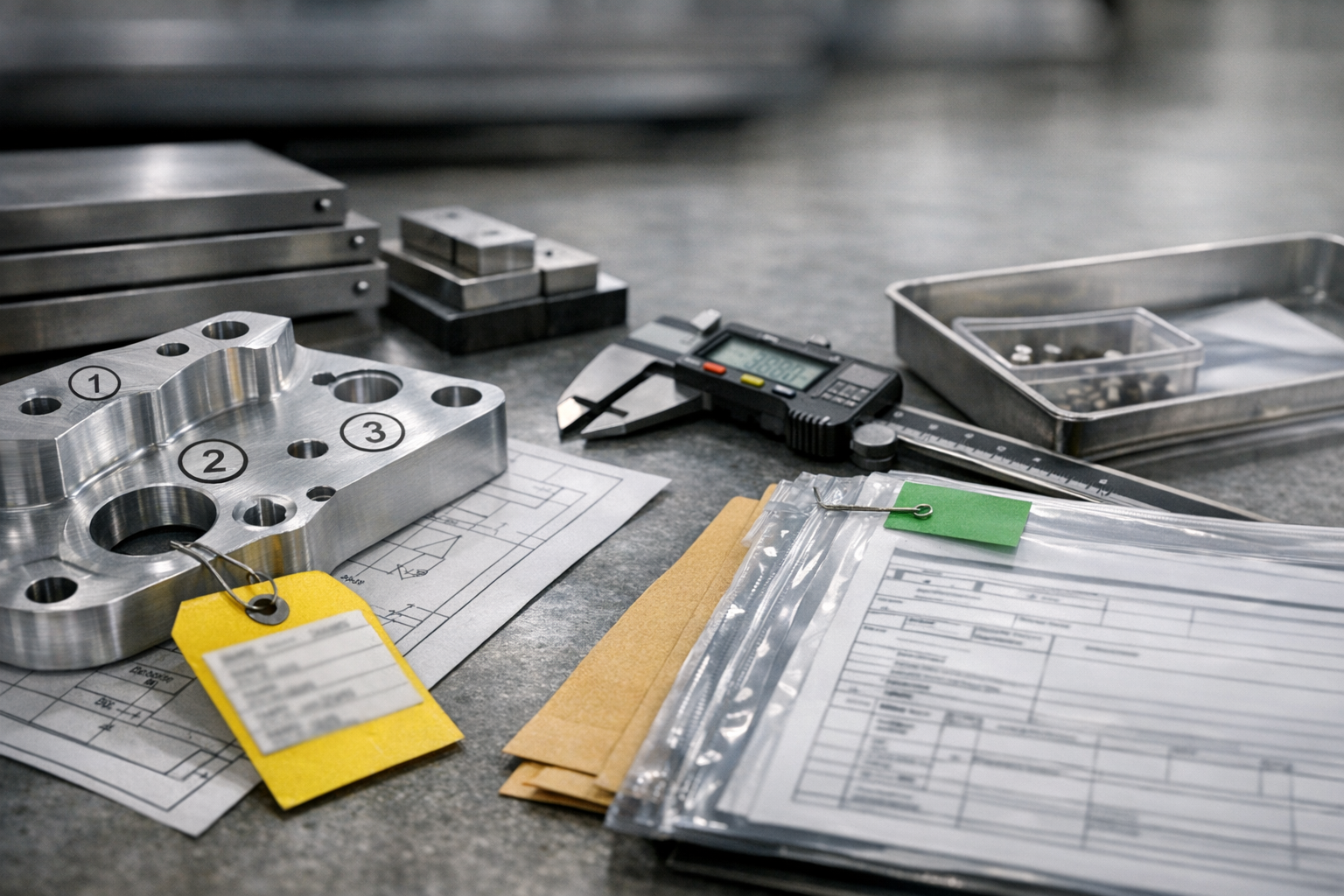
    The image shows a close-up of aerospace turbine engine components being meticulously measured with precision inspection tools, highlighting the importance of article inspection in ensuring compliance with quality standards. This process is crucial for manufacturers in the aerospace industry to maintain exact specifications and prevent errors during production.

    The fai process catches variances in dimensions, GD&T compliance, material properties, or process outcomes early. Inspecting articles from the first production lot against drawings, specifications, and purchase orders prevents scenarios where issues only surface during volume production or in service.

    Why FAI carries operational stakes:

    • Safety verification: FAI validates that special processes under NADCAP (welding, plating, NDT) were executed correctly and that key characteristics meet exact specifications
    • Program schedule protection: Incomplete or incorrect FAIRs have contributed to unplanned halts at OEM final assembly lines and delayed aircraft deliveries costing significant program resources
    • Airworthiness compliance: FAA and EASA expect demonstrable evidence that initial production articles meet design requirements before approval to proceed
    • Key characteristics (KCs) and critical characteristics (CCs): These flagged items receive heightened scrutiny because they affect safety of flight or regulatory requirements
    • Characteristic accountability: Primes and regulators expect clear traceability from ballooned drawing to measurement result, material certifications, special processes, and approvals

    FAI is not a box-ticking exercise. It provides the documented evidence that a supplier or manufacturing site has the capability to produce conforming product.

    Limitations and Risks of Manual AS9102 FAI Processes

    Manual FAI workflows typically involve printing multi-sheet drawings, hand-ballooning characteristics with colored markers, populating Excel-based FAIR templates, chasing paper certifications via email, and archiving PDFs on shared drives. For complex aerospace parts with 200 or more characteristics and multiple key characteristics, this process can consume 8 to 24 hours or more of engineering time.

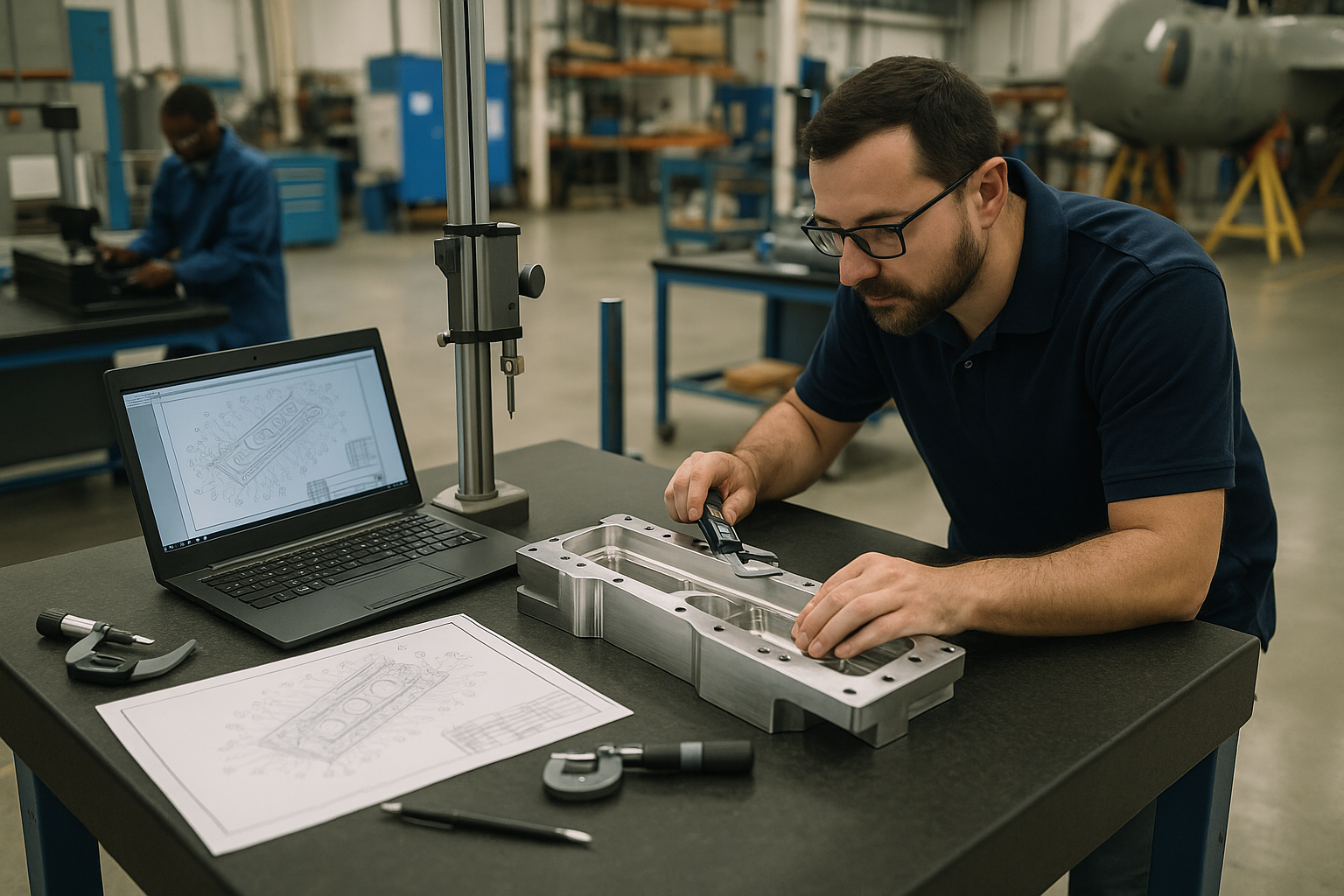
    A quality engineer is seated at a desk, intently reviewing large format technical drawings while utilizing measurement tools to ensure compliance with exact specifications. This meticulous process is essential for article inspection and contributes to maintaining quality standards in the aerospace industry.

    The time involved creates capacity constraints, but the error risk poses the greater threat.

    Common failure modes in manual FAI:

    • Missed or duplicated balloons: Industry benchmarks suggest 20-30% error rates in manual ballooning, where characteristics are either skipped or numbered inconsistently
    • Form 3 discrepancies: Actual measurements recorded on Form 3 do not align with the correct drawing revision or balloon numbers
    • Unit and tolerance inconsistencies: Manual data entry leads to mixed units or incorrect tolerance interpretations
    • Tribal knowledge dependency: When the designated FAI expert is unavailable, other technical professionals struggle to replicate the process correctly
    • Revision control breakdowns: Drawing updates get released while FAIRs are in progress, creating mismatches between documented and verified configurations

    Change management issues compound these problems:

    • Delta FAI challenges: When an engineering change affects only a subset of characteristics, manual processes often result in over-documentation (re-inspecting unaffected features) or under-documentation (omitting linked processes)
    • Partial FAI confusion: Relocating a machining operation to a new facility requires partial FAI, but determining which characteristics require re-verification is difficult without systematic tools

    Audit and customer risk exposure:

    • Weak traceability to material certifications and special process documentation
    • Slow FAIR retrieval during AS9100 surveillance audits leading to nonconformance findings
    • Supplier collaboration breakdowns when different spreadsheet formats create multiple versions of truth
    • Industry data suggests 15-25% of FAIRs are rejected for incompleteness when manual processes are used

    Core Capabilities of Modern AS9102 Software

    Robust first article inspection software extends beyond simple ballooning to automate end-to-end FAIR generation per AS9102 Rev C requirements. The following capabilities define what quality managers and manufacturing engineers should expect from a modern system.

    Ballooned drawing automation:

    • Import 2D PDF drawings or CAD derivatives and automatically detect dimensional, GD&T, and note characteristics
    • Assign sequential balloon numbers with the ability for engineers to review, adjust, and override
    • Auto balloon functionality that reduces manual markup from hours to just a few minutes
    • Synchronize extracted characteristics directly to Form 3 rows

    Digital FAIR forms:

    • Configurable templates enforcing AS9102 Rev C requirements for detailed forms including Forms 1, 2, and 3
    • Structured data entry with validation rules that prevent errors such as mismatched revisions or missing mandatory fields
    • Support for multiple units with conversion logic and tolerance formatting
    • Prime-specific formatting options (Boeing, Airbus, etc.) while maintaining a single data model

    Characteristic accountability:

    • One-to-one linkage between each ballooned characteristic and its Form 3 entry
    • Key characteristic and critical characteristic flags with configurable sampling requirements
    • Acceptance criteria and compatibility evaluation fields per Rev C

    Material and process linkage:

    • Attach raw material certifications, special process records (heat treat, NDT, plating), and lab results to Forms 1 and 2
    • Maintain perpetual storage and retrieval for audit readiness
    • Link NADCAP scope documentation to relevant process characteristics

    Revision and change control:

    • Built-in logic to handle delta FAI and partial FAI when only some characteristics change
    • Reuse baseline FAIR data while flagging only affected items for re-verification
    • Maintain full lineage between original and subsequent FAIRs

    Workflow and approvals:

    • Route FAIRs through multi-level review cycles with configurable approval matrices
    • Electronic signatures supporting 21 CFR Part 11 requirements
    • Formal submission workflows to customers or regulatory stakeholders

    Advanced AS9102 software, including Connect 981, extends these core capabilities to include real-time dashboards, defect trend analysis, and integration with shopfloor execution. However, these foundational capabilities remain the essential starting point.

    Digital FAIR Forms and Ballooned Drawings

    Ballooned drawings and FAIR forms represent the heart of any AS9102 software implementation. This is where most of the time and error risk concentrate in manual processes.

    A ballooned drawing systematically numbers every verifiable requirement: dimensions and tolerances, GD&T callouts, surface finishes, notes such as “NO SHARP EDGES,” and material or process callouts. Each balloon number drives the structure of Form 3, creating the foundation for characteristic accountability.

    How digital tools automate ballooned drawings:

    • Import PDF or CAD-derived drawings and use OCR and machine learning to detect characteristics with 90% or higher accuracy for printed dimensions
    • Assign sequential balloon numbers automatically with options to hide non-relevant features and focus on applicable requirements
    • Enable engineers to review detected characteristics, adjust balloon placement, and add manually identified items
    • Support multi-sheet drawings common in aerospace with consistent numbering across sheets

    How AS9102 digital FAIR forms should behave:

    • Pre-populate part number, revision, and order details from ERP or MES integration
    • Auto-fill Form 3 lines directly from ballooned drawing data, achieving 80-90% population without manual data entry
    • Enforce correct field usage for Forms 1, 2, and 3 per Rev C requirements
    • Support structured result entries with units, tolerances, and acceptance criteria in reportable fields
    • Export data in customer-required formats with one click submission options

    Characteristic accountability in practice:

    • Each balloon number maps to exactly one row on Form 3
    • Key characteristic flags trigger appropriate sampling plans
    • Results, tolerances, and compatibility notes are captured in linked, structured fields
    • Bidirectional navigation: click a Form 3 row to highlight the corresponding balloon on the drawing

    Connect 981 maintains balloon and characteristic data as reusable digital objects. Subsequent delta FAI or repeat builds leverage the same structure without starting from scratch, preserving audit trails across revisions.

    Handling Partial FAI and Delta FAI in Software

    Not every FAI is a full FAI. AS9102 Rev C explicitly accommodates partial FAI and delta FAI to address changes without requiring complete re-verification of unchanged characteristics.

    Partial FAI applies when re-inspection and documentation is needed for only selected characteristics or features. Typical aerospace scenarios include:

    • Moving a machining operation to a new machine or facility
    • Changing tooling that affects specific dimensions
    • Transferring production between supplier sites

    Delta FAI applies when only characteristics impacted by a drawing or specification change require verification, while linking back to the baseline FAIR. Examples include:

    • Tolerance tightening on a specific hole pattern
    • Addition of a new feature to an existing design
    • Material specification updates affecting certain callouts

    How AS9102 software should handle these cases:

    • Tag each FAIR explicitly as full, partial, or delta using Form 1 status fields
    • Reuse existing characteristic data from baseline FAIRs, adding or updating only affected lines
    • Maintain lineage between original and subsequent FAIRs for complete traceability
    • Provide impact analysis tools that parse change notices to flag affected balloons
    • Display FAIR family trees showing relationships across serials and suppliers

    Operational benefits of proper partial and delta FAI handling:

    • 50-80% cycle time reduction for engineering changes compared to full re-FAI
    • Reduced duplication of work across quality engineering teams
    • Stronger audit trails demonstrating exactly what was re-verified and when
    • Better alignment with aerospace change rates (10-20% of parts see annual engineering change orders)

    Connect 981 surfaces partial and delta FAIR relationships across multiple factories and suppliers, giving program and quality teams visibility into the complete FAI history of each part number.

    Integration of AS9102 Software with Manufacturing Workflows

    Digital FAI cannot operate in isolation. Effective article inspection report software connects to ERP, MES, PLM, and QMS to eliminate re-keying and ensure fai data accuracy.

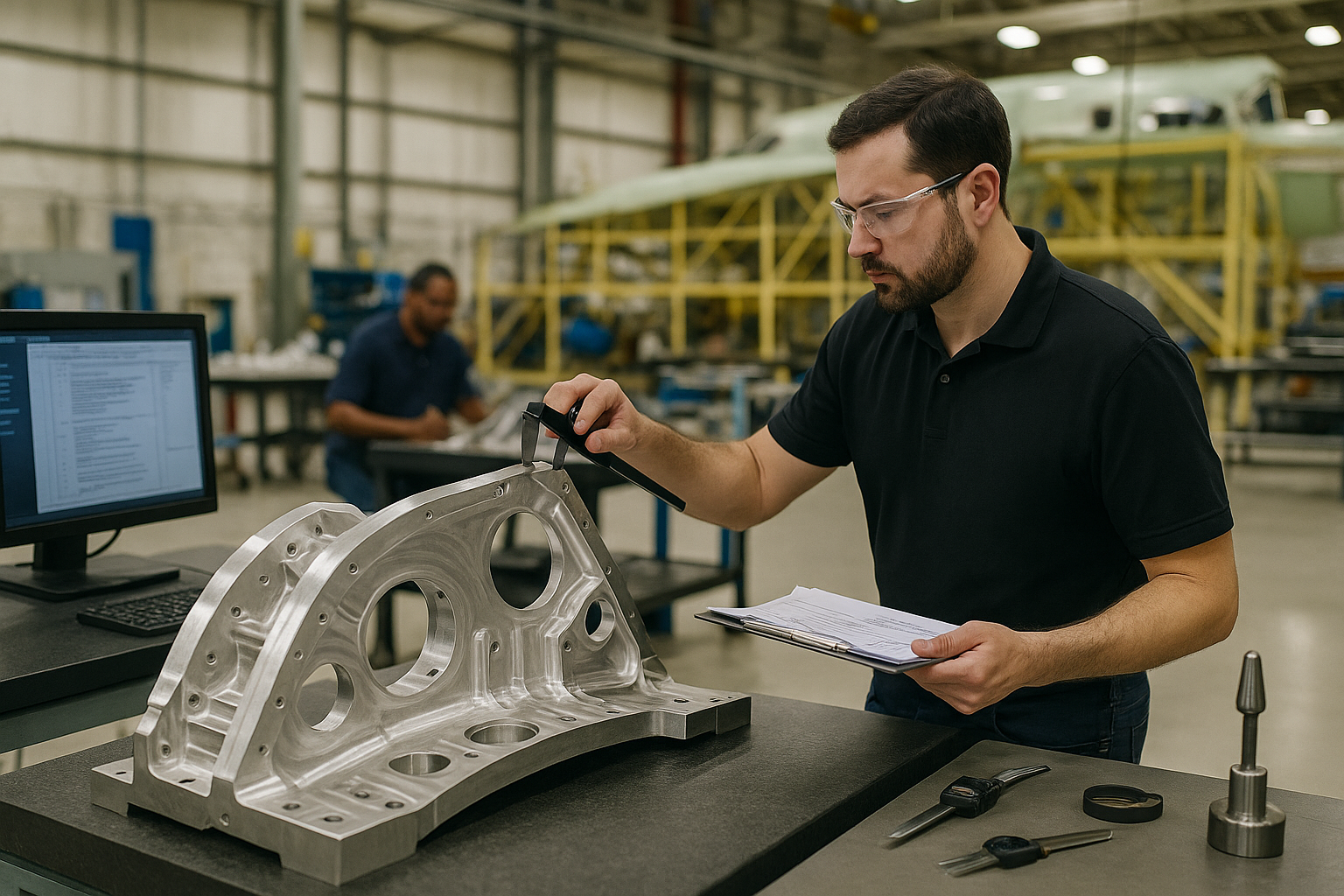
    The image depicts a modern factory floor where operators are engaged with digital tablets at their workstations, facilitating the first article inspection (FAI) process. This setup enhances efficiency in the production process by allowing quality managers and technical professionals to streamline data entry and generate accurate article inspection reports.

    Key integration points:

    • ERP integration: Pull part numbers, revisions, purchase orders, and routing information so FAIRs match contractual and planning data
    • MES or shopfloor systems: Link FAIRs to specific work orders, operations, machines, and operators for contextual results
    • PLM integration: Align FAIRs with correct engineering drawing revisions and change notices automatically
    • QMS connection: Connect nonconformance reports and corrective actions to specific characteristics and FAIRs

    Connect 981 is positioned as a unified operations layer that sits above existing ERP and MES systems. FAI becomes part of the same digital workflow used for work instructions, inspections, and defect logging.

    Practical workflow examples:

    • A new work order for a flight-critical part automatically triggers FAI requirements based on configuration rules
    • Operators collect measurement data on the shopfloor using digital checklists, feeding results directly into Form 3
    • Quality engineers review and sign off FAIRs in the same system used for other AS9100 documentation
    • CMM systems import cmm data directly into characteristic results, eliminating transcription errors

    Multi-site and supplier integration considerations:

    • Standardized FAIR templates and workflows across internal plants and external suppliers
    • Flexibility to honor customer-specific requirements while maintaining a common data model
    • Portal access for suppliers to submit FAIRs with consistent formatting and required documentation
    • Real-time visibility into FAIR status across the supply chain

    AS9102 Software and Broader Aerospace Compliance

    Digital FAI anchors a compliance ecosystem that includes AS9100, NADCAP, FAA and EASA regulations, and customer-specific quality clauses. Reliable first article inspection fai execution supports multiple compliance objectives simultaneously.

    How FAI connects to broader compliance:

    • Configuration management: Correct part and revision verified against design intent
    • Process validation: Special processes, NADCAP scopes, and supplier approvals recorded and linked
    • Traceability: Serial and lot numbers connected to measurement data, material certifications, and process records
    • Assurance documentation: Evidence of conformance available for customer and regulatory review

    Traceability requirements in detail:

    • Linkage between serial numbers, work orders, FAIRs, material lots, process batches, and inspection equipment
    • Calibration records for measurement tools used during inspection
    • Material certifications traceable to specific lots and suppliers
    • Special process documentation linked to relevant Form 2 entries

    Related topics that support this pillar:

    • FAI documentation requirements: What attachments, certifications, and evidence must accompany a complete FAIR
    • AS9102 workflow: The planning, execution, and submission sequence for compliant FAI
    • AS9102 audit readiness: Preparing for customer and registrar scrutiny of FAI records

    Connect 981’s data model was built around aerospace documentation and compliance requirements. FAI data can be reused for audits, customer scorecards, and continuous improvement rather than treated as a one-off artifact that gets filed and forgotten.

    AS9102 Audit Readiness and Digital Traceability

    AS9100, customer, and regulatory audits frequently sample AS9102 FAIRs to evaluate quality system effectiveness. Preparation for these audits determines whether reviews proceed smoothly or generate findings that require corrective actions.

    What auditors typically examine in FAI:

    • Evidence of full characteristic accountability with all ballooned characteristics documented
    • Proper use of Forms 1, 2, and 3 per AS9102 Rev C requirements
    • Clear linkage between drawing revisions, FAIRs, and changes (delta and partial FAI documentation)
    • Traceability to material certifications, special processes, and measurement equipment calibrations
    • Approval signatures and dates demonstrating proper review cycles
    • Document control ensuring only approved templates and forms are used

    How AS9102 software supports audit readiness:

    • Centralized repository of all FAIRs searchable by part, serial, PO, supplier, or date
    • Immutable audit logs recording who created, modified, and approved each FAIR and when
    • Rapid retrieval of ballooned drawings, measurement data, and supporting documents
    • Version control maintaining historical form templates while ensuring current submissions use approved formats
    • Export capabilities for producing complete FAIR packages in pdf or customer-required formats

    Connect 981 provides real-time dashboards showing FAI status (open, in review, approved, rejected) across programs and suppliers. Quality leaders can identify overdue FAIRs, bottlenecks in approval workflows, and patterns requiring attention before auditors arrive.

    The practical outcome: response times during audits drop from days of searching shared drives to minutes of filtered queries. This efficiency demonstrates system effectiveness rather than just compliance.

    From Stand-Alone FAI Tools to Connected Aerospace Operations Platforms

    The AS9102 software market includes point solutions focused on ballooning and desktop FAIR creation as well as connected operations platforms that embed FAI in end-to-end production workflows. Understanding the difference helps manufacturers and suppliers align tool selection with long-term digitalization goals.

    Stand-alone FAI tools (examples include InspectionXpert, DISCUS, and similar):

    • Quick adoption for single plants or individual engineers
    • Fast time-to-value for ballooning and form generation
    • Often require manual ERP and MES bridges
    • Create data silos that need reconciliation during audits or supplier coordination
    • Well-suited for companies with limited FAI volume or simpler part portfolios

    Connected operations platforms (including Connect 981, Net-Inspect, and others):

    • Use a common data model for work instructions, inspections, nonconformances, and FAIRs
    • Support cross-site standardization of FAI processes and templates
    • Enable analytics across FAI, in-process inspections, and final inspections to identify systemic issues
    • Reduce reliance on spreadsheets, paper packets, and tribal knowledge
    • Require more upfront configuration but deliver compounding efficiency over time

    Evaluating maturity position:

    Maturity Level Characteristics Typical FAI Time
    Paper and spreadsheets Manual ballooning, Excel forms, email coordination Days to weeks
    Stand-alone FAI tools Automated ballooning, digital forms, local storage Hours
    Integrated digital operations Connected workflows, unified data, cross-site visibility 1-2 hours

    Connect 981 unifies digital work instructions, FAI execution, quality checks, and supplier collaboration in one environment. For companies at aerospace manufacturers and suppliers managing complex multi-tier supply chains, the platform approach addresses workflows that span multiple systems and sites.

    Teams should evaluate where they sit on this maturity curve and whether AS9102 software selection aligns with broader digital transformation objectives.

    Measuring the Impact of Digital AS9102 FAI

    Aerospace organizations can quantify the ROI of implementing AS9102 software and digital FAI workflows through specific operational metrics. These measurements validate investment and identify areas for continued improvement.

    Recommended metrics to track:

    • Average time to complete a full FAIR (manual baseline vs. digital): Many industries report reduction from 8-24 hours to under 2 hours
    • Average time for delta FAI completion: Should show 50-80% reduction compared to full FAI cycles
    • Rate of FAIR rejections or customer returns due to documentation errors: Digital standardization typically reduces this by 15-25%
    • Number of late deliveries attributed to FAI delays: Tracking this connects FAI efficiency to program schedules
    • Audit findings related to FAI or traceability: Target near-zero findings with proper digital traceability
    • FAI throughput per quality engineer: Measures capacity improvements from automation

    Process capability metrics worth monitoring:

    • Frequency of key characteristics approaching tolerance limits
    • Patterns in characteristic measurements that indicate process drift
    • Correlation between specific operations or suppliers and FAI issues
    • Root cause distribution for nonconformances linked to FAI characteristics

    Platforms like Connect 981 provide dashboards showing FAI throughput, bottlenecks, and trends across programs, suppliers, and plants. This visibility enables targeted improvement projects rather than broad-brush process changes.

    Over time, organizations can leverage FAI data to refine design for manufacturability feedback loops with engineering. Rather than treating FAI solely as a compliance requirement, the accumulated data becomes a continuous improvement tool identifying where designs create inspection challenges or where processes need refinement.

    The Future of Digital FAI and Aerospace Compliance

    AS9102 software will evolve significantly over the next three to five years, driven by smart factory initiatives and aerospace digital thread requirements. Understanding these trends helps manufacturers and suppliers make software investments that remain relevant.

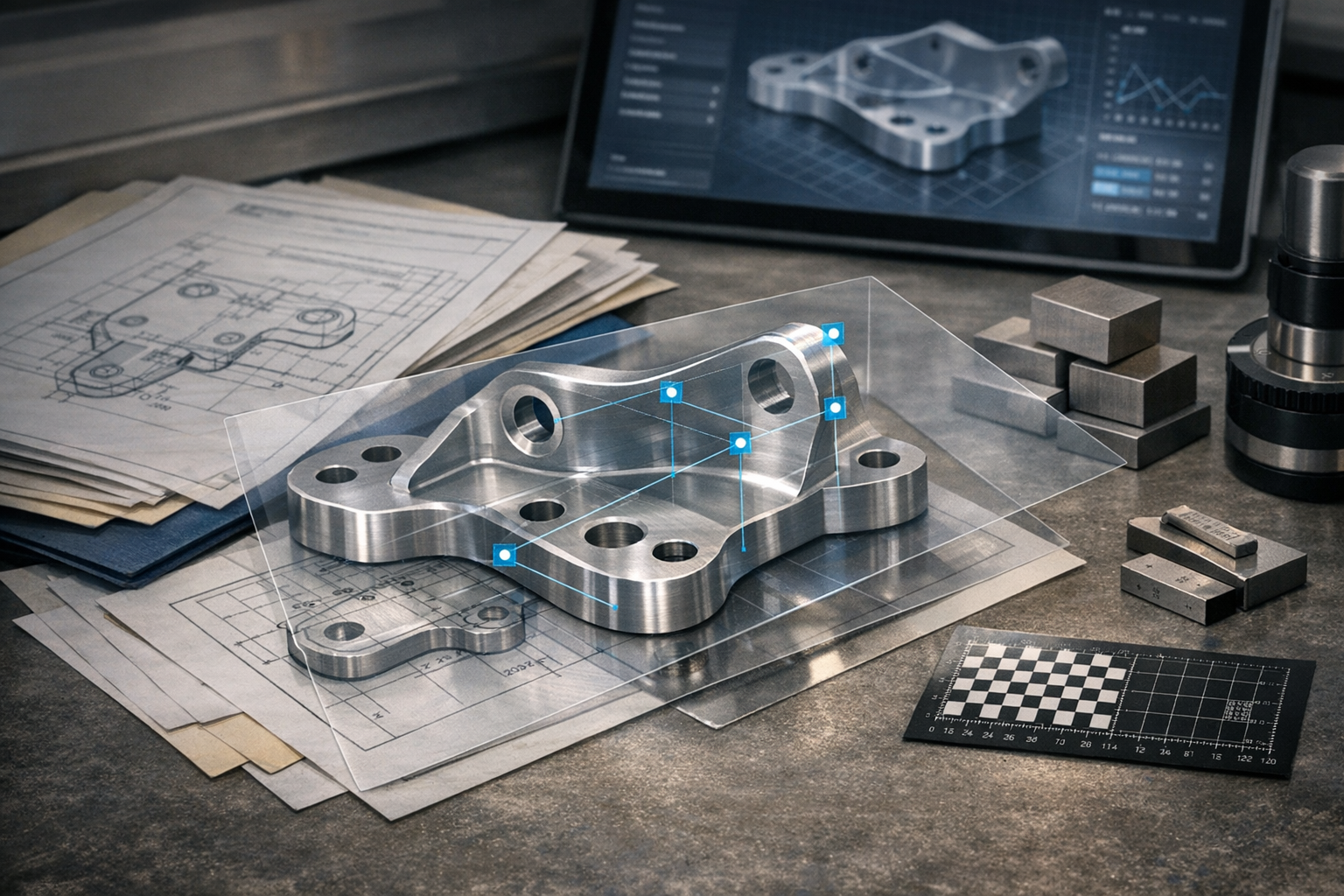
    The image depicts a modern aerospace manufacturing facility featuring digital displays and automated inspection stations designed for the first article inspection (FAI) process. This high-tech environment emphasizes quality assurance and efficiency in the production process, showcasing tools and systems that streamline article inspection and data management for technical professionals in the aerospace industry.

    Expected developments in digital FAI:

    • Model-based definition (MBD) and 3D model integration: Reducing reliance on 2D drawings by extracting characteristics directly from 3D models with embedded PMI (product manufacturing information)
    • AI-assisted risk-based sampling: Machine learning suggesting which characteristics warrant 100% inspection versus statistical sampling based on historical data and process capability
    • Anomaly detection in FAI data: Algorithms flagging unusual measurement patterns or potential data entry errors before approval
    • Predictive bottleneck identification: Analytics anticipating FAI delays based on part complexity, team capacity, and historical cycle times
    • Supplier portal integration: Real-time sharing of FAI templates, status, and approvals between primes and tiered suppliers

    How FAI fits the aerospace digital thread:

    • FAI becomes a core node connecting design, planning, execution, quality, and in-service data
    • Measurement results feed back to engineering for tolerance optimization
    • Material and process certifications link forward to maintenance records
    • Configuration control extends from design release through production verification to field support

    Connect 981 is being developed to support this direction through AI-assisted insights, low-code workflow modifications as standards evolve, and scalable deployment across global supply chains.

    The companies that treat digital FAI as a game changer rather than simply a compliance checkbox will gain competitive advantage through faster new part introduction, lower quality costs, and stronger customer relationships.

    Assess your current FAI workflows, identify the top bottlenecks in time, errors, or audit pain, and consider piloting a connected AS9102 solution to validate improvements. Manufacturers ready to streamline their fai software approach can request a demo of Connect 981 to see how unified operations platforms address the complete FAI lifecycle.

  • Manufacturing Operations Management Standards in Aerospace: ISA-95, IEC 62264, and ISO 22400

    Manufacturing Operations Management Standards in Aerospace: ISA-95, IEC 62264, and ISO 22400

    Manufacturing operations management, usually shortened to MOM, sits in the layer between enterprise planning and machine-level control. It is the operational space where production orders become real work, quality checks happen in context, materials are tracked through execution, maintenance activities are coordinated, and actual performance data is captured for review.

    That middle layer matters in every manufacturing sector, but it matters especially in aerospace. Aerospace operations do not just need efficiency. They need traceability, configuration control, documented execution, supplier visibility, and audit-ready records. That makes MOM more than a scheduling concept. In a regulated environment, it becomes part of the control structure that connects engineering intent, shopfloor execution, and quality evidence.

    For aerospace manufacturers and MRO teams, MOM standards provide a shared way to define how this layer should work. Standards such as ISA-95, IEC 62264, and ISO 22400 help organizations describe the operational model, clarify how information should move between business systems and the floor, and measure whether execution is actually performing as intended.

    Connect 981 sits directly in this layer. It helps aerospace organizations connect work instructions, quality evidence, traceability records, supplier context, and execution visibility so the operational system is not split across disconnected tools. That is where MOM standards become practical. They are not just reference models. They describe the structure that modern aerospace operations need in order to run cleanly and prove control.

    What Manufacturing Operations Management Means in Aerospace

    At a high level, manufacturing operations management covers the activities used to manage, coordinate, monitor, and improve operations between planning and control. It is where high-level business intent gets translated into executable work and where execution results get pushed upward as usable operational data.

    In aerospace, that includes more than production dispatching. MOM typically touches four operational domains:

    • Production operations such as work order execution, sequencing, dispatching, and status tracking
    • Quality operations such as inspections, holds, nonconformance logging, acceptance evidence, and in-process verification
    • Maintenance operations such as equipment reliability, repair coordination, and service planning
    • Inventory operations such as raw material movement, WIP control, serialized parts tracking, and floor-level inventory visibility

    In aerospace manufacturing, these domains are tightly tied to compliance and product integrity. A work order is not just a job ticket. It may carry configuration requirements, revision-controlled instructions, part traceability, tooling requirements, inspection gates, and signoff expectations. That is one reason generic factory coordination language is usually not enough in aerospace. Teams need models that define these functions with much more precision.

    Where MOM Sits in the Manufacturing Stack

    The most widely used conceptual model for this comes from ISA-95, later aligned internationally as IEC 62264 and ISO 62264. These standards place MOM at Level 3 in the manufacturing hierarchy.

    Level Role Typical Scope
    Level 4 Business planning and logistics ERP, forecasting, master scheduling, enterprise resource allocation, planning
    Level 3 Manufacturing operations management Scheduling, dispatching, quality operations, maintenance coordination, inventory execution, work instructions, production visibility
    Level 2 Supervisory control SCADA, HMI, supervisory logic, machine status visibility
    Level 1 Direct control PLCs, controllers, equipment logic, feedback loops
    Level 0 Physical process Machines, tooling, materials, operators, physical production activity

    This model is useful because it makes the boundary clear. MOM is not long-range planning, and it is not direct machine control. It is the execution coordination layer in between.

    In aerospace, that is often the most operationally painful layer because it is where planning meets the reality of revision changes, shortages, supplier delays, inspection failures, operator signoffs, serialized components, and controlled deviations. It is also where most organizations feel the cost of fragmented systems most sharply.

    ISA-95 and IEC 62264 as the Core MOM Reference Model

    ISA-95 is the foundational standard family for defining manufacturing operations management functions and enterprise-control integration. It gives organizations a shared language for how manufacturing activities are structured, what kinds of information objects are exchanged, and where the operational layer begins and ends.

    Its international counterpart, IEC 62264, carries the same core conceptual role. In practice, many teams refer to ISA-95 and IEC 62264 together because they describe the same underlying model.

    What these standards define

    ISA-95 and IEC 62264 help define:

    • functional hierarchies across Levels 0 through 4
    • activity models for production, quality, maintenance, and inventory operations
    • information models for exchanging data between business systems and operational systems
    • clear boundaries between planning, operations coordination, and control

    That may sound abstract, but it matters in practice. If an aerospace organization cannot clearly describe what the operations layer is responsible for, it usually ends up with overlap, gaps, or disconnected systems. Work instructions may live in one place, inspection results in another, serialized material data somewhere else, and supplier visibility nowhere useful at all.

    The four MOM domains from ISA-95

    ISA-95 breaks manufacturing operations management into four main domains:

    1. Production operations management
      Covers scheduling, dispatching, work execution, resource allocation, and production status tracking.
    2. Maintenance operations management
      Covers maintenance planning, maintenance execution, equipment reliability, and upkeep coordination.
    3. Quality operations management
      Covers inspections, process verification, holds, nonconformance control, and quality reporting.
    4. Inventory operations management
      Covers material tracking, WIP control, movement visibility, and execution-level inventory status.

    Those categories map directly to aerospace pain points. A production team may be trying to dispatch work in sequence while quality is holding a serialized subassembly, maintenance is working around a machine issue, and inventory is waiting on controlled material release. That is not four separate realities. It is one operational system, and ISA-95 gives it structure.

    Why MOM Standards Matter More in Aerospace

    Many factories can tolerate operational ambiguity for a while. Aerospace usually cannot. The moment you add configuration control, special process traceability, regulated documentation, supplier flowdown, and audit expectations, the Level 3 operating layer becomes much more important.

    In aerospace, MOM-aligned operations help coordinate things like:

    • revision-controlled work instructions
    • serialized part installation records
    • inspection gates tied to product definition
    • nonconformance handling in production context
    • material traceability through execution
    • production and maintenance data needed for compliance evidence

    This is where Connect 981 becomes especially relevant. It supports the operational layer where those controls actually live. Instead of leaving quality evidence, execution records, supplier inputs, and floor-level status scattered across multiple tools, Connect 981 helps bring them into one connected operating view.

    ISO 22400 and the Measurement Side of MOM

    If ISA-95 and IEC 62264 tell you what the operational layer is, ISO 22400 tells you how to measure its performance more consistently.

    ISO 22400 focuses on key performance indicators for manufacturing operations management. The goal is to standardize how organizations define and calculate operational metrics so results can be interpreted more clearly across teams, sites, and time periods.

    What ISO 22400 contributes

    • standardized MOM-related terminology
    • defined KPI concepts and formulas
    • measurement logic tied to operational activities
    • more consistent interpretation of production performance

    This matters in aerospace because organizations often operate across multiple plants, suppliers, and programs. If one site calculates throughput one way and another site uses a different logic, leadership gets noise instead of insight.

    Common KPI categories linked to MOM

    Category Example Metrics
    Production and time Cycle time, throughput rate, schedule adherence, execution time
    Quality First-pass yield, defect rate, scrap ratio, rework rate
    Equipment and utilization Availability, performance rate, overall equipment effectiveness
    Maintenance Mean time between failures, mean time to repair, planned vs unplanned maintenance
    Inventory Inventory accuracy, stock turns, WIP visibility, material availability

    In aerospace, some of these metrics need nuance. OEE may still be useful, but it rarely tells the whole story in a low-volume, high-complexity, high-documentation environment. First-pass yield, schedule adherence on constrained programs, inspection queue time, hold duration, and traceability-related delays may matter just as much.

    Connect 981 helps make these metrics more meaningful because it ties them to the execution context behind them. A performance number becomes much more useful when teams can see which work order, part family, station, supplier input, or quality event shaped it.

    How ISO 22400 Relates Back to ISA-95

    The relationship is straightforward. ISA-95 and IEC 62264 describe the functional operating model. ISO 22400 describes how to quantify the performance of that operating model.

    • ISA-95 / IEC 62264 define the structure of production, quality, maintenance, and inventory operations
    • ISO 22400 defines how to measure those operations consistently

    That pairing is useful because it gives aerospace organizations both the language for the workflow and the language for the scorecard. One defines how the operational system is structured. The other defines how its performance can be evaluated in a more consistent, comparable way.

    Other Standards That Shape the MOM Layer

    Manufacturing operations management does not live in isolation. In aerospace, the MOM layer is shaped by other standards and regulatory expectations even when those standards are not MOM frameworks themselves.

    AS9100

    AS9100 is the aerospace quality management system standard. It does not define MOM architecture, but it strongly shapes what the operations layer must support. If the quality system requires traceability, documented process control, nonconformance management, and audit-ready evidence, the MOM environment has to help deliver that.

    AS9102

    First article inspection workflows often sit at or near the MOM layer because they connect production execution, inspection activity, drawing accountability, and evidence generation. A disconnected FAI process usually creates friction because it is detached from the operational execution model around it.

    NADCAP and special process oversight

    Special process traceability and supplier approvals also push requirements into the operations layer. The shopfloor or execution system needs to know not just what job is being run, but what approved source, process route, or certification scope applies.

    ISA-88

    ISA-88 is more closely tied to batch control, so it is not the primary MOM standard for most aerospace discrete manufacturing environments. Still, the concept matters in operations where structured procedural execution, recipe-like controls, or tightly sequenced process logic are relevant.

    Planning, MOM, and Control: The Practical Boundary

    One of the most useful things MOM standards do is force clarity about where one layer ends and another begins.

    Planning layer

    The planning layer decides what should be made, in what quantity, and in what overall timeframe. This is where ERP, demand planning, financial planning, master scheduling, and aggregate resource logic usually live.

    MOM layer

    The MOM layer translates that intent into executable work. It handles detailed scheduling, order dispatching, operator-facing instructions, execution visibility, floor-level quality coordination, maintenance coordination, and actual-versus-plan feedback.

    Control layer

    The control layer runs the machines and equipment. It is responsible for setpoints, sequencing, machine logic, supervisory control, and physical process execution.

    Why does this boundary matter? Because in aerospace operations, confusion at the boundaries creates real pain:

    • ERP tries to own details it cannot see in real time
    • machine systems expose data with no operational context
    • quality records sit outside production execution
    • operators get instructions that are current in one system and outdated in another

    A MOM-aligned operating model helps keep those responsibilities clearer. Connect 981 supports that model by sitting in the execution and coordination layer rather than trying to replace planning systems or machine controls. It helps bridge the gap between what the business planned and what the floor can actually prove happened.

    How MOM Standards Apply in Aerospace Manufacturing

    For aerospace manufacturers, MOM standards become valuable when translated into practical workflows.

    Production operations

    • controlled release of work instructions
    • routing visibility tied to revision status
    • sequencing and dispatching around constrained equipment or approvals
    • as-built execution data connected to the production order

    Quality operations

    • in-process inspection capture
    • hold points before critical operations continue
    • defect logging with production context
    • FAI, verification, and acceptance evidence connected to execution history

    Inventory operations

    • lot and serial traceability through the floor
    • WIP visibility by job, operation, or configuration state
    • controlled material issue and consumption records
    • supplier-linked material status where approvals matter

    Maintenance operations

    • equipment readiness visibility
    • maintenance coordination that affects execution schedules
    • machine reliability metrics that matter for constrained processes
    • better distinction between planned and disruptive downtime

    These are not just smart factory nice-to-haves. In aerospace, they support schedule integrity, compliance confidence, and product traceability. Connect 981 supports these workflows by helping organizations connect execution status, instructions, quality records, supplier context, and evidence in one environment.

    How MOM Standards Apply in Aerospace MRO

    MRO environments introduce a different version of the same problem. In maintenance operations, the execution layer must coordinate inspections, findings, repair routing, serialized component history, replacement decisions, and airworthiness-related documentation. That makes MOM concepts just as useful, even if the environment looks different from new production.

    In MRO, MOM-aligned thinking helps structure:

    • task execution against controlled maintenance instructions
    • findings capture with traceable evidence
    • component and serialized asset history
    • repair cycle coordination across stations or vendors
    • maintenance KPIs such as turnaround time, repeat findings, and reliability trends

    That is especially relevant because aerospace operations often span both production and support environments. Connect 981 supports both by helping teams keep instructions, findings, records, and coordination activity linked instead of split across departmental tools.

    What a Connected MOM Layer Looks Like in Practice

    In older environments, ISA-95 might map cleanly to a classic MES that sat between ERP and shopfloor control. In modern aerospace operations, the reality is often much more fragmented. One tool may handle instructions, another inspections, another defects, another supplier coordination, and another production status. The result is not a coherent MOM layer. It is a patchwork.

    A connected platform approach restores that missing operational layer by unifying:

    • digital work instructions
    • execution status tracking
    • quality checks and evidence capture
    • nonconformance workflows
    • supplier and material context
    • traceability across the job lifecycle

    That is where Connect 981 fits. It strengthens the operational zone that MOM standards describe. It helps aerospace organizations make the Level 3 layer more real, more connected, and more useful by tying execution, quality, supplier input, and traceability together in ways that support both compliance and day-to-day control.

    Final Takeaway

    ISA-95 and IEC 62264 define the operational structure. ISO 22400 defines how performance is measured. Aerospace standards such as AS9100 shape what that operating layer must support. Together, they form a practical framework for understanding how aerospace manufacturing and MRO operations should connect planning, execution, quality, maintenance, and measurement.

    For aerospace organizations, MOM is not an abstract standards topic. It is the structure behind cleaner execution, stronger traceability, better evidence, and more disciplined control across the operational layer. Connect 981 supports that structure by helping manufacturers and MRO teams bring work instructions, quality events, traceability, supplier context, and execution visibility into one connected operating model.