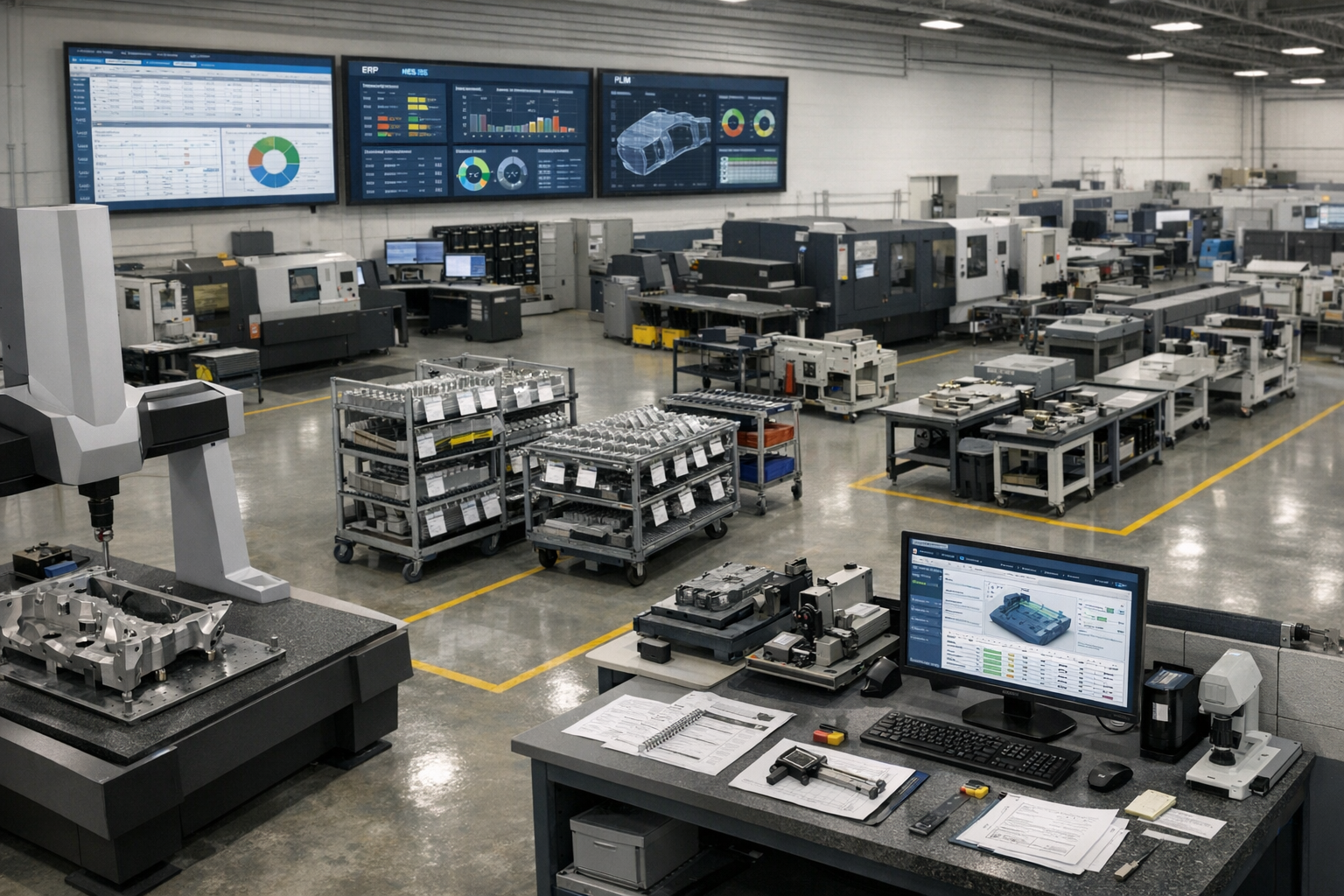
Most FAI debates do not start with bad intent. They start with a drawing revision, a supplier move, a long production gap, or a customer note buried in a purchase order. This guide answers when is full fai required, when a partial fai is enough, and how aerospace teams can make that decision without turning every change into a program delay.
Fast Answer: When Is a Full First Article Inspection Mandatory?
A full first article inspection is required when the prior baseline no longer proves that the article meets all engineering, manufacturing, and customer requirements. AS9102C, released on 2023-06-28, is the current aerospace reference, and customer flowdowns can be stricter than the standard.
A full FAI is required during new product introduction, production gaps, significant changes, major process overhauls, or customer demand for a re-baseline of quality data. If minor modifications are made, a partial or Delta FAI, focusing only on affected characteristics, is used instead of repeating the full FAI process.
Core triggers include:
- New part number, new first article, or first build to a customer design.
- Design change affecting fit, form, function, safety, or performance.
- Production lapse of 24 months or more, unless customer requirements define another interval.
- New site, new primary equipment, or new production process route.
- Change of material, source, or key special process, such as heat treat, plating, bonding, or welding.
- Customer-directed full FAI on the contract, purchase order, corrective actions plan, or approval process.
A full FAI covers the entire drawing and full characteristic accountability. A partial FAI covers only affected characteristics and links back to the baseline first article inspection report.
Full vs Partial FAI: Clear Definitions and Boundaries
A First Article Inspection (FAI) is a comprehensive review of the engineering documentation and the manufacturing process from raw materials through conversion and functional testing for one part. The AS9102 standard, developed by the International Aerospace Quality Group (IAQG), outlines the requirements for First Article Inspection in the aerospace industry, ensuring that all aspects of design, manufacturing, and inspection are verified and documented.
A complete fai includes:
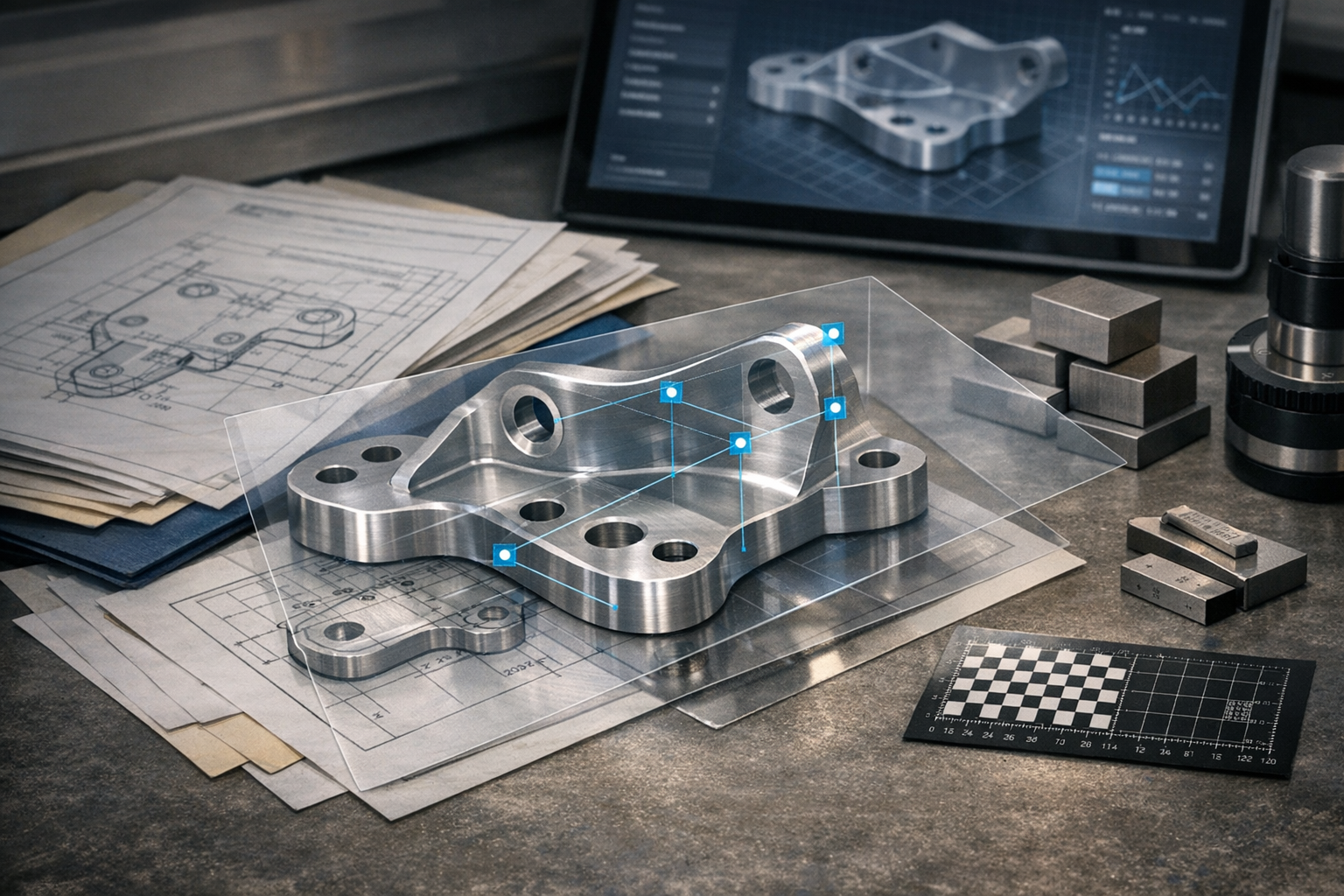
- Ballooned engineering drawings or 3D models with every design characteristic, material note, surface finish, and specification requirement identified.
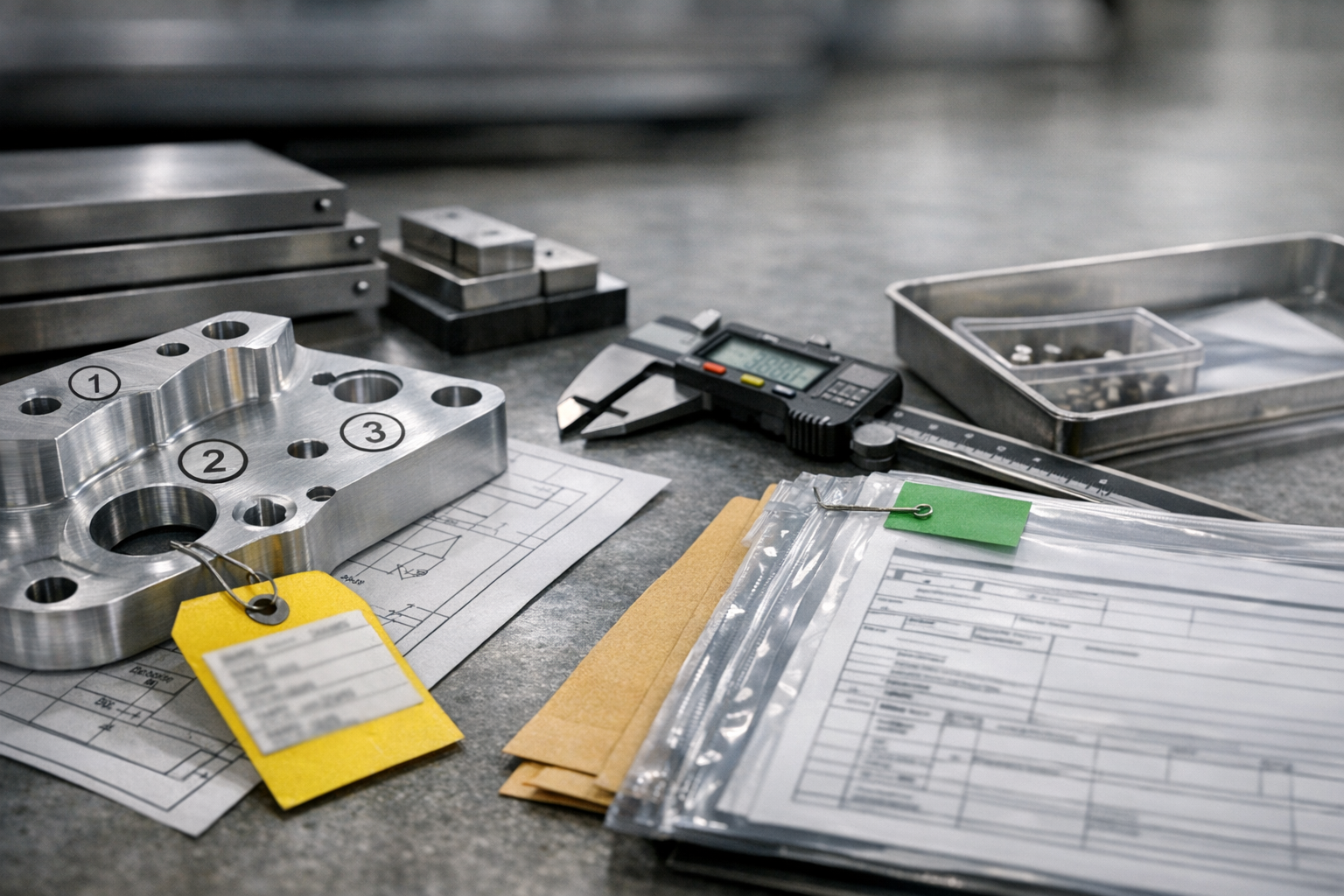
- A complete article inspection report FAIR using the three forms: Form 1, part number accountability form; Form 2, product accountability; Form 3, characteristic accountability with measured values.
- Compatibility evaluation against the latest design records, specification requirements, documentation requirements, and purchase order.
A partial FAI includes:
- Only new or revised dimensions, notes, materials, inspection methods, or production process changes.
- A FAIR that references the original baseline article inspection report by number and date.
- Evidence that unchanged tooling, calibrated tools, coordinate measuring machines, and inspection plan remain controlled.
Boundary example: a design note clarification with no functional effect usually supports partial FAI. A new machining center and fixture for the same part may require full FAI because the manufacturing environment changed.
Trigger Matrix: When a Full FAI Is Required vs When Partial Is Enough
Use a trigger matrix during supplier review, quality control, and formal approval. It gives responsible parties a consistent way to decide the required article inspection level.
Event
Impact
Typical decision
Notes
New Airbus A320neo bracket
No baseline
Full FAI
New first article inspection requirement
Hole location or tolerance change
Fit or function
Full FAI
Assembly risk
Drawing typo correction
Documentation only
Partial FAI
No change to specified requirements
New forging supplier for landing gear
Material and safety
Full FAI
Supply chain risk
Deburr clarification or cosmetic surface finish
Cosmetic only
Partial FAI
Unless CTQ
Flight control link restarted after 30 months
Lapse
Full FAI
Revalidate process and fai report
Standard inspection only
No change
No FAI
Normal inspection results still recorded
Default to full FAI if risk is unclear. That rule reduces non conformances, audit debate, and late customer rejection.
First Article Inspection is crucial in industries such as aerospace, defense, and automotive, where precision and quality are paramount, helping to prevent defects and ensure products meet design and performance criteria from the outset of production. The same risk logic appears in other regulated industries, including a medical device production run where a component fails and the team must prove the production process remains valid.

Design Change Triggers: Do All Design Changes Require a Full FAI?
No. AS9102C and most OEM specifications distinguish between changes that affect fit, form, function, safety, or performance and changes that are editorial.
Full FAI is normally required when a design revision:
- Adds or relocates mating interfaces, mounting holes, or datum schemes.
- Changes CTQ tolerances, GD&T, or key components.
- Adds functional requirements for pressure, load, vibration, leakage, electrical paths, or functional testing.
Partial FAI is commonly used when the change is limited to:
- Clarified inspection methods without changing the requirement.
- Spelling, unit symbols, or reference document numbers.
- Removal of unused reference dimensions while retaining the functional scheme.
Before deciding, confirm all routings, digital work instructions, CNC programs, CMM programs, and engineering documentation match the new revision. Some OEMs, including Boeing through D6-51991 practices and primes using advanced product quality planning or AS9145, may require full FAI for any revision on high criticality parts.
Process, Tooling, and Location Changes: When Production Lapses and Restarts Matter
AS9102C treats significant process and context changes as renewed article inspection triggers even when the drawing did not change. The question is whether the prior first article inspection fai still represents the actual production process.
Full FAI is typical for:
- Moving production to a different facility.
- Switching manual machining to five axis CNC, a new molding press, or a new welding cell.
- Replacing key fixtures that locate CTQ features.
- Introducing automation that changes process capability.
A common aerospace rule is that if manufactured parts have not been produced for 24 months or more, full FAI is usually required unless the customer specifies a shorter or longer interval. An actuator housing last built in 2021 and reordered in 2024 should receive full FAI to revalidate the article inspection process and article inspection report fair.
Partial FAI may be reasonable for documented minor tool wear replacement or non-critical cleaning changes. Connect981 can track last-production dates, routing changes, tooling IDs, and production process changes so teams can quickly see whether a full or partial FAI is required.
Material, Special Process, and Supplier Changes: Article Inspection Requirement Impacts
Material and special process changes are frequent sources of escapes. Full FAI is usually required for:
- Alloy or material specification changes, such as 7075-T6 to 7050-T7451.
- Material form changes, such as bar to forging or casting.
- New material supplier for structural or safety-critical parts.
Special process changes also matter. Heat treat, NDT, anodizing, plating, bonding, welding, curing cycle, temperature, or atmosphere changes should trigger re-validation and updated article inspections. If the change may affect performance, fatigue, corrosion, sealing, or safety, default to full FAI. If only a localized coating changes with no CTQ impact, partial FAI may be acceptable with customer approval.
Form 2 must be updated with new certifications, source approvals, test results, and product accountability evidence.
Customer, Regulatory, and Corrective-Action Driven Triggers
First Article Inspection (FAI) is mandated by various industry standards, including AS9100 for aerospace, which requires compliance with specific quality management practices to ensure that products meet design specifications before full production. FAI enhances regulatory compliance, as it is a mandatory requirement for many manufacturing sectors, including aerospace and automotive, ensuring that manufacturers meet critical regulations and standards.
Customer-driven triggers include:
- PO or quality clause requiring “AS9102 full FAI with Forms 1–3.”
- OEM-specific checks, such as BFAI, Boeing First Article Inspection.
- APQP, PPAP, or production part approval process gates.
Corrective-action triggers include:
- Escape or major nonconformance showing the original FAI is no longer valid.
- Repeat defects on CTQ features requiring containment, root cause, and full revalidation.
Audits, DER or UMAR approvals, NADCAP findings, AS9100 gaps, and safety-of-flight issues may also force retroactive full FAIs. Transparent article inspection reports help preserve customer confidence.
Supplier Decision Logic: How to Choose Full vs Partial FAI in Practice
Suppliers need repeatable fai procedures, not ad hoc judgment. A practical path is:
- Check AS9102C, contract, customer requirements, quality requirements, and purchase order.
- Classify the trigger: new part, design revision, process change, material change, location change, lapse, or corrective action.
- Assess fit, form, function, safety, regulatory impact, and whether the article meets all specified requirements.
- Use an internal matrix to choose full FAI, partial FAI, or no FAI, then document the rationale.
- Get customer concurrence when selecting partial FAI for borderline cases.
High criticality parts such as flight controls, landing gear, pressure vessels, and structural sub component assemblies should lean toward full FAI. Low-risk covers or brackets may justify partial FAI for minor changes. The decision record should ensure traceability and support future audits.
What a Full FAI Actually Includes: Article Inspection Process and FAIR Content
Once triggered, the first article inspection process must follow a structured inspection process. Utilizing a full FAI can help detect errors, tooling misalignments, or misunderstood specifications before mass production begins, mitigating expensive scrap, rework, and recalls.
The article inspection process includes:
- Validate latest drawings, models, specifications, design specifications, and purchase order requirements.
- Balloon every dimension, material requirement, note, and surface finish.
- Execute dimensional, visual, material, and functional tests using calibrated tools, gages, NDT, and coordinate measuring machines.
- Record measured values, inspection results, pass or fail status, and approval signatures.
The First Article Inspection Report (FAIR) serves as a formal record of the inspection and provides crucial information to both the manufacturing entity and the customer, including inspection details, results, and approval signatures. The First Article Inspection Report (FAIR) is a critical document that summarizes the findings of the FAI process, including inspection results, non-conformance issues, and approval signatures, and is essential for compliance with industry standards.
Good FAIRs improve the approval process, ensure accuracy, support compatibility evaluation, and help both the manufacturer and the customer avoid disputes.

Avoiding Over-Inspection and Under-Inspection: Practical Risk Balancing
Full FAIs consume time. Under-inspection creates escapes. First Article Inspection (FAI) is crucial in various industrial quality management systems and standards, such as ISO 9001 and AS9100, as it acts as a form of risk mitigation by helping to catch potential issues before production begins.
Do not repeat full FAI for pure editorial corrections when no requirement changed. Use partial FAI for tightly scoped changes backed by stable capability data.
Do not rely on partial FAI when the manufacturing method, site, key material, or long lapse has changed. Implementing a structured FAI process can prevent costly defects, which dramatically reduces costs associated with scrap, rework, and product recalls, thereby enhancing overall manufacturing efficiency.
A robust Quality Management System (QMS) provides a structured framework and systematic approach to quality control, which is instrumental in ensuring the accuracy, reliability, and compliance of First Article Inspection processes in the manufacturing industry. Quality Management Systems are essential for ensuring compliance with industry standards such as AS9100, which governs quality assurance in aerospace manufacturing. The implementation of a Quality Management System helps organizations monitor and control all aspects of part production, ensuring that inspection plans are based on the technical data package tied to customer contracts.
One note on terminology: outside manufacturing, a full Fair Admission Index is needed when broad demographic changes invalidate prior admissions results or when transitioning between admissions criteria. In educational contexts, a full Fair Admission Index (FAI) is required when transitioning to a lottery-based system to ensure equitable access for all students. That is not the aerospace first article inspection fai discussed here.
Digitizing FAI and Trigger Logic with Connect981
Connect981 is built for aerospace manufacturing and MRO teams that need reliable digital article inspection fai workflows, not more spreadsheet control points. It connects ERP, MES, QMS, supplier data, documentation, and shopfloor execution in one operations layer.
The Connect981 platform helps teams:
- Centralize engineering documentation, revision history, routings, inspection plan data, and quality management records.
- Embed a configurable FAI trigger matrix into workflows so article inspection requirement decisions are consistent.
- Generate and manage article inspection reports, including characteristic accountability tables from ballooned drawings or models.
- Track production lapses from ERP and MES data and flag when AS9102C logic suggests a new full FAI.
- Link non conformances and corrective actions directly to FAI records.
- Give cross-factory and supplier visibility into current full and partial FAI status.
This ensures consistency, supports continuous improvement, and helps teams exceed customer expectations without adding manual reporting burden.

Request a demo to see a working FAI trigger matrix, digital first article inspection process, and automated FAIR workflow inside Connect981.