RSC Content Type: Data Sheet / Proof Asset

KPI definitions, ROI math, or measurable outcome artifact.

  • Model card

    A model card is a structured document that summarizes what an artificial intelligence or machine learning model is, what it was designed to do, how it was evaluated, and what limits or risks should be understood before use. It commonly refers to a human-readable description that travels with the model or is linked to it in a repository, application, or governance workflow.

    In industrial and regulated environments, a model card is typically used as supporting documentation for transparency and internal review. It can help teams understand the model’s purpose, input and output expectations, training or reference data characteristics at a high level, performance measures, known constraints, and operational assumptions. It is documentation about the model, not the model itself.

    What it usually includes

    • The model’s name, version, and owner or maintaining team

    • Intended use cases and users

    • Out-of-scope or prohibited uses

    • Input data expectations and output format

    • Summary of how the model was trained or configured

    • Evaluation approach and reported performance metrics

    • Known limitations, failure modes, or bias considerations

    • Operational dependencies such as data quality, thresholds, or human review requirements

    How it appears in operations

    Model cards often appear in AI governance records, MLOps repositories, validation packages, supplier documentation, or approval workflows tied to analytics and decision-support tools. For example, a manufacturer using a machine learning model for visual inspection or maintenance prediction may keep a model card alongside version-controlled deployment records so quality, engineering, and IT stakeholders can review the model’s stated purpose and limits.

    Common confusion

    A model card is often confused with related artifacts, but they are not the same:

    • Data sheet or dataset documentation: describes the dataset rather than the model.

    • System documentation: covers the broader application, workflow, or architecture, not just the model.

    • Validation report: provides evidence from testing or qualification activities, while a model card is a summary-oriented description.

    • Algorithm specification: may describe logic or mathematics in depth, whereas a model card is usually broader and more operational.

    Boundary of the term

    The term commonly refers to documentation for AI or machine learning models, including predictive, classification, detection, or generative models. It does not by itself imply regulatory approval, production readiness, cybersecurity assurance, or fitness for a specific quality-critical decision. Those determinations depend on the surrounding governance, validation, and operational controls.

  • Aerospace MES: Connected Manufacturing Execution for Modern Aircraft and MRO

    Aerospace MES: Connected Manufacturing Execution for Modern Aircraft and MRO

    Manufacturing Execution Systems in the aerospace industry serve as the operational backbone connecting high-level planning to the physical reality of shop floor production and MRO bays. These systems enforce real-time control over manufacturing processes from raw material intake through assembly, test, and in-service maintenance, capturing the granular data that regulators, customers, and quality teams require. For aerospace manufacturers producing aircraft components or maintaining fleets, MES is where compliance, traceability, and operational control converge.

    The regulatory environment makes aerospace MES capabilities non-optional. AS9100 governs quality management systems. NADCAP certifies special processes like heat treatment and non-destructive testing. FAA Part 21 covers design and production approvals while Part 145 addresses repair stations. EASA equivalents apply across Europe, and ITAR controls export-sensitive data. Each standard demands documented evidence that paper-based or spreadsheet-driven systems cannot reliably provide. The 2023-2024 quality escapes, including the Boeing 737 MAX door plug incident that forced fleet-wide inspections, underscore what happens when traceability breaks down.

    Over 200 FAA airworthiness directives were issued in 2024 alone for traceability-related issues in engines and structures.

    This guide covers how aerospace MES works, how it integrates with ERP, PLM, and QMS, and what to look for when evaluating solutions. Connect981 operates as a unified operations layer that can complement or partially replace traditional MES for aerospace and MRO operations, offering configurable digital workflows built for regulated environments without the rigidity of legacy systems.

    What Is an Aerospace MES?

    A manufacturing execution system for aerospace extends beyond generic MES definitions to cover the full lifecycle of aerospace component manufacturing. This spans raw materials and buy-parts through machining, assembly, test, and in-service maintenance history. The system manages the transformation of materials into certified aircraft components or repaired assemblies, tracking every serial number, lot code, heat treat batch, and operator intervention with timestamped precision.

    Core MES functions in aerospace include:

    • Routing enforcement that prevents out-of-sequence operations, such as mandating NDT scans before final machining on titanium billets
    • Digital work instructions with embedded 3D models from CAD systems that auto-update via PLM links
    • WIP visibility across assembly lines showing queue depths at autoclaves, 5-axis mills, and test stations
    • Serial and lot traceability linking a specific Ti-6Al-4V bar to its billet supplier certs and every downstream process
    • Inline quality checks with automated pass/fail on dimensional scans and torque verification
    • NCR generation at the point of detection, such as delamination in composites or dimensional non-conformance
    • Real-time dashboards aggregating OEE metrics where aerospace targets typically exceed 85% for high-rate lines

    Aerospace-specific demands amplify these requirements significantly. Configuration control must tie to aircraft tail numbers or manufacturer serial numbers, enforcing variant-specific routings for different aircraft models. Time-controlled parts like hydraulic accumulators require expiration tracking. Life-limited components such as turbine blades must log every run hour from first operation. Multi-level sign-off chains involving operators, inspectors, quality engineers, and customer representatives often require electronic signatures compliant with 21 CFR Part 11 standards.

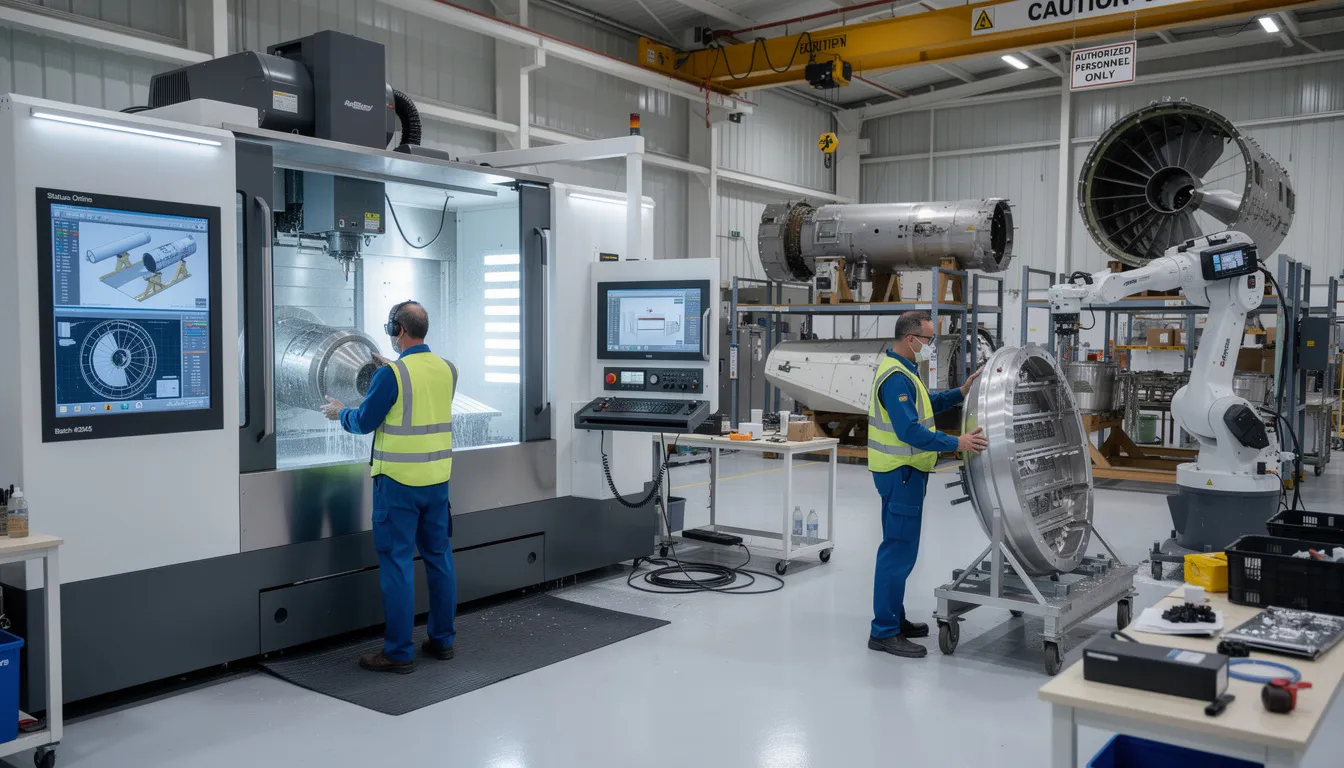
    The image depicts an aircraft fuselage assembly line where workers are engaged in precision installation tasks, showcasing the intricate processes involved in aerospace manufacturing. The scene highlights the operational efficiency and quality control measures essential in the aerospace industry for producing aircraft components.

    Unlike generic MES focused on high-volume consumer goods, aerospace MES prioritizes audit-surviving documentation. This means immutable logs of calibration traceability for every torque wrench used on engine mounts, regulatory record retention spanning 30 or more years, and granular sign-offs that capture welder qualifications or composite layup ply counts.

    MES vs ERP in Aerospace Operations

    ERP systems like SAP, Oracle, or IFS function as the system of record. They handle financials, purchase orders, capacity planning, and high-level scheduling. ERP generates work orders with material reservations based on MRP runs. MES acts as the system of execution on the shop floor and MRO bay, controlling the actual sequence of operations, capturing granular data like cycle times on a fuselage panel drill line, and gating progression through quality holds.

    Consider a 2025 narrow-body fuselage production line. ERP releases a work order for 20 sections with reserved aluminum sheets and rivets. MES enforces the build sequence: skin forming first, then frame attachment with torque-verified fasteners, followed by stringer riveting and leak checks. MES tracks actual versus planned progress, operator IDs, and scrap events like rejected holes. Completion confirmations, backflush consumption, and quality statuses flow back to ERP for inventory reconciliation and costing.

    What lives where in aerospace operations:

    ERP manages work order generation, material reservations, purchase orders, capacity planning, financial transactions, and high-level scheduling across programs.

    MES manages routing enforcement, operation sequencing, data capture at each step, quality gate control, serial and lot traceability, operator sign-offs, and real-time visibility into production line status.

    Connect981 connects these enterprise systems and other systems by bridging ERP, legacy MES, PLM, and QMS without requiring a full rip-and-replace. This proves especially valuable for aerospace companies operating across multiple sites with different system generations.

    The failure mode occurs when ERP is forced to act as a pseudo-MES through spreadsheets and paper travelers. This leads to missed electronic signatures on critical operations like engine assembly verification, uncontrolled rework loops causing 10-20% throughput losses, and audit failures. In 2024, several supplier disqualifications stemmed directly from incomplete traceability caused by manual processes attempting to bridge the gap between ERP and actual execution.

    Key Requirements for Aerospace MES in 2024-2026

    Aerospace OEMs, Tier 1-3 suppliers, and MRO providers should demand MES capabilities that address the unique challenges of regulated aerospace production. The following capabilities represent non-negotiable requirements for the 2024-2026 timeframe:

    Traceability at maximum granularity:

    • Serial, lot, heat, batch, operator, machine, and timestamp-level tracking
    • Composites layup example: epoxy batch linked to ply count, vacuum bag pressure logs at 28 inHg for 6 hours, and technician NADCAP certification
    • Engine overhaul example: compressor disk heat lot traced through every blade grind pass with vibration data
    • Avionics repair example: firmware flashes logged and tied to part serials

    Digital work instructions with revision control:

    • Automatic enforcement of latest revision usage tied to engineering changes from PLM
    • Auto-pushing ECOs to block obsolete CAD models during production
    • Version history maintained for audit purposes

    Inline quality and process control:

    • In-process checks with digital FAI forms per AS9102
    • Torque value capture from calibrated transducers
    • Pressure test documentation at specified values
    • CMM dimensional data with ballooned characteristics
    • Automatic NCR triggers when out-of-tolerance conditions occur
    • Quality standards enforcement at each operation step

    Multi-site and multi-supplier support:

    • Template libraries for standardized routings reusable across plants
    • Shared dashboards for primes monitoring Tier 2 supplier queue times
    • Process standardization that maintains local flexibility
    • Real-time visibility across organizational boundaries

    Analytics and actionable insights:

    • OEE tracking targeting 90%+ on rate ramps
    • Scrap trend analysis by alloy family and part number
    • Recurring defect analysis via pattern recognition
    • Predictive alerts for special-cause variation like autoclave temperature drifts
    • Data supporting continuous improvement initiatives

    Buyers evaluating MES solutions should probe these capabilities specifically. Does the system support AS9100D clauses 8.5.4 on preservation and 8.7 on control of non-conforming outputs? What is the integration depth with existing ERP and PLM? Can the vendor demonstrate pilot ROI through reduced FAI cycles?

    How MES Enables Aerospace Compliance and Traceability

    MES supports regulatory requirements through automated process controls and records that prove conformity. The system provides digital evidence for FAA/EASA Part 21 production organization approvals, Part 145 maintenance release logs, NADCAP process parameter capture, and ITAR export-controlled data handling through encryption and access controls.

    The birth-to-grave digital thread works as follows: raw material certs for a 2025 batch of Ti-6Al-4V with chemical analysis showing 6.2% Al and 4.1% V are scanned into MES at receiving. The system tracks the material through forging at 950°C, precision machining with 0.001-inch tolerances, assembly on a wing spar with torque logs at 200 ft-lbs signed by a certified mechanic, NDT per ultrasonic test levels, FAI ballooning, serialization to a specific MSN on an aircraft, and MRO events like 5000-cycle inspections. Full genealogy queries remain available throughout the aircraft service life.

    Specific compliance traces captured by MES:

    • Material certificates auto-attached to work instructions at operation start
    • Torque logs with wrench serial numbers and calibration due dates
    • Calibration chains linking measurement tools to NIST standards
    • Ply count verifications in composites layup operations
    • Leak test pressures documented at 1.5x operating pressure
    • Deviation MRBs with root cause codes feeding CAPA systems
    • Operator training matrices verifying current qualifications
    • Electronic approvals via role-based e-signatures
    • Inspection data from digital gages with timestamps

    The 2024 Boeing quality escape involving fuselage door plugs with missing bolts illustrates the risk. The issue traced to undocumented torque skips during assembly. A robust MES with enforced sign-offs and real-time monitoring could have queried all prior assemblies for similar operations, isolating affected serials in hours rather than weeks. Root cause analysis would have benefited from linked operator training records and tool calibration data.

    MES for First Article Inspection (FAI)

    First Article Inspection per AS9102 is mandatory for new part numbers, significant design changes such as a 0.010-inch tolerance shift, or process changes like a new 5-axis program. FAI requires full verification of 100% characteristics via ballooned drawings, with Levels 1-3 reporting formats capturing actual measurements, suppliers, gages, and compliance status.

    MES pre-populates digital AS9102 forms by pulling nominals from PLM-linked work instructions and overlaying real-time data from CMMs, torque transducers, or vision systems. This eliminates transcription errors that historically contribute to 15% of initial non-conformances in manual FAI processes.

    Connect981 hosts configurable FAI checklists with attached measurement datasets. The workflow proceeds as follows: FAI triggered by work order flag post-prototype run, quality inspector reviews and uploads measurements, engineering approves variances, customer representative e-signs, and FAI frozen as baseline for production. Responsibilities remain clearly assigned at each step, with the system tracking completion status.

    Benefits include reducing FAI cycle time from two weeks to three days, maintaining perpetual record retention for accident investigations, and enabling process replication where approved FAI templates auto-deploy to supplier sites for identical components.

    MES and NCR / CAPA Integration

    Non-Conformance Reports document defects like machining oversize on Inconel turbine blades or composite delamination from cure voids. Each NCR triggers disposition: use-as-is, rework, or scrap. Corrective and Preventive Actions follow root cause analysis via 8D or fishbone methods, implementing fixes like tool path adjustments or operator training.

    Modern aerospace MES enables operators to generate NCRs at workstations via barcode scan of affected serial or lot numbers. The system auto-links the NCR to the operation step, process parameters like spindle RPM, and evidence photos. Quality workflows route the NCR to MRB with quarantine holds blocking downstream operations on affected parts.

    Integration with QMS auto-feeds data for CAPA investigations. A Pareto analysis of delamination defects by epoxy lot becomes immediately available, enabling predictive blocks before additional non-conforming materials enter production.

    Connect981 orchestrates the full thread: NCR creation, rework routing with revised instructions, verification inspections, and closure sign-off. Production context stays attached throughout, reducing errors during disposition.

    Public incidents make this risk tangible. The 2023 Alaska Airlines 737 door plug event involved missing bolts and undocumented installation skips. The 2024 Spirit AeroSystems fuselage gaps involved NCR mishandling that delayed production rates. MES-driven queries in these scenarios could trace issues to specific shifts, tools, and operators in minutes rather than weeks of manual investigation.

    MES and Aerospace Production Rate Increases

    Airbus targets A320neo rates at 75 per month by 2026 and A350 at 18 per month. Boeing plans 737 MAX at 52 per month post-2025 recovery and 777X ramping to 10 per month by 2030. These targets pressure the entire supply chain for 20-50% throughput gains amid persistent labor shortages.

    MES manages higher throughput through constraint-based scheduling that prioritizes bottleneck equipment like autoclaves with 8-hour cycle times for multiple wing panels. Real-time dashboards flag NDT backlogs before they impact downstream operations. Resource balancing addresses scarcer skills like friction stir welding certification.

    Advanced technologies entering production lines require MES coordination:

    • Digital twins simulating drill paths and assembly sequences
    • Automated fiber placement with data ingestion for cure parameter tracking
    • AR overlays for wire routing verification
    • Intelligent tooling with feedback loops to process control systems
    • Machine connectivity enabling real-time monitoring of equipment status

    Connect981 unifies these diverse cells and legacy systems, tracking WIP from fuselage section lines to nacelle suppliers. The platform visualizes queue times against targets and schedule adherence percentages across the production network.

    In a 2026 winglet ramp scenario, MES-templated routings de-risk new composites production by standardizing proven processes. Engine test cell throughput can increase 30% through predictive OEE alerts that reduce unplanned downtime and optimize routine tasks scheduling.

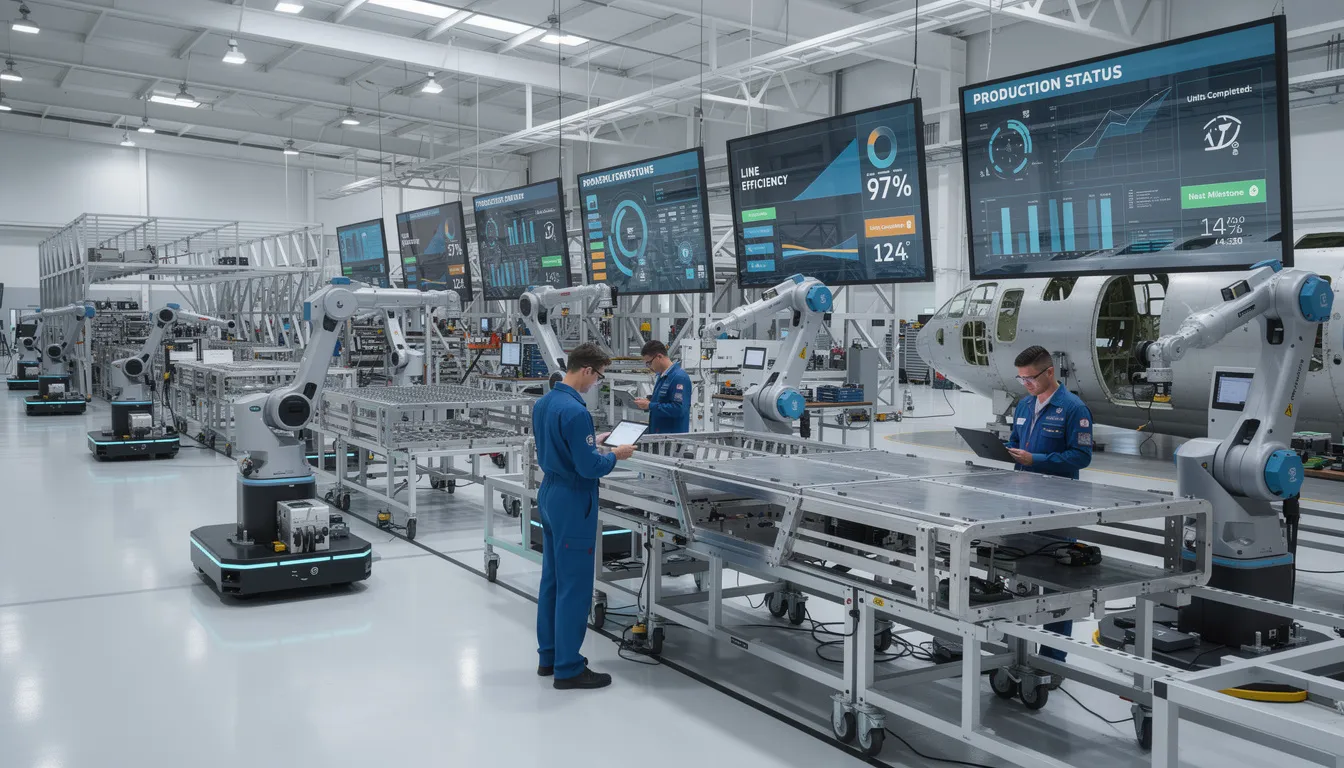
    The image depicts a modern aerospace factory floor filled with automated equipment and digital displays that showcase production metrics, reflecting the advanced manufacturing processes used in the aerospace industry. This environment emphasizes operational efficiency and quality control, highlighting the role of manufacturing execution systems (MES) in optimizing production lines and ensuring compliance with industry standards.

    Sustainability, Safety, and the Role of MES

    ICAO CORSIA and EU Fit for 55 mandate significant emissions reductions by 2030, driving increased use of composites, advanced titanium alloys, and hybrid-electric propulsion components with novel battery modules. These material and system changes heighten process control requirements rather than reducing them.

    MES data supports both safety and environmental objectives through connected capabilities:

    • Material genealogy verifies sustainable sourcing certifications through the supply chain
    • Process parameter capture validates that changes meet both quality standards and environmental targets
    • Scrap tracking enables reduction from baseline 3% composites waste to 1.5% through parameter analytics
    • Energy monitoring in rework operations identifies autoclave kWh per panel for Scope 3 reporting
    • Digital sign-offs ensure compliance for every validated process change
    • OEE optimization cuts energy consumption 10-15% through downtime reduction

    Safety-critical inline checks prevent out-of-spec installations. Enforced torque windows on engine mounts, such as 180-220 ft-lbs with real-time verification, catch issues before they become in-service problems. The alternative is catching loose fasteners during end-of-line inspection or worse, discovering them after operational efficiency degrades in service.

    The complex manufacturing environment for sustainable aviation fuel systems, electric propulsion components, and advanced composites demands MES capabilities that maintain production discipline while enabling the process optimization these new technologies require.

    MES for Aerospace SMEs and Tiered Suppliers

    Tier 2, 3, and 4 suppliers with 50-500 employees face prime contractor demands for digital data packages, 98% on-time delivery, and zero-escape quality. IT budgets typically run below 5% of revenue, and staff shortages limit system administration capacity. Traditional MES deployments requiring multi-year implementations do not match these realities.

    Configurable platforms like Connect981 deploy digital travelers in 90 days. A precision machining shop tracks 1000-part runs with serial scans and e-signoffs, replacing paper packets. Error rates drop 40% when operators work from enforced digital work instructions rather than paper travelers that may be outdated. A composites firm digitizes cure cycles with oven ramps to 180°C and 2-hour dwell times, adding bagging checklists with sign-off enforcement.

    Primes increasingly audit for AS9100 digital readiness. Suppliers with MES capabilities have measurable advantages:

    • Real-time status portals showing WIP for 500-blade orders
    • Digital trace packages delivered with shipments
    • Audit readiness demonstrated through system-generated reports
    • Customer satisfaction improvements through transparency

    The progression from paper to spreadsheets to a modern connected execution layer represents a competitive necessity rather than optional improvement. Companies managing this transition position themselves for future program awards while those relying on manual processes face increasing audit scrutiny and potential disqualification.

    Cloud vs On-Prem Aerospace MES

    On-premises MES deployments historically dominated aerospace due to ITAR restrictions, export control concerns, air-gap requirements for classified programs, and data residency regulations. These factors remain relevant for certain operations.

    Cloud and hybrid approaches offer significant advantages for many aerospace operations:

    • Deployment in weeks rather than years
    • Easier multi-site rollouts with standardized configurations
    • Continuous updates incorporating regulatory changes
    • Scalability for new programs or locations without infrastructure investment
    • Supplier collaboration portals with controlled access

    Reasons some operations still require on-prem or hybrid deployment include classified program requirements, site air-gap policies, local data residency requirements under GDPR or similar regulations, and specific customer contractual requirements.

    Connect981 is designed for secure cloud and hybrid use in aerospace environments. The platform employs AES-256 encryption, role-based access control, immutable audit trails, and integration patterns that keep sensitive CAD and PLM data controlled according to customer requirements.

    Decision criteria for deployment model:

    • Latency requirements for real-time operations
    • Security review and certification requirements
    • IT staffing availability for on-prem maintenance
    • Program classification levels
    • Multi-site coordination needs
    • Supplier collaboration requirements

    Evaluating and Selecting an Aerospace MES Vendor

    A practical selection framework for aerospace and MRO buyers in 2024-2026 should prioritize aerospace domain experience over generic MES capabilities. Key criteria include:

    • Ten or more years of aerospace experience with 50+ installations
    • Native AS9100 and NADCAP workflows rather than customizations
    • FAI, NCR, and CAPA modules with AS9102 form generation
    • Supplier portals for shared traceability and status visibility
    • Plug-and-play integration with SAP, IFS, Teamcenter, and similar enterprise systems

    Contrast heavy, monolithic MES replacements requiring two-year implementations with workflow-driven platforms that deliver value in months. Connect981 can coexist with legacy MES installations, extending capabilities without forcing wholesale system replacement.

    Realistic pilots demonstrate actual fit. Digitizing a specific nacelle assembly line or defined MRO routing with measurable KPIs provides evidence for broader rollout decisions. Target metrics include defect ppm below 50, FAI cycle days below 5, and 100% traveler digital completion.

    RFP question areas to probe:

    • Can the system execute serial-to-timestamp trace queries across operations?
    • Does the no code platform support ECO propagation without IT involvement?
    • What audit export formats are available for regulatory submissions?
    • How does the solution handle multi-site template deployment?
    • What supplier collaboration capabilities exist out of the box?

    Connect981 focuses specifically on aerospace and MRO operational realities. The platform addresses the compliance burden, rate pressure, and supplier coordination challenges that define modern aerospace production.

    How Connect981 Extends or Replaces Traditional Aerospace MES

    Connect981 functions as a unified operations layer with two primary deployment modes. First, it can augment an existing MES by digitizing work instructions, NCR and FAI workflows, and supplier collaboration while leaving core scheduling and ERP integration in place. Second, it can act as a lightweight MES where none exists, providing manufacturing execution capabilities connected to ERP and PLM without the complexity of traditional deployments.

    Key capabilities in aerospace language include:

    • Digital build packets with version-controlled work instructions
    • Routing control with operation sequencing and gate enforcement
    • E-signatures compliant with regulatory requirements
    • Material and serial traceability from receiving through shipment
    • Inspection templates and FAI management
    • MRO service history tracking tied to aircraft tail numbers

    Consider two scenarios. A 1990s-era plant with legacy on-prem MES extends capabilities through Connect981, adding modern analytics on engine overhaul operations and supplier visibility without replacing the core system. A greenfield 2026 MRO facility uses Connect981 as the main execution layer, connecting IFS ERP and PLM while deploying in months rather than years.

    The zero and low-code workflow builder enables manufacturing engineers and quality teams to adapt processes as customers and regulators change requirements. This means faster response to engineering changes, easier adaptation to new program requirements, and reduced IT dependency for operational process changes.

    An aerospace maintenance technician is focused on a tablet device, accessing digital work instructions to enhance operational efficiency on the shop floor. This modern approach, utilizing a manufacturing execution system (MES), supports quality control and compliance within the aerospace industry.

    Conclusion: The Future of Aerospace MES and Connected Operations

    MES underpins safe, compliant, high-rate aerospace production and MRO operations. The threads connecting compliance documentation, traceability queries, and operational control all run through manufacturing execution. As production rates increase and regulatory scrutiny intensifies, these capabilities become more critical rather than less.

    The next generation of aerospace MES will be more connected across organizational boundaries, more configurable through low and no-code tools, and more collaborative between factories and suppliers. One system providing unified visibility replaces the fragmented spreadsheets and manual processes that create compliance risk and reduce efficiency.

    Connect981 aligns with this future by bridging ERP, PLM, MES, QMS, and supplier systems while remaining tailored to aerospace regulatory and operational realities. The platform delivers the performance improvements and risk reduction that aerospace companies require without the multi-year deployment timelines that delay value.

    Assess your current execution and traceability gaps. Identify where paper, spreadsheets, or disconnected systems create audit risk or operational friction. Then contact Connect981 for a tailored walkthrough demonstrating how your specific processes translate into digital workflows with full traceability. Request a Demo to see how Connect981 addresses your aerospace MES requirements.

  • What is the highest paid job in supply chain?

    There is no single “highest paid” supply chain job across all companies. Pay at the top end is driven less by the job title label and more by scope, P&L impact, regulatory exposure, and scarcity of expertise.

    Roles that typically sit at the top of the pay range

    In industrial, regulated environments, the highest compensation is usually found in roles like:

    • Chief Supply Chain Officer (CSCO) or EVP/VP Supply Chain with global scope and direct influence on P&L, inventory, working capital, and service levels.
    • Head of Operations / COO with supply chain accountability, where manufacturing, logistics, and supplier management sit under one executive.
    • VP/Head of Procurement or Strategic Sourcing in materials-intensive businesses (aerospace, pharma, medical devices, semiconductors, energy) where supplier risk, long lead equipment, and regulatory exposure are high.
    • VP/Head of Planning & Logistics in organizations where supply chain reliability is mission critical (e.g., aftermarket support, defense programs, high-mix low-volume with contractual penalties).

    At the executive level, total compensation is often dominated by bonuses and long-term incentives tied to inventory turns, service levels, cost of goods, and program milestones. In some firms, the COO with strong supply chain scope will earn more than a CSCO in another firm; title alone does not guarantee the pay band.

    Highly paid non-C-suite supply chain roles

    Below the C-suite, some roles can reach very high compensation when tied to high-consequence risk or scarce skills:

    • Senior Director / Director of Supply Chain in a major site or business unit with full responsibility for planning, materials, logistics, and supplier performance.
    • Director of Supplier Quality & Development in aerospace, defense, or life sciences, where supplier issues directly affect certification, recalls, or contractual penalties.
    • Director of Integrated Business Planning (IBP/S&OP) when they orchestrate demand, supply, and financial planning across multiple plants and regions.
    • Director of Logistics & Network Design for complex global networks with trade compliance, cold chain, or hazardous materials constraints.
    • Technical specialist roles (e.g., senior supply chain architect, network optimization expert, advanced planning systems lead) embedded in operations or IT, where deep systems and data integration skills intersect with regulated operations.

    These roles often command high pay because they sit at the intersection of supply continuity, regulatory risk, and major capital or operating costs.

    Key factors that drive the top end of pay

    Compensation at the top end of supply chain roles depends heavily on context:

    • Industry and regulatory burden: Aerospace, defense, pharma, and medical devices often pay more than light manufacturing or distribution because supply failures have higher legal, safety, and contractual exposure.
    • Scope and scale: Global multi-plant networks, complex supplier ecosystems, and high-mix low-volume manufacturing typically pay more than a single local site.
    • P&L and balance sheet impact: Roles directly accountable for inventory, working capital, material cost, logistics spend, and on-time delivery trend higher than “advisory” or narrow functional roles.
    • Exposure to critical programs: Program-critical roles in long-lifecycle equipment (airframes, turbines, therapeutics, fabs) are often paid at a premium because delays or shortages cascade into major financial and contractual impact.
    • Brownfield systems competence: In many plants, leaders who can improve performance without full system replacement, and who understand MES/ERP/QMS/MRP coexistence, are more valuable than those proposing greenfield overhauls with high validation and downtime risk.
    • Talent scarcity: Deep knowledge of export controls, regulated cold chain, advanced planning engines, or multi-tier supplier risk often pushes pay higher.

    Why there is no universal “top job”

    Across regulated, long-lifecycle industries, the highest paid supply chain role could be a CSCO in one company, a COO with integrated supply chain in another, or a highly specialized procurement or logistics executive in a third. Structural differences matter:

    • Ownership: Private equity ownership may drive aggressive incentives tied to working capital and cost reduction. State-owned or family-owned firms may have different bands.
    • Geography: Pay levels vary significantly between regions and even between major hubs within a region.
    • Org design: Some companies centralize planning and procurement; others push responsibility to business units or plants. Pay follows where accountability actually sits, not just title labels.

    As a result, there is no single job title that is always the highest paid in supply chain. The most consistently high-compensation category is senior leadership with end-to-end supply chain accountability and direct impact on financial and regulatory risk.

    Implications if you are planning your career

    If you are deciding where to specialize, focusing solely on the theoretically highest paid job is usually less practical than building toward roles with broad accountability and scarce skills:

    • Seek experience where planning, procurement, logistics, and manufacturing operations intersect, not just one narrow function.
    • Develop fluency in MES/ERP/MRP and QMS integration, and understand change control, validation, and traceability requirements.
    • Take on roles with real accountability for service levels, inventory, and supplier performance, not just analysis or reporting.
    • In regulated environments, build credibility around risk management, audit readiness, and compliance-aligned process improvement.

    Over time, those capabilities are what typically open the door to the better-paid senior director, VP, and C-level supply chain roles.

  • What does work order mean?

    In industrial and regulated manufacturing environments, a work order is a formal, authorized instruction to perform defined work on a product, component, batch, or asset. It is both a planning object and a control record that ties the work to specific materials, documents, people, equipment, and timestamps.

    Typical purpose of a work order

    A work order is used to:

    • Authorize work to be done (production, rework, maintenance, calibration, or inspection).
    • Specify what must be done (operations, tasks, or steps).
    • Reference how to do it (routes, travelers, work instructions, drawings, specifications).
    • Identify which units are affected (serials, lots, batches, assets, locations).
    • Capture evidence that it was done (signatures, timestamps, data, measurements, nonconformances).

    Common types of work orders in regulated operations

    • Production work order (or shop order): to build a defined quantity of a part or assembly, typically created from MRP/ERP and executed in an MES or on paper travelers.
    • Rework or repair work order: to perform specific corrective work on nonconforming or returned product, often tied to a deviation or nonconformance record.
    • Maintenance work order: to perform preventive or corrective maintenance on equipment, tools, or facilities, commonly managed in a CMMS or EAM system.
    • Calibration work order: to perform calibration or verification on gauges and measurement systems, with results feeding back into metrology and quality records.

    Key information usually contained in a work order

    The exact fields vary by system (ERP, MES, CMMS) and by plant, but most regulated environments include:

    • Identifiers: work order number, revision, plant/area, asset or line.
    • Scope: part number or asset ID, quantity or specific units, type of work (build, inspect, rework, maintain).
    • Linked documents: bill of materials, routing, work instructions, drawings, specifications, permits.
    • Schedule & responsibility: required start/finish dates, assigned department or cell, responsible owner.
    • Materials & resources: required components, tools, fixtures, test equipment, special processes.
    • Execution records: operator or technician identifiers, timestamps, results, measurements, deviations.
    • Approvals: electronic or physical signatures for creation, release, completion, and sometimes QA review.

    How work orders relate to other systems

    In brownfield environments, the work order typically sits at the intersection of multiple systems:

    • ERP/MRP often creates production work orders for planning, costing, and inventory control.
    • MES or line control systems use the work order to drive execution, data capture, and traceability at the operation level.
    • QMS may reference work orders in nonconformance, CAPA, or deviation records, especially for rework and concessions.
    • CMMS/EAM manages maintenance and calibration work orders for assets and equipment.

    In many plants, these are only partly integrated, so the same work order ID might appear across systems, or separate IDs may need to be cross-referenced manually. How cleanly this works depends on integration quality, master data discipline, and change control.

    Constraints and variations

    • Naming differs: some sites use job order, shop order, process order, or batch record for similar concepts.
    • Granularity varies: a single work order may cover an entire build, a specific operation, or only certain serial numbers or lots.
    • Paper vs digital: many regulated plants still rely on paper travelers or mixed paper/digital records, which affects how the work order is created, updated, and archived.
    • Regulatory impact: in aerospace, medical, and similar environments, work orders are part of the permanent quality record and must be controlled, versioned, and retained under formal procedures.

    Because of these variations, when someone says “work order” in your facility, you usually need to clarify whether they mean a production order, maintenance order, rework order, or the combined traveler and record used on the floor.

  • How does MES reduce unplanned downtime?

    What MES can and cannot do about unplanned downtime

    MES reduces unplanned downtime primarily by improving visibility, coordination, and discipline around how equipment is run and maintained. It does not prevent failures by itself and will not eliminate all unplanned stops, especially in mixed, aging equipment fleets. The real benefit comes from detecting issues earlier, reacting faster, and learning systematically from each downtime event. In regulated environments, the effectiveness of MES is limited by validation scope, operator adoption, and how well it is integrated with automation, CMMS, and quality systems.

    An MES is most effective when downtime is caused by avoidable factors like scheduling conflicts, material shortages, changeover errors, or recurring process issues. It is less effective at stopping true random failures such as sudden component breakage with no prior indicators. Even then, it can still shorten the recovery time by providing clear instructions, standard work, and accurate status to maintenance and operations. Plants that treat MES as a silver bullet usually end up disappointed; plants that treat it as a data backbone and enforcement layer for existing reliability processes tend to see more realistic improvements.

    Real-time visibility into equipment status and constraints

    A core way MES reduces unplanned downtime is by giving operations and maintenance near real-time visibility of machine status, causes of stop, and performance trends. Instead of learning about issues when a queue has already built up or an order is at risk, supervisors can see that a line is trending unstable and intervene earlier. This relies on robust connections to PLCs or data historians and on consistent configuration of status codes and reason trees. If these integrations are weak or partially implemented, the MES view may be incomplete or misleading.

    In brownfield environments, some equipment will never be fully integrated, and operators will still enter status manually. This can introduce delays and classification errors, so the MES must be configured to separate auto-captured data from manual entries and make those differences visible. Over time, analyzing this status data helps identify chronic micro-stops, nuisance alarms, and bottleneck machines that drive unplanned downtime. Without a sustained effort to clean up status codes, train operators, and maintain mappings, MES dashboards can become cluttered noise rather than actionable insight.

    Better planning to avoid avoidable stops

    Unplanned downtime is often driven by planning failures masquerading as equipment issues: missing materials, unavailable tools, overlapping changeovers, or operators assigned to two critical tasks at once. MES can reduce this class of unplanned stops by enforcing realistic sequencing, availability checks, and material staging rules at dispatch time. When MES is integrated with ERP, WMS, and tooling systems, it can block or warn on orders that cannot reasonably run, turning what would have been a “surprise” stop into a visible constraint earlier in the process.

    In most brownfield plants, these integrations are partial, and many checks still rely on tribal knowledge and manual verification. MES helps only to the extent that master data (BOMs, routings, resource calendars) are accurate and maintained under change control. If planning data are outdated, MES may push infeasible schedules more efficiently, which can actually increase unplanned downtime. The tradeoff is that tighter MES enforcement can initially surface more late orders and conflicts; dealing with this requires management willingness to fix upstream planning and not just blame the system.

    Faster detection and escalation of emerging problems

    MES can shorten the time between the onset of a problem and effective response by automating alerts, workflows, and escalation paths. When a machine stops or performance degrades below a threshold, MES can trigger notifications to maintenance, quality, or engineering, including relevant context like last good part, active recipe, and environmental data. This shifts the pattern from operators informally “chasing” support to a more structured and traceable response process. However, if alert thresholds and routing are not tuned carefully, teams can quickly be overwhelmed by false or low-value notifications.

    In regulated environments, every change in alarm logic, workflow, or escalation rule may require impact assessment, configuration control, and in some cases re-validation. This can slow down optimization and result in conservative, static configurations that underperform. Plants need to deliberately prioritize which failure modes justify automated MES escalation and which remain manual. Done well, this reduces the mean time to respond and mean time to repair; done poorly, it just shifts the noise from radios and phone calls into on-screen popups and emails.

    Structured capture and analysis of downtime events

    An MES typically provides structured downtime reason codes, comment capture, and reporting, which supports more rigorous root cause analysis. By classifying each event with consistent codes and linking it to product, order, shift, and resource, the plant can move beyond anecdotes and guesswork. Over time, this reveals patterns such as specific SKUs or changeovers that disproportionately trigger stops, or particular machines with recurring, poorly understood failures. The value depends heavily on how disciplined operators and supervisors are in choosing accurate reasons and entering meaningful notes.

    If the reason tree is too granular, operators will guess or pick the first item; if it is too generic, analysis will remain vague and unhelpful. In many brownfield implementations, old habits persist and people treat MES downtime entry as a compliance chore rather than a tool to improve their work. Without management follow-through—reviewing reports, closing the loop with corrective actions, and updating reason structures through change control—the MES becomes a passive logging system rather than an engine for reducing unplanned downtime. The tradeoff is between data accuracy and operator burden; each plant must tune this carefully.

    Supporting maintenance and condition-based interventions

    MES is not a maintenance system, but it can complement CMMS or EAM by providing operating context, runtime counters, and usage-based triggers. For example, MES data can feed maintenance scheduling based on actual operating hours, cycles, or number of changeovers, rather than fixed calendar intervals. This can reduce both over-maintenance and unexpected failures, especially on high-criticality assets. It also helps coordinate maintenance windows with production plans, so that planned interventions do not accidentally cause additional unplanned disruption.

    In practice, these benefits only materialize if MES and CMMS are bidirectionally integrated and both data structures and processes are aligned. In many regulated plants, these integrations are either missing or limited to simple notifications, because deeper coupling increases validation scope and complexity. In such cases, MES may still help by providing better visibility to runtime and stop patterns, but maintenance teams must manually translate that into work orders. The tradeoff is between tight coupling with higher automation (and validation burden) and looser coupling with more manual but flexible workflows.

    Why MES alone will not eliminate unplanned downtime

    No MES can fully compensate for fundamental issues such as aging equipment near end-of-life, poor spare parts availability, inadequate maintenance practices, or chronic under-staffing. In aerospace-grade and similar regulated environments, aggressively replacing legacy controls or systems to enable more automation can actually increase risk by expanding qualification and validation scope, extending downtime for commissioning, and introducing integration failures. MES should be layered on top of existing validated equipment and processes, augmenting them rather than trying to replace them wholesale.

    Full replacement strategies often underestimate not just technical integration complexity, but also the need to maintain traceability, audit trails, and validated states while changing how downtime is captured and acted upon. Every new MES feature or interface that influences product quality or traceability has to be assessed, documented, and verified, which slows rapid iteration. As a result, improvements in unplanned downtime are usually incremental and uneven across lines, not a step-change. A realistic approach is to target the top few downtime drivers with MES-enabled interventions, measure impact, and then expand scope gradually, instead of expecting the system to solve all reliability problems by itself.

  • Who should own master data for AI use cases in aerospace manufacturing?

    No single team should own all master data for AI use cases in aerospace manufacturing.

    In practice, the right model is federated ownership with formal governance. The function that already owns the business meaning, approval workflow, and quality of a data domain should remain the owner of that master data in its system of record. AI, IT, and analytics teams should enable access, transformation, monitoring, and reuse, but they should not become the de facto business owner of engineering, quality, supplier, product, routing, or maintenance data.

    What this usually looks like

    • Engineering owns product structures, specifications, and approved revisions in PLM or related engineering systems.
    • Operations or manufacturing engineering owns routings, work centers, standard process definitions, and execution-relevant production master data, often across MES and ERP.
    • Quality owns defect codes, inspection plans, dispositions, and controlled quality reference data in QMS, MES, or connected systems.
    • Supply chain or procurement owns supplier master, approved source attributes, and purchasing reference data in ERP or supplier systems.
    • Maintenance or asset teams own equipment hierarchies, asset status, and maintenance master data where those use cases matter.
    • IT and data teams own integration patterns, identity and access controls, metadata catalogs, data quality monitoring, lineage, and the governed delivery of data for AI use cases.
    • A data governance council sets common rules for naming, identifiers, version control, stewardship, change control, retention, and exception handling across domains.

    If nobody can name the business owner, steward, approval path, and system of record for each critical data domain, the AI program is not ready to scale.

    Why central ownership by AI or IT alone usually fails

    AI teams rarely have the authority to approve engineering changes, alter controlled quality definitions, or reconcile supplier and routing conflicts across plants. IT can host and move data, but that is different from owning its meaning and approved state. Putting all ownership under a central AI or IT team often creates predictable problems:

    • Local experts stop trusting the data because business context gets separated from stewardship.
    • Changes happen outside normal review and approval workflows.
    • Model inputs drift from approved revisions, routings, or quality definitions.
    • Traceability becomes harder when transformed datasets are treated as the truth instead of derived copies.
    • Validation effort increases because no one can clearly show lineage from source records to AI outputs.

    That does not mean decentralized chaos is acceptable. Federated ownership only works if governance is explicit and enforced.

    What should be centrally governed for AI

    Even when domain ownership stays distributed, several things should be managed centrally or at least consistently:

    • Canonical identifiers and cross-reference rules across ERP, MES, PLM, QMS, and historian or data lake environments
    • Data lineage and metadata standards
    • Access controls, especially for export-controlled or otherwise sensitive technical data
    • Data quality thresholds, issue escalation, and remediation workflows
    • Model input definitions and approved feature calculations
    • Versioning for reference datasets used in training, testing, and production inference
    • Change control for transformations, mappings, and interfaces

    This is where a central data office, enterprise architecture function, or manufacturing IT group can and should lead.

    Brownfield reality in aerospace

    In aerospace manufacturing, master data is usually spread across legacy ERP, MES, PLM, QMS, spreadsheets, supplier portals, and plant-specific databases. That is normal. Trying to replace all of that with a new unified master data platform before delivering any AI use case is usually a mistake.

    Full replacement strategies often fail because the qualification burden is high, downtime windows are limited, integration debt is real, and long equipment and system lifecycles make broad cutovers risky. In regulated environments, every major change can also increase validation effort and create new traceability and change-control obligations. A more realistic path is to keep authoritative ownership where it already belongs, then add governed integration, mapping, and stewardship around the highest-value data domains first.

    What to decide before launching AI use cases

    • Which system is the authoritative source for each critical master data domain
    • Who approves changes to that data and who performs day-to-day stewardship
    • How identifiers are reconciled across systems and plants
    • What data quality rules must be met before AI can use the data
    • How training and inference datasets are versioned and traced back to source records
    • How exceptions, overrides, and local plant variations are documented
    • Which changes require review under existing validation or change-control processes

    If those decisions are unresolved, the main risk is not just poor model accuracy. It is operational confusion over which data is trusted, current, approved, and explainable.

    So the short answer is: business domains should own their master data, and a cross-functional governance structure should own the rules for how that data is made usable for AI.

  • What MES data do I need before starting AI projects in aerospace?

    You do not need a perfect MES before starting AI projects in aerospace. You do need data that is usable, governed, and tied to a narrow business question. In practice, the required MES data depends on whether you are trying to predict delays, detect quality risk, reduce rework, improve labor planning, or identify process drift.

    A good rule is this: start with one decision you want to improve, then confirm you have enough historical MES and adjacent system data to reconstruct what happened, when it happened, to which part or assembly, under which revision, at which operation, using which resources, and with what outcome.

    Minimum MES data foundation

    For most aerospace AI use cases, the minimum useful data set includes:

    • Work order, traveler, or routing execution history by operation

    • Part number, serial number, lot, and where applicable full genealogy links

    • Timestamps for operation start, stop, queue, hold, completion, and rework events

    • Resource context such as workcenter, machine, tool, line, or cell

    • Operator or role information, if allowed by policy and handled appropriately

    • Disposition outcomes such as pass, fail, scrap, rework, deviation, or concession status

    • Nonconformance references and defect or symptom codes

    • Recipe, process plan, routing revision, and work instruction revision in effect at execution time

    • Material consumption and component issue records where product risk depends on material lineage

    • Equipment or test results if process capability or condition affects quality or throughput

    If you cannot connect execution records to outcomes, AI will usually produce weak correlations rather than operationally useful guidance.

    What matters more than data volume

    In regulated aerospace operations, data quality usually matters more than raw volume. A smaller, well-controlled history with reliable timestamps and revision context is often more useful than a large, messy export. Before starting, check for these basic conditions:

    • Consistent identifiers across MES, ERP, QMS, and where relevant PLM

    • Stable event timestamps and time zone handling

    • Clear status transitions rather than free-text updates

    • Reason codes that are actually used consistently on the floor

    • Versioned master data for routings, resources, and instructions

    • Enough history to cover normal variation, engineering changes, and atypical events

    If your plant has frequent manual overrides, backfilled transactions, shared generic logins, or uncontrolled free text, say so early. Those are common realities, but they directly limit model reliability and explainability.

    Use-case-specific data needs

    Different AI projects need different MES depth.

    • Delay and bottleneck prediction: queue times, operation durations, dispatch status, resource calendars, holds, shortage status, and rework loops.

    • Quality risk prediction: defect history, inspection/test results, parameter readings, operator steps, material lots, genealogy, and revision history.

    • Scrap and rework reduction: nonconformance codes, disposition paths, prior process conditions, tool or machine context, and process deviations.

    • Knowledge capture and guidance: standard work adherence, step completion records, exceptions, and links to controlled instructions.

    • Scheduling or labor recommendations: route variability, touch time versus elapsed time, skill constraints, and actual vs planned completion by operation.

    If the project touches product quality, airworthiness records, or release-adjacent decisions, expectations for traceability, validation, and change control go up quickly. That does not make AI impossible, but it changes the burden of proof.

    Data you probably need beyond MES

    MES alone is often not enough. In brownfield aerospace environments, useful AI usually depends on stitching MES to nearby systems:

    • ERP: order status, shortages, supplier delays, cost signals, and inventory state

    • QMS: NCR, CAPA, dispositions, audit evidence, and recurring defect patterns

    • PLM: revision effectivity, change history, and engineering context

    • Test and equipment systems: measured values, calibration state, equipment events, and environmental conditions

    • Document control systems: released work instructions and approval history

    This is where many AI programs stall. The issue is usually not model selection. It is unresolved identifier mapping, conflicting timestamps, poor lineage, and missing business rules across systems.

    What you do not need on day one

    You do not need a full digital thread, complete automation, or years of perfectly labeled data to begin. You can often start with one bounded use case if you have:

    • a stable process segment

    • a measurable outcome

    • several months of trustworthy event history

    • basic traceability to revision and outcome

    • a team willing to validate whether outputs are operationally credible

    For many plants, the first sensible step is not a plant-wide AI deployment. It is a data-readiness assessment and a narrow pilot on one product family, line, cell, or recurring quality issue.

    Common failure modes

    • Starting with a generic AI platform before defining the operational decision

    • Assuming MES transaction data reflects actual shop floor behavior without checking workarounds

    • Ignoring engineering change timing and revision effectivity

    • Treating free-text defect descriptions as a substitute for structured cause or disposition data

    • Underestimating rework loops, split lots, and serialized genealogy complexity

    • Trying to replace core MES, ERP, or QMS systems as part of the AI initiative

    That last point matters. Full replacement strategies often fail in regulated, long lifecycle environments because qualification burden, validation cost, downtime risk, integration complexity, and traceability requirements are high. In most aerospace plants, AI has to coexist with existing MES, ERP, PLM, and QMS systems rather than forcing a reset.

    A practical readiness threshold

    You are probably ready to start if you can answer these questions with evidence:

    • Can we reconstruct the execution history for a part, assembly, or work order?

    • Can we link execution events to quality and schedule outcomes?

    • Can we identify which revision, instruction, material lot, and resources were in effect?

    • Can we explain major data gaps, overrides, and manual steps?

    • Can we validate outputs without disrupting production or controlled processes?

    If the answer is no to most of these, the right next step is usually data remediation and integration cleanup, not model development.

    So the short answer is: you need enough MES and adjacent-system data to support traceable, revision-aware, outcome-linked analysis for one specific use case. Not more than that, but also not less.

  • Supplier Collaboration in Aerospace: Digital Systems, Portals, and Workflows

    Supplier Collaboration in Aerospace: Digital Systems, Portals, and Workflows

    Modern aerospace programs depend on thousands of suppliers spread across continents. An A320neo program sources structural components, avionics, engines, and special processes from Tier 1 integrators down to Tier 3 machine shops and heat treaters. A single Boeing 737 MAX involves precision castings from one region, composite layups from another, and NADCAP-certified surface treatments from a third. When any link in this aerospace supply chain breaks down, the consequences cascade through the entire value chain.

    The years between 2020 and 2024 exposed just how fragile manual, email-driven collaboration can be. COVID-19 factory shutdowns delayed deliveries by up to 50% in some cases. The 737 MAX recertification process extended supplier requalification timelines by 12 to 18 months. Persistent LEAP engine delivery delays, attributed to titanium forging bottlenecks, forced production rate adjustments across narrow-body programs. Industry-wide, on-time delivery shortfalls of 20 to 30% became common. These disruptions proved that spreadsheets, scattered email chains, and disconnected file shares cannot support the pace and precision aerospace demands.

    This article serves as a practical guide for aerospace OEMs, Tier 1 suppliers, and MRO organizations evaluating supplier collaboration systems. The focus is on purpose-built aerospace tools rather than generic procurement software or spend analysis platforms. Connect981 is designed specifically for aerospace and MRO workflows, sitting on top of existing ERP, MES, and QMS systems to connect suppliers, factories, and engineering data in one shared layer. The core capabilities covered here include supplier portals, digital RFQ workflows, supplier scorecards, change order management, and supplier documentation systems.

    What “Supplier Collaboration” Really Means in Aerospace Operations

    Supplier collaboration in aerospace extends far beyond purchase orders and invoice processing. It encompasses joint planning for lead times, quality standards, configuration management, and documentation exchange across a tiered network of suppliers. When an OEM and its suppliers are aligned, parts arrive on time, conform to specifications, and carry complete certification records. When alignment fails, programs stall.

    The typical aerospace value chain flows from OEMs through Tier 1 structural and systems integrators, who in turn rely on Tier 2 and Tier 3 specialists in machining, composites, chemical processing, and special processes. A Tier 3 heat treater using an outdated furnace qualification can cascade into airworthiness risks, delaying programs by months and costing millions. The 737 MAX supply chain disruptions post-2019 grounding demonstrated exactly how misalignment at any tier can ripple through the entire network.

    Key collaboration areas in aerospace include:

    • RFQs and sourcing for complex parts with multi-page specifications
    • Order promise and capacity visibility to match production ramps
    • Engineering change propagation across multiple supplier tiers
    • Quality and nonconformance resolution via supplier corrective action request workflows
    • Documentation and certifications tied to specific serial and lot numbers
    • MRO spares and repairs coordination for in-service fleet support

    A regulatory overlay of AS9100, NADCAP, FAA/EASA airworthiness directives, and ITAR export controls makes casual, spreadsheet-based collaboration both risky and difficult to audit. Supplier management processes must generate audit trails that withstand scrutiny from customers, regulators, and internal quality teams. A modern supplier management system ties these touchpoints into unified, automated workflows rather than scattered portals, emails, and file shares.

    Core Capabilities of Modern Aerospace Supplier Collaboration Systems

    An aerospace-ready supplier management platform differs fundamentally from generic vendor management software. The workflows, data models, and compliance requirements are specific to this industry. The following five pillars define what a mature aerospace supplier collaboration system should provide.

    • Supplier portals: Secure access for suppliers to view RFQs, purchase orders, engineering drawings, quality specs, and delivery forecasts in one place
    • Digital RFQ and sourcing workflows: Structured processes for complex aerospace parts that capture specifications, certifications, and evaluation criteria in auditable records
    • Supplier scorecards and performance reviews: Automated tracking of quality, delivery, cost, and responsiveness metrics over the life of the supplier relationship
    • Engineering and change order management: Controlled propagation of design changes, process updates, and configuration revisions across all impacted suppliers
    • Supplier documentation and traceability systems: Digital capture and linkage of certificates, test reports, FAI records, and process documentation to specific parts and serials

    Supporting capabilities include integration with ERP, MES, PLM, and QMS systems, role-based access control for ITAR and export control compliance, and audit-ready logging for AS9100 and FAA/EASA requirements. The sections that follow examine each pillar with aerospace-specific examples and practical implementation guidance.

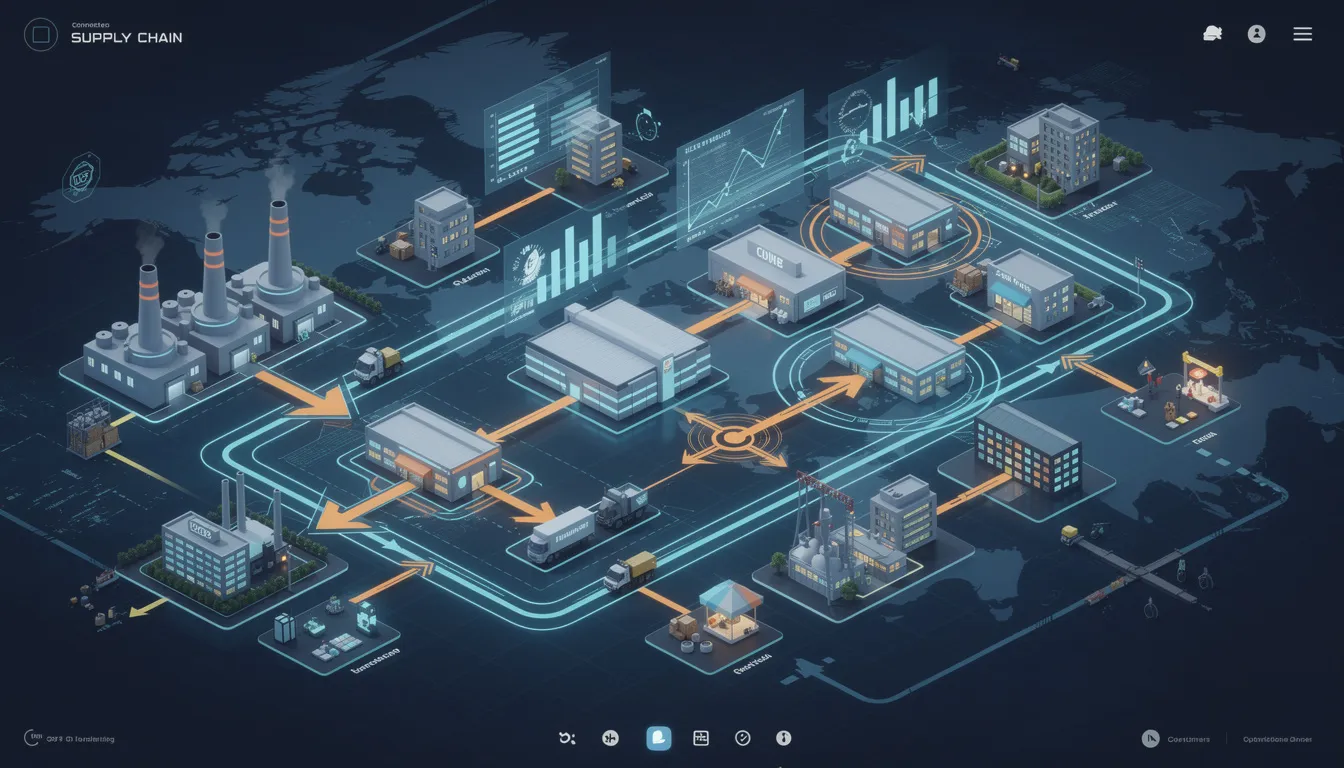
    The image depicts a bustling industrial aerospace factory floor, where workers are actively assembling various aircraft components. The scene highlights the importance of supplier management processes and efficient supply chain management in the aerospace industry, showcasing a collaborative environment focused on product quality and operational efficiency.

    Supplier Portals for Aerospace: The Front Door to Collaboration

    Supplier portals are often the first visible component of a collaboration system. In aerospace, they must go well beyond basic PO views and invoice uploads. A portal that only shows order status fails to address the real coordination needs of complex programs.

    A modern aerospace supplier portal should allow secure access for suppliers to view RFQs, active purchase orders, quality requirements, the latest revisions of engineering drawings, process specifications, and delivery forecasts. Suppliers maintain their own certification records, upload required documentation, and respond to requests without waiting for emails or phone calls. The portal becomes the single source of truth for the commercial and technical relationship.

    Concrete aerospace use cases demonstrate the value:

    • A NADCAP-accredited heat-treat house uploads furnace run charts tied to specific lot numbers
    • A composite fabricator accesses updated layup sequences for LEAP engine fan blades
    • A precision machinist confirms capacity for a production ramp on A320neo brackets

    Self-service profile and certification management reduces manual follow-ups. Suppliers update their AS9100, NADCAP, and ITAR registration status, insurance certificates, and contact information directly. This approach cuts manual chases by an estimated 60% and eliminates audit surprises from expired certifications.

    Connect981 provides a shared portal that syncs with existing ERP systems like SAP or Oracle and quality management systems. This avoids duplicate data entry for supplier master records and ensures that supplier data remains consistent across systems.

    Designing a Supplier Portal That Aerospace Suppliers Actually Use

    Many suppliers ignore portals that are slow, confusing, or redundant with email. Legacy portal adoption rates often fall below 40% because the systems create more work rather than less. An effective supplier portal requires deliberate attention to usability and value.

    Usability requirements for high adoption include:

    • Simple navigation with clear task queues showing actions like “respond to RFQ” or “upload FAI report”
    • Mobile-ready interface for shop supervisors who work on the floor, not at desks
    • Minimal training needed for occasional users who may interact with the portal monthly
    • Transparent change logs showing what was updated and when

    Permission models must separate commercial data from technical data. ITAR and EAR export-controlled drawings require controls that limit access by user role and geography. A machining supplier in a non-U.S. location should not see controlled drawings unless proper export licenses are in place.

    Features that build trust include shared status trackers for RFQs and change requests, consistent notification rules that avoid email overload, and clear visibility into where a request sits in the approval process. When suppliers see value in using the portal, they engage.

    Connect981 emphasizes low-friction portal design. Small and mid-size machine shops, plating houses, and MRO partners can participate without requiring an IT department. High adoption correlates with 30% faster response times according to industry studies on digital supply chains.

    Digital RFQ and Sourcing Workflows for Complex Aerospace Parts

    RFQs for aerospace parts bear little resemblance to commodity purchasing. A request for landing gear actuators, composite spars, or engine mounts can span dozens of pages detailing materials like Ti-6Al-4V, special processes with NADCAP requirements for welding or coating, qualification cycles running 6 to 12 months for first article inspection, and volumes that may reach thousands of units per year across multiple aircraft programs.

    Managing these RFQs via email and spreadsheets generates predictable problems. Version confusion, lost attachments, and misinterpretation of requirements occur at rates approaching 25%. Digital RFQ workflows eliminate these failure modes.

    A structured digital RFQ workflow allows engineering and sourcing teams to publish controlled packages to pre-qualified supplier lists, solicit structured bids covering price breakdowns, lead times, capability matrices, and risk factors, and then generate automatic comparisons across all responses. A Tier 1 integrator issuing RFQs for A321XLR structural brackets to eight machine shops with different NADCAP coating requirements can streamline award decisions using weighted scoring models.

    Evaluation Criterion

    Weight

    Cost

    40%

    On-time delivery history

    30%

    Capacity and capability

    20%

    Geography and offset requirements

    10%

    The workflow supports iterative RFQs. When design changes occur, re-bids can be issued with updated requirements. Batch updates to due dates, captured clarifications, and Q&A threads remain inside the RFQ record for future audits and reference.

    Connect981 pulls BOM and configuration data from PLM and ERP, packages it into RFQs, and mirrors awarded work into execution workflows. This eliminates re-typing and reduces errors in translating requirements from sourcing into production.

    Standardizing RFQ Data and Evaluation Criteria

    Standard RFQ templates reduce ambiguity and supplier misinterpretation. When every RFQ follows a consistent format, suppliers know what to expect and procurement teams can compare responses directly.

    Mandatory data for aerospace RFQs should include:

    • Part numbers and revision levels
    • Material specifications and process requirements
    • Required certifications such as EN 9100 and specific NADCAP codes
    • Expected annual volumes and program duration
    • Target first article inspection dates
    • Packaging, shipping, and labeling standards

    Evaluation criteria should be visible and consistent across RFQs. Suppliers benefit from understanding how their bids will be scored, and sourcing leaders can justify award decisions to internal stakeholders and auditors using documented scoring models.

    Connect981 embeds these templates and scoring models as reusable, configurable workflows. Separate templates for rotorcraft, business jets, and defense programs ensure that program-specific requirements are captured without starting from scratch each time.

    Supplier Scorecards and Performance Management in Aerospace

    Aerospace supplier relationships often span 10 to 20 years. Supplier performance management must go beyond transactional metrics to encompass long-term capability evaluation, risk management, and collaborative improvement.

    A comprehensive supplier scorecard for aerospace typically tracks:

    Category

    Metrics

    Target

    Quality

    PPM defect rate, escape rate, FAI first-pass yield

    PPM <100, FAI yield >95%

    Delivery

    On-time delivery percentage, schedule adherence

    OTD >98%

    Cost

    Price trends, cost reduction contributions

    Per program targets

    Responsiveness

    Change acknowledgment time, corrective action closure

    <7 days acknowledgment

    Compliance

    Audit findings, certification status

    Zero open findings

    Consider tracking a precision machining supplier from 2021 through 2025 as build rates increased on a narrow-body program. Digital systems automatically pull data from ERP for delivery performance, QMS for nonconformances and SCARs, and MES for scrap and rework rates. This automation avoids the manual effort of spreadsheet scorecards that become stale within days of creation.

    The collaboration platform shares scorecards with suppliers regularly. Quarterly business reviews use shared dashboards to review trends and agree on improvement targets. This approach transforms scorecards from punitive reporting artifacts into joint improvement tools.

    Turning Scorecards into Joint Improvement Programs

    Scorecards should drive corrective and preventive actions rather than serve only as reporting artifacts. Supplier relationship management depends on converting performance data into concrete improvements.

    A structured cadence supports this transformation:

    • Quarterly business reviews with strategic suppliers using shared dashboards
    • Review of OTD, scrap/rework, and change responsiveness trends
    • Agreement on specific improvement targets for the next quarter
    • Documented action plans with owners and due dates

    Scorecard results link directly to improvement projects in the system. These may include process capability studies, additional inspection points, operator certification training, or co-investment in tooling and automation. When a scorecard shows recurring issues, the system generates workflows for root cause analysis and tracks closure of corrective actions.

    Tracking SCARs and 8D/CAPA outcomes against the supplier’s scorecard demonstrates trending improvements or highlights persistent problems. Connect981 logs supplier-specific actions, owners, due dates, and verification steps, creating audit trails that satisfy AS9100 requirements and customer audit expectations.

    Engineering Change and Change Order Management with Suppliers

    Design changes in aerospace programs are inevitable. Weight reduction initiatives, new alloy specifications, updated fastener requirements, and customer configuration requests generate engineering change notices that must propagate accurately across the supply chain. When changes are not controlled, costly deviations result.

    Types of changes relevant to aerospace supplier management include:

    • Engineering change notices from design and engineering teams
    • Change orders to contracts and purchase orders
    • Process changes at supplier facilities
    • Customer-driven configuration changes for specific aircraft tail numbers or operators

    Real programs have demonstrated the risks. The F-35 program experienced supplier-related deviations costing over $100 million when suppliers continued building to obsolete prints after weight reduction changes. Suppliers building to outdated revisions, making unapproved process substitutions, or missing serial-number trace updates following changes create airworthiness risks and delivery delays.

    A robust digital change management workflow notifies impacted suppliers, requires acknowledgment, tracks re-qualification requirements such as new FAIs or special process approvals, and ensures that ERP, MES, and portal data stay synchronized. The system prevents anyone from building or repairing to obsolete information.

    Connect981 serves as a coordination layer linking PLM and engineering changes to on-the-floor work instructions and supplier tasks. When an engineering change is released, the system propagates it to all affected parties with clear task assignments and acknowledgment requirements.

    An engineering team is intently reviewing technical documents displayed on their computer screens, focusing on supplier management processes and compliance monitoring within the aerospace supply chain. The collaborative atmosphere highlights their commitment to maintaining accurate supplier records and enhancing supplier relationships through effective vendor management software.

    Coordinating Multi-Tier Change Propagation

    A change to a single drawing can affect multiple tiers of suppliers. A casting foundry, machining shop, heat treater, and surface finisher may all be impacted by a material specification change. Digital systems must map BOM relationships and supplier assignments so that a single ECN triggers tasks and notifications across all affected parties.

    Workflows for supplier-initiated changes are equally important. Suppliers may propose alternative materials, new machining sequences, or different coating processes. These proposals require formal review and approval via documented processes that maintain accurate supplier records of what was approved and when.

    Full traceability requires recording which serial numbers or lots were built under which revision and change approvals. This data proves critical during FAA/EASA investigations or customer queries about specific aircraft. The digital thread must link changes to physical parts throughout the supply chain.

    Connect981’s audit logs and version control on work instructions and supplier documentation reduce disputes between engineering and suppliers about approval status. When questions arise, the system provides up to date data on exactly what was approved, who approved it, and when.

    Supplier Documentation, Traceability, and Compliance Systems

    In aerospace, documentation carries equal importance to the physical part. Incomplete certifications can ground aircraft or force scrapping of otherwise conforming material. Supplier documentation systems must capture, validate, and link documents to specific parts, serials, and lots.

    Typical supplier documents in aerospace include:

    • Certificates of conformity (CoC)
    • Material test reports (MTRs)
    • Special process certifications
    • First article inspection reports per AS9102
    • Process control records
    • Shipping documentation tied to serial and lot numbers

    Problems with paper and email-based documentation are well documented. Lost certificates, mismatched lot numbers, inconsistent naming conventions, and last-minute “doc hunts” before delivery or audits plague organizations using manual methods. Industry data suggests 10 to 15% loss or mismatch rates with paper-based approaches, causing 2 to 5 day shipment delays.

    A supplier documentation system addresses these issues by requiring suppliers to upload documents directly in the portal, tied to specific POs, parts, and serials. Validation rules and mandatory fields reduce errors at the point of upload. The system rejects submissions with missing information rather than discovering problems at inspection.

    Connect981 is designed around aerospace-grade traceability, linking supplier documents to shopfloor execution, inspection results, and MRO histories. This creates complete digital records that support both production and long-term maintenance requirements.

    Building End-to-End Digital Traceability Across Suppliers and MRO

    The same supplier documentation that supports initial production also supports maintenance and overhaul decisions years or decades later. Serial number tracking must flow continuously from raw material heats through supplier operations, special processes, assembly, installation, and future MRO events.

    AS9100 and customer audits require quick retrieval of all supplier records for a given serial, lot, or event. Auditors expect response times measured in minutes, not days. Organizations still relying on paper archives or scattered electronic files struggle to meet these expectations.

    Digital traceability has prevented major issues in real programs. When a supplier process deviation is discovered, organizations with strong traceability systems can quickly isolate affected serials and limit inspections to specific parts. Organizations without traceability face potential full-fleet inspections and extended groundings.

    Connect981’s shared data model allows both OEM/MRO operations and selected suppliers to see the same digital thread with appropriate access controls. This shared visibility eliminates the data collection overhead of requesting information from suppliers each time a question arises about part history.

    An aircraft is being inspected for maintenance inside a spacious hangar, with technicians carefully examining various components. This scene reflects the importance of compliance management and supplier performance in the aerospace supply chain, ensuring that the aircraft meets regulatory requirements and safety standards.

    Integrating Supplier Collaboration Systems with ERP, MES, PLM, and QMS

    Aerospace organizations already operate SAP, Oracle, legacy MES, and PLM tools like Teamcenter, Windchill, or 3DEXPERIENCE. A supplier collaboration system must integrate with these existing systems rather than attempt to replace them. Rip-and-replace approaches fail in aerospace because regulatory compliance depends on data continuity across production records.

    Key integration points include:

    System

    Integration Purpose

    ERP

    Supplier master data, purchase orders, accounts payable

    PLM

    BOMs, revisions, engineering changes

    QMS

    Quality events, nonconformances, CAPA tracking

    MES

    Work orders, shopfloor execution status

    A unified collaboration layer reduces duplicate data entry and discrepancies. Mismatched supplier codes across systems create compliance risks and operational confusion. When the approved supplier list syncs automatically between systems, procurement teams can trust that sourcing decisions align with quality approvals.

    Specific aerospace integration scenarios include synchronizing approved supplier lists by special process code, feeding supplier scorecard metrics back into sourcing approval workflows, and aligning engineering changes between PLM and supplier portal data. When these connections work, supplier information flows without manual effort.

    Connect981 operates as a lightweight, zero and low-code layer that bridges existing systems. The platform enables cross-factory and cross-supplier workflows without requiring a full MES or ERP replacement. Integration via APIs and configurable connectors allows IT teams to establish connections incrementally.

    Implementing Supplier Collaboration in Aerospace: Practical Steps

    Many aerospace suppliers still rely on fax, email, and paper for daily coordination. Rollout of digital collaboration systems must be staged and realistic. Attempting to onboard hundreds of suppliers simultaneously typically fails.

    A phased approach reduces risk and builds momentum:

    1. Pilot scope: Select a single airframe or engine program and a small group of strategic suppliers for initial deployment
    2. Process mapping: Document existing RFQ, change, and documentation workflows before configuring the platform
    3. Standard workflows: Define templates and approval workflows for the pilot scope
    4. Platform configuration: Set up the collaboration system with pilot-specific configurations
    5. Supplier onboarding: Train pilot suppliers with clear messaging on benefits and provide ongoing support
    6. Baseline measurement: Establish metrics for RFQ cycle time, supplier OTD, and documentation accuracy before and after

    Supplier engagement determines success. Training sessions should emphasize benefits that suppliers value: fewer email chains, faster approvals, clearer requirements, and reduced time spent answering the same questions repeatedly. New suppliers joining the program see a clear onboarding path rather than a confusing mix of emails and phone calls.

    Connect981’s low-code workflows and aerospace templates reduce IT dependence. Process owners in supply chain, quality, and MRO can iterate on workflows without waiting for development resources. This operational efficiency accelerates adoption and allows continuous improvement based on real usage patterns.

    Measuring the Impact of Supplier Collaboration Systems

    Digital collaboration investments should connect to tangible business outcomes. Generic claims about digital transformation provide little value. Concrete KPIs demonstrate whether the investment delivers results.

    Metrics to track include:

    Metric

    Baseline Comparison

    RFQ cycle time

    Days or weeks before vs. after implementation

    Supplier OTD percentage

    Trend over 6-12 months

    Supplier-related nonconformances

    Count and severity trends

    Documentation-related shipment holds

    Frequency and duration

    FAI right-first-time rate

    Before and after comparison

    Engineering change implementation time

    Days to full supplier acknowledgment

    Audit finding closures

    Time to resolve supplier control findings

    Before-and-after comparisons on a specific program build internal business cases. When a narrow-body production line demonstrates 15% improvement in supplier OTD and 25% reduction in RFQ cycle time, expansion to other programs follows naturally.

    Connect981 provides real-time dashboards and AI-assisted analytics to surface bottlenecks and recurring supplier issues proactively. Data driven decision making replaces reactive fire-fighting when leadership has visibility into compliance monitoring and supplier quality trends.

    How Connect981 Supports Aerospace Supplier Collaboration

    Connect981 unifies supplier portals, RFQs, scorecards, change workflows, and documentation in one aerospace-oriented management platform. Unlike generic procurement software or SAP Ariba implementations focused on indirect spend, Connect981 is built around the realities of aerospace production and MRO operations.

    Key differentiators include:

    • Built specifically for aerospace and MRO compliance requirements
    • Fast deployment via zero and low-code configurable workflows
    • Deep focus on traceability, digital work instructions, and audit readiness
    • Integration layer that connects ERP, MES, PLM, and QMS without replacement
    • Automation capabilities that reduce manual effort across internal teams and suppliers

    Example workflows demonstrate practical application:

    1. Supplier FAI submission and approval: Supplier uploads first article inspection report in the portal, tied to specific part numbers and serials. Quality team reviews and approves or requests corrections. Full audit trail captured automatically.
    2. Digital RFQ for complex machined assembly: Engineering packages BOM and specifications from PLM, sourcing distributes to qualified suppliers, structured responses enable comparison, and awarded work flows into execution workflows.
    3. Supplier-initiated process change request: Supplier proposes alternative machining sequence through formal channel. Engineering reviews, approves with conditions, and system tracks implementation across affected orders.
    4. MRO shop requesting supplier support: Maintenance organization identifies recurring field failure linked to supplier process. System links field data to supplier records and initiates joint analysis workflow.

    Aerospace manufacturers facing supply chain disruptions, compliance issues, or operational inefficiencies from disconnected systems can evaluate how Connect981 addresses their specific challenges. The platform supports compliance tracking, ongoing monitoring of supplier performance, and procurement operations that meet regulatory requirements.

    Request a demo to see supplier collaboration workflows applied to your programs and supplier network. The Connect981 team can demonstrate how the platform integrates with your existing systems and supports your specific aerospace and MRO requirements.

  • Can MES traceability data support customer audits and investigations?

    Short answer and key constraints

    MES traceability data can support customer audits and investigations, but it rarely serves as a complete, stand‑alone evidence set. Its usefulness depends heavily on how well the system is configured, integrated, validated, and actually used on the shop floor. In many regulated plants, MES is one of several systems contributing to the total traceability picture, alongside ERP, QMS, PLM, LIMS, historian, and paper records. You should assume that customer auditors will expect consistent, reconciled data across these systems rather than trusting MES in isolation. MES data can make investigations faster and more structured, but it cannot compensate for poor master data, weak procedures, or undocumented workarounds. Treat MES as a powerful evidence source that still requires cross‑checks, context, and documented interpretation.

    What MES traceability can usually provide

    A reasonably implemented MES can typically provide genealogy between materials, intermediates, and finished goods, including batch/lot relationships and serial number links where used. It often captures which equipment, tools, and lines were used, which work instructions or recipes were followed, and who performed which steps and when. Many systems also store process parameters and alarms or deviations, or at least link to a historian or QMS record that does. For customer audits, this allows you to show how a specific delivered unit or batch was built, which materials fed into it, and which other batches or customers are potentially affected. This level of traceability can significantly reduce the time to define the scope of a complaint, recall, or field issue, provided the data is complete and reliably associated with the product identifier the customer cares about.

    Common gaps that limit audit readiness

    MES often does not cover the entire value stream, especially in brownfield environments with legacy equipment and partial rollout. Early process steps, external suppliers, contract manufacturers, or downstream packaging and distribution may sit outside MES, creating breaks in the traceability chain. Even inside MES, some data is frequently missing or unreliable due to optional data fields, operator shortcuts, poor user interface design, or insufficient training and oversight. Where manual records, spreadsheets, or local databases coexist with MES, reconciling the data can be time‑consuming and may expose inconsistencies during an audit. These gaps do not make MES useless, but they mean you cannot present it as the single, authoritative source of truth without qualification and supporting evidence.

    Role of configuration, master data, and procedures

    Whether MES traceability stands up in a customer audit depends less on the software brand and more on how your plant configures and governs it. Poorly structured master data for materials, routes, recipes, and product hierarchies leads directly to confusing or ambiguous traceability outputs. If operators can bypass steps, record work under the wrong order, or rework outside the prescribed electronic flow, the genealogy chain becomes unreliable. Clear procedures for order management, BOM changes, rework, holds, and scrap are essential so that the MES data matches what actually happens on the floor. Regular review of exceptions, missing scans, and overridden checks is needed to keep the dataset audit‑ready, rather than discovering systemic issues only when a customer is in the room.

    Integration with ERP, QMS, PLM, and historians

    In most regulated operations, the evidence set for a customer investigation spans multiple systems, not just MES. ERP is typically the commercial and logistics system of record for orders, shipping, and invoicing, so customer part numbers and delivery details often live there. QMS holds complaints, CAPAs, and deviations, while PLM or document control systems own the official product definition and approved work instructions. Process historians or equipment data loggers may be the authoritative record for critical parameters. For an investigation, MES needs to align with these sources: product codes and revisions must match, batch IDs must map cleanly across systems, and timestamps should be at least reasonably consistent. Weak or manual integrations increase the effort to present a coherent story to auditors and raise the risk of contradictions.

    Validation, data integrity, and evidence quality

    For MES data to be credible in regulated or aerospace‑grade customer audits, validation and data integrity controls must be demonstrable. This typically means documented requirements, test protocols, and change control for MES configurations that impact traceability and product quality. Auditors may ask how electronic records are protected from unauthorized change, how audit trails are captured, and how you ensure time synchronization and user identity integrity. If there are known limitations, such as specific fields that can be edited post‑fact or operations recorded offline and back‑entered, those must be clearly understood and risk‑assessed. MES can still support investigations under these conditions, but you need to be transparent about which data elements are strictly controlled and which rely more on procedural safeguards and review.

    Why MES is rarely a single system of record for audits

    Trying to make MES the sole system of record for traceability in aerospace‑grade or similar regulated environments usually runs into practical constraints. Replacing or fully centralizing ERP, QMS, PLM, and historians into MES would trigger a massive qualification and validation burden, prolonged downtime, and significant integration risk. Many key assets and processes have lifecycles measured in decades, with proprietary controls and validated interfaces that cannot be easily re‑platformed. As a result, MES must coexist with legacy and specialized systems, playing a central but not exclusive role in traceability. In customer audits, you are therefore presenting a federated evidence set where MES is one anchor among several, and the credibility comes from consistency and reconciliation, not single‑system dominance.

    Practical ways to strengthen MES support for customer investigations

    To make MES more effective in audits, many plants focus first on a handful of critical product families or customers and tighten traceability there. This may include enforcing mandatory data capture at key steps, hardening barcode or RFID practices, and closing obvious gaps in genealogy (such as linking rework or off‑line operations back to the main record). Periodic mock audits and sample investigations can reveal where MES views are confusing, slow to extract, or misaligned with how customers describe their parts and issues. Incrementally improving integrations with ERP, QMS, and historians around those high‑risk areas often delivers more value than attempting a wholesale systems overhaul. Over time, this approach builds a body of evidence that MES data is reliable for the scenarios that matter most, while making its limitations explicit and managed rather than hidden.

  • What is work order management?

    Work order management is the end-to-end process of planning, issuing, executing, tracking, and closing formal instructions to perform work on assets, products, or facilities. In industrial and regulated environments, it is a core control mechanism that connects planning systems (ERP/MRP), execution (operators and technicians), and compliance requirements (QMS, EHS, regulatory records).

    What a work order typically represents

    A work order is a structured instruction to perform defined work under controlled conditions. Depending on context, this can include:

    • Maintenance work orders: Preventive, predictive, or corrective work on equipment, tooling, or facilities, usually managed in a CMMS or EAM system.
    • Production work orders: Discrete manufacturing jobs or batches, usually linked to a routing, bill of materials, and schedule in ERP or MES.
    • Calibration and validation work orders: Activities required to keep instruments, equipment, and validated systems in a qualified state.
    • Facility and utility work orders: Work on HVAC, compressed air, clean rooms, or other critical infrastructure.

    Core elements of work order management

    Effective work order management usually covers:

    • Creation: Work orders generated from schedules, condition-based triggers, operator requests, CAPA actions, or change controls.
    • Planning: Defining scope, steps, required skills, parts and tools, safety and quality checks, and expected duration.
    • Scheduling and assignment: Prioritizing work, assigning to technicians or cells, aligning with production windows and downtime constraints.
    • Execution and data capture: Recording who did what, when, and how, including measurements, test results, deviations, and approvals.
    • Closure and review: Verifying completion, documenting residual risks or follow-up actions, and formally closing with appropriate approvals.
    • Traceability and reporting: Linking the work to assets, product lots, nonconformances, and changes, and making the data available for audits and analysis.

    How it fits into a brownfield system landscape

    In most existing plants, work order management is distributed across multiple systems rather than owned by a single platform:

    • ERP/MRP typically creates production work orders, manages costs, and tracks completion status at the order level.
    • MES breaks work orders into operations, enforces sequences and process parameters, and captures in-process evidence.
    • CMMS/EAM manages maintenance and facility work orders, asset hierarchies, PM schedules, and maintenance histories.
    • QMS connects work orders with nonconformances, CAPAs, and change controls, especially in regulated industries.

    Because of this, work order management is as much about integration and governance as it is about screens and forms. Attempting to replace all order-related functions with a single new system often fails in regulated, long-lifecycle environments due to validation cost, integration complexity, and downtime risk. Incremental approaches that respect existing ERP, MES, and CMMS roles and integrate cleanly are usually more realistic.

    What “good” work order management looks like in regulated operations

    In regulated or high-liability environments, work order management must do more than schedule work. It should:

    • Support traceability: Every work order should be linkable to specific assets, batches or serial numbers, procedures, and change records, with timestamps and personnel identifiers.
    • Enforce approved methods: Work instructions, torque specs, test limits, and acceptance criteria should be tied to controlled documents, with version control and clear effectivity dates.
    • Respect validation and change control: Changes to forms, workflows, or integrations that affect data used for release, qualification, or audits must be managed via formal change control and, where applicable, revalidation.
    • Handle long asset lifecycles: Records and histories may need to be retained for the life of the product or asset, which can span decades.
    • Provide auditable history: Including electronic signatures where required, and a clear record of overrides, deviations, and rework.

    Common failure modes and tradeoffs

    Typical issues when implementing or improving work order management include:

    • Fragmented data: Work order details scattered across ERP, MES, CMMS, spreadsheets, and paper, making it hard to reconstruct what happened for an audit or investigation.
    • Unclear system of record: Disputes over whether the “true” status is in ERP, MES, or a local tracker, which undermines trust in metrics and release decisions.
    • Overly rigid workflows: Designs that ignore real-world constraints (unplanned downtime, part shortages, emergent safety work) and drive people back to side channels and shadow systems.
    • Underestimating integration and validation effort: Especially when pushing work order capabilities into a new platform without accounting for impacts on qualified or validated processes.
    • Incomplete execution data: Work orders closed without sufficient detail on actual work done, parts used, or as-found/as-left conditions, which weakens root cause analysis and long-term asset management.

    Why it matters

    Done well, work order management provides:

    • Operational control: Confidence that the right work is being done at the right time with the right methods.
    • Evidence for decisions: Reliable histories for maintenance strategies, capacity planning, quality investigations, and audits.
    • Risk reduction: Better visibility into overdue maintenance, high-risk assets, recurring issues, and deviations from standard work.

    However, these benefits depend heavily on how well work order processes are integrated with existing systems, governed under change control, and adopted by the people doing the work. Technology alone does not guarantee effective work order management.