RSC Topic: Equipment & System Qualification

  • calibration

    Core meaning

    Calibration commonly refers to the documented comparison of a measurement device or system against a known reference standard to determine and, when allowed, adjust its accuracy.

    In industrial and regulated manufacturing environments, calibration:

    – Uses traceable reference standards with known accuracy
    – Quantifies measurement error (bias, offset, drift)
    – Confirms that the device meets predefined tolerances
    – Records results, dates, and due dates for audit and quality control

    Calibration may include adjustment of the instrument to bring readings within acceptable limits, but the comparison and documentation step is always required.

    Use in manufacturing operations

    In manufacturing systems, calibration is applied to:

    – **Process instruments**: pressure, temperature, flow, level transmitters, controllers
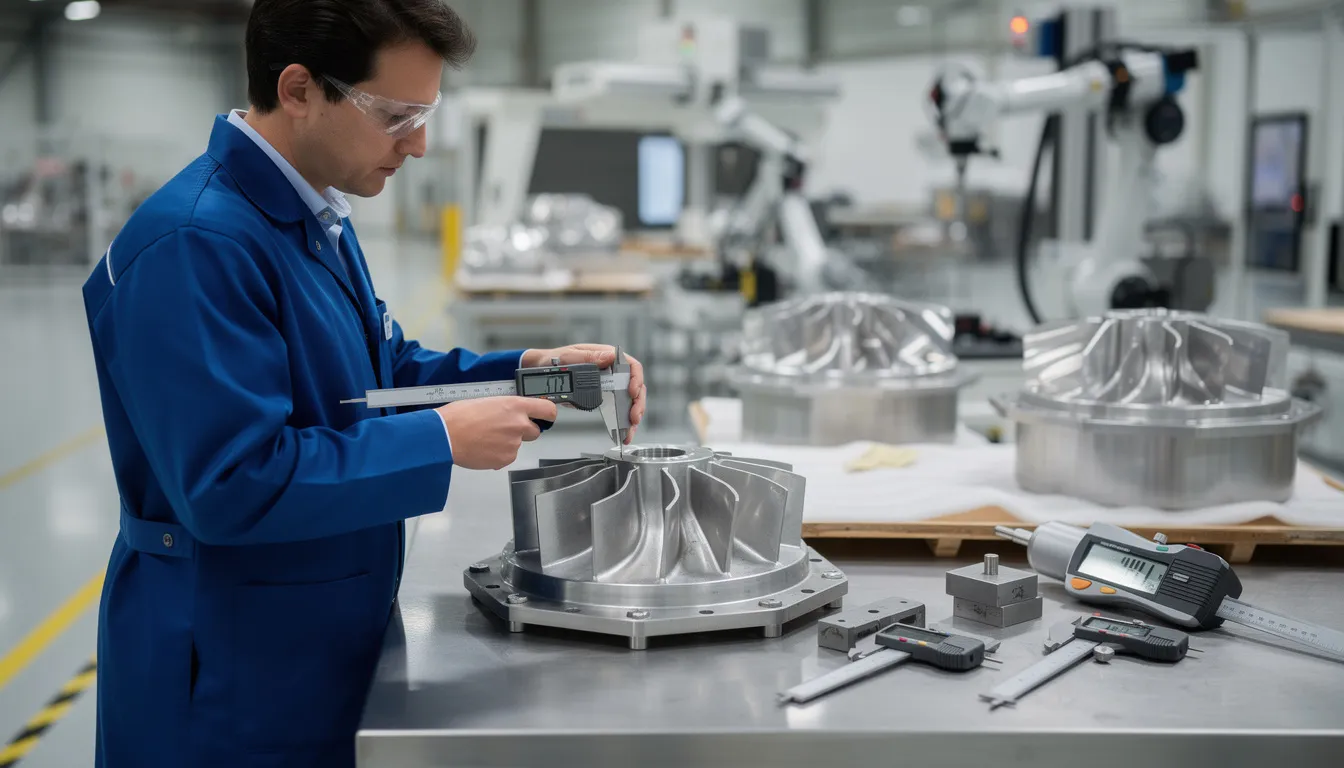
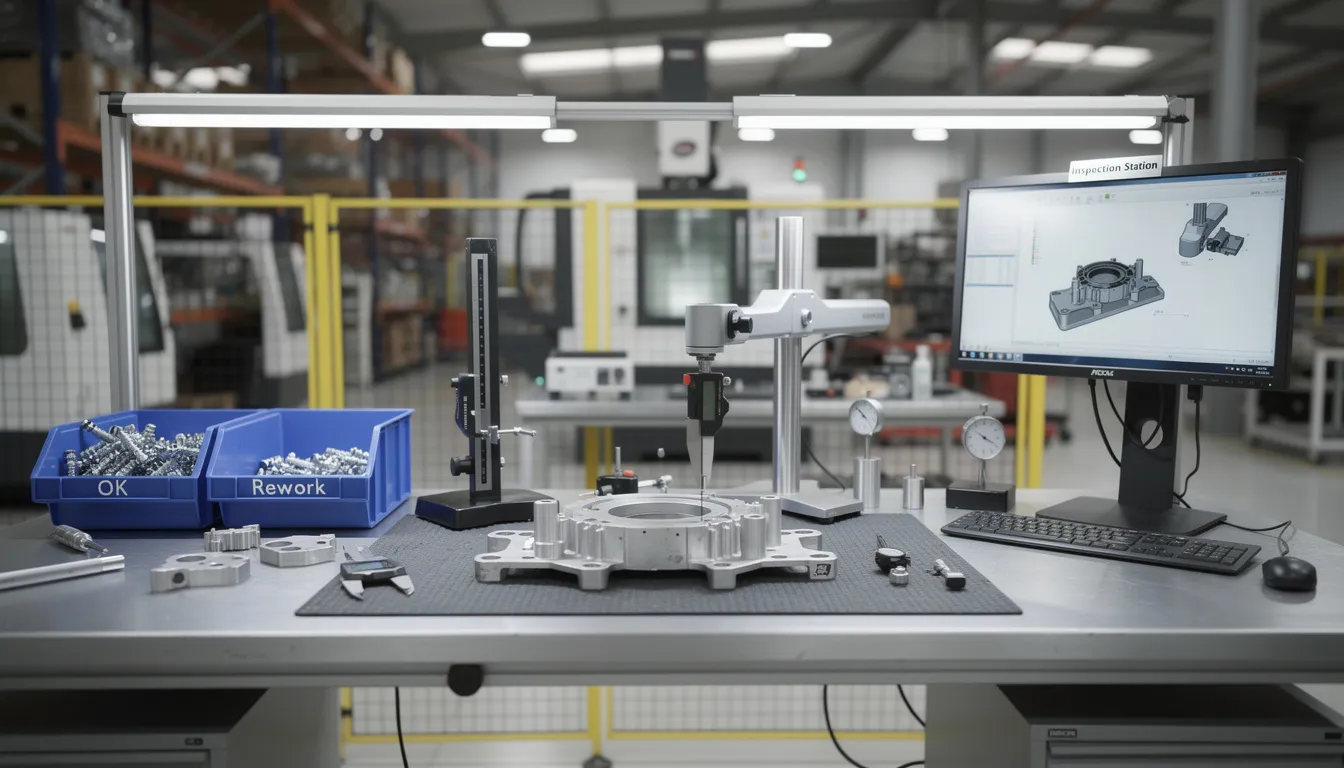
    – **Quality and test equipment**: gauges, micrometers, CMMs, load cells, torque tools, vision systems
    – **Environmental monitoring**: humidity, differential pressure, particle counters, cleanroom sensors

    Typical operational uses include:

    – Establishing calibration intervals and due dates in a calibration management or CMMS system
    – Locking out or flagging production equipment in MES/SCADA when a critical sensor is overdue for calibration
    – Using calibration data to determine if product measured since the last in-tolerance verification is potentially affected
    – Providing objective evidence for audits that measurement systems used to release product are controlled and within specification

    Boundaries and exclusions

    Calibration in this context:

    – **Includes**: comparison to a standard, determination of error, acceptance decision, documentation, and sometimes adjustment
    – **Excludes**: general equipment maintenance (e.g., cleaning, lubrication) that does not involve measurement accuracy, and informal “checks” without reference standards or records

    It is related to, but distinct from:

    – **Verification**: confirming a device meets requirements without necessarily adjusting it
    – **Validation**: confirming that a process or system is fit for intended use; calibration may be an input but is not the same activity

    Common confusion and correct usage

    Common areas of confusion include:

    – **Calibration vs. zeroing/offset**: Zeroing a scale or taring a balance is not full calibration unless it is performed against a known standard and documented.
    – **Calibration vs. adjustment**: Adjustment changes the device reading; calibration is the act of determining and documenting how the device reads relative to a standard. Some procedures combine both but they are conceptually separate steps.
    – **“Self-calibrating” devices**: Many instruments can auto-adjust internally, but in regulated and quality-critical environments they are still subject to periodic external calibration against traceable standards.

    Site context: calibration and MES, quality, and scrap

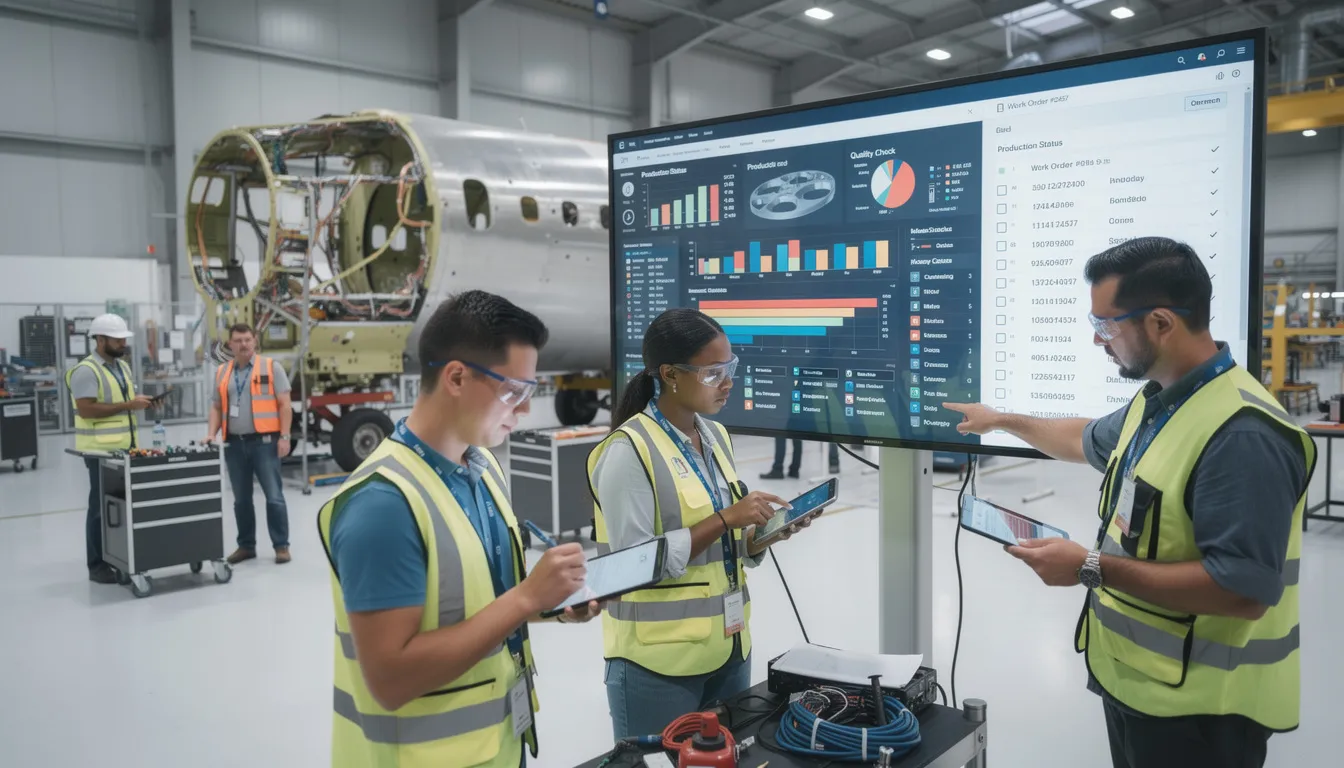
    Within MES and integrated quality systems, calibration data is often used to:

    – Generate alerts when critical instruments approach or reach calibration due dates
    – Trigger holds or extra review when calibration results show significant drift
    – Link measurement devices and their calibration status to specific work orders, batches, or serial numbers

    For high-risk products (such as aerospace components), systems may:

    – Issue targeted alerts when measurement drift trends toward limits
    – Block completion of inspections if the associated gauge or sensor is out of calibration
    – Support traceability between nonconformances and the calibration status of the equipment used

    In this context, calibration is a key element of measurement system control that underpins reliable specifications, scrap prevention, and audit-ready records.

  • What is the difference between S88 and ISA‑88?

    There is no technical difference between “S88” and “ISA‑88” in the context of batch control.

    Both terms refer to the same family of standards published by the International Society of Automation that define models and terminology for batch control (procedural control models, equipment models, recipes, phases, etc.).

    How the terms are used

    The distinction is mostly about naming, not content:

    • ISA‑88: The formal designation of the standard (e.g., ISA‑88.01, ISA‑88.02). You will see this in standards documents, contracts, and some vendor specifications.
    • S88: The common shorthand used in day‑to‑day discussions, system design meetings, and a lot of vendor marketing and user manuals.

    In regulated manufacturing, both terms are used interchangeably when people talk about batch models, equipment hierarchies, and recipe structures aligned with the ISA‑88 standard.

    Where real differences do appear

    While the names are interchangeable, you should expect differences in:

    • Vendor implementations: DCS, MES, and batch engine vendors interpret and implement ISA‑88 concepts differently (e.g., how they map units, phases, and recipes to configuration objects).
    • Site conventions: Plants may adopt subsets of ISA‑88, or adapt terminology to existing SOPs and qualification packages, especially in brownfield environments with legacy batch systems.
    • Version of the standard: References to ISA‑88.01 vs later parts or editions can matter for detailed features and terminology. Many systems say “S88 compliant” without specifying which parts or how completely they follow them.

    In validated or highly regulated environments, those implementation details matter far more than whether someone writes “S88” or “ISA‑88”. They affect recipe portability, change control, and how painful migrations or integrations to new batch/MES platforms will be.

    Practical takeaway for projects

    • When a URS or FRS says “follow S88” or “ISA‑88 compliant,” treat them as the same request, but clarify which ISA‑88 elements must be supported (equipment model depth, recipe types, phase logic handling, etc.).
    • For brownfield plants, focus on how the chosen interpretation of ISA‑88 will coexist with existing batch logic, historical data, and validated recipes rather than on the S88 vs ISA‑88 wording.
    • Do not assume that a system labeled “S88” or “ISA‑88” will be plug‑compatible with your existing batch hierarchy or recipes. Verification, mapping, and often re‑qualification are required.

    In summary, “S88” and “ISA‑88” are different names for the same batch control standard. The real differences you need to manage are between implementations, interpretations, and versions of the standard, especially when integrating or upgrading systems in a regulated, long‑lifecycle environment.

  • Which standard regulates batch processes?

    There is no single global standard that regulates all batch processes in the legal or compliance sense. Instead, there are widely adopted technical standards for how batch processes are modeled and controlled, plus separate regulatory frameworks that apply by industry and jurisdiction.

    Core technical standard: ISA‑88 / IEC 61512

    For most industrial batch processes, especially in pharmaceuticals, specialty chemicals, and food & beverage, the foundational technical standard is:

    • ISA‑88 (S88), also published as IEC 61512: “Batch Control”

    ISA‑88 defines:

    • A standard batch control model and terminology (procedures, operations, phases)
    • Separation of process design from equipment design
    • Recipe types (general, site, master, control recipes)
    • Equipment models (enterprise/site/area/unit, etc.)

    ISA‑88 is not a regulatory statute or binding regulation. It is a consensus engineering standard. It helps align control systems, MES, and recipe structures, and it can make validation, change control, and integration more systematic. But by itself it does not guarantee compliance or a favorable audit outcome.

    Related standards often used with batch processes

    Depending on your environment, other standards commonly coexist with ISA‑88:

    • ISA‑95: For modeling and integrating information flows between enterprise systems (ERP, PLM, QMS) and control/MES layers. Batch recipes and genealogy often sit at this interface.
    • GAMP 5 (guidance, not a standard): For approaching computerized system validation in GxP environments, including batch control and MES.
    • IEC 61508 / IEC 61511: For functional safety in process industries, sometimes relevant when batch steps involve safety instrumented functions.

    None of these are regulations in themselves; they are frameworks that can support your compliance posture if implemented and validated appropriately.

    Regulatory frameworks that apply to batch processes

    What actually regulates your batch process is typically industry- and region-specific. Examples include:

    • Pharmaceuticals / biopharma: FDA 21 CFR Parts 210/211 (drug GMP), 21 CFR Part 11 (electronic records and signatures), and EU/EMA GMP requirements. These govern how you manufacture, document, validate, and control batch production, not just which technical standard you use.
    • Medical devices: FDA 21 CFR Part 820 and ISO 13485, which may apply when device manufacturing uses batch processes.
    • Food & beverage: FDA/USDA rules in the US, EU food regulations, and HACCP-based requirements, which influence batch traceability, hygiene, and recall readiness.
    • Chemicals and other process industries: Environmental, safety, and product stewardship regulations (for example, OSHA PSM in the US, REACH in the EU) that affect how batch operations are designed and documented.

    In all of these, regulators do not usually mandate “you must use ISA‑88” but they expect clear procedures, traceability, validated control systems, and robust change control. An ISA‑88-aligned batch model often makes it easier to demonstrate these elements.

    Brownfield and coexistence considerations

    In real plants, batch processes usually sit within a brownfield stack: legacy DCS/PLC control, historical batch servers, and MES/ERP/QMS systems from multiple vendors. Introducing or tightening ISA‑88 alignment typically means:

    • Mapping existing unit operations and equipment to the ISA‑88 models without disrupting validated recipes.
    • Refactoring recipes and control logic incrementally to avoid large outages and revalidation scope.
    • Coexisting with non‑ISA‑88 legacy units where full retrofit is not economically or operationally viable.

    Attempting a full rip‑and‑replace of batch control, MES, or ERP purely “to comply with ISA‑88” is rarely justified in regulated, long‑lifecycle environments. The qualification burden, downtime risk, integration complexity, and impact on existing traceability and change histories often outweigh the benefits unless there is a broader modernization or capacity driver.

    Key takeaway

    ISA‑88 (IEC 61512) is the primary technical standard for structuring and controlling batch processes, but it does not itself regulate them. Your actual regulatory obligations come from industry‑specific GMP, safety, environmental, and quality regulations. An ISA‑88‑aligned architecture can support, but not guarantee, compliance, and must be implemented with careful validation, change control, and integration planning in existing plants.

  • special process

    Core meaning

    In industrial and regulated manufacturing, a **special process** is a process whose output quality **cannot be fully verified by subsequent inspection or testing**, so conformity must be ensured by:

    – validated methods and equipment
    – controlled and recorded process parameters
    – qualified personnel and procedures

    Special processes are common in sectors such as aerospace, automotive, medical devices, and pharmaceuticals.

    Typical examples in manufacturing

    Common special processes include:

    – **Heat treatment** (e.g., hardening, tempering)
    – **Welding, brazing, and soldering**
    – **Surface treatments and coatings** (e.g., anodizing, plating, painting with critical properties)
    – **Nondestructive testing (NDT)**, when the effectiveness of the inspection method itself must be qualified
    – **Sterilization and cleanroom processes**
    – **Composite curing and bonding** (e.g., autoclave cycles)

    For these, key parameters (time, temperature, pressure, chemistry, energy input, etc.) must be tightly controlled and documented because destructive testing of each item is not feasible.

    How the term is used in regulated environments

    In regulated and standards-driven environments, “special process” commonly refers to processes that:

    – require **process validation** before routine production
    – require **ongoing monitoring** of critical parameters rather than relying only on final inspection
    – often involve **formal qualification** of equipment, methods, and personnel
    – are subject to **documentation and traceability requirements** (e.g., process records, lot and batch histories)

    Sector and standard-specific definitions exist, but they generally follow this same concept.

    Role in MES, QMS, and OT/IT systems

    Within MES, QMS, and related OT/IT systems, special processes are typically handled by:

    – **Recipe and parameter control**: enforcing validated setpoints, ranges, and sequences
    – **Electronic work instructions**: guiding operators through required steps and holds
    – **Interlocks and holds**: preventing production from continuing when critical parameters, approvals, or calibrations are missing
    – **Traceability records**: capturing who performed the process, when, on what equipment, with which parameters and materials
    – **Exception and deviation logging**: recording and managing any departures from validated conditions

    These controls compensate for the fact that defective outcomes may not be fully detectable by downstream inspection.

    Site context: aerospace and scrap prevention

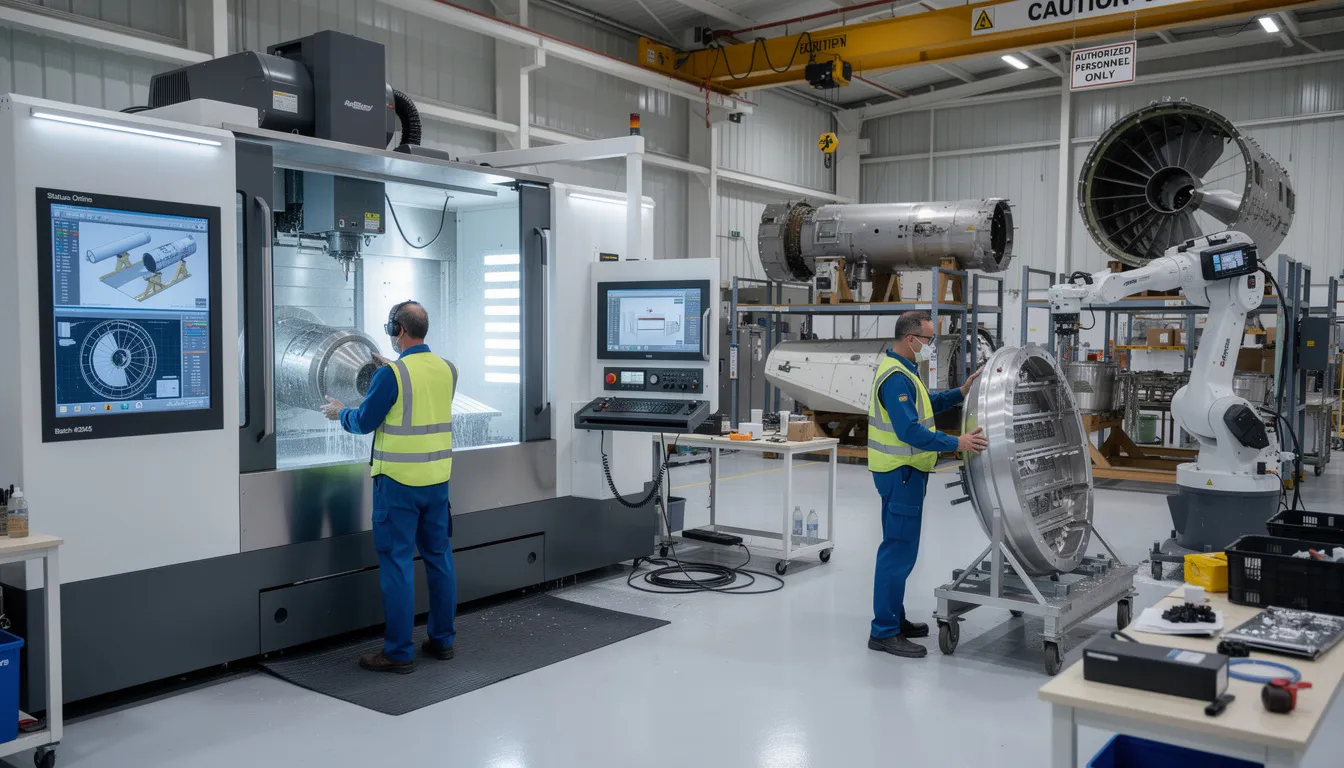
    In aerospace manufacturing, many operations are classified as special processes, such as heat treatment, welding, surface finishing, and composite curing. MES is frequently configured to:

    – trigger **alerts and holds** when special process parameters go out of tolerance
    – enforce **revision and configuration control** of special process instructions and recipes
    – detect **measurement drift** of instruments used to control or monitor special processes
    – ensure **operator sequencing** (e.g., that prerequisite special processes and inspections are completed in order)

    These controls support prevention of scrap and rework when the resulting characteristics cannot be fully verified later.

    Boundaries and exclusions

    A special process **is**:

    – a manufacturing or test process where fitness for use cannot be assured solely by final inspection
    – controlled primarily through validated methods, parameters, and qualifications

    A special process **is not**:

    – just any complex or automated process
    – simply a high-cost or long-duration process
    – routine visual or dimensional inspection where nonconformities are fully detectable

    Some organizations use the term loosely for any critical process; in formal quality and regulatory contexts, it should be reserved for processes meeting the verification limitation described above.

    Common confusion and related terms

    – **Critical process vs. special process**: A critical process affects safety or key performance but may still be verifiable by inspection. A special process specifically involves **limited verifiability by inspection**.
    – **Inspection process vs. special process**: An inspection step can itself be a special process if its effectiveness cannot be fully verified (e.g., complex NDT methods) and must be qualified and controlled.
    – **Validated process vs. special process**: Many special processes must be validated, but not every validated process is a special process; some are validated for efficiency or consistency, not because inspection is insufficient.

  • autoclave

    Core meaning

    In industrial and regulated manufacturing environments, an **autoclave** is a sealed pressure vessel used to run tightly controlled thermal and pressure cycles on materials, parts, or products. It allows processing at temperatures above the normal boiling point of water by applying elevated pressure, enabling specific physical or chemical changes.

    Typical controlled parameters include:

    – Temperature profile (ramps, soaks, cool-down)
    – Internal pressure (gas, steam, or vacuum differential)
    – Cycle time
    – Atmosphere (e.g., steam, nitrogen, air)
    – Vacuum on parts or tooling (for some processes)

    Autoclaves are treated as special-process equipment in many regulated industries because product quality cannot be fully verified by end-of-line inspection alone and instead depends on adherence to the validated cycle.

    Common industrial uses

    In manufacturing and industrial operations, autoclaves commonly support:

    – **Composite curing**: Curing fiber-reinforced polymer components (e.g., aerospace structures) under controlled heat, pressure, and vacuum to achieve required mechanical properties.
    – **Bonding and laminating**: Bonding multi-layer assemblies or honeycomb structures where pressure and heat must be applied uniformly.
    – **Vulcanization or rubber processing**: Curing elastomeric parts under controlled temperature and pressure.
    – **Sterilization**: Sterilizing tools, containers, or materials (e.g., in medical device and some pharma-related operations) using saturated steam at elevated pressure.
    – **Material conditioning**: Stress relief or other heat/pressure treatments where a sealed environment is required.

    The exact use depends on the industry, but in all cases the autoclave is used when uniform, repeatable heat and pressure conditions are critical to product performance or regulatory compliance.

    Operational characteristics and controls

    In production environments, an autoclave is typically integrated into broader OT/IT and quality systems. Common operational characteristics include:

    – **Recipe-driven operation**: Cycles are run according to predefined, approved recipes specifying temperatures, pressures, ramps, holds, and alarms.
    – **Sensor coverage**: Multiple thermocouples and pressure sensors monitor chamber conditions and sometimes part-level conditions.
    – **Equipment interlocks**: Controls that prevent door opening under unsafe pressure or temperature, or starting a cycle without required conditions (e.g., vacuum established, load configuration verified).
    – **Data acquisition and records**: Continuous recording of key parameters (e.g., every few seconds) for batch records, investigations, and regulatory review.

    When connected to MES or other manufacturing systems, autoclaves are often managed as special-process resources where:

    – Lots or serials are tracked into and out of each cycle.
    – Only approved recipes are selectable for a given part or specification.
    – Deviations (e.g., out-of-band temperature) are automatically flagged in electronic records.

    Boundaries and exclusions

    In this site context, “autoclave” generally **includes**:

    – Industrial composite-curing autoclaves
    – Production sterilization autoclaves used in manufacturing flows
    – Pressure vessels with integrated controls designed for validated thermal/pressure processes

    It generally **excludes**:

    – Simple ovens or furnaces without pressurization capability
    – Pressure vessels used only for storage or transport (no controlled thermal cycles)
    – Informal laboratory pressure cookers without process control or data logging

    Common confusion and related terms

    Autoclaves are sometimes confused with:

    – **Ovens**: Ovens control temperature but typically operate at near-atmospheric pressure. Autoclaves uniquely combine controlled pressure with temperature.
    – **Retorts**: In food processing, the term “retort” is often used for equipment functionally similar to an autoclave; in other sectors, “autoclave” is the more common term.
    – **Pressure cookers**: Domestic or small lab devices that work on a similar principle (pressure + heat) but lack the industrial control, scale, and record-keeping associated with production autoclaves.

    When discussing regulated manufacturing processes, using the term **autoclave** usually implies industrial-scale equipment with validated recipes, instrumentation, and traceable records rather than household or improvised pressure vessels.

    Site context: aerospace and special processes

    In aerospace and other highly regulated sectors, autoclaves are frequently classified as **special process equipment**:

    – Composite parts, bonded structures, or other critical components are cured in autoclaves following tightly specified process parameters.
    – MES, SCADA, or other OT/IT systems are often integrated to manage recipes, capture detailed process histories, and link cycles to specific parts, lots, or work orders.
    – Audit and certification activities typically review autoclave process data, operator actions, and recipe management controls to confirm that required conditions were achieved.

    In this context, “autoclave control” typically refers to both real-time equipment control (via PLC/SCADA or similar) and higher-level coordination by MES or quality systems that ensure correct recipes are used and that complete, tamper-evident electronic records are retained.

  • Test stand

    A test stand is a dedicated installation used to test, validate, or characterize components, equipment, or complete systems under controlled conditions. In industrial and manufacturing environments, it typically consists of a mechanical or electrical mounting structure, instrumentation, sensors, data acquisition, and control software that allow repeatable testing of products or subsystems.

    Test stands are used throughout the product lifecycle, including development, qualification, production, and maintenance. They can be fully automated, semi-automated, or manual, and may be either standalone or integrated with plant systems such as MES, quality management systems, and data historians.

    Typical characteristics

    In regulated or high-reliability manufacturing, a test stand commonly includes:

    • A physical fixture or frame to hold the unit under test (UUT) or device under test (DUT)
    • Power supplies, actuators, or utilities (air, vacuum, fluids) to operate the UUT under defined conditions
    • Sensors and measurement devices (for example, pressure, torque, flow, temperature, electrical signals)
    • Control hardware and software to execute defined test sequences and safety interlocks
    • Data acquisition and logging for traceability, analysis, and compliance records
    • Interfaces to plant IT/OT systems for test recipe management and result transmission

    Operational use in manufacturing

    On the shop floor, test stands commonly:

    • Support end-of-line functional testing of assemblies or finished products
    • Run performance and endurance tests under simulated operating conditions
    • Perform calibration and verification of instruments or subassemblies
    • Provide objective pass/fail criteria linked to product specifications and control plans
    • Generate electronic records used in batch release, device history records, and audits

    In highly regulated industries, test stands and their software often follow formal change control, versioning, and validation practices to ensure that test methods remain consistent and that results are trustworthy.

    What a test stand is not

    A test stand is not the same as:

    • A general-purpose laboratory bench, which lacks fixed, dedicated fixtures and integrated control/instrumentation for a specific test scope
    • Production equipment that primarily performs manufacturing steps (for example, machining, assembly) rather than measurement and verification, even if that equipment has limited in-process checks

    Common confusion

    Test rig: In many industries, “test stand” and “test rig” are used interchangeably. Both refer to dedicated test installations; “test stand” is more common in some manufacturing and aerospace contexts.

    Bench test system: A bench test system is typically smaller, more flexible, and often used in R&D labs. A test stand usually implies a more permanent, production-ready setup with defined fixtures and formal procedures.

    Relation to manufacturing systems

    In integrated manufacturing environments, test stands may:

    • Receive test recipes or parameters from an MES or similar system
    • Write back test results, measurement data, and pass/fail status for each serial number or batch
    • Feed data into quality systems for trending, statistical process control, and nonconformance management
    • Participate in traceability, providing evidence that each unit met defined functional or performance criteria

    Because test stands directly influence product release decisions, they are often subject to stricter configuration control, maintenance, and periodic verification or calibration programs.

  • qualification

    Operational meaning

    In regulated manufacturing, **qualification** commonly refers to the documented demonstration that equipment, utilities, facilities, computer systems, or processes are **installed and operate as intended** for their specified use.

    It is typically broken into structured stages such as:
    – **Design qualification (DQ)** – evidence that the proposed design is suitable for the intended purpose.
    – **Installation qualification (IQ)** – evidence that equipment or systems are installed correctly and according to specifications.
    – **Operational qualification (OQ)** – evidence that the system operates as intended across defined operating ranges.
    – **Performance qualification (PQ)** – evidence that the system or process performs effectively and reproducibly under routine (or simulated routine) conditions.

    Qualification activities are planned, executed, and documented under change control and quality management procedures, and often feed into or sit alongside validation activities.

    Use in manufacturing and industrial systems

    In industrial and OT/IT environments, qualification commonly applies to:

    – **Production equipment and special process tools** (e.g., coating, sterilization, heat treatment): documenting that they achieve required operating parameters and control accuracy.
    – **MES, historian, and other computerized systems**: qualifying infrastructure, configurations, interfaces, and basic functions prior to or as part of broader computer system validation.
    – **Support utilities** (e.g., HVAC, compressed air, purified water): verifying capability to maintain required environmental or supply conditions.
    – **Automation and control systems** (e.g., PLCs, SCADA, DCS): demonstrating correct installation, I/O mapping, control logic execution, alarming, and interlocks relevant to product quality and safety.

    In day-to-day workflows, qualification results in:
    – Approved protocols (test plans and acceptance criteria).
    – Executed test records and objective evidence (data, screenshots, calibration certificates).
    – Summary reports and traceability to user, functional, and design requirements.

    Boundaries and what qualification is not

    – **Not the same as validation**:
    – *Qualification* focuses on showing that specific equipment, systems, or facilities are installed and operate as intended.
    – *Validation* commonly refers to showing that a process or system consistently produces outcomes meeting predefined requirements for its intended use.
    – **Not individual job or personnel qualification** in the HR sense (e.g., skills or certifications), although people are sometimes colloquially called “qualified” operators.
    – **Not routine maintenance or calibration**, though calibration and maintenance activities are often prerequisites and supporting evidence for qualification.

    Qualification in MES and equipment integration (site context)

    When integrating **MES with special process equipment** in regulated plants, qualification typically involves:

    – Demonstrating that **interfaces and data flows** (e.g., between MES, equipment controllers, and edge gateways) are installed and configured according to approved specifications.
    – Executing tests to confirm **data integrity, time-stamping, sequencing, and error handling** across the integrated system.
    – Qualifying both **new and modified components**, such as interface scripts, connectors, or configuration changes that affect how production or quality-relevant data is captured.
    – Documenting any **procedural controls** that supplement or compensate for technical controls (e.g., manual checks where direct integration is not implemented).

    These activities are usually aligned with site computer system validation procedures and change control, so that the qualified state of the integrated MES–equipment stack can be demonstrated during audits.

    Common confusion and misuse

    – **Qualification vs. validation**: Often used interchangeably in conversation, but many regulated frameworks treat qualification as a subset or component of validation. In formal documents, it is important to distinguish them.
    – **Qualification vs. commissioning**: Commissioning is broader and may cover functional readiness for operation, including aspects not directly related to product quality or compliance. Qualification focuses on documented evidence relevant to regulated use and quality requirements.
    – **Personnel qualification vs. system qualification**: In manufacturing system discussions, “qualification” most often refers to equipment, systems, or processes, not to training and competency of individuals.

  • system validation

    System validation is the documented process of demonstrating that a computerized or automated system is fit for its intended use, operates as specified, and is maintained in a controlled state over its lifecycle. In regulated manufacturing environments, it commonly refers to validation of software and computer systems used in GxP processes, quality systems, MES, ERP integrations, and data collection or control systems.

    System validation usually covers the end-to-end system, not just the software application. This can include hardware, infrastructure, operating systems, configuration, interfaces, data flows, standard operating procedures (SOPs), and user training that together support the intended use.

    Key characteristics

    In industrial and regulated contexts, system validation typically involves:

    • Defined intended use: Clearly stating what the system is used for, which processes it supports, and which records or decisions it affects.
    • Risk-based approach: Focusing validation effort on functions that impact product quality, patient or user safety, or data integrity.
    • Lifecycle documentation: Maintaining requirements, design specifications, configuration records, test plans, test results, and deviation handling.
    • Planned verification: Executing Installation Qualification (IQ), Operational Qualification (OQ), and Performance Qualification (PQ) or equivalent testing to show the system works as intended in the production environment.
    • Change control: Ensuring that updates, patches, and configuration changes are assessed, tested, and documented to maintain the validated state.
    • Procedures and training: Defining and following procedures for use, administration, backup, security, and incident management, supported by training records.

    What system validation includes and excludes

    System validation typically includes:

    • Computerized systems used in production or quality decisions, such as MES, LIMS, QMS, SCADA, data historians, and electronic batch records.
    • Controls around electronic records and electronic signatures, including audit trails and security.
    • Configurations and customizations applied to commercial off-the-shelf (COTS) software.

    System validation typically does not include:

    • Informal tools that are demonstrably outside regulated processes, such as personal productivity tools, unless they directly affect regulated decisions or records.
    • Pure IT infrastructure qualification activities when treated separately from the validated application (although infrastructure status often supports the validation package).

    Operational meaning in manufacturing

    In day-to-day operations, a validated system is one that has:

    • Completed a documented validation process with approved protocols and reports.
    • Controlled configurations and versions, with traceability from requirements to tests.
    • Defined responsibilities for system ownership, administration, and monitoring.
    • Evidence to support audits and inspections that the system consistently performs as intended.

    For example, an MES used to generate electronic batch records, track material genealogy, or capture in-process quality checks would undergo system validation so that its outputs can be relied on in product release and regulatory inspections.

    Relation to electronic signatures and data integrity

    When systems provide electronic records and electronic signatures, system validation is part of demonstrating that these controls are trustworthy. It helps show that:

    • Records are accurate, complete, and attributable to specific individuals.
    • Audit trails, access controls, and time-stamps function as specified.
    • Signatures are linked to records and cannot be removed or reused inappropriately.

    This is relevant where regulations address electronic records and signatures and where internal quality systems require evidence that computerized controls operate reliably.

    Common confusion

    System validation vs. software testing: Software testing focuses on detecting defects in code or configuration. System validation is broader and aims to show that the complete configured system, in its intended environment, fulfills specified requirements and intended use, with documentation suitable for internal and external review.

    System validation vs. equipment qualification: Equipment qualification addresses physical equipment capability and performance (for example, a filling line or sterilizer). System validation usually refers to computerized or automated systems, though both are often managed under a common validation framework.

    System validation vs. verification: Verification checks that specific requirements are met (for example, via test cases). Validation focuses on suitability for intended use, which may rely on multiple verification activities plus user acceptance and process-level evaluation.

  • software validation

    Software validation is the documented process of confirming that a software system, as implemented and used in a specific environment, consistently fulfills its intended use and stated requirements. In regulated manufacturing and industrial operations, it typically applies to systems such as MES, ERP, LIMS, QMS, batch control, data historians, and custom applications used for production or quality decisions.

    Software validation looks at the complete system in its real-life context, not just the software code. It considers configuration, interfaces, infrastructure, procedures, training, and data. The objective is to provide documented evidence that the system performs as intended for its defined scope and use cases.

    What software validation includes

    While approaches and terminology vary, software validation in manufacturing environments commonly involves:

    • Defined intended use and requirements: Clear user requirements and intended use, including regulatory and quality-related needs.
    • Risk assessment: Evaluation of how the software could impact product quality, data integrity, safety, or regulatory compliance.
    • Planned lifecycle approach: A validation plan describing scope, responsibilities, testing strategy, acceptance criteria, and required records.
    • Qualification and testing: Structured testing (for example, unit, integration, system, user acceptance) to verify the system meets defined requirements in the target environment.
    • Documentation: Maintained records such as requirements, design descriptions, test protocols and results, deviations, and summary reports.
    • Change control and revalidation: Assessment and, when needed, testing of changes to configuration, interfaces, infrastructure, or scope to confirm the validated state is preserved.
    • Operational controls: Procedures, training, access control, backup, and monitoring necessary to keep the validated system operating as intended.

    What software validation is not

    • It is not limited to checking that the software installs or runs; it focuses on fitness for intended use.
    • It is not the same as vendor testing alone; it must consider the specific implementation at a site.
    • It is not a one-time event; it continues over the system lifecycle through change control and periodic review.

    Operational meaning in manufacturing

    In industrial and regulated operations, software validation is part of the broader computerized systems lifecycle. It affects:

    • Production systems: MES, batch systems, or PLC/SCADA configuration that drive recipes, work instructions, and data collection.
    • Quality and lab systems: QMS, LIMS, electronic batch records, and deviation/CAPA tools used to make product release or quality decisions.
    • Data integrity and traceability: Systems that capture, store, and retrieve manufacturing data used for genealogy, audit trails, and compliance reporting.

    When system scope, configuration, or connected processes change (for example, adding a new product, site, or integration), organizations typically assess the impact on the validated state and perform targeted testing and documentation updates as needed.

    Common confusion

    • Software validation vs. software verification: Verification checks whether the system has been built correctly against specifications (for example, test that each requirement is met). Validation checks whether the right system has been built for its intended use in the real environment.
    • Software validation vs. equipment qualification: Equipment qualification focuses on physical equipment and utilities (for example, installation and operational qualification of a filling line). Software validation focuses on computerized systems and their configured behavior, although the two can be linked in integrated systems.
    • Software validation vs. vendor certification: A vendor may have tested or qualified their product, but that does not replace validation of the customer’s specific implementation, data flows, and procedures.

    Relation to standards and guidance

    Software validation approaches in manufacturing are often aligned with industry standards and guidance on computerized systems and quality management. Organizations typically adapt these principles into internal procedures for planning, testing, documenting, and maintaining the validated state across the system lifecycle.