RSC Topic: Export Controls & Technical Data Handling

Secure sharing of drawings, specs, and technical data across boundaries.

  • What is an industrial security system?

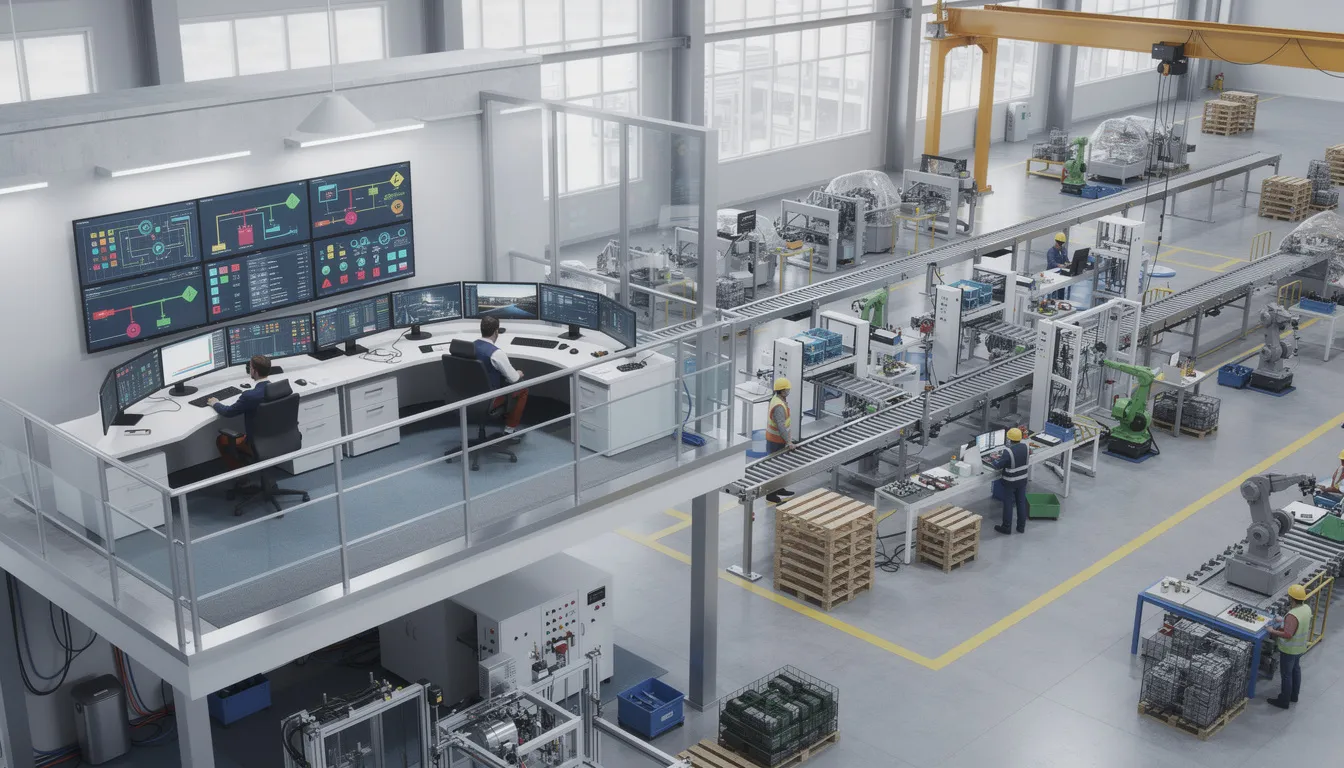
    An industrial security system is the set of technical controls, processes, and monitoring practices used to protect industrial operations and operational technology (OT) from cyber, physical, and insider threats. It covers how you control access to systems, segment and monitor networks, protect critical control assets, and respond to security events without compromising safety, quality, or regulatory commitments.

    What it typically includes

    Although implementations vary by plant, an industrial security system usually spans:

    • OT and industrial network security: Segmentation between IT and OT, per-cell zones, firewalls, secure remote access, and management of legacy protocols and devices that were not designed with security in mind.
    • Access control and identity: Role-based access to HMIs, PLCs, SCADA, DCS, MES, historians, and engineering workstations; hardened accounts; and procedures for granting, changing, and revoking access.
    • System hardening and patching: Baseline configurations, whitelisting, antivirus/EDR where feasible, and structured patching processes that respect validation, qualification, and downtime constraints.
    • Monitoring and detection: Logging, industrial intrusion detection systems, and alarm handling processes that fit within existing control room and maintenance workflows.
    • Physical security interfaces: Door controls, cameras, badge systems, and visitor controls for sensitive areas such as control rooms, data centers, cleanrooms, and high-value test cells.
    • Procedures and training: Change control, secure engineering practices, removable media handling, vendor access rules, and operator awareness tailored to the plant’s risk profile.
    • Backup and recovery: Tested recovery procedures for PLC logic, recipes, configuration data, and key servers, designed around realistic outage windows and qualification needs.

    How it differs from general IT security

    An industrial security system focuses on protecting production and safety outcomes rather than only data confidentiality. The main differences from traditional IT security include:

    • Safety and availability first: Many control systems cannot simply be rebooted or patched on demand. Security controls must not introduce unacceptable process risk.
    • Legacy and proprietary equipment: OT environments often include decades-old PLCs and controllers, custom interfaces, and vendor-locked systems that do not support modern security agents.
    • Long asset lifecycles: Control systems and qualified equipment can remain in service for 10–20+ years, so security designs must accommodate outdated operating systems and limited vendor support.
    • Regulatory and validation impact: In regulated industries, changes to control systems, data flows, or access controls frequently require documented impact assessment, change control, and sometimes revalidation.

    Dependencies, constraints, and tradeoffs

    The effectiveness of an industrial security system depends heavily on:

    • Plant architecture and integration quality: Mixed-vendor PLCs, multiple MES instances, and custom interfaces can complicate segmentation, monitoring, and centralized identity management.
    • Process maturity: Plants with weak change control or undocumented integrations face higher risk that new security controls will disrupt operations or break compliance-relevant data flows.
    • Downtime tolerance: Where downtime windows are tightly constrained, patching and major security upgrades must be staged over long cycles and aligned with maintenance shutdowns.
    • Vendor cooperation: Some OEMs limit what can be installed on their equipment or require specific configurations, which can constrain hardening and monitoring options.

    There are real tradeoffs. Aggressive security controls can impair system availability, upset timing-sensitive communications, or trigger requalification. Under-investment leaves critical assets exposed and can compromise safety, quality, and data integrity. Most plants progress incrementally: start with network zoning, visibility, and access control, then expand to more advanced monitoring and automation-aware protections.

    Brownfield and coexistence considerations

    In most regulated manufacturing environments, industrial security must be layered onto existing systems rather than replacing them. Full replacement of MES, control systems, or historians solely for security reasons is rare and often impractical due to:

    • Qualification and validation burden: New control platforms or major MES changes can trigger extensive testing, documentation updates, and sometimes regulatory notification.
    • Downtime and cutover risk: Replacing core systems in continuous or high-value production carries outage and startup risks that many plants cannot accept.
    • Integration complexity: Existing interfaces with ERP, PLM, QMS, and custom test systems are expensive and risky to rebuild.
    • Traceability and change control: Changes must preserve data integrity, genealogy, and audit trails, so security enhancements are typically phased and tightly controlled.

    As a result, an industrial security system is usually implemented as a layered architecture around existing OT, with selective upgrades to the highest-risk or most exposed assets, rather than a wholesale platform replacement.

    Relationship to standards and governance

    Industrial security systems are often informed by standards and frameworks such as IEC 62443, NIST guidance, or sector-specific expectations, but using these frameworks does not guarantee compliance or audit outcomes. In regulated environments, alignment efforts must be accompanied by clear documentation, traceability of requirements, and defined ownership across OT, IT, engineering, and quality functions.

  • technical data

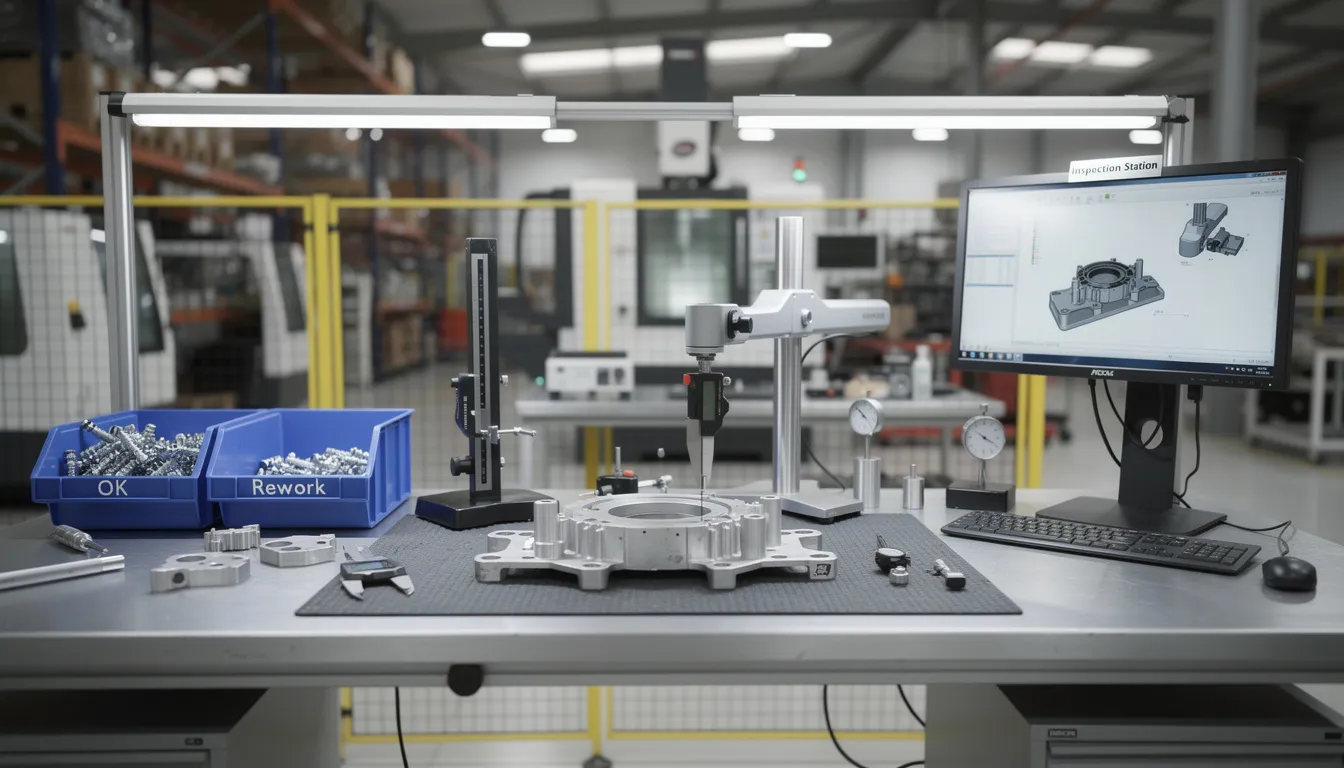
    Technical data commonly refers to detailed information that describes the design, manufacture, operation, maintenance, or testing of a product, system, or process. In industrial and regulated environments, it often has specific handling, export control, and information security implications.

    What technical data typically includes

    In manufacturing and industrial operations, technical data often covers:

    • Engineering designs and drawings, including CAD models and schematics
    • Manufacturing process instructions, routings, and control plans
    • Bill of materials (BOM) details beyond commercial part descriptions
    • Test methods, qualification procedures, and acceptance criteria
    • Product performance characteristics and tolerance data
    • Software source code or configuration details for embedded or control systems
    • Maintenance manuals, repair instructions, and overhaul procedures

    This information may exist in PLM, MES, ERP, document management, and quality systems, or as files exchanged with suppliers and customers.

    What technical data usually excludes

    Depending on the regulatory regime, technical data typically does not include:

    • Purely commercial or marketing materials (price lists, brochures, sales quotes)
    • Basic product descriptions that do not reveal detailed design or manufacturing know-how
    • General engineering knowledge that is widely taught or publicly available

    However, the exact boundary between technical data and non-technical information is defined by the applicable regulations, contracts, or internal policies.

    Technical data in regulated environments

    In many jurisdictions, technical data is a defined term in export control and defense-related regulations. In those contexts it can trigger specific obligations for:

    • Access control and user authorization within OT/IT systems
    • Cross-border transfers (email, file sharing, cloud storage, supplier portals)
    • Use of external service providers for design, analysis, or manufacturing
    • Recordkeeping and traceability of who accessed or shared certain documents

    Manufacturers often classify technical data to align with export control regimes or customer contract requirements and configure MES, PLM, and document control systems to enforce those classifications.

    Operational handling in manufacturing systems

    In day-to-day operations, technical data appears as:

    • Digital work instructions and standard operating procedures on the shop floor
    • Controlled drawings and specifications linked to part numbers and revisions
    • NC/CNC programs, control logic, and machine parameter sets
    • Test limits and calibration data used in inspection or automated testing

    Organizations typically govern technical data through document control, configuration management, and access control workflows. These workflows may integrate across MES, ERP, PLM, QMS, and content management systems to ensure that only authorized users can access specific technical data and that correct revisions are used in production.

    Information security and data loss considerations

    Because technical data can contain sensitive intellectual property or controlled information, it is often a focus area for information security and data loss prevention. Controls can include:

    • Role-based access control and segregation of duties
    • Network segmentation between OT and IT systems that store or process technical data
    • Monitoring and restrictions on file transfer, removable media, and printing
    • Encryption of repositories and communication channels where technical data is stored or transmitted

    Standards-based information security programs often require organizations to identify and classify technical data, assess risks related to its transfer and storage, and implement appropriate technical and procedural controls.

    Common confusion

    • Technical data vs. personal data: Technical data describes products and processes, while personal data relates to identifiable individuals. Both can be sensitive but are governed by different rules.
    • Technical data vs. trade secrets: Some technical data may qualify as trade secrets, but not all. Trade secret status depends on legal criteria and protection measures, not only on the type of information.
    • Technical data vs. operational data: Operational data (for example, machine telemetry or production counts) describes performance and events. Technical data describes how products are designed and manufactured. In some systems, both are stored together but are conceptually different.

    Link to data loss prevention and security standards

    In information security standards and risk assessments, technical data is often treated as a sensitive information category that requires controls on transfer, storage, and access. Data loss prevention tools, secure collaboration platforms, and controlled document workflows are examples of mechanisms that may be used to reduce the risk of unauthorized disclosure or leakage of technical data, especially when that data is subject to export controls or customer-imposed restrictions.

  • What access controls are required when FAI data is ITAR-controlled?

    If FAI data is ITAR-controlled, access cannot be broad, convenience-based, or handled only with generic department permissions. The practical requirement is to restrict access to authorized personnel with a documented need-to-know, and to enforce that restriction consistently across storage, workflow, transmission, export, and administration.

    There is no single universal control set that by itself makes an environment acceptable. The exact control model depends on whether the FAI package contains controlled technical data, how that data is classified internally, where it is stored, which systems touch it, and whether any users, admins, support staff, suppliers, or cloud services could create unauthorized access.

    Controls typically expected in practice

    • Identity-based access control: Access should be assigned to named users, not shared accounts. Generic shop-floor logins and mailbox-style accounts are a weak fit for ITAR-controlled FAI records.

    • Need-to-know and least privilege: Users should only see the FAI records, fields, attachments, and functions required for their role. Many plants need finer control than simple quality-versus-engineering permissions.

    • U.S. person and authorization screening where applicable: If the content is ITAR-controlled technical data, access decisions often need to account for export-control status, not just job title. That includes internal users, contractors, supplier contacts, and sometimes vendor support personnel.

    • Strong authentication: Multi-factor authentication is commonly part of a defensible control set, especially for remote access, administrative access, and cloud-based workflows.

    • Segregation of administrative privileges: System administrators should not automatically have unfettered access to controlled content unless that access is explicitly justified, approved, and logged. This is often overlooked in SaaS and managed-service arrangements.

    • Audit logging and review: You need traceable logs for access, changes, downloads, approvals, exports, and privilege changes. Logging without review and retention discipline is not enough.

    • Controlled attachment handling: FAI packages often include drawings, models, characteristic ballooning outputs, inspection results, and cert packages. Access controls have to extend to attachments, generated reports, exports, email notifications, and temporary files, not just the main application record.

    • Restricted sharing and transmission paths: If users can freely email, sync, print, or externally share FAI data, your application-level permissions may be bypassed. Transmission controls and approved data-sharing workflows matter as much as repository permissions.

    • Data segmentation: ITAR-controlled FAI data should be logically and, in some environments, operationally separated from non-controlled records to reduce accidental exposure and simplify review.

    • Change control for permissions and configuration: Group membership, role definitions, connector behavior, report templates, and export settings should be governed changes. In regulated operations, informal admin changes create traceability and validation problems quickly.

    • Retention, archival, and disposal controls: Historical FAI records can remain sensitive long after the product is released. Access rules must continue through archive copies, backups, and migrated records.

    What this means in brownfield environments

    In most plants, FAI data does not live in one clean system. It may move between QMS, MES, PLM, ERP, shared drives, supplier portals, CMM software, ballooning tools, and reporting packages. That is where access control usually fails.

    If one connected system has weaker permissions than the system of record, the overall control posture is only as strong as the weakest export, integration, or replica. Common failure modes include nightly data extracts to shared folders, uncontrolled PDF generation, supplier email loops, broad ERP attachments access, and vendor support accounts with excessive privileges.

    For that reason, the requirement is not simply to lock down the FAI application. You need to map where controlled data is created, copied, cached, transformed, and viewed across the workflow. In older environments, coexistence with legacy systems is normal, but each handoff needs to be assessed explicitly.

    Role-based access alone is usually not enough

    No, standard role-based access control by itself is usually not sufficient for ITAR-controlled FAI data. It helps, but by itself it often misses export-control status, attachment-level restrictions, admin access, downstream copies, and external collaboration paths.

    A more credible approach combines role-based permissions with user identity controls, documented authorization rules, data classification, logging, and restrictions on transfer and support access.

    Cloud and vendor access considerations

    Cloud deployment is not automatically disqualifying, but it raises design questions that must be answered carefully. You need clarity on where data is stored, who can administer the environment, what support access exists, how logs are retained, whether backups and disaster recovery copies are controlled appropriately, and how integrations move data in and out.

    If a vendor, subcontractor, or MSP can access the environment, that access needs the same scrutiny as internal access. Many organizations focus on end users and overlook privileged vendor paths, which can undermine the control model.

    Documentation matters as much as the control itself

    Whatever access model you implement, it should be documented, approved, tested, and maintained. In practice, that usually includes documented data classification rules, role definitions, access approval workflows, periodic access reviews, validation or verification evidence for configured controls, and change records when permissions or integrations change.

    That documentation does not guarantee any regulatory outcome, but without it, it becomes difficult to show that controls are intentional, repeatable, and traceable.

    Bottom line

    The required access controls for ITAR-controlled FAI data are restrictive, identity-based, auditable, and end-to-end. At a minimum, you should expect need-to-know access, least privilege, strong authentication, controlled admin access, auditable logs, protected attachments and exports, and disciplined governance over integrations and configuration changes.

    If your current process relies on shared folders, broad internal visibility, unmanaged PDF exports, or loosely controlled system integrations, that is a warning sign. In most aerospace environments, the real work is not choosing a policy statement. It is enforcing consistent controls across a mixed, long-lived system landscape without breaking validated processes or production continuity.

  • ITAR

    ITAR commonly refers to the International Traffic in Arms Regulations, a set of United States export control regulations that govern the manufacture, export, temporary import, and brokering of defense-related articles, services, and technical data.

    What ITAR covers

    In an industrial and manufacturing context, ITAR typically applies when an organization is involved with items or data that are listed on the U.S. Munitions List (USML). This can include:

    • Physical products such as weapon system components, military aircraft parts, or specialized electronics designed for defense use
    • Technical data such as drawings, models, CAD files, material specifications, process sheets, and work instructions that describe ITAR-controlled items
    • Defense services, including support, training, or design work provided to foreign entities related to ITAR-controlled items

    ITAR is focused on control of access and transfer. It regulates who can access controlled items and technical data, and under what conditions data can be shared across borders, including via IT and OT systems.

    Operational meaning in manufacturing

    For manufacturers and industrial operations, ITAR most often shows up as requirements around:

    • Identifying which parts, assemblies, and documents are ITAR-controlled
    • Restricting access in MES, PLM, ERP, QMS, and document management systems to authorized personnel only
    • Managing export-controlled technical data when integrating OT and IT systems, including backups and cloud services
    • Controlling which workers, contractors, and suppliers can view or handle ITAR-controlled data or product
    • Maintaining records that show how controlled data was handled, shared, and accessed

    ITAR considerations often intersect with cybersecurity frameworks and information security management systems, but they remain export control regulations rather than an information security standard.

    What ITAR is not

    ITAR:

    • Is not an information security standard like ISO 27001 or NIST 800-171, although those frameworks may support ITAR-related controls
    • Is not specific to any one industry software platform; it applies regardless of the MES, ERP, or QMS in use
    • Does not apply to all aerospace or industrial products, only to items and data subject to U.S. export control under the USML

    Common confusion

    • ITAR vs. EAR: ITAR typically covers defense and munitions items, while the Export Administration Regulations (EAR) cover many dual-use and commercial items. Some manufacturing operations handle both ITAR- and EAR-controlled products and data.
    • ITAR vs. cybersecurity standards: ITAR focuses on export control and who may access technical data. Cybersecurity frameworks address how information systems are secured overall. They are related but not interchangeable.

    Context for aerospace and regulated suppliers

    In aerospace and defense supply chains, ITAR is often a key driver for how technical data is classified, stored, and shared. When plants integrate legacy MES, ERP, and QMS systems, they must evaluate how ITAR-controlled data flows between systems and across organizational or national boundaries, and configure access controls and evidence capture accordingly.

  • What is industrial control system security?

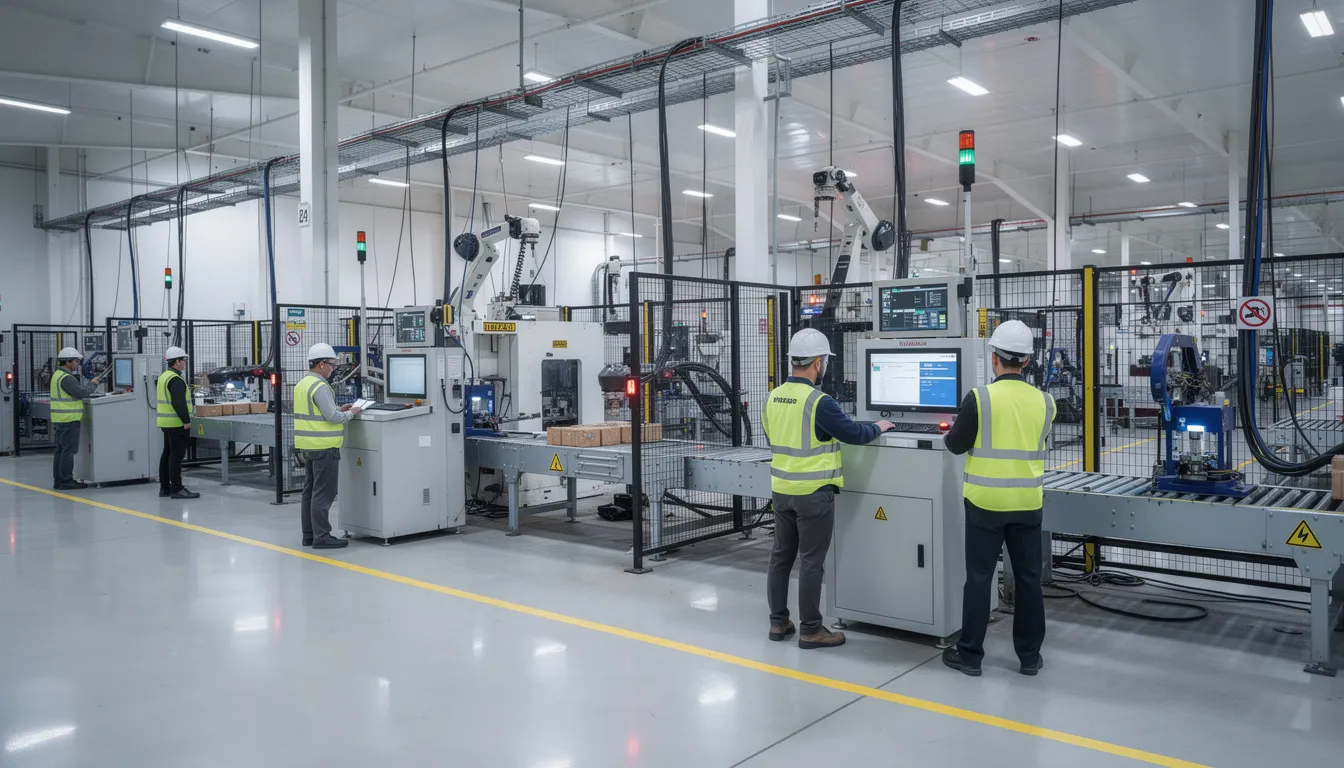
    Industrial control system (ICS) security is the set of practices, technologies, and governance used to protect the control equipment and supporting networks that run industrial plants. It focuses on keeping automation assets safe, available, and trustworthy in the face of cyber threats, misconfigurations, and unintended changes.

    In this context, “industrial control systems” usually include:

    In practice, this connects to security and compliance requirements when teams need to turn the answer into repeatable execution habits.

    • DCS, PLCs, PACs, CNC controllers, and motion controllers
    • SCADA systems, HMIs, historians, and engineering workstations
    • Industrial networks and fieldbuses (for example Ethernet-based OT networks, serial links, safety networks)
    • Interfaces to MES, ERP, QMS, and remote support connections

    What ICS security is trying to protect

    ICS security applies familiar security goals, but the order of priorities is different from typical IT:

    • Safety and product quality: Preventing unsafe states, bad product, and environmental releases.
    • Availability and reliability: Keeping lines running, avoiding unplanned downtime and unstable operation.
    • Integrity: Ensuring control logic, recipes, and setpoints are correct and traceable.
    • Confidentiality where necessary: Protecting sensitive process data, intellectual property, and export-controlled technical data.

    Because control systems directly affect physical equipment, a poorly managed security change can create more risk than leaving a vulnerability unpatched for a period. ICS security has to balance cyber risk reduction with operational and safety risk.

    Typical elements of ICS security

    In regulated, long-lifecycle environments, ICS security usually includes:

    • Network architecture and segmentation: Separating OT from IT, isolating critical cells or zones, and controlling data flows between levels.
    • Access control and credentials: Role-based accounts, controlled use of shared logins on legacy equipment, secure remote access, and procedures for engineering laptops and vendor access.
    • System hardening: Disabling unused services, restricting USB and portable media, locking down HMIs and engineering workstations where feasible.
    • Monitoring and detection: Logging, network monitoring, and anomaly detection that are tuned for OT protocols and do not interfere with real-time operation.
    • Patch and vulnerability management: Risk-based patching that respects validation, vendor support matrices, and planned downtime windows.
    • Backup, restore, and configuration management: Reliable backups of control logic, configurations, and recipes, with tested restore procedures and change control.
    • Physical security: Controlled access to MCC rooms, control cabinets, and networking closets, especially where logical controls are weak or legacy.
    • Procedures and training: Clear procedures for changes, incident handling, and use of portable tools; operator and engineer awareness of OT-specific cyber risks.

    Standards and frameworks commonly referenced

    Many organizations align ICS security with established frameworks, without claiming formal compliance unless it is specifically achieved and documented. Common references include:

    • IEC 62443 for industrial automation and control systems security
    • NIST guidance on ICS security (for example, NIST SP 800‑82)
    • Sector-specific guidance in pharma, aerospace, defense, and energy, where applicable

    In regulated environments, these frameworks usually need to be interpreted through internal quality systems, validation requirements, and local regulatory expectations.

    How ICS security coexists with legacy systems

    Most plants operate brownfield environments where full replacement of control systems is rare. Assets may run for decades, often with:

    • Unsupported or unpatchable operating systems
    • Proprietary protocols and vendor-specific configuration tools
    • Limited CPU or network headroom for additional security agents or heavy scanning

    In these cases, ICS security often relies on compensating controls such as:

    • Stricter network segregation and one-way data flows where possible
    • Procedural controls and physical access restrictions
    • Engineering of secure jump hosts or zoning to confine exposure

    Attempting a full rip-and-replace for security reasons alone is rarely practical in highly regulated, long-lifecycle environments due to validation burdens, requalification of processes, integration complexity with MES/ERP/QMS, and downtime risk. Security strategies generally assume coexistence and incremental hardening instead.

    Role of governance, traceability, and change control

    Effective ICS security depends heavily on governance rather than tools alone:

    • Change control: Security changes are treated like any other change to validated or safety-related systems: risk assessed, documented, tested, and approved.
    • Traceability: Clear linkage between security configurations, system baselines, and individual changes, so you can reconstruct what was running when a deviation or incident occurred.
    • Lifecycle management: Planning for obsolescence, end-of-support, and staged migrations, so security gaps do not accumulate unnoticed.

    These practices help align ICS security with quality management systems and regulatory expectations without promising specific audit outcomes.

    How ICS security interacts with MES, QMS, and IT systems

    ICS security cannot be treated as isolated from higher-level systems. Interfaces to MES, ERP, QMS, PLM, and corporate IT networks are often the main attack and failure paths. Practical strategies include:

    • Defining controlled interfaces between OT and IT, including data flows for production orders, quality records, and traceability data.
    • Coordinating identity and access management so that role changes and leavers are reflected in OT access, where feasible.
    • Aligning incident response so that IT security teams understand OT constraints, and OT teams know when and how to involve corporate security.

    The result is a security posture that reduces risk while respecting operational continuity, validation requirements, and the long life of industrial assets.

  • How can digital platforms support ITAR and EAR constraints in supply chain collaboration?

    Digital platforms can support ITAR and EAR constraints in supply chain collaboration, but only if they are configured around export-control decisions your organization has already defined. The platform is an enforcement and traceability layer, not a substitute for classification, licensing analysis, or internal export-control governance.

    In practice, a useful platform supports controlled collaboration by limiting who can see what, when, and under what workflow conditions. That usually includes role-based and attribute-based access controls, segregation of controlled technical data from commercial data, approval workflows for external sharing, immutable audit trails, document version control, and retention of evidence showing what was shared with which supplier and why.

    In practice, this connects to export controls and technical data handling when teams need to turn the answer into repeatable execution habits.

    For supply chain use cases, the most valuable capabilities are usually:

    • supplier-specific access scopes so one supplier cannot see another supplier’s controlled data

    • data partitioning by program, part, customer, country, and control status

    • workflow gates before releasing drawings, models, work instructions, inspection requirements, or deviation-related information

    • download, print, forwarding, and watermarking restrictions where appropriate

    • end-to-end audit trails across document release, acknowledgment, revisions, and revocation

    • integration with identity providers for stronger authentication and access revocation

    • policy-driven notifications when controlled content changes or access exceptions occur

    • evidence preservation for internal review, customer review, and audit preparation

    These controls are especially important in brownfield environments because collaboration data rarely lives in one place. Controlled information may originate in PLM, ERP, MES, QMS, file shares, email, or legacy portals. If those systems are poorly integrated, the platform may show a clean access model on the surface while uncontrolled copies still move through side channels. That is a common failure mode.

    Another practical limit is data labeling and classification quality. If parts, documents, BOM elements, or process instructions are not accurately tagged for export sensitivity, the platform cannot reliably enforce restrictions. Many programs fail here because master data is inconsistent across systems, attachments bypass structured controls, or revisions are copied into unmanaged repositories.

    Digital platforms can also reduce exposure by enabling selective disclosure. A supplier may need routing steps, delivery requirements, and approved specifications, but not full product definition, broader program context, or unrelated technical packages. Good system design supports least-necessary data sharing rather than broad document dumps.

    That said, there are tradeoffs. Tighter controls can slow supplier response, complicate onboarding, and increase administrative overhead. More granular permissions improve risk control but raise configuration and validation effort. Stronger segregation often means more integration work, more metadata discipline, and more user training. In regulated operations, these are not one-time setup tasks. They require ongoing change control, periodic access review, and validation after process or system changes.

    Full replacement of existing collaboration, PLM, ERP, or quality systems is often not the best answer. In long lifecycle, regulated environments, replacement programs frequently stall because of qualification burden, validation cost, downtime risk, interface complexity, and the need to preserve traceability across legacy records. A more realistic pattern is controlled coexistence: keep systems of record where they are, add policy enforcement and workflow controls at integration points, and close the highest-risk data leakage paths first.

    No platform can guarantee compliant behavior on its own. Users can still export data incorrectly, classify information badly, use unmanaged channels, or create process gaps between systems. The practical objective is narrower: reduce uncontrolled sharing, make authorized sharing traceable, and make exceptions visible quickly enough to investigate and correct them.

    What good looks like operationally

    A defensible implementation usually includes:

    • a defined data classification model tied to parts, documents, and transactions

    • clear ownership for release authority and supplier access approval

    • segregated collaboration spaces for controlled and non-controlled exchanges

    • integrated identity management and timely access revocation

    • revision-aware sharing so obsolete controlled content is not left accessible

    • logging and evidence retention that survive system changes

    • periodic review of supplier access, workflow exceptions, and integration failures

    If those foundations are weak, adding a portal or cloud workspace may improve convenience without materially improving control.

  • What kind of access controls are recommended for aerospace maintenance content?

    Aerospace maintenance content typically includes work instructions, repair records, engineering dispositions, configuration data, and sometimes export-controlled or classified technical data. Recommended access controls need to balance safety, regulatory expectations, and operational practicality, especially in mixed legacy environments.

    Core access control principles

    Across MRO, line maintenance, and depot environments, the following principles are generally expected:

    In practice, this connects to part genealogy and traceability when teams need to turn the answer into repeatable execution habits.

    • Least privilege and need-to-know: Users only see and edit the minimum content required to perform their role, for specific fleets, platforms, programs, or customers.
    • Role-based and attribute-based control: Combine role-based access control (RBAC) with attributes such as location, customer/program, security clearance, ITAR status, or contract.
    • Segregation of duties: Authoring, technical approval, quality approval, and execution use distinct roles with different permissions.
    • Strong authentication: At minimum MFA for remote and privileged access, ideally integrated with corporate identity (IdP, directory services).
    • Traceability: Every view, edit, release, and use of maintenance content is logged with user, timestamp, and version, and is retrievable for audits.

    Recommended role and permission model

    In most aerospace maintenance organizations, a layered RBAC model is practical:

    • Maintenance technicians/operators:
      • Read-only access to released work instructions and task cards for assigned work orders, tail numbers, bays, or lines.
      • No ability to edit or release controlled content.
      • Ability to record execution data (who did what, when, torque values, signoffs) under controlled fields.
    • Planners and MRO engineers:
      • Create and edit draft maintenance content and routings.
      • Cannot unilaterally release content that affects airworthiness; requires independent review/approval.
      • Scoped by platform, customer, or program where possible.
    • Design engineering / OEM liaison:
      • Access to engineering source documents as needed for repairs and modifications.
      • Ability to propose repairs or deviations, with controlled interface to PLM/QMS for approvals.
    • Quality and airworthiness representatives:
      • Read access across relevant maintenance records and instructions.
      • Approval rights on content releases, concessions, and deviations.
      • Limited edit permissions, typically restricted to quality records, not technical content.
    • Configuration management and document control:
      • Rights to manage versions, effectivity dates, baselines, and superseded content.
      • Control who can see obsolete instructions and under what conditions.
    • Administrators:
      • System-level configuration and user provisioning.
      • No implicit right to change regulated content; ideally separated “content admin” and “system admin” permissions.

    The exact role set will depend on your organization, but a similar separation of responsibilities is generally expected in regulated aerospace maintenance.

    Layered controls for ITAR and export-controlled maintenance content

    If your maintenance content includes ITAR or other export-controlled technical data, additional layers are typically required:

    • Data classification: Flag content as ITAR, EAR, proprietary, or unrestricted at the document or data-object level.
    • Attribute-based access control: Use user attributes (citizenship, clearance, contract, location) to filter access to export-controlled content.
    • Logical separation: Where practical, host ITAR content in separate, compliant environments (for example, segregated cloud regions or networks) with dedicated identity and logging.
    • Geolocation constraints: Prevent access from non-approved countries or networks via network and application controls.
    • Download and print controls: Limit export-controlled content to on-screen use where feasible; restrict or log printing, exporting, and offline copies.

    The details depend heavily on your export-control posture, data residency, and whether you are using GCC High or other specialized environments. Access options that might be acceptable for commercial-only fleets may be inadequate where defense contracts or ITAR are involved.

    Version, configuration, and usage control

    Access control for maintenance content cannot be separated from version and configuration management:

    • Release versus draft separation: Only authorized roles can see and use draft content; technicians normally see only the current released version applicable to the asset.
    • Effectivity control: Access to instructions and task cards is constrained by tail number, configuration, serial range, or modification status.
    • Obsolete content handling: Obsolete instructions remain accessible for traceability and historical investigation, but are clearly marked and not selectable for new work unless a controlled deviation is approved.
    • Work-order binding: Permissions can be evaluated at the work-order level, combining user role, asset, and program/customer attributes.

    Workflow-based approvals and change control

    Robust access control is closely tied to workflow and change control:

    • Multi-step approval: Drafts move through technical review, quality/safety review, and sometimes customer or OEM approval, with enforced signoffs from different roles.
    • Electronic signatures: Changes, releases, and critical signoffs are tied to authenticated users, with timestamps and reason codes.
    • Impact-based restrictions: Changes affecting safety, airworthiness, or regulatory approvals may require elevated approvers and additional documentation, while low-impact changes follow lighter workflows.
    • Change history access: Authorized users can see prior versions and rationale; general users should see only what they need to execute safely.

    Authentication and identity integration

    In most brownfield environments, maintenance content is spread across MRO systems, MES, PLM, and document repositories. Recommended practices:

    • Centralized identity: Integrate maintenance applications with a common identity provider where feasible, using SSO to enforce consistent access rules.
    • MFA for sensitive roles: Enforce multi-factor authentication for admins, approvers, and remote access.
    • Joiner-mover-leaver process: Tie role assignments to HR or corporate IT processes so access changes when people change jobs or leave.
    • Service account limits: Avoid shared logins for shop-floor stations; use badge or short SSO flows so actions are attributable to individuals.

    The level of integration you can achieve depends on how legacy your MES/MRO/PLM stack is and whether those systems support modern identity protocols. Where they do not, you may need compensating controls (for example, tighter network segmentation, manual account reviews, and more frequent audit log review).

    Audit trails and monitoring

    For regulated aerospace maintenance, the ability to prove control is as important as the control itself:

    • Comprehensive logging: Log access to maintenance content, including views of sensitive documents, edits, releases, and approvals.
    • Retention aligned with lifecycle: Retain logs and records in line with aircraft and component lifecycles and contractual/regulatory requirements.
    • Regular review: Periodic audits of access rights, role assignments, and anomalous access patterns.
    • Cross-system correlation: Where multiple systems hold overlapping content, aim to correlate logs to reconstruct who saw what, when, even if each system has its own logger.

    Coexistence with legacy systems

    In many aerospace MRO organizations, maintenance content is fragmented across paper archives, PDFs on network drives, OEM portals, legacy MRO systems, and newer digital work instruction tools. This limits how “perfect” access control can be in practice.

    Typical tradeoffs and constraints include:

    • Parallel systems: Some legacy tools may lack fine-grained RBAC or attribute-based controls, forcing reliance on folder-level permissions or network segmentation.
    • Offline content: Printed task cards or exported PDFs reduce technical access control to physical controls and procedures.
    • Integration gaps: MES, PLM, QMS, and DMS products may implement roles differently, making it hard to enforce a single model without custom integration and validation.
    • Qualification and downtime risk: Attempting to rip and replace core MRO or PLM systems solely to improve access control often fails, due to extensive requalification, data migration risk, and limited downtime windows.

    As a result, many organizations pursue incremental improvements: strengthen identity and network layers, introduce better role models in new systems, wrap legacy systems with stricter perimeter controls, and tighten governance for exports and approvals, instead of a single large replacement project.

    Dependencies and validation

    The “right” access control design for aerospace maintenance content depends on:

    • Your mix of civil versus defense work and exposure to ITAR/export-controlled or classified data.
    • The capabilities of your existing MES, MRO, PLM, QMS, and document systems.
    • How far identity, MFA, and logging are standardized across the enterprise.
    • Your change control and validation processes for modifying production systems.

    Any changes to access controls in production environments should go through formal change management, with documented testing to confirm that critical maintenance content remains available to the right people while being appropriately restricted and traceable.