RSC Topic: Manufacturing Execution Systems (MES)

How production work is routed, tracked, and controlled on the shop floor.

  • Drill-down

    Drill-down commonly refers to navigating from a high-level summary into progressively more detailed information. In manufacturing and industrial software, it is used to investigate a metric, event, record, or exception by moving from dashboards or aggregated reports into the underlying data.

    The term usually applies to reporting, analytics, MES, ERP, quality, and traceability systems. For example, a user might drill down from plant-level throughput to a production line, then to a work order, and then to a specific machine event or operator entry. The core idea is structured detail navigation, not just opening another screen.

    Drill-down includes hierarchical or linked exploration of related data, such as moving from:

    • a KPI to the transactions or events behind it
    • a nonconformance count to individual NCR records
    • a batch summary to lot, material, or genealogy details
    • an equipment alarm total to time-stamped alarm history

    It does not usually mean root cause analysis by itself, although drill-down is often a step used during investigation. It also does not necessarily imply write access or workflow action; many drill-down paths are read-only views for analysis and verification.

    Common confusion

    Drill-down is often confused with filtering, sorting, and search. Filtering narrows a data set by conditions. Sorting changes display order. Search locates matching records. Drill-down specifically means moving from summary information to the lower-level details behind that information.

    It can also be confused with traceability. Traceability focuses on lineage and relationships across materials, processes, and records. Drill-down is a navigation method that may be used to access traceability data, but it is not the same concept.

    How it appears in operations systems

    In regulated and quality-sensitive environments, drill-down is commonly used to review exceptions, reconcile data between systems, and inspect evidence behind reported metrics. Typical examples include moving from an ERP production summary into MES execution records, or from a quality dashboard into inspection results, deviations, or CAPA-linked records.

  • MES (Manufacturing Execution System)

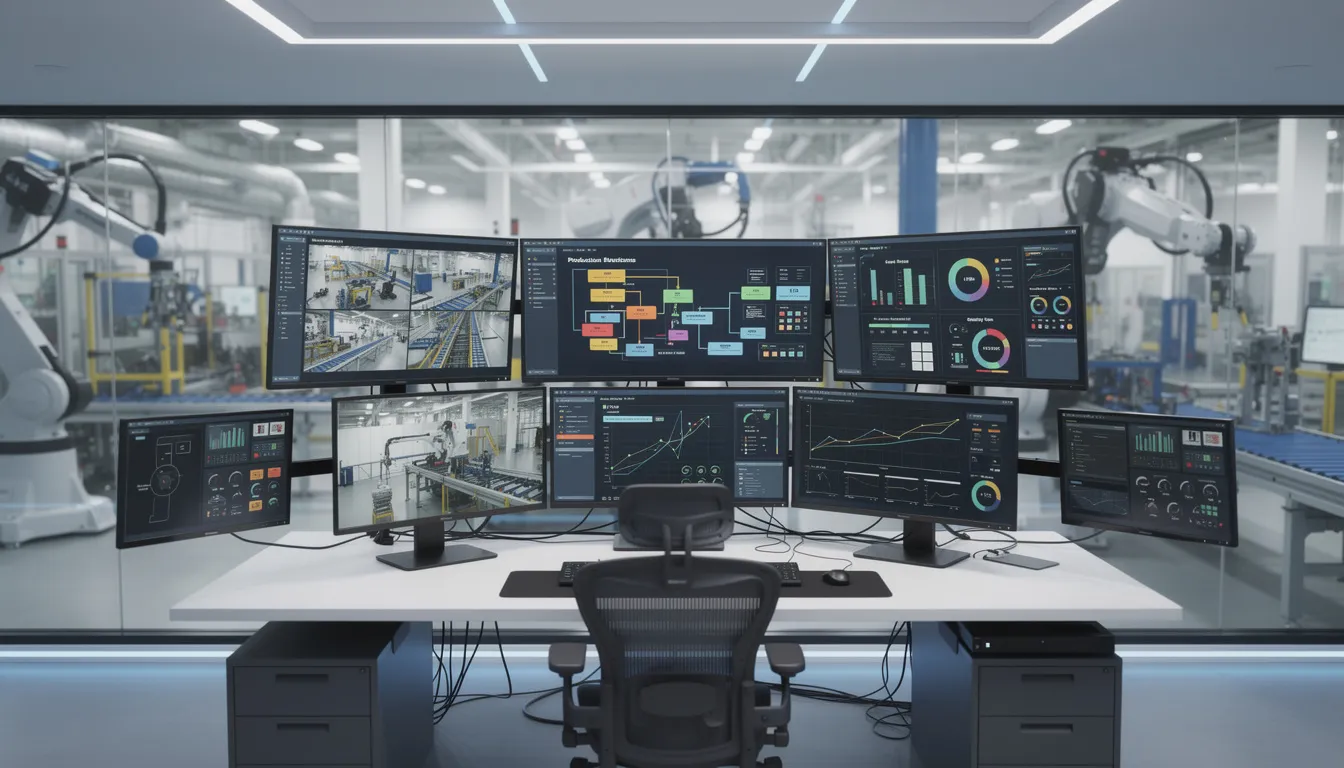
    A Manufacturing Execution System (MES) is a software application or suite that manages, monitors, and records production activities on the shop floor in near real time. It typically sits between enterprise-level planning systems, such as ERP, and plant-level control or automation systems, such as PLCs, SCADA, and DCS.

    Scope and core functions

    MES commonly refers to the operational IT/OT layer that:

    • Translates production plans and work orders into executable shop floor operations
    • Guides and records execution of manufacturing steps, often via electronic work instructions and operator terminals
    • Captures production data, including material usage, process parameters, equipment status, and operator actions
    • Tracks work-in-process (WIP), material flow, and product genealogy across batches, lots, or serial numbers
    • Supports quality control activities, including in-process checks, holds, deviations, and nonconformance recording
    • Coordinates resource usage, such as machines, tools, and personnel, according to defined routing and rules
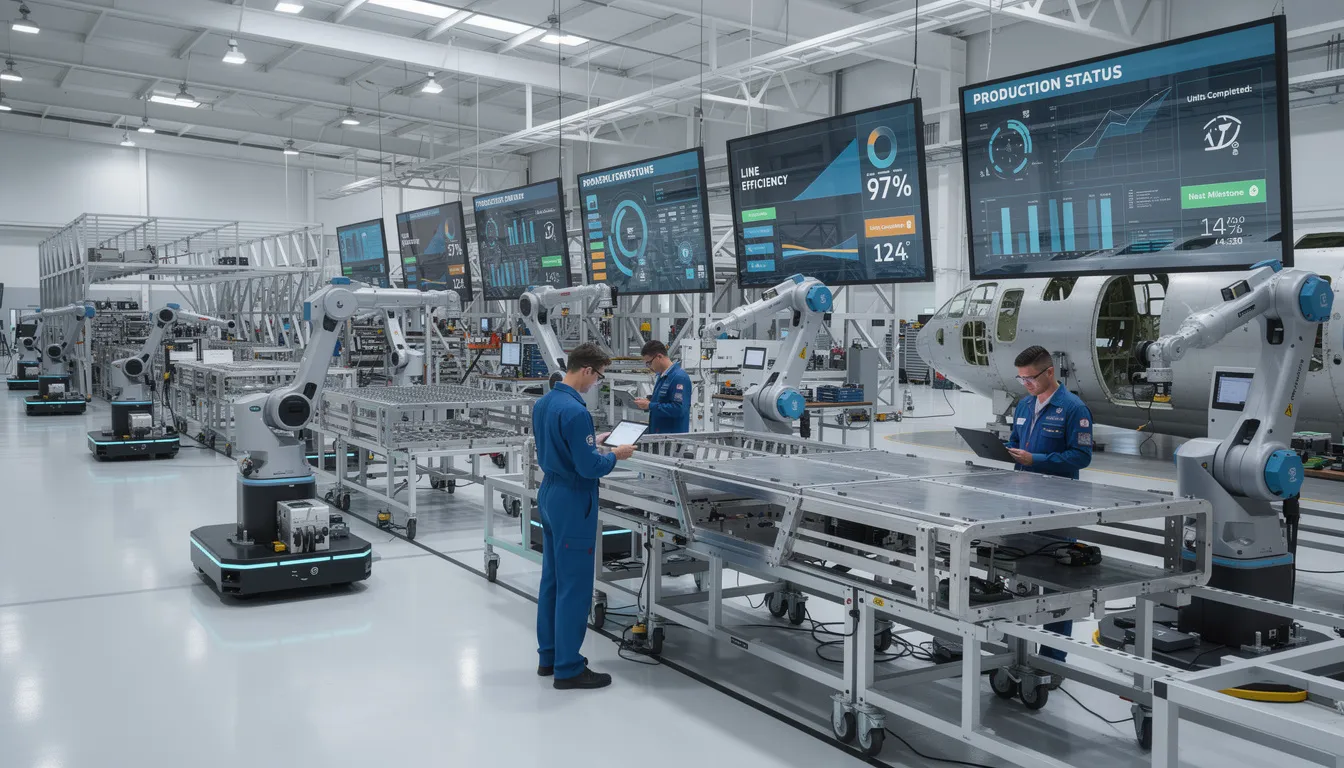
    • Provides visibility into production performance, including metrics like cycle time, downtime, yield, and OEE

    In regulated manufacturing environments, MES often plays a central role in enforcing defined process sequences, recording execution evidence, and supporting electronic records and audit trails.

    Position in the systems landscape

    Within common reference models, such as ISA-95, MES is usually associated with manufacturing operations management at the level between business planning and scheduling (ERP) and direct process control (PLC/SCADA/DCS). In practice, an MES may:

    • Receive production orders and master data (materials, BOMs, routings) from ERP or planning systems
    • Exchange status and parameter data with equipment, historians, or other OT systems
    • Provide execution data back to ERP, quality systems, data lakes, and reporting tools

    MES is not the same as ERP, which focuses on planning, finance, and high-level logistics, and it is not the same as control systems that execute low-level machine control logic.

    Operational use in industrial environments

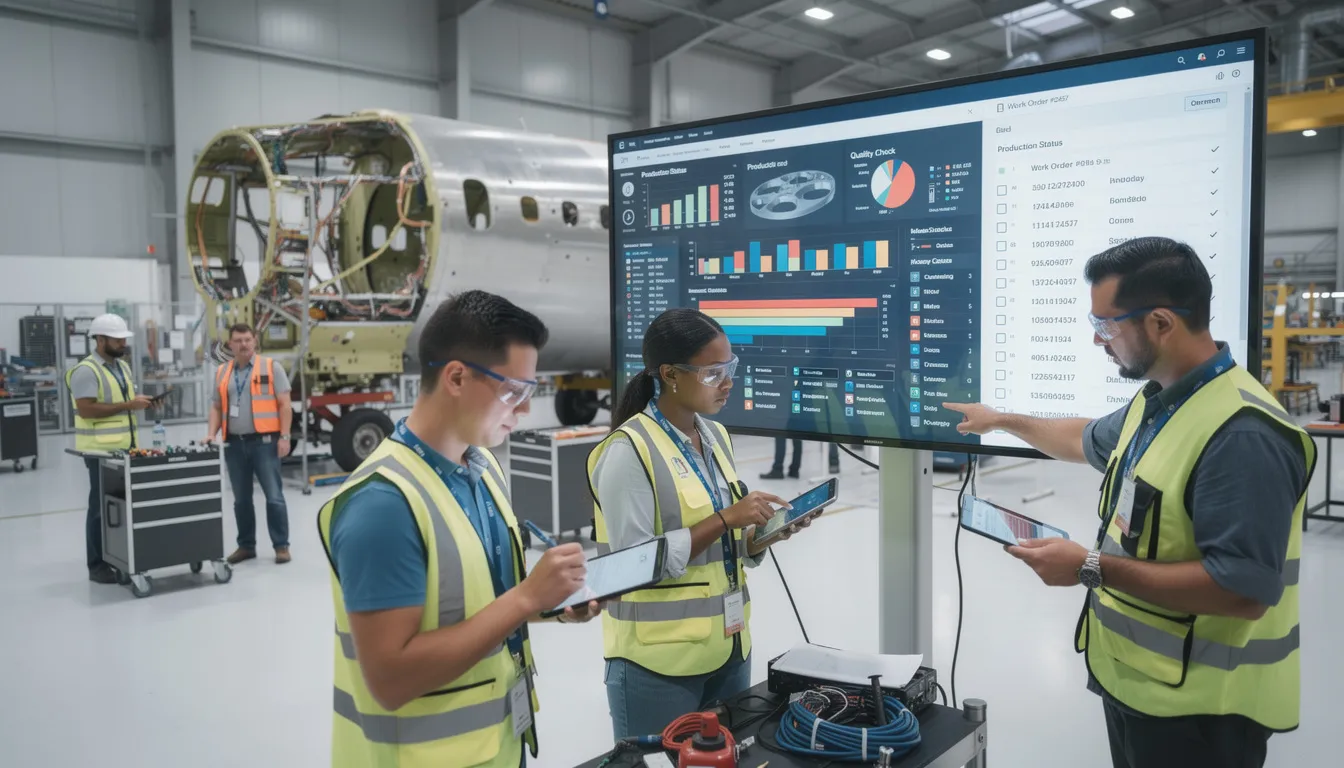
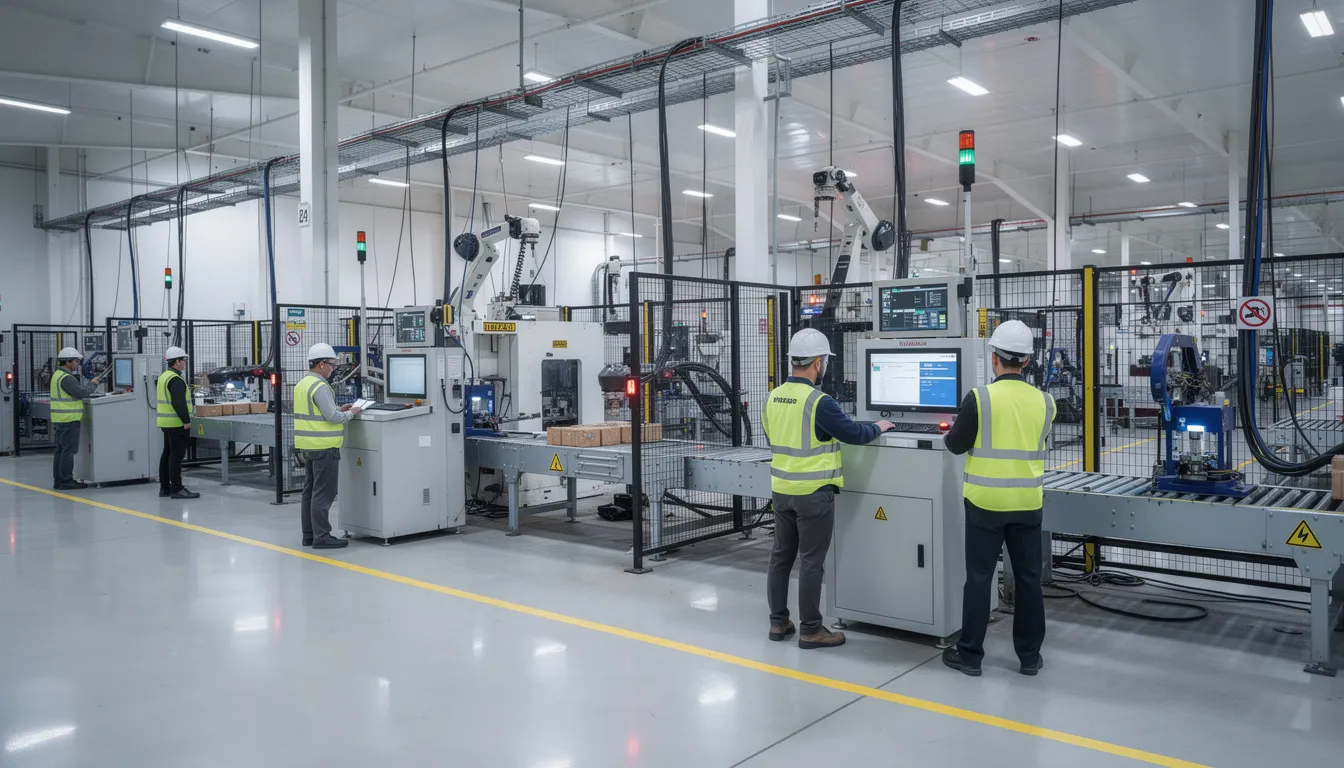
    On the shop floor, MES typically appears as operator terminals or integrated interfaces that:

    • Display the correct job, recipe, or batch record to each work center
    • Prompt operators for data entry, checks, sign-offs, or electronic signatures where required
    • Trigger equipment setpoints or recipe downloads when integrated with automation
    • Enforce sequencing and interlocks, for example preventing a step from proceeding until required inspections are complete
    • Generate a detailed execution history, often used for traceability, investigations, and continuous improvement analysis

    In many regulated industries, MES capabilities may overlap or integrate with systems used for electronic batch records, deviation logging, and certain aspects of quality management.

    Common confusion

    • MES vs ERP: ERP focuses on planning, inventory, and commercial transactions. MES focuses on executing and recording detailed production activities. They are often integrated but serve different purposes.
    • MES vs SCADA/PLC: SCADA and PLCs directly control and monitor equipment signals and automation logic. MES uses data from these systems but focuses on workflows, materials, and records at the operations level.
    • MES vs MOM: Manufacturing Operations Management (MOM) is sometimes used as a broader term that can include MES plus related functions such as maintenance, quality operations, and inventory operations. In many organizations the terms are used interchangeably, but MES often refers more specifically to execution-centric capabilities.

    Relation to integration and standards

    MES is frequently designed or configured with reference to standards and models for manufacturing integration and operations, such as ISA-95 and related guidance. These models are commonly used to structure system boundaries, data flows, and responsibilities between ERP, MES, automation, and quality systems. Implementations vary by industry and vendor, and the specific division of functions between MES and other systems is highly context-dependent.

  • How fast can a small aerospace shop realistically deploy MES?

    A small aerospace shop can sometimes deploy a narrow MES pilot in about 8 to 16 weeks, but that usually means a controlled scope: one value stream, one product family, limited integrations, and a clear decision about what remains manual. A production-grade MES rollout across the shop more commonly takes several months, and a fully integrated, validated deployment can take 6 to 18 months depending on data quality, process maturity, customer requirements, and legacy system constraints.

    What can be done quickly

    The fastest realistic deployment is usually not a full MES replacement. It is a focused pilot around digital travelers, work instructions, labor capture, basic quality checks, and limited traceability for a defined routing or cell.

    This can move quickly if the shop already has stable routings, part masters, revision controls, operator roles, inspection steps, and a clear owner for process decisions. If the pilot avoids deep ERP, PLM, and QMS integration at first, the technical build may be manageable in weeks rather than months.

    That does not mean the system is fully institutionalized. Training, validation evidence, work instruction governance, exception handling, and supervisor adoption still determine whether the deployment is usable after go-live.

    What usually slows it down

    Small shops are not automatically simple shops. Aerospace work often has serialized parts, revision-sensitive work instructions, AS9100 expectations, AS9102 first article requirements, customer-specific flowdowns, export-controlled data, nonconformance workflows, and long-lived programs. These requirements affect MES design even when headcount is low.

    Common schedule drivers include:

    • Master data quality: routings, operations, BOMs, inspection plans, tooling, skills, and revision links must be reliable enough to execute from.
    • Integration scope: ERP, PLM, QMS, calibration, maintenance, and document control connections add time, especially in brownfield environments.
    • Validation and change control: regulated operations need evidence that the configured process works as intended and that changes are controlled.
    • Exception handling: rework, MRB, deviations, split lots, partial completions, scrap, and customer holds often expose gaps in a simple pilot design.
    • Operator adoption: if the MES adds clicks without removing ambiguity or paper burden, usage quality degrades quickly.

    Why full replacement is rarely the first move

    For most small aerospace shops, replacing ERP, legacy travelers, document control, quality workflows, and production reporting all at once is usually unrealistic. The qualification burden, validation cost, downtime risk, integration complexity, traceability obligations, and long equipment or program lifecycles make big-bang replacement a high-risk path.

    A more realistic approach is staged coexistence. The MES takes over defined execution controls first, while ERP remains the system of record for orders, inventory, purchasing, and finance. PLM or document control remains the authority for released engineering data. QMS remains the authority for formal quality records unless and until an approved integration or process change moves that responsibility.

    A practical planning range

    For planning purposes, a small aerospace shop should treat these ranges as starting assumptions, not commitments:

    • 4 to 8 weeks: discovery, process mapping, data assessment, pilot scope, and configuration design.
    • 8 to 16 weeks: narrow pilot for one area if data and decisions are ready and integrations are limited.
    • 3 to 6 months: first production rollout with controlled integrations, training, governance, and validation evidence.
    • 6 to 18 months: broader shop deployment with ERP, PLM, QMS, nonconformance, inspection, and traceability integration.

    These ranges can expand if the shop has unstable routings, inconsistent revision control, poor inventory accuracy, custom customer reporting, export-control constraints, or unresolved ownership between operations, quality, engineering, and IT.

    The practical answer

    If the goal is a visible MES pilot, a small aerospace shop may be able to move in one quarter. If the goal is a durable, audited, integrated operating system for production execution, plan in phases and expect the work to continue beyond the first go-live. Speed is possible only when scope is narrow, data is ready, interfaces are limited, and change control is treated as part of the deployment rather than an afterthought.

  • What is the ISA-88 standard and how does it define batch process control?

    ISA-88, commonly called S88, is a standard for batch process control. In practice, it provides a consistent way to model batch operations, equipment, recipes, and procedural execution so that batch processes are easier to design, automate, maintain, and transfer across lines or sites.

    At a high level, ISA-88 defines batch control through a few core ideas:

    • A physical model that describes the manufacturing assets involved in batch production, typically from enterprise and site down to area, process cell, unit, equipment module, and control module.

    • A procedural model that describes how a batch runs, usually as process, process stage, operation, and phase.

    • A recipe model that separates product-specific instructions from equipment-specific control logic.

    • States and modes that define how equipment and batch procedures behave during execution, hold, restart, stop, and exception conditions.

    The most important practical point is that ISA-88 separates what needs to be made from how the equipment performs it. Product intent is captured in recipes, while reusable equipment capabilities are implemented in control strategies and modular automation. That separation is why S88 is often used to improve consistency, recipe portability, and lifecycle maintainability.

    How ISA-88 defines batch process control

    Under ISA-88, batch process control is not just a sequence of machine commands. It is a structured combination of:

    • Recipe management, including formulas, parameters, inputs, outputs, and required process steps

    • Equipment management, including which units and modules can perform which actions

    • Procedural execution, including ordered phases, branching, holds, and restarts where the process design allows them

    • Batch records and data capture, which are essential for traceability, review, and investigation in regulated operations

    In that framework, a batch is executed by applying a recipe to suitable equipment using a defined procedural structure. For example, a recipe may specify material quantities, setpoints, timing, and process parameters, while the unit phases handle actions such as charge, mix, heat, hold, or transfer. The standard helps make those phases reusable across products where the equipment capability is genuinely common.

    ISA-88 also distinguishes different recipe types, such as general, site, master, and control recipes. That matters because recipe detail and approval context often differ across development, site deployment, and runtime execution. In regulated environments, those distinctions can support traceability and controlled change, but only if the implementation is disciplined and integrated into the site’s validation and governance practices.

    What ISA-88 does and does not do

    ISA-88 does not mandate one vendor architecture, one control platform, or one software product. It is a model and terminology standard. A plant can align well with S88 using different combinations of DCS, PLC, SCADA, batch engines, MES, historian, and ERP systems.

    It also does not guarantee interoperability, easier validation, or successful recipe transfer by itself. Those outcomes depend on how consistently the models are applied, how cleanly interfaces are designed, and how much variation exists in equipment, instrumentation, and site procedures.

    Common failure modes include:

    • using S88 terms loosely without enforcing a real equipment and recipe model

    • embedding product-specific logic deep in PLC or DCS code, which defeats recipe portability

    • assuming two lines are interchangeable when instrumentation, sequencing, or material handling details differ

    • treating batch records as an afterthought instead of designing for review, exception handling, and genealogy from the start

    How it fits in brownfield plants

    In brownfield environments, ISA-88 is often most useful as a structuring approach rather than a full replacement program. Many plants already have a mix of legacy automation, vendor batch packages, MES workflows, ERP integrations, local historian setups, and manual or semi-digital records. In those conditions, trying to replace everything to become “fully S88 compliant” often fails for predictable reasons: qualification burden, validation cost, downtime risk, integration complexity, and the reality of long-lived production assets.

    A more practical approach is usually incremental:

    • standardize recipe and equipment models for new products or new cells first

    • wrap legacy control with clearer procedural and data interfaces where replacement is not justified

    • align MES, historian, and batch record structures to the S88 model over time

    • apply change control carefully so recipe, automation, and record changes remain traceable

    That coexistence model is slower, but it is often more realistic in regulated manufacturing where downtime windows are constrained and validation effort is material.

    Why operations and quality teams care

    When implemented well, ISA-88 can help organizations reduce ambiguity in batch execution, improve repeatability, and make recipe changes more controlled. It can also make cross-functional communication clearer between process engineering, automation, MES, quality, and IT.

    But the tradeoff is governance overhead. Modular recipe design, reusable phases, exception handling, and record integration require sustained discipline. If master data is inconsistent, equipment capabilities are poorly defined, or recipe ownership is fragmented across departments, the standard will not fix those problems on its own.

    So the short answer is: ISA-88 is the standard that defines a structured model for batch process control by separating recipes, equipment, and procedures into reusable, governable elements. Its practical value is real, but it depends heavily on implementation quality, data discipline, and how well it is adapted to existing plant systems.

  • How do analytics support the business case for MES investments?

    Using analytics to quantify the current baseline

    Analytics support the business case for MES by providing a defensible baseline of current performance before any system changes. Instead of arguing from anecdotes, you can show hard numbers on unplanned downtime, yield loss, rework rates, compliance deviations, and schedule adherence. This baseline is essential for calculating potential uplift from improved execution, standardization, and visibility. In regulated environments, being explicit about data sources, time windows, and exclusions is important so that finance, quality, and operations accept the numbers. Where data is incomplete or inconsistent, analytics can surface the gaps and establish confidence intervals rather than pretending to give exact values. The business case is stronger when it openly acknowledges these data limitations and still shows a material opportunity range.

    Identifying where MES can realistically move the needle

    Analytics help distinguish problems that MES is well-suited to address from those driven mainly by equipment design, labor constraints, or upstream supply variability. By drilling into loss trees and Pareto charts for downtime, scrap, and delays, you can map which losses are tied to poor instruction management, manual data entry, lack of genealogy, or weak dispatching logic. Those are areas where MES capabilities are likely to have impact, assuming proper configuration and adoption. Conversely, when root causes point to chronic equipment reliability issues or supplier quality, MES alone will not close the gap, and the business case should not claim that it will. Using analytics this way avoids over-attributing all pain to the lack of MES and helps size only the portion of benefit that better execution and traceability can realistically provide.

    Building traceable links between MES features and financial outcomes

    To be credible with finance and leadership, the case for MES should connect specific MES capabilities to specific metrics and then to financial impact. Analytics allow you to model how changes in right-first-time rates, batch release lead time, or investigation cycle time translate into reduced scrap, lower overtime, or higher throughput. For example, better electronic work instructions and inline checks may relate directly to fewer operator-induced deviations, which analytics can quantify using historical deviation classifications and defect codes. Electronic batch records and automated data collection can then be tied to reduced manual review effort and fewer investigation extensions, again supported by measured time and effort data. These relationships are rarely perfect, but even approximate, documented linkages give stakeholders more confidence than generic claims about “digital transformation” or “paperless benefits.”

    Stress-testing assumptions, scenarios, and tradeoffs

    Analytics enable scenario analysis to test the assumptions behind the MES business case instead of relying on a single optimistic projection. You can model different adoption rates, partial-rollout scenarios, or alternative workflows (for example, minimal MES with just electronic records versus a more automated dispatching and enforcement model). In each scenario, you estimate changes in key metrics like OEE, on-time-in-full, deviation volume, or cycle time, then convert those into cost and capacity implications. This makes tradeoffs visible: a low-disruption MES deployment may lead to smaller short-term gains but lower risk, while a more aggressive deployment might promise larger gains with higher disruption and validation effort. In regulated environments, the analytics should also incorporate the cost and schedule impact of validation, training, and change control, rather than treating them as negligible overhead.

    Leveraging pilots and phased rollouts for evidence

    In brownfield, highly regulated plants, large bang–big-bang MES replacements are rarely viable due to validation burden, downtime, and integration complexity. Analytics are critical in phased or pilot-based strategies, where you need early evidence of value from limited scope deployments. By instrumenting pilot lines or selected product families, you can track pre- and post-implementation metrics with the same definitions and measurement methods. This allows you to separate real signal from noise and to see whether observed improvements persist beyond the “new project attention” period. Analytics also highlight unintended consequences, such as longer operator log-in times or new workarounds introduced by the system, which should be factored back into the business case before wider rollout.

    Accounting for data quality, integration, and validation constraints

    The strength of an MES business case that leans on analytics is directly limited by data quality, integration maturity, and validation status of source systems. If current data is fragmented across PLCs, spreadsheets, and legacy MES or LIMS systems, the initial analytics may require significant manual reconciliation and careful explanation of uncertainty. Integration debt may also mean that some of the projected MES benefits (such as automatic material status checks or real-time genealogy) will depend on additional interfaces to ERP, QMS, or warehouse systems, each with its own cost and validation plan. In safety- or quality-critical contexts, the analytics models and data transformations themselves may need review to ensure they do not drive decisions based on misclassified or incomplete data. Being transparent about these constraints avoids overstating near-term gains and helps scope enabling work as part of the business case.

    Differentiating between optimization and full system replacement

    Analytics can support decisions about whether to invest in incremental MES enhancements, point solutions, or a more substantial platform change. By comparing performance across areas with different levels of MES functionality, you can see whether major constraints are due to missing core capabilities or simply poor use of existing ones. Often, analytics show that optimizing configurations, cleaning master data, and automating specific handoffs can deliver a meaningful share of the value without a full rip-and-replace. In aerospace-grade or similar environments, a complete MES replacement can trigger extensive revalidation, requalification, and retraining, with downtime and integration risk that outweigh the modeled benefits. Good analytics make these tradeoffs explicit, allowing leadership to decide whether the additional benefit from a new platform justifies the lifecycle cost and risk.

    Connecting back to your specific operations context

    In a mixed-vendor, legacy-heavy environment, analytics usually start from whatever data is already being captured in existing MES, historians, and quality systems, even if it is incomplete. The early goal is to quantify the magnitude and location of losses well enough to decide where MES investments are likely to have a material effect. Over time, as MES capabilities expand, the same analytics framework can be used to monitor actual versus expected benefits, track deviations from the plan, and justify course corrections. The most effective organizations treat analytics as an ongoing discipline supporting MES governance, not just a one-time exercise to get a project approved. This mindset is particularly important where validation and change control make every subsequent adjustment expensive, so initial decisions need to be grounded in the best available evidence.

  • What is a BMR in pharma?

    In pharma, a BMR is a Batch Manufacturing Record. It is the complete, controlled record that shows how a specific batch of product was actually manufactured, tested, and handled, compared to the approved process.

    What a BMR includes

    Depending on the product and site procedures, a BMR typically contains:

    • Reference to the master manufacturing record / master batch record (MMR/MBR)
    • Material details: lot numbers, quantities, expiry/retest dates, and status
    • Executed process steps: equipment used, setpoints, actual values, and operators
    • In-process controls and test results, including any deviations and investigations
    • Environmental or line clearance checks, where applicable
    • Labeling and packaging details and line reconciliation results
    • Signatures / e-signatures and timestamps for all critical actions and reviews
    • Final quality review and batch disposition (e.g., released, rejected, quarantined)

    Why the BMR matters in regulated manufacturing

    The BMR is a core GMP record because it:

    • Provides documented evidence that the batch followed the approved and validated process
    • Enables traceability of materials, equipment, personnel, and process parameters
    • Supports investigations, complaints handling, and product quality reviews
    • Is a primary focus area in regulatory inspections and customer audits

    A complete, legible, and accurate BMR does not guarantee a positive audit outcome, but poor BMR practices almost always create findings or concerns.

    Paper vs electronic BMRs in brownfield environments

    In many pharma plants, BMRs exist as a mix of paper and electronic records:

    • Paper BMRs are still common where older equipment, limited integration, or validation cost makes full electronic execution difficult. They are simple to deploy but prone to data entry errors, missing signatures, and legibility issues.
    • Electronic BMRs (eBMR) are typically implemented via MES or eDHR/EBR systems. They can enforce sequence, checks, and calculations, but require validated integrations, robust change control, and careful management of hybrid workflows.

    In brownfield environments with legacy MES/ERP/PLM/QMS stacks, full replacement of existing batch documentation processes is rare. Incremental approaches are more common, for example:

    • Digitizing specific high-risk or high-volume steps while keeping the rest on paper
    • Capturing critical data electronically at the equipment level and attaching printouts to a paper BMR
    • Running hybrid BMRs where some sections are executed in MES and others via controlled paper forms, with clear linking and reconciliation rules

    Attempts to fully replace legacy BMR processes and systems often stall due to validation burden, downtime risk for critical lines, integration complexity with older equipment, and the need to maintain historical traceability across long product lifecycles.

    Key constraints and good practices

    The exact structure and management of BMRs vary by site, but some common constraints and practices are:

    • Change control: Any change to BMR format, content, or execution flow should go through formal change control with impact assessment and, where needed, re-validation.
    • Document control: Only the current approved version of the batch record template (the master) should be used to generate BMRs. Obsolete versions must be clearly segregated.
    • Traceability: BMRs must be linkable to equipment logs, calibration records, analytical results, deviations, CAPAs, and supply chain data. In fragmented system landscapes this often depends on robust identifiers and disciplined data entry.
    • Data integrity: ALCOA+ principles apply. Corrections, overrides, and rework should be clearly documented and attributable.
    • Retention: BMRs typically must be retained for many years; storing and retrieving both paper and electronic records reliably over long horizons is a nontrivial design and cost consideration.

    Because of these factors, any change to how BMRs are created, captured, or stored should be planned with cross-functional input from manufacturing, quality, IT, and validation, with explicit acknowledgment of brownfield constraints and long equipment lifecycles.

  • Is SAP a MES system?

    SAP, by itself, is not a traditional MES. SAP started as an ERP and planning platform. However, some SAP products provide MES-like capabilities and, in some plants, effectively function as the MES layer.

    What SAP is in this context

    When people say “SAP” in manufacturing, they usually mean:

    • SAP ERP / S/4HANA for planning, MRP, finance, procurement, inventory, and high-level production orders.
    • SAP Digital Manufacturing (SAP DM / SAP DMi) and older offerings like SAP MII and ME, which provide shop-floor integration and execution capabilities.

    The core ERP (ECC, S/4) is not a MES. It manages orders, materials, and confirmations, but it is not designed to be the primary real-time execution system at the equipment or cell level.

    Where SAP provides MES-like functions

    SAP offers products that can cover parts of the MES role:

    • SAP Digital Manufacturing / SAP DM: Work execution, operator UI, data collection, routing enforcement, some traceability, and OEE-style metrics.
    • SAP ME (Manufacturing Execution): A more traditional MES product for discrete manufacturing, still found in some installed bases.
    • SAP MII (Manufacturing Integration and Intelligence): Often used as a middleware and visualization layer between ERP and plant systems; it can host custom logic that behaves like a MES in some implementations.

    Depending on configuration and customization, these can act as the primary MES or as part of a distributed execution stack.

    What a MES usually does that ERP alone does not

    In most regulated, long-lifecycle environments, a MES is expected to handle:

    • Real-time dispatching and sequencing of work at the line, cell, or machine level.
    • Enforcement of work instructions and routing at the operation level, including holds and checks.
    • Detailed operator interactions (start/stop, data entry, sign-offs, e-signatures).
    • Equipment-level data capture, interlocks, and integration with PLC/SCADA.
    • Full genealogy and traceability at lot/serial/component level.
    • Support for electronic records and signatures as required by regulated industries.

    Standard SAP ERP transactions (even with basic confirmations and backflushing) generally do not provide this level of granularity or real-time control without adding additional SAP components or custom development.

    Brownfield reality: SAP plus existing MES

    In most established plants, SAP and MES coexist:

    • SAP (ECC or S/4HANA) is the system of record for orders, materials, and inventory.
    • One or more MES/L2 systems from different vendors handle real-time execution, operator UI, and equipment integration.

    Reasons full replacement of legacy MES with SAP-centric execution often fails or stalls include:

    • Qualification and validation burden for regulated processes when changing core execution systems.
    • Downtime risk for extended cutovers on running lines with tight capacity.
    • Integration complexity with existing PLCs, historians, QMS, PLM, and lab systems.
    • Long equipment lifecycles, where existing MES integrations are deeply embedded in control strategies and work instructions.

    As a result, many organizations keep SAP as the planning and inventory backbone while incrementally integrating or extending MES, rather than replacing MES wholesale with SAP DM or custom SAP logic.

    How to decide what role SAP should play

    Whether SAP should be treated as a MES in your environment depends on:

    • Which SAP components you actually run (ERP only, or also DM/ME/MII).
    • Required level of control and traceability at the operation and equipment level.
    • Regulatory expectations around electronic records, signatures, and audit trails.
    • Existing MES footprint and how deeply it is tied into validated processes and equipment.
    • Integration and data model strategy for ERP, MES, QMS, PLM, historian, and SCADA.

    In many regulated plants, SAP is the planning and material backbone, while a dedicated MES (which may include SAP DM or non-SAP products) is the primary execution layer. Treating plain SAP ERP as a MES without addressing these gaps usually introduces traceability, validation, and integration risks.

    Practical takeaway

    SAP ERP is not a MES. SAP’s manufacturing products can provide MES capabilities and may function as the MES in some implementations, but in brownfield, regulated environments they typically coexist with other MES and L2 systems. The right architecture depends on your current stack, validation constraints, and long-term support strategy.

  • How does the MES system work?

    A Manufacturing Execution System (MES) works as the operational layer between business systems (ERP, PLM, sometimes APS) and the actual production assets and people on the shop floor. It turns high-level plans into executable, traceable work and captures detailed production history as that work is performed.

    Core idea: orchestrate and record production

    At a high level, an MES does four things:

    • Receives plans and definitions from ERP, PLM, and scheduling systems (orders, BOMs, routings, revisions).
    • Creates and manages work as operations and tasks that operators, cells, and machines execute.
    • Enforces rules and sequence so work follows approved process steps and data is captured at the right time.
    • Collects and stores production data (who did what, when, on which resource, with which materials, and what results).

    How well this works in practice depends on integrations, master data quality, configuration choices, and formal validation in regulated environments.

    Key functional building blocks

    Most MES platforms expose similar functional areas, even if naming differs by vendor:

    • Order and work management: Breaks down production orders into work orders / operations, assigns them to lines, cells, or work centers, and tracks their status. Often synchronized with ERP, which remains the system of record for customer orders and inventory.
    • Routing and workflow control: Represents the process flow (steps, resources, inspections, hold points). The MES checks that each unit, lot, or batch follows its approved route and blocks out-of-sequence or unapproved steps where configured.
    • Electronic work instructions: Presents the right instructions and reference data at the right step, linked to the correct product and revision. In regulated environments this usually needs tight document control, versioning, and evidence that the right version was used.
    • Data collection and traceability: Captures process parameters, inspection results, operator entries, machine data, and material usage. This is what supports genealogy, device history records (where applicable), and root cause analysis.
    • Resource and personnel management: Tracks equipment availability and, in some cases, operator qualifications or training status before allowing work on certain operations (depending on configuration and integrations with HR/LMS/QMS).
    • Nonconformance and exceptions: Records defects, deviations, holds, and rework routing. In many regulated plants, formal CAPA remains in the QMS while MES provides the shop-floor trigger and execution data.
    • Performance and WIP visibility: Provides near real-time views of work-in-process, cycle times, bottlenecks, and sometimes computes OEE or similar metrics, depending on how deeply it is integrated with machines and downtime tracking.

    How MES sits in your overall stack

    In a brownfield, regulated environment, MES is rarely a standalone solution; it has to coexist with a mix of legacy and modern systems:

    • ERP: Typically remains the source of truth for orders, inventory, costing, and financial postings. MES receives production orders and reports back completions, scrap, and sometimes labor time and material consumption.
    • PLM / PDM: Defines product structures, routings, and approved design/production data. MES usually consumes released artifacts (BOM, routing, specs, instruction content), not the in-development versions.
    • QMS: Owns formal nonconformances, CAPA, change control, and training records. MES often handles shop-floor data capture and execution steps that then feed or link to QMS records.
    • SCADA / PLC / machine controllers: Provide real-time process data and state. In some plants MES receives high-level signals (start/stop, counters); in others, it is closely coupled to SCADA or an IIoT platform to collect detailed parameters.
    • Data historians and IIoT platforms: May store high-frequency process data, with MES referencing or sampling that data for traceability and analytics.

    The actual data flows are highly implementation-specific. For example, some sites send all material movements through ERP and use MES only as the operational front-end; others make MES the operational system of record for WIP and synchronize to ERP at key handoff points.

    Typical MES process flow during production

    A simplified, generic flow looks like this:

    1. Order release: ERP (or a planning system) releases a production order. MES imports it, associates it with the approved routing, and creates operations to be executed.
    2. Scheduling and dispatching: MES (or a separate scheduling system) sequences work and assigns operations to lines or cells, generating an operator-friendly dispatch list.
    3. Setup and verification: Before work starts, MES may enforce checks such as material availability, tool/equipment readiness, calibration status, and revision alignment of instructions and programs (where integrated).
    4. Execution and data capture: Operators log in to the MES, start operations, record setups, scan materials, and enter process or inspection data. Where integrated, machine and test equipment data are pulled automatically.
    5. Nonconformances and rework: If defects or deviations are detected, MES records them and may initiate holds, alternate routings, or rework steps, often under QMS control and procedures.
    6. Completion and backflush: When operations are complete, MES closes them, reports good and scrap quantities, and triggers updates back to ERP and sometimes inventory or warehouse systems.
    7. Genealogy and reporting: All actions and results are stored for traceability, audits, and performance analysis.

    In regulated environments, change control around these flows is strict. Any modification to routing logic, data collection requirements, or interfaces may need risk assessment, validation, and documented approval.

    Dependencies and constraints that shape how MES actually works

    How an MES works in a specific plant is strongly shaped by constraints:

    • Integration quality: Weak or brittle integrations with ERP, PLM, and automation often lead to manual workarounds, dual data entry, and inconsistent records.
    • Master data maturity: Poorly maintained routings, BOMs, work centers, and revision control severely limit what MES can automate or enforce.
    • Validation and qualification: In aerospace, medical, and similar sectors, the effort to validate MES workflows and interfaces often means functionality is deployed incrementally and is slow to change.
    • Legacy equipment: Older machines and test stands may not be easily connected. MES may rely on manual entry or intermediate data collection tools, which increases risk of error and reduces real-time visibility.
    • Downtime and rollout constraints: Cutovers must avoid extended downtime. As a result, many plants run MES alongside older systems for an extended period, with phased migrations by product line or area.

    This is why full “rip-and-replace” MES strategies often stall in high-criticality environments: the qualification burden, integration complexity, and risk of disrupting validated flows push organizations toward staged adoption and coexistence with legacy tools.

    What MES does not do by itself

    It is also important to be clear about what MES does not automatically provide:

    • It does not guarantee compliance or audit outcomes. It can support traceability and procedural control, but outcomes depend on configuration, disciplined use, and overall quality system maturity.
    • It does not replace the need for QMS, PLM, or ERP. Some vendors blur boundaries, but in most regulated plants, MES works alongside these systems rather than fully displacing them.
    • It does not fix process design issues. MES can expose bottlenecks and enforce rules, but poorly designed or unstable processes still need engineering and quality work.

    Connecting this to brownfield deployments

    In a typical brownfield plant, the MES system works as a layer stitched into existing systems and procedures rather than a clean, end-to-end solution. Expect:

    • Selective use of MES functions in certain lines or product families while others remain on legacy travelers or spreadsheets.
    • Hybrid traceability, where some genealogy lives in MES and some in older databases or even paper archives.
    • Gradual tightening of integration and data collection as trust in the system grows and as validation cycles are completed.

    When planning or evaluating how MES will work in your environment, the critical questions are not only what the software can do, but how it will interact with your existing stack, your change control processes, and your tolerance for downtime and revalidation.

  • How can we quantify AOG risk using MES data?

    What does it mean to quantify AOG risk from MES data?

    Quantifying AOG risk from MES data means turning shop-floor execution signals into a probability that specific units, configurations, or deliveries will cause aircraft-on-ground events later in the lifecycle. You are not predicting regulatory outcomes or guaranteeing fleet availability; you are estimating likelihoods based on historical patterns. This typically focuses on late defects, rework on safety- or mission-critical assemblies, and schedule slippage for parts that are hard to substitute. The output is usually a relative risk score, not a binary forecast, and needs to be interpreted alongside maintenance and operational data. In most plants, the MES on its own is insufficient; it has to be combined with ERP, MRO, and configuration records to be meaningful.

    Which MES signals matter most for AOG risk?

    From the MES perspective, the highest value signals tend to be late-stage nonconformances, repeated rework on the same feature or station, and holds or deviations on critical-to-safety process steps. Work-in-process aging at specific operations, especially around final assembly, test, and certification-related steps, is another important indicator. Unplanned routing changes, manual overrides, and skipped operations (where allowed) often correlate with later reliability issues when you look across several years of data. Resource constraints such as chronic test-cell bottlenecks, calibration issues, or frequent equipment downtime can drive rushed recoveries and workarounds that never get fully documented. All of these are only useful if timestamps, operator IDs, revision levels, and serial/lot traceability are consistently captured and retained in the MES.

    How do we turn MES events into a quantified risk metric?

    A practical approach is to construct an AOG risk score per unit, serial number, or delivery batch by aggregating weighted MES indicators. For example, you might assign higher weights to nonconformances on flight-critical assemblies, late rework after functional test, or deviations requiring MRB approval. You then normalize scores by route complexity, configuration, and historical volumes to avoid overstating risk on inherently complex products. Over time, you can regress these MES-derived scores against actual downstream events (e.g., delays in induction to service, first-in-service failures, or maintenance events correlated with AOG) to calibrate the weights. The result is a probabilistic model that ranks work orders or serials by their historical propensity to contribute to in-service issues, rather than a hard prediction that a specific aircraft will be grounded.

    What data integration and quality constraints should we expect?

    Accurate AOG risk quantification depends heavily on robust integration between MES, ERP, PLM, and maintenance/MRO systems. If serial number, tail number, or configuration data is broken or inconsistent across systems, you will struggle to link shop-floor events to actual aircraft outcomes. Legacy MES deployments may not capture all needed fields (e.g., detailed test results, MRB decisions, or exact hardware/software configurations), which limits the precision of any model. In brownfield plants, multiple MES instances, homegrown tools, and paper records often coexist, creating gaps that need manual reconciliation or data engineering workarounds. Any automated scoring must be backed by explicit data lineage, versioning of integration logic, and documented assumptions so quality and engineering can review and challenge the model.

    How should we handle validation, traceability, and change control?

    In regulated environments, any use of MES data for risk scoring that might influence decisions about release, concessions, or maintenance needs a clear validation strategy. You should treat the risk model like a governed tool: version-controlled logic, documented training data, performance metrics, and defined operating ranges. Changes to weights, thresholds, or algorithms require change control and impact assessment, especially if outputs are referenced in quality or airworthiness decisions. Historical scores and underlying features must be retained so auditors and internal investigators can reconstruct why a particular unit was classified as higher or lower risk at a point in time. You should also explicitly separate “advisory” use of the model (e.g., prioritizing investigations) from any formal acceptance or rejection criteria governed by approved procedures.

    What are the main limitations and failure modes?

    The primary limitation is that MES data see only the manufacturing slice of the lifecycle, while AOG risk is a fleet-level phenomenon influenced by operations, environment, maintenance quality, and supply chain behavior. Models easily overfit to recent incidents if the underlying sample of true AOG events is small or poorly tagged, leading to unstable scores and false confidence. If nonconformance logging is inconsistent or culturally discouraged, you will underestimate true risk and reward plants or teams that under-report problems. Conversely, sites with rigorous defect capture may appear riskier on paper while actually being safer, unless you normalize carefully. There is also a risk that leadership treats AOG scores as deterministic, ignoring the model’s statistical uncertainty, data gaps, and known blind spots.

    How does this coexist with legacy MES, ERP, and MRO systems?

    In most aerospace-grade environments, replacing MES or MRO systems purely to enable better AOG analytics is rarely viable due to validation cost, downtime constraints, and qualification burden. A more realistic pattern is to build a data layer or analytics environment that consumes events and master data from existing systems via interfaces or scheduled extracts. This leaves validated transaction systems in place while allowing you to iterate on risk models with fewer constraints, provided you keep a clear separation between analytical tools and systems of record. You should expect heterogeneous data structures, inconsistent codes, and partial historical coverage, and design your models to degrade gracefully when data is missing. Over time, you can feed lessons from the analytics back into incremental MES configuration improvements instead of attempting a disruptive full replacement.

    How can we start small and still get value?

    A practical starting point is to focus on a narrow, high-impact scope: for example, final assembly and test for a specific program where you have decent serial traceability into service. Begin with descriptive analytics that correlate MES events (late rework, test failures, MRB actions) with downstream delays or early-life maintenance events, before committing to a full predictive model. Use this to define a simple scoring scheme that flags units for additional review or enhanced documentation, explicitly labeling it as a decision-support tool. Engage quality, reliability, and MRO stakeholders early so the scoring aligns with how they already think about risk. As you gain evidence that certain MES patterns consistently align with downstream issues, you can formalize thresholds and governance while keeping expectations realistic about the model’s precision.

  • What integrations are required to connect MES into the digital thread?

    There is no universal integration checklist for connecting MES into the digital thread. At minimum, MES usually needs to exchange controlled execution data with the systems that define the product and process, plan the work, verify quality, manage exceptions, and retain evidence. Which integrations are truly required depends on what the digital thread must prove for a product, program, customer, and regulatory context.

    Common MES integrations in a digital thread

    The most common integrations are with systems that own upstream definitions, downstream records, or quality evidence. In regulated manufacturing, the important question is not just whether systems are connected, but whether the data is version-controlled, traceable, validated, and usable during an investigation or audit.

    • PLM or engineering document control: product structures, drawings, specifications, process plans, revision status, effectivity, and engineering changes.
    • ERP or MRP: work orders, demand signals, routings at a planning level, inventory, material allocations, completions, and cost or schedule status.
    • QMS: nonconformances, deviations, concessions, CAPA links, approvals, dispositions, and quality record references.
    • Inspection, metrology, or SPC systems: characteristics, measurement results, inspection status, sampling decisions, gage or equipment references, and evidence attachments.
    • CMMS, EAM, or calibration systems: asset status, maintenance holds, calibration validity, tool availability, and equipment constraints that affect execution.
    • Equipment, SCADA, PLC, or historian systems: machine state, process parameters, alarms, recipes, cycle data, and environmental data where those signals are relevant and reliable.
    • Warehouse, supplier, or receiving systems: lots, serials, certificates, incoming inspection status, kitting, and material genealogy.
    • Identity, training, and access control systems: operator authorization, role-based access, electronic signature support, and training prerequisites where required by procedure.
    • Data warehouse, lakehouse, or analytics platforms: curated read-only data for reporting and analysis, usually not as the system of record for regulated execution decisions.

    The integration scope should follow the traceability requirement

    MES does not need to integrate with every system to participate in a digital thread. It needs to integrate with the systems required to maintain a defensible chain from engineering definition to production execution, inspection evidence, material genealogy, and quality disposition.

    For some plants, ERP plus PLM plus QMS is the minimum practical set. For others, inspection equipment, calibration systems, or supplier data are equally important because the product risk, customer requirements, or process controls depend on them.

    Brownfield constraints matter

    In most established plants, MES is added to an existing mix of ERP, PLM, QMS, legacy databases, paper records, spreadsheets, machine interfaces, and custom middleware. Full replacement is usually unrealistic in regulated environments because of qualification burden, validation cost, downtime risk, integration complexity, traceability obligations, change control, and long equipment lifecycles.

    A more realistic approach is controlled coexistence: define the system of record for each data object, map identifiers and revisions, integrate only the data needed for execution and evidence, and phase the rollout by product line, work center, or value stream.

    Common failure modes

    The main failure mode is assuming that connectivity equals a digital thread. It does not. A brittle point-to-point interface can move data while still leaving unclear ownership, stale revisions, missing context, or incomplete audit trails.

    Typical problems include mismatched part numbers, ambiguous revision effectivity, duplicate routings, uncontrolled work instruction changes, missing lot or serial genealogy, incomplete exception handling, unvalidated middleware, weak time synchronization, and poor integration monitoring.

    Security and export control requirements can also limit what data may move, where it may be stored, and who may access it. Those constraints need to be designed into the integration architecture rather than added after go-live.

    What must be in place before integration works

    The prerequisites are usually master data discipline, clear system-of-record decisions, a canonical data model or mapping layer, documented interface requirements, change control, validation planning, error handling, and operational ownership. Without those controls, MES integrations often create faster data movement but weaker traceability.

    The practical answer is that MES integration into the digital thread is not a single interface project. It is a governed set of data relationships across engineering, planning, production, quality, maintenance, and records systems. The required integrations are the ones needed to preserve traceability and execution control for the specific operation.