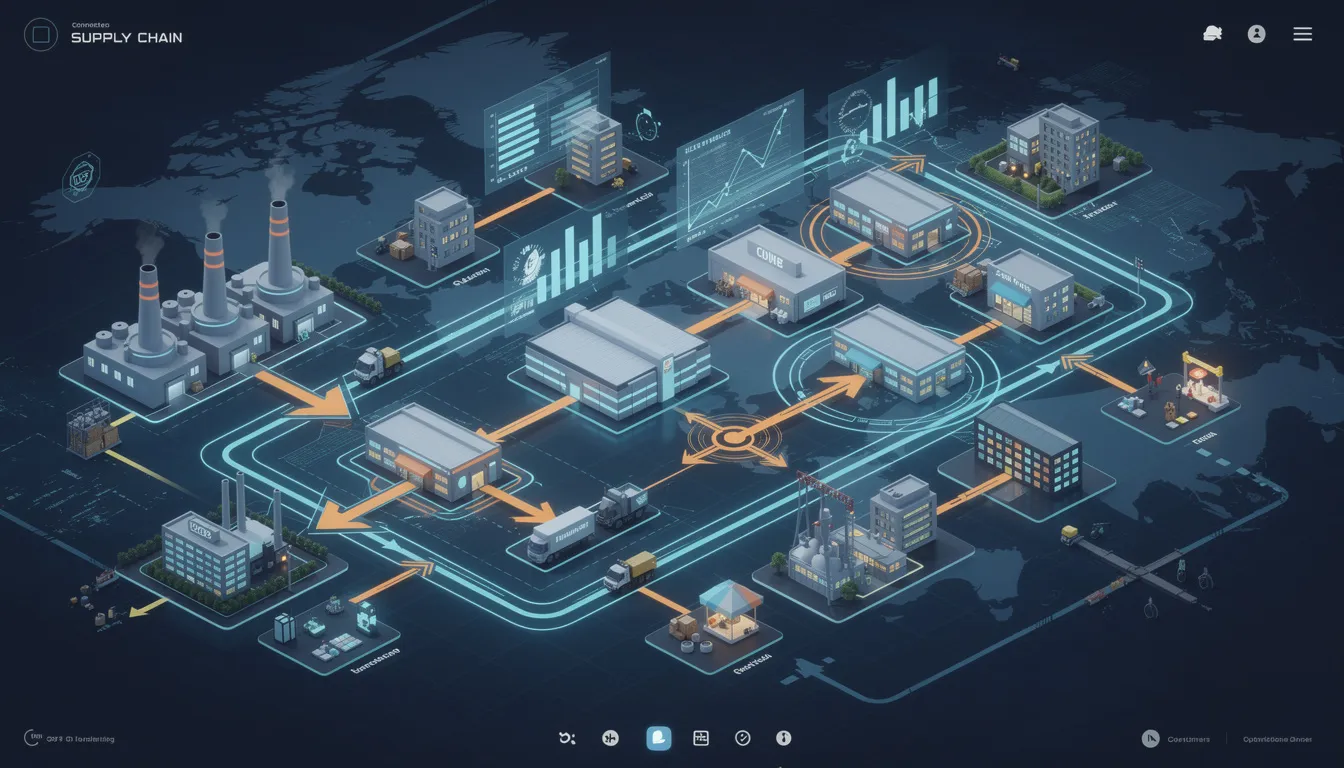
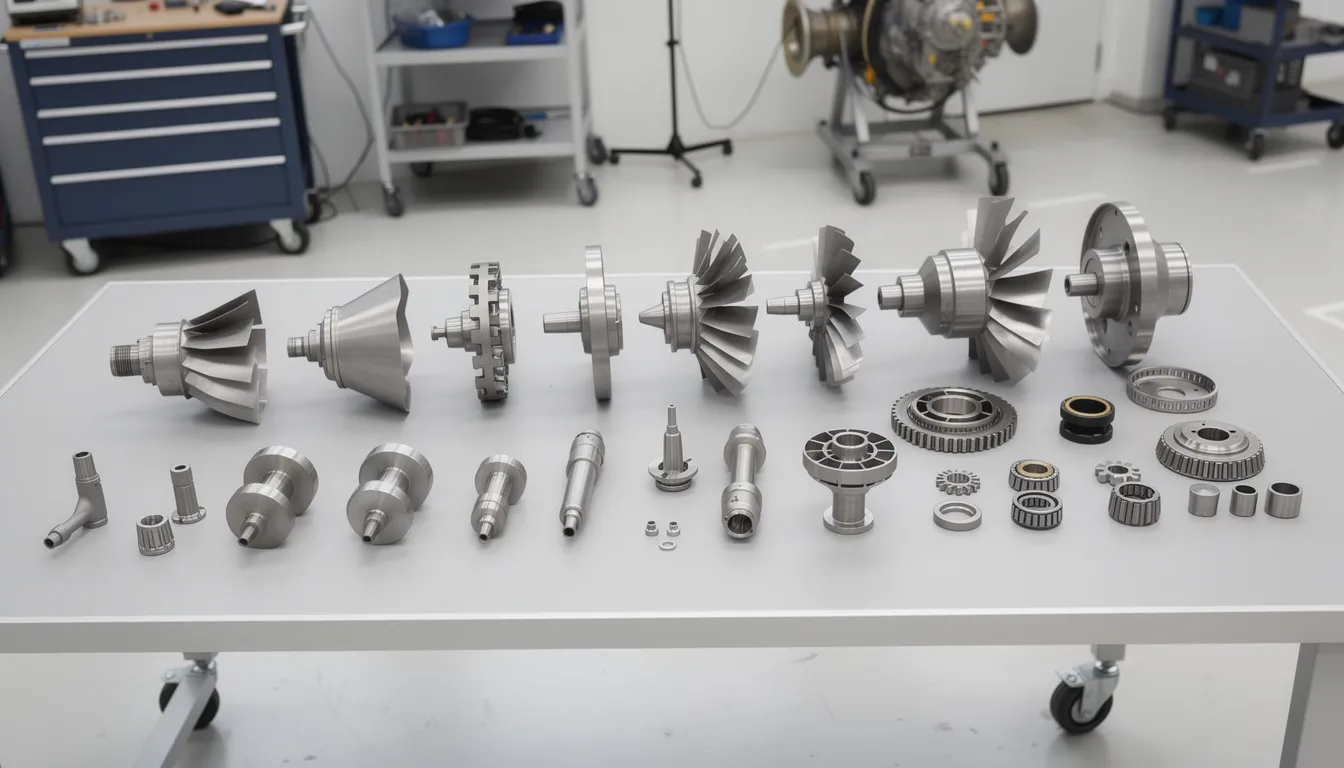
RSC Topic: Supplier Collaboration & Outside Processing

Work-order handoffs, supplier portals, and multi-tier visibility.

  • SRM

    Core meaning

    SRM (Supplier Relationship Management) commonly refers to the structured processes, data, and supporting systems an organization uses to manage its suppliers throughout the lifecycle of the relationship.

    In manufacturing and other industrial operations, SRM typically includes:

    – Central supplier master data (identities, contacts, contractual details)
    – Qualification and onboarding information
    – Performance and risk profiles for each supplier
    – Ongoing monitoring of quality, delivery, cost, compliance, and service
    – Collaboration records (communications, corrective actions, improvement initiatives)

    SRM may be implemented as a distinct software application, as a functional module within ERP, or as an integrated set of tools and workflows.

    How SRM is used in industrial and regulated environments

    In industrial operations, SRM commonly serves as a system of record for:

    – **Approved supplier lists (ASL):** Tracking which suppliers are qualified to provide specific materials, components, or services.
    – **Supplier performance data:** Storing and organizing metrics such as on-time delivery, defect rates, nonconformance counts, and response times.
    – **Compliance and documentation:** Managing supplier-related documentation such as certifications, declarations, and regulatory attestations, and tracking their status and expiry.
    – **Corrective actions and escalations:** Recording supplier-related issues, root cause analyses, and agreed corrective or preventive actions, often in coordination with quality systems.
    – **Contract and commercial terms (at a summary level):** Providing visibility of key contracted terms that affect operational decision-making (e.g., minimum order quantities, lead times, service levels).

    In many organizations, SRM works closely with ERP (for purchasing and inventory), QMS (for quality events and audits), and MES or LIMS (for plant-floor or lab data) but is focused on the supplier relationship rather than internal production activities.

    Boundaries and what SRM is not

    To avoid confusion, SRM is typically **not**:

    – A replacement for **ERP** purchasing and inventory management, which handles orders, receipts, invoices, and financial postings.
    – A full **Quality Management System (QMS)**, although SRM may reference or link to quality records (e.g., supplier nonconformances, audit findings).
    – A production system like **MES** or **LIMS**; SRM normally does not execute or track shop-floor operations, it consumes or aggregates their outputs as supplier-related evidence.
    – A generic CRM (Customer Relationship Management) tool; SRM focuses on upstream suppliers rather than downstream customers.

    Some vendors use SRM as a product label for broader procurement suites, but in industrial contexts it usually centers on the data, processes, and governance related to suppliers.

    Common confusion and alternate meanings

    The acronym SRM can also be used in other technology and engineering contexts, such as:

    – **Storage Resource Management** in IT infrastructure, referring to tools that monitor and manage storage systems.
    – **Switched Reluctance Motor** in electrical engineering.

    Within manufacturing operations and supply-chain management, however, **Supplier Relationship Management** is the primary meaning. When documenting systems or processes, it is good practice to spell out “Supplier Relationship Management” at first use to avoid mixing it with these other domains.

    Site context: SRM and manufacturing systems

    In regulated, brownfield manufacturing environments, SRM systems commonly:

    – Consume performance and quality metrics from MES, LIMS, ERP, and QMS (e.g., delivery performance, in-plant defect rates, rework or scrap attributed to a supplier).
    – Act as the organizing layer for **supplier scorecards** and periodic performance reviews, including weighting rules, thresholds, and approval workflows.
    – Provide a consolidated view of supplier risk and performance that can be referenced in sourcing decisions, change control, and regulatory inspections.

    In this context, MES and other plant systems provide the factual operational data, while SRM maintains the relationship, scoring logic, and governance history with each supplier.

  • What is the best way to collect KPI data from smaller suppliers?

    The best way is usually to use a tiered collection model: define a small, controlled KPI set centrally, allow simpler submission methods for smaller suppliers, and automate only where the supplier and data quality are mature enough.

    In practice, that means starting with a limited scorecard such as on-time delivery, quality escapes, response time, lead time adherence, and open corrective action aging, then documenting exactly how each KPI is calculated, what period it covers, what source data is expected, and who is accountable for submission and review.

    For smaller suppliers, a lightweight approach is often more reliable than forcing direct system integration too early. Many do not have modern MES, stable ERP master data, or staff available to maintain EDI, API, or portal workflows. If you push a high-friction model onto them, you often get late submissions, manual workarounds, inconsistent definitions, and numbers that cannot be traced back to source records.

    What usually works best

    • Use a standard template first. A controlled spreadsheet, secure web form, or supplier portal form is often the practical starting point.

    • Keep the KPI set narrow. Fewer metrics with consistent definitions are better than a large scorecard with weak comparability.

    • Require source references. Ask suppliers to provide shipment IDs, PO numbers, lot numbers, NCR references, or reporting period details so the KPI can be checked.

    • Separate reported KPIs from derived KPIs. If you can calculate a metric from your own receiving, quality, or scheduling data, do that rather than asking the supplier to report it independently.

    • Tier suppliers by capability. High-volume or strategic suppliers may justify API, EDI, or portal integration. Smaller suppliers may stay on governed manual submission for a long time.

    • Establish review and exception handling. A KPI process without data challenge, correction, and change control quickly loses credibility.

    Best collection methods by supplier maturity

    • Lowest maturity: controlled spreadsheet submission with locked fields, fixed definitions, due dates, and buyer review.

    • Medium maturity: supplier portal or web form with validation rules, required fields, and document attachment support.

    • Higher maturity: automated exchange from ERP, QMS, ASN, shipping, or quality systems through API, EDI, SFTP, or managed integration.

    There is no single best method across all suppliers. The right choice depends on supplier size, transaction volume, cybersecurity requirements, data quality, contract structure, and how much validation effort your team can sustain.

    What to avoid

    • Do not start with too many KPIs.

    • Do not assume the supplier calculates metrics the same way you do.

    • Do not treat portal entry as data integrity. A portal can still collect inconsistent or untraceable data.

    • Do not rely only on monthly summary numbers without supporting transaction references.

    • Do not launch full replacement expectations such as requiring small suppliers to adopt your preferred stack. In regulated, long-lifecycle environments, this often fails due to qualification burden, validation cost, integration complexity, and the downtime risk of changing established systems.

    Tradeoffs to expect

    Manual collection is faster to launch and easier for smaller suppliers, but it creates review overhead and weaker timeliness. Automated integration improves scale and consistency, but only if master data, event definitions, system mapping, and support ownership are already stable. A supplier portal can help with governance, but it does not remove the need for master data alignment, calculation rules, and exception handling.

    You also need to decide whether the goal is supplier reporting or supplier performance management. Those are not the same. Reporting collects numbers. Performance management requires common definitions, traceability to transactions, periodic reviews, and a way to challenge, correct, and version the data when disputes arise.

    Practical recommendation

    For most organizations, the best path is:

    1. Define 5 to 8 KPIs with strict calculation rules and reporting cadence.

    2. Map which KPIs can be calculated internally from ERP, receiving, quality, or scheduling data.

    3. Use a controlled manual template or portal form for the remaining supplier-provided metrics.

    4. Require traceable references for every reported value.

    5. Tier suppliers and automate only where volume, stability, and business risk justify it.

    6. Put the KPI definitions and submission process under change control.

    If the question is whether you should force all smaller suppliers into direct integration, the answer is usually no. A governed hybrid model is usually more durable in brownfield supply chains.

  • source inspection

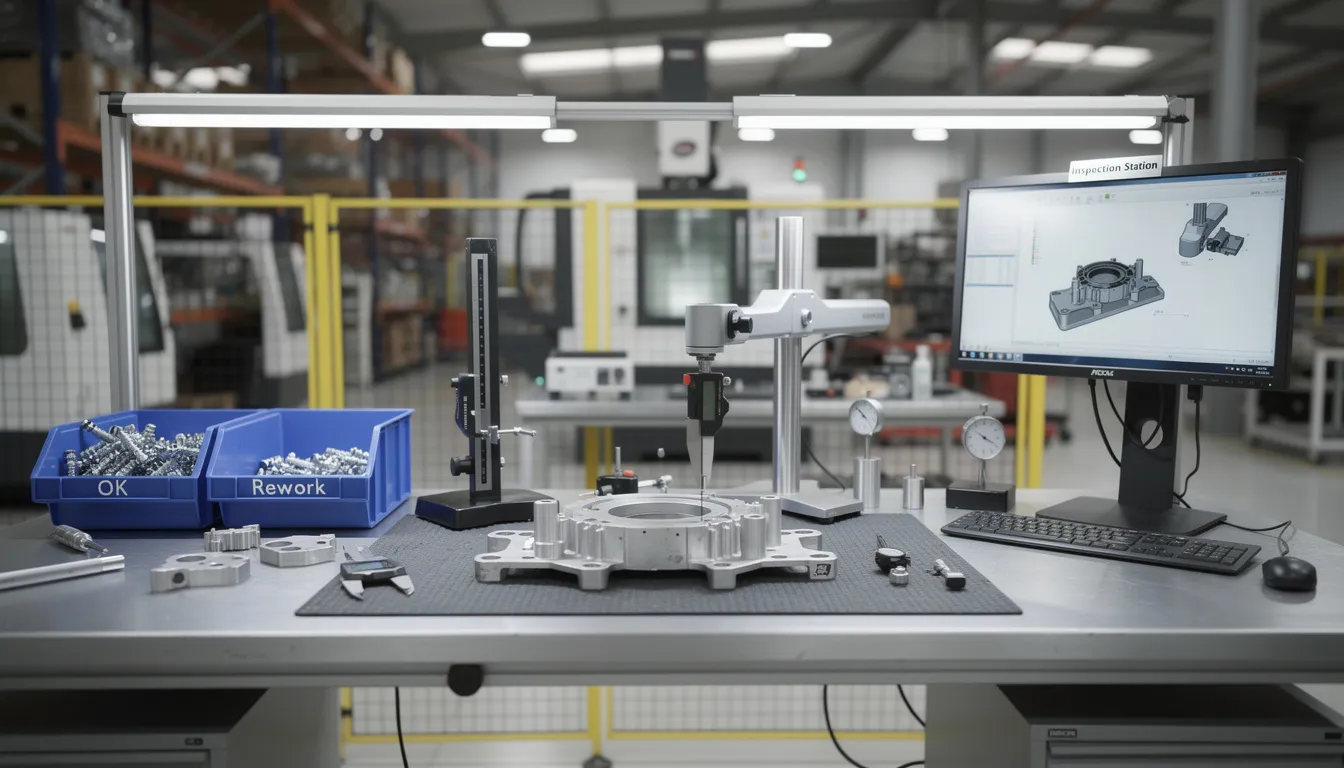
    Source inspection commonly refers to an inspection performed at the place where a product is made, processed, or prepared for delivery, rather than only at the receiving site or final point of use. In manufacturing and regulated supply chains, it is typically used to verify that materials, parts, assemblies, processes, records, or test results meet specified requirements before shipment, release, or the next operation.

    The term includes inspections conducted at a supplier facility, subcontractor location, outside processor, or another point of origin. It may be performed by the supplier’s personnel, the customer, a designated representative, or an independent inspection party, depending on the contract, quality plan, or applicable workflow. It does not by itself mean that a product is accepted for all purposes, and it is not the same as a regulatory audit or a full quality system assessment.

    How it is used in operations

    In operational workflows, source inspection is often tied to purchase orders, work orders, traveler steps, hold points, or release gates. It can involve review of physical characteristics, documentation, certifications, test data, traceability records, special process evidence, packaging readiness, or labeling before material moves downstream.

    • For incoming supply, it may occur at a supplier site before shipment.

    • For in-process manufacturing, it may occur at a defined operation before the next routing step.

    • For outsourced processing, it may confirm completion and conformity before parts return to the main facility.

    The exact scope depends on the specification and inspection plan. Some source inspections are limited to selected characteristics or records, while others cover a broader release package.

    What it is not

    Source inspection is not the same as receiving inspection, which occurs after material arrives at the receiving organization. It is also different from first article inspection, which focuses on verifying that a production process can produce a part or assembly that meets defined design requirements, often for an initial run or change event. A source inspection may support those activities, but it does not automatically replace them.

    Common confusion

    Source inspection vs. receiving inspection: source inspection happens at the point of origin before shipment or release; receiving inspection happens after receipt.

    Source inspection vs. in-process inspection: in-process inspection is a broader term for checks during production. Source inspection may be in-process if the source is an internal operation, but it more often refers to inspection at a supplier or external source.

    Source inspection vs. audit: an audit evaluates a system, process, or compliance framework. Source inspection evaluates specific product, process output, or release evidence.

    Manufacturing example

    A customer may require source inspection of a machined aerospace component at the supplier’s facility before shipment, including dimensional results, material traceability, and completion of required process documentation.

  • Service provider

    A service provider is an external organization or internal unit that delivers defined services to a manufacturer or industrial operation under agreed terms, usually documented in contracts, purchase orders, or service level agreements.

    Typical roles in industrial and regulated manufacturing

    In manufacturing and regulated environments, service providers commonly include:

    • Technical and engineering services, such as calibration labs, test houses, nondestructive testing (NDT), or special process shops (heat treat, plating, coating) that work on parts and assemblies.
    • IT and OT service providers, such as managed service providers (MSPs), cloud hosting providers, MES/ERP vendors providing software as a service, and cybersecurity monitoring services.
    • Maintenance and MRO services, including equipment maintenance contractors, field service technicians, and overhaul shops that repair or refurbish tools, machines, or aircraft components.
    • Quality and compliance services, such as external inspection services, certification bodies, and labs performing material analysis or environmental monitoring.
    • Training and workforce services, such as external trainers, e-learning platforms, or consulting firms that deliver operator and supervisor training.

    Operationally, service providers are often managed through supplier management processes, including qualification, audits, contracts, and ongoing performance monitoring. In many quality and ERP/MES systems, they are set up as supplier records with additional attributes indicating that they provide services rather than physical materials.

    Service provider vs. supplier

    A service provider is usually treated as a type of supplier, but with important distinctions:

    • Service provider: Delivers intangible work or outcomes (for example, calibration certificates, inspection results, repaired components, hosted systems). The result is often evidence, reports, or updated status rather than a new manufactured part.
    • Material supplier: Delivers physical goods (raw material, components, consumables) that enter the product or are used in production.

    Many organizations use the term “supplier” as the umbrella term and classify service providers as service-type suppliers in purchasing, quality, and risk management systems.

    Service providers in quality and compliance workflows

    In regulated industries, service providers are frequently subject to:

    • Qualification and approval, including capability reviews and, where applicable, special process approvals or technical data controls.
    • Service-level definitions, such as turnaround time, availability of systems, response times for support, and reporting requirements.
    • Traceability requirements, for example linking calibration certificates, inspection reports, or repair records to specific equipment, lots, or serial numbers.
    • Performance and risk monitoring, often via scorecards, nonconformance tracking, and periodic audits.

    Common confusion

    • Service provider vs. contractor: “Contractor” often refers to individuals or firms providing labor on site. “Service provider” is broader and can include managed IT services, external labs, or off-site processing facilities.
    • Service provider vs. software vendor: A software company that only sells licenses may be considered a vendor. When it operates or hosts the system (for example, SaaS MES or ERP) or provides managed support, it is acting as a service provider.

    Relation to manufacturing systems and data

    In MES, ERP, and quality systems, service providers may appear as:

    • Approved suppliers for outside processing steps in routings or work orders.
    • Calibrators or maintenance providers linked to equipment and gage records.
    • External users or organizations with controlled access to shared quality data, such as nonconformance reports or inspection results.

    Managing service providers effectively supports traceability, data integrity, and continuity of operations, especially when critical processes or systems are performed or hosted outside the manufacturer.

  • Can suppliers be given direct access to our NCR system securely?

    Yes, suppliers can be given direct access to your NCR system, but it must be designed as a narrowly scoped, auditable integration rather than a blanket login. The security and compliance posture depends heavily on your specific NCR platform, network design, supplier maturity, and how you handle export-controlled or proprietary data.

    What “direct access” should usually mean

    In regulated, multi-vendor environments, “direct access” is safer when it means one or more of the following, not full internal user access:

    • Supplier-specific portal or external-facing module that exposes only the NCRs relevant to that supplier.
    • API-based integration where the supplier’s system syncs limited NCR data (e.g., defect description, disposition, required actions) under strict scopes.
    • Managed collaboration workspace linked to the NCR system (e.g., a controlled vendor portal) with read/submit/update rights only on assigned records.

    Giving suppliers the same access profile as internal quality engineers is usually inappropriate and difficult to justify to security and compliance stakeholders.

    Key security controls to have in place

    To make supplier access defensible, you typically need all of the following:

    • Network isolation and zero trust principles: Place supplier access behind a demilitarized zone or external portal, not on the core internal network. Assume any external session might be hostile and validate every request.
    • Strong identity and access management: Use unique accounts per person (not shared vendor logins), enforce MFA, and tie identities to a formal supplier contact list under change control.
    • Fine-grained authorization: Limit suppliers to NCRs where they are the designated supplier of record, or where they are explicitly invited. Enforce role-based access controls so they cannot see unrelated customers, programs, or internal notes.
    • Data minimization: Expose only the fields suppliers need to act (e.g., defect details, required containment, due dates, attachments appropriate for them). Keep internal investigation notes, personnel names, cost of poor quality, and other sensitive data on internal-only views.
    • Full audit logging: Log logins, views, downloads, comments, attachments, and status changes by supplier accounts. Ensure logs are retained per your record retention and validation policies and are queryable for investigations and audits.
    • Session and device controls: Configure session timeouts, geofencing or IP controls where appropriate, attachment type restrictions, and malware scanning for any files uploaded by suppliers.
    • Vendor risk management: Treat each supplier as a third-party security risk. Confirm their own security practices if they receive NCR data through API or file exchange.

    Export control, confidentiality, and IP considerations

    For aerospace and defense or export-controlled programs, you cannot assume that exposing NCR data to a supplier is always permissible:

    • Check whether the supplier is authorized to receive the specific technical data in an NCR (e.g., drawings, photos, test results) under your export control program.
    • Segment export-controlled programs into separate projects, tenants, or data domains. Supplier access may need to be limited to specific programs or contracts.
    • Ensure non-disclosure agreements and data handling clauses explicitly cover defect and quality records, including attached images, logs, and test reports.

    Where export or ITAR/EAR constraints are present, some NCR content may need to be split, with a supplier-visible record that omits restricted details.

    Process and governance requirements

    Even if your tooling supports secure supplier access, you need process discipline to keep it reliable:

    • Role and responsibility definition: Clearly define what suppliers must do in the system (e.g., acknowledge NCRs, propose containment, provide 8D reports) and what remains strictly internal (e.g., risk ranking, regulatory reporting decisions).
    • Onboarding and offboarding: Establish a controlled process to create, modify, and deactivate supplier user accounts tied to supplier qualification and contract status.
    • Change control: Treat changes to supplier-facing NCR workflows, fields, and permissions as formal changes, with impact assessment and re-validation where needed.
    • Training and guidance: Provide concise instructions to suppliers on how to use the portal and what not to do (e.g., no sensitive personal data in comments, no uncontrolled design changes in attachments).
    • Periodic access review: Regularly review which supplier users exist, what they can see, and whether that still matches current business and contract boundaries.

    Brownfield system realities

    Most plants have a mix of legacy NCR modules in QMS, MES, or ERP systems that were not designed as secure external collaboration tools. In that case:

    • Direct VPN access into a legacy NCR module for suppliers is usually high risk and difficult to justify.
    • You may need a separate, modern external portal that synchronizes subset NCR data from the legacy system via integration or periodic export/import.
    • Full replacement of your NCR/QMS purely to enable supplier access can be hard to justify given validation cost, downtime, retraining, and qualification burden. A staged, portal-based approach is often more realistic.
    • Integration quality is a major constraint: if references (part numbers, supplier codes, program identifiers) are inconsistent across systems, it becomes difficult to reliably expose “only that supplier’s NCRs.” Data cleanup and master data governance are often prerequisites.

    Validation and regulated environment considerations

    If your NCR system is validated, extending it to external users is typically a change that requires:

    • Formal impact assessment on the validated state and risk to data integrity.
    • Documented requirements and design for supplier access features.
    • Updated test cases and regression testing to demonstrate that internal workflows, calculations, and records remain correct.
    • Updated procedures and training materials reflecting supplier collaboration steps.

    Regulators and customers generally expect you to demonstrate how data integrity, traceability, and access controls are maintained when third parties touch any part of the quality system.

    When you should not give direct system access

    There are scenarios where the answer should be no, at least for now:

    • Your NCR/QMS tool cannot support role-based partitioning by supplier or project without major customization, making inadvertent data exposure likely.
    • Your network and identity stack cannot reliably isolate and manage external users (e.g., no MFA, no practical way to segregate supplier traffic).
    • You cannot meet export control and IP protection obligations if suppliers see the NCR data in its current form.
    • The effort to secure and validate direct access is higher than using controlled report sharing, structured email templates, or a separate collaboration system in the short term.

    In these cases, a more manual but controlled process (e.g., generating redacted NCR summaries for suppliers) may be safer until your infrastructure and governance mature.

    Practical starting pattern

    A pragmatic, low-regret pattern many organizations adopt is:

    1. Define a minimal supplier interaction model (what they must see and do in NCRs).
    2. Segment NCR data logically by supplier and program, cleaning up master data where needed.
    3. Introduce an external-facing portal or limited API that exposes only supplier-relevant NCRs and selected fields.
    4. Enforce MFA, role-based access control, and logging from day one.
    5. Validate the new capabilities, update procedures, and expand usage gradually to more suppliers.

    This approach supports collaboration benefits without assuming you can safely give suppliers full internal access to a historically internal-only NCR environment.

  • Supplier Relationship Management

    Supplier Relationship Management (SRM) is the structured approach an organization uses to plan, manage, and continuously review its interactions with suppliers. It focuses on how suppliers are selected, contracted, monitored, developed, and, when needed, replaced, with attention to quality, delivery, cost, compliance, and risk.

    In industrial and regulated manufacturing environments, SRM typically spans both strategic activities (such as supplier segmentation and long-term agreements) and operational activities (such as performance reviews, nonconformance handling, and change notification). It often involves coordination across procurement, quality, engineering, and operations teams.

    Key elements of Supplier Relationship Management

    • Supplier segmentation: Classifying suppliers (for example, strategic, critical, approved, or tactical) based on impact on production, uniqueness of materials, regulatory exposure, and supply risk.
    • Onboarding and qualification: Evaluating new suppliers for technical capability, quality systems, capacity, regulatory history, and data integration readiness before adding them to the approved supplier list.
    • Performance monitoring: Tracking metrics such as on-time delivery, defect rates, nonconformances, responsiveness to corrective actions, and documentation completeness.
    • Quality and compliance management: Managing quality agreements, audits, corrective and preventive actions (CAPA), and documentation requirements like certificates of analysis, material certifications, and change notifications.
    • Risk and continuity planning: Identifying single-source dependencies, long-lead or highly regulated items, and suppliers in vulnerable regions, and planning alternatives or dual sourcing.
    • Collaboration and communication: Defining communication channels, escalation paths, and expectations for technical data exchange, engineering change management, and issue resolution.
    • Continuous improvement: Joint projects with key suppliers to stabilize processes, reduce variation, improve documentation quality, and support digital integration with ERP, MES, or quality systems.

    How SRM appears in manufacturing workflows and systems

    Operationally, Supplier Relationship Management often shows up as a combination of processes, data, and system integrations, for example:

    • ERP and procurement systems: Maintain supplier master data, contracts, pricing, lead times, and approved supplier lists linked to materials or components.
    • Quality management systems: Record supplier-related nonconformances, incoming inspections, supplier audits, and supplier CAPA, and link them to specific lots or purchase orders.
    • MES and shop-floor systems: Capture supplier lot, batch, or serial information for traceability, and associate supplier data with work orders or production records.
    • Supplier portals or collaboration tools: Provide controlled access for suppliers to view forecasts, submit documentation, respond to corrective actions, or acknowledge engineering and specification changes.

    In regulated industries, SRM is frequently aligned with documented procedures for supplier qualification, periodic evaluation, and evidence handling to support internal reviews and external audits.

    Common confusion

    • SRM vs. procurement: Procurement focuses on sourcing and buying (quotations, purchase orders, and contracts). SRM is broader, covering ongoing performance management, risk, quality, and collaboration with suppliers.
    • SRM vs. supply chain management: Supply chain management addresses the full flow of materials, information, and logistics. SRM focuses specifically on the relationships and agreements with external suppliers within that broader supply chain.
    • SRM vs. vendor management: The terms are sometimes used interchangeably. In industrial contexts, “supplier” is usually preferred for organizations that provide materials, components, or manufacturing services, while “vendor” may be used more generally for any external service provider.

    Relation to shop floor and compliance

    Effective Supplier Relationship Management supports consistent material quality, reliable delivery, and clear documentation, which are important for traceability, nonconformance handling, and demonstrating control of external providers in audits. It also supports collaboration with outside processors and contract manufacturers whose operations directly affect product quality and regulatory records.

  • OEM–supplier boundary

    The OEM–supplier boundary commonly refers to the defined interface between an original equipment manufacturer (OEM) and an external supplier. It marks where responsibility, authority, deliverables, data exchange, and process control pass from one organization to the other.

    In manufacturing and regulated operations, this boundary is not just a contractual idea. It also appears in operational workflows such as purchase orders, work orders, specifications, approved drawings, quality requirements, traceability records, inspection results, nonconformance handling, shipping notifications, and receipt or acceptance activities.

    The term includes questions such as who owns the product definition, who performs which manufacturing steps, who approves changes, who maintains records, and where evidence must be handed off. It does not mean the organizations operate as one system, even when they share portals, EDI messages, supplier collaboration tools, or integrated ERP, MES, PLM, or QMS processes.

    What it typically covers

    • Scope of work and deliverables between OEM and supplier

    • Responsibility for quality activities such as inspection, testing, and nonconformance reporting

    • Ownership and transfer of technical data, revisions, and specifications

    • Traceability expectations for materials, serial numbers, lots, or process history

    • Transaction points such as order release, ASN submission, shipment, receipt, and acceptance

    • Escalation paths for shortages, defects, deviations, or late changes

    Operational meaning

    Operationally, the OEM–supplier boundary is the point where information and accountability must be clear enough for execution. For example, an OEM may issue the design definition and quality clauses, while the supplier performs fabrication and submits inspection evidence and shipment data. Systems often represent this boundary through document controls, workflow approvals, supplier portals, status updates, and required record handoffs.

    In outsourced processing or multi-tier supply chains, the boundary may exist at several handoff points rather than as a single event. Each boundary can have its own required records, approvals, and acceptance criteria.

    Common confusion

    The OEM–supplier boundary is often confused with a legal contract boundary, but the two are not identical. The contract helps define commercial terms, while the operational boundary concerns how work, data, and evidence move between organizations.

    It is also different from a system boundary. A system boundary describes what one software platform or process includes or excludes. The OEM–supplier boundary focuses on the organizational handoff, even if both parties use connected systems.

  • How can digital workflows shorten supplier onboarding cycle time?

    Digital workflows can shorten supplier onboarding cycle time, but they do not eliminate the underlying qualification work. In regulated manufacturing, the practical benefit comes from reducing waiting, rekeying, missing information, and unclear ownership across procurement, quality, engineering, compliance, and IT.

    The biggest time savings usually come from four areas:

    • Structured intake: suppliers submit required company, capability, quality, and security information through controlled forms instead of email chains and spreadsheet attachments.

    • Rule-based routing: the workflow sends tasks to the right reviewers based on supplier type, commodity, process criticality, geography, technical data exposure, or customer-specific requirements.

    • Document and evidence control: required records, acknowledgments, approvals, and revision-controlled documents are collected in one traceable flow instead of scattered across inboxes and shared drives.

    • Status transparency: buyers, supplier quality, engineering, and the supplier can see what is complete, what is blocked, and who owns the next step.

    When implemented well, this typically reduces cycle time by preventing avoidable delays such as incomplete packets, duplicate requests, approval bottlenecks, and manual data entry into multiple systems.

    What digital workflows can realistically improve

    • Pre-qualification questionnaires with mandatory fields and conditional logic

    • Collection of certifications, process approvals, insurance, banking, and cybersecurity attestations where applicable

    • Automated review queues for supplier quality, sourcing, engineering, trade compliance, and IT/security

    • Escalations for overdue approvals and missing evidence

    • Controlled supplier master creation requests into ERP or supplier management systems

    • Audit trails for who reviewed, approved, rejected, or requested changes

    • Reusable templates by supplier class, region, or part/process category

    That said, digital workflows do not compress every step equally. If onboarding requires site audits, special process approval, sample part review, first article evidence, cybersecurity assessment, or customer source approval, those steps remain gating items. The workflow can coordinate them better, but it cannot make them disappear.

    Where projects fail or underperform

    Most delays are not caused by the lack of a form. They come from inconsistent onboarding criteria, weak master data, unclear approval authority, duplicate systems, and poor integration. If those issues are not addressed, digitizing the process can simply make confusion move faster.

    Common failure modes include:

    • Too many exceptions handled outside the workflow

    • No agreed supplier data model across procurement, ERP, QMS, and PLM

    • Conflicting approval rules by site or business unit

    • Suppliers forced to enter the same data in multiple portals

    • Workflow states that do not match the real qualification process

    • Insufficient change control for forms, checklists, and approval logic

    • Manual re-entry into legacy ERP or QMS because integration was deferred

    In brownfield environments, these issues are common. Most plants already have some mix of ERP vendor records, QMS qualification records, PLM approved manufacturer lists, document repositories, email approvals, and shared spreadsheets. Full replacement is usually not the right first move. In long lifecycle, regulated operations, replacement strategies often fail because of qualification burden, validation cost, downtime risk, integration complexity, and the need to preserve traceability and change history.

    A more reliable approach is to add a workflow layer that coexists with current systems, then integrate the highest-friction steps first. For example, the workflow may collect and validate supplier inputs, route reviews, and then create or update supplier records in ERP and attach controlled evidence in QMS. That is less disruptive than trying to replace procurement, quality, and document systems at once.

    What determines the actual cycle-time reduction

    The answer depends on process maturity and system readiness more than software alone. Cycle-time reduction is most likely when:

    • required fields, approval rules, and decision criteria are standardized

    • supplier master data definitions are clear

    • ERP, QMS, identity management, and document control systems are integrated adequately

    • owners for each approval step are defined

    • exceptions are limited and governed

    • the workflow is validated to the level your environment requires

    If those conditions are weak, digital workflows may still improve visibility, but the cycle-time impact will be modest.

    Practical tradeoffs

    • More control versus faster intake: tighter required evidence improves consistency but can increase front-end effort for suppliers.

    • Standardization versus local flexibility: shared workflows reduce variation, but some sites or commodities may still need controlled exceptions.

    • Integration depth versus deployment speed: light integration is faster to launch, but manual re-entry often leaves cycle time on the table.

    • Automation versus reviewer judgment: rules can route and check completeness, but qualification decisions for critical suppliers usually still require human review.

    So yes, digital workflows can shorten supplier onboarding cycle time, sometimes materially. But the result depends on disciplined process design, governed data, system interoperability, and realistic coexistence with legacy platforms. The workflow is most effective when it removes administrative delay while preserving traceability, approvals, and evidence needed for regulated operations.

  • How can digital RFQ workflows reduce sourcing cycle time for flight hardware?

    They can reduce cycle time, but mostly by removing avoidable administrative delay rather than compressing the technical and quality work that flight hardware sourcing still requires.

    In practice, digital RFQ workflows help when they standardize the request package, route it automatically to the right suppliers and internal reviewers, track open actions, and keep revisions visible. That cuts time lost to email chains, missing attachments, version confusion, duplicate data entry, and manual follow-up.

    Where the time savings usually come from

    • Faster RFQ package creation: pulling approved part, drawing, specification, routing, and supplier data from existing ERP, PLM, or document systems instead of rebuilding packages manually.

    • Required-field enforcement: preventing incomplete RFQs from going out without needed commercial, technical, quality, or export-control information.

    • Controlled document distribution: issuing the current revision to suppliers with an auditable record of what was sent, when, and to whom.

    • Parallel review and approvals: allowing sourcing, engineering, quality, and program stakeholders to review in workflow rather than sequential email loops.

    • Supplier response management: giving suppliers a structured way to acknowledge, ask questions, submit quotes, identify exceptions, and upload supporting documents.

    • Exception visibility: surfacing missing certs, capacity constraints, lead-time risks, tooling assumptions, or spec exceptions earlier so they do not appear after award.

    • Quote comparison: normalizing responses enough to compare lead time, price, minimums, outside processing needs, and compliance-related requirements without extensive manual cleanup.

    • PO handoff: carrying approved RFQ data into purchasing and supplier execution systems so buyers do not retype awarded information.

    What digital RFQ workflows do not fix

    They do not make an unqualified supplier qualified. They do not remove source inspection requirements, first article obligations, frozen process constraints, export-control handling needs, or customer flowdown review. For flight hardware, those steps often dominate the critical path.

    If the part definition is unstable, approved supplier lists are inconsistent, drawings are unclear, or internal approvals are slow because roles are unclear, digitizing the RFQ alone will not solve the problem. It may simply expose those weaknesses faster.

    Brownfield reality

    Most aerospace manufacturers do not start with a clean slate. RFQ digitization usually has to coexist with legacy ERP, PLM, QMS, document control, email, shared drives, and supplier-specific communication practices. That matters because cycle-time gains depend heavily on integration quality.

    The strongest results usually come from adding workflow and evidence capture around existing systems, not from trying to replace them all at once. Full replacement strategies often fail in regulated, long-lifecycle environments because qualification burden, validation cost, downtime risk, and integration complexity are high, and the existing systems still hold traceability-critical records.

    A practical approach is often to digitize the RFQ orchestration layer first, then connect incrementally to ERP, PLM, approved supplier data, and quality records under change control.

    Main dependencies and tradeoffs

    • Master data quality: if part numbers, revisions, supplier records, and process codes are inconsistent, workflow speed can stall or route work incorrectly.

    • Document control discipline: sending the wrong revision faster is worse than sending the right one slowly.

    • Supplier adoption: cycle time will not improve much if key suppliers still respond by email, phone, or uncontrolled spreadsheets.

    • Export-control and security handling: technical data sharing must be configured carefully. Access control, distribution rules, and retention behavior matter.

    • Validation and change control: if the workflow feeds purchasing, quality evidence, or traceability records, implementation changes may require formal testing and controlled rollout.

    • Standardization versus flexibility: more structure improves speed and comparability, but too much rigidity can slow unusual parts, development buys, or complex outside processing chains.

    What good looks like

    A useful digital RFQ workflow for flight hardware usually does four things well:

    1. Creates a complete and revision-controlled RFQ package from authoritative sources.

    2. Routes review and approval to sourcing, engineering, quality, and program owners with clear accountability.

    3. Lets suppliers respond in a structured, traceable way, including exceptions and clarifications.

    4. Transfers the awarded data into downstream purchasing and supplier-management processes without re-entry.

    If those four conditions are met, sourcing cycle time can improve materially. If they are not, the workflow may become another layer on top of existing delay.

  • How do MRO shops collaborate with OEMs and suppliers on complex repairs?

    MRO shops typically collaborate with OEMs and suppliers through a controlled mix of technical disposition, document exchange, parts and process coordination, and traceable execution records. On complex repairs, the MRO rarely works in isolation. The OEM may provide approved repair schemes, engineering support, or disposition authority, while suppliers may handle outside processing, special processes, replacement parts, inspections, or subcomponent repairs.

    In practice, collaboration usually centers on a few core workflows:

    • Repair assessment and disposition: The MRO identifies damage, captures inspection findings, and requests repair guidance or disposition when needed.
    • Technical data exchange: OEM manuals, service bulletins, repair drawings, limits, and revision-controlled instructions must be available to the right parties with clear version control.
    • Parts and outside processing coordination: Suppliers may provide serialized parts, coatings, machining, NDT, heat treat, or other specialized services tied to the repair.
    • Approval and exception handling: Deviations, concessions, or engineering approvals may be required depending on authority and contract structure.
    • Traceable record completion: The MRO must preserve who did what, to which part or assembly, against which approved instruction set, and with what results.

    The collaboration model depends on who holds engineering authority, airworthiness responsibility, technical data rights, and release responsibility. Some OEMs are deeply involved in repair disposition and configuration decisions. In other cases, the MRO operates under approved manuals and only escalates exceptions. Suppliers may be tightly connected or may still operate through slower document and purchase order workflows.

    What effective collaboration usually looks like

    Effective collaboration is less about a single portal and more about disciplined control across multiple systems and organizations. Most MRO shops need the following to work reliably:

    • Clear handoffs: Defined triggers for when damage findings go to OEM engineering, when suppliers are engaged, and when internal quality or MRB review is required.
    • Revision control: Everyone must be working from the correct maintenance, repair, inspection, and process instructions. Uncontrolled copies are a common failure mode.
    • Part and serial traceability: Especially for life-limited, serialized, or critical components, the MRO has to maintain lineage across teardown, inspection, repair, replacement, and reassembly.
    • Evidence capture: Photos, measurements, inspection results, approvals, certifications, and process records need to be linked to the repair event.
    • Status visibility: The MRO needs to know whether it is waiting on engineering disposition, material, supplier turnaround, inspection, or customer decision.
    • Change control: Repair methods, work instructions, supplier routing, and data mappings should not change informally in a regulated environment.

    Common system patterns in brownfield environments

    Most MRO collaboration happens across existing ERP, MRO, QMS, PLM, and supplier systems, not in a clean end-to-end platform. A typical shop may use one system for work orders, another for technical publications, another for nonconformance or disposition, and email or supplier portals for external coordination. That can work, but only if integration, document control, and role responsibilities are well defined.

    Common patterns include:

    • MRO or ERP system as the system of record for work scope, materials, routing, and release status.
    • QMS or NCR workflow for discrepancy management, approvals, and corrective actions.
    • PLM or controlled document repository for repair instructions, drawings, and revision governance.
    • Supplier portals or EDI/API links for outside processing status, certs, and shipment updates.
    • Digital travelers or electronic work packages for execution evidence, signoffs, and inspection capture on the shop floor.

    Full replacement of all these systems is often unrealistic in regulated, long-lifecycle environments. It commonly fails because of validation cost, qualification burden, downtime risk, entrenched integrations, and the need to preserve traceability across legacy records. In many aerospace-grade settings, phased interoperability is more practical than rip-and-replace.

    Where collaboration breaks down

    Complex repairs often stall for operational reasons rather than lack of intent. Typical failure modes include:

    • OEM technical data is available, but not in a form the MRO can execute without manual re-entry.
    • Supplier status is visible only through email, so turnaround risk appears late.
    • Disposition authority is unclear, causing unauthorized decisions or excessive escalation.
    • Part numbers, serial numbers, or effectivity do not match across systems.
    • Inspection evidence is captured locally but not linked to the formal repair record.
    • Repair instructions change mid-job without synchronized revision control.
    • Cybersecurity or export control restrictions limit direct data sharing.

    These are not minor issues. They affect turnaround time, rework risk, record completeness, and the ability to reconstruct what happened later.

    Tradeoffs to expect

    There is no single best collaboration model for every MRO network. The tradeoffs are real:

    • Tighter OEM involvement can improve technical confidence, but may slow turnaround if every exception requires external review.
    • More supplier integration can improve visibility, but increases onboarding effort, security review, and master data discipline.
    • More digital workflow control can improve traceability, but requires training, validation, and process maturity to avoid creating bypass behavior.
    • Local autonomy at the repair station can speed work, but increases variation if instructions, approvals, and records are not tightly governed.

    So the answer is yes, MRO shops do collaborate closely with OEMs and suppliers on complex repairs, but usually through a structured, traceable operating model rather than a seamless single system. The quality of that collaboration depends heavily on data readiness, authority boundaries, integration quality, and discipline around controlled records.