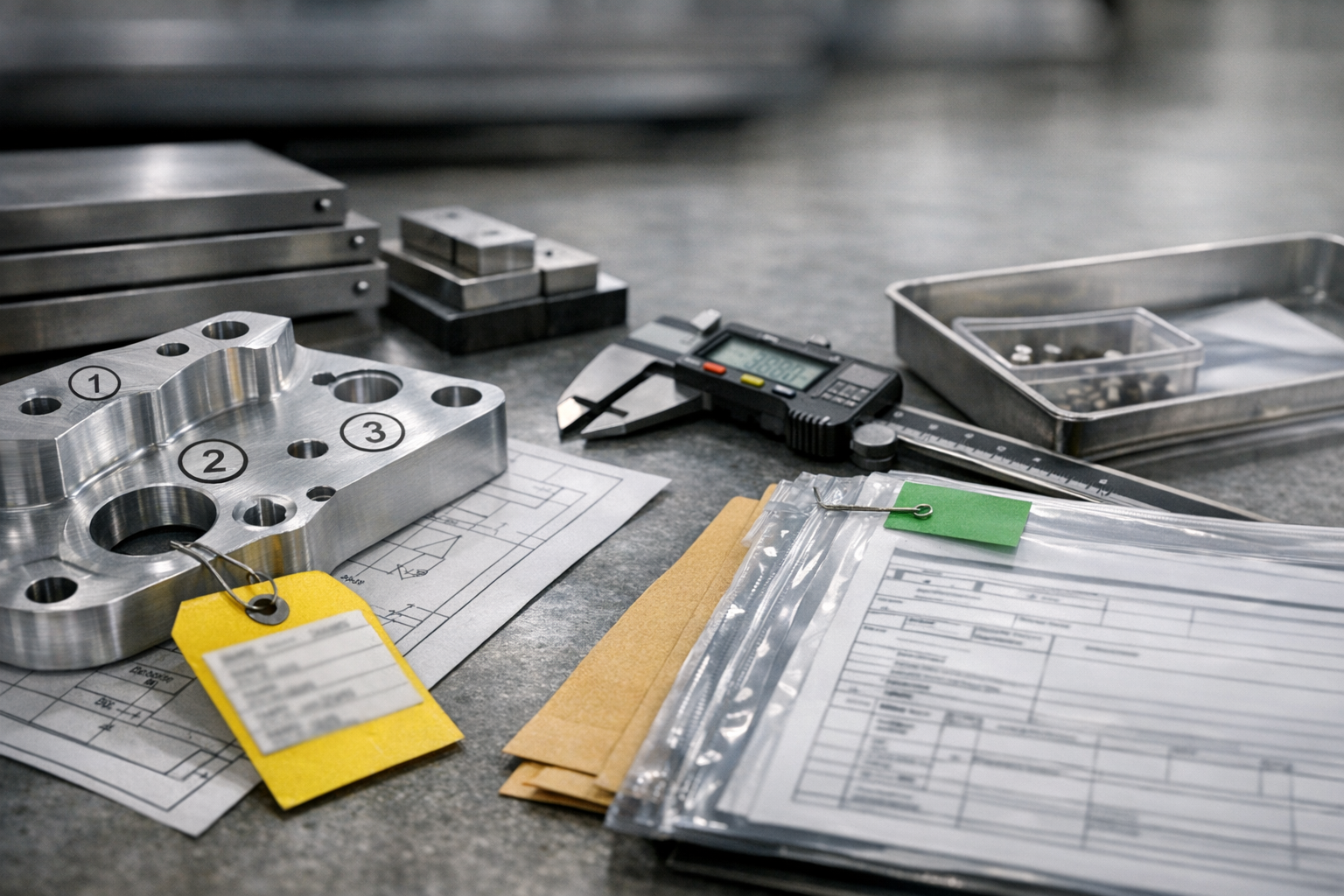
RSC Cluster: Nonconformance, MRB and CAPA (NCR)

The Nonconformance, MRB and CAPA Cluster explains how quality issues should flow through execution instead of living in parallel systems. It covers how nonconformances are detected, contained, dispositioned, corrected, and prevented, with clear ownership and timing expectations. The content makes pause, quarantine, rework, and resume mechanics explicit so quality actions are operationally enforceable. This cluster connects quality events directly back to work instructions, traceability, and prevention rather than treating them as paperwork exercises.

  • Can CAPA workflows be integrated with our existing NCR system in aerospace manufacturing?

    Yes, CAPA workflows can usually be integrated with an existing NCR system in aerospace manufacturing, but it is not automatic and it is not risk free. The details depend heavily on your current QMS/NCR platform, MES/ERP landscape, and how tightly your quality processes are already coupled.

    What “integration” typically means

    In most aerospace plants, integrating CAPA with an existing NCR system involves one or more of the following:

    In practice, this connects to non-conformance management when teams need to turn the answer into repeatable execution habits.

    • Linking records: Each NCR can create or link to one or more CAPA records, with a persistent, auditable reference in both directions.
    • Shared master data: Common references for part numbers, revisions, work orders, suppliers, customers, equipment, and operators.
    • Workflow triggers: Business rules such as “open CAPA if NCR severity >= X” or “block closure of NCR until CAPA verification is complete.”
    • Status and metrics sync: Aggregated visibility across NCRs and CAPAs for trend analysis (repeat defects, systemic issues, COPQ) without double entry.
    • Evidence and attachments: Controlled handoff of investigation documents, test results, photos, and approvals between NCR and CAPA records.

    Common technical approaches

    How you achieve this depends on your current systems and vendors:

    • Single-system configuration: If your NCRs and CAPAs already live in the same QMS or MES, integration is often a matter of reconfiguring workflows, forms, and business rules, not building new interfaces. This still requires impact assessment and revalidation.
    • API-based integration: When CAPA is in a different system (e.g., a separate QMS tool) than NCRs (e.g., MES or homegrown NCR database), integration usually uses REST/SOAP APIs, message queues, or vendor connectors to create, update, and link records.
    • File- or batch-based integration: In older or more constrained environments, integration may rely on scheduled batch jobs (e.g., CSV, XML) to synchronize NCR and CAPA data. This is slower and more fragile, but sometimes the only option for legacy systems.
    • Manual “soft integration”: As a fallback, you can operate with defined fields for cross-references (e.g., NCR ID in CAPA form and CAPA ID in NCR form), controlled procedures, and periodic reconciliation reports. This does not remove human error, but it can be governed and audited.

    Key constraints in aerospace and regulated environments

    Even when technically feasible, integrating CAPA and NCR workflows must respect these realities:

    • Validation and change control: Any change to NCR/CAPA workflows, data schemas, or interfaces in a regulated environment should go through formal impact assessment, documented testing, and approval. Expect a non-trivial validation effort, especially if your QMS is in AS9100 scope.
    • Traceability and audit trails: Integrations must preserve complete, chronological records of who did what, when, and why. Auditors often sample NCRs and expect to see clear linkage to associated CAPAs, MRB decisions, and effectiveness checks.
    • Data ownership and “source of truth”: Decide where the authoritative record for NCRs and for CAPAs will live. Duplicating records in multiple systems without clear ownership usually leads to inconsistencies and audit issues.
    • Long equipment and system lifecycles: Many aerospace facilities rely on legacy MES/ERP/QMS systems that are difficult or expensive to modify. Vendor limitations, license terms, or unsupported interfaces can constrain what level of integration is realistic.
    • Downtime and production risk: NCR creation and CAPA initiation are often critical to release parts and close MRB actions. Any integration that risks interrupting these flows must be carefully staged, piloted, and possibly feature-flagged.

    Process design considerations

    Before investing in integration, it is worth addressing process-level questions:

    • When is CAPA mandatory? Not every NCR should trigger a CAPA. Clearly define criteria such as severity, recurrence, safety impact, or customer complaints to avoid flooding the system with low-value CAPAs.
    • How are MRB, deviations, and CAPA related? Many aerospace organizations separate immediate MRB disposition from systemic corrective action. Your integration should reflect that separation while still connecting the records for traceability.
    • Who owns what? Clarify ownership of NCR investigation vs. CAPA problem solving, especially across manufacturing, quality engineering, and supplier quality. Workflow integration should route work to the right roles, not just connect IDs.
    • Evidence and approvals Define what evidence must be visible on both sides (e.g., root cause analysis, interim containment, verification of effectiveness) and where the formal approval resides.

    Why full system replacement is rarely the first step

    It can be tempting to solve NCR/CAPA fragmentation by replacing the entire QMS or MES. In aerospace and other long-lifecycle programs, this often fails or stalls because of:

    • Qualification and validation burden: Replacing a core quality or execution system typically requires extensive revalidation, re-training, and documentation updates across multiple programs and customers.
    • Integration complexity: Your NCR system is usually tied into ERP, PLM, supplier portals, and reporting. Swapping it out can destabilize these dependencies for years.
    • Downtime risk: Cutovers on live programs with tight deliveries and penalties are hard to justify, especially when NCR and CAPA are safety- and compliance-relevant.

    For most organizations, a phased approach that integrates and incrementally improves NCR/CAPA workflows on top of existing systems is less risky than a big-bang replacement.

    Practical steps to evaluate feasibility

    To determine how far you can realistically integrate CAPA with your NCR system:

    1. Inventory current systems: Identify where NCRs, CAPAs, MRB dispositions, and concessions currently live (QMS, MES, ERP, spreadsheets, custom tools).
    2. Review vendor capabilities: Check your NCR system and candidate CAPA tool for available APIs, event hooks, and supported integration patterns.
    3. Map the data model: Align key fields and IDs (NCR number, CAPA number, part, revision, lot, work order, supplier, program) and identify where data conflicts or gaps exist.
    4. Define minimum viable integration: Prioritize the smallest integration that materially improves traceability and effectiveness (for example, automatic CAPA creation and bidirectional links) before attempting full bi-directional synchronization.
    5. Plan validation and rollout: Document test cases, regression checks, and rollback plans. Pilot the integration on a limited set of lines, sites, or customers before scaling.

    With a clear architecture, disciplined change control, and realistic scope, integrating CAPA workflows with your existing NCR system in aerospace manufacturing is achievable, but it should be approached as a structured quality-system change, not a simple IT patch.

  • What best describes a nonconformity?

    A nonconformity is a documented instance where something in your system fails to meet a defined requirement. The requirement can come from a standard, specification, drawing, procedure, work instruction, contract, or internal policy that has been baselined and is under change control.

    Core characteristics of a nonconformity

    • There is a clear requirement: The expectation is written, controlled, and traceable (for example, drawing tolerance, torque spec, SOP step, inspection method).
    • There is objective evidence of not meeting it: Data, records, or observations show the requirement was not satisfied.
    • It is recorded and traceable: The issue is logged with enough detail to tie it back to the requirement, the affected material or process, and the detection point.
    • It can apply to product, process, or system: It may be a nonconforming part, a process not followed, or a quality system element that does not meet a standard like ISO 9001 or AS9100.

    What a nonconformity is not

    • Not just a general problem: An annoyance, risk, or inefficiency is only a nonconformity if it violates a defined requirement.
    • Not a guarantee of regulatory impact: A nonconformity is a data point. How serious it is depends on product risk, regulatory context, and how it is managed.
    • Not automatically a CAPA: Many sites triage nonconformities; only some escalate to corrective or preventive actions based on risk, recurrence, and impact.

    Typical examples in regulated manufacturing

    • Product nonconformity: A machined feature is outside drawing tolerance but passed to the next operation.
    • Process nonconformity: An operator skips a required in-process inspection step documented in the work instruction.
    • Documentation nonconformity: A batch record is incomplete, illegible, or not filled out as required by procedure.
    • System nonconformity: An internal audit finds that calibration intervals defined in the quality system are not being followed.

    Dependencies and site-specific nuances

    • Requirement clarity: Ambiguous specifications or inconsistent procedures make it hard to decide if an issue is truly a nonconformity or a requirement gap.
    • System maturity: Plants with fragmented MES/ERP/QMS often struggle to tie nonconformities to material, equipment, and process history, which affects how confidently they can classify and trend them.
    • Regulatory and customer context: In aerospace, medical devices, and similar environments, the same deviation may be treated very differently depending on customer contracts and regulatory filings.

    Across brownfield, mixed-system environments, the practical test is: Can you point to a controlled requirement, show objective evidence it was not met, and trace the impact? If yes, it is typically considered a nonconformity and should be processed through the site’s defined nonconformance or deviation handling workflow.

  • supplier quality

    Supplier quality commonly refers to the level of conformance, reliability, and regulatory compliance achieved by materials, components, and services delivered by external suppliers to a manufacturing organization. It focuses on whether purchased product consistently meets specified requirements and is supported by adequate controls, documentation, and traceability.

    What supplier quality includes

    In regulated industrial and manufacturing environments, supplier quality typically covers:

    • Qualification and onboarding of suppliers, including evaluation, audits, and approval against defined criteria.
    • Incoming quality control, such as receiving inspection, sampling, test verification, and documentation checks.
    • Ongoing performance monitoring, including defect rates, on-time delivery, responsiveness, and adherence to specifications.
    • Nonconformance management, including recording, investigating, and trending supplier-related defects or deviations.
    • Corrective and preventive actions (CAPA) raised to suppliers, with evidence that systemic issues are identified and addressed.
    • Compliance and documentation, such as certificates of analysis, material certifications, traceability records, and adherence to contractual and regulatory requirements.
    • Change control coordination, ensuring supplier process or design changes are evaluated, approved, and documented before implementation.

    Operational meaning in manufacturing systems

    Operationally, supplier quality shows up across multiple systems and workflows:

    • In ERP/MRP, through approved supplier lists, quality status of lots, and blocked or restricted suppliers.
    • In MES and shop-floor systems, via holds or additional inspections for certain suppliers or materials.
    • In quality management systems, as supplier audits, SCARs (supplier corrective action requests), CAPA records, and risk assessments.
    • In compliance and traceability records, linking final product to specific supplier batches, certificates, and change notices.

    Supplier quality management

    Supplier quality management is the systematic approach an organization uses to plan, control, and improve supplier quality. It often includes:

    • Defining requirements and quality agreements with suppliers.
    • Using risk-based criteria to determine audit frequency, inspection levels, and monitoring intensity.
    • Escalation paths for repeated or severe supplier nonconformances, including enhanced controls, formal supplier CAPA, or disqualification decisions.
    • Periodic review of supplier performance metrics and risk profiles.

    Common confusion

    • Supplier quality vs. procurement: Procurement focuses on sourcing, cost, and contracts. Supplier quality focuses on conformance, reliability, and compliance of what is supplied.
    • Supplier quality vs. incoming inspection: Incoming inspection is one operational control within a broader supplier quality program, which also covers qualification, audits, CAPA, and performance monitoring.
    • Supplier quality vs. overall product quality: Supplier quality is one contributor to overall product quality, alongside internal process controls, design, and production practices.

    Link to repeat nonconformances

    In the context of repeat nonconformances from the same supplier, supplier quality involves structured evaluation of whether issues stem from isolated events or systemic causes at the supplier. This typically leads to decisions about containment actions, formal supplier CAPA, adjustments to incoming inspection or process controls, and, if needed, reassessment of the supplier’s approved status.

  • Material Review Board (MRB)

    A Material Review Board (MRB) is a formal, cross-functional body and process used in manufacturing to evaluate nonconforming materials or products and decide what should happen to them. MRB activity typically covers items that do not meet specifications, drawings, or requirements discovered during inspection, testing, or production.

    What a Material Review Board includes

    An MRB commonly includes representatives from functions such as:

    • Quality or quality engineering
    • Manufacturing or operations
    • Design or product engineering
    • Supply chain or procurement (for purchased parts)
    • Regulatory or compliance, when required

    In many plants, MRB is both:

    • A governance body that is authorized to decide how to handle nonconformances.
    • A defined workflow for logging, evaluating, approving, and closing dispositions in systems such as MES, QMS, or ERP.

    Typical MRB responsibilities

    Within industrial and regulated environments, MRB commonly:

    • Receives and reviews nonconformance records, hold tags, or quality notifications.
    • Assesses the severity and risk of the nonconformance, including potential impact on safety, performance, and compliance.
    • Determines and documents disposition decisions, such as:
    • Use as is (if still acceptable within defined criteria)
    • Rework to meet specification
    • Repair under defined limits and controls
    • Scrap or destroy
    • Return to supplier
    • Ensures appropriate approvals are captured according to procedures and regulations.
    • Triggers follow-up actions, such as corrective and preventive actions (CAPA) or design and process changes, when patterns are identified.
    • Verifies that dispositions are executed and closed in the relevant systems.

    Operational meaning in manufacturing systems

    From a systems and operations perspective, MRB is visible as a controlled workflow across OT and IT systems. Nonconforming units or lots are often placed on physical and system hold, then routed through MRB steps in systems like:

    • MES, for tracking affected units, routing, and rework instructions.
    • QMS, for nonconformance records, risk assessment, and approvals.
    • ERP, for material status, inventory value adjustments, and supplier interactions.

    MRB cycle time (the time from detection of a nonconformance to final disposition and release or removal of material) is frequently monitored as an indicator of operational health, inventory quality, and schedule risk.

    Scope and limits

    MRB typically focuses on:

    • Nonconforming raw materials, components, work in process (WIP), and finished goods.
    • Items where a deviation from requirements needs formal, documented decision and authorization.

    MRB does not usually cover:

    • Routine process adjustments that stay within established control limits.
    • Minor issues that can be corrected at the workstation following existing work instructions without formal disposition.

    Common confusion

    • MRB vs. nonconformance reporting: A nonconformance report records that something is out of specification. MRB is the structured evaluation and disposition process that follows, often using that report as input.
    • MRB vs. CAPA: MRB decides what to do with specific affected material. CAPA focuses on eliminating the underlying causes of recurring nonconformances. MRB outcomes may feed into CAPA, but they are not the same process.

    Link to the provided context

    In the referenced context, MRB is discussed in terms of cycle time. In that usage, the focus is on how quickly and consistently a plant detects, evaluates, and disposes of nonconformances through the MRB process, and how delays can create hidden work in process, schedule uncertainty, and compliance exposure.

  • nonconformity

    A nonconformity is a documented situation where a product, process, service, or management system does not meet a defined requirement. In industrial and regulated manufacturing environments, those requirements usually come from standards (such as ISO 9001 or AS9100), internal procedures, customer specifications, engineering documents, or regulatory obligations.

    Nonconformity is typically identified through inspections, in-process checks, testing, audits, or system monitoring. Each nonconformity is recorded and evaluated so that the organization can decide how to address the immediate issue and whether longer-term corrective or preventive actions are needed.

    What a nonconformity includes

    In an operational and quality management context, nonconformity commonly refers to:

    • Product characteristics outside specified limits (for example, a dimension out of tolerance or an incorrect material lot)
    • Process deviations (for example, a step skipped in a work instruction or an unauthorized process change)
    • System or QMS gaps (for example, missing required records, uncontrolled documents, or incomplete training against a procedure)
    • Supplier issues (for example, received parts that do not match purchase order or drawing requirements)

    Nonconformities can be classified in different ways, such as major or minor, based on their potential impact on safety, compliance, or fitness for use.

    What a nonconformity is not

    • It is not necessarily a defect in the customer-delivered product, although product defects are one type of nonconformity.
    • It is not the same as the root cause. The nonconformity describes what requirement was not met; root cause analysis explains why it occurred.
    • It is not, by itself, a corrective action. Corrective and preventive actions are follow-up activities taken in response to a nonconformity or risk.

    Operational use in manufacturing systems

    In manufacturing, nonconformities are usually tracked within quality systems, MES, ERP, or dedicated nonconformance management tools. Common elements include:

    • Reference to the violated requirement (standard clause, specification, drawing, or procedure)
    • Description of the issue and objective evidence (measurements, photos, records, system logs)
    • Classification and risk or severity assessment
    • Disposition decision (for example, rework, use-as-is under concession, scrap, return to supplier)
    • Links to corrective and preventive action (CAPA) records if a systemic issue is suspected

    In standards-based QMS environments, such as those aligned with ISO 9001 or AS9100, nonconformities can apply to both operational processes and the management system itself. For example, an internal audit might raise a nonconformity when a documented procedure is not followed or when required records are missing or incomplete.

    Common confusion

    • Nonconformity vs. noncompliance: “Nonconformity” is typically used in quality and QMS contexts to mean not meeting a specified requirement, which may be internal, customer, or standard-based. “Noncompliance” often refers more specifically to not meeting a legal or regulatory requirement. In practice, the terms are sometimes used interchangeably, but they may carry different implications in regulated industries.
    • Nonconformity vs. defect: A defect usually refers to a product that does not meet fitness-for-use or customer expectations. A nonconformity is broader and also covers process and system issues that may not yet have produced a defective item.

    Relation to aerospace and AS9100

    In aerospace and other highly regulated sectors, AS9100 and similar standards use the concept of nonconformity to structure how organizations identify, document, and control deviations from requirements. This typically includes controls for nonconforming product, requirements for documenting nonconformities found in audits, and expectations for linking significant or repeated nonconformities to formal corrective action processes.

  • MRB (Material Review Board)

    Core meaning

    MRB (Material Review Board) is a cross-functional group formally assigned to review, assess, and disposition nonconforming material, components, or finished products. It operates under defined procedures to decide what happens to material that does not meet specified requirements.

    In industrial and regulated manufacturing environments, the MRB commonly includes representatives from quality, engineering, production, and sometimes supply chain or regulatory/compliance functions.

    Typical responsibilities

    An MRB process commonly includes:

    – **Reviewing nonconformances**: Evaluating nonconforming material identified through inspections, in-process checks, or customer returns.
    – **Root cause input**: Providing technical and quality perspectives to support or trigger root cause analysis by appropriate teams.
    – **Disposition decisions**: Assigning an allowed path forward for the material, such as:
    – Use as is (with justification and documentation)
    – Rework or repair
    – Regrade or downgrade
    – Scrap or destroy
    – Return to supplier
    – **Risk and compliance assessment**: Considering safety, reliability, regulatory, and contract requirements before disposition.
    – **Documentation**: Ensuring that decisions and justifications are documented in the applicable quality or manufacturing systems.

    How MRB is used in manufacturing workflows

    In many plants, MRB activity is integrated into quality and production workflows as follows:

    – Nonconforming material is **quarantined** or placed on **hold** (often in an MES, QMS, or ERP system) and physically moved to a designated area.
    – A **nonconformance record** is created, including defect description, lot or batch data, and inspection results.
    – The MRB team reviews the record, may request additional tests or inspections, and then records a **disposition** in the system.
    – The chosen disposition drives **subsequent system actions**, such as:
    – Updating inventory status
    – Generating rework orders
    – Triggering supplier corrective actions
    – Linking to CAPA or other corrective action processes

    In regulated industries (e.g., pharmaceuticals, medical devices, aerospace), MRB decisions are typically subject to strict documentation, traceability, and retention requirements.

    Boundaries and what MRB is not

    – **Not the same as general quality control**: MRB is a specific, formal decision process for nonconforming material, not all routine inspections or tests.
    – **Not always a standing physical committee**: In some organizations, MRB is a virtual or workflow-defined role set, but the function is still recognized as “the MRB.”
    – **Not a full root cause investigation process**: MRB may initiate or request investigations, but detailed root cause analysis and CAPA activities are usually managed through separate processes.

    Common variations and terminology

    Terms and structures that are closely related include:

    – **Material Review**: The process or activity; MRB is the governing body or function.
    – **MRB disposition**: The documented outcome (e.g., scrap, rework) resulting from the MRB review.
    – **Nonconforming material review**: Sometimes used interchangeably with MRB activity.

    Some organizations use MRB for **both incoming and in-process material**, while others maintain separate boards or processes (e.g., Supplier MRB vs. internal MRB).

    Relation to quality and risk management

    MRB is a key control point in quality management systems because it:

    – Provides a structured path to prevent unintended use of nonconforming material.
    – Links inspection and deviation records to downstream actions like rework orders or supplier feedback.
    – Supports traceability and auditability of how nonconformances were handled.

    It often interfaces with:

    – **QMS**: For nonconformance, deviation, and CAPA records.
    – **MES/ERP**: For inventory status, work order updates, and material traceability.
    – **Risk management processes**: For assessing potential impact on product performance, safety, or compliance when deciding to use as is, rework, or scrap.

    Common confusion and misuse

    – **MRB vs. NCR (Nonconformance Report)**: The NCR is the record describing the issue. The MRB is the body or function that reviews the nonconforming item and decides the disposition recorded on that NCR.
    – **MRB vs. CAPA**: MRB focuses on the immediate handling of the nonconforming material. CAPA addresses systemic causes and long-term corrective and preventive actions.
    – **MRB vs. Material Review Board in non-manufacturing contexts**: In some non-industrial settings, “material review” might mean document or content review. In manufacturing and industrial operations, MRB almost always refers to nonconforming physical materials or products.

  • Corrective Action Plan

    A corrective action plan is a documented set of actions created to eliminate identified nonconformities and their causes, along with a defined approach to verify that the problem has been resolved. In industrial and regulated manufacturing environments, it is typically triggered by an audit finding, deviation, quality event, safety incident, or recurring performance issue.

    What a corrective action plan includes

    While formats vary, a corrective action plan commonly includes:

    • A clear description of the issue or nonconformity, including reference to requirements, specifications, or procedures that were not met
    • Initial containment or short-term actions to control the impact on product, process, or safety
    • Root cause analysis or problem investigation results
    • Defined corrective actions to remove the root cause(s) and prevent recurrence
    • Assigned responsibilities and due dates for each action
    • Verification and effectiveness checks (for example, follow-up inspections, metrics review, or audits)
    • Documentation of approvals and closure, often within a CAPA, QMS, or EHS system

    Use in manufacturing and regulated environments

    In manufacturing operations, corrective action plans are often managed through a quality management system (QMS), CAPA workflows, or integrated MES/ERP tools. Typical applications include:

    • Responding to internal or external audit findings
    • Addressing nonconforming product, process deviations, or out-of-spec test results
    • Resolving supplier quality issues or field returns
    • Dealing with repeated machine downtime, safety issues, or data integrity problems in OT/IT systems

    The plan provides a traceable record of how the issue was analyzed, what was changed in procedures, equipment, software, training, or controls, and how the organization confirmed that the nonconformity does not recur.

    What a corrective action plan is not

    • It is not the same as simple containment or rework instructions. Those deal with immediate impact, while the plan targets underlying causes.
    • It is not limited to quality defects. It can apply to safety incidents, cybersecurity issues, data integrity gaps, and process performance problems.
    • It is not only an audit artifact. It should be an operational tool used in daily problem-solving and continuous improvement.

    Common confusion

    Corrective action plan vs CAPA: A corrective action plan focuses on eliminating the causes of an identified nonconformity. CAPA (Corrective and Preventive Action) is a broader regulated quality process that may include both corrective actions (for problems that have occurred) and preventive actions (to avoid potential problems). A corrective action plan is often one component or output of a CAPA workflow.

    Corrective action plan vs preventive action plan: A preventive action plan addresses potential issues that have not yet occurred, based on risk assessments, near misses, or trend data. A corrective action plan responds to a problem or nonconformity that has already been observed.

    Relation to OT/IT and manufacturing systems

    In integrated OT/IT landscapes, corrective action plans may be linked to:

    • MES records for nonconforming product or process deviations
    • ERP records for supplier or customer complaints
    • LIMS or test systems for failed results or data integrity issues
    • Maintenance or EHS systems for equipment failures and safety incidents

    Linking the plan to these systems supports traceability, evidence collection, and follow-up review for audits and internal governance.

  • major nonconformance

    A major nonconformance is a significant departure from specified requirements that can affect the safety, performance, reliability, regulatory compliance, or intended use of a product, process, or system. In industrial and regulated manufacturing environments, it usually indicates a condition that could lead to unsafe operation, product failure, loss of conformity to approved design, or violation of contractual or regulatory obligations.

    Typical characteristics

    While exact criteria are defined by each organization, customer, or regulator, a nonconformance is commonly classified as major when one or more of the following apply:

    • Potential to affect safety, health, or environmental protection
    • Potential to affect product performance, reliability, or critical function
    • Impact on regulatory, statutory, or certification requirements
    • Deviation from approved design or configuration in a critical or controlled area
    • Significant impact on traceability, identification, or documentation integrity
    • Evidence of systemic issues, process breakdown, or risk of widespread escapes

    Major nonconformances typically require documented disposition, formal risk assessment, and corrective and preventive action (CAPA). They often trigger additional reviews, such as material review boards (MRB), cross-functional investigations, or customer notification, depending on governing requirements.

    Operational context in manufacturing

    On the shop floor and in quality systems, major nonconformances usually appear as:

    • Nonconformance reports (NCRs) or deviations flagged as “major” or similar severity
    • Events that may require stopping production, quarantining material, or halting shipments
    • Issues that must be escalated to engineering, quality, or customer representatives for disposition
    • Records that are subject to heightened review during audits and inspections

    Manufacturing execution systems (MES), ERP, and quality management systems (QMS) often include fields or workflows to distinguish major from minor nonconformances, with associated routing, approvals, and evidence requirements.

    Common confusion

    Major vs minor nonconformance: A minor nonconformance is generally a departure from requirements that does not significantly affect safety, function, or compliance and can often be corrected without substantial rework or risk. The same physical defect may be classified as major or minor depending on design intent, criticality of the feature, customer rules, and regulatory context. Classification should follow documented criteria in the quality system.

    Nonconformance vs noncompliance: In manufacturing, a major nonconformance typically relates to product or process not meeting specified technical or quality requirements. Noncompliance is often used for broader failures to follow laws, regulations, or internal policies. A single event can be both a major nonconformance and a regulatory noncompliance, but the terms are not interchangeable.

    Ties to regulated environments

    In highly regulated sectors such as aerospace, medical devices, or pharmaceuticals, the distinction between major and minor nonconformance is driven by risk to safety, reliability, and conformity to approved design, as well as by customer, contractual, and regulatory criteria. Organizations are expected to maintain clear, documented definitions and decision logic, apply them consistently, and retain records that demonstrate how major nonconformances were identified, assessed, and dispositioned.

  • NCMR

    NCMR stands for Nonconforming Material Report. It is a formal record used in manufacturing and quality systems to document, track, and disposition material, components, or finished product that do not meet specified requirements.

    What an NCMR includes

    An NCMR typically captures enough information to identify and control the nonconforming item and support investigation and decision making. Common elements include:

    • Identification of the nonconforming material (part number, lot/batch, quantity, location)
    • Description of the nonconformance (what requirement was not met, observed defects, test results)
    • Immediate containment actions (quarantine, segregation, labeling)
    • Risk or impact assessment at a basic level (e.g., safety, fit, function, regulatory impact)
    • Disposition decision (rework, repair, use-as-is under deviation, scrap, return to supplier)
    • Links to related records, such as NCs, CAPAs, deviations, or supplier complaints
    • Approvals, dates, and responsible personnel

    Where NCMRs are used

    In industrial and regulated manufacturing environments, NCMRs are part of the quality management system and often connect to IT and OT systems such as:

    • MES or shop floor systems, which may trigger NCMRs when inspections fail or process limits are exceeded
    • ERP or inventory systems, to place material on hold and prevent unintended use
    • Electronic QMS platforms, where NCMRs feed into nonconformance, CAPA, or deviation workflows

    NCMRs support traceability and provide evidence that nonconforming material is identified, controlled, and handled through defined procedures.

    Relationship to nonconformance (NC)

    An NCMR is related to, but not identical with, the broader concept of nonconformance (NC):

    • Nonconformance (NC) is any failure to meet a specified requirement, which can involve product, process, documentation, or systems.
    • NCMR is a specific record focused on nonconforming material or product, usually at the part, lot, batch, or unit level.

    In many organizations, an NCMR may initiate or be linked to a higher level NC record or investigation in the QMS.

    Operational role

    Operationally, NCMRs are used to:

    • Quarantine and track suspect material on the shop floor or in warehouses
    • Coordinate decisions between production, quality, engineering, and supply chain
    • Provide data for trend analysis, supplier performance monitoring, and cost of poor quality analysis
    • Demonstrate traceable handling of nonconforming material during audits and inspections

    Common confusion

    • NCMR vs NC: NC is the general nonconformance concept; NCMR is a document or record specific to material/product nonconformance.
    • NCMR vs CAPA: CAPA focuses on root cause and preventive/corrective actions at system or process level. An NCMR may feed into a CAPA if trends or risk justify deeper investigation.
    • NCMR vs deviation: A deviation (or waiver) is an approved temporary departure from a requirement. An NCMR may reference a deviation when use-as-is of nonconforming material is formally authorized.
  • Risk-Based Sampling

    Risk-based sampling is an inspection and testing approach in which the size, frequency, and rigor of sampling are determined by the assessed level of risk associated with a product, process, supplier, or batch. Instead of applying a uniform sampling plan to all situations, organizations adjust how much they sample based on factors such as criticality, historical performance, process capability, and potential impact on safety, quality, or compliance.

    Key characteristics

    In industrial and regulated manufacturing environments, risk-based sampling commonly includes:

    • Risk assessment as a driver: Sampling plans are informed by formal or semi-formal risk assessments (for example using severity, occurrence, and detectability) rather than only by fixed AQL tables.
    • Variable sample sizes: Higher-risk items (such as safety-critical features, new processes, or high-defect suppliers) receive larger sample sizes or 100% inspection, while lower-risk items may be sampled at reduced rates.
    • Dynamic adjustment: Sampling intensity can be increased or decreased over time based on nonconformance trends, process capability, audit findings, or changes in design or process.
    • Integration with quality systems: The approach is often documented within quality plans, control plans, supplier quality requirements, or inspection plans in MES/QMS systems.
    • Focus on critical characteristics: Particular emphasis is placed on critical-to-quality or safety-related characteristics, which may be sampled more heavily than non-critical features in the same lot.

    Operational usage in manufacturing

    Operationally, risk-based sampling shows up in:

    • Incoming inspection: Adjusting sampling levels per supplier, part family, or risk classification, often linked to supplier scorecards and historical defect data.
    • In-process checks: Setting higher sampling frequencies at process steps with higher failure risk, new tooling, or recent changes, and lower frequencies on stable, capable operations.
    • Final inspection and release: Applying enhanced sampling for high-criticality assemblies, new product introductions, or parts with recent nonconformances.
    • Electronic systems: Encoding different sampling rules in MES, LIMS, or SPC systems so that inspection plans are automatically adjusted based on part, process, or supplier risk attributes.

    What risk-based sampling is not

    • It is not the same as simple random sampling without regard to risk.
    • It is not a guarantee of compliance to any specific standard, although some standards and guidance documents encourage risk-based thinking.
    • It does not remove the need for documented rationale; sampling decisions are typically supported by written risk assessments and quality procedures.

    Common confusion

    • Risk-based sampling vs. AQL sampling: AQL (Acceptance Quality Limit) sampling uses predefined statistical plans based mainly on lot size and acceptable defect rates. Risk-based sampling may use AQL tables as inputs, but adjusts them according to risk factors such as criticality, process history, and supplier performance.
    • Risk-based sampling vs. 100% inspection: For very high-risk situations, a risk-based approach may justify 100% inspection, but risk-based sampling also supports reduced sampling where risk is demonstrably lower.

    Relation to risk and quality management

    Risk-based sampling is typically part of a broader risk and quality management strategy. It supports prioritization of inspection resources toward areas with higher potential impact on product quality, regulatory compliance, or customer requirements. In regulated sectors, documented risk-based sampling rationales are often referenced during audits or inspections to show how inspection controls are aligned with identified risks.