RSC Cluster: Nonconformance, MRB and CAPA (NCR)

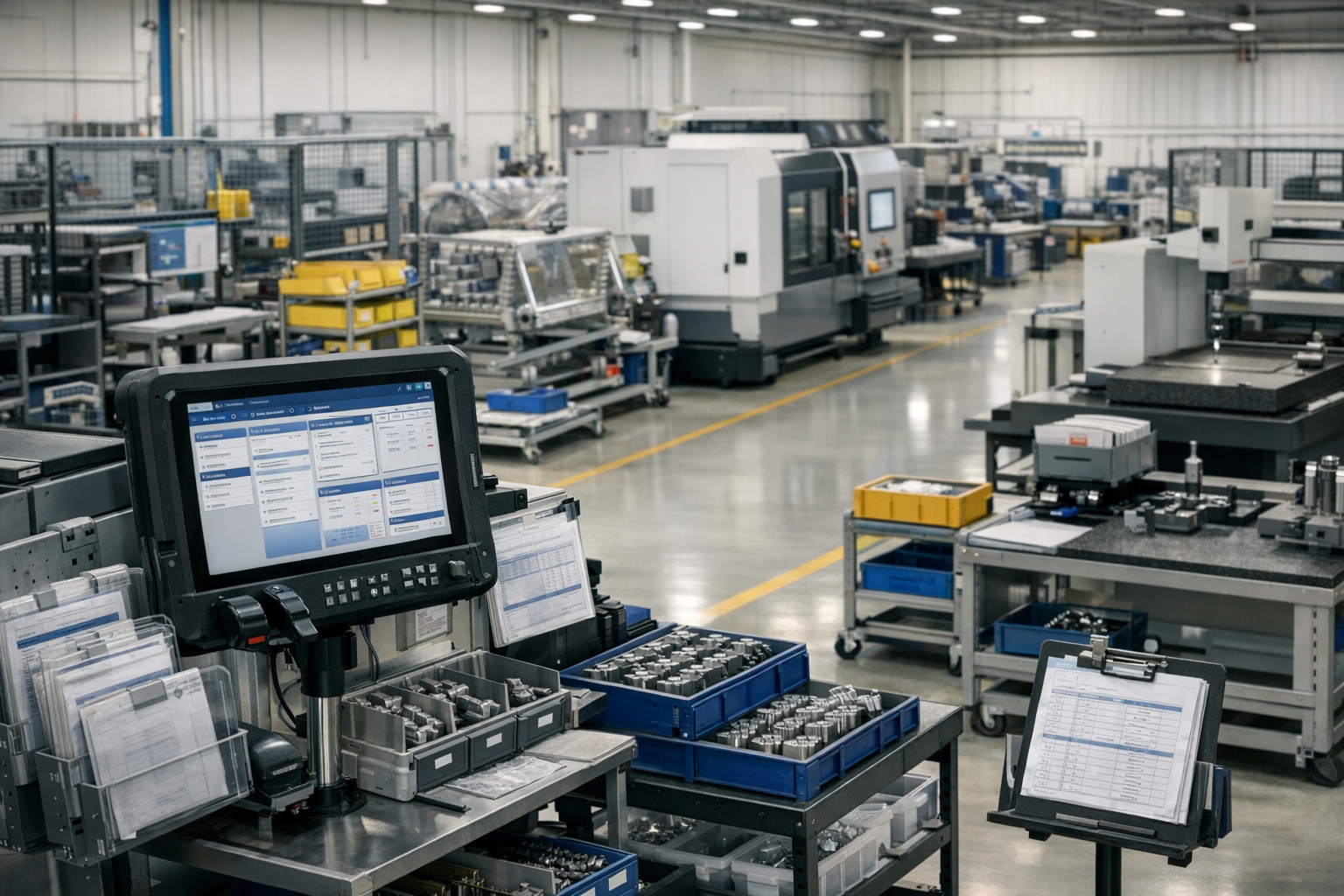
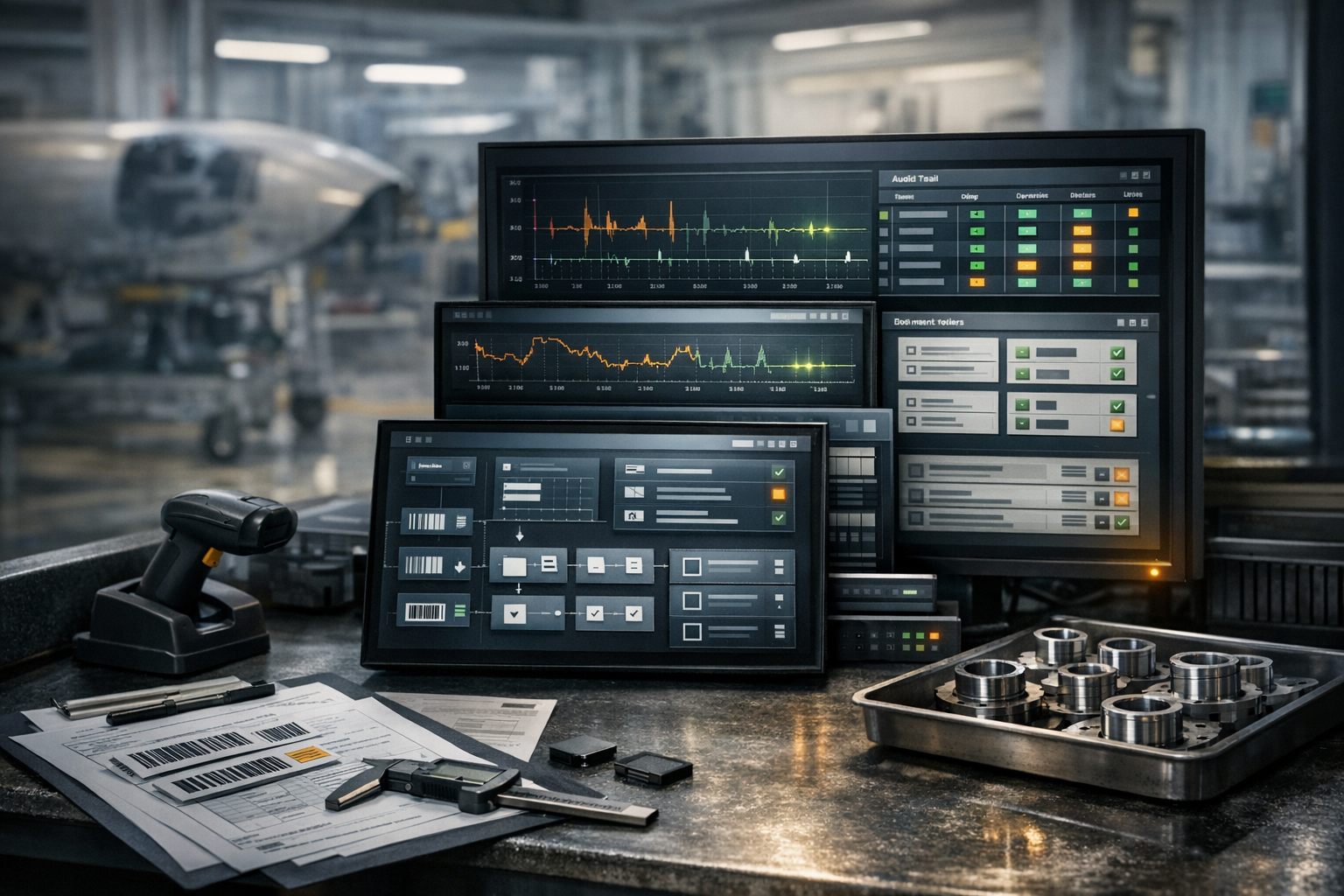
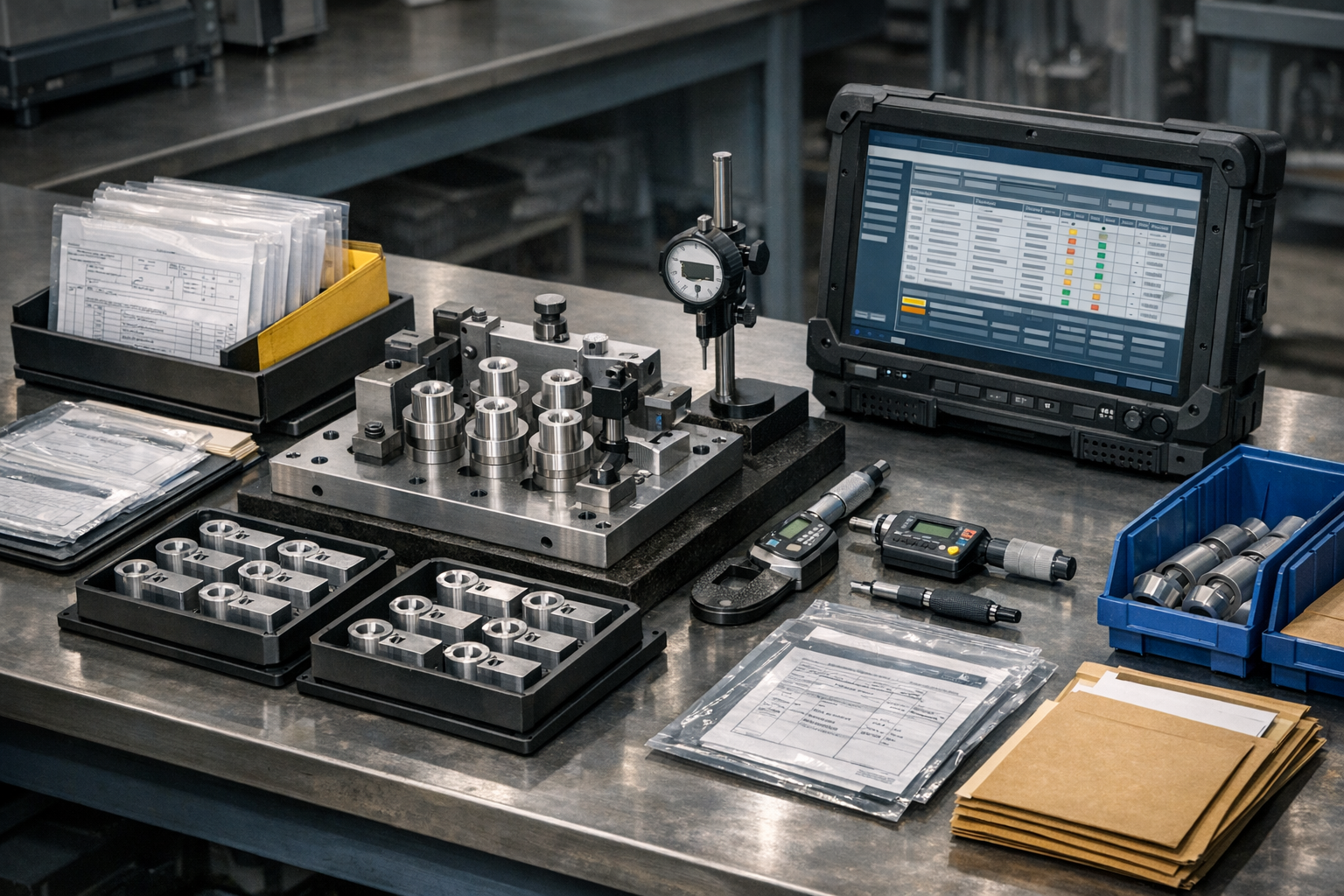
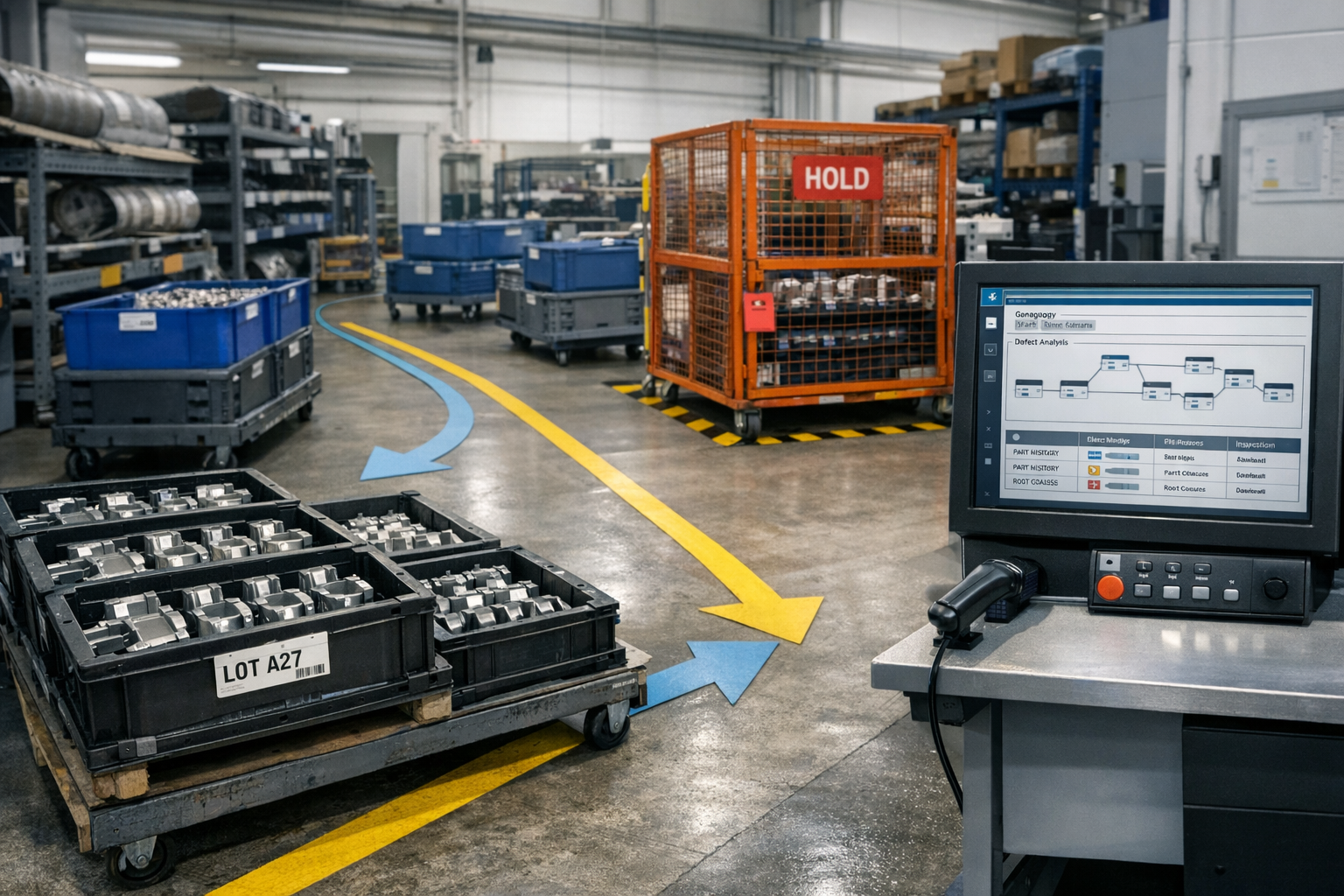
The Nonconformance, MRB and CAPA Cluster explains how quality issues should flow through execution instead of living in parallel systems. It covers how nonconformances are detected, contained, dispositioned, corrected, and prevented, with clear ownership and timing expectations. The content makes pause, quarantine, rework, and resume mechanics explicit so quality actions are operationally enforceable. This cluster connects quality events directly back to work instructions, traceability, and prevention rather than treating them as paperwork exercises.

  • Material Review Board

    A Material Review Board (MRB) is a cross-functional team that evaluates nonconforming, damaged, or otherwise suspect material and makes formal decisions about its disposition within a controlled quality process.

    Core meaning

    In industrial and regulated manufacturing environments, a Material Review Board commonly refers to:

    • A defined group of roles (for example, quality, manufacturing engineering, design engineering, supply chain, and operations) authorized to decide what to do with nonconforming or suspect product or components.
    • A formal process, often supported by an MES, QMS, or ERP workflow, through which nonconforming material is documented, analyzed, and dispositioned.

    The MRB typically reviews:

    • In-process or finished goods that fail inspection or test
    • Incoming materials that do not meet specifications
    • Assemblies affected by deviations, concessions, or engineering changes
    • Field returns or rework material in some organizations

    Typical MRB activities

    Operationally, a Material Review Board is responsible for:

    • Confirming the nonconformance and reviewing objective evidence (inspection data, test results, NCR records, traceability data).
    • Assessing risk and potential impact on safety, performance, regulatory requirements, and customer specifications.
    • Determining and approving disposition, such as:
    • Scrap
    • Use as is (when justified and allowed by requirements)
    • Rework or repair to a defined and approved process
    • Return to supplier
    • Concession or deviation against requirement, when permitted

    MRB decisions are normally documented and linked to related records such as nonconformance reports (NCRs), CAPA investigations, engineering changes, and batch/lot or serial number traceability.

    Use in regulated and standards-based environments

    In industries aligned to standards such as AS9100, IATF 16949, ISO 13485, or similar frameworks, MRB activity is typically part of the documented nonconformance control process. Auditors often expect to see:

    • Clear criteria for what material requires MRB review.
    • Defined MRB membership and authority.
    • Recorded MRB decisions and rationales.
    • Traceability from MRB records to production orders, inspection results, and any resulting corrective actions.

    Common confusion

    • MRB vs. MRB record: The term can refer either to the decision-making group or to the documentation produced by that group. In many systems, an “MRB record” or “MRB ticket” is the electronic or paper record of the nonconformance, analysis, and disposition.
    • MRB vs. CAPA: MRB decides what to do with specific nonconforming material. CAPA focuses on investigating root causes and preventing recurrence. A single CAPA may be linked to many MRB events.
    • MRB vs. Change Control Board (CCB): A CCB governs design or process changes, while MRB handles specific material that already exists and does not meet requirements, although MRB outcomes can trigger change requests.

    Systems and workflow context

    In integrated MES, ERP, or eQMS environments, MRB workflows may include:

    • Automatic creation of MRB tasks from nonconformance events on the shop floor.
    • Role-based routing for review and electronic approval.
    • Linkage to inventory status (for example, quarantine, hold, or blocked stock) and release after disposition.
    • Reporting on MRB volumes, disposition trends, and cost of poor quality.

    In paper or hybrid systems, the same steps exist, but records are maintained through forms, logs, and controlled documents rather than fully digital workflows.

  • defect

    Core meaning

    In industrial and manufacturing contexts, a **defect** is any nonconformance in a product, material, or process output relative to defined requirements. These requirements are typically documented in specifications, drawings, standards, control plans, or work instructions.

    A defect may involve:
    – Dimensions or physical properties outside tolerance
    – Missing, extra, or incorrect components or features
    – Cosmetic or surface flaws beyond acceptable limits
    – Functional failures during testing or inspection
    – Incorrect labeling, documentation, or identification linked to the product

    Defects are usually detected through inspections, in-process checks, automated vision systems, functional tests, or customer feedback.

    Use in manufacturing workflows

    In regulated and high-reliability manufacturing, the term “defect” commonly appears in:

    – **Quality management systems (QMS):** Recorded as nonconformances or defects in logs, CAPA records, and deviation reports.
    – **Manufacturing execution systems (MES):** Captured as scrap, rework, or defect codes at work centers, often tied to batches, lots, or serial numbers.
    – **Statistical process control (SPC):** Counted for defect rates, DPMO/PPM, yield, and process capability analyses.
    – **Traceability workflows:** Linked to specific equipment, operators, materials, and process parameters to enable root cause analysis.

    Defects can lead to scrap, rework, hold/review status, or controlled release decisions, depending on severity and impact.

    Types and classification

    Organizations often classify defects to standardize reporting and analysis. Common distinctions include:

    – **By severity**
    – Critical: May pose safety risk or regulatory impact
    – Major: Affects fit, function, or performance
    – Minor: Limited to appearance or non-critical features

    – **By disposition**
    – Scrap: Cannot be economically or acceptably repaired
    – Rework: Can be brought into conformance by additional processing
    – Use-as-is / concession: May be accepted under controlled decision and documentation

    – **By origin**
    – Design-related: Arising from specifications or design choices
    – Process-related: Caused by manufacturing methods, equipment, or setup
    – Material-related: Due to incoming material or component issues

    Boundaries and exclusions

    In this context, a defect:

    – **Is:** A specific instance of nonconformance affecting a unit, lot, or process output.
    – **Is not:**
    – A generic “issue” or “problem” unless it violates a defined requirement.
    – A process risk or failure mode that has not occurred yet (those are typically addressed in FMEA or risk assessments).
    – A regulatory term by itself; some regulations define more specific defect-related categories that must be handled under their own rules.

    Defects are distinct from **process variation** in general; only the portion of variation that drives outputs outside defined limits is considered defective.

    Common confusion and related terms

    – **Defect vs. nonconformance:** In many quality systems, a defect is one type of nonconformance. Nonconformance can also refer to process, documentation, or system deviations that do not attach directly to a product unit.
    – **Defect vs. deviation:** A deviation is often a documented, controlled departure from a requirement (planned or unplanned). A defect is an actual failure to meet a requirement in a product or output.
    – **Defect vs. failure:** A failure is typically functional (the item does not perform as intended). A defect may be functional or cosmetic, as long as it violates defined acceptance criteria.

    Site context: defects and data-driven improvement

    In data-driven manufacturing and AI/analytics use cases, defects are treated as **labels** linked to production data. Systems often:

    – Capture defect type, location, and timestamp in MES or QMS
    – Associate defects with process parameters, equipment conditions, and material lots
    – Use these labeled records to train models for predicting defect risk, identifying root causes, or optimizing process windows

    The completeness, accuracy, and traceability of defect data significantly influence the usefulness of analytics and AI in reducing scrap and rework.

  • non conformance

    A non conformance is any instance where a product, material, process, service, or system does not meet a defined requirement. In industrial and regulated manufacturing environments, it commonly refers to a documented deviation from specifications, standards, procedures, or contractual or regulatory requirements.

    Non conformances can relate to:

    • Product characteristics that fall outside of defined tolerances or specifications
    • Process steps that are not executed according to approved work instructions or recipes
    • Use of unapproved materials, equipment, or software versions
    • Documentation errors or missing records required by quality or regulatory systems
    • Supplier parts or services that fail incoming inspection or qualification

    Operational meaning in manufacturing systems

    Operationally, a non conformance is often initiated as a formal record in a quality or manufacturing system when an issue is detected on the shop floor, during inspection, in the field, or at a supplier. Typical elements of a non conformance record include:

    • Description of the deviation and affected items (lots, serial numbers, orders)
    • Reference to the specific requirement that was not met
    • Classification (e.g., critical, major, minor; internal vs. external)
    • Immediate containment actions (e.g., hold, quarantine, rework, scrap)
    • Disposition decision (use as is, rework, repair, return to supplier, scrap)
    • Links to related CAPA, change controls, or risk assessments if applicable

    In integrated MES, ERP, and quality systems, non conformance records may trigger holds on work orders or inventory, adjust yield and cost of poor quality metrics, and provide evidence for audits and regulatory inspections.

    Relationship to CAPA and quality management

    A non conformance is an observation or event, not the corrective action itself. Many organizations use non conformance data as input to:

    • Corrective and preventive actions (CAPA) when root cause analysis is required
    • Trend analysis to identify recurring issues across products, lines, or sites
    • Risk assessments for processes, suppliers, and changes
    • Continuous improvement and standardization of work instructions and controls

    Cost of a non conformance

    The cost of a non conformance commonly refers to all resources consumed and impacts created by a specific deviation. This can include direct costs such as scrap, rework, concessions, and additional testing, as well as indirect costs such as downtime, delays, investigations, customer returns, and potential regulatory exposure. In practice, these costs are often modeled within cost of poor quality frameworks and may depend on the maturity of data capture and system integration.

    Common confusion

    • Non conformance vs. defect: A defect usually describes a specific flaw in a product unit. A non conformance is broader and can include process, documentation, or system deviations even when no discrete product defect is visible.
    • Non conformance vs. CAPA: A non conformance is the documented deviation. CAPA refers to the structured investigation and actions taken to correct and prevent recurrence. Not all non conformances lead to a full CAPA, depending on risk and frequency.
    • Non conformance vs. deviation: In some regulated sectors, a deviation is any departure from a procedure, while a non conformance is reserved for departures that violate a formal requirement or specification. Usage varies by organization, so local definitions and SOPs should be consulted.
  • Process owner

    A process owner is the identified person who is formally accountable for the performance, control, and continual improvement of a defined business or manufacturing process. In regulated and industrial environments, the process owner is typically named in procedures or quality management documentation and is responsible for ensuring that the process is clearly defined, documented, followed, and periodically reviewed.

    Core responsibilities

    While the specific scope varies by organization, a process owner commonly:

    • Defines the purpose, inputs, outputs, and boundaries of the process
    • Maintains process documentation, such as SOPs, work instructions, and flow diagrams
    • Ensures the process aligns with applicable standards, regulations, and internal policies
    • Monitors process performance using agreed metrics and KPIs
    • Coordinates changes to the process, including change control and impact assessment
    • Works with IT/OT, MES, ERP, and QMS teams to ensure systems correctly support the process
    • Leads or participates in audits and investigations related to their process
    • Drives or approves corrective and preventive actions (CAPA) related to process performance

    In manufacturing and regulated operations

    In manufacturing, a process owner may be responsible for areas such as production routing, nonconformance handling, supplier receipt inspection, maintenance workflows, or training and qualification processes. In MES- and ERP-integrated environments, the process owner often:

    • Defines master data requirements (such as routings, work centers, or inspection plans) for their process
    • Approves changes to electronic workflows, digital travelers, or electronic records that implement the process
    • Collaborates with quality, engineering, and IT/OT teams to validate that system configurations match approved procedures
    • Provides process expertise during system upgrades, integrations, and audit-readiness activities

    What a process owner is and is not

    • A process owner is accountable for the process design and its outcomes, even when day-to-day execution is performed by many operators or departments.
    • A process owner is not necessarily the direct manager of all people involved in executing the process; line management and process ownership can be separate.
    • A process owner is not limited to quality functions; operations, supply chain, engineering, maintenance, and IT can each have named process owners.

    Common confusion

    • Process owner vs. process operator: Operators or users execute steps in the process. The process owner is accountable for the process as a whole, including design, documentation, and performance monitoring.
    • Process owner vs. project manager: A project manager coordinates a temporary initiative (such as a system implementation). The process owner is responsible for the ongoing, repeatable process over its lifecycle.
    • Process owner vs. document owner: A document owner maintains specific documents. A process owner oversees the end-to-end process, which may include multiple documents, systems, and departments.

    Relation to audits and quality systems

    In quality management systems, especially where standards such as ISO 9001 or aerospace and defense sector standards apply, process owners are often referenced during internal or external audits. Auditors may interview process owners to:

    • Confirm that process objectives and metrics are defined and understood
    • Verify that procedures, work instructions, and electronic workflows are current and controlled
    • Review how nonconformances, deviations, and CAPAs are handled within the process
    • Assess how process performance is reviewed and improved over time

    Operational examples

    • Nonconformance process owner: Accountable for how nonconforming material is identified, contained, dispositioned, and documented across MES, ERP, and QMS.
    • Training and qualification process owner: Responsible for how operators are trained, how records are maintained, and how access to workstations or operations is controlled based on qualifications.
    • Supplier receipt and inspection process owner: Oversees how incoming materials are received, inspected, and traced, including electronic receiving, ASNs, and inspection workflows.
  • incident management

    Incident management commonly refers to the organized process for identifying, assessing, responding to, and learning from unplanned events that disrupt, or could disrupt, normal operations. In industrial and regulated manufacturing environments, this includes events affecting production systems, quality, data integrity, safety, cybersecurity, or supplier-dependent services.

    What incident management includes

    Within operations and manufacturing, incident management typically covers:

    • Detection and logging: Recognizing an incident (or near miss), capturing basic details such as time, affected systems, initial impact, and reporter.
    • Classification and prioritization: Assigning severity and type (for example, IT/OT outage, quality deviation, cybersecurity event, supplier failure, safety-related incident) to determine response urgency and required roles.
    • Containment and stabilization: Taking short-term actions to limit impact on product, equipment, data, or customers while maintaining safety and regulatory expectations.
    • Investigation and diagnosis: Gathering facts, technical evidence, and process context to understand what happened, who or what was affected, and the likely root causes.
    • Resolution and recovery: Implementing changes, workarounds, or repairs to return systems and processes to a controlled state, and verifying that operations can resume.
    • Documentation and communication: Recording the incident, decisions, and evidence, and communicating with stakeholders such as production, quality, IT/OT, suppliers, and customers where appropriate.
    • Follow-up actions: Initiating corrective and preventive actions (for example, via CAPA or change control) and updating procedures, training, and configurations as needed.

    Incident management can apply to a range of scenarios, such as a manufacturing execution system (MES) outage, an equipment control failure, a data integrity issue in a batch record, a cyber incident affecting an OT network, or an event originating from a supplier-hosted application or service.

    Operational use in regulated manufacturing

    In regulated or audit-sensitive environments, incident management is typically formalized in documented procedures and integrated with other quality and governance processes. Common operational characteristics include:

    • Clear criteria for what constitutes an incident versus a minor deviation, service request, or planned change.
    • Defined roles and responsibilities across operations, IT/OT, quality, and engineering.
    • Traceable records that support investigations, audits, and regulatory inspections.
    • Linkages to systems such as CAPA, change control, document control, problem management, and risk management.
    • Consideration of validated system status, data integrity requirements, and product release decisions.

    Incidents involving suppliers

    When incidents involve supplier systems or services (for example, cloud-hosted MES components, outsourced testing, or outside processing partners), incident management usually includes coordinated activities:

    • Rapid assessment of impact on production, product quality, and customers.
    • Joint fact-finding with the supplier using agreed communication channels and escalation paths.
    • Use of contractual terms and service-level agreements to guide response expectations and information sharing.
    • Documentation that supports both internal quality requirements and any external regulatory obligations.

    These aspects are often embedded in the organization’s broader incident management and change control procedures rather than handled separately.

    Common confusion

    • Incident management vs. problem management: Incident management focuses on restoring normal service and managing the immediate event. Problem management focuses on identifying and eliminating underlying root causes to prevent recurrence. In practice, a single incident can trigger a separate problem investigation.
    • Incident management vs. change management: Incident management addresses unplanned events, while change management (or change control in quality systems) governs planned modifications to systems, processes, or configurations. Resolution of an incident may require controlled changes, which are then managed through change management procedures.
    • Incident management vs. deviation or nonconformance management: In quality systems, a deviation or nonconformance typically refers to a departure from an approved process or specification. An incident may include such deviations but also covers a broader set of operational and technical disruptions, including IT/OT outages and cybersecurity events.

    Relation to standards and frameworks

    Incident management concepts appear in various industry and IT/OT frameworks. For example, service management frameworks describe structured incident processes for IT services, and information security standards include requirements for incident detection, reporting, and response. In manufacturing, these ideas are commonly adapted to integrate with production, MES, quality management systems, and risk management approaches, while respecting local regulatory expectations.

  • nonconformance management

    Nonconformance management is the structured process an organization uses to identify, document, evaluate, control, and disposition any product, material, process, or service that does not meet specified requirements. It is a core element of quality management systems in regulated and industrial manufacturing environments.

    In practice, nonconformance management typically covers:

    • Detection and reporting: Finding defects, deviations, or out-of-spec conditions through inspections, tests, in-process checks, or customer feedback, and recording them in a controlled system.
    • Classification and risk assessment: Evaluating the nature and impact of the nonconformance (for example minor vs major, product vs process, internal vs supplier) based on safety, regulatory, functional, and contractual criteria.
    • Containment and segregation: Physically and systematically isolating affected items or processes to prevent unintended use, shipment, or further processing.
    • Disposition: Deciding and documenting what to do with the nonconforming item or condition, such as rework, repair, use-as-is under approved deviation, scrap, or return to supplier.
    • Approvals and traceability: Ensuring dispositions and risk-based decisions are reviewed and approved by authorized roles, with traceable records for audits and customer or regulatory oversight.
    • Data analysis and escalation: Monitoring nonconformance trends, identifying systemic issues, and escalating to corrective and preventive action (CAPA) or process improvement where appropriate.

    Operational context in manufacturing

    In manufacturing operations, nonconformance management often spans multiple systems and functions. Nonconformances may be initiated on the shop floor within a manufacturing execution system (MES), logged in a quality management system (QMS), referenced in enterprise resource planning (ERP) for inventory and cost handling, and linked to design or configuration records.

    Typical operational elements include:

    • Standardized nonconformance reports or records with fields for part numbers, lot/batch, equipment, process step, and inspection data.
    • Workflow routing for review by quality, engineering, manufacturing, and sometimes customer representatives.
    • Integration with document control so dispositions and deviations remain aligned with current specifications and work instructions.
    • Support for regulatory and customer-specific rules, for example in aerospace, medical devices, or pharmaceuticals.

    Relationship to CAPA and deviation management

    Nonconformance management focuses on handling specific instances where requirements are not met. When patterns or significant risks are identified, organizations often open a formal corrective and preventive action (CAPA) to address root causes and prevent recurrence at the system or process level.

    In some industries, nonconformance management is closely related to deviation management, where planned or unplanned departures from approved methods, specifications, or procedures are evaluated and controlled. Nonconformances typically relate to product or process outcomes, while deviations may relate more broadly to the way work is performed, although terminology varies across sectors.

    Common confusion

    Nonconformance vs defect: A defect is a specific flaw or failure in a product or process. A nonconformance is a broader concept that covers any failure to meet a specified requirement, which may or may not present as a visible defect.

    Nonconformance management vs CAPA management: Nonconformance management controls how individual nonconforming items or events are handled. CAPA management focuses on investigating causes and implementing changes to prevent recurrence or occurrence. The two processes are often linked but are not the same.

    Connection to aerospace and other regulated environments

    In aerospace and similarly regulated industries, nonconformance management is tightly linked to safety, airworthiness, and contract or regulatory obligations. The same physical defect may be classified and managed differently depending on design intent, criticality, configuration, and customer rules. Organizations typically maintain documented, configuration-controlled criteria and workflows to classify nonconformances, justify dispositions, and maintain traceable records for audits and regulatory reviews.

  • Critical Characteristic (CC)

    A Critical Characteristic (CC) is a specific product or process attribute that is identified as having a significant impact on safety, regulatory compliance, or the fit, form, or function of a part or assembly. In regulated manufacturing environments such as aerospace, defense, and medical devices, CCs are formally called out, controlled, and verified to reduce the risk of severe failures.

    What a Critical Characteristic includes

    A Critical Characteristic commonly refers to any measurable feature where an out-of-tolerance or incorrect condition could:

    • Compromise safety or airworthiness
    • Violate a regulatory, contractual, or customer requirement
    • Prevent the part from meeting required fit, form, or function
    • Cause loss of performance that is not easily detectable in service

    Examples in an industrial context include:

    • Critical dimensions and tolerances (hole diameter, wall thickness, concentricity)
    • Material or heat-treatment requirements (alloy type, hardness, temper condition)
    • Special process parameters (plating thickness, weld penetration, cure time/temperature)
    • Software or configuration items that affect control logic or safety interlocks

    Operational meaning on the shop floor

    In operations and quality systems, Critical Characteristics are typically:

    • Identified in drawings, specifications, control plans, and FMEA outputs
    • Ballooned and numbered in inspection plans and AS9102 First Article Inspection (FAI) reports
    • Tagged in MES, QMS, or PLM systems for special handling and traceability
    • Subject to enhanced inspection, measurement system analysis, and documented acceptance criteria
    • Linked to specific process controls, operator qualifications, or special process approvals

    Recording results for CCs is often required at the characteristic level, with clear traceability to the lot, work order, operator, equipment, and inspection gage used.

    Relationship to risk and compliance

    CCs are usually identified through risk-based methods such as FMEA, hazard analysis, or regulatory assessments. Once identified, they are managed through:

    • Control plans that specify how the characteristic is produced and verified
    • Documented inspection plans, sampling strategies, and acceptance criteria
    • Nonconformance and CAPA workflows when CCs are found out of specification
    • Evidence records used for audits, customer reviews, and regulatory inspections

    Common confusion

    Critical Characteristic vs. Key Characteristic (KC)

    Both terms refer to important product or process features, but they are not always interchangeable:

    • Critical Characteristic (CC): Typically tied to safety, regulatory, or functional risk. Failure can have severe consequences and often triggers stricter controls and traceability.
    • Key Characteristic (KC): Often used for features that strongly influence product performance, manufacturability, or variation control, but may not always be directly safety-related.

    Specific industries, customers, or standards may define these terms differently. It is common to find organization- or customer-specific definitions for CCs in quality manuals, procedures, or contracts.

    Connection to aerospace and AS9102

    In aerospace manufacturing, Critical Characteristics are frequently identified on engineering drawings and then carried into AS9102 First Article Inspection documentation. Each CC is ballooned, numbered as an inspection characteristic, and must have documented results. Digital FAI and MES systems often represent CCs explicitly to support traceability, inspection evidence, and audit readiness across the product lifecycle.

  • PPAP (Production Part Approval Process)

    PPAP (Production Part Approval Process) is a structured method used primarily in automotive and other discrete manufacturing to demonstrate that a supplier’s production process can consistently produce parts that meet all specified requirements at the quoted production rate. It is part of the APQP (Advanced Product Quality Planning) framework and is widely referenced in automotive and transportation supply chains, as well as in adjacent regulated industries.

    What PPAP includes

    PPAP commonly refers to both:

    • The approval process itself, in which a customer (often an OEM or Tier 1) reviews and approves submitted evidence before authorizing production shipments.
    • The compiled submission package (PPAP package), which contains the documented evidence that the part and process meet requirements.

    A typical PPAP package includes a defined set of elements, such as:

    • Design records and any authorized engineering changes
    • DFMEA/PFMEA and control plan
    • Process flow diagram
    • Dimensional results and material / performance test results
    • Measurement system analysis (e.g., gage R&R)
    • Initial process capability studies for key or critical characteristics
    • Sample parts and supporting appearance or functional reports where applicable
    • Records of qualified production tooling and any special process approvals

    In operational terms, PPAP is often triggered by events such as new part introduction, design change, supplier change, or significant process changes (equipment, location, tooling or method). The PPAP approval status then controls whether a part may ship as production, as interim/limited approval, or not at all.

    How PPAP shows up in manufacturing systems

    In industrial and regulated environments, PPAP requirements typically interact with MES, ERP, PLM and QMS workflows. Examples include:

    • Linking PPAP submissions to specific part numbers, revisions and BOMs in PLM/ERP.
    • Using MES or quality systems to capture inspection data, capability indices and traceability records required in the PPAP package.
    • Driving supplier status, incoming inspection level and release decisions based on PPAP approval state.
    • Storing PPAP documentation under document control, with version governance and audit trails for future reference.

    For suppliers, PPAP often defines the evidence needed to demonstrate process readiness and capability to key customers. For customers, it provides a structured way to review and approve supplier processes before relying on them for serial production.

    Common confusion

    • PPAP vs. FAI (First Article Inspection): FAI, as in AS9102, focuses on verifying that one or more initial production pieces meet design and drawing requirements. PPAP includes dimensional and test data but also covers process planning, capability, measurement systems and control plans. FAI can be one input to a PPAP but is not a full PPAP by itself.
    • PPAP vs. APQP: APQP is the broader product and process development framework. PPAP is one defined output of APQP that provides formal customer approval for production parts.
    • PPAP vs. routine inspection: Routine inspection is ongoing quality control during production. PPAP is usually a one-time or event-driven approval activity, although resubmission can be required when key changes occur.

    Use in regulated and adjacent industries

    While PPAP originated in automotive, similar structured approval processes are now used in other sectors, including aerospace, heavy equipment and medical-adjacent manufacturing. Organizations may adopt PPAP, or PPAP-like requirements, to standardize supplier onboarding and change control for production parts, especially where traceability, documentation and process capability evidence are important.

  • NCR (Nonconformance Report)

    Operational meaning

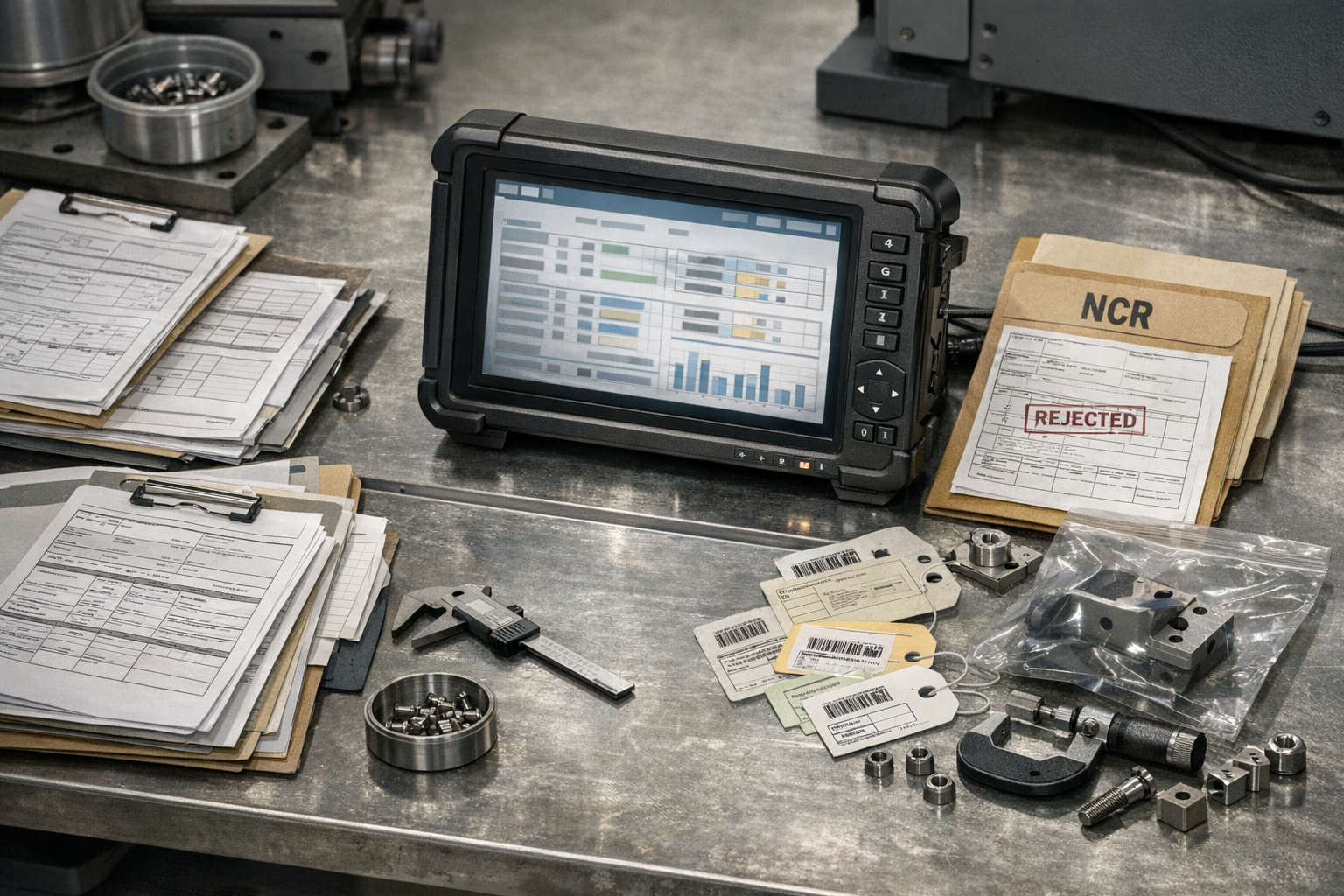
    An **NCR (Nonconformance Report)** is a formal record used to document and control any instance where a product, material, process, service, or documentation does not meet specified requirements. In industrial and regulated manufacturing environments, NCRs are a key element of the nonconformance control process within a quality management system.

    An NCR typically captures:

    – Identification of the nonconforming item or process
    – The specific requirement that was not met (specification, drawing, SOP, standard)
    – Description and classification of the nonconformance (e.g., critical, major, minor)
    – Containment actions (e.g., quarantine, hold tags, line stop)
    – Disposition (e.g., use-as-is, rework, repair, scrap, return to supplier)
    – Approvals and sign-offs by authorized personnel
    – Traceability information (lot/batch, equipment, operator, work order)

    NCRs may be implemented on paper forms or in electronic systems such as MES, QMS, or ERP modules.

    Use in manufacturing and regulated environments

    In manufacturing operations, an NCR commonly:

    – Is triggered when inspection, in-process checks, alarms, or operators detect a deviation
    – Initiates segregation and labeling of nonconforming material or product
    – Connects to material status and inventory controls (e.g., movement to a quality hold location)
    – Drives formal disposition decisions by quality, engineering, or authorized roles
    – Feeds data into corrective and preventive action (CAPA) or problem-solving processes
    – Provides records required for audits, customer reporting, and regulatory inspections

    In regulated industries (such as pharmaceuticals, medical devices, aerospace, food and beverage), NCRs are often tightly linked to batch records, device history records, or other mandatory documentation.

    What an NCR is and is not

    **Included:**

    – Documentation of actual or suspected nonconforming product, materials, components, or processes
    – Records related to internal production, incoming inspection, or customer returns
    – Information used for traceability, trend analysis, and risk assessments

    **Typically not included:**

    – The full root cause analysis and long-term corrective actions (these are usually handled in CAPA or separate problem-solving records)
    – Routine process monitoring data where no limits are exceeded
    – Change control records for planned changes (managed through separate change management processes)

    An NCR may **reference** related investigations, risk assessments, and CAPA records, but it is not itself a complete investigation report.

    Common workflow connections

    In integrated OT/IT and quality environments, NCRs often interact with:

    – **MES**: automatic NCR creation from failed inspections, SPC violations, or machine events
    – **ERP**: material status updates (blocked/hold), stock adjustments, and supplier returns
    – **QMS**: linkage to CAPA, audit findings, deviation records, and customer complaint handling
    – **LIMS or lab systems**: lab test failures that trigger NCRs for affected lots or batches

    This integration supports consistent material control, traceability, and data for reliability and quality analytics.

    Common confusion and related terms

    – **NCR vs CAPA**: An NCR documents the occurrence and disposition of a nonconformance. CAPA focuses on investigating causes and implementing and verifying long-term corrective or preventive actions. An NCR can be an input to a CAPA.
    – **NCR vs deviation**: Some organizations use *deviation* for any departure from a procedure or expected condition, and reserve *NCR* for product or material nonconformance. Others treat them as equivalent. Usage is organization- and sector-specific.
    – **NCR vs defect log**: A defect log may collect issues at a summary level. NCRs are typically formal, controlled records with defined approval and disposition workflows.

    Clear definition in site or company procedures is important to avoid overlap and gaps between NCRs, deviations, and CAPA processes.

    Site context application

    Within industrial operations and manufacturing systems, an NCR is treated as a structured quality record that:

    – Controls nonconforming items to prevent unintended use or shipment
    – Provides traceable documentation for audits and regulatory review
    – Supplies data for continuous improvement, risk management, and reliability analysis

    Digital NCR workflows in MES, QMS, and ERP systems are commonly used to standardize how nonconformances are captured, reviewed, and resolved across sites and production lines.