Author: RSC Suite

  • What is ISO 27001? A Practical Overview for Aerospace and Industrial Operations

    What is ISO 27001? A Practical Overview for Aerospace and Industrial Operations

    Quick answer: what ISO 27001 is and why it matters in manufacturing

    ISO/IEC 27001 is the leading international standard for establishing, implementing, maintaining, and improving an information security management system. Published jointly by the International Organization for Standardization (ISO) and the International Electrotechnical Commission, the standard defines formal requirements for how organizations manage information security across people, processes, and information systems.

    In practical terms, ISO 27001 specifies what an organization must do to protect the confidentiality, integrity, and availability of information. It addresses cybersecurity, data protection, and privacy through a structured management system rather than through prescriptive technical controls. The standard is industry-neutral by design, applicable to any organization regardless of size or sector.

    For aerospace manufacturing, MRO operations, and industrial digitalization, ISO 27001 has become increasingly relevant. Production and supplier workflows now depend on connected, data-driven systems. ERP, MES, PLM, and supplier collaboration platforms like Connect981 create interdependencies that require structured governance over information security. The current version, ISO/IEC 27001:2022, reflects this reality by focusing on how organizations manage information security risks, not on specific technologies or tools.

    Key points to understand about ISO 27001:

    • It is a requirements standard, not an implementation guide
    • It applies to information in all forms: digital, paper-based, and verbal
    • It provides a comprehensive framework for managing information security risks
    • It supports integration with other ISO management system standards such as ISO 9001 and AS9100
    The image depicts an aerospace manufacturing floor bustling with workers engaged in operating precision machinery, surrounded by advanced digital displays. This environment emphasizes the importance of information security management systems, as meticulous attention to security controls and risk management processes is crucial in safeguarding sensitive data and ensuring operational integrity.

    What does ISO/IEC 27001 actually define?

    ISO 27001 is a requirements standard. It specifies what an organization’s approach to managing information security must achieve. It does not dictate how to technically configure systems, which tools to deploy, or which specific security measures to implement.

    The standard covers several core areas:

    • Establishing an ISMS: Defining the scope, context, and governance structure for information security management
    • Implementing and maintaining the ISMS: Operating the management system through defined policies, procedures, and processes
    • Performing risk assessment and risk treatment: Identifying information security risks and determining how to address them
    • Defining roles and responsibilities: Assigning accountability for information security across the organization
    • Evaluating and improving ISMS performance: Monitoring effectiveness, conducting internal audits, and driving continual improvement

    ISO 27001 addresses information regardless of where it resides or what form it takes. For aerospace and industrial operations, this means the standard applies equally to design documentation stored in PLM systems, production data flowing through MES platforms, quality records maintained for AS9100 compliance, and supplier data shared through collaboration portals.

    The standard deliberately avoids prescribing specific products, tools, or detailed control techniques. An organization certified to ISO 27001 has demonstrated that its information security management processes meet the standard’s requirements. The actual controls selected depend on the organization’s risk assessment and treatment decisions.

    The scope of information security management in ISO 27001

    ISO 27001 defines information security through three fundamental properties, collectively known as the CIA triad:

    • Confidentiality: Protecting information from unauthorized disclosure
    • Integrity: Safeguarding information from improper modification
    • Availability: Ensuring information is accessible to authorized users when needed

    The scope of an ISMS is defined by the organization itself. In aerospace and industrial contexts, this scope might be expressed as “global aerospace manufacturing and MRO operations,” “production facilities in North America,” or “supplier collaboration platform and associated data flows.” Whatever the boundaries, they must be explicitly documented.

    Information assets within scope can include:

    • Design documentation and engineering drawings
    • Digital work instructions and revision-controlled procedures
    • Production data, including serial number tracking and build records
    • Quality records, inspection results, and nonconformance logs
    • Maintenance and repair histories for MRO operations
    • Supplier and customer data shared through collaboration portals
    • Configuration files for production systems, ERP integrations, and connected platforms

    When defining scope, organizations must consider both internal and external issues. Regulatory requirements such as AS9100, ITAR, FAA, and EASA create external constraints. Contractual commitments with primes or Tier 1 suppliers may specify information security expectations. Dependencies on cloud services or SaaS platforms, including operations software like Connect981, introduce additional considerations for how information is managed across boundaries.

    The scope determines which locations, processes, information systems, and interested parties fall under the ISMS. It defines what is governed, not how to secure it technically.

    The concept of an Information Security Management System (ISMS)

    An information security management system is the core concept at the heart of ISO 27001. It represents a formal management system that governs how an organization manages information security throughout the lifecycle of its information assets.

    An ISMS is not a piece of software or a collection of security tools. It is built on:

    • Policies that define the organization’s information security commitments
    • Procedures that translate policy into operational practice
    • Defined processes for identifying and treating information security risks
    • Roles and responsibilities assigned across the organization
    • Documented information that provides evidence of conformity and enables consistent operation

    The underlying model for an ISMS is the Plan-Do-Check-Act cycle, familiar to organizations already operating under ISO 9001 or AS9100. At a high level:

    • Plan: Establish the ISMS scope, conduct risk assessment, define objectives, and plan risk treatment
    • Do: Implement and operate the ISMS, including the risk treatment plan and selected security controls
    • Check: Monitor and measure ISMS performance, conduct internal audits, and perform management review
    • Act: Address nonconformities and drive continual improvement

    For manufacturing and MRO operations, the ISMS connects strategic decisions with operational practices. Leadership defines the organization’s information security policy and risk appetite. Those decisions then cascade into how production data is controlled, how documentation is managed across ERP, MES, and platforms like Connect981, and how supplier information flows are governed.

    In practice, the ISMS typically interfaces with other management systems. Quality management under AS9100, environmental management under ISO 14001, and occupational health and safety systems may all coexist. ISO 27001 focuses specifically on the information security aspects of operations, complementing rather than replacing those other systems.

    The image depicts an industrial control room where operators are actively monitoring digital systems and analyzing production data. This environment emphasizes information security management practices, reflecting the importance of ISO 27001 standards in managing security risks and ensuring the protection of sensitive data.

    High-level structure of ISO/IEC 27001

    ISO 27001 follows the Harmonized Structure used across ISO management system standards. This common architecture makes integration with quality management (ISO 9001, AS9100), environmental management (ISO 14001), and other management systems more straightforward.

    The standard is organized into three main components:

    Component

    Description

    Clauses 0–3

    Introduction, scope of the standard, normative references, and terms and definitions

    Clauses 4–10

    Core requirements for the ISMS

    Annex A

    Reference set of 93 information security controls

    Requirements Clauses 4–10

    • Clause 4 – Context of the organization: Understanding internal and external issues, determining interested parties and their requirements, defining the scope of the ISMS
    • Clause 5 – Leadership: Top management commitment, establishing the organization’s information security policy, assigning roles and responsibilities
    • Clause 6 – Planning: Addressing risks and opportunities, conducting information security risk assessment, planning risk treatment, setting information security objectives
    • Clause 7 – Support: Resources, competence, awareness, communication, and control of documented information
    • Clause 8 – Operation: Implementing and controlling the processes needed to meet information security requirements, executing the risk treatment plan
    • Clause 9 – Performance evaluation: Monitoring, measurement, analysis, and evaluation; internal audits; management review
    • Clause 10 – Improvement: Addressing nonconformities, implementing corrective actions, driving continuous improvement

    Annex A Controls

    Annex A of ISO/IEC 27001:2022 provides a catalog of 93 information security controls organized into four themes:

    Theme

    Focus Areas

    Organizational controls

    Policies, governance, asset management, access control policy, supplier relationships, incident management, business continuity, compliance

    People controls

    Human resource security, awareness, training, responsibilities during and after employment

    Physical controls

    Physical security, environmental security, equipment protection, secure areas

    Technological controls

    Endpoint security, access control, cryptography, operations security, communications security, secure coding, data masking, data leakage prevention, threat intelligence

    Selection and implementation of Annex A controls is not a fixed checklist. Organizations must justify their selection or exclusion of controls based on their information security risk management process. Full conformity with ISO 27001 requires meeting all applicable requirements in Clauses 4–10 and documenting the rationale for control selection.

    Relationship between ISO 27001 and ISO 27002

    ISO/IEC 27001 and ISO/IEC 27002 serve distinct but complementary purposes.

    Standard

    Purpose

    ISO/IEC 27001

    Requirements standard for an ISMS; certifiable

    ISO/IEC 27002

    Guidance document for information security controls; not certifiable

    ISO 27001 specifies what an ISMS must achieve. ISO 27002 provides detailed guidance and examples for how information security controls might be implemented. Each control listed in Annex A of ISO 27001:2022 has a corresponding section in ISO 27002:2022 with objectives, implementation guidance, and other information.

    An organization can pursue ISO 27001 certification through an accredited certification body. ISO 27002, by contrast, is a supporting code of practice. It helps organizations understand control objectives and consider implementation options, but it does not define additional requirements beyond what ISO 27001 specifies.

    In aerospace and industrial contexts, organizations typically use ISO 27001 to define the overarching management process and governance structure for information security. When more detail is needed on specific control areas, such as how to approach access control for production networks, documentation repositories, or supplier data flows, ISO 27002 serves as a reference.

    This article does not describe technical implementation or recommend specific technologies. The distinction between the two standards matters for understanding what certification demonstrates and where to look for additional guidance.

    Why ISO 27001 is referenced in manufacturing, aerospace, and industrial systems

    Digital transformation has fundamentally changed how manufacturing and MRO operations work. Production, quality, and supply chain processes have become information-intensive and interconnected. ERP systems, MES platforms, PLM tools, QMS software, and supplier collaboration platforms like Connect981 now form the operational backbone of aerospace production.

    This shift creates new information security risks. Production data, traceability records, work instructions, and supplier communications all flow through connected systems. Security incidents or data breaches can disrupt operations, compromise sensitive data, and expose organizations to regulatory consequences.

    ISO 27001 is referenced in manufacturing and industrial contexts because it provides a recognized structure for managing these information security risks. Organizations use the standard to demonstrate governance across:

    • Smart factory platforms and industrial IoT data flows
    • Integrated ERP, MES, PLM, QMS, and supplier collaboration systems
    • Documentation and traceability records required for AS9100, FAA, EASA, and ITAR-regulated operations
    • Multi-site and multi-supplier production networks

    Primes, Tier 1 suppliers, and regulators increasingly expect evidence of structured information security governance. ISO 27001 provides a security framework that is widely understood and internationally recognized. It offers a common language for discussing information security practices with business partners and customers.

    ISO 27001 complements rather than replaces sector-specific standards. AS9100 addresses quality management for aerospace. ITAR and export control regulations address controlled technical data. FAA and EASA requirements focus on aviation safety. ISO 27001 specifically addresses how information security is managed across all of these operational contexts.

    For organizations coordinating complex multi-site and multi-supplier production, an ISO 27001-aligned ISMS can provide a unifying structure. Even when not all entities in a supply chain are certified, the standard’s concepts support consistent governance over information security expectations across partners.
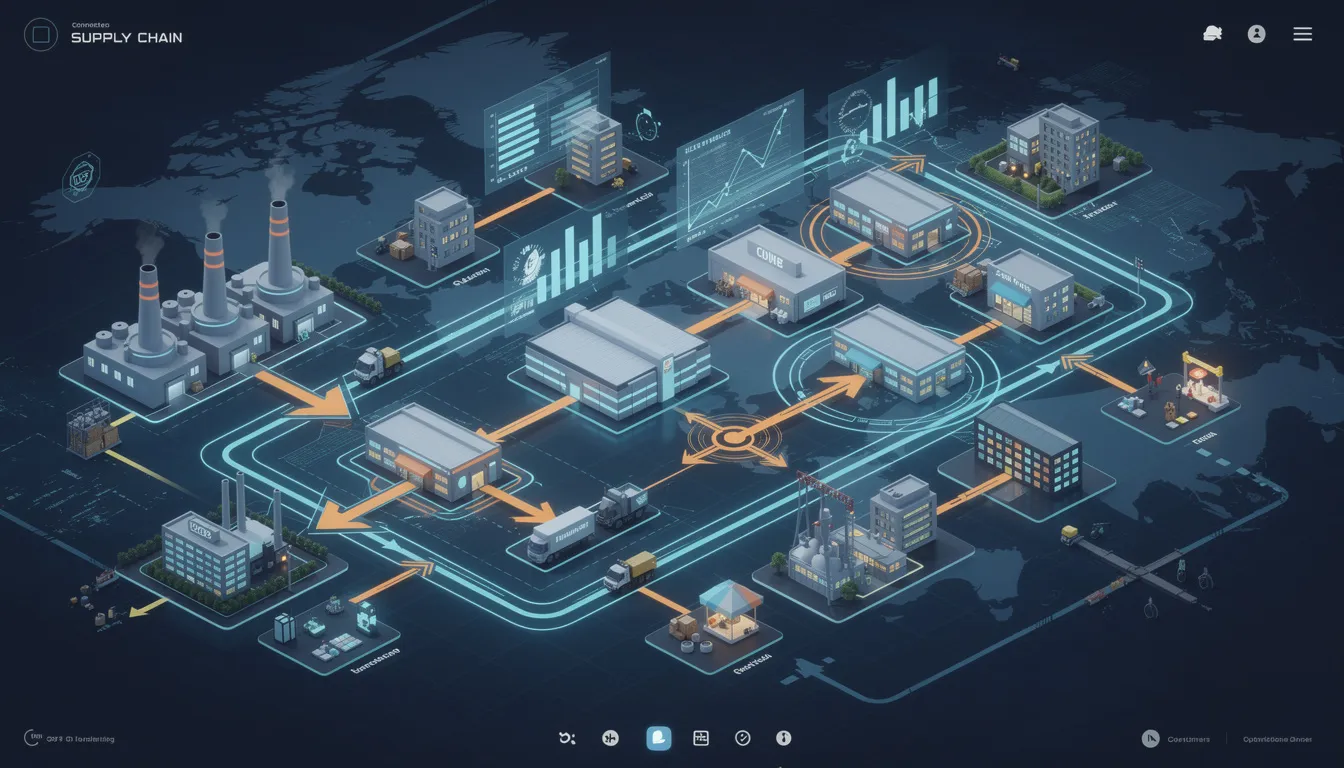
    The image depicts a connected supply chain visualization showcasing multiple facilities, each represented with data flows illustrating the integration of information security management systems. This visualization emphasizes the importance of ISO 27001 standards in managing information security risks and ensuring data protection across the supply chain.

    ISO 27001 in practice: certification, versions, and use in governance

    Certification process

    ISO 27001 certification is a formal verification by an accredited certification body that an organization’s ISMS conforms to the standard’s requirements. The certification audit typically occurs in two stages:

    • Stage 1: Documentation review to verify the ISMS is designed to meet requirements
    • Stage 2: On-site assessment to verify the ISMS is implemented and operating effectively

    Certification is valid for three years, subject to periodic surveillance audits. Recertification requires a full audit at the end of each cycle.

    Version history

    Version

    Key characteristics

    ISO/IEC 27001:2005

    Original international standard, based on BS 7799

    ISO/IEC 27001:2013

    Major revision with explicit leadership and planning clauses

    ISO/IEC 27001:2022

    Current version with Annex A reorganized to 93 controls across four themes, aligned with ISO/IEC 27002:2022

    Organizations certified under the 2013 version have transition timelines to update their ISMS to the 2022 edition. The structural changes primarily affect Annex A control organization rather than the core management system requirements.

    Approaches to using ISO 27001

    Organizations approach ISO 27001 in different ways depending on their objectives:

    • Internal reference framework: Using ISO 27001 concepts to structure information security governance without pursuing formal certification
    • Formal certification: Seeking certification to provide external assurance to customers, regulators, and business partners
    • Integrated management systems: Combining ISO 27001 with ISO 9001, AS9100, ISO 14001, or other standards under a shared governance structure

    ISO 27001 is generally not mandated by law, though specific jurisdictions or sectors may reference it. More commonly, it becomes a contractual requirement in supply chains where primes or customers expect evidence of information security governance.

    Relevance to digital operations platforms

    For organizations operating digital platforms like Connect981, alignment with ISO 27001 concepts supports customers’ own ISMS requirements. When production data, work instructions, quality records, and supplier collaboration flow through a shared platform, clear governance over that information becomes essential.

    A platform designed with information security governance in mind enables aerospace and industrial organizations to:

    • Maintain visibility over information assets across factories and suppliers
    • Support traceability and documentation control requirements
    • Provide evidence of information security practices for audits and customer reviews
    • Integrate with broader ISMS processes already in place

    ISO 27001 provides the reference framework. Operational platforms provide the capability to execute on information security requirements in practice. For organizations managing sensitive data, personally identifiable information, or ITAR-controlled technical data, this alignment matters.

    Information security controls continue to evolve as threats change and industrial systems become more connected. ISO 27001 offers a stable governance structure that adapts through its risk-based approach, supporting security posture improvements without requiring wholesale changes to the management system itself.

    For aerospace and industrial operations seeking to formalize information security governance, ISO 27001 provides a recognized starting point. Whether used as an internal framework or pursued through formal certification, the standard offers structure for managing information security in environments where production, quality, and supply chain data are increasingly interconnected.

    To explore how Connect981 supports governance over production data, documentation, and supplier workflows in aerospace and industrial operations, request a demo.


  • ISO 27001 Information Security Management System

    ISO 27001 Information Security Management System

    ISO 27001 stands as the internationally recognized benchmark for managing information security within organizations. For operations leaders, quality managers, and compliance teams in manufacturing and aerospace, understanding what this standard defines and why it matters is increasingly relevant as digital systems become central to production workflows, supplier coordination, and regulatory compliance.

    This article provides a factual overview of ISO 27001 as an information security management standard, covering its structure, scope, relationship to supporting standards, and its role in industrial environments.

    ISO 27001 at a Glance

    ISO/IEC 27001 is the world’s best known standard for information security management systems. It is jointly published by the International Organization for Standardization (ISO) and the International Electrotechnical Commission (IEC), with the current edition released in 2022 as ISO/IEC 27001:2022.

    The standard defines requirements for establishing, implementing, maintaining, and continually improving an ISMS. It applies to organizations of any size or sector.

    Key characteristics of ISO 27001:

    • Specifies a systematic approach to managing sensitive information so that it remains secure
    • Covers information in all forms, including digital, paper-based, and verbal
    • Focuses on management system requirements rather than prescribing specific technologies or tools
    • Emphasizes risk-based thinking, with organizations identifying and treating information security risks based on their own context
    • Provides a framework that brings information security under explicit management control
    • Enables third-party certification through accredited certification bodies

    Connect981, as a B2B SaaS platform for aerospace manufacturing and MRO workflows, aligns its internal practices with ISO 27001 principles to support secure, audit-ready operations for customers handling controlled technical data and production documentation.

    The image depicts the interior of a modern aerospace manufacturing facility, showcasing digital workstations and an organized production floor designed for efficiency. This environment emphasizes the importance of information security management systems and the implementation of security measures to protect sensitive data and mitigate information security risks.

    The Concept of an Information Security Management System (ISMS)

    An information security management system is the core mechanism through which ISO 27001 operates. The standard does not prescribe a fixed set of controls or technologies. Instead, it requires organizations to build and maintain a documented management system that governs how information security is handled across people, processes, and supporting systems.

    An ISMS is defined as a comprehensive set of interrelated elements, including policies, processes, procedures, organizational structures, and resources, that an organization deploys to establish information security policies and objectives along with the processes to achieve them.

    Key elements of an ISMS:

    • Documented policies and objectives for information security
    • Defined roles, responsibilities, and authorities assigned by senior management
    • A continuous improvement cycle, often described as Plan-Do-Check-Act, embedded in the standard’s clauses
    • Integration of information security into everyday business processes
    • Management oversight, including regular management reviews
    • Mechanisms for monitoring, measurement, and internal audits
    • Processes to respond to security incidents and nonconformities

    In industrial environments, the ISMS integrates information security into engineering, production planning, supplier coordination, and maintenance documentation. The standard specifies what an ISMS must include; organizations choose how those requirements are met in their own operational context.

    Scope of Information Security Management in ISO 27001

    The scope of information security management in ISO 27001 covers three fundamental properties: confidentiality, integrity, and availability of information. These are explicitly referenced throughout the standard’s clauses.

    Information, as defined by the standard, extends to all forms of data an organization handles:

    Information Type

    Examples in Manufacturing

    Design data

    CAD files, engineering drawings, specifications

    Production records

    Build packages, routing sheets, work orders

    Quality documentation

    Inspection records, nonconformance reports, first article inspection data

    Maintenance records

    Aircraft maintenance history, component traceability

    Contractual information

    Supplier agreements, customer requirements, PO documentation

    Configuration baselines

    Revision-controlled documentation, change records

    The ISMS scope must define organizational units, physical locations, processes, and information types to which the ISO 27001 requirements apply.

    Organizations in manufacturing and aerospace may include in their scope:

    • Production engineering offices
    • Shopfloor support systems and digital work instruction platforms
    • Supplier collaboration portals and data exchange interfaces
    • Cloud services handling controlled information
    • Document repositories and configuration management systems
    • ERP, MES, PLM, and QMS platforms

    Defining the ISMS scope is a foundational step. It determines what is subject to the standard’s requirements and what is excluded.

    High-Level Structure of ISO/IEC 27001

    ISO 27001 follows the Annex SL high-level structure, a common framework used by many modern management system standards. This structure enables organizations to integrate ISO 27001 with other standards such as ISO 9001 for quality management or ISO 14001 for environmental management.

    The mandatory requirements of ISO 27001 are contained in clauses 4 through 10. Each clause addresses a distinct aspect of the management system:

    Clause

    Title

    Focus

    4

    Context of the organization

    Understanding internal and external issues, interested parties, and ISMS scope

    5

    Leadership

    Top management commitment, policy, and organizational roles

    6

    Planning

    Addressing risks and opportunities, setting objectives, risk treatment planning

    7

    Support

    Resources, competence, awareness, communication, documented information

    8

    Operation

    Operational planning and control, implementing risk treatment plans

    9

    Performance evaluation

    Monitoring, measurement, analysis, internal audits, management reviews

    10

    Improvement

    Nonconformities, corrective actions, continual improvement process

    Annex A lists reference information security controls, organized in ISO 27001:2022 into four themes: organizational, people, physical, and technological. The standard includes 93 controls across these themes. However, Annex A is a reference list; the management system clauses (4–10) contain the auditable requirements.

    The standard also includes introductory sections and normative references, but the certification process focuses on demonstrating conformance with clauses 4 through 10 and justified selection of applicable Annex A controls.

    Core Clauses of the Standard

    Each clause in the high-level structure addresses specific management system requirements. The following summarizes what each clause covers.

    Clause 4: Context of the organization

    This clause requires organizations to understand internal and external issues that affect their ability to achieve the intended outcomes of the ISMS. It mandates identification of interested parties and their requirements, and requires a clearly defined ISMS scope that considers organizational boundaries, interfaces, and dependencies.

    Clause 5: Leadership

    Leadership requirements establish that senior management must demonstrate commitment to the ISMS. This includes establishing an information security policy, ensuring adequate resources are available, and assigning roles and responsibilities for managing information security.

    Clause 6: Planning

    The planning clause requires organizations to address risks and opportunities through a risk management process. Organizations must conduct a thorough risk assessment, define information security objectives, and plan actions to mitigate identified risks. This clause also requires production of a Statement of Applicability documenting which Annex A controls apply and why.

    Clause 7: Support

    Support requirements cover the resources, competence, and awareness needed to operate the ISMS. This includes ensuring personnel are competent, aware of the information security policy, and understand their responsibilities. It also addresses communication requirements and mandates ISMS documentation, including control of documented information.

    Clause 8: Operation

    The operation clause focuses on implementing and controlling the processes needed to meet information security requirements. This includes executing risk treatment plans and performing risk reassessments at planned intervals or when significant changes occur.

    Clause 9: Performance evaluation

    Performance evaluation requirements mandate that organizations monitor, measure, analyze, and evaluate ISMS performance. This includes conducting periodic audits (internal audits) and management reviews to evaluate ISMS performance and identify opportunities for improvement.

    Clause 10: Improvement

    The improvement clause addresses nonconformities, corrective actions, and continual improvement. Organizations must react to nonconformities, take action to control and correct them, and implement changes to prevent recurrence.

    A group of business professionals is gathered around a large conference table in a modern meeting room, intently reviewing documents related to information security management systems. The setting reflects a focus on risk management processes and data protection, as they discuss strategies to mitigate identified risks and enhance security practices within their organization.

    Relationship Between ISO 27001 and ISO 27002

    ISO 27001 and ISO 27002 serve complementary but distinct purposes. Understanding their relationship is essential for organizations implementing an ISMS.

    ISO/IEC 27001 is the certifiable international standard that sets requirements for an ISMS. It includes Annex A, which provides a reference list of information security controls. ISO/IEC 27002 is a guidance document that provides detailed implementation guidance for those controls.

    Key distinctions:

    • ISO 27001 specifies what an ISMS must include; ISO 27002 explains how controls can be implemented
    • Certification audits assess conformance with ISO 27001, not ISO 27002
    • ISO 27002 expands each Annex A control with explanatory text, purpose statements, and implementation considerations
    • The 2022 editions of both standards are aligned, with 93 controls grouped into four thematic categories

    Organizations in industrial and manufacturing contexts often use ISO 27002 to interpret Annex A controls for environments involving ERP systems, MES platforms, supplier portals, and information flows adjacent to operational technology.

    Annex A Controls and ISO 27002

    Annex A of ISO 27001 is a concise catalog of control objectives and controls. It provides a reference list that organizations use when determining which security measures apply to their ISMS.

    ISO 27002 then expands each control:

    • Provides detailed guidance and explanatory text
    • Includes purpose statements explaining why each control exists
    • Offers considerations for different organizational contexts
    • Helps organizations understand the intent behind each control

    Organizations select and justify applicable Annex A controls in their Statement of Applicability. This document explains which controls are included, which are excluded, and the rationale for each decision.

    For sectors handling regulated technical data, such as aerospace, Annex A controls and ISO 27002 guidance are often mapped against sector-specific security requirements and customer contracts. This mapping helps demonstrate that security practices meet both international standard requirements and industry-specific obligations.

    Why ISO 27001 Matters in Manufacturing and Industrial Systems

    Manufacturing and industrial organizations increasingly rely on interconnected digital systems that store and process sensitive information. ERP, MES, PLM, QMS, and supplier portals now form the backbone of production operations. Design data, build documentation, quality records, and traceability information flow through these systems continuously.

    ISO 27001 provides a recognized security framework for managing information security risks across these systems and workflows.

    Relevance in manufacturing environments:

    • Documentation control: Production documentation, revision history, and change records require protection against unauthorized modification
    • Traceability data: Serial numbers, lot tracking, and parts genealogy must maintain integrity throughout the supply chain
    • Supplier coordination: Data exchanges with suppliers involve sensitive technical and contractual information
    • Regulatory alignment: Aerospace and MRO operations often operate under AS9100, FAA/EASA regulations, and ITAR/EAR obligations
    • Customer requirements: OEMs and prime contractors frequently reference ISO 27001 in supplier qualification criteria and contractual clauses

    With over 70,000 certificates issued globally by 2023, ISO 27001 adoption continues to grow across industries. Manufacturing sectors have seen notable uptake due to rising concerns about cybersecurity threats targeting operational technology and supply chain data.

    Connect981’s role as a unified operations layer means its customers often integrate ISO 27001-aligned information flows, including work instructions, quality records, and supplier data, into a controlled environment that supports data protection and audit readiness.

    The image shows a large commercial aircraft inside a maintenance, repair, and overhaul (MRO) hangar, surrounded by maintenance equipment and scaffolding, highlighting the importance of thorough risk assessment and security measures in the aviation industry's information security management systems. The scene emphasizes the need for effective management practices to protect sensitive data and mitigate identified risks during maintenance operations.

    ISO 27001 in Aerospace and MRO Workflows

    Aerospace manufacturers use ISO 27001 references to structure information security for design documentation, build packages, nonconformance reports, and first article inspection records. These documents contain sensitive data about aircraft configuration, proprietary manufacturing processes, and customer specifications.

    Specific workflow areas where ISO 27001 applies:

    • Design documentation: Engineering drawings, specifications, and revision-controlled data require access control and integrity protection
    • Build packages: Work orders, routing sheets, and assembly instructions often contain controlled technical data
    • Quality records: Inspection results, defect logs, and corrective action documentation must be protected from unauthorized changes
    • Parts traceability: Serial number management and component history records require data integrity throughout the product lifecycle
    • Supplier quality documentation: Data received from and shared with suppliers involves contractual and regulatory obligations

    MRO organizations handling aircraft maintenance history, parts traceability, and regulatory documentation benefit from an ISMS framework recognized by aviation authorities and prime contractors. Incident management procedures and business continuity planning, both addressed within an ISO 27001 framework, support organizations in maintaining operational reliability.

    Digital platforms like Connect981, which connect ERP, shopfloor execution, and supplier data, often sit inside an ISO 27001-aligned environment to support consistent treatment of sensitive operational information across factories and supply chain partners.

    ISO 27001:2022 – Focus and Evolution

    ISO/IEC 27001:2022 is the current edition of the standard, updating the 2013 version to better reflect information security, cybersecurity, and privacy protection in modern digital environments.

    Key changes in the 2022 revision:

    Aspect

    2013 Edition

    2022 Edition

    Annex A controls

    114 controls in 14 domains

    93 controls in 4 themes

    Control themes

    Multiple domain categories

    Organizational, People, Physical, Technological

    Management system clauses

    Annex SL structure

    Updated Annex SL alignment

    New control areas

    Limited cloud and threat intelligence focus

    Threat intelligence, cloud services, data masking addressed

    The management system clauses (4–10) were aligned with the latest Annex SL framework, enabling tighter integration with other ISO management system standards. The reduction and reorganization of controls reflects consolidation and modernization rather than reduced coverage.

    The 2022 revision maintains the same core objective: a risk-based management system for information security, applicable across sectors including manufacturing and industrial operations. Organizations that originally implemented ISO 27001:2013 have transition timelines defined by their certification body to move to ISO 27001:2022.

    For organizations facing emerging threats related to cloud security, supply chain attacks, and connected industrial systems, the 2022 edition provides updated reference controls without changing the fundamental management system approach.

    Position of ISO 27001 Among Other Management System Standards

    ISO 27001 shares a common structure with other widely used standards, enabling organizations to build integrated management systems. This structural alignment reduces duplication and supports efficient governance.

    Standards that share the Annex SL high-level structure:

    • ISO 9001: Quality management systems
    • ISO 14001: Environmental management systems
    • ISO 45001: Occupational health and safety management systems
    • AS9100: Quality management systems for aerospace (builds on ISO 9001)

    Organizations in aerospace manufacturing may reference ISO 27001 alongside AS9100 requirements, aligning information security with broader quality and operational controls. This alignment supports organizations that must maintain compliance across multiple regulatory requirements and customer expectations.

    The shared structure allows organizations to align:

    • Documentation and record-keeping practices
    • Internal audit programs
    • Management review processes
    • Nonconformity and corrective action procedures
    • Resource allocation and competence requirements

    For operations teams managing complex production environments, this integration reduces the burden of maintaining separate, disconnected management systems. Information security becomes part of the organization’s processes rather than a standalone compliance exercise.

    Conclusion

    ISO 27001 provides a structured, internationally recognized approach to managing information security risks. Its focus on management system requirements rather than prescriptive controls makes it applicable across sectors and organizational contexts.

    For organizations in manufacturing and aerospace, the standard offers a common framework for protect sensitive data, demonstrating due diligence to customers and regulators, and building security practices into everyday operations. As production environments become more connected and data-dependent, the relevance of a holistic approach to information security continues to grow.

    Connect981 supports organizations operating in these environments by providing a platform aligned with the principles of controlled, traceable, and audit-ready information flows. To see how the platform supports secure aerospace manufacturing and MRO workflows, request a demo.

  • IEC 62443 Industrial Cybersecurity: A Standards-Based Overview for Manufacturing and OT

    IEC 62443 Industrial Cybersecurity: A Standards-Based Overview for Manufacturing and OT

    Executive summary: What IEC 62443 means for industrial and aerospace operations

    IEC 62443 is the primary international standard family for industrial automation and control systems cybersecurity, published jointly by the International Society of Automation (ISA) and the International Electrotechnical Commission (IEC). The series provides a structured, consensus-based framework for addressing cybersecurity risks across operational technology environments, including process plants, discrete manufacturing lines, and aerospace production and MRO facilities. Its focus on OT security distinguishes it from IT-centric standards like ISO/IEC 27001, reflecting the unique constraints of systems that must maintain real-time performance, safety, and continuous operation.

    The standard family is technology-neutral and sector-independent, meaning it applies equally to oil refineries, water treatment plants, power generation facilities, and aerospace manufacturing cells. Typical OT environments covered include SCADA systems, PLC-based control networks, and distributed control systems that govern everything from chemical process loops to CNC machine tools. This article provides a standards-based overview of IEC 62443: it explains the structure, concepts, and scope of the series, but does not offer prescriptive cybersecurity advice or design recommendations.

    From Connect981’s perspective, IEC 62443 aligns naturally with the operational concerns of aerospace manufacturing and MRO. Digital traceability, controlled workflows, and compliant operations depend on systems where integrity and availability are paramount. Understanding how the standard family defines requirements for industrial networks, control system solutions, and component security provides a useful reference point for organizations managing connected production environments across multiple sites and suppliers.

    Background and purpose of IEC 62443

    Origins in ISA99 and industrial control systems security

    The foundation of IEC 62443 traces back to 2002, when ISA formed the ISA99 committee to address emerging cybersecurity concerns for control systems in critical infrastructure sectors. At the time, industrial control systems were increasingly connected to enterprise networks, yet lacked the security frameworks that had developed for traditional IT systems. The committee brought together engineers, operators, and security professionals to develop consensus-based standards suited to operational technology environments.

    Adoption by the International Electrotechnical Commission

    In the late 2000s and early 2010s, the work of ISA99 was adopted by the IEC, creating the ISA IEC 62443 series recognized internationally. This adoption established a formal pathway for industrial organizations worldwide to reference a common set of requirements and terminology. The collaboration between ISA and IEC continues, with the ISA Global Cybersecurity Alliance and IEC Technical Committee 65 coordinating ongoing development and maintenance of the standard family.

    Purpose and lifecycle coverage

    The purpose of IEC 62443 is to define a common framework for securing industrial automation systems throughout their full lifecycle. This includes design, development, integration, operation, maintenance, and decommissioning. The series creates a shared language for asset owners, automation product suppliers, IACS service providers, and integrators when discussing security requirements, capabilities, and responsibilities. Rather than mandating uniform measures across all assets, IEC 62443 enables organizations to conduct security risk assessment and tailor requirements based on their specific operational risk management profiles and threat environments.

    Scope: What systems and environments IEC 62443 covers

    Defining Industrial Automation and Control Systems

    IEC 62443 defines Industrial Automation and Control Systems (IACS) as systems comprising combinations of hardware, software, networks, and personnel used to monitor, control, and automate industrial processes. This includes distributed control systems, SCADA systems, programmable logic controllers, safety instrumented systems, and the communication networks and software that support them.

    The scope spans multiple layers of industrial architecture:

    • Field devices such as sensors, actuators, and motor drives
    • Controllers including PLCs, RTUs, and embedded control modules
    • Network infrastructure connecting control system components
    • Supervisory systems for process monitoring and management
    • Engineering and maintenance workstations used for configuration and diagnostics

    Covered OT environments

    Typical OT environments addressed by IEC 62443 include process plants in chemicals and refining, discrete manufacturing lines, building management systems, electric power generation and distribution, water treatment facilities, transportation systems, and aerospace production and MRO operations. The standard focuses on cyber-related aspects of availability, integrity, and where relevant confidentiality of automation and control systems, distinct from but complementary to process safety standards.

    IEC 62443 applies to both new installations and legacy systems. Organizations can apply the framework to individual components, integrated systems, or complete facilities. From a Connect981 viewpoint, concrete examples include workstations running digital work instructions, automated test stands interfacing with control systems, specialized MRO benches, and manufacturing cells controlled via PLCs and industrial networks. Each of these represents a system under consideration where cybersecurity requirements must be defined and maintained.

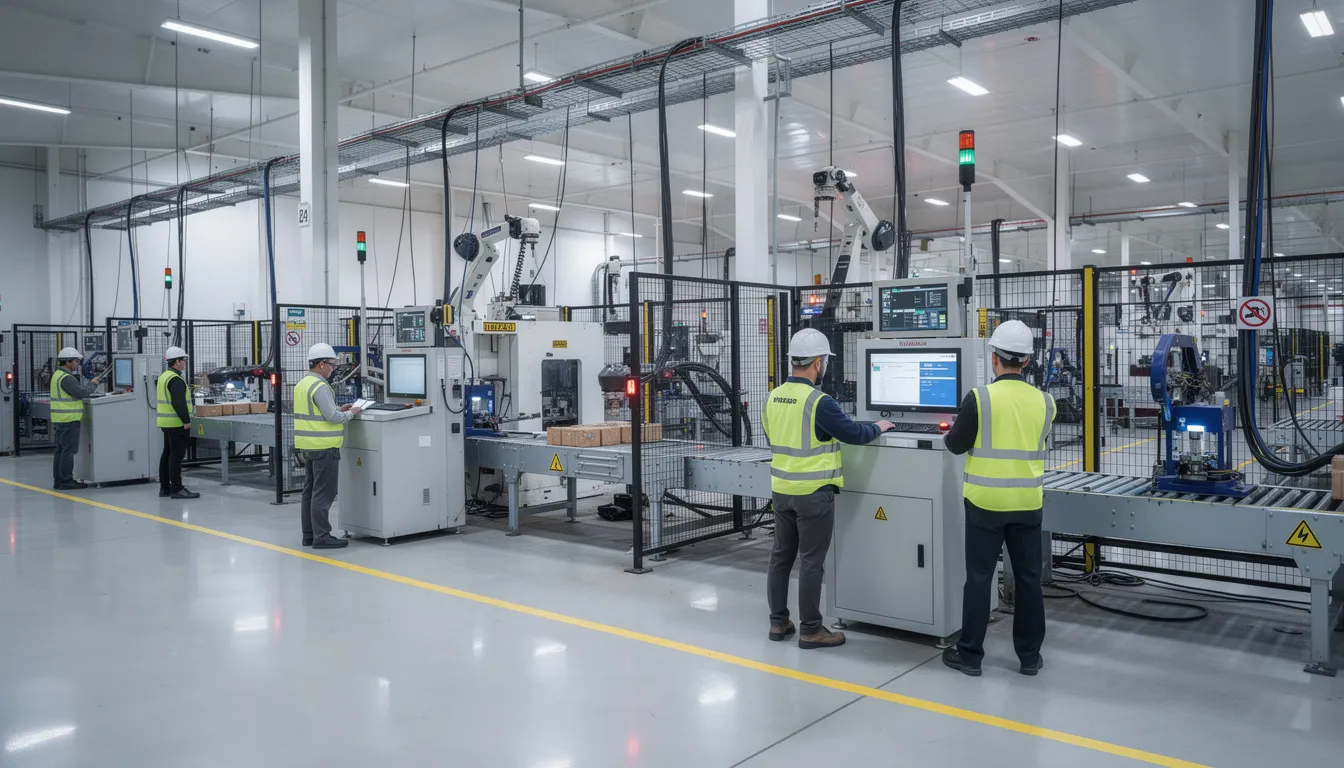
    The image depicts an industrial manufacturing floor featuring robotic arms and control panels actively functioning within a production cell, highlighting the integration of industrial automation and control systems. This environment emphasizes the importance of control systems security and cybersecurity management in operational technology settings to protect critical infrastructure.

    Modular structure of the IEC 62443 standards family

    Four-part architecture

    IEC 62443 is organized into four main groups, each targeting specific roles and abstraction levels within the industrial ecosystem. This modular architecture allows organizations to adopt the most relevant documents first, rather than implementing the entire family simultaneously.

    The General group (part 1-x) establishes foundational terminology, concepts, and models for IACS security. The Policies and Procedures group (part 2-x) defines cybersecurity management system requirements for asset owners and IACS service providers. The System group (part 3-x) addresses system-level security risk assessment and system security requirements for integrated IACS. The Component group (part 4-x) covers secure development lifecycle requirements and technical security requirements for individual components.

    Key documents in the series

    IEC 62443-1-1 introduces the terminology, concepts, and models that form the vocabulary for the entire series. IEC 62443-2-1 specifies security program requirements for establishing and maintaining a cybersecurity management system within an industrial organization. IEC 62443-2-4 defines requirements for IACS service providers system integration and maintenance activities.

    IEC 62443-3-2 provides the methodology for security risk assessment and defining zones and conduits within a system. IEC 62443-3-3 specifies system security requirements and security levels for integrated control systems. IEC 62443-4-1 addresses secure development lifecycle requirements for product suppliers. IEC 62443-4-2 defines technical security requirements for components, establishing component security assurance expectations.

    Relationship between ISA and IEC naming

    The standard family uses parallel naming conventions between ISA and IEC publications. For example, ISA-62443-3-3 and IEC 62443-3-3 contain aligned content. The series collectively spans more than 800 pages of material across technical reports and normative standards. Parts are designed to be used together, but each is formally a separate standard with its own publication and revision cycle, allowing organizations to reference specific editions as required by their governance frameworks.

    Core concepts: Zones, conduits, security levels, and foundational requirements

    IEC 62443 introduces a set of core concepts to describe industrial cybersecurity in a structured, repeatable way. These concepts provide the vocabulary for defining requirements, assessing risks, and aligning expectations among key stakeholder groups without prescribing specific security technologies.

    System under Consideration

    The System under Consideration (SuC) defines the boundary of what is being analyzed or specified. This might be a single production line, a SCADA system for a utility, or a multi-cell aerospace assembly area. Establishing the SuC is a prerequisite for conducting risk analysis and defining security controls appropriate to the operational context.

    Zones and conduits

    Zones are logical groupings of IACS assets that share similar security requirements. A zone might encompass a high-criticality flight-control component machining cell, a lower-criticality facility monitoring network, or an enterprise-facing data collection system. Assets within a zone share a common target security level.

    Conduits are controlled communication paths linking zones. Security requirements for data flows through conduits are defined to manage the transfer of information between areas with different security postures. This approach supports network segmentation strategies that limit the propagation of cyber threats across industrial networks without requiring uniform measures throughout the entire facility.

    Security levels

    IEC 62443 defines security levels (SL 0 through SL 4) as a way to express the required resistance against classes of threat actors. SL 1 addresses protection against unintentional or accidental misuse. SL 2 addresses intentional attacks using simple means and moderate resources. SL 3 addresses sophisticated attacks with significant resources. SL 4 addresses advanced persistent threats with extensive capabilities. Organizations specify target security levels (SL-T) based on risk assessment, and systems or components provide capability security levels (SL-C) that indicate their inherent security features.

    Seven foundational requirements

    Parts 3-3 and 4-2 of the series define seven foundational requirements that structure the detailed system security requirements and technical security requirements:

    • Identification and Authentication Control: Establishing and verifying identity of users, devices, and software.
    • Use Control: Enforcing authorized privileges and least-privilege principles.
    • System Integrity: Protecting systems and data from unauthorized modification.
    • Data Confidentiality: Ensuring sensitive information is protected from unauthorized disclosure.
    • Restricted Data Flow: Controlling and monitoring information flows between zones.
    • Timely Response to Events: Detecting and responding to security incidents.
    • Resource Availability: Ensuring critical systems remain available for intended operations.

    These foundational requirements connect high-level IACS security program requirements with concrete system and component-level expectations.

    Distinguishing IT and OT security in IEC 62443

    Fundamental differences in priorities

    Traditional IT systems environments prioritize data confidentiality, integrity, and availability in roughly that order. Enterprise networks, office applications, and cloud services can typically tolerate brief outages for patching and updates. In contrast, OT systems and operational technology environments prioritize availability and safety above all else. Control systems governing manufacturing processes, utility operations, and safety-critical functions must remain operational continuously. Unplanned downtime in OT environments can disrupt production, damage equipment, or create safety hazards.

    IEC 62443 is explicitly designed around these OT constraints. Long equipment lifecycles, deterministic communication requirements, safety interlocks, and the need for continuous operation shape how security measures are interpreted and applied. The standard recognizes that aggressive patching cycles and frequent system restarts, common in IT environments, may be impractical or dangerous in operational technology environments.

    Shared concepts with OT-specific interpretation

    The standard family still addresses IT security concepts such as authentication, logging, data protection, and access control. However, IEC 62443 interprets these concepts in a way that reflects OT-specific requirements and risk trade-offs. For example, identification and authentication controls must function reliably without introducing latency that could disrupt real-time control loops.

    Aerospace and MRO examples

    In aerospace manufacturing and MRO operations, the IT/OT distinction manifests in concrete scenarios. A CNC machine tool cell where unplanned downtime disrupts flight hardware deliveries represents a high-availability OT environment. A test stand where control software interacts with high-energy systems subject to process safety standards requires careful integration of cybersecurity and safety requirements. Shopfloor terminals running digital work instructions may interface with both MES and ERP systems (IT) and machine controllers (OT), creating convergence points where both perspectives apply.

    IEC 62443 provides a vocabulary to align IT security teams, OT engineers, and production management. The standard defines roles and shared concepts without prescribing a particular organizational structure, enabling organizations to coordinate control systems cybersecurity standards across functions.

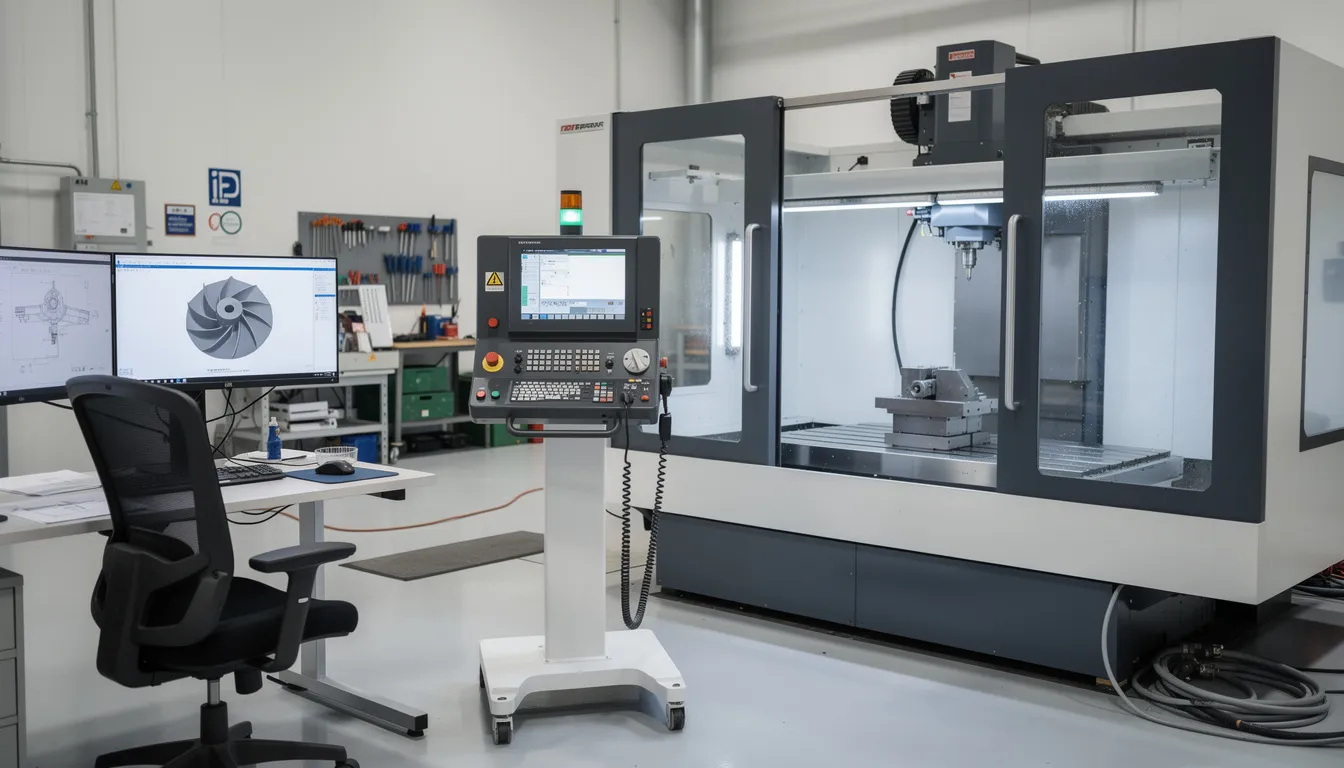
    The image depicts an aerospace CNC machining center featuring an operator workstation and an industrial control panel, illustrating a sophisticated setup for industrial automation. This environment emphasizes the importance of control systems security and operational technology, highlighting the need for robust cybersecurity measures in critical infrastructure.

    Relevance of IEC 62443 for manufacturing, aerospace, and MRO operations

    Connectivity and convergence in modern manufacturing

    IEC 62443 is particularly relevant for modern manufacturing and aerospace operations where OT systems are increasingly connected to enterprise IT, supplier networks, and cloud-based analytics platforms. Industry 4.0 initiatives have expanded the attack surface for industrial automation control systems, making structured approaches to OT security essential. The standard provides a framework for addressing cybersecurity risks that arise when production systems, work instructions, and quality data flow across previously isolated boundaries.

    Supporting key manufacturing concerns

    The framework supports several operational concerns central to aerospace manufacturing and MRO:

    • Maintaining predictable production schedules and turnaround times by protecting control systems that govern manufacturing execution
    • Protecting integrity of process parameters, digital work instructions, and test results that feed quality and compliance records
    • Ensuring traceability and auditability of control changes across facilities and suppliers participating in complex programs

    Connection to aerospace regulatory and quality frameworks

    Aerospace operations already navigate regulatory and quality frameworks including AS9100, FAA and EASA oversight, NADCAP audits, and ITAR requirements. IEC 62443 provides complementary IACS-focused expectations for critical infrastructure protection, but does not replace sector-specific regulations. The standard’s structured approach to defining zones, security levels, and security requirements can support regulatory compliance efforts by establishing consistent terminology and expectations for industrial automation and control systems security.

    Connect981 perspective on IEC 62443 alignment

    From Connect981’s perspective, a unified operations layer that connects ERP, MES, documentation, and shopfloor execution benefits from alignment with IEC 62443 concepts. Clear definition of systems and zones across multiple plants and suppliers supports consistent governance. Structured handling of configuration data and production records feeding traceability and quality systems reflects the integrity requirements central to the standard. Integration of supplier data and remote services into the broader OT and IT systems landscape can reference the conduit and zone concepts to maintain appropriate security controls.

    Concrete manufacturing scenarios illustrate this relevance. A multi-site wing assembly program with shared routing and inspection workflows spans multiple zones, each with defined security requirements. An MRO facility managing serialized components with long service histories and distributed data sources must maintain control system solutions that protect the integrity of maintenance records across the component lifecycle.

    The image depicts MRO technicians diligently working on various aircraft components within a spacious hangar environment, showcasing their expertise in maintaining control systems and ensuring the safety of critical infrastructure. The scene highlights the importance of industrial automation and control systems in aviation maintenance, emphasizing the need for robust cybersecurity practices to protect operational technology.

    Roles and responsibilities across the industrial ecosystem

    Stakeholder categories in IEC 62443

    IEC 62443 assigns expectations to different stakeholder groups involved with IACS. The standard recognizes that industrial cybersecurity is not the responsibility of any single party, but rather emerges from coordinated efforts across asset owners, product suppliers, system integrators, and service providers.

    Asset owner responsibilities

    Asset owners, typically the organizations operating industrial facilities, define required security levels for their systems based on security risk assessment. They establish and maintain a cybersecurity management system, coordinate cybersecurity practices across sites, and implement continuous monitoring and response capabilities. Asset owners are responsible for ensuring that the combined system meets target security levels, even when integrating components from multiple suppliers.

    Product supplier responsibilities

    Product suppliers, including OEMs of control system components, design and document component security capabilities in line with IEC 62443-4-1 and 4-2. Secure development lifecycle requirements ensure that products are designed with security in mind from the outset. Suppliers document the security levels components can achieve and provide information needed for integration and operation.

    Integrator and service provider responsibilities

    System integrators combine components from multiple suppliers into systems that meet defined security requirements. They are responsible for ensuring that the integrated system achieves the target security levels specified by asset owners. IACS service providers, including those providing maintenance, engineering, and remote support, must meet requirements defined in IEC 62443-2-4 for documentation, testing, and lifecycle support.

    Coordination in aerospace environments

    In aerospace manufacturing and MRO environments, multiple parties must coordinate around consistent terminology and requirements. Internal engineering teams, external equipment OEMs, specialized MRO service providers, and digital platform vendors all contribute to the security posture of connected production systems. IEC 62443 provides the shared vocabulary that enables this coordination without prescribing specific organizational structures.

    Integration with broader standards and governance frameworks

    IEC 62443 is often used alongside other international and sectoral standards. ISO/IEC 27001 addresses information security management for enterprise IT systems. The NIST Cybersecurity Framework provides a risk-based approach applicable across sectors. Process safety standards such as IEC 61511 address functional safety for industrial processes. Each covers distinct but related domains.

    IEC 62443 focuses specifically on IACS and OT, while ISO/IEC 27001 primarily addresses information security for enterprise IT. Organizations commonly map requirements between these frameworks to achieve unified governance across IT and OT environments. The zone and conduit concepts from IEC 62443 can complement higher-level risk and compliance frameworks, providing specific vocabulary for industrial networks and critical systems within broader governance structures.

    For aerospace operations already managing AS9100, FAA, EASA, and ITAR compliance, IEC 62443 offers additional structure for addressing cybersecurity risks in production and MRO environments. The standard’s terminology for security levels, foundational requirements, and system security assurance can support audit readiness and consistent reporting across industry sectors.

    From the perspective of a connected operations platform like Connect981, aligning data models and workflows with IEC 62443 concepts supports consistent reporting, documentation, and audit readiness across factories, MRO facilities, and suppliers. The framework provides a reference for coordinating digital workflows and external networks without creating conflicts with existing regulatory compliance requirements.

    Practical considerations and limitations when applying IEC 62443

    Phased adoption

    The IEC 62443 series is extensive, covering hundreds of pages across multiple parts. Organizations typically phase their adoption according to role and priority. Asset owners may begin with IEC 62443-2-1 to establish a cybersecurity management system, while product suppliers focus on IEC 62443-4-1 and 4-2 for secure development and component requirements. This modular approach allows organizations to adopt the most relevant documents first without requiring simultaneous implementation of the entire family.

    Contextual factors in industrial environments

    Industrial plants and aerospace operations present contextual factors that affect how IEC 62443 requirements are interpreted and applied. Prevalence of legacy control systems with limited security capabilities, heterogeneous vendor landscapes spanning multiple generations of equipment, and multi-decade asset lifecycles all influence implementation approaches. The standard family intentionally leaves room for organizations to interpret and implement requirements in line with their own risk governance and operational constraints.

    Ongoing evolution of the standard

    Different parts of the standard family mature at different times, with revisions and new technical reports periodically published through the IEC and ISA. Organizations must track applicable editions and updates to ensure their practices remain aligned with current expectations. The ISA Global Cybersecurity Alliance continues to coordinate development and provide guidance on applying the series across industry sectors including the industrial process sector, discrete manufacturing, and critical infrastructure.

    Conclusion: IEC 62443 as a reference point for secure industrial operations

    IEC 62443 provides a structured, role-aware framework for describing and specifying cybersecurity requirements for industrial automation and control systems across industries. The series establishes clear scope, modular structure, and core concepts including zones, conduits, security levels, and seven foundational requirements. The explicit distinction between IT and OT security ensures that the framework addresses the unique constraints of critical functions in operational technology environments.

    For manufacturing, aerospace production, and MRO operations, IEC 62443 offers particular relevance. Digital traceability, controlled workflows, and cross-site consistency depend on systems where integrity and availability are paramount. The framework provides vocabulary and expectations that support coordination among engineering, operations, suppliers, and enterprise governance functions managing critical assets across complex programs.

    From Connect981’s perspective, standards such as IEC 62443 form a foundational reference for designing and governing digital industrial operations. The framework enables alignment between operational technology security requirements and the connected workflows that define modern aerospace manufacturing and MRO, supporting organizations as they maintain control system solutions that meet evolving expectations for industrial cybersecurity.

  • NIST 800-53 Security Controls: Catalog Overview and Industrial Context

    NIST 800-53 Security Controls: Catalog Overview and Industrial Context

    What is NIST SP 800-53?

    NIST Special Publication 800-53, Revision 5, finalized in September 2020, is a comprehensive catalog of security and privacy controls for information systems and organizations. Published by the National Institute of Standards and Technology, this document provides over 1,000 individual security controls organized across 20 control families. The catalog serves as a structured reference for describing, documenting, and evaluating safeguards that protect organizational operations, data, and systems from a range of threats including hostile attacks, natural disasters, structural failures, and insider threats.

    The publication was originally developed for U.S. federal information systems subject to the Federal Information Security Management Act. However, Revision 5 deliberately removed the word “federal” from its title and scope language, positioning NIST 800-53 as a broadly applicable control catalog. This shift reflects the reality that federal government agencies, defense contractors, critical infrastructure operators, and private sector organizations increasingly share common security requirements and benefit from a unified vocabulary for describing expected safeguards.

    NIST SP 800-53 is maintained by the Joint Task Force, which includes representatives from civil, defense, and intelligence communities. The catalog itself does not prescribe how an organization must implement controls. Instead, it enumerates standardized control statements, organizes them into families, and provides discussion and enhancement options for each. This article is a descriptive overview of the catalog and its role in federal and industrial contexts, not a guide to selecting or implementing controls or achieving compliance.

    Key attributes of NIST 800-53 as a catalog:

    • Contains over 1,000 security and privacy controls
    • Organized into 20 distinct control families
    • Provides base controls and optional control enhancements
    • Technology-neutral and adaptable to different system types
    • Serves as a reference vocabulary, not a rigid compliance checklist
    • Maintained by NIST with input from multiple federal communities

    The image depicts a secure modern data center featuring rows of server racks illuminated by blue lighting, emphasizing the importance of security controls and risk management strategies in protecting sensitive data. This environment highlights the implementation of NIST 800 53 security and privacy controls, ensuring robust physical and environmental protection for federal information systems.

    Why NIST 800-53 Exists and How the Catalog is Structured

    The Federal Information Security Management Act of 2002, updated as FISMA 2014, established the requirement for a common, repeatable set of security controls across federal agencies. Before NIST 800-53, agencies often developed their own control sets, leading to inconsistent security posture and difficulty comparing the effectiveness of safeguards across government information systems. The catalog emerged to address this fragmentation by providing a single authoritative reference.

    A control catalog is fundamentally different from a compliance standard or management system. It is an organized, technology-neutral listing of security and privacy safeguards, each with a standardized identifier (such as AC-2 for Account Management or AU-6 for Audit Record Review), a control statement describing the expected behavior, discussion text explaining context and intent, and possible enhancements that add rigor or specificity. The catalog functions as a reference library that organizations can draw from based on their risk management strategy, system categorization, and operational context.

    NIST 800-53 supports the NIST Risk Management Framework by providing the control content that RMF steps reference during system authorization and continuous monitoring. The catalog is divided into 20 control families in Revision 5, covering functional areas such as:

    Family ID

    Family Name

    Focus Area

    AC

    Access Control

    Managing system access and user privileges

    AU

    Audit and Accountability

    Logging and monitoring activities

    AT

    Awareness and Training

    Security training and education

    CM

    Configuration Management

    System baseline and change control

    CP

    Contingency Planning

    Business continuity and recovery

    IA

    Identification and Authentication

    User and device identity verification

    IR

    Incident Response

    Handling security incidents

    MA

    Maintenance

    System upkeep and maintenance controls

    MP

    Media Protection

    Protecting storage media

    PS

    Personnel Security

    Workforce-related safeguards

    PE

    Physical and Environmental Protection

    Facility security

    PL

    Planning

    Security planning documentation

    PM

    Program Management

    Organization-wide security programs

    RA

    Risk Assessment

    Identifying and evaluating risks

    CA

    Security Assessment and Authorization

    Evaluating control effectiveness

    SC

    System and Communications Protection

    Network and data protection

    SI

    System and Information Integrity

    Malware protection and integrity verification

    SR

    Supply Chain Risk Management

    Third-party and vendor risks

    PT

    PII Processing and Transparency

    Privacy controls for sensitive data

    Controls within this framework can be used for both security and privacy purposes. Some controls explicitly address privacy risks and the handling of personally identifiable information.

    Revision 5 Control Families and Key Additions

    Revision 5 represents a major modernization of the catalog to address cloud computing, cyber physical systems, mobile platforms, and supply chain contexts. Released in September 2020, this revision expanded the control families from 18 to 20, explicitly adding two new families:

    • PT (Personally Identifiable Information Processing and Transparency): Addresses privacy controls including consent management, data minimization, and transparency requirements for handling sensitive data
    • SR (Supply Chain Risk Management): Addresses risks in third-party vendor relationships, software supply chains, and services acquisition processes

    The 20 families span policy, operations, technical safeguards, and program management. Each control family groups conceptually related controls. For example, the access control family covers user access provisioning, remote access logging, account management, and least privilege principles. The configuration management family addresses baseline configurations, change control, and system component inventories.

    The catalog distinguishes between base controls and control enhancements:

    • Base controls represent the minimum safeguard expected to address a particular security or privacy objective
    • Control enhancements build on base controls, adding strength, rigor, automation requirements, or additional conditions

    Organizations must first satisfy base controls before adding enhancements. This structure allows the catalog to serve organizations with varying risk profiles and security requirements.

    NIST SP 800-53B, released alongside Revision 5, provides example security control baselines. These three security control baselines correspond to Low, Moderate, and High impact levels, plus a separate privacy baseline. The baselines suggest which controls and enhancements are appropriate for systems categorized at each impact level. However, the baselines themselves are separate from the catalog and represent one approach to control selection.

    Federal Relevance: FISMA, RMF, and Government Use

    NIST 800-53 serves U.S. federal civilian agencies, the Department of Defense, and the Intelligence Community as the primary security and privacy controls catalog referenced in FISMA-related programs. Federal agencies are required to implement appropriate security controls based on the categorization of their information systems, making the catalog foundational to federal computer security and risk management activities.

    Federal information systems are categorized under FIPS 199, which establishes Low, Moderate, and High impact levels based on the potential adverse effects of a security breach on organizational operations, assets, or individuals. These categorizations point to the control baselines defined in SP 800-53B, which in turn draw specific controls from the SP 800-53 catalog. This tiered approach allows agencies to implement security proportional to the sensitivity and criticality of their systems and data.

    The NIST Risk Management Framework, documented in SP 800-37, uses 800-53 controls throughout its lifecycle steps:

    1. Categorize the system based on mission impact
    2. Select controls from the 800-53 catalog based on categorization
    3. Implement the selected controls
    4. Assess control effectiveness using SP 800-53A procedures
    5. Authorize the system based on risk determination
    6. Monitor controls on an ongoing basis

    Companion publications support different aspects of this process. SP 800-53A provides security assessment procedures for evaluating whether existing controls are implemented effectively. SP 800-53B provides the baseline selections that link system categorization to specific control requirements. These documents work together to form a comprehensive approach to protecting organizational operations and maintaining organizational systems.

    U.S. federal cloud environments, including FedRAMP-authorized offerings, typically map their technical and procedural safeguards back to NIST 800-53 controls as part of their authorization documentation. Cloud service providers seeking to serve federal government agencies document how their services address each required control, creating a shared vocabulary between service providers and agency customers.

    The image depicts a federal government office building prominently displaying the American flag, symbolizing national security and the operational integrity of federal agencies. This structure represents the importance of implementing appropriate security controls and maintaining a robust security posture to protect sensitive data within federal information systems.

    Industrial and Aerospace Relevance Beyond the Federal Sector

    While NIST 800-53 originated for federal systems, Revision 5’s broader language has led to widespread adoption as a reference catalog in critical infrastructure sectors, including aerospace manufacturing and MRO operations. Organizations that never directly interact with federal information systems increasingly encounter 800-53 terminology through their customers, partners, and supply chain relationships.

    Large industrial organizations, primes, and tiered suppliers in aerospace often encounter NIST 800-53 through:

    • Defense contracting requirements: Systems supporting DoD programs may reference 800-53 controls or related publications such as NIST 800-171 for protecting Controlled Unclassified Information
    • Government-funded R&D environments: Research and development operations handling federal data may need to demonstrate alignment with federal security requirements
    • Customer expectations: Primes and major aerospace customers increasingly structure their internal control sets with NIST publications, expecting suppliers to speak the same language
    • Critical infrastructure plan alignment: Aerospace operations often fall under critical infrastructure designations that reference NIST frameworks

    Control areas particularly relevant to aerospace digital operations include:

    Control Family

    Industrial Relevance

    Access Control (AC)

    Shopfloor access, user provisioning, role-based permissions for production systems

    Configuration Management (CM)

    Work instruction version control, system baseline management

    System and Communications Protection (SC)

    Secure data transfer between sites and suppliers, encryption requirements

    Supply Chain Risk Management (SR)

    Supplier data sharing, third-party software components, vendor assessments

    Incident Response (IR)

    Handling cybersecurity risks and security incidents affecting production

    Audit and Accountability (AU)

    Traceability, remote access logging, audit trails for compliance

    From the perspective of a digital operations platform like Connect981, these control areas align with everyday operational concerns. An aerospace operations platform may need to interface with customers that structure their security requirements using NIST 800-53 terminology. Understanding this vocabulary helps bridge conversations between plant managers, IT security teams, and compliance stakeholders when evaluating digital workflows, traceability systems, and supplier data exchange.

    In industrial environments, NIST 800-53 typically serves as a technical reference vocabulary for describing expected safeguards, rather than as a regulatory certification framework. Organizations use it to articulate security objectives and compare approaches across suppliers and partners.

    The image depicts a bustling aerospace manufacturing floor, where workers are actively assembling various aircraft components, surrounded by advanced machinery and tools. This environment emphasizes the importance of security controls and risk management strategies, essential for protecting sensitive data and ensuring the integrity of federal information systems.

    NIST 800-53 and the Nature of Control Catalogs

    A control catalog is a structured, technology-agnostic enumeration of security and privacy controls used to design policies, architectures, and assurance activities. Catalogs like NIST 800-53 provide common language and structure through standardized identifiers, control titles, control statements, and enhancements. They function as neutral building blocks without dictating specific tools, products, or implementation tactics.

    NIST 800-53 distinguishes between controls operating at different organizational levels:

    • Organizational or program-level controls (PM, PL): Address organization’s security planning policies, information security program plan development, and program management activities
    • System-level technical safeguards (SC, SI): Address communications protection, information integrity, malware protection, and system security functions
    • Human-centric or process-oriented controls (AT, PS, IR): Address security training, personnel security, and incident response procedures

    The catalog covers both security functionality and assurance. From a functionality perspective, controls describe what safeguards should do, such as enforce access restrictions or encrypt sensitive data in transit. From an assurance perspective, controls address how organizations verify that safeguards work as intended through security assessment, continuous monitoring, and oversight activities.

    This dual coverage explains why NIST 800-53 is often used when designing assurance programs for complex digital operations. It provides vocabulary for describing both what protections exist and how their effectiveness is evaluated.

    A catalog is fundamentally different from a compliance standard or management system specification:

    Catalog (NIST 800-53)

    Management System Standard

    Enumerates controls and safeguards

    Specifies governance and operational requirements

    Technology-neutral reference

    Defines how to plan, operate, and improve

    Flexible selection based on risk

    Certification against defined requirements

    Building blocks for multiple approaches

    Structured framework for organizational processes

    NIST 800-53 can underpin multiple approaches to security management, serving as a reference that different frameworks and programs draw from according to their specific needs.

    Conceptual Comparison: NIST 800-53 and ISO/IEC 27001

    ISO/IEC 27001, most recently updated in 2022, is an international standard that defines requirements for an Information Security Management System. The standard is supported by a control set in Annex A, which is linked in detail to ISO/IEC 27002. While both NIST 800-53 and ISO 27001 address information security, they operate at different layers and serve different purposes.

    NIST 800-53 is a detailed control catalog containing hundreds of individual security and privacy controls organized into 20 families. It provides granular control statements that describe specific safeguards, behaviors, and technical requirements. The catalog is designed to be selected from and tailored based on system categorization and organizational risk assessment.

    ISO/IEC 27001 is a management system framework specifying how an organization plans, operates, and improves its information security program. It addresses governance, risk management, leadership commitment, resource allocation, and continual improvement. Annex A provides a structured but shorter list of controls that organizations consider when implementing their ISMS, but the emphasis is on the management system rather than exhaustive control enumeration.

    Key conceptual differences:

    Aspect

    NIST 800-53

    ISO/IEC 27001

    Origin

    U.S. National Institute of Standards

    International Organization for Standardization

    Primary purpose

    Detailed control catalog

    Management system specification

    Control count

    Over 1,000 controls with enhancements

    93 controls in Annex A (2022 version)

    Certification

    No direct certification

    Formal third-party certification available

    Update cycle

    Periodic revisions by NIST

    Periodic revisions by ISO

    Many organizations build internal mappings between NIST 800-53 controls and ISO/IEC 27001 Annex A controls to harmonize terminology. This is common when serving both U.S. federal customers and international commercial clients. The mappings allow organizations to demonstrate that they address security concerns recognized in both frameworks without maintaining entirely separate control documentation.

    Neither framework is inherently better. They serve different purposes. Some organizations use NIST 800-53 as the underlying technical catalog for granular control statements while using ISO 27001 to structure governance, risk management, and continual improvement processes. Others focus primarily on one framework based on their customer base and regulatory environment.

    NIST 800-53, NIST Cybersecurity Framework, and Other References

    The NIST Cybersecurity Framework, first released in 2014 and updated since, organizes cybersecurity activities into five high-level functions: Identify, Protect, Detect, Respond, and Recover. CSF provides a strategic view of security objectives without prescribing specific controls, making it accessible to executives and board members while still useful for technical practitioners.

    CSF profiles often reference NIST 800-53 controls as one of several underlying catalogs that can be used to realize CSF outcomes. Critical infrastructure operators and industrial organizations frequently adopt CSF as their strategic framework while using 800-53 for detailed control statements. This layered approach allows organizations to communicate security posture at multiple levels of abstraction.

    NIST provides mappings between CSF subcategories and 800-53 controls, enabling organizations to:

    • Express high-level security objectives in CSF language for executive communication
    • Retain 800-53 for detailed control statements in technical documentation
    • Trace strategic objectives to specific implemented safeguards
    • Maintain consistency between governance reporting and operational controls

    Similar mapping work exists between 800-53 and other publications:

    • NIST 800-171: Protects Controlled Unclassified Information in non-federal systems, derived from 800-53 with tailoring for contractor environments
    • FedRAMP: Uses 800-53 baselines for cloud service provider authorization
    • CMMC: Defense contractor cybersecurity maturity model that references NIST control structures

    These relationships allow different documents to share a common control vocabulary. Organizations operating across multiple compliance regimes can map their current security controls to various framework requirements, reducing duplication of effort and improving consistency.

    NIST 800-53 in Cloud and Industrial Digitalization Contexts

    Major cloud service providers publish mappings between their service controls and NIST 800-53 to support federal and regulated workloads. AWS, Microsoft Azure, Google Cloud Platform, and other providers document how their infrastructure, platform, and application services address 800-53 controls. These mappings illustrate how the catalog functions as a common reference across diverse technology stacks.

    For industrial and aerospace operations, this has practical implications. As factories, MRO facilities, and supplier networks rely more heavily on connected platforms, organizations increasingly model their technical and procedural safeguards using catalog-based references like 800-53. The catalog provides vocabulary for discussing:

    • Data protection requirements for production systems
    • Access control expectations for shopfloor applications
    • Communications protection standards for supplier integrations
    • Audit and accountability requirements for traceability systems

    From the perspective of a digital operations platform like Connect981, alignment with customers’ chosen catalogs is often part of integration and assurance discussions. Aerospace primes and defense contractors may specify security requirements using NIST 800-53 terminology, expecting their suppliers and platform vendors to understand and respond to that vocabulary.

    Using a common catalog lexicon simplifies communication between plant managers, IT security teams, and compliance stakeholders when evaluating:

    • Digital work instruction platforms and version control systems
    • Shopfloor execution and work order tracking applications
    • Supplier workflow integration and shared data visibility
    • Traceability systems and audit-ready documentation

    The catalog does not dictate specific technologies or architectures, but it provides a shared framework for articulating security requirements and evaluating whether proposed solutions address relevant cybersecurity risks and privacy risks.

    The image depicts a network of interconnected industrial manufacturing equipment featuring digital displays, showcasing advanced technology in a factory setting. This setup emphasizes the importance of security controls and risk management strategies, essential for protecting sensitive data and ensuring operational integrity in compliance with NIST 800 53 standards.

    Summary: Role of NIST 800-53 as a Security Controls Catalog

    NIST SP 800-53 Rev. 5 is a mature, widely recognized catalog of security and privacy controls, originally rooted in U.S. federal requirements and now broadly referenced across sectors. Its primary function is to provide a structured, detailed control vocabulary that can underpin risk management approaches, security architectures, and assurance programs. The catalog contains over 1,000 controls organized into 20 families, covering everything from access control and incident response to supply chain risk management and privacy protections.

    Organizations often relate NIST 800-53 to other frameworks, including ISO/IEC 27001 and the NIST Cybersecurity Framework, using mappings and harmonized taxonomies rather than treating them as mutually exclusive choices. This interoperability allows organizations to leverage existing controls to satisfy multiple requirements, communicate with different stakeholders using appropriate vocabulary, and maintain consistency across governance and technical documentation.

    This overview has focused on the conceptual and structural aspects of the catalog and its relevance to federal and industrial contexts. Understanding NIST 800-53 as a control catalog, rather than a prescriptive compliance mandate, clarifies its role in security discussions. For aerospace manufacturing and MRO operations, familiarity with this vocabulary supports effective communication with customers, partners, and internal stakeholders who reference these controls in their security requirements. The catalog provides common ground for discussing how digital platforms, supplier integrations, and connected operations protect organizational operations and national security interests.

  • What is ISA-88? A Practical Overview of the Batch Control Standard

    What is ISA-88? A Practical Overview of the Batch Control Standard

    What is ISA-88?

    ISA-88, formally known as ANSI/ISA-88.01-1995 and also referenced as S88 or IEC 61512, is an international standard that defines models and terminology for batch control in manufacturing processes. The standard originated from the work of the International Society of Automation (ISA) SP88 committee in the early 1990s, driven by the need for a consistent set of concepts that could be applied across plants, vendors, and automation platforms. Rather than prescribing specific control algorithms or batch control software configurations, ISA-88 provides a structured framework for describing how batch processes work, how equipment is organized, and how recipes translate product requirements into executable procedures.

    The standard was developed primarily for batch process industries such as pharmaceuticals, specialty chemicals, food and beverage, and biotechnology. However, the underlying concepts have proven useful in any manufacturing environment where finite quantities of material are produced through defined sequences of processing activities on shared or reusable equipment. ISA-88’s main contribution is the conceptual separation of recipe, equipment, and process, which provides a common language for control engineers, IT teams, operations personnel, and management. This separation allows organizations to describe what they make, where they make it, and how they make it as distinct but connected concerns.

    Connect981 works with manufacturers that often rely on ISA-88 concepts to structure their batch documentation, traceability, and shopfloor workflows, even when control systems differ across sites or supplier facilities. The models and terminology defined by the standard offer a foundation for consistent communication regardless of the specific batch automation platforms in use.

    Batch Manufacturing and Batch Control Context

    Batch production involves creating finite quantities of material by subjecting inputs to an ordered sequence of operations over a defined period, typically using equipment that can be reconfigured or reused for different products. This stands in contrast to continuous processing, where material flows through a plant without discrete start and stop points, as in large petroleum refineries or paper mills. It also differs from one-off discrete manufacturing, such as custom fabrication of a unique part, where each item may follow a distinct path.

    Many regulated and high-mix environments rely on batch logic. Pharmaceutical manufacturing, for example, produces defined lots of tablets or injectable solutions where every batch must meet strict quality specifications. Chemical processors run different formulations through shared reactors and separators. Food manufacturers produce finite runs of different product recipes on the same filling and packaging lines. In each case, batch operations coordinate what happens, when it happens, and on which equipment, covering activities such as charging materials, heating, holding, reacting, cooling, and discharging.

    The image depicts an industrial batch processing facility featuring stainless steel reactor vessels and mixing tanks, essential components in batch production. This environment highlights the use of batch control systems and automated control systems for efficient process operations and regulatory compliance in manufacturing.

    In life sciences and aerospace-related special processes, the batch concept extends to operations like composite curing, surface treatment baths, and heat treatment cycles. These batches must be tightly controlled and fully traceable to support regulatory compliance and product quality. ISA-88 provides a consistent way to model this complexity so that procedures, equipment capabilities, and recorded batch data remain aligned and auditable across different sites, systems, and even supplier networks.

    Purpose and Scope of the ISA-88 Standard

    The primary goal of ISA-88 is to define a common set of models and terminology for batch control that can be applied consistently across plants, control systems, and suppliers. Before the standard existed, batch automation was often implemented using custom, plant-specific software that made it difficult to transfer processes between sites, communicate requirements to automation vendors, or integrate systems from different manufacturers.

    ISA-88 addresses these challenges by improving efficient communication between process engineering, automation, IT, and operations teams. The standard enables modular, reusable design of batch procedures, meaning that a well-defined phase or operation can be deployed across multiple products without being rewritten for each application. It also supports regulatory compliance by providing structured data structures for batch production records, making it easier to demonstrate traceability and process consistency during audits.

    The ISA-88 standard is organized into multiple parts. Part 1 establishes the core models and terminology. Part 2 covers data structures and guidelines for languages used to represent batch logic. Part 3 extends the recipe framework to general and site recipe models that support multi-site standardization. Part 4 defines a data model for batch production records, capturing materials, activities, and process conditions. Part 5 addresses modular concepts for automated control systems, applying ISA-88 principles to reusable automation components. These parts are discussed in more detail later in this article.

    The boundaries of the standard’s scope are deliberate. ISA-88 focuses on batch control models and data structures, not on mechanical design, detailed safety interlock systems, or business planning logic. It is also technology-agnostic: the concepts apply whether batch control is implemented on PLCs, DCS platforms, SCADA systems, MES layers, or custom batch engines. Higher-level coordination may use modern platforms like Connect981 or legacy tools, and the ISA-88 framework remains applicable in either case.

    Core ISA-88 Models and Terminology

    ISA-88 defines a set of abstract models that describe batch processes from multiple perspectives. These include the process model, the physical model, and the procedural control model, along with standardized terminology such as process cell, unit, phase, and recipe. Each model provides a different view of the same manufacturing reality. The process model focuses on the scientific and chemical requirements of what must happen to the material. The physical model describes the equipment hierarchy that exists in the plant. The procedural control model captures how operations are executed over time, connecting process requirements to physical resources.

    These models give multidisciplinary teams a shared framework for discussing batch operations without getting lost in vendor-specific control code or hardware details. The following subsections introduce each model and its key components.

    ISA-88 Process Model

    The process model describes the manufacturing process in terms of what needs to happen to the material, independent of specific physical equipment. It uses a hierarchy of process, process stages, process operations, and process actions. At the top level, a process represents the complete set of steps required to transform raw materials into a final product. For example, in pharmaceutical manufacturing, this might encompass everything from raw active ingredients and excipients through to compressed tablets ready for packaging.

    Process stages break the overall process into major segments that are meaningful to process engineers and quality teams. These might include stages such as solution preparation, reaction, purification, and finishing. Each stage represents a significant portion of the overall transformation without yet specifying which tanks, reactors, or dryers will be used.

    Process operations and process actions allow further refinement. Operations capture logical steps within a stage, while actions represent elementary tasks such as charging solvent, heating to a setpoint, agitating, or holding for a defined reaction time. Throughout this hierarchy, the process model remains equipment-agnostic. This allows organizations to define a common process description that can later be mapped onto different physical installations, whether at a headquarters plant, a contract manufacturer, or a supplier facility. In aerospace-related special processes, the process model might capture stages like surface preparation, coating application, cure, and post-cure inspection, without assigning specific ovens or spray booths.

    ISA-88 Physical Model

    The physical model represents the real equipment hierarchy that exists in a manufacturing facility. ISA-88 defines levels including enterprise, site, area, process cell, unit, equipment module, and control module, though batch control typically focuses on the levels from process cell downward.

    The image depicts a factory floor filled with various processing equipment, including reactors, mixers, and control panels, essential for batch production and automation. This environment showcases the integration of batch control systems and equipment modules that support efficient process operations and regulatory compliance.

    A process cell is a collection of control equipment arranged to produce one or more products. For example, a pharmaceutical process cell might include a set of reactors, filters, and dryers that can be combined in various configurations to run several different recipes. The process cell is the scope within which batch control coordinates activities.

    Units are major pieces of physical equipment capable of carrying out unit procedures. A reactor vessel, blending tank, granulator, or autoclave would each be considered a unit. In the standard model, each unit operates on one batch at a time, making it a natural boundary for procedural execution and traceability.

    Equipment modules represent functional groupings within or across units. A dosing skid, heating loop, or clean-in-place module would be examples. Control modules sit at the lowest level and include individual devices like valves, motors, sensors, and measurement instruments. These are the components that receive basic control commands and provide feedback to higher-level logic.

    The physical model allows batch designers to reason about what each part of the plant can do, independent of any specific recipe. This makes it easier to reuse units or modules across many products and to understand capacity constraints when scheduling batch production. While ISA-88 was created for control systems, the same physical structure proves useful in higher-level digital tools for mapping work instructions, traceability, and maintenance records onto specific units and modules.

    ISA-88 Procedural Control Model

    The procedural control model describes how a batch is executed over time, using a hierarchy of procedure, unit procedure, operation, and phase. A procedure represents the complete set of steps needed to run a batch, mapped to a process cell. A unit procedure is a logical segment tied to a specific unit, such as a charging and reacting sequence that takes place entirely within a single reactor.

    Operations divide unit procedures into smaller logical steps. Phases are the smallest procedural elements, directly interacting with equipment modules and control modules. A phase might represent actions such as starting an agitator, heating and holding at a setpoint, or transferring material to a buffer tank. Phases are where sequential control and regulatory control commands are typically applied to the physical equipment.

    The procedural control model is where the separation between recipe logic and equipment capability becomes operational. The same unit might support phases used by multiple different recipes. A reactor that can heat, cool, agitate, and transfer can execute phases for dozens of products without requiring new control logic for each one.

    ISA-88 also defines standard execution states and transitions for phases and units. These include quiescent states like idle and held, transient states representing transitions, and final states indicating completion. The standard provides guidelines for unit states without prescribing PLC programming patterns or specific vendor implementations. This allows multidisciplinary teams to discuss sequence behavior and exception handling using common terminology.

    Consider a simple unit procedure: charge materials, heat to reaction temperature, hold for reaction time, cool to discharge temperature, transfer to the next unit. This sequence illustrates how the procedural control model organizes activities without specifying the exact valve sequences or controller settings that would vary by installation.

    Separation of Recipe, Equipment, and Process in ISA-88

    One of ISA-88’s defining principles is the clear separation of three concerns: what must happen to the material (process), what physical resources exist (equipment), and how a specific product is made at a given site (recipe). This separation allows each concern to be managed, documented, and changed somewhat independently.

    ISA-88 defines several recipe types that sit on top of the process and physical models. A general recipe describes a product at a high level, independent of any specific site. A site recipe adapts that general recipe to the capabilities and constraints of a particular manufacturing location. A master recipe adds equipment-specific details for a particular process cell or set of units. A control recipe is the actual executable instance created for a single batch, containing specific parameter values, material quantities, and equipment assignments.

    The process model expresses product and chemistry requirements. The physical model describes available units and modules. Recipes bind these two worlds together for a specific product on specific equipment. Recipe management becomes a structured activity rather than ad-hoc customization of control code.

    This separation creates practical benefits for organizations. Moving a recipe between sites with different equipment layouts becomes a matter of adapting the recipe at the appropriate level rather than rewriting control logic from scratch. Introducing new equipment modules does not require rethinking the entire product definition if the module can support the required phases. Change control and validation in regulated industries become more tractable when process intent, equipment capability, and recipe parameters are documented in aligned but distinct structures.

    Consider scaling a biotech fermentation process from a pilot plant to commercial production. The process model describes the fermentation requirements: media preparation, inoculation, growth phase, harvest. The pilot plant has one set of units with specific volume and control capabilities. The commercial plant has larger fermenters with different instrumentation. By maintaining the separation, the organization can adapt recipes to the new physical model without changing the underlying process definition.

    In aerospace and MRO operations, many special processes and repair routes follow similar patterns. Process requirements remain stable, specifying what must happen to achieve required material properties or surface conditions. Equipment assignments and control recipes may vary between in-house facilities, approved suppliers, or partner locations. The ISA-88 framework provides a conceptual structure for managing this variation while maintaining traceability and compliance.

    What ISA-88 Standardizes (and What It Does Not)

    ISA-88 standardizes how to describe batch processes, equipment, procedures, and data. It does not standardize how to program or configure specific batch control systems. This distinction is fundamental to understanding the standard’s role and limitations.

    What ISA-88 Standardizes

    What ISA-88 Does Not Standardize

    Common terminology for batch control objects

    Specific PLC, DCS, or MES configurations

    Conceptual models (process, physical, procedural)

    Control algorithms or tuning parameters

    Types and structure of recipes

    User interface layouts or alarm designs

    High-level data structures and relationships

    Enterprise planning logic (scheduling, capacity)

    Concepts for batch production records

    Vendor-specific file formats

    Modular automation concepts

    Manual processes implementation details

    Functional model guidelines

    Data acquisition system specifics

    The standard provides guidelines rather than rigid specifications. It establishes that a control recipe should contain a header, formula, equipment requirements, and procedure, but it does not dictate the database schema or file format used to store that information. It defines what regulatory control and basic control mean in a batch context, but it does not provide guidelines on specific tuning approaches or controller selection.

    This deliberate boundary allows ISA-88 to remain stable and vendor-neutral while giving suppliers and manufacturers freedom to innovate implementations. Organizations often map ISA-88 structures onto their own databases, MES systems, or digital operations platforms to maintain consistency from control logic through documentation and traceability without enforcing a single control technology. Connect981, for example, helps organizations structure shopfloor workflows and documentation in ways that align with ISA-88 concepts even when underlying batch control software varies across sites.

    The standard is just a standard: a conceptual framework rather than a turnkey solution. Its value lies in widespread adoption of common terminology and models that enable smooth integration across disciplines, vendors, and organizational boundaries.

    Relationship Between ISA-88 and ISA-95

    ISA-95 is a companion standard focused on integrating enterprise systems and control systems. While ISA-88 addresses the structure of batch control at the equipment and process cell level, ISA-95 defines models for how information flows between higher-level business systems (ERP, planning, MES) and lower-level control environments.

    The image depicts an overview of a manufacturing facility, showcasing a control room alongside the production floor, illustrating different operational levels within the batch production process. This setting emphasizes the integration of automated control systems and batch control software, essential for managing batch processes and ensuring regulatory compliance in production operations.

    In terms of the Purdue reference model, ISA-88 primarily addresses Levels 1 and 2, where batch operations and control logic reside, with some extension into Level 3 for batch supervision. ISA-95 covers Levels 3 and 4, defining production operations management, scheduling, performance analysis, and inventory management. Together, the standards provide guidelines for a cohesive architecture from enterprise planning through shopfloor execution.

    ISA-88 objects such as units, control recipes, and batch production records can be mapped into ISA-95’s production order, production schedule, and production performance models. Joint guidance from ISA working groups, including discussions at the World Batch Forum and related industry events, has clarified how these mappings work in practice.

    Consider a practical example: an ERP system creates a production order for a batch of specialty chemicals. This order, structured according to ISA-95 concepts, is translated into one or more control recipes and batch runs modeled according to ISA-88. As each batch executes, batch data is collected according to ISA-88’s production record concepts. Batch results then feed back as production responses and records into higher-level systems, completing the information loop.

    Connect981 typically operates in the space between ERP/PLM and on-the-floor control, where ISA-95 production models and ISA-88 batch structures both matter. The platform helps organizations orchestrate work, share data with suppliers, and maintain audit-ready histories in ways that respect both standards’ concepts. Seamless integration between these levels is increasingly important as manufacturers pursue digital transformation and require better visibility across operations, quality, and supply chain functions.

    Structure of the ISA-88 Standard Parts

    ISA-88 is a multi-part standard developed over several decades, with parts published and maintained both by ISA and as IEC 61512 standards for international adoption. Understanding the structure helps organizations determine which parts are most relevant to their operations.

    Part 1: Models and Terminology was published in the mid-1990s and remains the foundation of the standard. It defines the core process model, physical model, and procedural control model along with the vocabulary that has become widely adopted across batch industries. Any organization working with ISA 88 batch control should be familiar with Part 1 concepts.

    Part 2: Data Structures and Guidelines for Languages extends Part 1 by describing data models for batch procedures and records. It provides guidance on how to represent batch logic and procedural elements in a structured way that supports implementation across different platforms. While more technical than Part 1, Part 2 is valuable for teams designing batch control software architectures or MES integrations.

    Part 3: General and Site Recipe Models and Representation expands the recipe framework above the master and control recipe levels. It addresses how organizations can define recipes at corporate or general levels and then adapt them for specific sites, supporting multi-site standardization and technology transfer. This part is particularly relevant for large organizations with multiple manufacturing locations or extensive contract manufacturing networks.

    Part 4: Batch Production Records defines a data model for capturing and storing batch histories, including activities, materials, and process conditions. This part directly supports regulatory compliance requirements in industries like pharmaceuticals, where complete batch records are mandatory for product release. The technical report guidance in Part 4 helps organizations design systems that capture the right information in auditable formats.

    Part 5: Modular Concepts for Automated Control Systems applies ISA-88 concepts to modular, reusable automation components. This part extends the standard builds beyond traditional batch process industries to address modular equipment and plug-and-play automation scenarios that are increasingly common in flexible manufacturing.

    The IEC 61512 series represents the international adoption of ISA-88, with only minor technical differences between the ISA and IEC versions. Global manufacturers often reference the IEC designation in their documentation, particularly when working with European suppliers or regulatory bodies.

    Organizations rarely implement all of ISA-88 at once. Most selectively apply models and recipe concepts that align with their products, regulatory requirements, and legacy batch systems. The modular nature of the standard supports this approach, allowing organizations to adopt terminology and models progressively as their batch operations mature.

    For organizations managing complex batch operations across aerospace, pharmaceutical, or chemical industries, understanding ISA-88 provides a common language that bridges engineering, operations, and compliance. Connect981 helps teams put these concepts into practice through digital work instructions, traceability, and workflow management that align with how batch operations are structured and documented. To explore how your batch documentation and shopfloor workflows can benefit from this structured approach, request a demo to see the platform in action.

  • Manufacturing Operations Management Standards

    Manufacturing Operations Management Standards

    Introduction to Manufacturing Operations Management (MOM)

    Manufacturing operations management sits at the intersection of business planning and shopfloor reality. It represents the coordinated management of production operations between enterprise planning systems and physical process control. Where ERP handles long-term scheduling and resource allocation, and automation systems handle real-time machine control, manufacturing operations management occupies the middle ground: translating business intent into executable work and feeding actual results back up the chain.

    This article focuses specifically on the standards that define and measure manufacturing operations management. The goal is not to recommend software products or propose architectures. Instead, the aim is to walk through the major models and how they relate to one another.

    The term MOM gained traction in the 2000s as ISA-95 and manufacturing execution systems concepts evolved toward a broader operational scope. Before that, manufacturers often referred to MES, SCADA, or various shop floor control systems without a unifying framework. Standards such as ISA-95, IEC/ISO 62264, and ISO 22400 now offer a shared language for MOM functions, data exchanges, and performance indicators. Understanding these standards helps operations teams, engineers, and leadership speak the same language when discussing how production should be managed.

    The image depicts an industrial manufacturing floor bustling with activity, featuring automated equipment alongside workers who are monitoring production lines to ensure operational efficiency. This environment highlights the integration of smart manufacturing and quality management systems, aimed at achieving high-quality products and continuous improvement in manufacturing operations.

    What Is MOM? Definitions, Scope, and Boundaries

    At a high level, manufacturing operations management is the set of activities that manage, monitor, track, and improve manufacturing operations in real time or near-real time. It bridges the gap between what the business wants to produce and what actually happens on the production floor.

    MOM covers several operational domains that together form the entire manufacturing process:

    • Production operations: scheduling, dispatching, and tracking work orders through the production process
    • Quality operations: enforcing quality standards, inspections, and defect logging
    • Maintenance operations: coordinating equipment upkeep, repairs, and reliability tracking
    • Inventory operations: managing raw materials, work-in-progress, and finished goods on the floor

    These domains align with terminology from ISA-95 and IEC 62264, which refer to them as Production Operations Management, Maintenance Operations Management, Quality Operations Management, and Inventory Operations Management.

    The functional boundary between manufacturing operations management and adjacent systems is drawn along three zones:

    Zone

    Function

    Examples

    Planning

    Long-term and aggregate decisions about what to make, when, and with what resources

    MRP, rough-cut capacity planning, demand forecasting in ERP

    Operations Management

    Detailed scheduling, dispatching, resource allocation, and real-time coordination

    Work order management, production scheduling, workforce management

    Control

    Real-time actuation, feedback loops, and machine-level automation

    PLCs, SCADA, DCS, sensor networks

    Standards frame MOM at “Level 3” in the classic automation hierarchy. This places it above real-time control (Level 2) and below business planning (Level 4). The Level 3 boundary is where production efficiency meets business processes. Planning largely happens at Level 4, execution and coordination at Level 3, and closed-loop control at Levels 2 through 0.

    Definitions vary slightly between ISA, ISO, and MESA documents, but all center on the same idea: orchestrating the execution of production in alignment with business plans while collecting performance data to support continuous improvement.

    Why Multiple MOM-Related Standards Exist

    Different standards bodies developed MOM-related specifications to address complementary needs. ISA focused on functional models and integration. IEC and ISO addressed international harmonization and performance measurement. MESA and the World Batch Forum (WBF) historically contributed best practices and batch-specific guidance.

    The timeline helps explain the landscape:

    • ISA-95 Part 1 was first published in 1995, with subsequent parts released through the early 2000s
    • ISA-95 was later adopted as IEC 62264 and subsequently as ISO 62264, creating alignment across international standards bodies
    • ISO 22400, focusing on KPIs for manufacturing operations, was published between 2014 and 2017

    Regional and sector-specific regulations also influenced the proliferation of MOM-adjacent guidance. FDA regulations in life sciences demand traceability and validation. EN standards in Europe address safety and environmental regulations. AS9100 in aerospace requires documented quality management systems and process control.

    The overlapping scopes are intentional. The primary mom standards describe different aspects of the same operational reality:

    Standard

    Primary Focus

    ISA-95 / IEC 62264

    What functions exist and how information flows between levels

    ISO 22400

    How to measure and quantify MOM performance

    ISA-88

    How batch processes should be structured and controlled

    Sector standards (AS9100, IATF 16949)

    Industry-specific quality and compliance requirements

    Convergence efforts exist. The adoption of ISA-95 as IEC/ISO 62264 represents one major unification. However, complete standardization has not been achieved because different use cases and stakeholder communities have distinct priorities. A discrete electronics manufacturer has different needs than a batch pharmaceutical producer. A global supply chain network has different integration challenges than a single-site operation.

    The goal of multiple standards is interoperability and comparability, not vendor lock-in. When organizations reference these standards, they can describe their manufacturing operations using internationally recognized terminology that suppliers, auditors, and partners understand.

    The Role of ISA-95 and IEC/ISO 62264 in MOM

    ISA-95 is the foundational family of standards for describing manufacturing operations management functions and information flows. Developed by the International Society of Automation, its parts were later adopted as IEC 62264 and then ISO 62264. This makes ISA-95 the backbone for discussing what MOM does and how it connects to the rest of the enterprise.

    The main conceptual contributions of ISA-95 and IEC 62264 include:

    • A functional hierarchy spanning Levels 0 through 4
    • Models for production, quality, maintenance, and inventory management
    • Object models defining the data entities exchanged between enterprise and control levels
    • Activity models describing how manufacturing operations are managed

    ISA-95 defines the Level 3 space where a manufacturing operations management system lives. This distinguishes it from enterprise resource planning at Level 4 and automation and control at Levels 0 through 2.

    The key elements of the standard are organized across multiple parts:

    • Part 1: Models and terminology for enterprise-control integration
    • Part 2: Object models and attributes for information exchange
    • Part 3: Activity models of manufacturing operations management
    • Parts 4 and beyond: Object models for integration, batch specifics, and extended scenarios

    MOM in ISA-95 is decomposed into four major domains that cover actual manufacturing operations activities:

    1. Production Operations Management: managing work orders, production scheduling, dispatching, and tracking
    2. Maintenance Operations Management: coordinating equipment maintenance and reliability
    3. Quality Operations Management: enforcing quality control, inspections, and nonconformance handling
    4. Inventory Operations Management: tracking materials through the shopfloor

    These domains work together to ensure that manufacturing processes execute according to plan while adapting to real-time conditions.

    ISA-95 Levels and the MOM Boundary

    The classic ISA-95 levels provide a conceptual stack from business planning down to physical processes:

    Level 4: Business Planning and Logistics This is where ERP, supply chain management, and long-term planning reside. Decisions at this level involve what products to make, in what quantities, and when. Demand forecasting, master scheduling, and financial planning happen here. The time horizon spans days, weeks, or months.

    Level 3: Manufacturing Operations Management This is the MOM layer. Detailed scheduling, dispatching, resource allocation, and real-time tracking occur here. The manufacturing operations management system translates Level 4 plans into actionable work instructions and coordinates production efficiency on the floor. Time horizons range from seconds to shifts to days.

    Level 2: Supervisory Control SCADA systems, HMIs, and supervisory logic operate at this level. They provide operators with visibility into process status and enable manual overrides when needed.

    Level 1: Direct Control PLCs, controllers, and feedback loops manage individual pieces of equipment. They execute setpoints and maintain process parameters.

    Level 0: Physical Process This is the actual production process: machines running, materials flowing, parts being assembled or transformed.

    The boundaries help define responsibilities and data exchanges. Planning decisions flow down from Level 4 to Level 3. Execution instructions flow from Level 3 to Levels 2 through 0. Status, measurements, and production performance flow back up the stack.

    In practice, data can cross levels in near real time. Modern systems architectures apply various integration patterns to enable this. But the logical separation in ISA-95 helps standardize what each layer is responsible for and what information it should provide.

    ISO 22400: KPIs and Metrics for MOM

    ISO 22400 is a series of standards that define key performance indicators and terminology for manufacturing operations management. While ISA-95 describes what functions exist, ISO 22400 describes how to measure them.

    ISO 22400 provides:

    • Definitions of MOM-related terms such as availability, performance, and quality rate
    • Formulas for KPIs, including Overall Equipment Effectiveness (OEE)
    • Guidance on interpreting KPIs for different production contexts

    The standard helps organizations achieve standardized processes for performance measurement. When two plants calculate OEE using ISO 22400 definitions, the results are comparable. This matters for operations leaders managing multi-site operations or tracking improvements over time.

    ISO 22400-2 focuses specifically on KPIs for manufacturing operations and references concepts from ISA-95 and IEC 62264. This alignment ensures that metrics correspond to the operations models defined in those standards.

    Key categories of KPIs in ISO 22400 include:

    Category

    Example KPIs

    Throughput and time

    Cycle time, throughput rate, production time

    Quality

    First-pass yield, defect rate, scrap ratio

    Equipment

    OEE, availability, performance rate

    Maintenance

    MTBF (mean time between failures), MTTR (mean time to repair)

    Inventory

    Stock turns, inventory accuracy

    The position of ISO 22400 in the standards landscape is clear: ISA-95 describes what MOM functions and information objects exist; ISO 22400 describes how to quantify MOM performance. Together, they enable organizations to define operations and measure results using internationally recognized methods.

    The image depicts a quality inspection station within a manufacturing facility, featuring various measurement equipment designed to ensure adherence to quality management systems and standards. This setup plays a crucial role in the production process, contributing to operational efficiency and the continuous improvement of product quality.

    Relating ISO 22400 KPIs to ISA-95 MOM Functions

    The relationship between ISO 22400 KPIs and ISA-95 operations domains is direct. Each domain generates data that feeds specific metrics:

    Production Operations Management

    • OEE captures availability, performance, and quality in a single metric
    • Throughput and cycle time measure production process speed
    • Production scheduling adherence tracks plan versus actual

    Maintenance Operations Management

    • MTBF indicates equipment reliability
    • MTTR measures how quickly issues are resolved
    • Planned versus unplanned maintenance ratios show maintenance management maturity

    Quality Operations Management

    • First-pass yield measures how often products pass inspection without rework
    • Defect density tracks quality issues per unit or batch
    • These metrics support quality improvement initiatives and audit readiness

    Inventory Operations Management

    • Stock turns indicate how efficiently inventory moves through the system
    • Inventory accuracy measures alignment between records and physical counts
    • These metrics help reduce waste and avoid excess inventory

    Conceptually, ISA-95 defines the activities generating data, while ISO 22400 defines how to transform that data into comparable indicators. Using both standards together allows organizations to describe both process structure and performance measurement using consistent terminology.

    This combination supports real time data collection and analysis for operational excellence. When mom systems collect data aligned with ISA-95 models and calculate KPIs per ISO 22400 definitions, the resulting manufacturing intelligence is consistent and actionable.

    Other Standards and Reference Models Touching MOM

    Several additional standards intersect with the MOM layer without being MOM definitions themselves. These shape how MOM processes must behave to ensure quality, safety, and compliance.

    ISA-88 (Batch Control) ISA-88 provides models for batch process structuring. It defines procedures, units, equipment modules, and recipes. In batch industries such as pharmaceuticals, food and beverage, and specialty chemicals, ISA-88 models integrate with ISA-95 production operations management. The recipe and procedure structures from ISA-88 feed into MOM scheduling and execution.

    ISO 9001 (Quality Management Systems) ISO 9001 establishes requirements for quality management systems. It influences how MOM quality processes are designed, documented, and audited. Traceability, process control, and continuous improvement requirements in ISO 9001 translate into MOM activities.

    Sector-Specific Standards Relevant international mom standards from specific industries add compliance requirements:

    • IATF 16949 for the automotive sector mandates process control and traceability
    • AS9100 in aerospace requires documented standard operating procedures and audit trails
    • FDA 21 CFR Part 11 in life sciences demands electronic record integrity

    OPC UA Companion Specifications Broader industrial interoperability efforts reference ISA-95 models. OPC UA companion specifications provide standardized data models that align with ISA-95 object models. This enables mom software and control systems to exchange data using consistent structures.

    These standards are not MOM definitions per se, but they shape what MOM must accomplish. When regulatory requirements demand traceability, risk management, or documentation, MOM processes must deliver. When customer expectations require high quality products and on-time delivery, MOM must coordinate production to meet those goals.

    Boundaries Between Planning, MOM, and Control in Practice

    Standards collectively draw lines between three zones of manufacturing management. Understanding these boundaries helps teams align their systems and processes without overlap or ambiguity.

    Planning (Level 4) Planning involves longer-term, aggregate decisions. What products should be made? In what quantities? When? What resources are available across the entire supply chain? Chain management and demand forecasting happen here. Planning decisions flow down to MOM as production orders, schedules, and master data.

    Manufacturing Operations Management (Level 3) MOM handles short-term, detailed coordination. It takes planning inputs and translates them into specific work orders, production scheduling, dispatching, and resource allocation. MOM coordinates workforce management, tracks production efficiency, and manages quality control activities. Results flow back up to planning as production performance, consumption data, and quality reports.

    Control (Levels 0-2) Control manages real-time actuation and feedback. PLCs execute setpoints. Sensors report status. Control loops maintain process parameters. MOM sends detailed work instructions and setpoints down to control. Control sends status and measurements back up to MOM.

    Using terminology from ISA-95, typical data exchanges include:

    Direction

    Data Types

    Level 4 → Level 3

    Demand, master data, production schedules, resource plans

    Level 3 → Level 4

    Production performance, consumption, quality results, inventory status

    Level 3 → Level 2-0

    Work instructions, setpoints, recipes, dispatch orders

    Level 2-0 → Level 3

    Equipment status, measurements, process data, completion signals

    Standards generally avoid mandating specific systems architectures. Instead, they define business processes, interfaces, and information models that can be realized in many ways. This allows organizations to choose the right mom solution for their context while maintaining compatibility with partners and supply chain stakeholders.

    Respecting these conceptual boundaries helps organizations avoid overlap when adopting multiple standards. ISA-95 defines structure. ISO 22400 defines measurement. Sector standards define compliance requirements. Together, they form a coherent picture of how manufacturing operations management connects to the rest of the manufacturing stack.

    When flexible manufacturing operations management aligns with these standards, organizations gain operational efficiency, reduce waste, and achieve effective collaboration across sites and suppliers.

    The image depicts an aircraft maintenance hangar where technicians are actively engaged in servicing a commercial aircraft, showcasing a manufacturing environment focused on quality management and operational efficiency. The scene highlights the collaboration and adherence to standard operating procedures essential for maintaining high-quality products in the aviation industry.

    How Aerospace and MRO Operations Use MOM Standards (Contextual View)

    Highly regulated sectors such as aerospace manufacturing and maintenance, repair, and overhaul (MRO) rely on MOM-aligned practices to meet stringent compliance requirements. AS9100, FAA, EASA, NADCAP, and ITAR regulations demand documented processes, traceability, and audit-ready operations.

    In these environments, the primary mom standards applied to core operational challenges include:

    Production Operations Management Configuration control and build sequence integrity are critical. Work orders must track exactly which parts, at which serial numbers, were installed in which assemblies. Lean manufacturing principles combined with standardized MOM processes help maintain overall operational efficiency while meeting compliance requirements.

    Quality Operations Management First article inspection, in-process checks, and final acceptance all generate quality records. These feed into quality management and support audit trails required by AS9100 and FAA oversight. Advanced analytics on quality data can identify trends and support quality improvement before issues escalate.

    Inventory Operations Management Serialized part traceability spans the global supply chain network. Organizations must track raw materials from receiving through consumption. Multi-tier supplier coordination requires shared visibility into inventory status and material certifications.

    Maintenance Operations Management In MRO operations, maintenance management includes tracking component histories, managing repair cycles, and documenting compliance with airworthiness directives. MTBF and MTTR metrics from ISO 22400 apply directly to fleet reliability analysis.

    Organizations in aerospace and MRO often implement ISA-95/IEC 62264 models alongside ISO 22400 KPIs. This combination supports data analytics for improved safety and resource efficiency. Digital transformation in these sectors means aligning digital operations platforms with MOM standards to ease integration and reporting.

    Current industry discussions in aerospace increasingly focus on how mom systems can support smart manufacturing initiatives while maintaining compliance. The challenges identified include integrating existing systems, managing incremental improvements without disrupting production, and ensuring that digital workflows achieve competitive advantage through better data rather than just automation.

    When digital operations platforms align their data structures and workflows with MOM standards, organizations can more easily connect ERP, MES, supplier portals, and quality systems. This alignment supports cost reduction through reduced rework, waste reduction through better visibility, and customer satisfaction through reliable delivery.

    The standards provide a shared vocabulary. Implementation provides the value. Understanding where manufacturing operations management sits in the hierarchy helps aerospace operations teams align production planning, execution, and measurement while meeting the regulatory requirements that define their industry.

    For aerospace manufacturers and MRO organizations navigating these standards, the path forward involves understanding how MOM concepts apply to your specific operations, compliance requirements, and supply chain complexity. The standards exist to enable consistency and interoperability. The work lies in translating those frameworks into practical workflows that deliver operational excellence on the shopfloor.

  • AS9100 Aerospace Quality Standard

    AS9100 Aerospace Quality Standard

    Overview: What AS9100 Is and Why It Exists

    AS9100 is the primary quality management system standard for organizations operating in the aviation, space, and defense sectors. The current version, AS9100 Rev D, was released in 2016 and remains the benchmark for aerospace quality management worldwide. It establishes requirements for how aerospace organizations design, manufacture, assemble, test, and service products that must perform reliably under the most demanding conditions.

    The standard is published by SAE International and was primarily developed through the collaborative work of the International Aerospace Quality Group, which includes representatives from major aerospace manufacturers and suppliers across the Americas, Europe, and Asia-Pacific. AS9100 is built directly on the ISO 9001:2015 framework, incorporating all of its requirements while adding over 100 aerospace-specific mandates that address the unique demands of safety-critical products and complex global supply chains.

    This article focuses on the conceptual and industry-level understanding of AS9100. It does not provide certification guidance, audit preparation advice, or compliance recommendations.

    Core characteristics of AS9100 as a standard:

    • Defines quality management systems requirements specifically for aviation space and defense organizations
    • Builds on ISO 9001 with additional requirements addressing product safety, risk management, configuration management, and traceability
    • Applies across all tiers of the aerospace supply chain, from prime contractors to subcontractors and service providers
    • Serves as a common quality language recognized by aerospace manufacturers, regulators, and defense organizations globally

    Industry Context: Why Aerospace Needs a Dedicated Quality Standard

    The aerospace industry operates under conditions that differ fundamentally from most other industry sectors. Products such as commercial aircraft, military platforms, satellites, launch vehicles, and propulsion systems have lifecycles measured in decades. A single airframe may remain in service for 30 years or more, accumulating hundreds of thousands of flight hours while passing through multiple maintenance, repair, and overhaul cycles. Throughout that lifecycle, every component must perform as designed, every modification must be traceable, and every maintenance action must be documented.

    The regulatory environment reinforces this reality. Authorities like the Federal Aviation Administration in the United States, EASA in Europe, and defense agencies worldwide impose stringent oversight on design, production, and continued airworthiness. These regulatory requirements reflect the consequences of failure: a nonconforming part in a flight control system, a counterfeit fastener in a structural assembly, or a software anomaly in avionics can result in loss of life, mission failure, or catastrophic asset destruction. The aerospace sector operates with zero tolerance for such outcomes.

    A generic ISO 9001 quality management system, while effective for many industries, does not address these specific conditions. ISO 9001 establishes foundational quality management principles around process control, customer satisfaction, and continual improvement. However, it does not require the depth of configuration management, traceability, risk controls, or supplier oversight that aerospace demands. When AS9100 was first released in March 1999, it formalized what aerospace primes and space and defense organizations had already learned: that a sector-specific standard was necessary to codify good practices and reduce organization unique requirements across the supply chain.

    The practical environment where AS9100 applies includes OEM final assembly lines building complete aircraft or spacecraft, tier-1 and tier-2 suppliers manufacturing engines, landing gear, avionics, and structural assemblies, and MRO facilities performing heavy maintenance checks on aging fleets. These operations span multiple countries, involve thousands of suppliers, and require consistent quality systems that can coordinate across organizational and geographic boundaries. The result of traceability gaps, configuration errors, or quality escapes in any part of this network can propagate through the entire product lifecycle.

    The image depicts a commercial aircraft on an assembly line within a large manufacturing facility, showcasing the meticulous processes involved in the aerospace industry. This setting emphasizes the importance of quality management systems and regulatory compliance, ensuring that the aircraft meets the rigorous standards of the aviation space and defense sectors.

    Relationship Between AS9100 and ISO 9001

    AS9100 Rev D incorporates all requirements of ISO 9001:2015 verbatim. Every clause, every expectation, and every process requirement in ISO 9001 appears identically in AS9100. Organizations that achieve AS9100 certification inherently satisfy ISO 9001 requirements as well.

    ISO 9001 functions as a generic quality management system standard applicable to any organization in any sector. It establishes a process-based approach to managing quality, emphasizing customer focus, leadership engagement, planning, operational controls, performance evaluation, and continual improvement. These quality standards provide a solid foundation for organizations seeking to enhance customer satisfaction and deliver products and services consistently.

    AS9100 extends this foundation with aerospace-specific additions that address the elevated risk profile of the sector. Where ISO 9001 introduces risk-based thinking at a conceptual level, AS9100 mandates structured operational risk assessment and mitigation for activities that could affect flight safety, mission success, or regulatory compliance. Where ISO 9001 expects organizations to control documented information, AS9100 adds requirements for configuration management that ensure every product matches its intended design baseline and every change is controlled and traceable throughout the product lifecycle.

    The conceptual scope differences are significant. ISO 9001 aims for consistent product quality and customer requirements fulfillment across diverse industries. AS9100 narrows this focus to aerospace operations, where product quality intersects with product safety, where reliability requirements must account for extreme environmental conditions, and where regulatory compliance is not optional but foundational. Specific thematic additions in AS9100 include:

    • Extended risk management protocols covering operational, safety, and supply chain vulnerabilities
    • Explicit product safety requirements ensuring products perform safely under specified conditions
    • Heightened configuration management controls for tracking design baselines, modifications, and as-built records
    • Strengthened oversight of external providers, including supplier selection criteria, performance monitoring, and flow-down of quality requirements
    • Requirements for counterfeit parts prevention to detect and block unapproved materials from entering the supply chain
    • Focus on critical items whose failure could affect safety or mission success
    • Emphasis on delivery performance and on-time metrics given the tight schedules of aerospace programs

    For readers familiar with ISO 9001, the relationship is straightforward: AS9100 is ISO 9001 plus the additional requirements that aerospace demands.

    Development History and Governance of AS9100

    The first version of AS9100 was published in March 1999, developed by the Society of Automotive Engineers in collaboration with aerospace industry stakeholders. This original release aligned with ISO 9001:1994 and represented the sector’s first unified attempt to standardize quality practices beyond the patchwork of organization unique requirements that primes had historically imposed on their suppliers.

    Subsequent revisions tracked changes in ISO 9001 while incorporating lessons learned from aerospace operations. AS9100 Revision B emerged in the early 2000s, followed by Revision C, which aligned with ISO 9001:2008. The current version, AS9100 Rev D, was released in 2016 to align with the updated QMS model aligned with ISO 9001:2015. Each revision has strengthened requirements around risk management, product safety, and supply chain controls based on industry experience and regulatory expectations.

    The International Aerospace Quality Group governs AS9100’s development and maintenance. IAQG includes representatives from three regional groups: AAQG in the Americas, EAQG in Europe, and APAQG in Asia-Pacific. This structure ensures that the standard reflects global aerospace needs rather than the requirements of any single region or prime manufacturer. Major aerospace manufacturers participate directly in IAQG working groups, contributing operational experience and technical expertise to revision cycles.

    SAE International serves as the publisher for AS9100 in the Americas. In Europe, the equivalent standard is published as EN9100, and in Japan as JISQ9100. Despite different document numbers, these are technically equivalent standards, ensuring that certification to any one of them is recognized globally. This harmonization supports the international standard recognition that aerospace supply chains require.

    Revision cycles are driven by changes in the underlying ISO 9001 framework, lessons learned from aerospace incidents and near-misses, evolving regulatory expectations, and technological advances in areas like composite materials, avionics software, additive manufacturing, and space systems. The forthcoming IA9100 revision is expected to introduce expanded product safety requirements, quality culture and ethical behavior integration, Advanced Product Quality Planning linkages, and a new information security clause reflecting the sector’s digital transformation.

    Conceptual Scope of AS9100 in Aerospace Operations

    AS9100 covers the full aerospace product lifecycle, from initial design and development through manufacturing, assembly, testing, delivery, and post-delivery support. This scope extends to maintenance, repair, and overhaul activities that sustain products throughout decades of operational service. The standard applies wherever aerospace products and services are realized, regardless of whether the organization is an OEM, a tiered supplier, a distributor, or a maintenance provider.

    The types of aerospace organizations that AS9100 targets include:

    • Original equipment manufacturers producing complete aircraft, spacecraft, engines, or major assemblies
    • Tier-1 and tier-2 suppliers manufacturing components such as landing gear, avionics systems, hydraulic actuators, and structural parts
    • Tier-3 and lower suppliers providing raw materials, fasteners, electronic components, and specialized hardware
    • Maintenance, repair, and overhaul organizations performing scheduled maintenance, modifications, and repairs on operational fleets
    • Service providers supporting aerospace programs through engineering, testing, calibration, or logistics functions

    AS9100 emphasizes process-based management. Organizations must define the processes that affect product conformity and safety, establish controls to ensure these processes operate as intended, measure performance to identify gaps, and implement continual improvement to address weaknesses. This approach requires documented process flows, clear responsibilities, defined interfaces between functions, and mechanisms for detecting and correcting nonconformities before they reach customers.

    In daily operations, AS9100 requirements manifest in tangible ways. Build packages contain controlled work instructions with revision control ensuring every operator follows current procedures. Serialized parts carry documented histories that trace their origin, processing, inspection results, and installation location. Nonconformities trigger formal disposition processes that evaluate impact, determine root causes, and implement recurring corrective actions to prevent recurrence. Internal audits verify that processes operate as designed and that records support the objective evidence required by interested parties including regulators, primes, and customers.

    Core Aerospace-Specific Quality Themes in AS9100

    AS9100’s differentiation from ISO 9001 centers on several major aerospace-specific themes that reflect the sector’s risk profile, regulatory environment, and operational complexity. These themes are not isolated clauses but interconnected concepts that shape how aerospace organizations manage quality throughout the product lifecycle.

    The key themes include:

    • Product safety: Requirements ensuring that aerospace products can be safely used under specified conditions, with controls that identify and mitigate potential risks to passengers, crew, and ground personnel
    • Operational risk management: Structured approaches to identifying, assessing, and controlling risks that could affect product conformity, flight safety, mission success, or regulatory compliance
    • Configuration management: Disciplines ensuring that each product conforms to its intended design baseline, with every change controlled, documented, and traceable
    • Reliability and maintainability: Considerations for how products will perform over extended service lives and how maintenance requirements are addressed in design and documentation
    • External provider controls: Expanded oversight of suppliers, subcontractors, and special process houses to ensure quality requirements flow down through the supply chain

    Digital traceability and documentation integrity are woven throughout these themes. Serial and lot management, first article inspection records, lifetime maintenance histories, and engineering change documentation all depend on accurate, accessible, and controlled information systems. The data that supports AS9100 compliance must be consistent across factories, suppliers, and MRO facilities.

    These themes connect directly to typical aerospace workflows: build packages that guide assembly operations, engineering change incorporation that modifies production configurations, maintenance records that document every action performed on an aircraft, and cross-site data consistency that enables global supply chain management.

    Risk-Based Thinking and Operational Risk in Aerospace

    AS9100 extends ISO 9001’s risk-based thinking into structured operational risk management with explicit focus on aerospace-specific hazards. While ISO 9001 expects organizations to consider risks and opportunities when planning their quality management system, AS9100 mandates that this thinking be applied systematically to activities that could affect flight safety, mission success, and regulatory compliance.

    Aerospace operational risks take many forms. Hardware failures in flight-critical systems can result in loss of control. Software anomalies in avionics can corrupt navigation or flight management data. Maintenance errors during heavy checks can introduce latent defects that remain undetected until operational stress reveals them. Disruptions to single-source critical suppliers can halt production lines and delay aircraft deliveries. Human factors in assembly or maintenance can lead to incorrectly installed components, missed inspection steps, or documentation errors that mask nonconformities.

    AS9100 expects organizations to identify, assess, and control these potential risks not only during product design but also throughout production, servicing, and change management activities. A missed torque sequence on a flight-critical fastener, a misrouted wire harness in an avionics bay, or an undocumented deviation from an approved repair procedure all represent operational risks that the standard requires organizations to address through their quality systems.

    The emphasis is on prevention rather than detection. AS9100’s approach to risk management aims to build controls into processes before problems occur, reducing variation and eliminating conditions that could lead to nonconforming outputs.

    Product Safety and Configuration Management

    Product safety in AS9100 refers to the state where an aerospace product can be safely used under specified conditions throughout its lifecycle. This concept extends beyond manufacturing quality to encompass design decisions, maintenance procedures, operational limits, and documentation that together ensure safe operation in service.

    Configuration management is the discipline that binds design intent to physical reality. Every aircraft, engine, or subsystem exists in a specific configuration state defined by its design baseline, approved modifications, and as-built records. Configuration management ensures that:

    • Design data accurately reflects the intended product configuration
    • Production documentation translates design intent into manufacturing instructions
    • As-built records capture the actual configuration of each delivered product
    • Changes are controlled through formal processes that evaluate impact, approve modifications, and update affected documentation

    Concrete examples illustrate why this matters. An aircraft fleet may include airframes at different modification states, some incorporating service bulletins while others remain at the original configuration. Managing this variation requires precise records that show exactly which modifications have been incorporated on each tail number. Avionics systems may run different software versions depending on when they were manufactured or last updated, and tracking these versions is essential for troubleshooting, maintenance planning, and regulatory compliance. Composite structures may be produced using approved process variations that affect material properties, and knowing which variation applies to each part is critical for structural analysis and repair decisions.

    AS9100 conceptually binds design data, production documentation, and actual physical configuration together. When these elements align, products conform to their approved design and can be certified as airworthy. When mismatches occur, the consequences can include grounded aircraft, costly rework, regulatory findings, or safety events.

    The image depicts various aerospace engine components meticulously arranged for inspection, highlighting the importance of quality management systems in the aerospace industry. This setup emphasizes adherence to quality standards and regulatory requirements, ensuring product safety and customer satisfaction in the aviation space and defense sectors.

    Counterfeit Parts, Traceability, and External Providers

    The aerospace sector faces particular exposure to risks from counterfeit or unapproved parts. Global supply chains, long product lifecycles, and high component values create incentives for fraudulent materials to enter the system. Examples include unauthorized fasteners that fail to meet strength specifications, electronic components with falsified certifications, and so-called “paper parts” that exist only in documentation while substandard materials are actually supplied.

    AS9100 addresses counterfeit parts prevention through requirements that organizations detect and block unapproved materials before they enter production or maintenance activities. This includes supplier controls, incoming inspection protocols, documentation verification, and awareness training for personnel who handle parts and materials.

    Traceability is the foundation that makes counterfeit detection possible. AS9100 requires that aerospace components carry documented histories tracing their origin, material certifications, processing records, inspection results, and movement through the supply chain. For safety-critical items, this traceability extends throughout the product lifecycle, enabling investigations when anomalies occur and supporting airworthiness determinations during maintenance events.

    The standard also places significant emphasis on controlling external providers. Aerospace organizations depend on suppliers, subcontractors, and special process houses that perform work affecting product conformity. AS9100 requires that quality requirements flow down to these external providers, that their performance is monitored through supplier selection and evaluation processes, and that objective evidence confirms requirements conformance. The OASIS database maintained by IAQG provides a registry where aerospace suppliers can demonstrate their certification status, supporting supply chain visibility across the aerospace and defense industry.

    These themes connect to the reality of globalized aerospace supply networks. OEMs, suppliers, and MRO partners must share reliable data to maintain the integrity of products that may cross dozens of organizational boundaries before reaching operational service.

    AS9100 in the Broader Aerospace Standards Ecosystem

    AS9100 serves as the core quality management system reference for aerospace, but it operates within a broader ecosystem of standards that address specific segments, processes, and requirements. Understanding this ecosystem helps clarify how AS9100 relates to other standards referenced in contracts, specifications, and regulatory frameworks.

    Related aerospace management systems standards include:

    Standard

    Scope

    AS9100

    QMS for design, manufacturing, and service organizations

    AS9110

    QMS for maintenance, repair, and overhaul organizations

    AS9120

    QMS for stockists and distributors

    AS9102

    First article inspection requirements

    AS9103

    Requirements conformance measure variation management

    AS9145

    Requirements for Advanced Product Quality Planning

    These standards share a common foundation in ISO 9001 but add specific requirements relevant to their scope. An MRO organization might hold AS9110 certification, while a hardware distributor might hold AS9120. Both standards build on the same quality management principles but address the distinct operational realities of their sectors.

    Regulators, primes, and defense organizations often expect alignment with AS9100 principles even when contracts reference additional quality standards. NADCAP accreditation for special processes like heat treatment, welding, or nondestructive testing represents another layer of aerospace quality assurance that works alongside AS9100 certification. An aerospace company may require certification to AS9100 as a baseline while also requiring NADCAP accreditation for suppliers performing critical processes.

    AS9100 sits at the center of this layered environment, providing the foundational management system structure that other standards and requirements build upon.

    Digital Operations, AS9100, and the Role of Platforms like Connect981

    Modern aerospace operations increasingly depend on digital systems to uphold AS9100 expectations around documentation control, traceability, quality assurance, and record retention. The volume and complexity of data that aerospace organizations must manage, from build packages and work instructions to serial number histories and nonconformance records, exceeds what paper-based or disconnected systems can reliably handle.

    Connecting ERP, MES, PLM, QMS, and supplier data into a single operational layer helps organizations maintain consistent, audit-ready information across factories and supply chains. When data flows seamlessly between systems, the risk of configuration mismatches, traceability gaps, and documentation errors decreases. Quality leaders can monitor requirements conformance measure metrics in real time rather than discovering problems during internal audits or customer reviews.

    Typical AS9100-relevant workflows that benefit from digitalization include:

    • Electronic work instructions with version control ensuring operators follow current procedures
    • Serialized parts tracking that maintains documented histories from receiving through final assembly
    • Defect logging and nonconformance documentation with automated routing for disposition decisions
    • Supplier quality visibility enabling real-time insight into external provider performance
    • First article inspection records linked to production data for validation of new parts or processes
    • Audit trail generation that demonstrates objective evidence of conformance to interested parties

    The Connect981 platform is an aerospace-focused operations layer that supports these kinds of AS9100-aligned quality and traceability workflows. By connecting shopfloor execution, supplier data, documentation control, and quality processes in a unified system, Connect981 helps aerospace organizations maintain the data integrity and process control that AS9100 conceptually requires. The platform is designed for fast deployment with minimal IT overhead, enabling organizations to digitize critical workflows without the complexity of full MES or ERP replacement.

    This digital infrastructure does not guarantee compliance; that remains the responsibility of each organization’s management system. However, connected operations make it easier to operate within AS9100’s conceptual framework and demonstrate conformance when customers, regulators, or certification bodies require evidence.

    The image depicts a modern factory floor bustling with workers who are actively engaging with digital displays and tablets, showcasing the integration of technology in the aerospace and defense industry. This environment reflects effective quality management systems and emphasizes continual improvement in customer satisfaction and regulatory compliance.

    Summary: Conceptual Impact of AS9100 on Aerospace Quality

    AS9100 represents the aerospace-specific extension of ISO 9001 that formalizes how organizations manage quality, safety, and risk across complex, regulated product lifecycles. It provides the structural foundation for effective quality management system implementation in aviation, space, and defense while addressing the sector’s unique demands for product safety, configuration control, and supply chain integrity.

    The main conceptual differences from ISO 9001 center on deeper risk integration, explicit product safety focus, rigorous configuration management, heightened traceability requirements, and elevated expectations for supplier oversight. These additions reflect the aerospace sector’s reality: products must perform reliably under extreme conditions, regulatory requirements must be satisfied, and failures carry consequences that extend far beyond typical manufacturing environments.

    Industry-wide, AS9100 provides a common language and structure for OEMs, aerospace suppliers, and MRO providers to align their quality systems, data flows, and daily operations. This standardization reduces organization unique requirements, minimizes supply chain variation, and enables the consistent delivery of products that meet customer requirements and regulatory expectations.

    Evolving aerospace technologies, including advanced materials, digital systems, additive manufacturing, and autonomous platforms, will continue to shape future revisions of AS9100. The digital infrastructures that support these quality systems, including platforms like Connect981, will play an increasingly important role in helping aerospace organizations maintain the documentation control, traceability, and process visibility that the standard demands. Organizations that understand AS9100 conceptually are better positioned to operationalize its requirements and deliver products that meet the aerospace industry’s uncompromising standards for safety and reliability.

    For aerospace manufacturing and MRO teams seeking digital support for AS9100-aligned workflows, request a demo of Connect981 to see how a unified operations layer can strengthen documentation control, traceability, and quality processes across your organization.

  • IATF 16949 Automotive Quality Standard

    IATF 16949 Automotive Quality Standard

    Overview: What is IATF 16949 and why it matters in 2025

    IATF 16949:2016 is the globally recognized quality management system standard for the automotive industry. As of 2025, it remains the foundational framework that original equipment manufacturers and their suppliers use to ensure consistent quality across passenger cars, commercial vehicles, and other on-road automotive applications. The standard applies to organizations involved in the design, development, production, and servicing of automotive production parts and service parts worldwide.

    The standard was published in October 2016, formally replacing ISO/TS 16949:2009. It is maintained by the International Automotive Task Force, a consortium of major automotive manufacturers and national trade associations, in continuing liaison committee status with the International Organization for Standardization. This strong cooperation between IATF and ISO ensures continued alignment with broader quality management principles while preserving automotive-specific requirements.

    IATF 16949 is not a stand alone document. It must be applied in conjunction with ISO 9001:2015 and follows the same structure established by ISO’s Annex SL framework. Organizations cannot achieve certification to IATF 16949 without simultaneously meeting all ISO 9001 requirements. This relationship means that IATF 16949 functions as an automotive-sector supplement that overlays additional requirements onto the ISO 9001 baseline.

    While Connect981 primarily serves aerospace manufacturing and MRO operations, understanding automotive quality management systems provides valuable context for how structured quality frameworks have developed across safety-critical industries. Many of the themes found in IATF 16949, including traceability, supplier oversight, and rigorous process control, parallel requirements in aerospace standards like AS9100.

    The image depicts an automotive production line showcasing vehicles at various stages of assembly, illustrating the intricate production process within the automotive industry. This scene emphasizes the importance of quality management systems, such as IATF 16949, in ensuring high-quality products and customer satisfaction throughout the automotive supply chain.

    Purpose and intent of the IATF 16949 automotive quality standard

    The central purpose of IATF 16949 is to establish a common, globally harmonized set of quality management system requirements for organizations involved in automotive production and service parts. Before harmonization efforts began, automotive suppliers often faced competing quality requirements from different OEM customers, each with their own certification systems. The IATF standard was originally created to consolidate these expectations into a single framework that serves the entire automotive supply chain.

    The core intent focuses on three interconnected objectives: defect prevention, reduction of variation and waste, and robust process control. Rather than treating quality as an inspection-based activity that catches problems after they occur, IATF 16949 emphasizes preventing defects before they reach the production process. This approach acknowledges that in automotive manufacturing, where a single component failure can cascade into recalls affecting millions of vehicles, prevention is far more cost-effective than correction.

    IATF 16949 aligns with customer specific requirements from major OEMs including General Motors, Ford, Stellantis, Volkswagen Group, BMW, and Daimler Truck, among others. By providing a shared baseline for quality expectations, the standard reduces redundancy for suppliers who would otherwise need to manage multiple competing systems. The standard emphasizes customer satisfaction, risk-based thinking, and continual improvement as foundational principles, while leaving specific implementation approaches to individual organizations based on their context and resources.

    From ISO/TS 16949 to IATF 16949: key changes and replacement history

    IATF 16949:2016 formally replaced the previous technical specification, ISO/TS 16949:2009, with the new standard released in October 2016 and transition deadlines set through 2017 and 2018 by IATF and accreditation bodies. The designation change from “ISO/TS” to “IATF” reflects that the document is now owned and maintained directly by the International Automotive Task Force, though it continues to reference ISO 9001:2015 for its base requirements.

    The transition was driven by several factors. First, ISO 9001:2015 introduced a significantly updated structure based on risk-based thinking, requiring alignment from sector-specific standards. Second, the automotive sector needed to address new technologies, including embedded software in vehicle systems, that were not adequately covered in the previous edition. Third, there was recognition that supplier quality and product safety requirements needed strengthening to reflect the increasing complexity of global automotive supply chains.

    Several high-level areas were strengthened in IATF 16949:2016 compared to its predecessor. Product safety received explicit emphasis, with new requirements for organizations to demonstrate that safety-related products and manufacturing processes are controlled appropriately. Traceability requirements were enhanced to address the need for tracking critical components through complex supply networks. Warranty and field failure analysis expectations were formalized, requiring organizations to establish processes for analyzing field incidents, warranty returns, and customer complaints. The standard also introduced considerations for embedded software in automotive related products, acknowledging that modern vehicles depend increasingly on electronic control systems.

    The first edition of the IATF standard represented an innovative document in how automotive quality requirements would be structured and governed globally. Each subsequent update has reflected changes to the underlying ISO 9001 framework while maintaining the automotive-specific emphasis on defect prevention and waste reduction that defines the IATF approach.

    Relationship between IATF 16949 and ISO 9001

    IATF 16949:2016 is a supplemental automotive QMS standard that must always be used together with ISO 9001:2015. Organizations pursuing certification are evaluated against a combined system, and certificates reflect compliance with both IATF 16949 and the underlying ISO 9001 requirements. There is no option to achieve IATF 16949 certification without meeting ISO 9001 in full.

    The structural relationship follows the ISO 9001:2015 High Level Structure, also known as Annex SL, which organizes management system standards into ten clauses. This same structure appears across multiple ISO standards, enabling organizations to align quality management systems ISO 9001 with environmental management under ISO 14001 and occupational health and safety under ISO 45001. The shared architecture reduces complexity for organizations managing an integrated management system across multiple domains.

    ISO 9001 baseline requirements establish foundational quality management principles including customer focus, leadership engagement, process approach, and evidence-based decision making. The seven quality management principles embedded in ISO 9001 provide the conceptual foundation that IATF 16949 builds upon.

    IATF 16949 automotive additions overlay sector-specific requirements throughout the ten-clause structure. These additions include more detailed control of manufacturing processes, specific requirements for supplier quality management, formalized approaches to product safety, and expectations for automotive-specific tools and methodologies. The automotive requirements do not replace or relax ISO 9001 expectations; they extend them to address the particular risks and operational realities of automotive production.

    This relationship enables straightforward integration with other stakeholders’ management system expectations while maintaining the automotive-specific rigor that OEMs require. Organizations already certified to ISO 9001 have a structural foundation in place, though the automotive-specific additions represent substantial additional requirements that reflect the complexity of the automotive sector.

    Scope and automotive supply chain context

    IATF 16949 applies to organizations involved in manufacturing and servicing automotive production parts, service parts, and accessory parts. This includes direct suppliers to OEMs, as well as organizations throughout the supply chain that provide materials, components, or processing services such as heat treating, plating, or painting. Certification bodies evaluate sites where customer-specified automotive products are manufactured, assembled, or supported.

    The standard focuses specifically on serial production for on-road vehicles, including light vehicles, heavy trucks, and buses. Organizations involved in automotive production at any tier level may pursue certification, though the standard explicitly limits applicability to manufacturers. Contract organizations providing only services, distribution, or activities outside direct production are not eligible for IATF 16949 certification.

    Certification expectations cascade through the automotive supply chain. Major OEMs typically require their Tier 1 suppliers to maintain IATF 16949 certification, and those suppliers in turn expect certification from their Tier 2 and Tier 3 sources. This creates a quality expectation that extends deep into global supplier networks, establishing IATF 16949 as the common language for quality management across geographic and organizational boundaries.

    The global nature of automotive production makes harmonized quality requirements essential. Modern vehicles contain thousands of components sourced from suppliers across North America, Europe, China, Japan, and emerging markets. Just-in-time delivery requirements, distributed manufacturing, and complex logistics create conditions where a quality failure at any point can disrupt production across multiple facilities and geographies. IATF 16949 provides the consistent quality performance expectations necessary to manage these risks across the worldwide automotive supply chain.

    The image depicts a complex scene of global shipping containers stacked at a logistics hub, showcasing the intricacies of the automotive supply chain. This visual representation highlights the importance of quality management systems, such as IATF 16949, in ensuring customer satisfaction and continual improvement in the automotive industry.

    Automotive-specific considerations within IATF 16949

    This section provides a high-level overview of themes where IATF 16949 goes beyond generic ISO 9001 requirements. The focus is on concepts and their significance to the automotive sector, not on methods for achieving compliance.

    IATF 16949 addresses several automotive-relevant topics that reflect the industry’s particular risks and operational demands:

    Theme

    Significance in Automotive Context

    Product Safety

    Vehicles carry passengers; failures create direct safety consequences requiring formalized controls

    Component Traceability

    Recalls may affect millions of units; traceability enables targeted response rather than broad recalls

    Manufacturing Process Change Control

    Process variations directly impact product quality in high-volume production

    Externally Provided Products and Services

    Multi-tier supply chains require consistent quality management across organizational boundaries

    Field Performance Analysis

    Large production volumes generate statistically significant performance data requiring systematic analysis

    The standard acknowledges that automotive organizations commonly use specific tools and practices including Advanced Product Quality Planning, Production Part Approval Process, Failure Mode and Effects Analysis, Measurement Systems Analysis, and Statistical Process Control. While IATF 16949 does not prescribe these specific methodologies, they represent expected practices in most OEM-supplier relationships and support the standard’s emphasis on defect prevention and variation reduction.

    Warranty data and field failure information receive particular attention in IATF 16949. The combination of high production volumes and extended vehicle lifecycles generates substantial performance data that organizations must analyze systematically. Customer feedback loops, including warranty returns and field incidents, provide essential input for continuous improvement and help identify problems that may not appear in manufacturing quality metrics.

    While Connect981 focuses on aerospace and MRO operations, many of these themes parallel requirements in AS9100 and other aerospace standards. Serial-number traceability, supplier oversight, rigorous change control, and systematic nonconformance management appear across both industries, reflecting shared recognition that high quality products in safety-critical applications require structured quality systems.

    High-level structure of IATF 16949:2016

    IATF 16949 follows the ten-clause Annex SL structure established by ISO 9001:2015. This common architecture makes it straightforward for organizations to align multiple management systems and reduces the complexity of maintaining parallel quality, environmental, and safety frameworks.

    The standard’s clause structure provides the organizational framework for automotive QMS requirements:

    Clause 4: Context of the Organization establishes requirements for understanding the organization’s context, including the needs and expectations of customers, suppliers, and other stakeholders. Organizations must define the scope of their quality management system and understand the automotive supply chain context in which they operate.

    Clause 5: Leadership addresses top management responsibility for the quality management system, including establishing quality policy, assigning roles and responsibilities, and demonstrating commitment to customer focus.

    Clause 6: Planning covers quality objectives, actions to address risks and opportunities, and planning for changes. Risk management principles are embedded throughout, reflecting the risk-based thinking introduced in ISO 9001:2015.

    Clause 7: Support addresses resources, competence, awareness, communication, and documented information. This includes requirements for infrastructure, manufacturing environment, and the knowledge necessary for effective quality management.

    Clause 8: Operation contains the most extensive automotive-specific additions, covering operational planning and control, requirements for products and services, design and development, control of externally provided processes, production and service provision, release of products and services, and control of nonconforming outputs.

    Clause 9: Performance Evaluation establishes requirements for monitoring, measurement, analysis, and evaluation, including internal audit and management review. Automotive-specific performance indicators supplement generic ISO 9001 expectations.

    Clause 10: Improvement addresses nonconformity and corrective action, emphasizing defect prevention and continual improvement as ongoing organizational priorities.

    Automotive-specific additions are embedded throughout these clauses rather than appearing in a separate section. This integration means that organizations must understand both the ISO 9001 base requirements and the automotive additions that apply to each clause.

    IATF rules and governance context (including Rules 6th Edition)

    The International Automotive Task Force functions as the consortium responsible for maintaining IATF 16949, associated rules, and oversight of the global certification scheme. The IATF membership includes major automotive manufacturers from North America, Europe, and Asia, along with national trade associations representing automotive suppliers in various regions.

    The IATF Rules documents govern how certification bodies conduct audits, issue certificates, and maintain the impartiality required for credible third-party certification. These rules establish consistent practices across certification bodies worldwide, ensuring that an IATF 16949 certificate represents the same level of demonstrated compliance regardless of which accredited certification body performed the assessment or where in the world the certified site operates.

    The IATF Rules 6th Edition takes effect on January 1, 2025, establishing revised expectations for how IATF 16949 audits and certification processes are managed. These updated rules reflect ongoing refinement of the certification scheme based on experience and feedback from manufacturers, suppliers, and certification bodies. The updates address audit practices, certification requirements, and oversight mechanisms that maintain the integrity of the IATF 16949 certification system.

    These rules are directed primarily at certification bodies and auditors rather than at individual manufacturing sites. The successful implementation of IATF 16949 at a manufacturing organization depends on the organization’s quality management system, while the Rules govern how external parties evaluate and certify that system. A recertification audit follows the same fundamental requirements regardless of Rules edition, though specific procedural details may change.

    Comparing automotive and aerospace quality frameworks

    While IATF 16949 is specific to the automotive sector, aerospace organizations typically follow AS9100, which is also built on ISO 9001’s structure but with aerospace-specific clauses and regulatory considerations. Both standards share the common foundation of ISO 9001 quality management principles, creating conceptual parallels even though the industries face different regulatory environments and customer expectations.

    Quality Theme

    Automotive (IATF 16949)

    Aerospace (AS9100)

    Traceability

    Component-level for recall management

    Serial-number level for airworthiness

    Configuration Management

    Process change control emphasis

    Design and build configuration control

    Supplier Oversight

    Cascading certification expectations

    Flowdown of requirements to supply chain

    Nonconformance Management

    Systematic corrective action

    Root cause analysis and preventive action

    Customer Requirements

    OEM-specific requirements

    Regulatory (FAA, EASA) and customer requirements

    Both frameworks emphasize strong traceability, configuration management, supplier quality oversight, and rigorous management of nonconformities and corrective actions. Advanced change control, production process validation, and field performance feedback loops appear as common themes across both industries, even though the specific standards and regulatory bodies differ.

    Connect981 is built around aerospace use cases, including AS9100 compliance, FAA and EASA regulatory requirements, and the particular demands of MRO operations. The same digital capabilities that support aerospace workflows, such as work instructions, defect logging, serial-number traceability, and supplier collaboration, reflect the maturity seen in highly structured frameworks like IATF 16949. Understanding how automotive quality management has evolved provides useful context for how these principles apply across safety-critical manufacturing sectors.

    The image depicts a precision manufacturing inspection process within a quality-controlled environment, showcasing workers meticulously examining automotive components to ensure compliance with IATF 16949 standards. This scene emphasizes the importance of quality management systems in the automotive industry, highlighting defect prevention and continual improvement for high-quality products.

    Summary: IATF 16949’s role in modern automotive quality management

    IATF 16949:2016 remains the globally recognized automotive quality management standard that supplements ISO 9001:2015 and establishes common expectations across the automotive supply chain. The standard replaced ISO/TS 16949:2009 and brought automotive quality requirements into alignment with modern risk-based thinking while strengthening emphasis on product safety, traceability, and supplier quality management. IATF maintains strong cooperation with ISO through its liaison committee status, ensuring that the automotive framework evolves alongside broader international standard developments.

    The standard’s primary contributions include harmonized quality management system requirements that reduce redundancy for global suppliers, an emphasis on defect prevention rather than detection-based quality approaches, and automotive-specific controls that reflect OEM expectations and applicable customer specific requirements. These elements work together to support customer loyalty by ensuring that vehicles meet quality and safety expectations across the production lifecycle.

    While Connect981 operates primarily in aerospace and MRO environments, understanding IATF 16949 helps frame how advanced quality management and digital traceability have developed across safety-critical manufacturing sectors. The principles of efficiency, waste reduction, and systematic quality control that IATF 16949 embodies are not unique to automotive; they represent baseline concepts for any organization seeking to deliver high quality products in complex production environments.

    Structured standards like IATF 16949 will continue to influence expectations for data integrity, supplier collaboration, and end-to-end quality assurance across industrial value chains. As supply chains become more interconnected and production systems more complex, the harmonized approach that IATF 16949 represents provides a model for how industries can establish common quality language and open new markets while managing the risks inherent in globally distributed manufacturing.

  • OPC UA Industrial Interoperability

    OPC UA Industrial Interoperability

    Answering the Core Question: What Is OPC UA and Why Does Interoperability Matter?

    OPC UA, or OPC Unified Architecture, is an interoperability standard developed by the OPC Foundation and first released around 2008. Formalized as IEC 62541, it provides a vendor-neutral, platform independent framework for exchanging industrial data between controllers, equipment, software applications, and enterprise systems. Unlike earlier approaches that tied data exchange to specific operating systems or hardware, OPC UA was designed from the start to work across diverse systems, from embedded controllers running on ARM processors to cloud platforms handling enterprise analytics.

    OPC UA is not just a protocol. It combines communication services with information modeling, defining both how data moves between systems and what that data means. This distinction matters. Many protocols can transfer bytes between two endpoints, but OPC UA goes further by providing a structured way to describe the context, relationships, and semantics of the data value being exchanged. A temperature reading, for example, carries not just a number but metadata about its source, units, quality, and timestamp.

    Industrial interoperability refers to the ability of heterogeneous systems, including PLCs, DCS, scada systems, MES, ERP, analytics platforms, and cloud platforms, to understand and use each other’s data without requiring custom one-off interfaces. In modern industrial contexts such as Industry 4.0 and the industrial internet of things, this capability has become essential. OPC UA’s main conceptual contribution is a common language for data across operational technology and it systems. For aerospace and MRO operations, where reliable traceability, quality, and regulatory compliance are non-negotiable, interoperability is not a convenience but a prerequisite.

    The image depicts a modern industrial factory floor bustling with various automated machines and advanced control systems, showcasing the integration of OPC UA technology for reliable data exchange and industrial automation. The scene highlights the use of diverse systems and sensors, reflecting the principles of Industry 4.0 and the importance of standardized data in process control.

    From OPC Classic to OPC UA: Evolution Toward Interoperability

    The original OPC standard, sometimes called OPC Classic, emerged in the mid-1990s. At that time, “OPC” stood for “OLE for Process Control,” reflecting its roots in Microsoft’s OLE and COM technologies. OPC Classic was designed primarily to connect Windows-based HMIs and scada systems to process control equipment. For its era, it solved a real problem: before OPC, every integration between a PLC and a visualization system required custom drivers.

    Limitations of OPC Classic:

    Constraint

    Impact

    Windows dependency

    Could not run on Linux, embedded devices, or non-Windows platforms

    COM/DCOM complexity

    Firewall configuration and network security were difficult

    Fragmented specifications

    Separate standards for data access (opc da), historical access, and alarms

    Weak security model

    Not aligned with modern expectations for encryption and authentication

    By 2003, industry groups and the OPC Foundation recognized that a new approach was needed. The goals were clear: cross-platform support for ARM, x86, Windows, Linux, and embedded systems; secure communications with encryption and user authentication; and richer context for industrial data. The result was OPC UA, which unified earlier OPC specifications into one extensible architecture and introduced a modern, service-oriented design.

    OPC UA marked a shift from signal-level connectivity to information-level interoperability. Rather than simply moving data points between two systems, OPC UA enables those systems to understand the structure and meaning of what they exchange. Today, OPC UA support is embedded in industrial devices and software products across discrete manufacturing, process industries, energy, and building automation, making it a de facto reference for reliable data exchange.

    Core Concepts of OPC UA: Services, Models, and Neutrality

    Understanding OPC UA requires grasping a few foundational ideas that distinguish it from simpler protocols.

    Service-Oriented Architecture

    OPC UA defines a set of standardized services that any compliant implementation must support. These services include reading and writing data, subscribing to changes, browsing structures, calling methods, and publishing events. The specification describes what each service does, not how a particular vendor must implement it internally. This approach allows opc ua clients and opc ua server implementations from multiple vendors to communicate without requiring custom adapters.

    Information Modeling and Address Space

    Everything in OPC UA is represented as nodes within a structured address space. Nodes can be objects, variables, methods, or data types, and they are connected by typed relationships. This object-oriented approach allows both simple tags (like a single sensor value) and complex assemblies (like an entire machine with subsystems) to be modeled consistently. The information models describe not just the data source but the context and semantics of the data.

    Separation of Model and Transport

    OPC UA separates the logical information model from the transport layer. The same model can be carried over different encodings and transports, including binary TCP/IP, HTTPS, WebSockets, and even the user datagram protocol in certain contexts. This means the underlying system used for communication can change without altering the meaning of the opc ua data being exchanged.

    Vendor Neutrality

    The OPC Foundation governs OPC UA as an independent body. The opc ua specifications are publicly documented, and any vendor, integrator, or end user can implement servers and clients without proprietary lock-in. This neutrality is central to OPC UA’s value proposition. It does not favor specific products or platforms.

    Coexistence with Legacy Systems

    OPC UA is designed to coexist with legacy fieldbuses, PLC protocols, and higher-level business systems. It does not replace these other systems but provides a shared layer that can expose their data in a consistent, standardized form. For organizations with decades of installed equipment, this coexistence is practical and necessary.

    The image depicts a manufacturing environment featuring advanced industrial automation equipment, including robotic arms and control panels. This setup highlights the integration of OPC UA technology for reliable data exchange and process automation in modern industrial systems.

    Why Industrial Interoperability Is a Strategic Issue

    Between 2010 and 2020, industrial operations became increasingly data-driven. The proliferation of sensors, the rise of MES and analytics platforms, and the push toward digital transformation created new demands for connectivity. At the same time, the heterogeneity of industrial systems became more pronounced.

    A typical plant today might include:

    • PLCs from multiple vendors with different native protocols
    • Specialized test stands and inspection equipment
    • Legacy historians from previous automation projects
    • Different MES deployments across sites or acquired companies
    • Multiple ERPs following mergers or global expansion

    Without standards, each connection becomes a custom interface. This increases project risk, maintenance cost, and the chance of misinterpretation of standardized data.

    Interoperability operates at three conceptual levels:

    Level

    Description

    OPC UA’s Role

    Physical connectivity

    Networks, cables, protocols

    Supports standard TCP/IP and web transports

    Syntactic interoperability

    Data formats and data types

    Defines structured data formats and encodings

    Semantic interoperability

    Shared meaning and context

    Provides information models with defined semantics

    OPC UA addresses primarily the syntactic and semantic levels. It defines standard structures so that data about temperature, torque, or serial numbers conveys the same meaning across industrial systems. For operations leaders, this translates into consistent quality records, reliable OEE metrics, unified traceability, and coherent root-cause analysis across production lines and sites.

    The Role of Open Standards in Industrial Data Exchange

    Open standards like OPC UA serve as long-term infrastructure for industrial data. Their value lies not in any single product but in the common ground they establish for an entire ecosystem.

    What “open” means in practice:

    • Publicly documented specifications (IEC 62541) available for review
    • Governance through a neutral foundation rather than a single vendor
    • Community involvement in developing and extending the standard
    • No licensing barriers to implementation

    Open standards reduce dependence on proprietary gateways and custom integrations. When every participant has a reference for how to structure and interpret industrial data, the engineering effort for each new connection decreases. The opc standard becomes shared infrastructure rather than a competitive differentiator.

    In complex environments, OPC UA commonly coexists with other standards. Industrial Ethernet variants, message queues, and fieldbuses all have their place. Interoperability often comes from combining these technologies rather than replacing one with another. OPC UA’s role is to provide a consistent, higher-level abstraction for data acquisition and exchange.

    Companion specifications, developed by industry working groups, extend the base OPC UA specification with domain-specific information models. These models capture shared concepts for machine tools, robots, energy systems, injection moulding machines, and other assets. When two systems implement the same companion specification, they can understand each other’s structures and semantics without custom mapping.

    For aerospace, energy, and process industry assets that operate for decades, a stable, vendor-neutral data description outlives individual software versions and hardware generations. This long lifecycle support is a strategic advantage of open standards.

    OPC UA Information Modeling and Companion Specifications

    Information modeling in everyday terms means describing what something is, what properties it has, and how it relates to other things. In industrial contexts, this might mean describing a CNC machine with its spindles, axes, tool changers, and the parameters each reports.

    OPC UA represents devices, subsystems, and processes as object-oriented structures. Each element is a node with typed relationships, attributes, and behaviors. A machine might be modeled as an object containing sub-objects for each major component, with variables representing temperatures, speeds, and states.

    How Companion Specifications Work:

    Domain

    Example Models

    Benefit

    Factory automation

    Machine tools, robotics

    Standardized structure for common equipment

    Process automation

    Pumps, valves, reactors

    Consistent representation across vendors

    Energy

    Power meters, inverters

    Comparable data across installations

    Packaging

    PackML state machines

    Interchangeable machine interfaces

    Companion specifications enable plug-and-play style interoperability. When two systems implement the same model, a client can browse and understand their structures without custom development. The opc ua technology carries not just raw data but the context needed to interpret it correctly.

    Different industries are converging on OPC UA-based information models. This reduces engineering effort and ambiguity when connecting assets from multiple vendors. For aerospace and MRO contexts, standardized models for equipment, test benches, quality checks, and asset health can make cross-site data comparison and supplier collaboration more straightforward.

    Security as a Foundation for Trustworthy Interoperability

    Interoperability without protection is risky. Once data flows across departments, networks, and partners, integrity and authenticity become as important as connectivity. The ability to exchange data creates exposure if that exchange is not secured.

    OPC UA addresses this by defining security features as part of the core specification, not as optional add-ons.

    Security mechanisms in OPC UA:

    • Secure sessions with encryption
    • Message signing to ensure integrity
    • Application authentication (certificates)
    • User authentication at multiple security levels
    • Fine-grained authorization for access control

    These mechanisms are built into the specification, enabling consistent approaches across different implementations. This reduces the need for ad-hoc security layers per integration. When an opc ua server and client establish a session, they negotiate security levels appropriate to the sensitivity of the data and the network environment.

    Security in OPC UA is designed to be end-to-end between communicating applications. This is important for systems that bridge operational technology and it systems or span multiple sites. The protection travels with the data, not just at network boundaries.

    Effective security still depends on correct implementation, certificate management, and operational practices. The opc ua protocol provides the tools, but their effectiveness depends on how organizations deploy and maintain them. Secure and reliable communication requires both good standards and good practices.

    Vendor-Neutral Interoperability Across Industrial Systems

    OPC UA conceptually sits between equipment on the shopfloor and higher-level systems. It provides a neutral interface that allows data to flow without tying organizations to a single vendor’s ecosystem.

    Typical system relationships:

    Layer

    System Types

    OPC UA Role

    Field level

    PLCs, CNCs, field devices, various sensors, edge devices

    OPC UA servers expose data

    Control level

    SCADA, DCS, control systems

    Consume and aggregate data

    Operations level

    MES, QMS, workflow platforms

    Use data for execution and quality

    Enterprise level

    ERP, PLM, analytics, cloud platforms

    Consume data for planning and analysis

    An opc ua server acts as a source of standardized information about assets and processes. Opc ua clients are consumers that might be visualization tools, workflow engines, historians, or analytics platforms. The relationship is flexible: a single server can serve many clients, and a single client can connect to many servers.

    This vendor neutrality allows organizations to introduce new components, such as a new analysis tool or a digital work instruction system, without redesigning every interface. As long as the new component speaks OPC UA consistently, it can access the data it needs.

    For long-lived capital environments like aerospace, energy, and process control, choosing a single-stack vendor for every layer is neither practical nor desirable. Equipment from different eras and suppliers must coexist. OPC UA makes it easier for these ot systems and it systems to exchange data in a well-defined way. It does not prescribe operating models, workflows, or business logic. Those remain the domain of the platforms and practices organizations choose.

    The image depicts an aerospace manufacturing facility bustling with workers operating precision equipment, showcasing a blend of advanced technology and industrial automation. The environment highlights the importance of reliable data exchange and the integration of OPC UA protocols for effective communication within industrial systems.

    OPC UA and Aerospace/MRO Digital Operations (Connect981 Perspective)

    Aerospace manufacturing and MRO operations depend on precise traceability, structured documentation, and consistent quality records across factories and suppliers. Serial numbers, batch data, repair histories, and inspection results must be accurate, accessible, and auditable. The regulatory environment, including AS9100, NADCAP, and FAA requirements, makes this non-negotiable.

    We see OPC UA’s standardized information models as a stable way to represent machine states, process parameters, measurements, and asset identifiers. When test cells, assembly equipment, and inspection stations expose their data through OPC UA, we can consume that data and relate it to work orders, build packages, and inspection records within our platform.

    In our view, OPC UA is one of the key mechanisms for bridging operational technology data with higher-level systems like ERP, PLM, and QMS. Connect981 focuses on creating that unified operations layer, linking shopfloor execution, supplier workflows, and compliance documentation. We rely on standards like OPC UA to bring structured, vendor-neutral equipment data into that environment without forcing custom integrations for every asset.

    This approach offers several practical advantages:

    • Reduced reliance on custom integrations and spreadsheets for data acquisition
    • Support for AS9100 and regulatory evidence chains through consistent data capture
    • Easier comparison of performance and quality indicators across sites and suppliers
    • Long-term data continuity as equipment and software evolve over decades

    We do not claim that OPC UA alone solves interoperability challenges. The value comes from pairing the standard with domain-specific platforms and operational design that understand aerospace realities.

    Conceptual Benefits of OPC UA-Driven Interoperability

    Standardized, vendor-neutral data exchange can make it easier to integrate new assets, evolve system architectures, and maintain long-term compatibility in changing industrial landscapes. These are conceptual enablers, not guaranteed outcomes.

    Potential benefits:

    Area

    Conceptual Advantage

    Integration

    Easier to add new equipment or software without redesigning interfaces

    Architecture

    Flexibility to evolve systems over time without vendor lock-in

    Communication

    Clearer data exchange between engineering, operations, IT, and suppliers

    Analysis

    Better-aligned data supports more reliable reporting and decision-making

    Longevity

    Standards outlive individual product versions and hardware generations

    Consistent information models support clearer communication by giving all parties a shared view of what data means. When a production engineer, an IT analyst, and a supplier quality manager all reference the same structured data, misinterpretation decreases.

    Better-aligned data from equipment and industrial systems can support more reliable analysis, real time monitoring, and predictive maintenance. Combined with workflow platforms and analytics tools, this data becomes actionable rather than dormant.

    Actual results depend on design choices, implementation quality, change management, and how organizations align OPC UA with existing processes and governance. OPC UA offers an architectural building block for future-ready industrial operations, not a standalone solution. The standard provides increased efficiency and valuable insights only when paired with thoughtful deployment.

    Looking Ahead: OPC UA in the Broader Interoperability Landscape

    The trajectory for OPC UA points toward continued expansion and refinement. Ongoing developments include expanded companion specifications for new domains, harmonization efforts across industries, and growing use of OPC UA in conjunction with message brokers, edge computing, and cloud-native architectures.

    Emerging trends:

    • Integration with time sensitive network for deterministic communication
    • Functional safety extensions for safety-critical applications
    • Expanded models for process industry and discrete manufacturing
    • Alignment with edge devices and cloud-native patterns

    As factories and MRO networks become more distributed and data-centric, OPC UA’s role as a neutral, model-driven exchange layer is likely to remain relevant. Transport technologies and computing platforms will evolve, but the need for consistent data models and reliable communication will persist.

    Governance matters. Organizations that benefit most from OPC UA-based interoperability will need clear ownership of information models, versioning policies, and cross-site conventions. Without this governance, the technical capability of the standard can be undermined by organizational fragmentation.

    OPC UA provides a common conceptual framework for industrial data, one that, when combined with platforms like Connect981 and thoughtful operational design, can support long-lived, adaptable, and auditable industrial ecosystems. For aerospace operations where compliance, traceability, and multi-site coordination are daily realities, this foundation is increasingly essential.

    For organizations looking to connect shopfloor data with work instructions, quality records, and supplier workflows in a structured, vendor-neutral way, exploring how these standards integrate with a unified operations platform is a practical next step. Request a demo to see how Connect981 approaches this challenge.

  • RAMI 4.0 Reference Architecture: A Structured Explanation

    RAMI 4.0 Reference Architecture: A Structured Explanation

    Overview: What RAMI 4.0 Represents

    RAMI 4.0, the Reference Architectural Model for Industry 4.0, was initially standardized as DIN SPEC 91345:2016 and later aligned with IEC PAS 63088. It emerged from German industry efforts to provide a structured way of describing the components, relationships, and data flows that characterize modern manufacturing systems. The model is a conceptual, three-dimensional reference architecture, not a concrete system blueprint or implementation method.

    The purpose of RAMI 4.0 is to serve as a shared mental model and common language for describing Industry 4.0 systems, physical assets, and data flows across disciplines. Engineers, software vendors, automation specialists, and standards bodies can use the same coordinate system to discuss where a given technology, standard, or function belongs within a broader manufacturing context. This is particularly valuable in environments where information technology and operational technology must converge.

    The model helps position technologies such as digital twin implementations, OPC UA communication protocols, and smart sensors within a consistent architectural frame. However, RAMI 4.0 remains technology-agnostic. It does not mandate specific products, platforms, or integration patterns. This article is written from Connect981’s perspective as an aerospace and MRO operations platform, using RAMI 4.0 purely as a reference explanation without prescribing adoption or implementation steps.

    The image depicts a modern industrial factory floor featuring robotic arms and various automation equipment, illustrating the principles of smart manufacturing and industrial automation. This environment reflects the integration of emerging technologies and communication protocols within the framework of the RAMI 4.0 reference architecture, emphasizing efficiency in manufacturing processes.

    Industry 4.0 Context and Motivation

    The term Industry 4.0 situates current manufacturing transformation within a historical sequence. The First Industrial Revolution brought mechanization through water and steam power. The Second introduced mass production and electrical engineering. The Third applied electronics and information technology to automate industrial processes. The fourth industrial revolution, emerging around 2011 onward, centers on cyber physical systems, the Industrial Internet of Things, and data-driven automation.

    Germany’s “Plattform Industrie 4.0” served as a central driver for this movement. The initiative brought together representatives from mechanical engineering, electrical engineering, and information and communication technology sectors to define a coherent vision for networked production. The goal was not merely to introduce advanced technologies but to enable manufacturing companies to operate with greater efficiency through connected, intelligent systems.

    The complexity of heterogeneous technologies, standards, and domains made a reference architecture necessary. Enterprise IT systems, shopfloor control systems, field devices, and products each brought their own conventions and protocols. Prior models like ISA-95 and IEC 62264 addressed automated interfaces between enterprise and control systems. Life cycle management standards such as IEC 62890 covered industrial system lifecycles. However, neither offered a unified view of Industry 4.0 that could span all these concerns.

    For sectors like aerospace manufacturing and MRO, clear reference models help reason about traceability, digital documentation, and multi-tier supply chain integration. Even if RAMI 4.0 itself does not dictate concrete automation solutions, it provides a vocabulary for discussing where different systems and functions belong in a broader architecture.

    Origins and Standardization of RAMI 4.0

    The development of RAMI 4.0 began around 2013-2015 through the collaborative efforts of German “Plattform Industrie 4.0” working groups, together with VDI (Association of German Engineers) and ZVEI (the German Electrical and Electronic Manufacturers Association). These organizations recognized that without a common framework, Industry 4.0 efforts would fragment into incompatible implementations.

    Key milestones in the standardization process include:

    Milestone

    Year

    Significance

    Initial RAMI 4.0 concept publication

    2015

    ZVEI status report establishing the three-dimensional model

    DIN SPEC 91345

    2016

    German national standard formalizing RAMI 4.0

    IEC PAS 63088

    2017

    International alignment through IEC Publicly Available Specification

    The purpose of RAMI 4.0 from the outset was to harmonize existing and emerging standards, not to replace them. The model gives stakeholders a shared three-dimensional map for positioning international standards and use cases. Government-backed initiatives in Germany aimed to avoid fragmentation by promoting RAMI 4.0 as a common reference, especially for machine builders, automation vendors, and software providers.

    The industrial internet reference architecture (IIRA), developed by the Industrial Internet Consortium, emerged in parallel for broader IIoT contexts. RAMI 4.0 focused specifically on manufacturing and industrial production, reflecting its German manufacturing origins and strong anchoring in European standardization for various industries.

    RAMI 4.0 as a Three-Dimensional Reference Architecture Model

    RAMI 4.0 uses a three dimensional coordinate system to map any Industry 4.0 concept, component, or function. The three axes are:

    • Layers (vertical axis): Representing IT representation of assets
    • Life Cycle & Value Stream (horizontal axis): Representing evolution over time
    • Hierarchy Levels (depth axis): Representing scale from products to connected enterprises

    The visual mental model resembles a three dimensional layer model or grid. Any element can be located by specifying its coordinates on these axes. A sensor’s OPC UA communication function at the work center level during the production phase occupies a specific position within this coordinate system, distinct from an enterprise planning function at the business layer during the design phase.

    The image depicts an abstract three-dimensional grid structure that illustrates a coordinate system with multiple intersecting planes, representing a complex framework for industrial internet reference architecture. This visual metaphor captures the integration of different systems and layers, essential for smart manufacturing and digital transformation in the context of industry 4.0.

    The axes are grounded in existing international standards. The Layers axis arises from IT architecture practice. The Life Cycle & Value Stream axis builds on IEC 62890 principles for life cycle and value chain management. The Hierarchy Levels axis extends IEC 62264 and ISA-95 automation levels, adding a “Product” level at the bottom and “Connected World” at the top.

    The model is descriptive and classificatory. It helps organize thinking and documentation in a structured manner, but it does not prescribe how to build software, design networks, or select technologies. In Connect981’s context, RAMI 4.0 serves as a reference lens to discuss where functions like digital work instructions, traceability, and supplier collaboration would sit in a broader Industry 4.0 architecture.

    Axis 1: Layers (Vertical IT Representation)

    The Layers axis, sometimes called the vertical axis or left horizontal axis in certain visualizations, decomposes how a physical asset is represented and handled in IT systems. The progression moves from physical properties up through data management and business processes. RAMI 4.0 defines six layers, each with distinct responsibilities.

    Asset Layer

    The asset layer focuses on physical entities. These include machines, fixtures, tools, and products with their mechanical and electrical characteristics. In aerospace manufacturing, this might include a serialized composite part, a torque-controlled assembly tool, or a CNC machine. The layer encompasses the physical world, including metal parts, circuit diagrams, QR codes, and documents that represent tangible reality.

    Integration Layer

    The integration layer couples physical assets to the digital world. This is where sensors, controllers, fieldbus interfaces, and initial data acquisition mechanisms reside. For assets that cannot communicate on their own, such as human operators or purely mechanical components, the integration layer provides interfaces like HMIs or barcode scanners. The digital twin concept begins here, creating IT representation of physical assets.

    Communication Layer

    The communication layer provides standardized communication protocols and services for interoperable data transport. Examples include OPC UA, MQTT, and fieldbus gateways. This layer ensures that communication technology enables different systems to exchange data in common formats, regardless of vendor or origin.

    Information Layer

    The information layer structures, contextualizes, and assigns semantic meaning to raw communication data. Data management practices ensure consistent interpretation across systems. Quality attributes, maintenance histories, and production parameters receive formal definitions at this level, supporting semantic interoperability essential for smart manufacturing.

    Functional Layer

    The functional layer defines services, logic, and behaviors. Functions like routing selection, condition monitoring, predictive maintenance rules, and quality check logic reside here. Formal function descriptions support decision logic execution and service-oriented architecture patterns.

    Business Layer

    The business layer models organizational business processes, compliance rules, and economic decisions. In aerospace contexts, requirements from AS9100, FAA, or ITAR regulations would be represented at this level. The layer links manufacturing processes to legal, regulatory, and business objectives, operating above purely technical implementation.

    The Layers axis separates concerns, allowing standards and solutions to focus on specific layers while still fitting into a coherent whole. This supports loose coupling between layers while maintaining high cohesion within each layer.

    Axis 2: Life Cycle & Value Stream (Horizontal Development and Operation)

    The right horizontal axis, or Life Cycle & Value Stream axis, captures an asset’s evolution over time. It spans from initial concept through end-of-life and distinguishes between “Type” and “Instance” perspectives.

    Type Perspective

    The Type perspective addresses generic product definitions, master data, and design models handled before any specific physical instance exists. In aerospace, this might include:

    • A generic engine bracket specification with defined tolerances
    • Master work instructions for a recurring assembly process
    • Design models for prototype production before first article inspection

    Type information represents blueprints and templates that define what something should be.

    Instance Perspective

    The Instance perspective tracks concrete physical items, batches, or machines once produced and deployed. This includes:

    • Serial numbers for individual components
    • Maintenance records for specific engines
    • Modification histories for a particular aircraft

    Instance information represents specific realizations of Type definitions.

    IEC 62890 provides the foundational standard for life cycle management. RAMI 4.0 overlays Industry 4.0 concepts, such as digital twins, onto this time dimension. The axis also encompasses value stream staging from development and prototyping through production, operation, service/maintenance, and decommissioning.

    For aerospace and MRO operations, this distinction matters when discussing traceability. First article inspection relates to validating that an Instance meets its Type definition. MRO overhaul processes track Instance-specific histories against Type-level requirements. The axis does not define individual process steps but provides a comprehensive framework for discussing which life cycle phase a given function or data set relates to.

    Axis 3: Hierarchy Levels (Depth Across Industrial Scale)

    The left horizontal axis represents hierarchy levels, expanding traditional automation levels from IEC 62264 and ISA-95 to reflect modern, connected manufacturing environments. Where traditional models stopped at the enterprise level, RAMI 4.0 extends in both directions.

    Level

    Description

    Aerospace Example

    Product

    Smart products or parts with embedded identification

    Serialized aerospace component with RFID tag

    Field Device

    Sensors, actuators, and drives interacting with physical processes

    Torque sensors on assembly tools, temperature probes in curing ovens

    Control Device

    PLCs, CNC controllers, motion controllers orchestrating field devices

    CNC controller for a 5-axis milling machine

    Station

    Individual machines, workstations, or inspection cells

    Assembly station, automated optical inspection cell

    Work Centers

    Collections of stations forming process areas

    Composite layup area, wing assembly line segment

    Enterprise

    ERP, PLM, and corporate planning systems

    Multi-site production planning, quality management systems

    Connected World

    External networks including customers, regulators, and suppliers

    Supplier data portals, regulatory submission systems

    The “Product” level at the bottom is a significant extension from traditional ISA-95. It recognizes that smart products can actively influence manufacturing processes through embedded sensors or self-optimizing capabilities. This reflects the industrie 4.0 vision where products carry their own production requirements and quality data.

    The “Connected World” level at the top extends beyond enterprise boundaries. In aerospace, this includes interactions with customers, regulatory bodies, and multi-tier suppliers through standards-based interfaces and shared services. The hierarchy levels represent the spectrum from individual components to global supply chain ecosystems.

    Unlike rigid pyramidal hierarchies of earlier models, RAMI 4.0 assumes cross-level communication and more dynamic interactions. Components at any level can potentially communicate with other components, supporting the network-structured architectures that characterize smart factories.

    The image depicts a large industrial manufacturing facility showcasing multiple operational levels, from floor equipment to control rooms, illustrating the integration of advanced technologies and automation solutions in a smart manufacturing environment. This scene represents the principles of the RAMI 4.0 reference architecture, highlighting the importance of communication technology and data management in optimizing industrial processes.

    Purpose and Use of Reference Architecture Models in Industry 4.0

    A reference architecture model is an abstract, standardized way of describing system structures and relationships, independent of particular products. Reference models serve several important aspects in complex systems environments.

    Shared Vocabulary

    Reference architectures provide a neutral, agreed-upon terminology for engineers, software vendors, and policy makers. When stakeholders discuss “where” a function belongs, a reference model gives them common understanding. The hierarchy levels, layers, and life cycle phases provide a structured approach for cross-disciplinary dialogue.

    Classification

    Existing standards, technologies, and use cases can be mapped to specific segments of the model. This clarifies where overlaps or gaps exist. For example, OPC UA clearly maps to the Communication layer, while IEC 62890 informs the Life Cycle axis. This classification supports step by step migration from legacy systems to smart manufacturing environments.

    Alignment

    In complex, multi-partner ecosystems such as aerospace value chain networks, different stakeholders need common perspective on system architecture. A reference model helps align expectations and documentation without requiring every party to use identical products or platforms.

    Analysis

    Systematic analysis becomes possible by locating elements along the three axes and assessing interactions or dependencies. Questions like “what happens when a field device needs to communicate with enterprise systems?” can be discussed using the model’s structure.

    Reference architectures like RAMI 4.0 do not mandate specific products, communication protocols, or platforms. They provide a standardized framework into which solutions can be placed. For platforms like Connect981, reference models inform conceptual discussions about where digital work instructions, traceability functions, or supplier collaboration portals sit in relation to broader Industry 4.0 structures.

    RAMI 4.0 in Relation to Other Industry 4.0 Architectures

    Multiple reference models coexist in the Industry 4.0 landscape. Understanding their relationships helps clarify RAMI 4.0’s specific focus.

    The Industrial Internet Reference Architecture (IIRA), developed by the Industrial Internet Consortium, is domain-independent. It covers a broad range of IIoT use cases beyond manufacturing, including energy, transportation, and healthcare. The IIRA addresses a connected world of industrial applications without the specific manufacturing focus of RAMI 4.0.

    Aspect

    RAMI 4.0

    IIRA

    Primary Focus

    Manufacturing, industrial production

    Broad IIoT across sectors

    Geographic Origin

    Germany, European standardization

    International, US-based consortium

    Life Cycle Integration

    Explicit axis based on IEC 62890

    Less explicit lifecycle dimension

    Hierarchy Model

    Extended ISA-95 with Product and Connected World

    Different functional domains approach

    International organizations have also developed related frameworks. NIST’s CPS Framework addresses cyber physical systems more broadly. Sector-specific models exist for particular industries. Sometimes mappings are created to translate between these architectures.

    Multiple reference models can be used in parallel. An organization might use IIRA for high-level IIoT planning and RAMI 4.0 to describe detailed manufacturing asset interactions. These models are abstract tools for structuring thought and documentation rather than prescriptive roadmaps for digital transformation or technology selection.

    Conceptual Strengths and Limitations of RAMI 4.0

    Strengths

    RAMI 4.0 provides several conceptual benefits:

    • Systematic Structure: The three-axis approach forces stakeholders to specify where, in terms of layers, life cycle phases, and hierarchy levels, a given concept belongs
    • Standards Grounding: Building on established IEC standards gives the model credibility and integration with existing industrial process measurement and automation frameworks
    • Cross-Disciplinary Dialogue: IT, OT, and business stakeholders can use the same coordinate system to discuss complex systems
    • Neutral Framework: Technology-agnostic positioning allows the model to remain relevant as emerging technologies and artificial intelligence capabilities evolve

    Limitations

    Any architectural abstraction carries inherent limitations. RAMI 4.0 is no exception.

    Abstraction Gap: High-level models cannot capture all real-world constraints. Legacy system quirks, specific aerospace regulations, organizational culture, and machine learning integration challenges do not map neatly onto a three-dimensional cube. The gap between model and reality requires additional guidance.

    Static Representation: The model is largely static and structural. Industry 4.0 systems often exhibit dynamic, adaptive behaviors. Real-time reconfiguration, autonomous decision-making by control systems, and event-driven architectures are difficult to express in a static coordinate system.

    Interpretation Variability: Organizations may interpret axes and levels differently. What one company considers a “Work Center” another might classify as a “Station.” This leads to inconsistent mappings and the need for supplementary documentation.

    Scope Boundaries: RAMI 4.0 focuses on industrial production. It does not, by itself, fully address service operations, logistics networks, or detailed cybersecurity models. Other components of a complete Industry 4.0 strategy require additional frameworks.

    RAMI 4.0 should be seen as one analytical lens among several. It structures discussions and documentation effectively but is insufficient on its own to fully specify or guarantee a working Industry 4.0 system. The model identifies where standards and business models might apply but does not resolve all practical challenges of integration.

    Implications for Digital Industrial Operations (Without Prescriptive Guidance)

    For domains like aerospace manufacturing and MRO, a model like RAMI 4.0 can inform thinking without dictating solutions.

    The Layers axis offers a way to discuss where capabilities typically reside:

    • Digital work instructions might span the Information and Functional layers, providing structured data with associated business logic
    • Traceability functions operate across Integration, Information, and Business layers, linking physical assets to semantic data and compliance requirements
    • Quality checks engage Functional layer logic with Business layer rules

    The Life Cycle & Value Stream axis clarifies whether a given data set or function relates to Type or Instance information. Tracking serialized aerospace components across manufacturing and MRO requires distinguishing between master definitions and instance-specific histories. This distinction matters for data management strategies and audit requirements.

    The Hierarchy Levels axis provides vocabulary for indicating whether a function pertains to field devices, stations, work centers, or enterprise and connected world levels. Multi-site coordination and supplier collaboration involve enterprise and connected world interactions, while shopfloor execution focuses on station and work center levels.

    The image depicts an aerospace manufacturing environment where workers are actively operating advanced equipment amidst digital displays on the factory floor, highlighting the integration of emerging technologies and industrial automation in smart manufacturing processes. This setting reflects the principles of the RAMI 4.0 reference architecture, emphasizing life cycle management and data management in a connected world.

    For platforms like Connect981, RAMI 4.0 acts as a reference backdrop for analysis and communication with stakeholders. When discussing how digital work instructions, traceability, and supplier portals function, the model provides a common language. However, the model does not directly define software modules, integration patterns, or deployment approaches.

    RAMI 4.0 is most valuable as a conceptual reference architecture. It structures how Industry 4.0 scenarios are described and reasoned about in various industries. Practical system design requires additional, more detailed models and decisions beyond the scope of what any single reference architecture can provide. For aerospace and MRO organizations navigating Industry 4.0 concepts, the model offers a starting point for structured discussions rather than a destination.

    For organizations seeking practical aerospace operations platforms that address shopfloor execution, traceability, and supplier collaboration, Connect981 offers a demo to explore how these capabilities work in real manufacturing environments.