Tag: MES

  • Real-Time MES Monitoring and Alerts to Prevent Aerospace Scrap

    Real-Time MES Monitoring and Alerts to Prevent Aerospace Scrap

    Real-Time MES Monitoring and Alerts to Prevent Aerospace Scrap

    In aerospace manufacturing, scrap is not just a quality defect—it is a financial event that threatens margins, delivery performance, and customer confidence. Real-time monitoring and alerts in a Manufacturing Execution System (MES) give plants the ability to detect process drift and nonconformances early, before they cascade into large scrap events.

    This article explains which parameters to monitor, how to configure effective alerts, and how to balance sensitivity with alert fatigue so you can intervene early without slowing throughput.

    Most aerospace waste does not come from dramatic failures. It comes from subtle process deviations—tool wear, environmental changes, small setup errors—that go unnoticed until final inspection. By then, multiple high-value parts may already be affected. MES turns this reactive model into a proactive one by continuously capturing execution and quality data, comparing it to approved limits, and triggering alerts the moment risk appears.

    If you are also looking at the broader picture of waste reduction with MES in aerospace manufacturing, real-time monitoring and alerts are one of the most powerful levers you can deploy.

    The Cost of Late Detection in Aerospace Production

    In aerospace, late detection of defects amplifies both direct and indirect costs. The combination of expensive materials, complex routings, and strict regulatory requirements makes every scrap event disproportionately painful.

    High-value materials and long cycle times

    Aerospace components are often made from high-value alloys and composites and may require multiple specialized operations such as precision machining, heat treatment, surface treatment, and complex assembly. When a defect is discovered late, you do not just lose raw material—you lose all the value added at each prior operation.

    • Material loss: Titanium, nickel-based superalloys, and engineered composites are expensive and often subject to long lead times.
    • Value-add loss: Hours of machining, heat treatment cycles, and inspection effort are embedded in each part.
    • Limited rework options: Many aerospace specifications restrict or forbid rework, turning marginal parts into full scrap.

    Impact on delivery schedules and customer commitments

    Scrap discovered late in the route can break carefully planned production schedules.

    • Schedule slips: Replacing a scrapped part may require an entirely new build sequence, consuming capacity you did not plan for.
    • Knock-on effects: One late part can delay engine builds, aircraft assembly, or maintenance events downstream.
    • Customer impact: Missed delivery windows can trigger penalties or harm long-term relationships.

    Hidden rework and unplanned capacity consumption

    Not every late-detected defect is scrapped; some are reworked. But rework is often underestimated:

    • Capacity drain: Rework consumes machine time, fixtures, inspection, and engineering support that could have been used for first-pass yield.
    • Increased risk: Additional handling and processing introduce new opportunities for error.
    • Opaque cost: Without detailed execution data, true rework cost remains buried in overhead.

    Real-time MES monitoring does not eliminate scrap or rework altogether, but it significantly reduces their frequency and scale by surfacing problems earlier.

    Core MES Capabilities for Real-Time Monitoring

    To prevent scrap effectively, an MES needs more than simple data collection. It must connect execution data with rules and workflows that support fast, decisive action.

    Collecting process and quality data at the operation level

    Real-time monitoring starts with high-quality data collection close to the process:

    • Machine and sensor data: Temperatures, pressures, speeds, feeds, cycle times, torque, oven profiles, and more.
    • Inspection and measurement results: Dimensions, surface finish, hardness, and other quality checks captured through manual input or digital gaging.
    • Operator and setup inputs: Tool changes, fixture IDs, batch numbers for consumables, and special process parameters.

    MES ties this data to specific work orders, lots, and serial numbers, enabling precise traceability for aerospace audits and investigations.

    Defining control limits and tolerance bands

    Once data is available in real time, the next step is defining control limits. In an MES context, limits typically include:

    • Specification limits: The allowable range of a parameter on the part drawing or process specification.
    • Process control limits: Tighter internal limits that provide early warning before a parameter reaches the specification boundary.
    • Contextual limits: Conditions specific to a machine, tool, batch, or customer program.

    These limits should be derived collaboratively by quality, manufacturing engineering, and process specialists, using historical data where possible rather than guesswork.

    Event-driven alerts vs. periodic reports

    Periodic reports are useful for trend analysis, but they are too slow to prevent many scrap events. Real-time MES adds:

    • Event-driven alerts: Immediate notifications triggered when data crosses defined conditions (e.g., a temperature exceeds its upper limit for more than a set time).
    • Escalation logic: Rules that escalate to supervisors, quality, or engineering when critical events occur or when lower-priority alerts remain unresolved.
    • Actionable context: Alerts that include the affected lot, operation, machine, and recent history so responders can act quickly.

    This shift from after-the-fact reports to in-the-moment alerts is what enables early intervention.

    Choosing What to Monitor in Aerospace Processes

    Monitoring every available signal with equal priority is neither practical nor desirable. An effective strategy focuses on parameters that meaningfully affect airworthiness, compliance, and cost.

    Critical-to-quality (CTQ) characteristics

    Start with characteristics that are directly critical to performance and safety:

    • Structural dimensions: Features affecting fit, load paths, or clearance.
    • Material properties: Hardness, tensile strength, or grain structure after heat treatment.
    • Functional surfaces: Seal faces, bearing journals, aerodynamic surfaces, or interfaces with mating components.

    For CTQs, consider early-warning limits stricter than drawing requirements so that subtle shifts are detected before nonconformance occurs.

    Environment, tool, and setup variables

    Many aerospace defects originate not in the part itself, but in the process conditions around it:

    • Environment: Temperature, humidity, and contamination levels in areas like composite layup, bonding, or painting.
    • Tooling and fixtures: Tool age, wear indicators, calibration status, and correct fixture or program selection.
    • Setup parameters: Correct NC program version, work offset selection, clamping sequence, and verified tool lists.

    MES can monitor these variables by integrating with machines and sensors, enforcing checklists, and validating scanned IDs or barcodes at each operation.

    Inspection results and operator inputs

    In many aerospace shops, critical knowledge still lives in operators’ heads or on paper. Real-time MES monitoring brings this into the digital workflow:

    • In-process inspection data: Periodic measurements during long runs or complex setups.
    • Visual defect logging: Operator-recorded defects, anomalies, or unusual sounds/vibrations.
    • Process confirmations: Sign-offs that specific steps, holds, or special process requirements were followed.

    Clarify the operational risk

    When the work behind Real-Time MES Monitoring and Alerts affects quality, delivery, or compliance, teams need one place to connect evidence, decisions, and shop-floor follow-through.

    Map the risk in Real-Time MES Monitoring and Alerts

    When this information is captured at the point of execution, MES can apply rules and trigger alerts based on patterns that would otherwise be invisible.

    Designing Effective MES Alerts

    Well-designed alerts help teams stop defects before they multiply. Poorly designed alerts create noise, slow production, and erode trust in the system. The goal is targeted sensitivity: enough to catch meaningful risk, but not so much that operators feel overwhelmed.

    Thresholds, trends, and rule-based logic

    Effective alerting uses a mix of simple thresholds and more advanced logic:

    • Threshold-based alerts: Triggered when a single value falls outside a defined band (e.g., pressure below a minimum limit).
    • Trend-based alerts: Triggered when a parameter is drifting toward a limit over time, even if still within spec.
    • Rule-based alerts: Triggered by combinations such as a specific CTQ deviation plus a particular machine, tool, or batch of material.

    In aerospace environments, trend and rule-based alerts are especially useful for catching subtle process drift before it crosses formal specification limits.

    Prioritizing alerts by risk and cost of failure

    Not all alerts deserve the same urgency. Prioritization should reflect both safety and cost:

    • Safety and airworthiness: Parameters tied directly to flight safety or regulatory compliance should generate high-priority alerts with clear escalation paths.
    • High scrap cost: Operations that consume expensive material or long cycle times merit stricter monitoring and faster response.
    • Containment complexity: Processes where defects are hard to detect later (e.g., embedded features) should be monitored more closely.

    Defining clear alert levels (for example, informational, warning, critical) helps operators and supervisors decide when immediate intervention is required.

    Avoiding alert fatigue among operators and engineers

    Alert fatigue—when users stop paying attention due to excessive or low-value notifications—is a real risk. To avoid it:

    • Limit alerts to actionable conditions: Every alert should imply a clear action or decision.
    • Minimize duplicates: Suppress repeated alerts for the same condition once acknowledged, and group related events.
    • Use meaningful messages: Include the affected operation, part or lot ID, parameter, current value, and recommended next steps.
    • Review usage data: Periodically analyze which alerts are acknowledged, ignored, or overridden to refine the rules.

    The objective is quality attention, not constant attention. A smaller number of well-targeted alerts will prevent more scrap than a flood of low-importance messages.

    Workflow After an Alert: From Response to Resolution

    Real-time alerts only deliver value when they trigger the right actions. MES should embed a consistent, auditable workflow from the moment an alert fires through to resolution.

    Automatic holds on work orders and lots

    For high-risk situations, MES can automatically place holds on affected work orders, lots, or serial numbers:

    • Immediate containment: Prevents suspect parts from moving to the next operation or shipping stage.
    • Targeted scope: Uses traceability data to identify which parts, tools, batches, or time windows are impacted.
    • Controlled release: Requires documented review and approval, often by quality or engineering, before holds are lifted.

    Guided troubleshooting steps in MES

    To support fast and consistent response, alerts should be tied to standard troubleshooting guidance:

    • Checklists: Step-by-step validation of machine status, tooling, programs, and setup conditions.
    • Decision trees: Logic that guides users based on what they find (e.g., different actions if tool wear is detected versus a fixture issue).
    • Integration with NCR and CAPA workflows: Automatic creation of nonconformance records or corrective action requests when certain thresholds are met.

    Embedding this guidance in MES helps ensure that different shifts and sites respond consistently to the same signals.

    Documentation and learning from each event

    Every alert is an opportunity to learn about process behavior:

    • Root cause capture: Documented conclusions on what actually caused the deviation.
    • Effectiveness checks: Follow-up to confirm that corrective actions prevented recurrence.
    • Feedback into rules: Adjusting alert thresholds, logic, or workflows based on what the team learned.

    Over time, this closed-loop approach sharpens both the process and the alerting strategy, reducing the number of significant events while maintaining protection against scrap.

    Case Examples: Catching Scrap Before It Scales

    The following examples illustrate how real-time MES monitoring and alerts can catch problems early. These are representative scenarios; each facility should tailor its approach based on its own processes, data, and risk profile.

    Detecting thermal profile drift in heat treatment

    Heat treatment is critical for achieving required material properties in aerospace components. Small deviations in temperature or soak time can render entire loads suspect.

    • Monitoring: MES collects furnace data—zone temperatures, ramp rates, soak times, and quench delays—in real time.
    • Alerting: Rules trigger warnings when temperatures trend toward control limits and critical alerts when they exceed them for more than a defined duration.
    • Outcome: Operators are prompted to intervene or adjust the load setup before parts are fully processed, reducing the risk of scrapping costly parts or entire loads.

    Catching mis-loaded programs in machining cells

    In a multi-part machining cell, loading the wrong NC program or an outdated revision can quickly generate multiple nonconforming parts.

    • Monitoring: MES validates that the active NC program ID and revision match the work order, part number, and operation.
    • Alerting: If a mismatch is detected, MES issues an immediate alert, stops the operation, and places a hold on the suspect parts.
    • Outcome: Only a small number of parts (or none) are affected, avoiding a broader scrap or rework event.

    Connect decisions to execution

    Connect 981 helps turn this kind of operational detail into traceable action, so the context behind each decision does not get lost.

    Discuss the workflow for Real-Time MES Monitoring and Alerts

    Identifying out-of-spec surface treatment conditions

    Surface treatments such as plating, coating, and anodizing often have tight process windows for bath chemistry, temperature, and current density.

    • Monitoring: MES ingests sensor and lab data for bath composition, pH, temperature, and current parameters, linked to each load.
    • Alerting: Deviations from configured control limits generate alerts; if persistent, the system can automatically quarantine affected loads for review.
    • Outcome: Potential nonconformances are contained before treated parts move to downstream operations or customers, reducing the scale and cost of any necessary rework or scrap.

    Governance and Continuous Improvement of Alert Rules

    Real-time monitoring is not a one-time configuration exercise. As processes, products, and data maturity evolve, alert rules should evolve as well.

    Tuning limits based on historical data

    Historical MES data is a powerful resource for improving alert performance:

    • Baseline behavior: Understand normal process variation before setting tight limits.
    • Correlation analysis: Identify which parameters and patterns actually correlate with nonconformances or rework.
    • Refinement: Gradually adjust control bands and logic to reduce false positives without sacrificing protection.

    Because aerospace processes and equipment differ widely, generic limit values are rarely appropriate; tuning should be done using your own data and expertise.

    Involving quality and manufacturing engineering

    Effective alert governance is cross-functional:

    • Quality: Ensures alerts align with specifications, risk assessments, and audit expectations.
    • Manufacturing engineering: Brings deep understanding of process capability and practical constraints.
    • Operations leadership: Balances responsiveness with throughput and resource availability.

    Define clear ownership for individual alert rules, along with a process for proposing, reviewing, approving, and retiring them.

    Aligning alerts with customer and regulatory requirements

    Aerospace programs often have customer-specific and regulatory requirements that influence monitoring and alerting:

    • Customer specifications: Some programs mandate particular process controls, inspection frequencies, or data retention practices.
    • Regulatory standards: Requirements from authorities and industry standards bodies affect traceability, documentation, and process validation.
    • Audit readiness: Well-governed alerts, with documented rationale and change history, support smoother audits and customer reviews.

    By embedding these requirements into MES alert rules and workflows, aerospace manufacturers can reduce risk proactively rather than reacting during audits or after-field events.

    Putting It All Together

    Real-time MES monitoring and alerts will not guarantee zero scrap, but they are among the most effective tools available to reduce the frequency and scale of waste in aerospace manufacturing. By focusing on critical parameters, designing actionable and prioritized alerts, and continuously refining rules based on real data, plants can catch issues early—often when only a handful of parts are at risk.

    Combined with strong containment workflows, guided troubleshooting, and disciplined governance, this approach protects margins, supports on-time delivery, and builds confidence with aerospace customers that your processes are under control.

    For teams putting this topic into daily operation, work orders and digital travelers, shop floor execution control, a connected execution platform help connect the concept to traceability, work-order reality, and audit-ready evidence.

    This article is for aerospace operations, quality, and compliance teams who need to understand Real-Time MES Monitoring and Alerts to Prevent Aerospace Scrap. It explains the practical question this topic answers in a manufacturing execution context.

    The same operating model also depends on Connect 981’s aerospace execution solutions, real aerospace execution examples, Connect 981’s aerospace operations guidance, practical aerospace operations FAQs, especially when decisions have to move across quality, production, suppliers, and program leadership without losing context.


  • How Real-Time MES Monitoring and Alerts Reduce Scrap in Aerospace Manufacturing

    How Real-Time MES Monitoring and Alerts Reduce Scrap in Aerospace Manufacturing

    Scrap in aerospace manufacturing is more than a quality problem—it is a financial event. Losing a single high-value forging, composite layup, or machined structure can erase the margin on an entire order and ripple through delivery schedules and customer commitments.

    Most of that waste does not come from dramatic failures. It comes from small process deviations that quietly accumulate between inspections. Real-time monitoring and alerts in a Manufacturing Execution System (MES) give aerospace plants a way to detect those deviations early, intervene before scrap multiplies, and protect throughput and on-time delivery.

    This article explains which parameters to monitor, how to design effective alerts, and how to respond when MES detects a problem—all with a focus on real time MES monitoring in aerospace environments.

    For a broader view of how MES cuts scrap and waste across the value stream, see our guide on waste reduction with MES in aerospace manufacturing.

    The Cost of Late Detection in Aerospace Production

    High-value materials and long cycle times

    Aerospace parts often combine expensive materials, complex routings, and long cycle times. When a defect is found late—for example, at final inspection—you are not just scrapping material. You are discarding:

    • Machine time and labor across multiple operations
    • Consumables, tooling life, and utilities
    • Occupied capacity that could have produced good parts

    In some programs, rework is tightly controlled or prohibited entirely. A nonconformance discovered late can mean a total loss, plus the cost of expediting a replacement.

    Impact on delivery schedules and customer commitments

    When defects are found only at end-of-line inspection, the recovery path usually involves:

    • Re-planning production to squeeze in replacement parts
    • Premium freight for materials or finished goods
    • Negotiations around missed milestones or penalty clauses

    Because cycle times are long, there may be no quick way to replace scrapped parts without displacing other work. This erodes customer confidence and increases program risk.

    Hidden rework and unplanned capacity consumption

    Even when parts can be saved, rework often hides the real cost of late detection. Rework consumes:

    • Engineering time to evaluate dispositions and concessions
    • Quality resources for additional inspections and documentation
    • Production capacity that should be producing conforming parts

    Without good traceability and real-time visibility, these costs can be buried in overhead. MES exposes this waste and, more importantly, helps prevent it by catching deviations as soon as they appear.

    Core MES Capabilities for Real-Time Monitoring

    Collecting process and quality data at the operation level

    Real-time MES monitoring in aerospace starts with data collection at the point of execution. This typically includes:

    • Process parameters (temperatures, pressures, speeds, feeds, flows, times)
    • Machine and cell status (run, idle, fault, setup, changeover)
    • In-process inspection results (dimensional checks, NDT results, visual inspections)
    • Operator inputs (checklists, confirmations, defect codes, comments)

    The MES associates this data with specific work orders, serial numbers, and operations. That traceability is crucial in aerospace, where requirements from customers and regulators demand clear evidence of how each part was produced.

    Defining control limits and tolerance bands

    To enable real-time monitoring, the MES needs to know what “good” looks like. This usually involves:

    • Nominal values for process parameters (e.g., target temperature or torque)
    • Specification limits from engineering drawings or process sheets
    • Control limits or tighter warning bands based on historical performance

    In many aerospace operations, especially special processes like heat treatment, coating, or bonding, the acceptable window may be narrow. The MES compares incoming data against these configured limits in real time and generates events when something drifts or crosses a boundary.

    Event-driven alerts vs. periodic reports

    Traditional quality systems often rely on daily or weekly reports, or batch uploads from machines. By the time someone analyzes the data, defects may already have multiplied.

    With real-time MES monitoring:

    • Event-driven alerts fire immediately when a rule is violated (e.g., a temperature exceeds its upper limit).
    • Trend-based notifications can indicate drift before a parameter leaves its tolerance band.
    • Dashboards show current status at the line, cell, or plant level for supervisors and engineers.

    Periodic reports still have value for analysis and improvement, but the primary protection against scrap comes from event-driven, in-the-moment feedback.

    Choosing What to Monitor in Aerospace Processes

    Critical-to-quality (CTQ) characteristics

    Not every parameter warrants a real-time alert. In aerospace, a practical starting point is to focus on critical-to-quality (CTQ) characteristics—those with the highest impact on safety, performance, and compliance. Examples include:

    • Key dimensions on flight-critical or rotating components
    • Bond-line thickness in composite assembly
    • Heat treatment profiles for structural alloys
    • Coating thickness and cure profiles on corrosion-critical surfaces

    By mapping CTQs to process steps in the MES, you can ensure that critical characteristics are measured, recorded, and monitored continuously where it matters most.

    Environment, tool, and setup variables

    Many defects originate not from the part itself but from its environment and setup. Real-time MES monitoring can track:

    • Ambient conditions (temperature, humidity) for processes where they affect cure, adhesion, or dimensional stability
    • Tooling and fixture status (tool life, calibration dates, fixture ID and verification)
    • Setup verification (correct program loaded, correct tooling loaded, correct material and revision)

    By alerting on these factors, the MES can catch problems like out-of-calibration tools, incorrect fixtures, or misconfigured programs before they impact multiple parts.

    Inspection results and operator inputs

    Inspection and operator feedback are often early indicators of problems. An effective MES will:

    • Capture in-process inspection results directly at the station
    • Compare those values to drawing tolerances or control limits
    • Allow operators to flag suspected issues or enter defect codes

    When an operator reports a recurring defect or borderline measurement, the MES can trigger alerts to quality and engineering, initiating investigation before the issue spreads.

    Designing Effective MES Alerts

    Thresholds, trends, and rule-based logic

    Effective alerts in aerospace MES implementations are rarely based on a single hard threshold. Common patterns include:

    • Limit violations: A parameter crosses a high or low limit.
    • Trend detection: A sequence of measurements shows consistent drift in one direction.
    • Rule-based logic: Combinations of conditions (e.g., “IF temperature is high AND dwell time is short THEN alert”).

    Clarify the operational risk

    When the work behind How Real-Time MES Monitoring and affects quality, delivery, or compliance, teams need one place to connect evidence, decisions, and shop-floor follow-through.

    Map the risk in How Real-Time MES Monitoring and

    Trend and rule-based alerts are especially useful for catching issues early, when parameters are still technically in tolerance but migrating toward an out-of-spec condition.

    Prioritizing alerts by risk and cost of failure

    Not all alerts are equal. To keep focus on what matters most, aerospace plants typically tier alerts, such as:

    • Critical: Potential impact on safety-of-flight or regulatory compliance; requires immediate action and often an automatic hold.
    • High: Likely to result in scrap or major rework if not addressed promptly.
    • Medium/Low: Early warnings, trends, or minor deviations that can be addressed in routine reviews.

    Prioritization helps ensure that the most serious issues are impossible to ignore while less urgent signals are still visible but not disruptive.

    Avoiding alert fatigue among operators and engineers

    Alert fatigue occurs when personnel receive so many notifications that they begin to ignore or routinely dismiss them. To avoid this in real time MES monitoring for aerospace:

    • Limit alerts on non-critical parameters; use dashboards or periodic summaries instead.
    • Consolidate related conditions into a single alert event when possible.
    • Set sensible deadbands or timers so alerts do not repeatedly fire for minor oscillations.
    • Review alert volumes regularly; disable or tune rules that generate frequent but low-value notifications.

    Well-designed alerts should be meaningful, actionable, and rare enough that operators treat them as important signals, not background noise.

    Workflow After an Alert: From Response to Resolution

    Automatic holds on work orders and lots

    When an alert indicates a potential nonconformance, speed matters. MES can automatically:

    • Place the affected lot, serial number, or work order on hold
    • Prevent further processing or shipment until evaluation is complete
    • Flag related parts that went through the same operation or setup window

    This containment limits exposure while engineers and quality teams investigate. Automatic holds are especially important when the suspected issue involves flight-critical components or special processes.

    Guided troubleshooting steps in MES

    To avoid ad-hoc responses, aerospace MES workflows often provide:

    • Standard response plans linked to specific alert types
    • Checklists for operators and technicians (e.g., verify tooling, confirm program version, inspect fixture)
    • Data capture forms for documenting findings, measurements, and interim actions

    By embedding troubleshooting guidance directly in the MES, plants can shorten response times and ensure that corrective actions are consistent and well documented.

    Documentation and learning from each event

    Every alert is an opportunity to strengthen the process. MES can support continuous improvement by:

    • Capturing the root cause analysis and final disposition
    • Linking alerts to corrective and preventive actions (CAPA)
    • Tracking how often specific alerts occur and how they are resolved

    Over time, this history helps engineers refine limits, update work instructions, and improve equipment maintenance plans—gradually reducing both scrap and the frequency of serious alerts.

    Case Examples: Catching Scrap Before It Scales

    Detecting thermal profile drift in heat treatment

    Consider a heat treatment furnace used for structural alloy components. The MES continuously records:

    • Zone temperatures at defined intervals
    • Soak times and ramp rates
    • Load details (part numbers, quantities, locations)

    Alert rules watch for trends where one zone begins to underperform relative to others. Before any run actually violates specification limits, the MES detects a pattern of slow drift and notifies engineering. The result:

    • Maintenance can investigate the heating elements and controls.
    • Potential nonconformances are caught before multiple loads are affected.
    • Scrap risk is reduced without stopping the furnace unnecessarily.

    Catching mis-loaded programs in machining cells

    In a flexible machining cell, each part number requires a specific NC program and tooling setup. The MES integrates with the machine controllers to verify:

    • Correct program revision is loaded for the scheduled part
    • Tool list matches the approved setup for that operation
    • Offsets and work coordinates are within expected ranges

    If an operator attempts to start a cycle with a mismatched program, the MES generates an alert and prevents machining from starting. This avoids the scenario where dozens of high-value parts are machined with an incorrect revision before anyone notices at inspection.

    Identifying out-of-spec surface treatment conditions

    Surface treatments such as anodizing, coating, or plating are common special processes in aerospace. MES can monitor:

    • Bath chemistry (concentration, pH, conductivity)
    • Temperature and agitation parameters
    • Exposure times for each rack or part

    Connect decisions to execution

    Connect 981 helps turn this kind of operational detail into traceable action, so the context behind each decision does not get lost.

    Discuss the workflow for How Real-Time MES Monitoring and

    When any parameter trends toward the edge of its allowable range, the MES issues alerts to operators and process engineers, who can perform corrective actions such as adjusting chemistry or scheduling tank maintenance. This reduces the chance that large batches of parts will require stripping and reprocessing or, in the worst case, scrapping.

    Governance and Continuous Improvement of Alert Rules

    Tuning limits based on historical data

    Initial MES alert limits are often set conservatively based on specifications and engineering judgment. Over time, historical data from real-time monitoring allows teams to:

    • Identify normal process variation and tighten or widen warning bands accordingly
    • Spot parameters that rarely move and may not need real-time alerts
    • Recognize patterns that precede failures and design better trend rules

    This tuning process helps balance early detection with operational stability, ensuring alerts are both sensitive and meaningful.

    Involving quality and manufacturing engineering

    Effective governance of MES alerts requires cross-functional collaboration. Common practices include:

    • Defining an alert ownership model (who maintains which rules, who responds)
    • Reviewing alert performance metrics (volume, response time, outcomes)
    • Formal change control for modifying alert logic on critical CTQs

    Quality, manufacturing engineering, maintenance, and operations should all have a voice in how alerts are configured and maintained, especially in aerospace programs with demanding customer and regulatory oversight.

    Aligning alerts with customer and regulatory requirements

    Many aerospace customers and authorities require evidence that processes are controlled and that special processes are monitored. Real-time MES monitoring and alerting can support this by:

    • Providing audit-ready records of process parameters and alert responses
    • Demonstrating that CTQ characteristics and special processes are actively controlled
    • Linking nonconformance events to traceable alert histories and actions

    While no monitoring system can guarantee zero scrap, a well-governed MES alert framework shows due diligence in risk reduction and process control—key points in customer and regulatory reviews.

    Using Real-Time MES Monitoring to Reduce Scrap Without Slowing Throughput

    Real-time MES monitoring and alerts are most valuable when they prevent problems, not when they repeatedly stop production. By focusing on high-risk CTQs, tuning thresholds over time, and designing clear response workflows, aerospace manufacturers can:

    • Detect process drift before it creates large scrap events
    • Contain and analyze potential nonconformances quickly
    • Reduce unplanned rework and protect limited capacity
    • Provide stronger evidence of process control to customers and regulators

    Real-time alerts do not eliminate scrap, but they are powerful risk-reduction tools. When implemented thoughtfully as part of a broader MES strategy for waste reduction with MES in aerospace manufacturing, they help protect margins, schedules, and reputation in a highly demanding industry.

    For teams putting this topic into daily operation, work orders and digital travelers, shop floor execution control, a connected execution platform help connect the concept to traceability, work-order reality, and audit-ready evidence.

    This article is for aerospace operations, quality, and compliance teams who need to understand How Real-Time MES Monitoring and Alerts Reduce Scrap in Aerospace Manufacturing. It explains the practical question this topic answers in a manufacturing execution context.

    The same operating model also depends on Connect 981’s aerospace execution solutions, real aerospace execution examples, Connect 981’s aerospace operations guidance, practical aerospace operations FAQs, especially when decisions have to move across quality, production, suppliers, and program leadership without losing context.

  • DFARS CMMC Clauses Are Now an Execution Problem, Not Just an IT Problem

    DFARS CMMC Clauses Are Now an Execution Problem, Not Just an IT Problem

    Key Takeaways

    • DFARS CMMC clauses are written as contract requirements, but the proof usually lives inside execution systems: identity, access, change control, training qualification, and records retention.
    • The common failure mode is treating the MES layer as just operations while routing CUI-adjacent work orders, drawings, or inspection results through it without an evidence plan.
    • NIST SP 800-171 and the 800-171A assessment method force a basic discipline: define boundaries, define data types, and prove control operation with repeatable artifacts.
    • Auditors do not want a narrative. They want a map: which system owns which control, where the record is produced, and how it is protected from alteration.
    • Operational leaders can reduce audit pain by standardizing evidence packaging around travelers, revisions, training, and nonconformance workflows.

    Why this moved from IT compliance to execution infrastructure

    Cybersecurity requirements become operational the moment your contracts and quality system depend on digital evidence. The DFARS CMMC clauses are not written for the shop floor, but they reach the shop floor because manufacturing execution systems are where work is authorized, controlled, and recorded.

    In practice, production schedules, travelers, digital work instructions, inspection results, calibration status, and nonconformance records are the exact artifacts an auditor will sample. When those artifacts touch Controlled Unclassified Information, or are used to fulfill a contract that requires specific CMMC levels, you now have a compliance obligation that is inseparable from how work is executed.

    If your compliance plan lives only in an IT enclave diagram and not in your routing and traveler reality, you will end up improvising evidence during an assessment. That is when audits become disruptive.

    The DFARS clause mechanics you need to understand

    DoD implemented CMMC requirements through DFARS provisions and clauses that contracting officers can include in solicitations and contracts. The key operational point is that these clauses are structured as enforceable obligations tied to a required CMMC level, not as optional guidance.

    The DFARS clause for contractor compliance with the CMMC level requirements is explicit about using a specified CMMC level and maintaining compliance with that level’s requirements. That clause is DFARS 252.204-7021. (Acquisition.gov)

    The solicitation provision that signals what level is required for a procurement is DFARS 252.204-7025, which gives the contracting officer a fill-in for Level 1 self, Level 2 self, Level 2 C3PAO, or Level 3 DIBCAC. This matters operationally because a Level 2 third-party assessment expectation drives far more formal evidence packaging than a casual internal self-attestation. (Acquisition.gov)

    Finally, DFARS Subpart 204.75 describes the policy intent and ties CMMC to 32 CFR Part 170. It is the procurement spine that connects contract language to assessment expectations. (Acquisition.gov)

    The evidence problem: execution systems produce the records

    Most organizations are not failing because they lack a policy. They fail because they cannot consistently prove control operation at the points where work happens. That usually means the MES layer, adjacent quality systems, document control, and training systems.

    Here is the evidence pattern auditors tend to pursue in manufacturing environments:

    • Who can access controlled work instructions and drawings, and how access is removed when roles change.
    • How revisions propagate, and how you prevent use of obsolete instructions on the floor.
    • How travelers and work orders prove what was done, by whom, and under which approved revision.
    • How exceptions are controlled: nonconformance, MRB, deviation, and rework authorization.
    • How training and qualification are enforced at time of execution, not just in a spreadsheet.

    Each of these is a cybersecurity control question and a quality evidence question at the same time. If the answer is we can pull it if you give us a week, you are already in trouble.

    Define the boundary first: MES vs ERP vs the CUI enclave

    A sloppy system boundary turns into a sloppy audit. You need a clear statement of what data types exist, where they flow, and where controls are enforced.

    At minimum, most aerospace manufacturers need three boundary statements that auditors can understand quickly:

    • ERP boundary: planning, purchasing, part masters, and contract structure.
    • MES boundary: authorization and recording of execution, including travelers, routings, inspections, and nonconformance.
    • CUI enclave boundary: where CUI is stored, processed, or transmitted, and which systems are in scope for NIST SP 800-171 controls.

    Once you have those, you can make an honest claim about whether MES is in the enclave, outside the enclave, or partially in scope due to integrations and data exchange. If you cannot explain this simply, you will burn time during an assessment.

    Generated diagram for audit-ready boundary communication

    Diagram showing ERP feeding planning data to MES, MES producing execution records, and a defined CUI enclave boundary with controlled interfaces, logging, and access controls.

    This diagram is not a source. It is a neutral instructional artifact intended to reduce ambiguity during internal readiness reviews and auditor walkthroughs.

    How NIST 800-171 and 800-171A change what proof looks like

    NIST SP 800-171 is the requirement set DoD uses to define protection of CUI in nonfederal systems. NIST SP 800-171A is the assessment guide that tells an assessor how to determine whether those requirements are met. (NIST Computer Security Resource Center)

    The operational impact is simple: you need repeatable evidence artifacts. Not a one-time screenshot dump, and not a single binder that only one person knows how to compile. Assessments look for consistent control operation across time, across users, and across workflows.

    In manufacturing terms, that means you should be able to demonstrate at least these control-adjacent behaviors without special preparation:

    • Access control: a user cannot open controlled work instructions without appropriate role membership.
    • Audit logging: access and changes to controlled documents are logged and reviewable.
    • Configuration management: revision history is preserved, and obsolete versions are not available at point of use.
    • Incident response: anomalous access is detectable and produces a defined response path.

    None of those are IT only. They are execution integrity. The most common gap is that MES and quality records are treated as operational systems with weak identity, weak logging, and informal admin practices. That is not survivable when the data is in scope.

    Common failure mode: the shadow CUI traveler and the uncontrolled export

    The fastest way to fail an assessment in a manufacturing environment is to create CUI-adjacent records outside the enclave, then move them around by habit.

    Here is a common pattern:

    • A drawing, spec excerpt, or contract requirement is pasted into a traveler note, a PDF work instruction, or an inspection template.
    • That artifact is exported, printed, or emailed to meet schedule pressure.
    • The file lands in shared drives, personal inboxes, or uncontrolled file shares.
    • No one can prove who accessed it, who modified it, or whether the floor used the latest revision.

    If you cannot trace who saw it and which revision was used, the problem is not paperwork. The problem is system design.

    What good looks like instead is boring and consistent:

    • Travelers reference controlled documents by identifier and revision, not by copy-paste content.
    • Controlled documents are delivered through authenticated systems with access logging.
    • Exports are restricted, watermarked, or routed through controlled release processes.
    • Point-of-use access is role-based and time bound, with clear offboarding.

    This is not about perfection. It is about reducing uncontrolled pathways that create unverifiable evidence.

    A concrete example: packaging evidence around a traveler lifecycle

    Consider a lot-controlled assembly with a digital traveler and two inspection operations. You do not need a fake company to make this real. Most aerospace shops run some version of this flow.

    An audit-ready evidence package for that traveler should include:

    • Traveler creation record: who released it, under which routing revision, with a link to the approved work instruction set.
    • Revision propagation proof: a demonstration that if the work instruction is revised, either the traveler is re-released or the system prevents continued execution under the obsolete revision.
    • Qualification enforcement: proof that the operator performing operation 20 was qualified on the required procedure at the time of execution.
    • Inspection result integrity: inspection records tied to lot and serial genealogy, with controlled edits and an audit trail.
    • Nonconformance pathway: if an NCR is raised, show the link between the traveler step, the NCR record, disposition, and rework authorization.

    Notice what is missing. There is no policy narrative. There is a set of linked, system-produced records that demonstrate execution control and record integrity.

    How to make this survivable under real constraints

    Most teams are not short on intent. They are short on time, and they are operating under margin pressure. The goal is to reduce bespoke audit prep by standardizing evidence production.

    Practical moves that tend to pay off quickly:

    • Define a single system of record for identity, and force MES and quality tools to use it.
    • Standardize traveler templates so controlled references are identifiers, not embedded content.
    • Enforce controlled revision behavior at point of use. Obsolete instructions should not be available but discouraged. They should be unavailable.
    • Make audit logs reviewable by process owners, not just IT. If logs exist but no one reviews them, they are weak evidence.
    • Build a repeatable evidence pack for one representative product family, then scale the pattern.

    This is infrastructure thinking. You are designing the system so that normal operations generate compliance-grade artifacts as a byproduct.

    Restrained CTA

    If you are trying to align CMMC and NIST 800-171 evidence with MES and quality workflows, talk to an engineer who understands both audit expectations and execution reality. Contact Connect 981 to review your system boundaries and evidence packaging approach before assessments turn into production interruptions.

    Sources

  • NIST 800-171 Rev. 3 Is Not an IT Problem. It Is an Operations Problem.

    NIST 800-171 Rev. 3 Is Not an IT Problem. It Is an Operations Problem.

    Key Takeaways

    • NIST 800-171 Rev. 3 directly affects manufacturing execution, not just IT controls.
    • CUI routinely touches work orders, travelers, inspection records, and supplier data.
    • Rev. 3 increases expectations around accountability, monitoring, and supply chain risk.
    • MES and ERP boundaries matter more than ever for compliance and audit readiness.
    • Paper packets and informal workarounds are now explicit risk vectors.

    Why Rev. 3 Changes the Conversation

    NIST finalized Revision 3 of SP 800-171 in 2024, consolidating and expanding requirements for protecting Controlled Unclassified Information in non federal systems. The document now includes 97 requirements across 17 control families, with clearer emphasis on governance, monitoring, and supply chain risk.

    Here is the thing. In aerospace manufacturing, CUI does not live only in email or document repositories. It lives in routings, work instructions, inspection results, MRB records, and supplier data exchanges. That means Rev. 3 is not an abstract cybersecurity update. It is an execution reality.

    The standard itself is published by the National Institute of Standards and Technology, and it is already being referenced as the baseline for CMMC alignment by the US Department of Defense.

    Where CUI Actually Touches Operations

    Many teams still scope NIST 800-171 by asking which servers store CUI. That question is incomplete. A better question is where CUI flows during execution.

    • Engineering drawings and digital work instructions referenced on the floor.
    • Work orders that include part numbers, quantities, and delivery schedules.
    • Inspection and test records tied to defense programs.
    • Nonconformance and CAPA data exchanged with customers and suppliers.
    • Supplier certifications and inspection evidence sent upstream.

    Once you trace these flows, it becomes obvious that MES and ERP systems are part of the CUI boundary. So are spreadsheets exported from them and paper packets printed from them.

    The MES and ERP Boundary Is Now a Compliance Boundary

    Rev. 3 strengthens requirements around access control, audit logging, and system integrity. For manufacturing systems, that translates into practical questions operators and quality leaders must answer.

    • Who can view or modify a routing tied to a defense program.
    • Whether changes to work instructions are logged and attributable.
    • How inspection results are protected from unauthorized edits.
    • How long execution and quality records are retained and controlled.

    ISA 95 and IEC 62264 already define logical boundaries between business systems and control systems. Rev. 3 effectively turns those architectural lines into audit lines. If your MES sits between ERP and the floor, it is part of the evidence chain.

    Both standards are maintained by the International Electrotechnical Commission and the International Society of Automation, and they are increasingly relevant for compliance conversations.

    Common Failure Mode: Treating This as Documentation Only

    Writing policies without controlling execution does not reduce risk. It just creates a gap between intent and reality.

    A common failure mode we see is heavy investment in policies and SSP documentation, paired with unchanged shop floor behavior. Paper travelers are still photocopied. Shared logins still exist on execution terminals. Inspection results are still retyped into spreadsheets.

    From a Rev. 3 perspective, those gaps matter. Requirements around auditability and monitoring assume that systems of record are actually used as systems of record.

    What good looks like instead is boring but effective. Digital travelers. Role based access in MES. Automatic logging of who did what, when, and under which revision. Fewer exports. Fewer side systems.

    Supplier Data Is Part of Your Scope

    Revision 3 adds explicit focus on supply chain risk management. That aligns with how primes already think, but it is new pressure for many suppliers.

    If you receive inspection data, certifications, or test results that include CUI, you are responsible for how that data is handled once it enters your systems. Email inboxes, shared drives, and uncontrolled portals all expand scope.

    This is where execution infrastructure matters. Structured supplier portals, controlled ingestion into MES or QMS, and clear traceability back to source reduce ambiguity for both audits and operations.

    A Practical Example From the Floor

    Consider a defense part with controlled drawings. The routing references a specific drawing revision. Operators access work instructions through MES terminals. Inspection results are recorded digitally and tied to the work order.

    In this setup, access control is enforced at login. Revision control is automatic. Audit logs show who executed each step. When a customer asks for evidence, the data is already packaged.

    Contrast that with a paper packet printed from ERP, handwritten inspection notes, and a spreadsheet emailed to quality. The information may be correct, but the control evidence is weak. Under Rev. 3, that difference matters.

    What Leaders Should Be Asking Now

    • Do we know where CUI flows during execution.
    • Which systems are part of that flow, intentionally or not.
    • Where do we rely on manual steps that break traceability.
    • Can we produce audit evidence without reconstructing history.

    Clarify the operational risk

    When the work behind NIST 800-171 Rev. 3 Is affects quality, delivery, or compliance, teams need one place to connect evidence, decisions, and shop-floor follow-through.

    Map the risk in NIST 800-171 Rev. 3 Is

    These are not trick questions. They are operational questions.

    Next Steps

    If you are treating NIST 800-171 Rev. 3 as an IT checklist, you are underestimating its impact. The real work is aligning execution systems with compliance expectations so that audit readiness is a byproduct of how work actually gets done.

    If this resonates, talk to an engineer at Connect 981. We spend our time in the space where execution, traceability, and compliance intersect.

    Sources

    For teams putting this topic into daily operation, industrial security evidence, security and compliance requirements, a connected execution platform help connect the concept to traceability, work-order reality, and audit-ready evidence.

    This article is for aerospace operations, quality, and compliance teams who need to understand NIST 800-171 Rev. 3 Is Not an IT Problem. It Is an Operations Problem.. It explains the practical question this topic answers in a manufacturing execution context.

  • How MES Accelerates Root Cause Analysis in Aerospace Scrap and Rework

    How MES Accelerates Root Cause Analysis in Aerospace Scrap and Rework

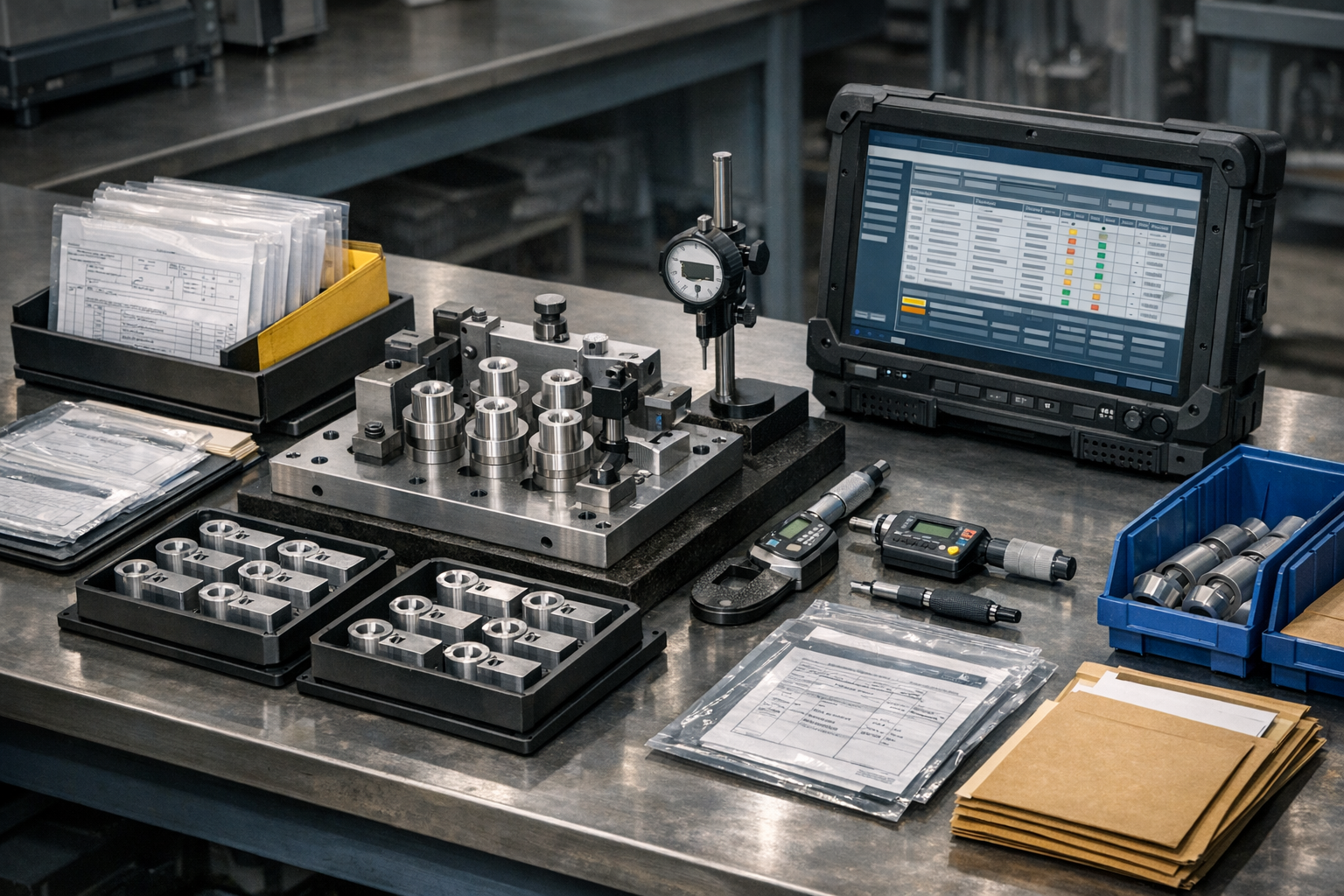
    Scrap and rework in aerospace manufacturing are not just quality issues; they are financial events. When high-value alloys, complex assemblies, and long cycle-time components are lost, the impact ripples through schedules, margins, and customer commitments. Most of that waste does not come from dramatic failures, but from small process deviations that slip through traditional controls until it is too late.

    A Manufacturing Execution System (MES) can change that equation. By turning execution data into evidence for fast, structured investigations, MES enables root cause analysis (RCA) that stops repeat defects instead of simply explaining what went wrong once. This article explains how aerospace manufacturers can use MES data to perform rapid, evidence-based RCA on scrap and rework events, with a focus on practical workflows, data structures, and best practices.

    For teams putting this topic into daily operation, scrap and rework reduction, shop floor execution control, quality management workflows help connect the concept to traceability, work-order reality, and audit-ready evidence.

    The same operating model also depends on a connected execution platform, Connect 981’s aerospace execution solutions, real aerospace execution examples, Connect 981’s aerospace operations guidance, especially when decisions have to move across quality, production, suppliers, and program leadership without losing context.
    If you are looking for a broader strategy on cutting waste, see our hub on reducing scrap, rework, and material waste in aerospace manufacturing with MES.

    Why Traditional Root Cause Analysis Fails in Aerospace

    Many aerospace plants still rely on paper travelers, spreadsheets, and disconnected quality systems to trace defects back to their causes. These tools struggle to keep up with complex routings, strict regulatory requirements, and the pace of modern programs.

    Delayed data and fragmented systems

    Traditional RCA often starts days or weeks after a defect is found. Inspectors record nonconformances on paper, engineers retype notes into separate systems, and process data lives in machine HMIs or local historians. By the time an investigation begins:

    • Key contextual information is missing or incomplete.
    • Operators and inspectors may not remember details clearly.
    • Multiple systems must be queried and reconciled manually.

    This latency makes it difficult to quickly contain issues and increases the risk that similar defects continue to slip through.

    Human bias and incomplete incident records

    When incident records rely heavily on free-text notes or manual data entry, investigations are vulnerable to bias and inconsistency. Common problems include:

    • Blame-focused narratives that emphasize who made a mistake rather than why the system allowed it.
    • Missing data on machine state, setup parameters, or environmental conditions at the time of the event.
    • Non-standard terminology that makes cross-comparison across lines and plants almost impossible.

    The result is a library of incident reports that are difficult to search, trend, or use to prevent repeat defects.

    Impact of complex, multi-step aerospace routings

    Aerospace components typically follow long, multi-step routings across multiple cells and sometimes multiple facilities. A single part may pass through machining, heat treat, surface prep, special processes, assembly, and final test.

    In this environment, traditional RCA struggles with questions like:

    • Which upstream operation introduced the defect?
    • Are only the scrapped parts affected, or an entire lot, shift, or batch?
    • Do we have any in-service parts that were built under similar conditions?

    Without end-to-end traceability of each part’s exact path, parameters, and inspections, teams either over-contain (scrapping or reworking more than necessary) or under-contain (missing at-risk product).

    What MES Brings to Root Cause Analysis

    An aerospace-grade MES sits at the center of execution, collecting data from operators, machines, and quality checks in real time. For RCA, that means investigations can be grounded in objective, time-stamped, linked data instead of scattered records and recollections.

    Single source of truth for execution data

    MES provides a consistent, authoritative record of what happened on the shop floor, including:

    • Work order, operation, and routing information.
    • Operator logins and certifications at each step.
    • Machine assignments, program IDs, tool sets, and setpoints (where integrated).
    • In-process inspection results and measurement data.
    • Nonconformance and deviation records tied directly to parts and operations.

    This single source of truth eliminates the need to reconcile multiple versions of reality when a defect is found.

    Linking process parameters, operators, machines, and lots

    Effective RCA requires seeing how people, equipment, and materials combine to produce outcomes. MES excels at linking these dimensions:

    • Each part or serial number is linked to its work order, route, operations, and timestamps.
    • Each operation record connects to operator IDs, machine IDs, tooling, and programs where available.
    • Material lots and batches are traced from receiving through consumption, facilitating full-material genealogy.

    When scrap occurs, investigators can quickly compare affected and unaffected parts across these variables, narrowing in on plausible causes.

    Traceability across cells, plants, and suppliers

    Aerospace programs often span multiple facilities and external suppliers. A well-implemented MES can support traceability across organizational boundaries, for example:

    • Tracking serialized components through sub-assembly, final assembly, and test.
    • Capturing which supplier lot went into which assembly and when.
    • Providing audit-ready histories that support customer and regulatory inquiries.

    This end-to-end visibility is especially critical when evaluating the potential field impact of a quality escape and deciding how far containment actions must extend. Note that MES complements, but does not replace, formal quality and regulatory processes.

    Building a MES-Driven Root Cause Workflow

    To get real value from MES root cause analysis in aerospace, it helps to define and standardize an investigation workflow that consistently uses MES data. The following steps outline a typical pattern that can be tailored to local requirements and quality systems.

    Capturing nonconformances and deviations in real time

    The workflow starts when scrap, rework, or a suspected deviation is detected. In an MES-driven approach:

    • Operators and inspectors record nonconformances directly in MES while the part is at the station.
    • Structured fields capture key attributes such as defect code, feature location, measurement results, and suspected operation of origin.
    • Attachments (photos, measurement sheets, CMM data) are stored alongside the record, not in email or local folders.
    • MES triggers automatic holds on affected work orders or lots when configured rules are met.

    Real-time capture ensures that investigations start with current, accurate data and that no suspect parts continue unnoticed downstream.

    Using genealogy and as-built records to bound the problem

    Once a nonconformance is logged, the first RCA task is to identify the population that may be affected. MES genealogy and as-built records support this by showing:

    • Which other parts ran on the same machine or program during the relevant time window.
    • Which parts consumed the same material lot or batch.
    • Which assemblies contain sub-components built under similar conditions.

    Using these records, investigators can:

    • Define an initial containment boundary (e.g., all parts processed on Machine 12 between specific timestamps).
    • Place targeted holds in MES only on those parts, avoiding overly broad shutdowns where possible.
    • Quickly identify any at-risk parts that have already progressed to later stages or shipment.

    This bounding step dramatically reduces mean time to containment and supports more proportionate responses.

    Filtering by time, tool, program, material, and shift

    With the population defined, the RCA team begins looking for patterns. MES search and reporting tools can filter data across multiple dimensions:

    • Time: When did the issue first appear? Did it coincide with a shift change, preventive maintenance, or a parameter change?
    • Tooling: Were specific tools or offsets in use? Do defects cluster near the end of tool life?
    • Programs and setups: Was a new CNC program, recipe, or fixture introduced?
    • Material: Are certain material heats or batches overrepresented in defect populations?
    • Shift and crew: Are results consistent across shifts, or does one crew see more defects?

    By comparing affected and unaffected parts along these axes, engineers can often pinpoint a short list of likely causes in minutes rather than days.

    Practical Examples of Root Cause Analysis with MES Data

    The concepts above become clearer through concrete scenarios. The examples below are illustrative only and do not represent universal solutions or guarantee compliance with any specific OEM or regulatory requirements.

    Tool wear drifting out of tolerance

    Situation: A final inspection station detects an increasing number of out-of-tolerance holes on a critical titanium bracket.

    Using MES data:

    • Quality logs a nonconformance in MES for each failed part, linking them to the specific drilling operation.
    • The engineer runs an MES query for all brackets produced on the same machine and operation in the last week.
    • MES data shows a progressive shift in hole diameter measurements over time, correlating with tool life.
    • The genealogy view identifies other parts and work orders that used the same tool set near end-of-life.

    Outcome: The root cause is identified as insufficient tool change frequency for the titanium application. The team updates standard work and MES parameters to enforce shorter tool life limits and adds an in-process gauging step when approaching tool-end thresholds.

    Incorrect setup parameter reused across work orders

    Situation: Several aluminum structural components show cosmetic damage after a deburr and finishing cell, triggering scrap and rework.

    Using MES data:

    • Nonconformances are logged against the finishing operation, and MES holds are placed on current WIP.
    • Investigators filter MES records by cell, operation, and time, comparing scrap vs. good product.
    • They discover that defects only occur on work orders after a particular engineering change, and only on parts processed with a certain program revision.
    • Setup traceability in MES shows that an incorrect brush pressure value was copied from a trial configuration into the production recipe.

    Outcome: The incorrect parameter is corrected, and MES workflows are updated so that recipe changes require a formal review and electronic approval before use. Future RCAs can quickly confirm that only the affected orders used the wrong setting.

    Material batch variability driving downstream scrap

    Situation: A heat treat operation begins to show a higher rate of hardness failures on landing gear components, leading to scrap and schedule risk.

    Using MES data:

    • Hardness test failures are logged in MES against the heat treat operation.
    • Investigators query MES genealogy data to correlate failed parts with raw material heats and suppliers.
    • A clear pattern emerges: all failed parts trace back to a specific heat from one supplier, while other heats pass consistently under identical process conditions.
    • Process parameters and furnace records in MES confirm that cycles remained within validated limits.

    Outcome: The root cause is determined to be incoming material variability, not furnace performance. Containment actions target parts using that heat only. Supplier quality and purchasing teams engage with the supplier using the MES data as objective evidence.

    Integrating Root Cause Findings into Standard Work

    Root cause analysis only creates value if the findings change how work is done. MES is a powerful lever for embedding improvements into daily operations so that lessons learned prevent future waste.

    Updating work instructions and checklists in MES

    Once a corrective action is defined, engineering can update electronic work instructions and operator checklists stored in MES. Examples include:

    • Adding an explicit step for tool inspection or verification at defined intervals.
    • Clarifying fixturing, clamping, or orientation details to avoid subtle mis-setups.
    • Highlighting critical characteristics and their associated inspection methods.

    Because these instructions are delivered at the point of use, operators see the latest guidance without relying on printed travelers or informal communication.

    Automating new in-process checks and alerts

    Some corrective and preventive actions can be encoded directly into MES logic, for example:

    • Requiring electronic verification of parameter values before an operation can start.
    • Triggering alerts or holds if measurement data trends toward a control limit.
    • Forcing a dual-approval workflow when high-risk recipes or special process parameters are changed.

    These rules reduce dependence on memory and vigilance alone and help ensure that improvements persist beyond the initial investigation.

    Closing the loop with CAPA and continuous improvement

    Many aerospace organizations use formal Corrective and Preventive Action (CAPA) processes, sometimes aligned with customer or regulatory expectations. MES can support these by:

    • Linking nonconformance records to specific CAPA cases managed in quality systems.
    • Providing data for 5-Why, 8D, or other structured analysis methods.
    • Supplying before/after metrics to assess whether corrective actions are effective.

    It is important to note that MES complements these formal quality tools and does not, on its own, replace required quality engineering or regulatory processes.

    Metrics to Track Root Cause Effectiveness

    To sustain improvement and justify investment, aerospace MES teams should track how well their RCA process performs. The following metrics are commonly used.

    Repeat defect rate and scrap trend lines

    The most direct indicator of RCA effectiveness is whether the same issues keep recurring. MES can help track:

    • Repeat defect rate: Frequency of nonconformances with the same code, feature, or operation after a corrective action is implemented.
    • Scrap and rework trends: Defect volume and cost by cell, part family, operation, or program over time.

    Visualizing these in dashboards allows leaders to see which corrective actions are working and which require further attention.

    Mean time to containment and resolution

    Root cause analysis is not only about correctness but also about speed. Two key time-based metrics are:

    • Mean Time to Containment (MTTC): Time from defect detection to implementation of a defined containment action (e.g., holds on suspect WIP, additional inspections).
    • Mean Time to Resolution (MTTR): Time from detection to deployment of an approved corrective action in production.

    MES contributes by enabling rapid detection, automated holds, and faster access to the data needed for analysis.

    Cost avoidance and margin impact

    Because aerospace programs often run under fixed-price or long-term agreements, avoiding waste directly protects margins. With MES, organizations can estimate:

    • Scrap cost avoided: Comparing actual scrap/rework costs after improvements to historical baselines.
    • Capacity recovered: Hours freed from rework and troubleshooting, redirected to value-adding production.
    • Schedule risk reduction: Fewer quality-related delays to key milestones or delivery commitments.

    These financial and operational metrics help justify continued investment in MES capabilities and data quality.

    Implementation Tips for Aerospace MES Teams

    Moving from basic MES usage to robust, data-driven RCA is a journey. The following considerations can help aerospace teams progress efficiently while respecting program and regulatory constraints.

    Data quality prerequisites

    MES-driven RCA is only as strong as the data it uses. Before relying heavily on MES for investigations, focus on:

    • Consistent master data: Standardized part numbers, operation codes, defect codes, and equipment IDs.
    • Accurate routing and configuration: Ensuring the MES reflects the true as-planned and as-built flow.
    • Reliable operator usage: Training and reinforcing correct login, data entry, and nonconformance recording behavior.
    • Machine and measurement integration: Where possible, capture parameters and measurements automatically to reduce transcription errors.

    It is often better to have a narrower but reliable dataset than a large volume of inconsistent records.

    Change management with engineers and inspectors

    For MES root cause analysis to succeed, engineers, inspectors, and operators must see it as a helpful tool, not a burden. Helpful practices include:

    • Involving them early in designing nonconformance forms, defect taxonomies, and reports.
    • Demonstrating quick wins where MES data helped resolve a real problem faster.
    • Clarifying that MES supports, rather than replaces, established quality engineering practices and regulatory processes.

    By aligning MES usage with existing quality frameworks, adoption becomes part of continuous improvement rather than a separate initiative.

    Piloting on high-cost, high-risk components

    Given the complexity of aerospace environments, many organizations start by piloting MES-driven RCA on a limited scope, for example:

    • A single part family with historically high scrap or rework cost.
    • A special process cell (e.g., heat treat, coating, or NDI) where defects have significant downstream impact.
    • A critical assembly where traceability and genealogy are already strong priorities.

    This focused approach allows teams to refine workflows, metrics, and training before expanding to additional lines, plants, or programs.

    Bringing It All Together

    MES root cause analysis in aerospace is ultimately about turning every defect into a learning opportunity. By capturing high-quality execution data, linking people, machines, and materials, and embedding findings into standard work, manufacturers can reduce repeat defects, protect margins, and strengthen customer confidence.

    When combined thoughtfully with formal quality methods and regulatory-compliant processes, MES becomes a core capability for identifying, understanding, and eliminating the sources of scrap and rework across complex aerospace value streams.